
Opinion
UNGA 80: Can Shettima Turn Applause Into Results?


UNGA 80: Can Shettima Turn Applause Into Results?
By Alabidun Shuaib AbdulRahman
Every September, New York becomes the theatre of global diplomacy as world leaders gather for the United Nations General Assembly. For Nigeria, the UNGA has always been more than routine. It is the stage where Africa’s most populous country asserts itself as a voice for the continent and a player in global debates. Yet, the critical question remains: what has Nigeria truly gained from all the speeches and pledges over the years?
Nigeria has long valued its seat at the UN. In the 1960s and 70s, its diplomats pressed for decolonisation and supported Southern Africa’s liberation movements. During the oil boom years, Nigeria demanded a fairer international economic order. In the 1990s, its peacekeeping role in Liberia and Sierra Leone gave it credibility as Africa’s stabiliser. More recently, themes of terrorism, climate change, illicit finance, and economic reform have dominated Nigeria’s interventions. But ambition has consistently outpaced delivery.
The last five years highlight the gap between rhetoric and results. In 2021, the then President Muhammadu Buhari (now late) used his UNGA speech to demand vaccine equity during COVID-19 and to call for debt relief. He was right to speak, but outcomes were thin. Nigeria received vaccines largely through COVAX and bilateral donations, while debt relief came only as temporary suspension. Terrorism deepened as ISWAP spread. Buhari’s 2022 outing was no different: a reflective speech on democracy and climate change, but only limited wins, such as $23 million in Abacha loot repatriated from the US.
When President Bola Ahmed Tinubu took office in 2023, he arrived in New York with reformist zeal. His first UNGA speech promised a Nigeria open for business, asking for investments rather than aid. Headlines followed: $14 billion in pledges from Indian companies and positive receptions from the US and Europe. But pledges are not FDI. Nigeria’s actual foreign direct investment that year was $3.9 billion, dwarfed by Egypt’s $11.4 billion. Investors applauded Tinubu’s reforms but waited for stability before committing cash.
In 2024, Vice President Kashim Shettima represented Nigeria. His speech leaned heavily on security, especially after Nigeria hosted the High-Level African Counter-Terrorism Meeting in Abuja, which produced the Abuja Declaration. The UN endorsed Nigeria’s leadership role, but financing remained elusive. Nigeria carried the recognition but not the resources.
Now in 2025, Shettima is back at UNGA 80. His assignment is bigger: Nigeria will unveil its new Nationally Determined Contributions under the Paris Agreement. Done well, this could unlock climate finance for renewable energy and adaptation projects. The delegation, packed with key ministers, signals ambition. But Nigerians at home care less about ambition and more about results. Will climate finance flow? Will investment pledges turn into jobs? Will the world share the cost of stabilising the Sahel?
The comparisons with other African states are sobering. Kenya has translated global diplomacy into concrete investments, such as the $1 billion Microsoft-G42 data centre project, which moved quickly from announcement to execution. Morocco has positioned itself as a magnet for green energy financing. Rwanda consistently turns its international reputation into tangible investment in services and technology. South Africa, despite challenges, uses its platforms to secure energy and infrastructure partnerships while pressing for global governance reform. Nigeria, by contrast, often leaves UNGA with applause and headlines but fewer signed deals.
The reasons are clear. Nigeria celebrates pledges as if they were cash, but investors demand clarity, legal frameworks, and project readiness. Domestic instability — inflation, currency volatility, insecurity — undermines confidence. The country’s messaging is often too broad, with sweeping appeals for investment instead of tight presentations of a few ready projects. And follow-through is weak, as many MOUs remain stagnant.
If Nigeria is to shift from rhetoric to results, Shettima’s mission in New York must mark a change. The new climate commitments must be tied to a clear pipeline of bankable projects. Security leadership must be backed by donor funding, and Nigeria must push aggressively for commitments in writing. Investor outreach should focus on specific, shovel-ready projects in energy and infrastructure, not broad appeals. And above all, the government should publish a post-UNGA outcome tracker, showing what was promised and how it is being delivered.
Nigeria’s diplomatic ambition remains valid. It still seeks a permanent seat on the UN Security Council, and it still claims leadership in Africa. But credibility is the currency of diplomacy. If speeches are not matched with results, Nigeria risks being seen as a loud but ineffective voice. If, however, Shettima can secure climate finance, investment agreements, and tangible security support, Nigeria’s presence at UNGA 80 will stand as a turning point.
Alabidun can be reached via alabidungoldenson@gmail.com






EDITORIAL: Tackling Poverty in Africa
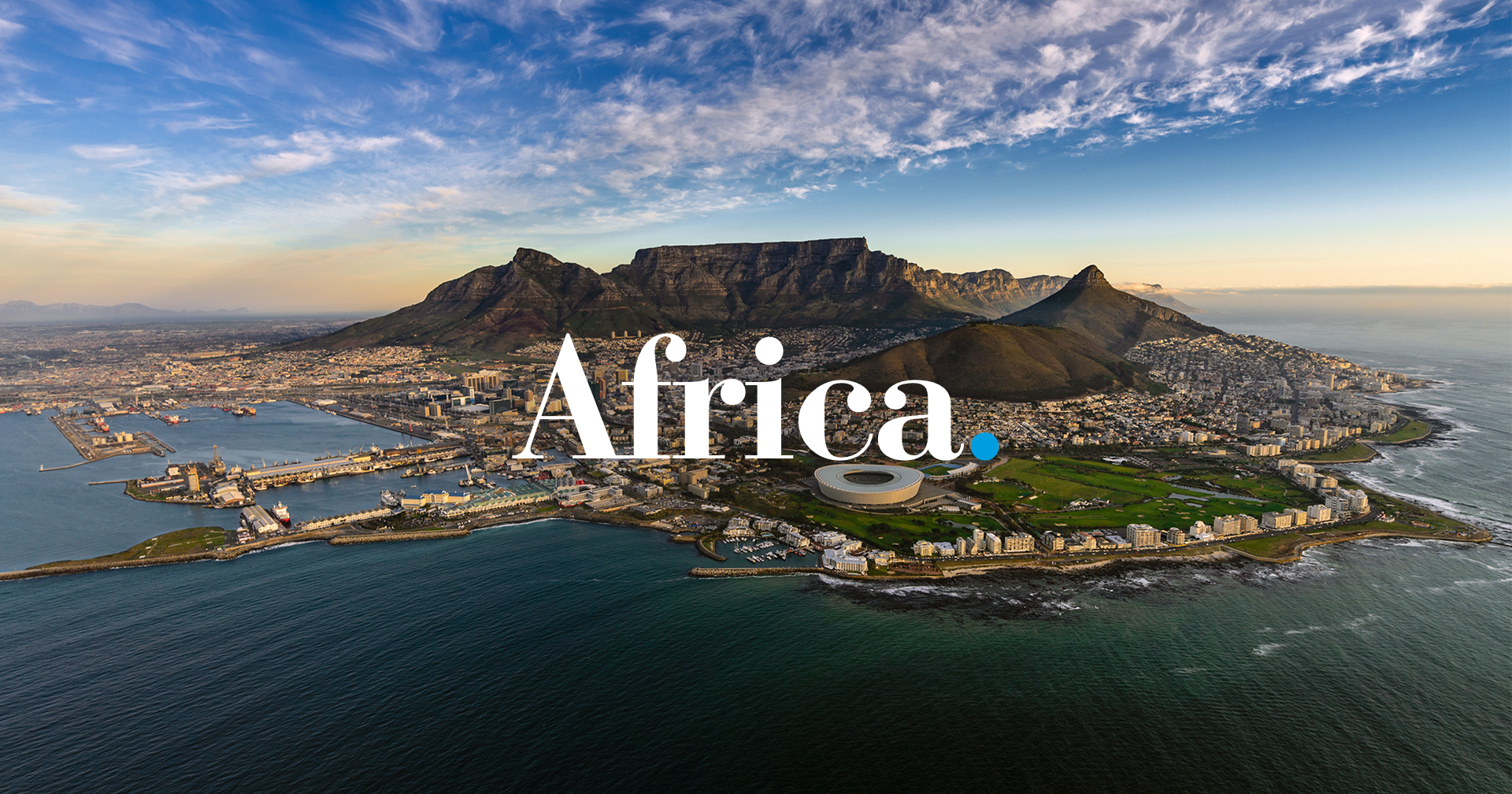
Poverty remains Africa’s greatest paradox. The continent possesses nearly one-third of the world’s mineral resources, about 60 per cent of the world’s uncultivated arable land, a youthful population projected to exceed two billion by 2050, and enormous renewable energy potential. Yet millions of Africans continue to struggle for daily survival. This contradiction underscores not a shortage of resources but a persistent deficit of governance, inclusive growth and political will.
The scale of the challenge is sobering. According to the World Bank’s Poverty, Prosperity and Planet Report 2024, nearly 700 million people worldwide live in extreme poverty, surviving on less than $2.15 a day. More troubling is the fact that Sub-Saharan Africa, home to just 16 per cent of the global population, accounts for about 67 per cent of the world’s extremely poor people. The region has effectively become the global epicentre of poverty.
Economic growth alone has not translated into prosperity for ordinary Africans. Although African economies have shown resilience in recent years, the World Bank has repeatedly warned that growth remains too weak and too unequal to significantly reduce poverty. Rising public debt, inflation, conflict, climate shocks and governance failures continue to erode development gains across many countries.
The causes of poverty in Africa are well known. Armed conflicts have displaced millions and destroyed livelihoods from Sudan to the eastern Democratic Republic of Congo and the Sahel. Climate change has intensified droughts, floods and food insecurity, particularly in the Horn of Africa. Weak institutions, corruption, inadequate infrastructure and overdependence on commodity exports have further constrained sustainable development. Meanwhile, millions of young Africans enter labour markets every year only to find few productive jobs.
Former United Nations Secretary-General Ban Ki-moon once observed that “there is no development without peace, no peace without development, and neither without respect for human rights.” His words remain profoundly relevant. Peace and security are indispensable foundations for economic progress. Without them, investment declines, education suffers and poverty deepens.
Yet Africa’s future need not be defined by deprivation. Encouraging examples exist across the continent. Countries that have invested consistently in agricultural productivity, financial inclusion, education and digital innovation have demonstrated that poverty can be reduced. Kenya’s mobile money revolution expanded financial access to millions. Ethiopia’s agricultural reforms boosted rural productivity for years before conflict interrupted progress. Rwanda has prioritised healthcare, technology and institutional reforms to improve living standards. These experiences show that sound policies can produce measurable results.
The African Continental Free Trade Area also offers a historic opportunity. By creating the world’s largest free trade area by participating countries, AfCFTA has the potential to stimulate industrialisation, expand intra-African trade, create millions of jobs and reduce dependence on external markets. However, success will depend on governments implementing complementary reforms in transport, energy, customs administration and the rule of law.
Development partners equally have responsibilities, but foreign aid cannot substitute for domestic accountability. As former UN Secretary-General Kofi Annan famously remarked, “Good governance is perhaps the single most important factor in eradicating poverty and promoting development.” African leaders must therefore strengthen institutions, fight corruption relentlessly, improve tax administration, invest in quality education and healthcare, empower women and create an enabling environment for private enterprise.
Ultimately, poverty is not inevitable. It is the consequence of choices made—and sometimes avoided—by governments and institutions. Africa possesses the human capital, natural wealth and entrepreneurial energy to transform its fortunes. What is urgently required is leadership that places citizens above politics, productivity above patronage and long-term development above short-term political gains.
The fight against poverty must now move beyond lofty declarations and conference communiqués. Africans deserve governments that deliver jobs instead of excuses, infrastructure instead of slogans, and opportunities instead of dependency. The continent’s greatest resource is neither oil nor gold, but its people. Investing in them is not merely good economics; it is the surest pathway to Africa’s enduring prosperity.
Lessons from the Catholic Bishops’ Visit to Tinubu, by Boniface Ihiasota
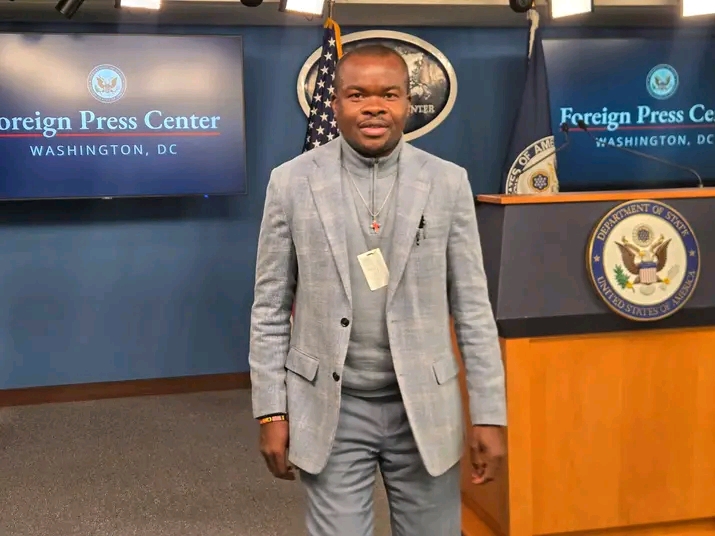
The recent visit of the Catholic Bishops’ Conference of Nigeria to President Bola Ahmed Tinubu at the Presidential Villa was more than a ceremonial engagement. It became one of the clearest illustrations yet of the widening gap between official optimism and the daily realities confronting millions of Nigerians. The discussions that followed—and the public reactions they generated—have once again underscored the indispensable role of religious institutions in shaping national conversations on governance, accountability and social justice.
Led by the President of the Catholic Bishops’ Conference of Nigeria, Archbishop Matthew Man-Oso Ndagoso, the bishops used the opportunity to raise concerns over insecurity, economic hardship, unemployment and the general welfare of Nigerians. They also urged President Tinubu to formally invite Pope Leo XIV to Nigeria, arguing that such a visit would strengthen peace, unity and national reconciliation.
President Tinubu, on his part, defended his administration’s reforms, insisting that the difficult decisions taken since assuming office were necessary to rescue the economy from years of structural distortions. He maintained that security architecture was being repositioned and that prosperity would eventually follow the current sacrifices.
Ordinarily, such exchanges between government and faith leaders are healthy in every democracy. However, the conversation assumed greater significance after Cardinal John Onaiyekan publicly disclosed that the President disagreed with many of the bishops’ assessments. According to the Cardinal, the bishops told Tinubu that “the economy is not helping our poor people,” while the President maintained that the economy was improving. The revelation immediately triggered widespread debate across political and religious circles because it exposed two sharply contrasting narratives about the state of the nation.
Yet, facts remain stubborn. Nigeria continues to face severe economic challenges. Inflation has remained elevated over the past two years, food prices have climbed dramatically, and millions of households continue to struggle with declining purchasing power. The World Bank has repeatedly warned that while reforms such as fuel subsidy removal and exchange-rate liberalisation may improve long-term fiscal sustainability, they also impose painful short-term costs on vulnerable citizens unless accompanied by robust social protection measures.
This explains why the bishops’ intervention resonated beyond the Catholic faithful. Religious leaders occupy a unique position in Nigerian society. They interact daily with ordinary citizens who seek assistance through churches, mosques and community organisations. Consequently, their assessment of public suffering often reflects grassroots realities that official statistics may not immediately capture.
The reactions also revealed an important democratic principle. Criticism of government should not automatically be interpreted as political opposition. Throughout Nigeria’s democratic history, both Christian and Muslim leaders have consistently spoken against corruption, insecurity, injustice and poverty irrespective of which party occupies Aso Rock. Their constitutional freedom to speak truth to power remains essential to democratic accountability.
At the same time, government officials equally have the responsibility to explain policies and defend their decisions. Democracy thrives not when everyone agrees but when disagreements are managed through dialogue rather than hostility. The exchange between Tinubu and the bishops should therefore be viewed as evidence that democratic engagement remains alive, provided both sides continue to listen respectfully.
The larger lesson is that perception matters almost as much as policy. Economic indicators may improve on paper, but if ordinary Nigerians cannot afford food, healthcare, education or transportation, public confidence will remain elusive. Governments ultimately earn legitimacy not through optimistic speeches but through measurable improvements in people’s quality of life.
As Nigeria journeys toward the 2027 elections, the meeting between the Catholic bishops and President Tinubu should remind both leaders and citizens that governance is not merely about defending statistics or winning arguments. It is about restoring hope. That hope will be strengthened only when policy outcomes begin to match the lived experiences of the millions whose voices the bishops sought to amplify.
Obasanjo, Atiku and the Burden of Broken Trust, by Alabidun Shuaib AbdulRahman
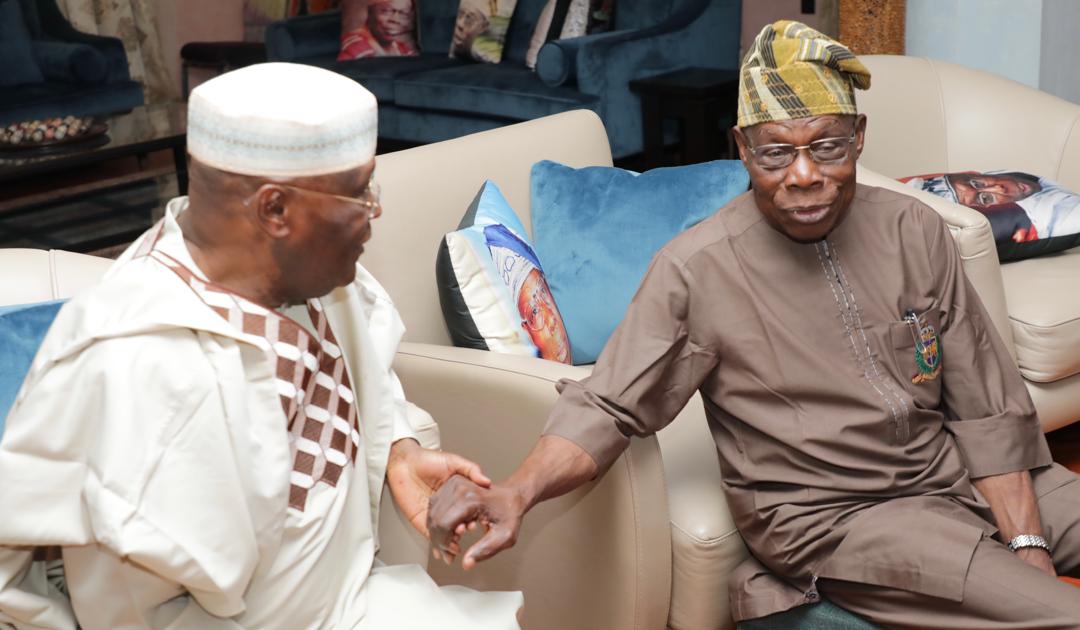
In politics, alliances are often built on interests, sustained by necessity and destroyed by distrust. Few relationships illustrate this reality more profoundly than that of former President Olusegun Obasanjo and former Vice-President Atiku Abubakar. What began as one of the strongest political partnerships in Nigeria’s Fourth Republic gradually degenerated into one of its most bitter rivalries, leaving enduring consequences not only for the two principal actors but also for the country’s democratic evolution.
Their story is not merely about two ambitious politicians. It is a study of trust, betrayal, power, succession and the burdens of political ambition. More importantly, it explains why Atiku Abubakar, despite his enormous political network, financial resources and national appeal, has remained one of Nigeria’s greatest political nearly-men.
Politically, the relationship predates the return to democracy in 1999. During the military era, Atiku had become a leading figure in the Shehu Musa Yar’Adua-led Peoples Democratic Movement (PDM), arguably Nigeria’s most organised political structure at the time. Following General Sani Abacha’s death on June 8, 1998, General Abdulsalami Abubakar initiated a transition programme that opened the way for democratic elections.
As political parties emerged, the newly formed Peoples Democratic Party became the dominant platform. Within the PDP, Atiku was among the strongest presidential aspirants. He had built an extensive grassroots network through the PDM and enjoyed significant support among party delegates.
However, circumstances changed dramatically when former military Head of State, General Olusegun Obasanjo, who had recently been released from prison by General Abdulsalami Abubakar, entered the presidential race. Many influential political leaders believed Nigeria required a Yoruba president to heal the wounds created by the annulment of the June 12, 1993 presidential election won by late Chief Moshood Kashimawo Olawale Abiola.
At the PDP presidential convention held in Jos in December 1998, Obasanjo defeated Alex Ekwueme to secure the party’s ticket. Atiku, recognising the prevailing political mood, aligned with Obasanjo and reportedly mobilised substantial support from the PDM machinery for the former military ruler.
To reward both political loyalty and strategic value, Obasanjo selected Atiku as his running mate ahead of the 1999 presidential election. Together they defeated the Alliance for Democracy-All People’s Party ticket of Chief Olu Falae and Dr Umaru Shinkafi.
Initially, on what appeared a perfect political marriage, Obasanjo concentrated on governance and Nigeria’s re-engagement with the international community, while Atiku chaired the National Economic Council and the National Council on Privatisation. The vice-president became one of the principal architects of Nigeria’s economic reform programme, overseeing privatisation policies that fundamentally reshaped sectors such as telecommunications, banking and manufacturing.
Obasanjo’s military background inclined him towards centralised authority, discipline and firm control of government. Atiku, by contrast, was a consummate coalition builder whose strength lay in negotiation, consultation and political networking.
Interestingly, the first visible cracks appeared shortly after their inauguration. Several influential figures accused Atiku of maintaining an independent political structure outside Aso Rock. Rather than functioning merely as the vice, he continued nurturing relationships with governors, legislators and party leaders across the federation. For Obasanjo, this increasingly looked like preparation for succession rather than loyalty and by 2002, mutual suspicion had become impossible to conceal.
As the 2003 election approached, rumours circulated that Obasanjo considered replacing Atiku with another running mate. It was further rumoured that Atiku’s political associates equally questioned whether the President intended to honour what they believed was an understanding that power would eventually pass to the vice-president. Neither man publicly admitted the existence of such an agreement. The crisis intensified after the 2003 elections, which returned both men to office. The second term proved far more turbulent than the first.
Cabinet meetings reportedly became battlegrounds of competing interests. PDP leaders increasingly aligned themselves with either Obasanjo or Atiku. Government gradually transformed into two competing political camps operating under one administration.
Then came the defining episode. The proposed constitutional amendment that would have allowed a third presidential term for Obasanjo became the turning point. Although Obasanjo repeatedly denied personally sponsoring the amendment, many political actors believed forces loyal to him actively supported it. On the other side, Atiku vehemently opposed the proposal.
Going forward, on May 16, 2006, the National Assembly rejected the constitutional amendment, effectively ending any possibility of a third term. That single event irreversibly destroyed whatever trust remained between President and Vice-President. The aftermath was brutal.
Obasanjo publicly accused Atiku of disloyalty and corruption. The Federal Executive Council recommended investigations into allegations arising from the United States-based Jefferson bribery scandal involving former Congressman William Jefferson and Vice-President Atiku’s former wife, Jennifer Douglas. Atiku consistently denied wrongdoing and was never convicted of corruption either in Nigeria or the United States.
The administration also attempted to exclude Atiku from contesting the 2007 presidential election through the Independent National Electoral Commission, INEC, after the Economic and Financial Crimes Commission, EFCC listed him among politicians allegedly indicted for corruption.
However, in a landmark judgment delivered on April 16, 2007, the Supreme Court ruled that INEC lacked constitutional powers to disqualify candidates without a court conviction. That judgment remains one of Nigeria’s most significant electoral precedents. By then, however, political damage had already been done. Atiku had left the PDP for the Action Congress, contested the presidency against the late Umaru Musa Yar’Adua and finished third.
Since then, Atiku has contested the presidency repeatedly—in 1993 (Social Democratic Party primaries), 2007 (Action Congress), 2011 (PDP), 2019 (PDP) and 2023 (PDP)—without success.
Many factors explain these defeats, but the collapse of his relationship with Obasanjo remains among the most consequential. Since Obasanjo described Atiku as unreliable and overly ambitious, many Nigerians began viewing the former vice-president through that lens.
Perhaps the most quoted criticism came from Obasanjo’s 2019 public letter in which he wrote that “Atiku is not the person to entrust the future of Nigeria with.” Ironically, only weeks earlier, the same Obasanjo had publicly endorsed Atiku’s presidential ambition after reconciling with him under the Coalition for Nigeria Movement.
For Atiku, the consequences have been profound. The very networking ability that made Atiku indispensable to Obasanjo’s emergence in 1999 later became one of the reasons their partnership collapsed. Obasanjo reportedly interpreted Atiku’s independent political influence as a direct threat rather than an institutional asset. Trust, once broken, rarely returns unchanged, they say.
Although both men occasionally reconciled for political expediency, notably, before the 2019 elections, the warmth of their earlier partnership never fully returned. Ahead of the 2023 presidential election, Obasanjo endorsed Labour Party candidate Peter Obi instead of Atiku, reinforcing public perception that the former President had permanently lost confidence in his erstwhile deputy.
Even though to some extent, Obasanjo restored Nigeria’s global standing after years of military dictatorship and implemented significant economic reforms. Atiku played a pivotal role in driving those reforms and expanding Nigeria’s private-sector economy through privatisation and investment promotion. Together, they achieved more than either is often willing to acknowledge.
However, their fractured relationship offers broader lessons for Nigeria’s political class. Institutions suffer when personal distrust supersedes constitutional responsibility. Democracy weakens when political partnerships collapse under the weight of suspicion rather than being managed through dialogue and internal party mechanisms.
For Atiku personally, the Obasanjo years permanently shaped his political identity. He emerged as a formidable coalition builder, an indefatigable presidential contender and one of Nigeria’s most recognisable democratic figures. Yet he also carried the enduring burden of questions about loyalty, consistency and political trust—questions amplified by his multiple party defections between the PDP, Action Congress and the All Progressives Congress before returning to the PDP and now ADC.
Whether those perceptions are entirely fair remains debatable. What is beyond dispute is that the Obasanjo-Atiku rupture altered the trajectory of Nigeria’s Fourth Republic and influenced every presidential election in which Atiku subsequently participated.
As the ancient Roman philosopher Cicero observed, “Nothing is more noble, nothing more venerable than fidelity.” In politics, as in life, trust is difficult to build, easy to lose and almost impossible to restore. The Obasanjo-Atiku story remains Nigeria’s most compelling reminder that political alliances may win elections, but only trust can sustain leadership.
Alabidun is a media practitioner and can be reached via alabidungoldenson@gmail.com


EDITORIAL: Tackling Poverty in Africa

Spain battles political fallout as 60,000 migrants overwhelm Ceuta border

Hamas agrees to disarm as Gaza withdrawal deal gains momentum

Pastor Jerry Eze Defends Miracles At UK Conference Amidst Criticism And Controversy

Diaspora Watch 20th Edition (October 14-20, 2024): Your Trusted Source for Global News and Insights

Tanzanian Man Reportedly Dies And Returns To Life Six Times


-
 Milestone6 days ago
Nigerian bags HVAC Engineering degree in US, lands full-time job
-
 News6 days ago
CARICOM chair renews reparations demand
-
 Analysis6 days ago
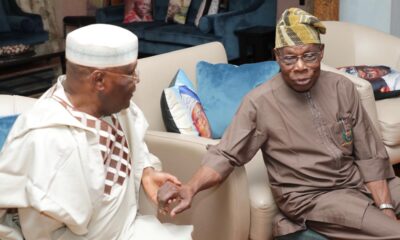
Obasanjo, Atiku and the Burden of Broken Trust, by Alabidun Shuaib AbdulRahman
-
 Analysis6 days ago
Lessons from the Catholic Bishops’ Visit to Tinubu, by Boniface Ihiasota
-
 News6 days ago
Hamas agrees to disarm as Gaza withdrawal deal gains momentum
-
 Opinion6 days ago
EDITORIAL: Tackling Poverty in Africa