
Business
Taxation and the Nigerian Diaspora


Taxation and the Nigerian Diaspora
For Nigerians in the diaspora, taxation has recently taken on a renewed urgency, shaped by Nigeria’s evolving fiscal reforms and global policy shifts that increasingly touch lives beyond the country’s borders. From London to Atlanta, Toronto to Berlin, conversations among Nigerians abroad are no longer just about exchange rates or remittance channels, but about what the newly introduced tax reforms at home truly mean for them.
Nigeria’s latest tax reforms, scheduled to take effect from January 2026, are among the most ambitious fiscal overhauls in decades. Driven by the need to boost non-oil revenue, the Federal Government has made clear its intention to widen the tax base and improve compliance rather than raise blanket tax rates. According to official data, Nigeria’s tax-to-GDP ratio remains below 11 per cent, far lower than the African average of about 16 per cent. This gap has pushed policymakers to rethink how revenue is generated, especially in an economy grappling with subsidy removal, currency reforms and rising public debt.
For Nigerians living abroad, the immediate concern was whether these reforms would extend Nigeria’s tax reach to foreign-earned income or remittances. That fear was amplified by online speculation and misinformation. However, the government has repeatedly clarified that foreign income earned by non-resident Nigerians remains exempt from Nigerian taxation. Residency remains the key determinant. Under the revised framework, an individual becomes tax-resident only if they spend 183 days or more in Nigeria within a 12-month period. For the vast majority of Nigerians in the diaspora, this condition does not apply.
Equally important is the clarification on remittances. Nigeria received approximately 20.5 billion dollars in diaspora remittances in 2023, according to World Bank estimates, making it one of the largest recipients globally. These inflows support millions of households and often serve as informal social security. The government has stated unequivocally that personal remittances sent to families are not subject to taxation. This reassurance, publicly restated by the Presidential Committee on Fiscal Policy and Tax Reforms, was crucial in calming fears of an erosion of diaspora support for families and communities back home.
That said, the reforms do affect Nigerians abroad who maintain economic ties with Nigeria. Rental income from properties, dividends from Nigerian companies, business profits and capital gains derived within Nigeria remain taxable. What has changed is the effort to streamline rates and enforcement. Under the new structure, individuals earning up to ₦800,000 annually in Nigeria are exempt from personal income tax, while higher income brackets attract progressive rates of up to 25 per cent. For diaspora investors, this clarity offers both reassurance and responsibility.
Yet taxation for Nigerians abroad is not shaped by Nigeria alone. Developments in host countries also matter. In the United States, for example, proposed legislation to impose an excise tax on outbound remittances has raised concerns among immigrant communities, including Nigerians. While still under debate, such proposals highlight how diaspora Nigerians can face additional financial pressure even when Nigeria itself does not tax remittances. These external policies complicate the already delicate balance between supporting home and meeting obligations abroad.
Beyond the figures and laws lies a deeper emotional dimension. Many Nigerians in the diaspora already shoulder what feels like an unspoken tax through remittances, school fees for relatives, medical bills and community obligations. When new fiscal policies are announced, the question is rarely about refusal to contribute but about trust. Diaspora Nigerians want assurance that taxation is tied to accountability, improved infrastructure and governance reforms that justify continued engagement.
Tax policy also influences long-term decisions. Uncertainty or perceived hostility can discourage diaspora investment, while transparent and predictable systems can attract it. Nigeria’s diaspora population is estimated at over 15 million people, with significant skills, capital and global networks. How taxation is framed and implemented will shape whether this community feels like partners in national development or distant revenue targets.
For second-generation Nigerians born abroad, the issue is even more symbolic. Their connection to Nigeria is often cultural rather than administrative. If engagement with the country is defined largely by obligations without visible benefits, the risk is gradual disengagement. Taxation, therefore, becomes a measure of how Nigeria defines citizenship in a globalised world.
In the end, the newly introduced tax reforms present both reassurance and reflection for Nigerians in the diaspora. They confirm that foreign-earned income and personal remittances remain protected, while reinforcing the principle that income generated in Nigeria carries responsibility. More importantly, they reopen a broader conversation about trust, inclusion and mutual benefit. For Nigerians abroad, tax is no longer just a line in a policy document; it is a mirror of how connected they remain to the country they still call home.

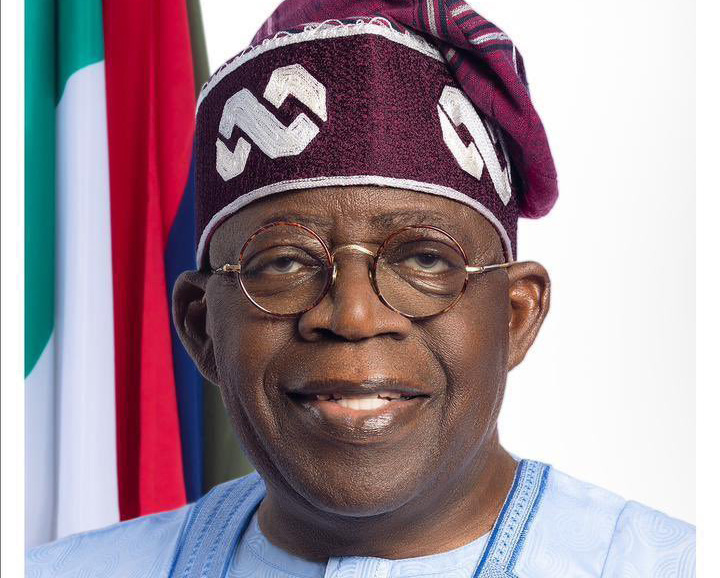
Nigeria Grants Rwandans 30-Day Visa-Free Entry to Boost African Integration, Trade
The Nigerian Government has commenced a 30-day visa-free entry policy for Rwandan nationals, in a move aimed at strengthening continental integration, boosting trade, and enhancing mobility under the African Continental Free Trade Area (AfCFTA) framework.
The policy, which takes immediate effect across all entry points, follows an announcement by President Bola Tinubu at the Africa CEO Forum held in Kigali, Rwanda, where he reiterated Nigeria’s commitment to easing movement across African borders.
In a statement issued on Thursday, the Nigeria Immigration Service (NIS) confirmed that operational arrangements had been concluded for the full implementation of the directive at airports, land borders and seaports nationwide.
Under the new arrangement, Rwandan citizens will be allowed to enter Nigeria without a visa for up to 30 days for legitimate purposes, including tourism, business engagements and official visits.
The Service, however, clarified that visitors wishing to stay beyond the approved period must obtain the appropriate visa through Nigerian diplomatic missions abroad or apply via the Nigeria e-Visa platform.
“Under this bilateral arrangement, Rwandan nationals may enter Nigeria without a visa for a period not exceeding thirty (30) days for lawful purposes, including tourism, business, and official engagements,” the statement read.
The NIS said the policy reflects the strengthening diplomatic relationship between Nigeria and Rwanda, while also aligning with broader African efforts to promote free movement of persons, trade facilitation and economic cooperation across the continent.
It added that the initiative underscores Nigeria’s commitment to regional integration under the AfCFTA agreement, which seeks to create a single African market for goods and services.
“The Nigeria Immigration Service notes that this initiative reflects the strong diplomatic and bilateral relations between the Federal Republic of Nigeria and the Republic of Rwanda, while promoting intra-African mobility, tourism, and economic cooperation in line with continental aspirations,” the agency said.
The Service reaffirmed its readiness to ensure safe, orderly and lawful migration in line with international standards and the Federal Government’s Renewed Hope Agenda.
The visa waiver comes amid growing continental momentum toward easing intra-African travel barriers, as several countries push policies aimed at improving economic linkages, tourism flows and regional investment opportunities.
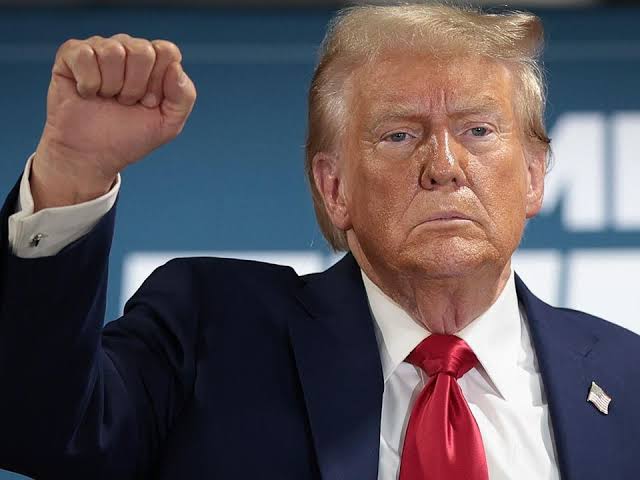
Trump Threatens Higher Tariffs on EU if Trade Talks Fail
United States President, Donald Trump, has threatened to impose “much higher” tariffs on the European Union if the bloc fails to remove its levies on American goods before July 4, escalating fresh tensions in transatlantic trade relations.
Trump issued the warning after a phone conversation with European Commission President Ursula von der Leyen, stating that the EU must agree to zero tariffs on U.S. exports or face steep economic consequences.
“I agreed to give her until our Country’s 250th Birthday or, unfortunately, their Tariffs would immediately jump to much higher levels,” Trump said.
In response, von der Leyen said the European Union was making “good progress towards tariff reduction” ahead of the deadline, while reaffirming commitment to ongoing negotiations between both sides.
The tariff dispute comes amid renewed uncertainty over a trade agreement reached last year between Washington and Brussels, which initially proposed a 15 per cent tariff on EU exports to the United States, while Trump had earlier pushed for a 30 per cent levy on European goods.
Although the deal received conditional backing from the European Parliament in March, lawmakers inserted safeguards requiring assurances that the United States would also honour its commitments, particularly concerning steel and aluminium exemptions.
Under the proposed arrangement, EU legislators insisted they would only accept zero tariffs on U.S. goods if European exports made with steel and aluminium were excluded from Trump’s global 50 per cent tariffs on the metals.
Despite parliamentary progress, final approval still depends on agreement from all 27 EU member states, while further negotiations are expected to continue later this month in Strasbourg.
Ahead of Trump’s latest comments, European Parliament chief negotiator Bernd Lange said discussions were progressing but warned that “there is still some way to go.”
However, tensions were further complicated hours after Trump’s threat when a United States trade court ruled that his latest 10 per cent global tariffs were not justified under U.S. trade law, potentially opening the door to further legal challenges.
The court ruling, though limited in scope, questioned the legal basis used by the Trump administration under Section 122 of the 1974 Trade Act, which allows temporary tariffs to address balance of payments deficits.
Trump had previously introduced the sweeping 10 per cent levy in February, following earlier legal and political disputes over his so-called “freedom day” tariffs.
While the court decision does not immediately block the tariffs nationwide, it applies to import duties involving two companies and could encourage wider legal opposition.
With negotiations ongoing and legal uncertainty mounting, analysts say the dispute signals a renewed phase of economic friction between the United States and the European Union.
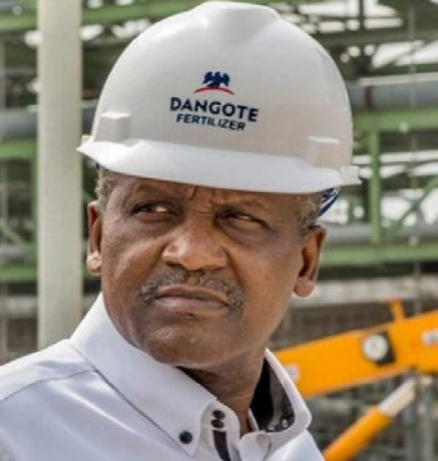
Dangote Unveils Plan for 20,000MW Power Project
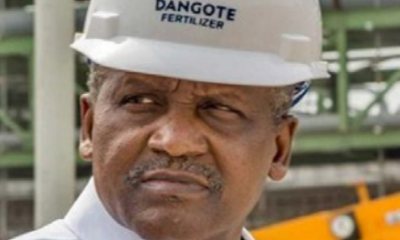
Africa’s richest man, Aliko Dangote, has announced plans to build a 20,000-megawatt power project, marking a major expansion of his industrial interests beyond oil refining, cement and fertiliser production.
Dangote disclosed the plan during an interview with Makhtar Diop, managing director of the International Finance Corporation, saying the project forms part of efforts to address Africa’s persistent energy deficit.
“We are now going into power… 20,000 megawatts,” he said, adding that the continent’s most urgent needs remain energy, fertilisers and industrial inputs.
Although he did not provide details on financing or implementation timelines, the proposed project, if realised, would significantly transform Nigeria’s struggling power sector, where generation remains inconsistent despite an installed capacity of about 13,000MW.
Dangote said Africa’s development priorities are clear, stressing that “the needs of Africa are petroleum products and fertilisers.”
According to him, his conglomerate is also expanding aggressively in fertiliser production and related industrial ventures.
“Today, in about two and a half years, we will be the largest fertiliser company in the world. We are putting up 12 million tons of urea. We are opening up mines of potash and phosphate in Congo and Brazil. We are building the biggest deep-sea port with an 18-meter draft. We are doing LNG,” he said.
The billionaire industrialist added that the expansion drive is being supported by stronger cash flows and improved financial flexibility within his business empire.
“We are now actually free of assets, and we can actually raise more money. Our cash flow now is very, very strong,” he said.
The announcement comes amid the ongoing expansion of the Dangote Refinery, which is currently being scaled up toward a capacity of 1.4 million barrels per day, further cementing its position as one of the largest refining facilities in the world.


CARICOM Declares Bahamas Poll Credible, Peaceful

The Trump Doctrine: How One President Became the World’s Peacemaker and Africa’s Loudest Defender

Trump Returns from China Visit With No Breakthrough on Iran as Diplomacy Stalls

Pastor Jerry Eze Defends Miracles At UK Conference Amidst Criticism And Controversy

Diaspora Watch 20th Edition (October 14-20, 2024): Your Trusted Source for Global News and Insights

Tanzanian Man Reportedly Dies And Returns To Life Six Times


-
 News2 days ago
World Terror Chief Falls in Nigeria
-
 Business1 week ago
Dangote Unveils Plan for 20,000MW Power Project
-
 News1 week ago
CARICOM Accredits New UK Ambassador
-

 Diplomacy2 days ago
Ghana to Evacuate 300 Citizens from South Africa Over Xenophobia
-

 Business1 week ago
Trump Threatens Higher Tariffs on EU if Trade Talks Fail
-

 News2 days ago
Trump Warns Iran as US Peace Talks Stall