
Diaspora
SPORTS – Diaspora Watch


Retro Football Shirts Make Comeback As Clubs, Brands Embrace Nostalgia Ahead 2026 World Cup.
La Liga clubs roll out vintage-inspired kits as global football, fashion industries tap into ‘retro boom’ ahead of expanded World Cup.
As the global football calendar builds toward the 2026 FIFA World Cup across the United States, Canada and Mexico, a wave of nostalgia is sweeping through the sport, with retro-inspired jerseys dominating both elite football and fashion spaces.
In Spain, nearly 40 professional clubs across La Liga’s top two divisions are set to feature specially designed kits inspired by their historical identities.
The uniforms, first unveiled at Madrid Fashion Week, form part of a wider cultural campaign celebrating Spain’s deep-rooted football heritage and its growing intersection with fashion.
The retro trend is not limited to Europe. Ten weeks ahead of the World Cup, the largest in history with 48 teams and 104 matches, global sportswear giants are also leaning heavily into vintage aesthetics.
Adidas, for instance, has released new away kits featuring a 1990s-inspired design language, updated with a modern finish.
The brand’s iconic trefoil logo, absent from World Cup jerseys for over 30 years, has also made a return.
Industry experts say the shift reflects a deeper cultural movement where the past is no longer simply remembered but actively recreated and worn.
Football historian Alex Ireland, author of Pretty Poly: The History of the Football Shirt, noted that replica jerseys were not widely accessible until the 1970s and only became mainstream fashion items in the 1990s.
He explained that earlier designs, such as England’s Euro 1996 away kit, were already being styled for everyday wear beyond stadiums.
Adidas football chief Sam Handy said jerseys are strongly tied to memory and emotion, noting that many fans associate specific kits with defining life moments, especially World Cups.
Collectors and retailers say this emotional attachment has evolved into a booming global market.
Once limited to flea markets and early online resale platforms, vintage football shirts are now a multi-million-dollar industry driven by dedicated platforms such as Classic Football Shirts and Cult Kits.
Co-founder of Cult Kits, David Jones, described today’s buyers as split between nostalgia-driven fans and fashion-conscious consumers adopting football jerseys as lifestyle wear.
Pop culture has further accelerated the trend, with celebrities frequently spotted in vintage national team shirts, turning them into mainstream fashion statements.
Cultural theorists also point to what they describe as “historical nostalgia”, a longing for eras not personally experienced, as a key driver of demand among younger generations.
Adidas says its current design philosophy aims to merge eras rather than separate them, allowing past aesthetics and modern innovation to coexist in a single product line.
The brand noted that its trefoil logo has now returned on multiple World Cup kits for the first time in decades.
One of the most iconic references in the revival remains the United States’ 1994 World Cup away shirt, widely regarded as a cult classic despite initial mixed reactions.
All replicas produced for fans eventually sold out, underscoring its lasting appeal.
For US midfielder Tyler Adams, the goal is clear: to create jerseys that remain iconic decades later, becoming part of football history rather than just seasonal apparel.
From stadiums to streetwear, football shirts are no longer just matchday uniforms, they are cultural artefacts being continuously reimagined for a new generation.














BCD Fashion-House

Hawah Kromah, Founder of BCD Fashion House

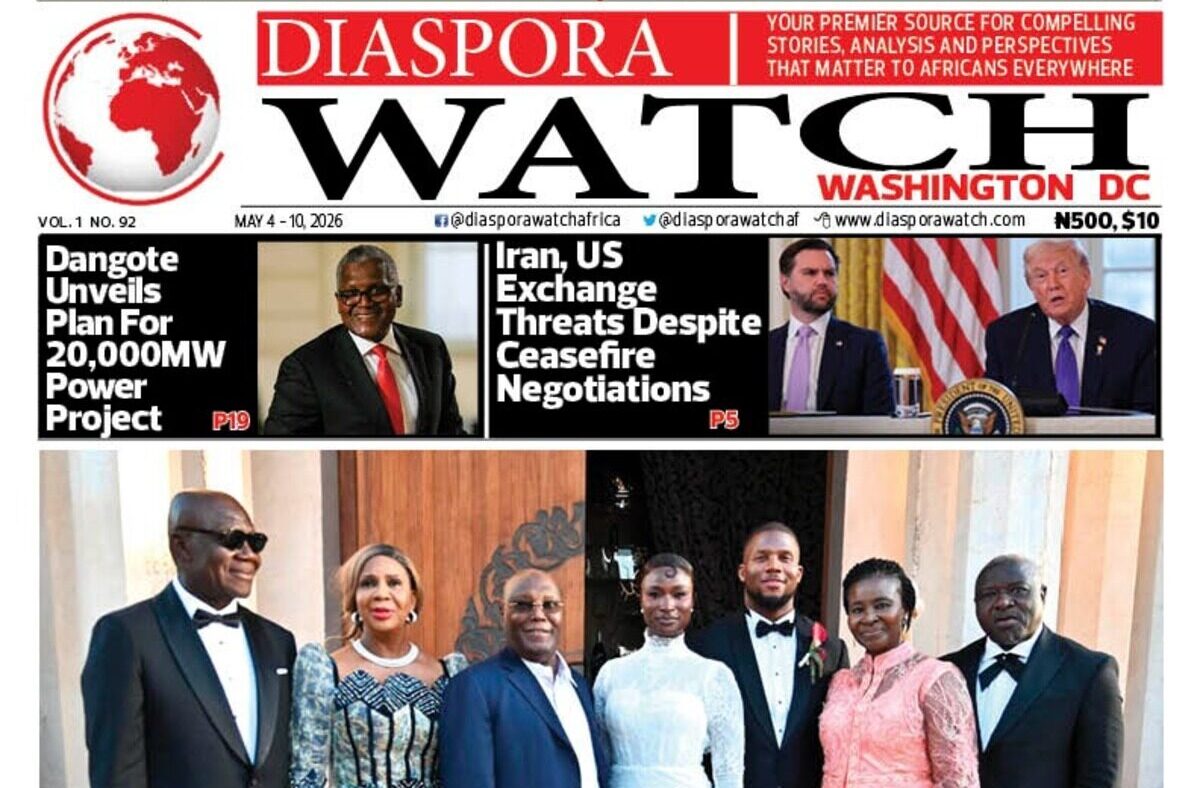
The management of Diaspora Watch Newspaper proudly announces the release of the 92nd edition of the newspaper, a compelling and globally engaging publication that captures the defining political, diplomatic, economic, cultural, and entertainment developments shaping conversations across continents.
This latest edition presents readers with an extraordinary blend of international diplomacy, economic transformation, royal engagements, security concerns, African excellence, and high society glamour, reaffirming Diaspora Watch Newspaper’s commitment to credible journalism, balanced reporting, and insightful global storytelling.
Diaspora Watch FREE Digital View: https://diasporawatch.com/3d-flip-book/diaspora-watch-vol-92/
On Demand Print: https://www.magcloud.com/browse/issue/3327462?__r=1069759
SUBSCRIBE TO DIASPORA WATCH NOW ON THE LINK BELOW!!!
https://diasporawatch.com/subscribe-to-diaspora-watch-newspaper/
Leading the headlines is the intensifying conflict between the United States and Iran as both nations exchange threats despite ongoing ceasefire negotiations, alongside US President Donald Trump rejecting Iran’s peace response and describing the proposal as “totally unacceptable.” The edition also offers deeper insight into the geopolitical implications of the crisis and its potential impact on global stability.
In a celebration of African prestige and international elegance, this edition extensively covers the grand wedding ceremony of Munachi “Muna” Ezeibe and Cherina Zerbo Lassina in Marrakech, Morocco, an event that attracted top African dignitaries, diplomats, business leaders, and influential personalities from across the continent.
Readers will also find exclusive reports on Aliko Dangote’s ambitious 20,000MW power project initiative, a development expected to significantly reshape Africa’s energy landscape and industrial future. Equally noteworthy is the report on Angola’s Cabinda Refinery commencing fuel exports, marking a major milestone in Africa’s refining capacity and economic independence.
The edition further highlights significant global diplomatic and societal developments, including King Charles III hosting the first Buckingham Palace Garden Party of 2026, the accreditation of a new United Kingdom ambassador by CARICOM, and concerns raised by China’s spy agency over the growing “lying flat” culture among young people.
On the back page, readers are treated to dazzling coverage of the 2026 edition of the Africa Magic Viewers’ Choice Awards 2026, where celebrities transformed Lagos into a spectacular runway of glamour, fashion, and unforgettable red-carpet moments.
As always, Diaspora Watch Newspaper remains steadfast in its mission to inform, educate, connect, and amplify global African perspectives through responsible journalism and compelling narratives.
The 92nd edition is now available for readers, stakeholders, institutions, and members of the global diaspora community.
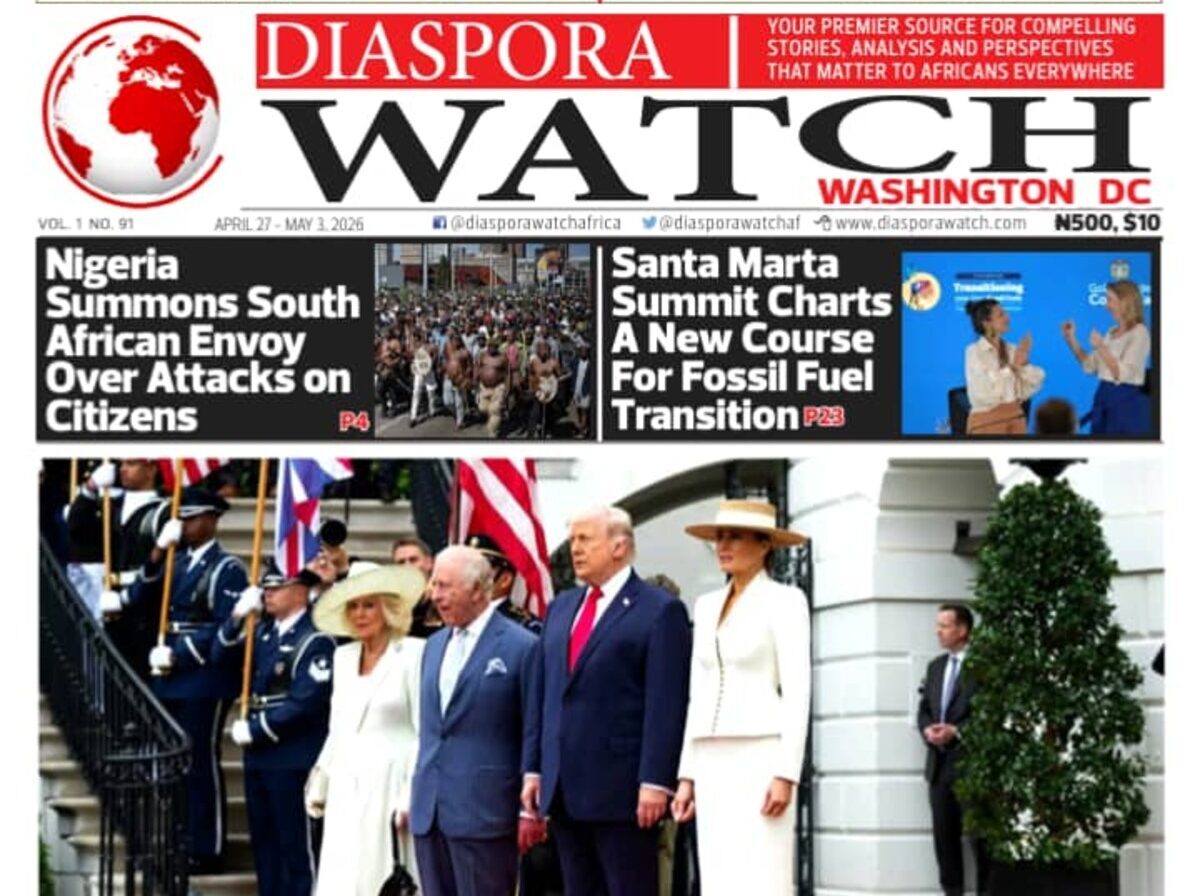
Diaspora Watch Newspaper Releases it’s 91st Edition.
Diaspora Watch Newspaper is proud to announce the release of its 91st edition, delivering a compelling blend of international headlines, geopolitical analysis, and cultural commentary that reflect the dynamic realities shaping the global community.
Diaspora Watch FREE Digital View: https://diasporawatch.com/3d-flip-book/diaspora-watch-vol-91/
On Demand Print: https://www.magcloud.com/browse/issue/3321550?__r=1069759
SUBSCRIBE TO DIASPORA WATCH NOW ON THE LINK BELOW!!!
https://diasporawatch.com/subscribe-to-diaspora-watch-newspaper/
Leading this edition is a major diplomatic spotlight: “Trump Hosts King Charles, Queen Camilla at White House, Hails ‘Unbreakable’ US-UK Ties.” The story examines renewed transatlantic relations and the strategic implications of high-level engagements between the United States and the United Kingdom.
Also featured prominently is Nigeria’s strong diplomatic response to rising tensions in Southern Africa, as the Government summons South Africa’s envoy over reported attacks on its citizens. This development underscores ongoing concerns about the safety and welfare of Nigerians in the diaspora.
In security and defense, the edition reports on the disappearance of two United States troops during military drills in Morocco, raising questions about operational risks and international military cooperation.
On the economic and developmental front, Caribbean leaders take decisive steps toward reducing import dependence through a new food security framework under CARICOM, while the Santa Marta Summit provides fresh momentum for a global transition away from fossil fuels.
Energy discourse is further amplified as the African Petroleum Producers’ Organization advocates for the establishment of regional energy hubs to drive investment in Africa’s oil and gas sector, signaling a strategic shift toward intra-continental collaboration.
In another major geopolitical development, the United States imposes sanctions on former DR Congo President Joseph Kabila over alleged links to the M23 rebel group, reflecting growing international scrutiny over instability in Central Africa.
Meanwhile, tensions in the Middle East deepen as the United Arab Emirates issues a stern warning on Iran’s reliability in managing the Strait of Hormuz, highlighting concerns over global energy security amid escalating US–Tehran relations.
Rounding off the edition on the back page is a cultural reflection from global music icon Jay-Z, who emphasizes authenticity in hip-hop culture with the thought-provoking stance: “Hip-Hop Must Stay Real, Not Trendy.”
Stay informed and ahead of the curve with the 91st edition of Diaspora Watch where we the complex dynamics shaping our world and provide insights into the stories that matter.
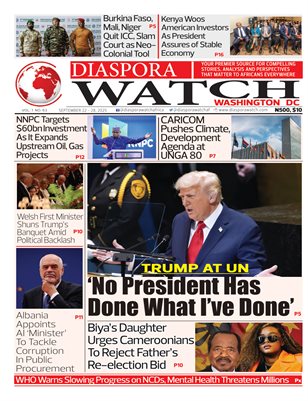


DRC gets 70,000 Ebola vaccine doses as trial targets Bundibugyo virus

Jamaica Set to Host 20th Caribbean Week of Agriculture

Trump’s policies may cost US $700bn in clean energy investment – Report

Pastor Jerry Eze Defends Miracles At UK Conference Amidst Criticism And Controversy

Diaspora Watch 20th Edition (October 14-20, 2024): Your Trusted Source for Global News and Insights

Tanzanian Man Reportedly Dies And Returns To Life Six Times


-
 News6 days ago
Kidney for Cash: Inside Nigeria’s Shadowy Organ Trade
-

 Analysis6 days ago
Tobi Amusan’s Legacy After the World Record Falls, by Boniface Ihiasota
-

 Analysis6 days ago
Wike and the Abuja Master Plan, by Alabidun Shuaib AbdulRahman
-
 News6 days ago
Trump’s policies may cost US $700bn in clean energy investment – Report
-
 News6 days ago
Jamaica Set to Host 20th Caribbean Week of Agriculture
-
 Health6 days ago
DRC gets 70,000 Ebola vaccine doses as trial targets Bundibugyo virus