
News
Alarming U.S. Budget Deficit Signals Economic Challenges Ahead

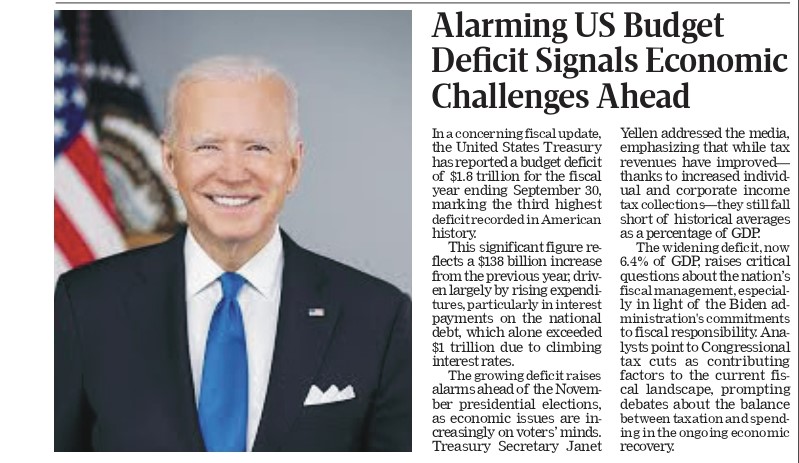
The rising U.S. budget deficit has sparked concerns about potential economic instability. With the federal deficit hitting unprecedented levels, experts are sounding the alarm on the long-term implications for the country’s financial health. As government spending continues to outpace revenue, the gap could lead to increased borrowing, higher interest rates, and mounting national debt.
Economists warn that if the deficit remains unchecked, it may strain future growth, impact government services, and reduce fiscal flexibility. Key sectors such as healthcare, infrastructure, and social services may face cutbacks, and there could be pressure to raise taxes. Moreover, the growing debt burden could make the U.S. more vulnerable to external shocks, such as inflation or global market fluctuations.
Policymakers are being urged to address these fiscal challenges with strategic reforms. These may include rethinking tax policies, cutting unnecessary spending, or investing in growth-stimulating sectors like technology and clean energy. If managed correctly, the U.S. can mitigate the risks and navigate through potential economic turbulence.
As the debate continues in Washington, it is clear that urgent action is needed to tackle the deficit and secure the nation’s long-term economic prosperity.
Dive into the world of Diaspora Watch and stay informed, engaged, and inspired.
FREE Digital View:
https://www.flipsnack.com/excelglobalmedia/diaspora-watch-oct-21-27-2024-vol-21/full-view.html
Print on Demand: https://www.magcloud.com/browse/issue/2926055?__r=1069759
SUBSCRIBE TO DIASPORA WATCH NOW ON THE BELOW LINK !!!
https://diasporawatch.com/subscribe-to-diaspora-watch…/







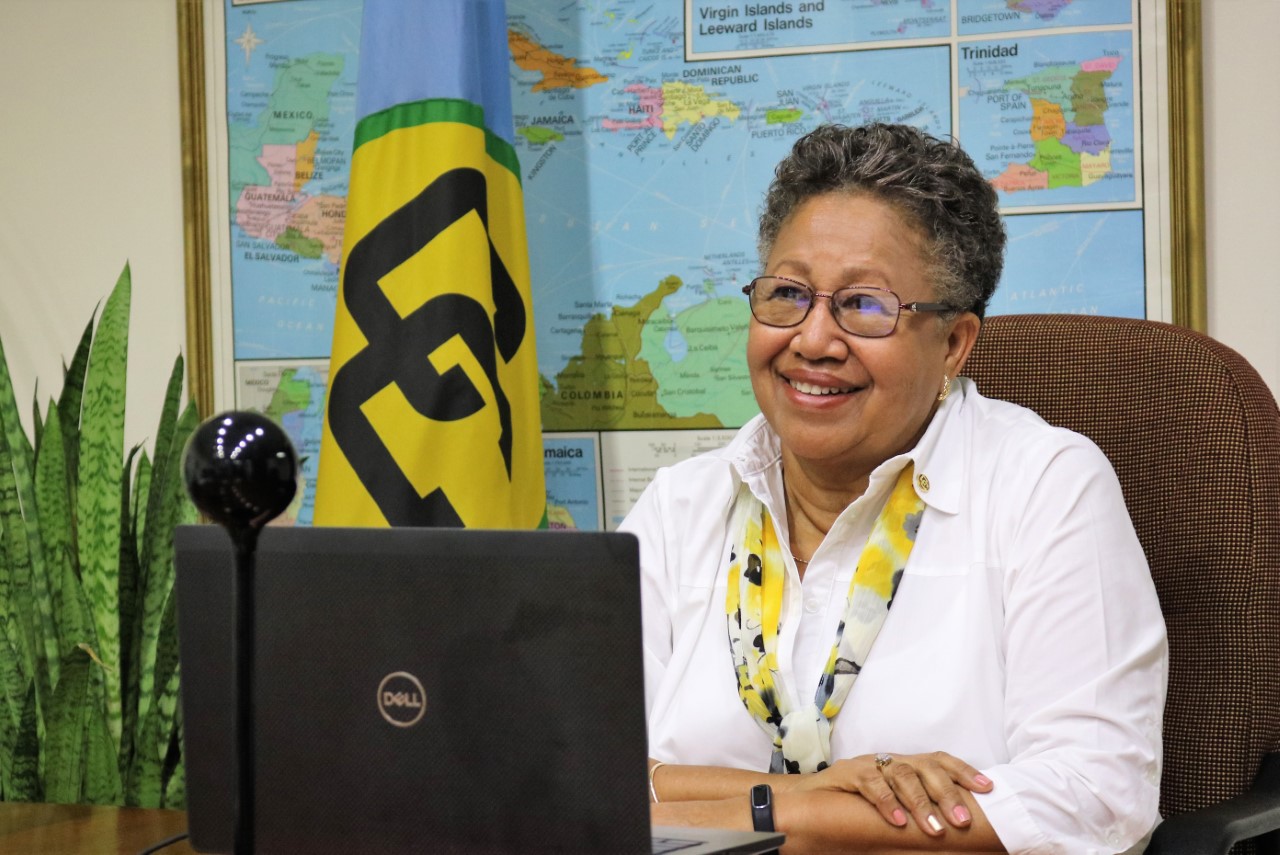
CARICOM backs UN resolution recognising slavery as crime against humanity
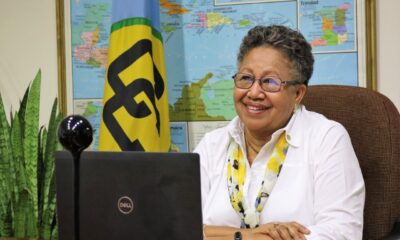
The CARICOM Reparations Commission has commended the adoption of a United Nations resolution recognising the trafficking and racialised chattel enslavement of Africans as the gravest crime against humanity.
Chairman of the commission, Hilary Beckles, described the resolution as a long-overdue milestone that provides a foundation for global engagement on justice and human dignity.
Speaking during a virtual media conference on March 7, Beckles called for sustained dialogue between nations that benefited from slavery and those still grappling with its legacy.
He said, “We’re calling for a dialogue of decency that is part of the discourse of development. Those who have benefited from the criminality of this system ought to engage the victims…to discuss how best to repair and move forward.”
The resolution, led by Ghana, was adopted on March 25, coinciding with the International Day of Remembrance of the Victims of Slavery and the Transatlantic Slave Trade, with 123 countries voting in support.
Beckles emphasised that the development marked a significant step in advancing justice and reconciliation for descendants of enslaved Africans, noting that reparatory justice must form part of broader development discussions.
“In the CARICOM Reparations Commission, we are of the view that reparatory justice is part of our development conversation… it is about repairing the economic, social and cultural resources necessary for human development,” he added.
He further highlighted the collaborative efforts between the African Union and CARICOM in pushing the agenda over the years, describing the resolution as the culmination of decades of advocacy.
According to him, the global position on slavery has evolved significantly since the 2001 Durban conference, where it was first proposed that chattel slavery be recognised as a crime against humanity.
“We have now moved from ‘should have been a crime’ to it being recognised as the gravest crime against humanity. The world is much more united on this matter now than it was then,” Beckles said.
He added that the resolution places the issue of slavery and its enduring impact within the proper context of human development, paving the way for deeper international cooperation on reparatory justice.
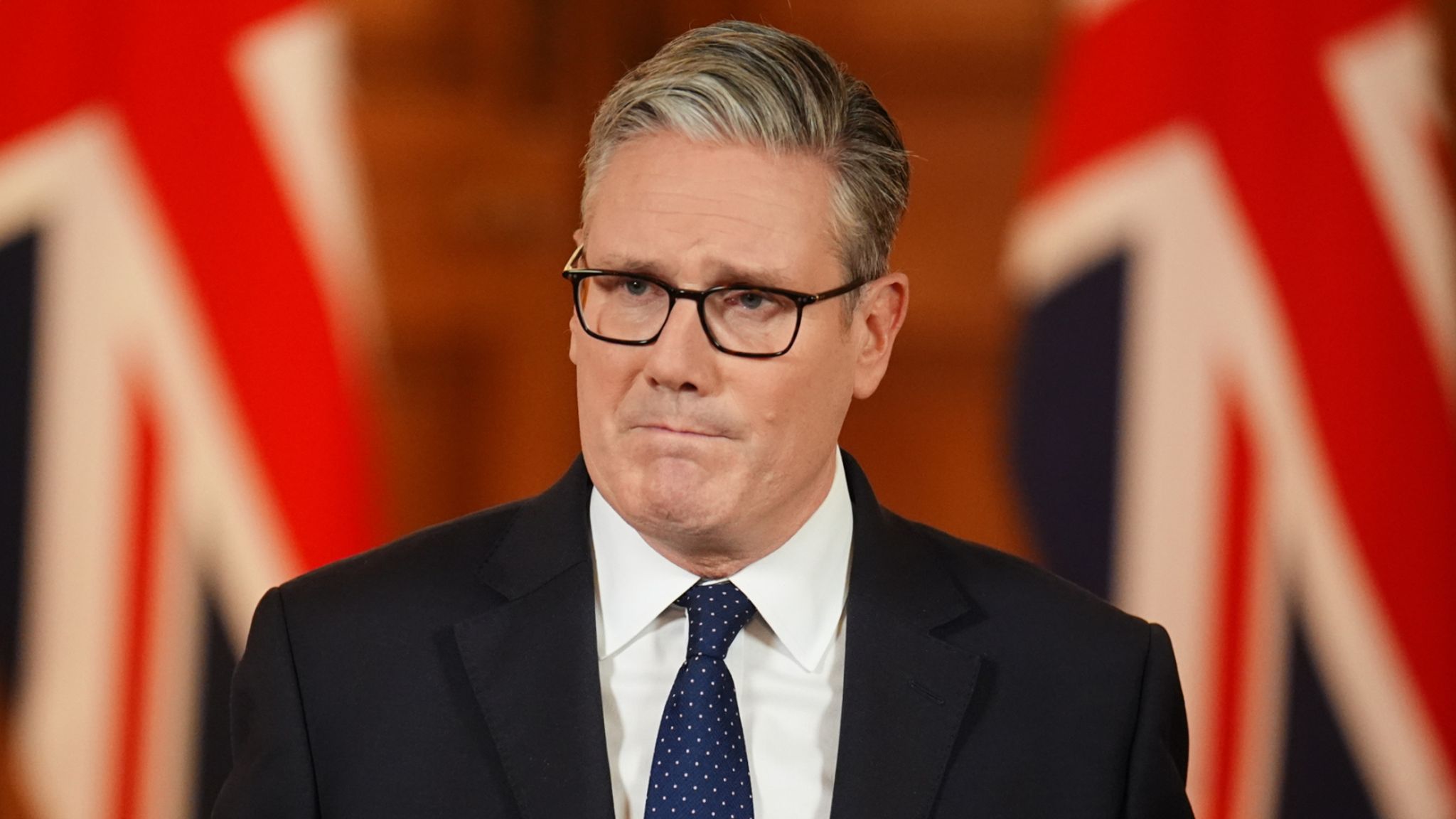
Starmer Shelves Chagos Islands Deal Amid Trump Opposition
British Prime Minister Sir Keir Starmer has shelved the proposed Chagos Islands sovereignty deal following deteriorating relations with United States President Donald Trump and the absence of formal US approval required to finalise the agreement.
The controversial pact, which would have transferred sovereignty of the British Indian Ocean Territory to Mauritius, stalled after Washington failed to complete a legally required exchange of letters confirming its backing.
Officials said without the document, the treaty cannot proceed.
The deal, signed in May 2025, also included provisions for the UK to lease back the strategic military base on Diego Garcia for an average cost of £101m annually.
However, growing political resistance in Washington and Trump’s public criticism—calling it an “act of total weakness”—have complicated its implementation.
The islands, located in the Indian Ocean, host a key UK-US military installation regarded as vital to Western strategic interests.
While UK officials insist the arrangement was designed to secure long-term operational stability, they acknowledged time has run out to pass the enabling legislation before Parliament is prorogued.
A government spokesperson maintained that the agreement was not entirely dead, stressing that it remains the “best way” to safeguard the future of the Diego Garcia base.
However, they added that the deal would only proceed with explicit US support, with discussions still ongoing between London, Washington and Port Louis.
The opposition Conservative Party welcomed the suspension, with leader Kemi Badenoch describing the plan as misguided and economically unjustifiable, while arguing that national interest should take precedence over diplomatic pressure.
Meanwhile, former Foreign Office official Lord Simon McDonald said the government had “no other choice” given the breakdown in transatlantic consensus.
Mauritius has reacted cautiously, with Attorney General Gavin Glover saying the delay reflected strained UK-US relations but insisting the agreement could still be revived in future.
Chagossian groups, however, continue to express concern over their long-standing exclusion from the islands and uncertainty over their right of return.
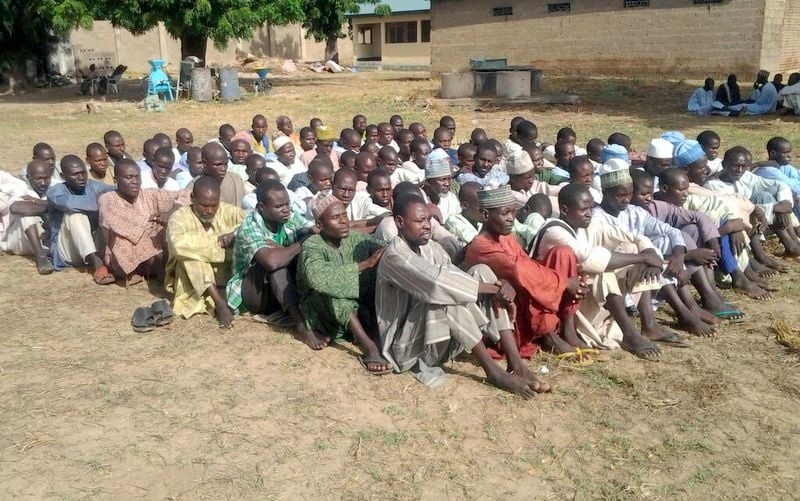
Court convicts 386 Boko Haram, ISWAP suspects, adjourns 112 cases
Nearly 400 individuals have been convicted in Nigeria over links to militant Islamist groups, following a series of mass trials held at the Federal High Court in Abuja.
The convictions, announced on Friday, involved suspects accused of affiliations with Boko Haram and its splinter faction, Islamic State West Africa Province.
According to officials, a total of 386 defendants were found guilty and handed sentences ranging from five years imprisonment to life terms.
Two suspects were acquitted, eight were discharged, while 112 cases were adjourned for further hearing.
The trials, which involved over 500 defendants, form part of ongoing efforts by the Federal Government to tackle terrorism and insecurity across the country.
The suspects were arraigned on charges including direct participation in attacks, as well as providing support to insurgents through funding, arms supply, intelligence, and logistics.
Authorities disclosed that five of the accused persons pleaded guilty at the commencement of proceedings.
Their offences reportedly included supplying food, selling livestock, and providing information to the militant groups.
Nigeria has continued to grapple with a protracted insurgency in its North-East region since 2009, when Boko Haram launched an armed campaign that has left tens of thousands dead and displaced over two million people, according to humanitarian agencies.
The mass convictions come amid mounting pressure on the government to address worsening insecurity across Africa’s most populous nation. Security forces are currently engaged on multiple fronts, battling not only Islamist insurgents but also bandit groups, separatist agitators, and kidnapping syndicates operating in different parts of the country.


Where Lies the Integrity of INEC Chairman? By Boniface Ihiasota

CARICOM backs UN resolution recognising slavery as crime against humanity

What Are Our Universities Producing? By Alabidun Shuaib AbdulRahman

Pastor Jerry Eze Defends Miracles At UK Conference Amidst Criticism And Controversy

Diaspora Watch 20th Edition (October 14-20, 2024): Your Trusted Source for Global News and Insights

Tanzanian Man Reportedly Dies And Returns To Life Six Times


-

 News3 days ago
NEWS
-

 Trending7 days ago
Diaspora Watch – Vol. 87
-

 News1 week ago
Artemis II Crew Captures Stunning Images of Earth Midway to Moon
-
 News1 week ago
Melania Trump Rallies 45 Nations on AI-powered Education
-
 News1 week ago
US, Iran Search for Missing Airman After Warplane Downed
-
 Analysis1 week ago
Understanding South Africa’s Xenophobic Violence, by Alabidun Shuaib AbdulRahman