
Analysis
Understanding South Africa’s Xenophobic Violence, by Alabidun Shuaib AbdulRahman

Understanding South Africa’s Xenophobic Violence, by Alabidun Shuaib AbdulRahman
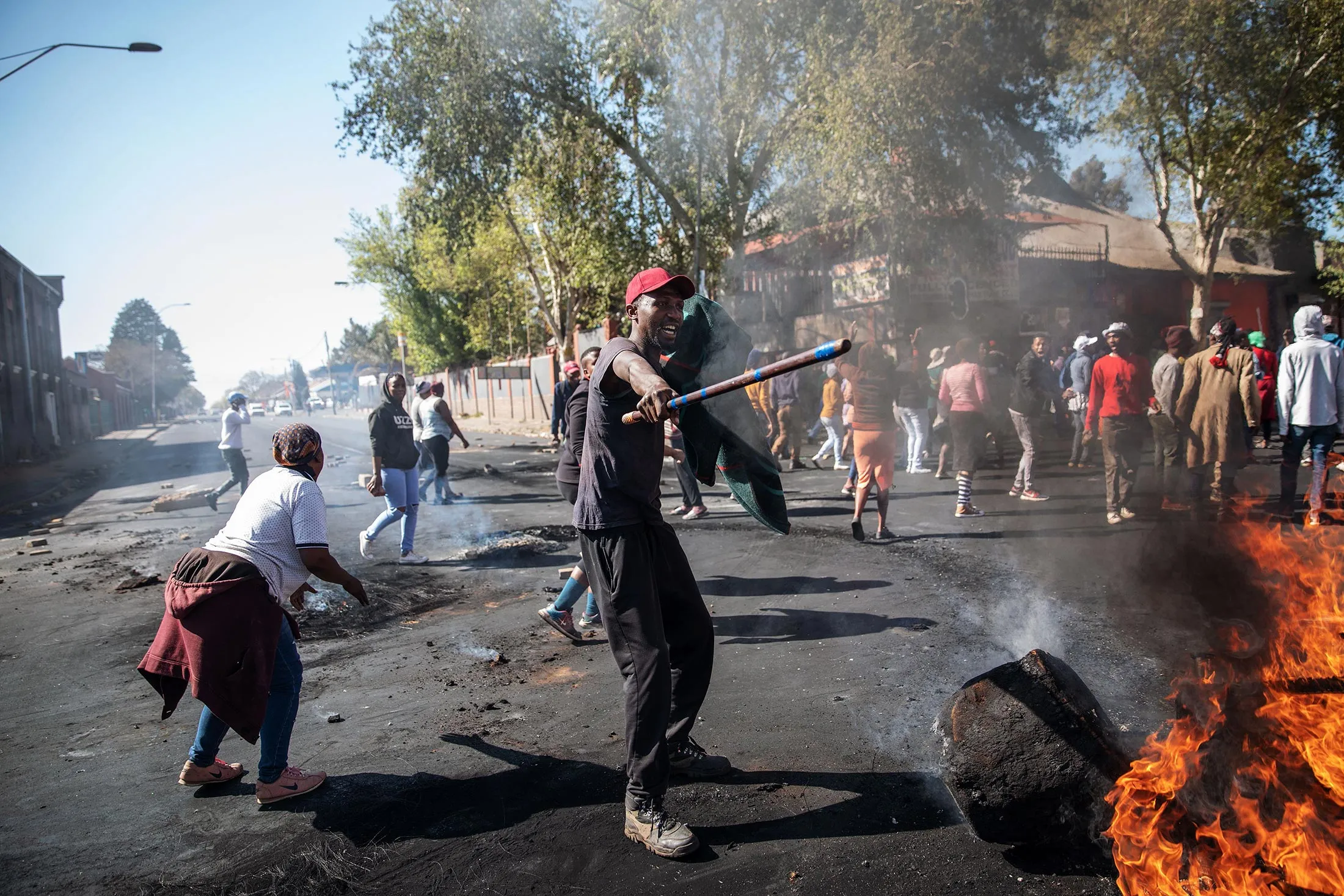
There is a tendency to explain xenophobic violence in South Africa as a spontaneous eruption of anger by frustrated citizens. That explanation is convenient, but it is incomplete. What has unfolded repeatedly across Johannesburg, Durban, Pretoria and other urban centres over the past three decades is not random. It is patterned, predictable, and rooted in deeper structural contradictions within South Africa’s post-apartheid society. To understand it fully is to confront an uncomfortable reality: xenophobia in South Africa is as much about internal failure as it is about external scapegoating, and as much about forgotten history.
Since the formal end of apartheid in 1994, South Africa has occupied a paradoxical position on the continent. It is Africa’s most industrialised economy, yet one of its most unequal societies. It is a democracy born out of global solidarity, yet one that has struggled to extend that same spirit to fellow Africans. These contradictions form the backdrop against which xenophobic violence has evolved.
The early years of democracy created powerful expectations. South Africa was imagined as a land of opportunity, and for many Africans, it became exactly that. Migrants from Nigeria, Zimbabwe, Mozambique, Somalia, Ethiopia and beyond moved into the country in search of economic advancement and stability. Nigerians, in particular, established themselves in commerce, education, entertainment and professional services, becoming one of the most visible African communities in the country.
South Africa’s structural inequality remained largely intact after apartheid. By the late 1990s, unemployment had become entrenched, especially among the youth. Informal settlements expanded, service delivery lagged, and frustration grew. In this environment, the presence of foreign nationals—many of whom operated small businesses in townships and informal markets—became a focal point for resentment.
The first major signal that this resentment could turn violent came in May 2008. What began as localised misunderstandings in Alexandra township near Johannesburg quickly escalated into nationwide attacks. Over the course of weeks, violence spread to multiple provinces, leaving at least 60 people dead and displacing tens of thousands. Shops owned by foreign nationals were looted, homes were destroyed, and entire communities were forced to flee. The victims were overwhelmingly African migrants, reflecting that the violence was not about race in the traditional South African sense, but about nationality and belonging.
The 2008 attacks were widely condemned, both domestically and internationally. The government responded with security deployments and humanitarian assistance, but the underlying causes were not resolved. Instead, the violence established a template that would be repeated in subsequent years.
In April 2015, xenophobic attacks erupted again, beginning in Durban and spreading to other parts of KwaZulu-Natal and Gauteng provinces. At least seven people were killed, and thousands were displaced. The violence followed controversial remarks attributed to Zulu King Goodwill Zwelithini, who was reported to have suggested that foreigners should leave South Africa. Regardless of the intended meaning, the statement resonated with existing anti-immigrant sentiment and contributed to the escalation.
By 2017, the pattern had become more targeted. Nigerian-owned businesses in Pretoria and Johannesburg were attacked, with shops looted and properties destroyed. Nigerians, already burdened by negative stereotypes linking them to crime, found themselves increasingly singled out. These stereotypes, often amplified by social media and sensational reporting, created a climate in which collective punishment was normalised.
The 2019 wave of violence marked another turning point. Attacks in Johannesburg and surrounding areas led to deaths, widespread looting, and renewed diplomatic rifts. The scale and intensity of the violence prompted strong reactions from affected countries, particularly Nigeria. The Nigerian government recalled its High Commissioner from Pretoria and boycotted the World Economic Forum on Africa in Cape Town. There were also retaliatory incidents in Nigeria, where South African-owned businesses were targeted by angry youths.
Behind these episodic eruptions lies a consistent pattern of human and economic loss. Over the years, hundreds of people have been killed, thousands displaced, and billions of naira worth of property destroyed. Nigerian victims alone have suffered disproportionately, with over a hundred deaths recorded within a short span between 2016 and 2018. These figures are not merely statistics; they represent lives disrupted, families broken, and dreams deferred.
Yet, to focus solely on the violence without examining its historical context is to miss a critical dimension of the story. South Africa’s liberation from apartheid was not achieved in isolation. It was the product of sustained international and continental support, in which Nigeria played a leading role.
From the 1960s through the early 1990s, Nigeria positioned itself as a central actor in the anti-apartheid struggle. It provided financial assistance to liberation movements such as the African National Congress, hosted South African exiles, and funded scholarships for thousands of students who could not pursue education at home due to apartheid restrictions. These efforts were not incidental; they were embedded in Nigeria’s foreign policy, which prioritised African liberation and unity.
The country’s commitment extended beyond financial support. In 1976, following the Soweto uprising, Nigeria intensified its diplomatic campaign against apartheid. By 1979, it had nationalised British Petroleum assets in protest against Western engagement with the apartheid regime. Nigeria also played a significant role at the United Nations, advocating for sanctions and contributing to the global isolation that eventually forced the apartheid government to negotiate.
These actions came at a cost. Nigeria sacrificed economic opportunities and diplomatic relationships in pursuit of a broader African cause. The expectation was not repayment, but recognition of a shared destiny. When Nelson Mandela was released in 1990 and later elected president in 1994, that expectation seemed justified.
However, the post-apartheid reality has complicated that narrative. Xenophobic violence has raised difficult questions about the durability of African solidarity. It has exposed the limits of historical memory in shaping contemporary behaviour.
To understand why xenophobia persists, one must examine the structural drivers within South Africa. Economic inequality remains central. The country consistently ranks among the most unequal in the world, with a Gini coefficient that reflects deep disparities in wealth and opportunity. Unemployment rates, particularly among young people, remain high. In such conditions, competition for resources becomes intense, and migrants are often perceived as competitors.
This perception is reinforced by political rhetoric. In times of economic stress, blaming foreigners can be politically expedient. It shifts attention away from governance failures and redirects public anger toward a vulnerable group. Over time, this narrative becomes entrenched, shaping public attitudes and legitimising hostility.
Law enforcement challenges further exacerbate the problem. While the South African government has condemned xenophobic violence and, at times, deployed security forces to restore order, the prosecution of perpetrators has been inconsistent. The result is a cycle of violence followed by temporary calm, without meaningful prosecution. This pattern creates a sense of impunity, encouraging future attacks.
There is also a psychological dimension that cannot be ignored. The transition from apartheid to democracy did not automatically resolve issues of identity and belonging. During apartheid, the struggle against a common oppressor created a sense of unity among black South Africans. In the post-apartheid era, that unifying force has dissipated, leaving space for new forms of exclusion.
Foreign Africans, despite their shared history, have been positioned as outsiders. The term “makwerekwere,” often used derogatorily to describe African migrants, reflects this sense of otherness. It is a linguistic marker of exclusion, one that reinforces the idea that not all Africans are equal within the African space.
For Nigerians, the challenge is compounded by perception. While many Nigerians in South Africa are law-abiding entrepreneurs, professionals and students, a minority involved in criminal activities has shaped public perception disproportionately. This perception has been amplified by media narratives and online discourse, creating a stereotype that is both persistent and damaging.
The result is a community that is simultaneously visible and vulnerable. Nigerian businesses are often among the first targets during xenophobic attacks, and Nigerian nationals frequently bear the brunt of violence. This dynamic reiterates the intersection of economic competition, social perception, and political narrative.
The implications extend beyond South Africa. Xenophobic violence has strained diplomatic relations, particularly between Nigeria and South Africa. These two countries are not just regional powers; they are central to the continent’s economic and political future. This issue between them have ripple effects across Africa, affecting trade, investment, and regional cooperation.
At a broader level, xenophobia challenges the very idea of Pan-Africanism. It raises fundamental questions about the feasibility of continental integration in the face of internal divisions. Initiatives such as the African Continental Free Trade Area depend on the free movement of people, goods, and services. Xenophobic violence undermines these goals, creating barriers where there should be bridges.
Addressing this crisis requires more than condemnation. It demands a comprehensive approach that tackles both immediate triggers and underlying causes. Economic reforms must prioritise inclusion, ensuring that growth translates into opportunities for all residents. Political leaders must exercise restraint in their rhetoric, avoiding narratives that scapegoat migrants.
Law enforcement must be strengthened to ensure proper prosecution. Without consequences, violence will continue to recur. At the same time, there is a need for sustained public education—an effort to reconnect South Africans with their own history and the role that other African nations played in their liberation.
For Nigeria, the response must be measured but firm. Protecting its citizens abroad is a fundamental responsibility, but so is maintaining diplomatic engagement. The relationship between Nigeria and South Africa remains too important to be defined by periodic crises.
In the final analysis, understanding South Africa’s xenophobic violence requires a willingness to confront uncomfortable truths. It is not enough to attribute the problem to ignorance or anger. It is a product of structural inequality, political dynamics, and historical amnesia.
The tragedy lies not only in the violence itself, but in what it represents: a breakdown of the solidarity that once defined Africa’s struggle for freedom. If that solidarity is to be restored, it will require more than memory. It will require action, leadership, and a renewed commitment to the idea that Africa’s future is shared.
Until then, xenophobic violence will remain a recurring wound—one that continues to undermine both South Africa’s promise and Africa’s collective aspiration.


Analysis
Nigeria’s 2027 Elections and the Unfinished Business of Diaspora Voting, by Boniface Ihiasota
Nigeria’s 2027 Elections and the Unfinished Business of Diaspora Voting, by Boniface Ihiasota
As Nigeria approaches the 2027 general elections, millions of Nigerians living abroad face a familiar democratic dilemma: they remain emotionally, economically and socially connected to their homeland, yet their ability to influence its political leadership through the ballot remains restricted. From London to Washington, Toronto to Johannesburg, and Dubai to other global cities, Nigerians in the diaspora have compelling reasons to prepare for the elections, even as the country continues to grapple with the legal barriers to diaspora voting.
The 2027 elections, scheduled for January 16, according to the Independent National Electoral Commission, will determine the leadership responsible for steering Nigeria through critical economic, security and governance challenges. The decisions made in Abuja and state capitals will affect citizens regardless of whether they live in Nigeria or abroad. These include exchange-rate policies, taxation, education, healthcare, security, investment regulations and the protection of property rights. Nigerians abroad therefore have legitimate reasons to follow the electoral process closely and demand accountability from those seeking public office.
However, preparation must begin with an important distinction: political participation is not the same as having a legally recognised opportunity to cast a ballot from overseas. Nigeria’s electoral framework has historically not provided for out-of-country voting. Although diaspora voting has featured in national debates and legislative proposals, the legal and administrative obstacles have remained significant.
The consequences extend beyond symbolism. Nigeria’s diaspora contributes to the economy through remittances, investment, professional expertise and business networks. The World Bank’s Migration and Development Brief estimated that Nigeria received approximately $20.9bn in personal remittances in 2022. Such financial contributions demonstrate the continuing relationship between Nigerians abroad and households at home. Yet economic contribution does not automatically translate into electoral influence. The challenge is how to ensure that citizens who contribute to national development can participate meaningfully in decisions about the country’s future.
The National Assembly has previously considered constitutional changes intended to enable diaspora voting. In March 2022, however, the proposed constitutional amendment was rejected during the legislative review process. The Nigerians in Diaspora Commission has criticised the setback, arguing that Nigerians abroad should not remain excluded from the democratic process. Subsequent proposals have continued to raise questions about electronic voting, voter verification, cybersecurity, electoral transparency and the practical cost of organising overseas polls. These concerns deserve serious consideration, but they should lead to workable solutions rather than indefinite postponement.
For Nigerians abroad, preparation for 2027 must therefore go beyond waiting for permission to vote. They can monitor INEC announcements, follow legislative developments, examine candidates’ records and scrutinise policy proposals. They can participate in lawful political discussions, support credible civic education initiatives, challenge misinformation and encourage relatives at home to make informed electoral decisions. Diaspora professionals can also contribute expertise in technology, election administration, cybersecurity and public accountability without becoming instruments of partisan manipulation.
Political parties should equally recognise that Nigerians abroad are not merely sources of remittances or occasional audiences for campaign speeches. They are citizens with knowledge of different governance systems, public institutions and economic practices. Their experiences can enrich national debate, provided their contributions are grounded in Nigeria’s realities rather than assumptions that foreign models can be transferred without adaptation.
The question surrounding the 2027 elections is not simply whether Nigerians abroad care about their country. Their sustained economic and personal connections already demonstrate that commitment. The more difficult question is whether Nigeria’s democratic institutions will create a credible, transparent and legally sound framework that allows eligible citizens overseas to exercise their electoral rights.
Until such arrangements are enacted and implemented, Nigerians abroad must remain informed, organised and engaged while respecting the law governing the elections. Democracy should not be reduced to the act of casting a ballot; it also requires informed scrutiny, civic responsibility and sustained demands for accountability. But these activities cannot permanently substitute for the right to vote.

Africa’s Resources Must Build Africa, by Alabidun Shuaib AbdulRahman
Across Africa lie enormous deposits of oil, gas, uranium, gold, lithium, cobalt, copper, diamonds and other strategic minerals, yet many of the countries sitting on these resources continue to struggle with poverty, unemployment, weak industrialisation and the steady movement of their young people towards Europe, North America and other destinations in search of better opportunities.
For decades, much of Africa’s natural wealth has travelled outward as raw material, while the greater economic value created through processing, refining, manufacturing and technology has accumulated elsewhere. Africa has supplied the resources that feed global industries, but has too often remained at the lower end of the economic chain, buying back finished products at prices far removed from what it earned when those raw materials left its soil.
That contradiction is becoming increasingly difficult to ignore because of what is happening in Niger Republic. Since General Abdourahamane Tiani came to power following the July 26, 2023 coup, his government has increasingly pursued greater control over Niger’s natural resources. What initially appeared to be part of the broader political rupture between Niamey and its former colonial power, France, has gradually developed into a wider policy of resource nationalism.
On June 19, 2025, Niger’s Council of Ministers approved the nationalisation of Société des Mines de l’Aïr, SOMAÏR, the uranium company operating at Arlit in the Agadez region. SOMAÏR was established in 1968 and began uranium production in 1971. Before nationalisation, French nuclear company Orano held 63.4 per cent, while Niger’s state mining company, SOPAMIN, held 36.6 per cent.
Between 1971 and 2024, SOMAÏR produced 81,861 tonnes of uranium, of which 80,518 tonnes were commercialised. Figures presented by the Nigerien government showed that Orano had taken 86.3 per cent of the commercialised production, while SOPAMIN accounted for 9.2 per cent.
In August 2026, the government took another step. It awarded the In Azaoua large-scale uranium mining permit in Arlit to Teloua Safeguarding Uranium Mining Company, TSUMCO, the state company created to replace SOMAÏR and continue operations over the former SOMAÏR perimeter. At its August 21 meeting, the Council of Ministers also approved the reassignment of another uranium permit, Madaouela I, to the state-linked Madaouela Mining Company.
The government has adopted a similar approach in the petroleum sector. On June 12, 2026, Niger’s Petroleum Minister, Hamadou Tini, announced that the government was reviewing the hydrocarbons code and preparing a new production-sharing contract model. He said the reforms were intended to strengthen the state’s negotiating capacity and increase the economic benefits accruing to Niger. He also disclosed plans to review provisions relating to cost recovery by petroleum operators and stressed the importance of training Nigerien professionals capable of negotiating more effectively with international companies.
Niger has also established MAZOUMAWA National Gold Company as part of its attempt to strengthen national control over gold resources and the country’s gold value chain. In January 2026, its Director-General, Abdou Ousseini, said the company intended to contribute to gold exploitation while controlling the valorisation and value chains of gold in Niger. The company had two exploration permits in the Dan Issa area and had collected more than 6,000 samples for analysis.
There is, therefore, something much bigger than the Niger-France dispute at stake. It is the ownership of Africa’s economic future.
For generations, the structure has remained remarkably familiar. Africa digs, pumps, cuts and exports. Someone elsewhere processes, refines, manufactures, finances and markets. The finished product eventually returns to African consumers at a considerably higher price.
That arrangement is not entirely without benefits. Foreign companies bring capital, technology, technical expertise, international markets and, in some cases, infrastructure that many African countries would struggle to provide on their own. The problem begins when that relationship becomes permanent, when Africa remains trapped at the extraction end of the value chain while the greater economic benefits of its resources accumulate elsewhere.
The African Union has recognised this problem for years through initiatives such as the African Mining Vision and its commodities strategy. The objective is for Africa to move from being primarily a supplier of raw materials towards greater value addition, stronger local content, higher returns from commodities and meaningful participation in global value chains.
The African Development Bank estimates that Africa possesses about 30 per cent of the world’s mineral reserves and could capture more than 10 per cent of the projected $16tn revenues from key green minerals by 2030. Yet the same institution reported that Africa received about $190.7bn in financial inflows in 2022 while losing approximately $587bn through financial leakages.
The implication is clear: Africa does not necessarily need to chase away foreign investors. It needs to become a better negotiator, a more capable participant and, ultimately, a stronger owner of the industries built around its own resources.
Botswana offers an important illustration. Its diamond industry was not built by simply shutting foreign capital out. Debswana, the company at the centre of Botswana’s diamond production, is jointly owned by the Government of Botswana and De Beers, with each holding 50 per cent. The partnership has become a major contributor to Botswana’s GDP, foreign exchange earnings and government revenue and employs about 5,000 staff and 6,000 contractors.
Tanzania has pursued another route by giving the state a minimum 16 per cent non-dilutable free-carried interest in mining companies, alongside taxation, royalties and other government participation mechanisms. Its local-content framework also seeks to ensure that Tanzanian companies participate in supplying goods and services to the mining industry.
Ghana has moved in a different direction. Rather than nationalising its gold mines, it has sought to increase domestic participation through regulation. Its 2025 local-content framework required surface mining operations to be undertaken by wholly Ghanaian-owned contractors, while underground contract mining requires at least 50 per cent Ghanaian ownership.
Zimbabwe’s lithium policy provides perhaps an even clearer example of beneficiation as a development strategy. After banning exports of unprocessed lithium ore in 2022, Zimbabwe announced in June 2025 that it would prohibit the export of lithium concentrates from January 1, 2027. The objective is to encourage greater domestic processing. Zimbabwe is Africa’s leading lithium producer, while Chinese-owned companies have invested more than $1bn in the country’s lithium sector since 2021.
If lithium is increasingly important to batteries and energy storage, Zimbabwe wants more of the economic activity generated by that demand to take place within Zimbabwe rather than elsewhere. That is precisely the direction Africa needs to consider.
The International Energy Agency reported in October 2025 that Africa captures less than one per cent of the value generated from manufacturing clean-energy technologies and their components, despite supplying around 75 per cent of global manganese, 70 per cent of cobalt and nearly 20 per cent of copper. The IEA estimates that moving into beneficiation, processing and manufacturing could raise the market value of minerals produced in Africa to about $120bn by 2040.
This is why the African Union’s Africa Green Minerals Strategy, adopted in March 2025, is significant. The strategy calls for Africa to move beyond raw mineral exports towards value addition at source, regional industrialisation, local beneficiation, job creation and economic diversification. The AU’s African Forum on Mining subsequently called for stronger continental bargaining power and high-level African critical-minerals diplomacy to ensure that mineral agreements prioritise local value addition rather than simply facilitate the export of raw materials.
Niger, therefore, should not be judged simply by whether its nationalisation policy succeeds or fails. Its experiment should be watched for what it reveals about both the possibilities and dangers of greater resource control.
National ownership does not automatically produce efficient management. A government can own a mine and still mismanage it. It can control petroleum and still import refined products. It can take over gold operations while communities around the mines remain poor. It can remove foreign companies and replace foreign inefficiency with domestic corruption.
Niger itself has already encountered some of these complications. Orano has pursued arbitration over the nationalisation of its interest in SOMAÏR. In September 2025, Reuters reported that about 1,500 tonnes of uranium, valued at roughly $270m, remained stockpiled at the former SOMAÏR mine. Orano had begun arbitration proceedings and warned against the material being transferred or sold without authorisation.
A country seeking greater control over its resources needs competent geologists, engineers, lawyers, accountants, negotiators, regulators and financial institutions. It needs reliable electricity, roads, railways and ports. It needs research institutions capable of developing technology. It needs transparent contracts and systems through which citizens can know what governments receive from their natural resources and how those revenues are spent.
Without these foundations, nationalisation can become an expensive political gesture. But Africa should not allow the imperfections of resource nationalism to become an excuse for maintaining a system in which the continent remains primarily an exporter of raw materials.
Nigeria illustrates the urgency. The country has oil, gas, gold, lithium, iron ore, coal and other minerals, but its economic history has repeatedly demonstrated the danger of exporting natural resources without developing sufficient downstream capacity.
The Tinubu administration has increasingly emphasised local processing and value addition in critical minerals. In July 2026, President Bola Tinubu commissioned a $250m lithium mining and processing plant in Nasarawa State with a capacity of 6,000 tonnes of lithium processing per day. It was described as Africa’s largest lithium processing facility.
Nigeria should not stop at processing lithium. It should be thinking about the battery industry, electric vehicles, energy-storage systems, industrial chemicals, research and the skilled workforce required to support those industries.
The same thinking should apply across Africa. A Congolese citizen living beside cobalt deposits should have access to opportunities created by cobalt. A Zambian living around copper mines should benefit from industries built around copper. A Ghanaian should see gold not merely as something extracted and exported, but as an opportunity for refining, jewellery, financial services and manufacturing. A Nigerien should be able to look at uranium and see engineering, science, technology and industrial opportunities. And a Nigerian should be able to look at oil and gas without accepting that the country’s natural destiny is simply to export crude and import refined products.
If Africa can retain more value from its resources, that value can help finance universities, technical schools, electricity, transport infrastructure, healthcare, manufacturing and technology. Those investments can create productive employment. Productive employment can reduce the economic pressure pushing young Africans towards foreign shores.
The real lesson from Niger, therefore, is not that every African government should wake up tomorrow and nationalise every foreign-owned mine, oilfield or industrial operation. That would be a simplistic reading of what is happening. The lesson is that the old bargain deserves serious reconsideration.
Africa should welcome investors, but it should negotiate better. It should welcome technology, but build its own capacity. It should welcome international capital, but ensure that African capital also grows. It should permit extraction, but demand value addition. It should collect royalties and taxes, but also build industries around the resources generating them.
Will Africa Follow Niger Republic? By Alabidun Shuaib AbdulRahman
Africa’s greatest economic contradiction is buried beneath its own soil. Across the continent lie enormous deposits of oil, gas, uranium, gold, lithium, cobalt, copper, diamonds and other strategic minerals, yet many of the countries sitting on these resources continue to struggle with poverty, unemployment, weak industrialisation and the steady movement of their young people towards Europe, North America and other destinations in search of better opportunities.
For decades, much of Africa’s natural wealth has travelled outward as raw material, while the greater economic value created through processing, refining, manufacturing and technology has accumulated elsewhere. Africa has supplied the resources that feed global industries, but has too often remained at the lower end of the economic chain, buying back finished products at prices far removed from what it earned when those raw materials left its soil.
That contradiction is becoming increasingly difficult to ignore because of what is happening in Niger Republic. Since General Abdourahamane Tiani came to power following the July 26, 2023 coup, his government has increasingly pursued greater control over Niger’s natural resources. What initially appeared to be part of the broader political rupture between Niamey and its former colonial power, France, has gradually developed into a wider policy of resource nationalism.
On June 19, 2025, Niger’s Council of Ministers approved the nationalisation of Société des Mines de l’Aïr, SOMAÏR, the uranium company operating at Arlit in the Agadez region. SOMAÏR was established in 1968 and began uranium production in 1971. Before nationalisation, French nuclear company Orano held 63.4 per cent, while Niger’s state mining company, SOPAMIN, held 36.6 per cent.
Between 1971 and 2024, SOMAÏR produced 81,861 tonnes of uranium, of which 80,518 tonnes were commercialised. Figures presented by the Nigerien government showed that Orano had taken 86.3 per cent of the commercialised production, while SOPAMIN accounted for 9.2 per cent.
In August 2026, the government took another step. It awarded the In Azaoua large-scale uranium mining permit in Arlit to Teloua Safeguarding Uranium Mining Company, TSUMCO, the state company created to replace SOMAÏR and continue operations over the former SOMAÏR perimeter. At its August 21 meeting, the Council of Ministers also approved the reassignment of another uranium permit, Madaouela I, to the state-linked Madaouela Mining Company.
The government has adopted a similar approach in the petroleum sector. On June 12, 2026, Niger’s Petroleum Minister, Hamadou Tini, announced that the government was reviewing the hydrocarbons code and preparing a new production-sharing contract model. He said the reforms were intended to strengthen the state’s negotiating capacity and increase the economic benefits accruing to Niger. He also disclosed plans to review provisions relating to cost recovery by petroleum operators and stressed the importance of training Nigerien professionals capable of negotiating more effectively with international companies.
Niger has also established MAZOUMAWA National Gold Company as part of its attempt to strengthen national control over gold resources and the country’s gold value chain. In January 2026, its Director-General, Abdou Ousseini, said the company intended to contribute to gold exploitation while controlling the valorisation and value chains of gold in Niger. The company had two exploration permits in the Dan Issa area and had collected more than 6,000 samples for analysis.
There is, therefore, something much bigger than the Niger-France dispute at stake. It is the ownership of Africa’s economic future.
For generations, the structure has remained remarkably familiar. Africa digs, pumps, cuts and exports. Someone elsewhere processes, refines, manufactures, finances and markets. The finished product eventually returns to African consumers at a considerably higher price.
That arrangement is not entirely without benefits. Foreign companies bring capital, technology, technical expertise, international markets and, in some cases, infrastructure that many African countries would struggle to provide on their own. The problem begins when that relationship becomes permanent, when Africa remains trapped at the extraction end of the value chain while the greater economic benefits of its resources accumulate elsewhere.
The African Union has recognised this problem for years through initiatives such as the African Mining Vision and its commodities strategy. The objective is for Africa to move from being primarily a supplier of raw materials towards greater value addition, stronger local content, higher returns from commodities and meaningful participation in global value chains.
The African Development Bank estimates that Africa possesses about 30 per cent of the world’s mineral reserves and could capture more than 10 per cent of the projected $16tn revenues from key green minerals by 2030. Yet the same institution reported that Africa received about $190.7bn in financial inflows in 2022 while losing approximately $587bn through financial leakages.
The implication is clear: Africa does not necessarily need to chase away foreign investors. It needs to become a better negotiator, a more capable participant and, ultimately, a stronger owner of the industries built around its own resources.
Botswana offers an important illustration. Its diamond industry was not built by simply shutting foreign capital out. Debswana, the company at the centre of Botswana’s diamond production, is jointly owned by the Government of Botswana and De Beers, with each holding 50 per cent. The partnership has become a major contributor to Botswana’s GDP, foreign exchange earnings and government revenue and employs about 5,000 staff and 6,000 contractors.
Tanzania has pursued another route by giving the state a minimum 16 per cent non-dilutable free-carried interest in mining companies, alongside taxation, royalties and other government participation mechanisms. Its local-content framework also seeks to ensure that Tanzanian companies participate in supplying goods and services to the mining industry.
Ghana has moved in a different direction. Rather than nationalising its gold mines, it has sought to increase domestic participation through regulation. Its 2025 local-content framework required surface mining operations to be undertaken by wholly Ghanaian-owned contractors, while underground contract mining requires at least 50 per cent Ghanaian ownership.
Zimbabwe’s lithium policy provides perhaps an even clearer example of beneficiation as a development strategy. After banning exports of unprocessed lithium ore in 2022, Zimbabwe announced in June 2025 that it would prohibit the export of lithium concentrates from January 1, 2027. The objective is to encourage greater domestic processing. Zimbabwe is Africa’s leading lithium producer, while Chinese-owned companies have invested more than $1bn in the country’s lithium sector since 2021.
If lithium is increasingly important to batteries and energy storage, Zimbabwe wants more of the economic activity generated by that demand to take place within Zimbabwe rather than elsewhere. That is precisely the direction Africa needs to consider.
The International Energy Agency reported in October 2025 that Africa captures less than one per cent of the value generated from manufacturing clean-energy technologies and their components, despite supplying around 75 per cent of global manganese, 70 per cent of cobalt and nearly 20 per cent of copper. The IEA estimates that moving into beneficiation, processing and manufacturing could raise the market value of minerals produced in Africa to about $120bn by 2040.
This is why the African Union’s Africa Green Minerals Strategy, adopted in March 2025, is significant. The strategy calls for Africa to move beyond raw mineral exports towards value addition at source, regional industrialisation, local beneficiation, job creation and economic diversification. The AU’s African Forum on Mining subsequently called for stronger continental bargaining power and high-level African critical-minerals diplomacy to ensure that mineral agreements prioritise local value addition rather than simply facilitate the export of raw materials.
Niger, therefore, should not be judged simply by whether its nationalisation policy succeeds or fails. Its experiment should be watched for what it reveals about both the possibilities and dangers of greater resource control.
National ownership does not automatically produce efficient management. A government can own a mine and still mismanage it. It can control petroleum and still import refined products. It can take over gold operations while communities around the mines remain poor. It can remove foreign companies and replace foreign inefficiency with domestic corruption.
Niger itself has already encountered some of these complications. Orano has pursued arbitration over the nationalisation of its interest in SOMAÏR. In September 2025, Reuters reported that about 1,500 tonnes of uranium, valued at roughly $270m, remained stockpiled at the former SOMAÏR mine. Orano had begun arbitration proceedings and warned against the material being transferred or sold without authorisation.
A country seeking greater control over its resources needs competent geologists, engineers, lawyers, accountants, negotiators, regulators and financial institutions. It needs reliable electricity, roads, railways and ports. It needs research institutions capable of developing technology. It needs transparent contracts and systems through which citizens can know what governments receive from their natural resources and how those revenues are spent.
Without these foundations, nationalisation can become an expensive political gesture. But Africa should not allow the imperfections of resource nationalism to become an excuse for maintaining a system in which the continent remains primarily an exporter of raw materials.
Nigeria illustrates the urgency. The country has oil, gas, gold, lithium, iron ore, coal and other minerals, but its economic history has repeatedly demonstrated the danger of exporting natural resources without developing sufficient downstream capacity.
The Tinubu administration has increasingly emphasised local processing and value addition in critical minerals. In July 2026, President Bola Tinubu commissioned a $250m lithium mining and processing plant in Nasarawa State with a capacity of 6,000 tonnes of lithium processing per day. It was described as Africa’s largest lithium processing facility.
Nigeria should not stop at processing lithium. It should be thinking about the battery industry, electric vehicles, energy-storage systems, industrial chemicals, research and the skilled workforce required to support those industries.
The same thinking should apply across Africa. A Congolese citizen living beside cobalt deposits should have access to opportunities created by cobalt. A Zambian living around copper mines should benefit from industries built around copper. A Ghanaian should see gold not merely as something extracted and exported, but as an opportunity for refining, jewellery, financial services and manufacturing. A Nigerien should be able to look at uranium and see engineering, science, technology and industrial opportunities. And a Nigerian should be able to look at oil and gas without accepting that the country’s natural destiny is simply to export crude and import refined products.
If Africa can retain more value from its resources, that value can help finance universities, technical schools, electricity, transport infrastructure, healthcare, manufacturing and technology. Those investments can create productive employment. Productive employment can reduce the economic pressure pushing young Africans towards foreign shores.
The real lesson from Niger, therefore, is not that every African government should wake up tomorrow and nationalise every foreign-owned mine, oilfield or industrial operation. That would be a simplistic reading of what is happening. The lesson is that the old bargain deserves serious reconsideration.
Africa should welcome investors, but it should negotiate better. It should welcome technology, but build its own capacity. It should welcome international capital, but ensure that African capital also grows. It should permit extraction, but demand value addition. It should collect royalties and taxes, but also build industries around the resources generating them.
Alabidun is a media practitioner and can be reached via alabidungoldenson@gmail.com


CARICOM assesses regional capacity to produce four key products

Trump Rules Out Iran Deal as US Weighs Fresh Military Strikes

Trump’s fuel price cuts face hurdles ahead of midterm elections

Pastor Jerry Eze Defends Miracles At UK Conference Amidst Criticism And Controversy

Diaspora Watch 20th Edition (October 14-20, 2024): Your Trusted Source for Global News and Insights

Tanzanian Man Reportedly Dies And Returns To Life Six Times


-

 Analysis4 days ago
Africa’s Resources Must Build Africa, by Alabidun Shuaib AbdulRahman
-
 Diplomacy3 days ago
UK, Germany ratify defence treaty amid Russian threat
-
 News3 days ago
Trump’s fuel price cuts face hurdles ahead of midterm elections
-

 News4 days ago
Riyadh Airport Attacks Threaten Oil, Global Trade
-
 News3 days ago
Trump Rules Out Iran Deal as US Weighs Fresh Military Strikes
-
 Analysis4 days ago
Nigeria’s 2027 Elections and the Unfinished Business of Diaspora Voting, by Boniface Ihiasota