
News
Russia Launches Over 900 Drone Strikes on Ukraine in Three Days Amid Stalled Peace Efforts


Russia Launches Over 900 Drone Strikes on Ukraine in Three Days Amid Stalled Peace Efforts
Kyiv, Ukraine — In a dramatic escalation of hostilities, Russian forces launched more than 900 attack drones on Ukrainian territory over the past three days, accompanied by a series of ballistic and cruise missile strikes, Ukrainian officials reported. The intensity and scale of the assault mark one of the most aggressive short-term barrages since the full-scale invasion began in 2022.
Ukrainian authorities and military analysts argue that the latest wave of attacks serves little strategic military purpose and instead reflects a deliberate political decision by Moscow to sustain and escalate the war.
“There is no military logic in this — it’s a clear political choice to keep waging war,” a senior Ukrainian official said on Sunday, emphasizing the disconnect between the attacks and any rational military objective. “This is not about achieving battlefield goals. It’s about intimidation, destruction, and demonstrating contempt for peace.”
The renewed violence comes as diplomatic developments unfold behind the scenes. A recent meeting in Istanbul brought together representatives for preliminary discussions, during which Russia was said to be drafting proposals for a peace memorandum. However, more than a week has passed with no formal proposal presented, and no signs of de-escalation on the ground.
“Russia’s behavior during this period is not consistent with genuine negotiations,” the official added. “While they talk about peace in one room, they continue launching deadly strikes from another. This is not diplomacy — it’s a diagnosis.”
According to Ukrainian sources, the Russian military is not only continuing its strikes but also preparing for potential new offensives. Civilian infrastructure in multiple regions, including Odesa, Kharkiv, and Dnipro, has been hit in recent days, leading to significant power outages, civilian casualties, and mass displacement.
In response, Ukrainian leaders are calling for a new wave of international sanctions against the Kremlin. They are urging the United States, European Union, and allied nations to adopt stronger, coordinated measures aimed at cutting off resources that fuel Russia’s war machine.
“New and strong sanctions from the U.S., from Europe, and from all nations who support peace must be enacted,” the official said. “Only sustained international pressure can force Russia not just to stop firing, but to start respecting international norms.”
President Vladimir Putin, critics argue, continues to exploit diplomatic processes as a smokescreen, using the appearance of engagement to stall for time while escalating military aggression. Western officials have also expressed skepticism over the sincerity of Moscow’s recent diplomatic overtures.
“Putin must begin to show respect — not just for the people he claims to negotiate with, but for the rules-based international order itself,” said the Ukrainian official. “Right now, he is merely playing games with diplomacy and with diplomats. That must change.”
As Ukraine braces for further assaults, international attention is once again shifting toward the effectiveness of current sanctions and the broader question of how the global community will respond to Russia’s ongoing defiance of peace efforts.


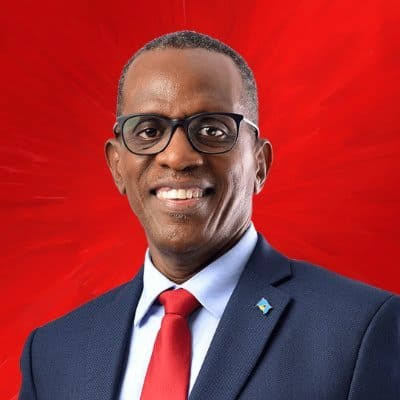
CARICOM, Türkiye explore cooperation in trade, energy, food security
The Caribbean Community, CARICOM and the Republic of Türkiye have explored opportunities to strengthen cooperation in trade, investment, food security, renewable energy, disaster management and maritime connectivity.
The two sides also identified health, port development and climate resilience as priority areas for deeper engagement during the second meeting of the CARICOM-Republic of Türkiye Consultation and Cooperation Mechanism held on October 12, 2026.
According to a joint press release, the meeting reaffirmed both parties’ commitment to strengthening political dialogue and advancing practical cooperation in areas of mutual interest.
The meeting was co-chaired by the Permanent Secretary in Suriname’s Ministry of Foreign Affairs, International Business and Cooperation, Ambassador Miriam Mac Intosh, and Türkiye’s Director-General for Latin America and the Caribbean in its Ministry of Foreign Affairs, Ambassador Erkan Aytun.
Mac Intosh, who represents the current chair of the CARICOM Council for Foreign and Community Relations, said the partnership was founded on constructive dialogue, mutual respect and a shared commitment to development.
She commended Türkiye for its support for development projects and humanitarian assistance across the Caribbean, noting that the contributions had delivered tangible benefits to the region.
“We remain committed to identifying and advancing further initiatives that contribute to the Region’s resilience and sustainable development,” she said.
Convened under a memorandum of understanding signed in 2011, the meeting reviewed developments in relations between the two parties and examined opportunities to expand cooperation.
High-level officials from CARICOM member states presented practical proposals covering trade and investment, disaster management, food security, renewable energy, health, maritime connectivity and port development.
Representatives of Turkish institutions also outlined how their technical expertise, technology and institutional capacity could support the priorities of Caribbean countries.
The discussions further examined preparations for the 31st Conference of the Parties to the United Nations Framework Convention on Climate Change, known as COP31, scheduled to take place in Antalya, Türkiye, from November 9 to 20, 2026.
Türkiye, which will preside over the conference, presented its strategic priorities and preparations for the global climate summit.
Aytun said the country wanted COP31 to focus on implementing climate commitments, following consultations with participating countries and other stakeholders.
“We need to make COP31 an implementation COP,” he said.
He identified 10 priority themes for the climate action agenda, including clean energy transition and electrification, zero waste and methane reduction, climate-resilient cities, green industrialisation, youth and education, food security, oceans and seas, resilient health systems, synergies among the Rio conventions and a climate implementation bridge.
CARICOM and Türkiye have expanded their engagement over the years through development cooperation, humanitarian assistance and support for regional initiatives.
Recent areas of cooperation include contributions to Caribbean disaster recovery efforts, support for the Caribbean Development Fund and assistance in strengthening the CARICOM Secretariat’s information and communications infrastructure.
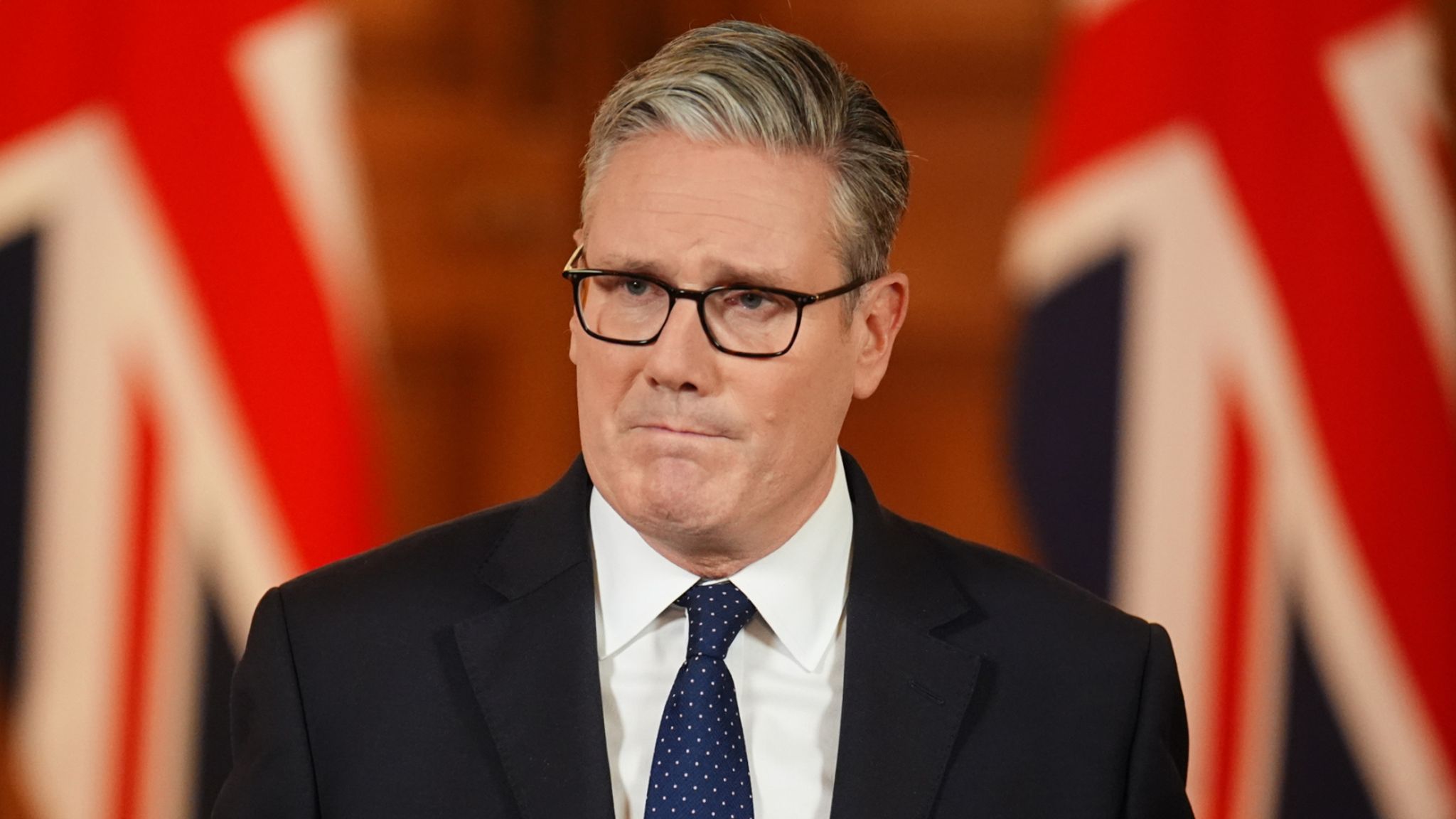
Britain restricts Eritrean diplomats, threatens entry ban
The United Kingdom has threatened to impose a blanket entry ban on Eritrean nationals if the East African country fails to cooperate with efforts to return migrants who have no legal right to remain in Britain and foreign nationals convicted of crimes.
The UK Home Secretary, Shabana Mahmood, announced the proposed measures amid growing tensions between both countries over migration and the repatriation of Eritrean nationals.
From Thursday, Eritrean diplomats will face restrictions on their movements outside London, while fast-track visa arrangements for senior officials will be suspended.
Mahmood warned that the British government could introduce further restrictions if Eritrean authorities continued to reject its requests for cooperation.
“Eritrea has had every chance to accept the return of criminals and those with no right to be in the UK. Unlike other countries, it has refused,” she said.
She added that she would not hesitate “to impose further measures on other countries refusing to co-operate”.
The British government accused Eritrea of abruptly withdrawing cooperation earlier this year, making it difficult to return nationals who had been denied permission to remain in the UK.
However, Eritrea’s government rejected the allegations, describing the restrictions as a “perfunctory political gimmick”.
The Eritrean embassy in London also accused Britain of failing to engage in meaningful dialogue and alleged that British authorities had not properly disclosed cases involving nationals who were returned while still serving prison sentences.
It further disputed Britain’s description of some returns as voluntary, arguing that the circumstances did not support that characterisation.
A UK Home Office spokesperson dismissed the criticism, saying Eritrea’s comments misrepresented the British government’s position.
The Home Office also said Britain had granted an exemption from immigration control to an Eritrean official in August 2026, disputing claims that no Eritrean official had received such an exemption since 2023.
The proposed restrictions come as Eritreans account for a significant proportion of migrants arriving in Britain through irregular Channel crossings.
Figures from the House of Commons Library show that Eritreans represented 18 per cent of small-boat arrivals in the 12 months to June.
Home Office data indicated that more than 5,800 Eritreans arrived in Britain through small boats during the same period, while approximately 1,300 were granted visas, mostly to join relatives already living in the country.
Only seven Eritrean nationals were returned directly to Eritrea from Britain during the 12 months to June, while another 244 were returned to other countries.
The figures have raised questions about the likely effectiveness of the proposed restrictions in reducing irregular migration.
Dr Madeleine Sumption, director of the Migration Observatory at the University of Oxford, said targeting Eritrea could have limited impact because most Eritreans seeking asylum in Britain were likely to qualify for international protection.
She told BBC Radio 4’s Today programme that Eritrea accounted for approximately 7,000 asylum applications in the latest year of available data, representing about eight per cent of the total.
“Most Eritreans who come and claim asylum are not removable at all,” she said, adding that about 84 per cent of applications were successful at the initial decision stage, with further applicants potentially succeeding on appeal.
Sumption said the number of people initially refused asylum would decline as appeals were considered.
Eritrea has faced longstanding international criticism over its human rights record, including allegations of forced labour, indefinite military conscription and restrictions on freedom of expression.
The country, which gained independence from Ethiopia in 1993, has never held a national election since independence and has no independent media.
Human Rights Watch has accused the government of widespread repression, while critics of President Isaias Afwerki have faced arrest and prolonged detention, often without trial.
Indefinite military service has also been cited as a major reason young Eritreans leave the country.
Zelenskyy seeks European support as Trump tensions deepen
Ukrainian President Volodymyr Zelenskyy has praised European leaders for their continued support for Kyiv as tensions with United States President Donald Trump threaten to complicate efforts to secure further assistance for Ukraine.
Zelenskyy made the remarks on Friday during a European summit in Brussels, where leaders were discussing support for Ukraine amid its continuing war with Russia.
“I’m so thankful that we have such huge support from EU Council Commission and leaders – real leaders,” he said, acknowledging Europe’s backing since Russia launched its full-scale invasion of Ukraine.
His comments came amid renewed concerns over Ukraine’s military communications following restrictions on SpaceX’s Starlink satellite service, which Ukrainian forces rely on for battlefield connectivity.
Ukraine’s First Deputy Minister for Recovery, Infrastructure and Transport, Serhiy Derkach, warned that restrictions on the service could create additional difficulties for the country’s defence efforts.
“With U.S. limiting the use of Starlinks on the battlefield, Russia feels that this is their moment to try and inflict even more pain and suffering on Ukraine’s civilian infrastructure,” Derkach told CNBC on Friday.
He added that Ukraine was approaching what could be a particularly difficult period and needed support from its international partners.
The development comes as Zelenskyy reportedly faces pressure from some European officials to moderate his public criticism of Trump in order to preserve cooperation with Washington.
Three officials familiar with preparations for the Brussels summit told the Financial Times that they planned to privately urge the Ukrainian president to tone down his rhetoric during their meeting.
Politico also reported concerns among some European leaders about Zelenskyy’s handling of his strained relationship with the US president.
One European Union diplomat was quoted as describing the Ukrainian leader’s public criticism of Trump as “not helpful”.
Despite the tensions, Zelenskyy insisted that Ukraine remained committed to ending the war but said there were no indications that Russia was ready to do the same.
“We want to end this war as quick as possible. We don’t see now signals from Russia side that they are ready for this to end this war,” he told reporters in Brussels.
The Ukrainian president’s comments followed his criticism of Russia over its alleged failure to respect an energy ceasefire announced by Trump.
Trump had announced the proposed arrangement the previous week, saying Russia and Ukraine had agreed to stop attacking each other’s energy infrastructure.
The initiative was presented as an attempt to reduce attacks on critical infrastructure and ease pressure on energy markets ahead of the US midterm elections in November.
Zelenskyy subsequently said Ukraine had refrained from striking Russian energy targets for three days in response to Washington’s proposal.
However, he described the arrangement concerning Russia’s energy-related commitments as weak.
Moscow has not confirmed that it agreed to an energy ceasefire, saying only that discussions were ongoing.
Russian authorities had not responded to multiple requests for comment from CNBC at the time of the report.
The dispute highlights the challenges facing diplomatic efforts to reduce hostilities, particularly as Ukraine continues to depend on Western military, financial and technological assistance.
European governments have maintained support for Kyiv, but concerns over the relationship between Zelenskyy and Trump have raised questions about how differences between Ukraine and its most influential partners could affect the wider war effort.


The Likes of Kila in Our Society, by Alabidun Shuaib AbdulRahman

CARICOM, Türkiye explore cooperation in trade, energy, food security

Britain restricts Eritrean diplomats, threatens entry ban

Pastor Jerry Eze Defends Miracles At UK Conference Amidst Criticism And Controversy

Diaspora Watch 20th Edition (October 14-20, 2024): Your Trusted Source for Global News and Insights

Tanzanian Man Reportedly Dies And Returns To Life Six Times


-

 Analysis4 days ago
France in Crisis: Anger and Unrest Shake the Nation
-
 Analysis1 week ago
Africa’s Resources Must Build Africa, by Alabidun Shuaib AbdulRahman
-
 News1 week ago
Trump’s fuel price cuts face hurdles ahead of midterm elections
-
 Diplomacy1 week ago
UK, Germany ratify defence treaty amid Russian threat
-

 News1 week ago
Trump Rules Out Iran Deal as US Weighs Fresh Military Strikes
-
 News1 week ago
CARICOM assesses regional capacity to produce four key products