
Diplomacy
CARICOM Raises Alarm Over Political Crisis in Haiti


CARICOM Raises Alarm Over Political Crisis in Haiti
The Caribbean Community (CARICOM) has expressed deep concern over the escalating internal crisis within Haiti’s transitional government, warning that the unfolding turmoil threatens an already fragile governance process at a critical moment for the country.
In a statement, CARICOM said the instability at the highest levels of the Haitian state comes at a time when calm decision-making and a clear focus on the welfare of the Haitian people are urgently required from members of the executive.
The regional bloc recalled that, under the founding decree of the Transitional Presidential Council and the Political Accord of April 3, 2024, the mandate of the Council is due to expire on February 7, 2026.
CARICOM noted that the current deadlock within the Transitional Presidential Council, following unsuccessful attempts by some of its members to remove the Prime Minister, has further complicated an already difficult transition process.
The organisation lamented that while political actors remain locked in disputes, ordinary Haitians continue to endure widespread violence, insecurity and severe deprivation.
“This situation is unacceptable,” CARICOM said, stressing the need for all stakeholders to set aside their differences and urgently reach a consensus.
CARICOM added that its Eminent Persons Group remains available to assist Haitian stakeholders in finding common ground among the various proposals currently on the table.
The regional body said its overriding hope is for an end to the ongoing fragmentation, which it warned only serves the interests of armed gangs, and for the restoration of political stability, security and peace in Haiti.
According to CARICOM, achieving stability would pave the way for credible elections and allow renewed attention to be given to economic growth and sustainable development for the benefit of the Haitian people.
The Community called on all Haitian stakeholders to place the future of their country above personal or political interests and to act with urgency, responsibility and patriotism in the interest of national stability.





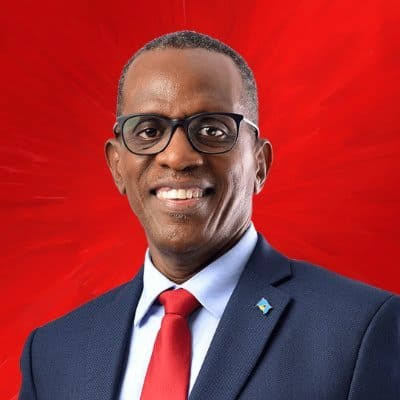
CARICOM, Türkiye explore cooperation in trade, energy, food security
The Caribbean Community, CARICOM and the Republic of Türkiye have explored opportunities to strengthen cooperation in trade, investment, food security, renewable energy, disaster management and maritime connectivity.
The two sides also identified health, port development and climate resilience as priority areas for deeper engagement during the second meeting of the CARICOM-Republic of Türkiye Consultation and Cooperation Mechanism held on October 12, 2026.
According to a joint press release, the meeting reaffirmed both parties’ commitment to strengthening political dialogue and advancing practical cooperation in areas of mutual interest.
The meeting was co-chaired by the Permanent Secretary in Suriname’s Ministry of Foreign Affairs, International Business and Cooperation, Ambassador Miriam Mac Intosh, and Türkiye’s Director-General for Latin America and the Caribbean in its Ministry of Foreign Affairs, Ambassador Erkan Aytun.
Mac Intosh, who represents the current chair of the CARICOM Council for Foreign and Community Relations, said the partnership was founded on constructive dialogue, mutual respect and a shared commitment to development.
She commended Türkiye for its support for development projects and humanitarian assistance across the Caribbean, noting that the contributions had delivered tangible benefits to the region.
“We remain committed to identifying and advancing further initiatives that contribute to the Region’s resilience and sustainable development,” she said.
Convened under a memorandum of understanding signed in 2011, the meeting reviewed developments in relations between the two parties and examined opportunities to expand cooperation.
High-level officials from CARICOM member states presented practical proposals covering trade and investment, disaster management, food security, renewable energy, health, maritime connectivity and port development.
Representatives of Turkish institutions also outlined how their technical expertise, technology and institutional capacity could support the priorities of Caribbean countries.
The discussions further examined preparations for the 31st Conference of the Parties to the United Nations Framework Convention on Climate Change, known as COP31, scheduled to take place in Antalya, Türkiye, from November 9 to 20, 2026.
Türkiye, which will preside over the conference, presented its strategic priorities and preparations for the global climate summit.
Aytun said the country wanted COP31 to focus on implementing climate commitments, following consultations with participating countries and other stakeholders.
“We need to make COP31 an implementation COP,” he said.
He identified 10 priority themes for the climate action agenda, including clean energy transition and electrification, zero waste and methane reduction, climate-resilient cities, green industrialisation, youth and education, food security, oceans and seas, resilient health systems, synergies among the Rio conventions and a climate implementation bridge.
CARICOM and Türkiye have expanded their engagement over the years through development cooperation, humanitarian assistance and support for regional initiatives.
Recent areas of cooperation include contributions to Caribbean disaster recovery efforts, support for the Caribbean Development Fund and assistance in strengthening the CARICOM Secretariat’s information and communications infrastructure.
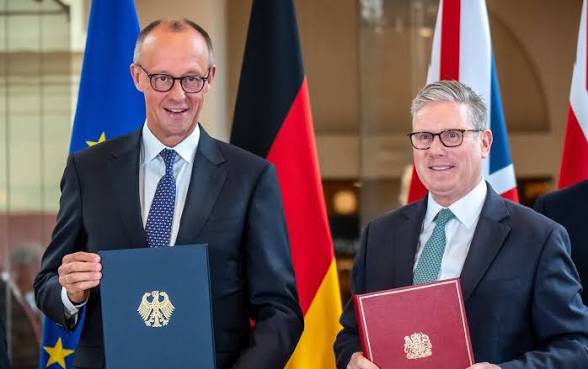
UK, Germany ratify defence treaty amid Russian threat
The United Kingdom and Germany have ratified a defence and security treaty aimed at strengthening cooperation against hybrid attacks, including cyber threats, sabotage and disinformation, amid growing concerns over Russia’s activities across Europe.
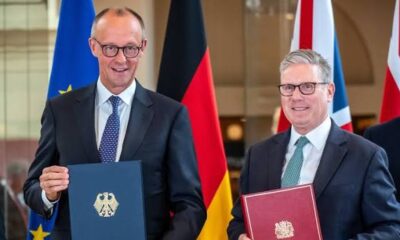
The British Prime Minister, Andy Burnham, and German Chancellor Friedrich Merz formalised the ratification of the 2025 Kensington Treaty during a meeting in Berlin, Germany, where both leaders pledged to deepen security cooperation and strengthen economic ties.
Speaking at the German Federal Chancellery, Burnham said the two countries faced hybrid attacks regularly and needed to work together to address the threats.
He said the agreement would improve security across Europe while creating opportunities to boost economic growth and living standards in both countries.
Burnham described the treaty as the first of its kind between the UK and Germany since the Second World War, adding that its implementation marked a significant development in bilateral relations.
The British leader also disclosed that his government would seek to advance discussions on Germany joining the Global Combat Air Programme, a multinational initiative involving the UK, Italy and Japan to develop a next-generation fighter aircraft.
He said the partnership would extend beyond conventional military cooperation to include efforts to counter hybrid attacks, protect democratic processes and strengthen collaboration in quantum technology and space.
Burnham also expressed his intention to host the first joint meeting of the British and German cabinets in 2027.
The Berlin meeting came amid heightened concerns among European governments over alleged Russian involvement in activities targeting critical infrastructure.
Germany accused Russia last month of launching a drone fitted with explosives at Leipzig/Halle Airport, a major international freight hub that also serves as a logistics centre for support to Ukraine.
The British government subsequently summoned a senior Russian diplomat over what it described as an egregious and reckless attack, while the European Union’s foreign affairs chief also summoned Russia’s envoy in Brussels.
Moscow has denied involvement in the incident.
Hybrid warfare refers to activities that fall between conventional armed conflict and peacetime relations. Such operations may involve cyberattacks, sabotage, espionage, disinformation campaigns and attempts to disrupt critical infrastructure.
Former British national security adviser, Sir Mark Lyall Grant, said Russia had intensified such activities in response to European support for Ukraine following Moscow’s invasion.
Grant warned that undersea cables in the North Sea were among the infrastructure attracting Russian interest, adding that the issue was likely to feature in discussions between the British and German leaders.
Meanwhile, Burnham expressed support for closer relations between Britain and the European Union ahead of a planned UK-EU summit next month.
He said he was committed to securing deeper cooperation with European partners, arguing that closer ties would benefit economic growth and efforts to tackle irregular migration.
French Finance Minister Roland Lescure had also urged Britain to consider returning fully to the European Union in an interview with the BBC.
Merz said Germany would support efforts to bring Britain closer to Europe and the EU.
The renewed discussions come amid reports of political pressure on both leaders at home.
Burnham became British prime minister in July after Sir Keir Starmer was forced out by members of his party, two years after leading Labour to a landslide election victory.
Merz, meanwhile, has faced criticism over his government’s standing and setbacks in regional elections, prompting speculation about his political future.
Despite the domestic challenges, both leaders used the Berlin meeting to reaffirm their commitment to security cooperation and closer European relations.
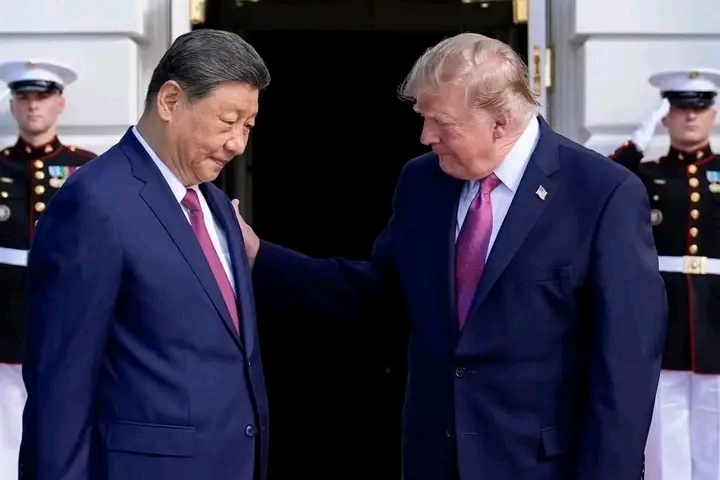
When Two Powerful Heads Meet …
By Boniface Ihiasota, Washington DC and Alabidun Shuaib AbdulRahman, Nigeria
When United States President Donald Trump welcomed Chinese President Xi Jinping to Washington this week, the world watched not merely two presidents meeting, but two competing centres of global power attempting to put limits on a relationship increasingly defined by economic rivalry, technological competition and strategic mistrust.
Xi arrived in the United States on Wednesday, September 23, 2026, for a three-day state visit at Trump’s invitation. The visit, which ended on Friday, September 25, was the first visit by a Chinese president to the White House in more than a decade and the first time a Chinese leader had made two formal state visits to the United States.
On Thursday, September 24, Trump and Xi stood together at the White House during a formal state arrival ceremony, followed by bilateral discussions and a state dinner. On Friday, they met again over tea before visiting the National Archives, where they viewed documents connected with the history of the United States.
The ceremony conveyed warmth. The substance of the talks revealed something more complicated.
The meeting produced agreements and additional channels for cooperation, particularly in trade, investment, artificial intelligence and law enforcement. But it did not resolve the principal disputes that have placed Washington and Beijing on a strategic collision course.
Diaspora Watch Newspaper reports that the United States and China have spent years imposing tariffs and restrictions on each other’s goods, creating uncertainty for manufacturers, farmers, technology companies and consumers. The two governments had already reached a framework during Trump’s May 2026 visit to Beijing, but implementation remained uneven before Xi’s arrival in Washington.
During the September meeting, the two countries operationalised the US-China Board of Trade and Board of Investment, mechanisms created during the May summit.
Under the Board of Trade, Washington and Beijing reached consensus on recommendations for more favourable tariff treatment covering $30bn of non-sensitive goods in each direction. The products include American agricultural goods, fish and seafood, logs and wood products, cosmetics and medical devices, as well as Chinese consumer products such as small appliances, toys, holiday decorations and children’s car seats.
China also agreed to import at least 10 million metric tonnes of American coal in both 2027 and 2028.
On paper, the arrangement represents a substantial commercial opportunity. But it would be premature to describe it as the end of the US-China trade conflict.
Reuters reported that the wider trade truce was extended for only two months, meaning that some of the most difficult questions remain subject to further negotiations. The two governments therefore appear to have chosen continuity over confrontation without yet reaching a permanent economic settlement. That is perhaps the most revealing aspect of the meeting. The relationship is not being reset. It is being managed.
For China, access to the American market remains important. For the United States, Chinese manufacturing capacity and supply chains remain difficult to replace quickly. Both governments consequently have reasons to negotiate even while they continue to prepare for greater competition.
The question of rare-earth minerals illustrates the problem. China occupies a dominant position in important parts of the global rare-earth supply chain. The minerals are used in electronics, electric vehicles, advanced manufacturing and defence-related technologies. Washington has increasingly regarded its dependence on Chinese processing capacity as a strategic vulnerability.
The White House said the two countries were continuing discussions over shortages involving rare earths and other critical minerals, with the objective of returning shipments to appropriate levels. The issue has therefore moved beyond conventional trade policy.
For Washington, critical minerals are now linked to economic and national security. For Beijing, control over important supply chains provides negotiating leverage at a time when the United States is attempting to restrict China’s access to some advanced technologies. That produces an unusual form of interdependence.
America possesses enormous financial, technological and military capabilities. China possesses enormous manufacturing capacity and occupies critical positions in several global supply chains. Neither country can easily ignore the other’s leverage.
Artificial intelligence added another layer to the discussion. Washington and Beijing are competing intensely over AI, a technology that is increasingly relevant to economic productivity, scientific research, communications and national security. Yet both governments also recognise that competition in such a rapidly developing field requires channels for communication.
The two sides agreed to establish a US-China “Super Intelligence” dialogue to discuss the risks and benefits associated with emerging technologies, with another exchange expected by November. They also agreed to establish a bilateral communication channel for incidents involving such technologies.
The significance lies not in the creation of a new diplomatic label, but in the recognition that technological competition can generate risks that neither side can manage in isolation.
The United States wants to preserve its technological advantages. China wants to expand its own technological capabilities and reduce dependence on American technology. Those objectives have not changed.
What has changed, at least temporarily, is the effort to create a mechanism through which the two governments can communicate while that competition continues. The same pattern emerged in discussions on law enforcement.
The White House said China had introduced export controls on two additional fentanyl precursor chemicals and that Chinese authorities had arrested 21 Chinese citizens in August following information supplied by US law enforcement. Washington has pressed Beijing for stronger action against the supply of precursor chemicals linked to illicit fentanyl production in North America.
For Trump, the issue has direct domestic significance. For Beijing, cooperation provides an opportunity to demonstrate that engagement with Washington can produce practical results even when disagreements persist elsewhere.
But perhaps the most difficult subject remains Taiwan. China regards Taiwan as part of its territory and opposes moves towards Taiwanese independence. The United States does not maintain formal diplomatic relations with Taiwan but has longstanding unofficial relations with Taipei and provides defensive support to the island.
Xi used the Washington meeting to restate Beijing’s position on Taiwan and national reunification. Reporting from the talks showed that the issue remained among the major areas of disagreement between the two governments. No new settlement emerged.
That is significant because Taiwan is not simply a question of sovereignty between Beijing and Taipei. It sits at the intersection of American security commitments, Chinese national policy, military strategy and the global semiconductor industry.
A serious crisis around the island could disrupt shipping, technology supply chains and financial markets while creating the possibility of direct confrontation between American and Chinese forces.
The absence of a new agreement on Taiwan therefore does not mean the issue has become less important. It demonstrates the limits of the current rapprochement.
The same caution applies to Iran. Trump raised China’s relationship with Tehran during the Washington talks and warned Beijing against supporting Iran, according to US Ambassador to China David Perdue.
Reuters reported that Trump received assurances from Xi that China would not provide such support, amid American concerns over Chinese-Iranian economic and military links.
The discussion illustrates another reality of the US-China relationship: bilateral diplomacy increasingly takes place against the background of conflicts and alliances elsewhere.
Washington and Beijing are not merely negotiating about their own economies. Their policies affect Russia, Iran, North Korea, Taiwan, international shipping and the broader balance of power.
The two leaders also discussed Russia, North Korea and Iran and agreed to support each other as hosts of the G20 and APEC meetings. The White House said Trump and Xi intend to attend each other’s summits.
Yet the most striking feature of the summit may have been what did not happen as there was no comprehensive trade settlement. There was no breakthrough over Taiwan. There was no end to the technology rivalry. There was no agreement that fundamentally altered the strategic competition between Washington and Beijing.
Reuters described the summit as producing few major public breakthroughs, while noting that the meeting was heavily focused on personal diplomacy and symbolism. That should not necessarily be interpreted as a failure of diplomacy.
Relations between major powers are rarely transformed by one meeting. More often, summits create mechanisms for managing disagreements and preventing them from escalating.
In that sense, the most important product of the Trump-Xi meeting may be the continuation of dialogue.
The alternative would be a relationship in which economic retaliation, technology restrictions, military manoeuvres and diplomatic disagreements occur without reliable channels between the two governments.
For two countries with enormous military capabilities and competing interests across the Indo-Pacific, such a situation would carry significant risks. The personal relationship between Trump and Xi is therefore only one component of the equation.
Trump has demonstrated a preference for leader-to-leader negotiations and tangible economic outcomes. Xi operates within a Chinese political system built around long-term strategic planning and the pursuit of what Beijing describes as national rejuvenation.
The two leaders can therefore reach tactical understandings without necessarily sharing the same long-term objectives.
Trump wants an economic relationship he considers fairer to American workers, farmers and businesses. Xi wants continued access to international markets while resisting what Beijing regards as attempts to constrain China’s technological and strategic rise. Those objectives overlap in some areas and collide in others. The result is a relationship that can simultaneously produce cooperation and confrontation. The Washington summit demonstrated precisely that contradiction.
The two countries can agree on coal purchases while competing over energy and technology. They can cooperate against illicit drug trafficking while imposing restrictions on strategic exports. They can establish an AI communication channel while competing intensely for technological leadership. They can discuss global stability while remaining divided over Taiwan.
That is the nature of the contemporary US-China relationship. It is neither a new Cold War in the traditional sense nor a normal commercial partnership. It is a complicated combination of economic interdependence, strategic competition and selective cooperation.


The Likes of Kila in Our Society, by Alabidun Shuaib AbdulRahman

CARICOM, Türkiye explore cooperation in trade, energy, food security

Britain restricts Eritrean diplomats, threatens entry ban

Pastor Jerry Eze Defends Miracles At UK Conference Amidst Criticism And Controversy

Diaspora Watch 20th Edition (October 14-20, 2024): Your Trusted Source for Global News and Insights

Tanzanian Man Reportedly Dies And Returns To Life Six Times


-

 Analysis4 days ago
France in Crisis: Anger and Unrest Shake the Nation
-
 Analysis1 week ago
Africa’s Resources Must Build Africa, by Alabidun Shuaib AbdulRahman
-
 News1 week ago
Trump’s fuel price cuts face hurdles ahead of midterm elections
-
 Diplomacy1 week ago
UK, Germany ratify defence treaty amid Russian threat
-
 News1 week ago
Trump Rules Out Iran Deal as US Weighs Fresh Military Strikes
-
 News1 week ago
CARICOM assesses regional capacity to produce four key products