
Features
Diaspora Watch Vol. 97

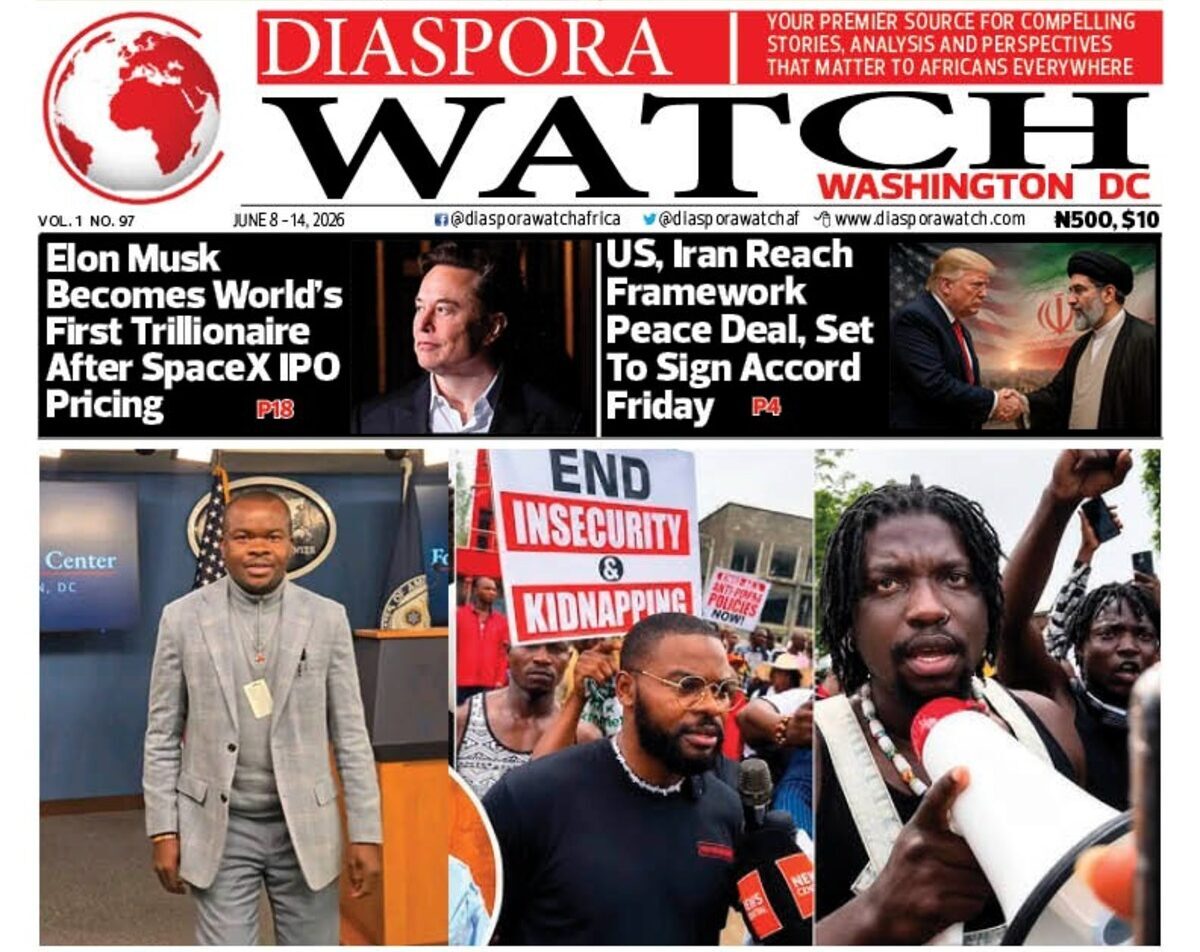
Diaspora Watch Newspaper is pleased to announce the release of its 97th edition, featuring a compelling lineup of global headlines, in-depth analyses, and thought-provoking commentary that reflect the evolving dynamics of politics, business, society, and culture across continents.
Leading the edition is a powerful open letter addressed to social media activist VDM and Nigeria’s younger generation, calling for renewed civic engagement and transformative leadership in shaping the country’s future.
Diaspora Watch FREE Digital View: https://diasporawatch.com/3d-flip-book/diaspora-watch-vol-97/
On Demand Print: https://www.magcloud.com/browse/issue/3353015?__r=1069759
SUBSCRIBE TO DIASPORA WATCH NOW ON THE LINK BELOW!!!
https://diasporawatch.com/subscribe-to-diaspora-watch-newspaper/
It also features the historic financial milestone achieved by Elon Musk, who has reportedly become the world’s first trillionaire following the landmark pricing of the SpaceX IPO. The development underscores the accelerating power of private space innovation and global capital markets.
In international diplomacy, attention is drawn to emerging reports of a framework peace agreement between the United States and Iran, with both nations expected to formalize the accord later this week—an outcome that could significantly reshape geopolitical tensions in the Middle East.
Europe also features prominently, as Norwegian authorities sentence the son of the Crown Princess to four years in prison for rape, a case that has sparked intense national debate on accountability and privilege within royal circles.
Across the Atlantic and beyond, economic and social developments dominate the headlines. From inflationary pressures and trade disruptions threatening Caribbean growth, to South Korea’s stock market surge attracting millions of first-time investors, the global economy remains in a state of rapid transformation and uncertainty.
In Russia, new restrictions on surveillance linked to President Vladimir Putin have been introduced amid growing concerns over artificial intelligence and digital monitoring, highlighting the expanding intersection between governance and emerging technologies.
Sporting tensions at the World Cup opener have been overshadowed by xenophobia-related controversies, raising fresh questions about inclusivity and fan conduct on the global stage.
On the entertainment front, global pop star Ariana Grande makes headlines after reportedly objecting to the use of her music by the White House, adding to ongoing debates about artistic rights and political messaging.
Diaspora Watch Newspaper continues to uphold its commitment to delivering credible, balanced, and impactful journalism that connects diaspora communities with critical global developments.










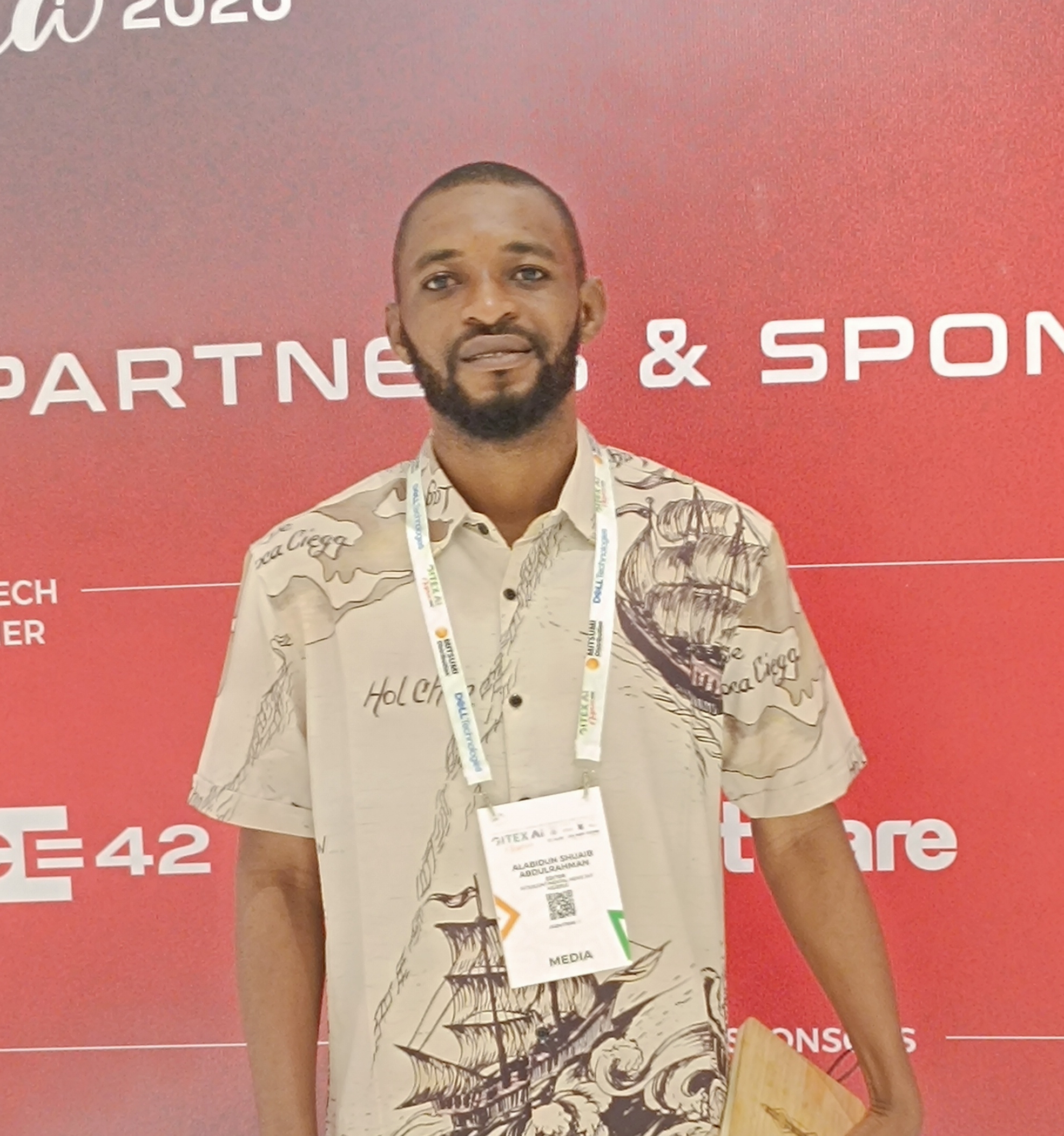
Will Africa Follow Niger Republic? By Alabidun Shuaib AbdulRahman
Africa’s greatest economic contradiction is buried beneath its own soil. Across the continent lie enormous deposits of oil, gas, uranium, gold, lithium, cobalt, copper, diamonds and other strategic minerals, yet many of the countries sitting on these resources continue to struggle with poverty, unemployment, weak industrialisation and the steady movement of their young people towards Europe, North America and other destinations in search of better opportunities.
For decades, much of Africa’s natural wealth has travelled outward as raw material, while the greater economic value created through processing, refining, manufacturing and technology has accumulated elsewhere. Africa has supplied the resources that feed global industries, but has too often remained at the lower end of the economic chain, buying back finished products at prices far removed from what it earned when those raw materials left its soil.
That contradiction is becoming increasingly difficult to ignore because of what is happening in Niger Republic. Since General Abdourahamane Tiani came to power following the July 26, 2023 coup, his government has increasingly pursued greater control over Niger’s natural resources. What initially appeared to be part of the broader political rupture between Niamey and its former colonial power, France, has gradually developed into a wider policy of resource nationalism.
On June 19, 2025, Niger’s Council of Ministers approved the nationalisation of Société des Mines de l’Aïr, SOMAÏR, the uranium company operating at Arlit in the Agadez region. SOMAÏR was established in 1968 and began uranium production in 1971. Before nationalisation, French nuclear company Orano held 63.4 per cent, while Niger’s state mining company, SOPAMIN, held 36.6 per cent.
Between 1971 and 2024, SOMAÏR produced 81,861 tonnes of uranium, of which 80,518 tonnes were commercialised. Figures presented by the Nigerien government showed that Orano had taken 86.3 per cent of the commercialised production, while SOPAMIN accounted for 9.2 per cent.
In August 2026, the government took another step. It awarded the In Azaoua large-scale uranium mining permit in Arlit to Teloua Safeguarding Uranium Mining Company, TSUMCO, the state company created to replace SOMAÏR and continue operations over the former SOMAÏR perimeter. At its August 21 meeting, the Council of Ministers also approved the reassignment of another uranium permit, Madaouela I, to the state-linked Madaouela Mining Company.
The government has adopted a similar approach in the petroleum sector. On June 12, 2026, Niger’s Petroleum Minister, Hamadou Tini, announced that the government was reviewing the hydrocarbons code and preparing a new production-sharing contract model. He said the reforms were intended to strengthen the state’s negotiating capacity and increase the economic benefits accruing to Niger. He also disclosed plans to review provisions relating to cost recovery by petroleum operators and stressed the importance of training Nigerien professionals capable of negotiating more effectively with international companies.
Niger has also established MAZOUMAWA National Gold Company as part of its attempt to strengthen national control over gold resources and the country’s gold value chain. In January 2026, its Director-General, Abdou Ousseini, said the company intended to contribute to gold exploitation while controlling the valorisation and value chains of gold in Niger. The company had two exploration permits in the Dan Issa area and had collected more than 6,000 samples for analysis.
There is, therefore, something much bigger than the Niger-France dispute at stake. It is the ownership of Africa’s economic future.
For generations, the structure has remained remarkably familiar. Africa digs, pumps, cuts and exports. Someone elsewhere processes, refines, manufactures, finances and markets. The finished product eventually returns to African consumers at a considerably higher price.
That arrangement is not entirely without benefits. Foreign companies bring capital, technology, technical expertise, international markets and, in some cases, infrastructure that many African countries would struggle to provide on their own. The problem begins when that relationship becomes permanent, when Africa remains trapped at the extraction end of the value chain while the greater economic benefits of its resources accumulate elsewhere.
The African Union has recognised this problem for years through initiatives such as the African Mining Vision and its commodities strategy. The objective is for Africa to move from being primarily a supplier of raw materials towards greater value addition, stronger local content, higher returns from commodities and meaningful participation in global value chains.
The African Development Bank estimates that Africa possesses about 30 per cent of the world’s mineral reserves and could capture more than 10 per cent of the projected $16tn revenues from key green minerals by 2030. Yet the same institution reported that Africa received about $190.7bn in financial inflows in 2022 while losing approximately $587bn through financial leakages.
The implication is clear: Africa does not necessarily need to chase away foreign investors. It needs to become a better negotiator, a more capable participant and, ultimately, a stronger owner of the industries built around its own resources.
Botswana offers an important illustration. Its diamond industry was not built by simply shutting foreign capital out. Debswana, the company at the centre of Botswana’s diamond production, is jointly owned by the Government of Botswana and De Beers, with each holding 50 per cent. The partnership has become a major contributor to Botswana’s GDP, foreign exchange earnings and government revenue and employs about 5,000 staff and 6,000 contractors.
Tanzania has pursued another route by giving the state a minimum 16 per cent non-dilutable free-carried interest in mining companies, alongside taxation, royalties and other government participation mechanisms. Its local-content framework also seeks to ensure that Tanzanian companies participate in supplying goods and services to the mining industry.
Ghana has moved in a different direction. Rather than nationalising its gold mines, it has sought to increase domestic participation through regulation. Its 2025 local-content framework required surface mining operations to be undertaken by wholly Ghanaian-owned contractors, while underground contract mining requires at least 50 per cent Ghanaian ownership.
Zimbabwe’s lithium policy provides perhaps an even clearer example of beneficiation as a development strategy. After banning exports of unprocessed lithium ore in 2022, Zimbabwe announced in June 2025 that it would prohibit the export of lithium concentrates from January 1, 2027. The objective is to encourage greater domestic processing. Zimbabwe is Africa’s leading lithium producer, while Chinese-owned companies have invested more than $1bn in the country’s lithium sector since 2021.
If lithium is increasingly important to batteries and energy storage, Zimbabwe wants more of the economic activity generated by that demand to take place within Zimbabwe rather than elsewhere. That is precisely the direction Africa needs to consider.
The International Energy Agency reported in October 2025 that Africa captures less than one per cent of the value generated from manufacturing clean-energy technologies and their components, despite supplying around 75 per cent of global manganese, 70 per cent of cobalt and nearly 20 per cent of copper. The IEA estimates that moving into beneficiation, processing and manufacturing could raise the market value of minerals produced in Africa to about $120bn by 2040.
This is why the African Union’s Africa Green Minerals Strategy, adopted in March 2025, is significant. The strategy calls for Africa to move beyond raw mineral exports towards value addition at source, regional industrialisation, local beneficiation, job creation and economic diversification. The AU’s African Forum on Mining subsequently called for stronger continental bargaining power and high-level African critical-minerals diplomacy to ensure that mineral agreements prioritise local value addition rather than simply facilitate the export of raw materials.
Niger, therefore, should not be judged simply by whether its nationalisation policy succeeds or fails. Its experiment should be watched for what it reveals about both the possibilities and dangers of greater resource control.
National ownership does not automatically produce efficient management. A government can own a mine and still mismanage it. It can control petroleum and still import refined products. It can take over gold operations while communities around the mines remain poor. It can remove foreign companies and replace foreign inefficiency with domestic corruption.
Niger itself has already encountered some of these complications. Orano has pursued arbitration over the nationalisation of its interest in SOMAÏR. In September 2025, Reuters reported that about 1,500 tonnes of uranium, valued at roughly $270m, remained stockpiled at the former SOMAÏR mine. Orano had begun arbitration proceedings and warned against the material being transferred or sold without authorisation.
A country seeking greater control over its resources needs competent geologists, engineers, lawyers, accountants, negotiators, regulators and financial institutions. It needs reliable electricity, roads, railways and ports. It needs research institutions capable of developing technology. It needs transparent contracts and systems through which citizens can know what governments receive from their natural resources and how those revenues are spent.
Without these foundations, nationalisation can become an expensive political gesture. But Africa should not allow the imperfections of resource nationalism to become an excuse for maintaining a system in which the continent remains primarily an exporter of raw materials.
Nigeria illustrates the urgency. The country has oil, gas, gold, lithium, iron ore, coal and other minerals, but its economic history has repeatedly demonstrated the danger of exporting natural resources without developing sufficient downstream capacity.
The Tinubu administration has increasingly emphasised local processing and value addition in critical minerals. In July 2026, President Bola Tinubu commissioned a $250m lithium mining and processing plant in Nasarawa State with a capacity of 6,000 tonnes of lithium processing per day. It was described as Africa’s largest lithium processing facility.
Nigeria should not stop at processing lithium. It should be thinking about the battery industry, electric vehicles, energy-storage systems, industrial chemicals, research and the skilled workforce required to support those industries.
The same thinking should apply across Africa. A Congolese citizen living beside cobalt deposits should have access to opportunities created by cobalt. A Zambian living around copper mines should benefit from industries built around copper. A Ghanaian should see gold not merely as something extracted and exported, but as an opportunity for refining, jewellery, financial services and manufacturing. A Nigerien should be able to look at uranium and see engineering, science, technology and industrial opportunities. And a Nigerian should be able to look at oil and gas without accepting that the country’s natural destiny is simply to export crude and import refined products.
If Africa can retain more value from its resources, that value can help finance universities, technical schools, electricity, transport infrastructure, healthcare, manufacturing and technology. Those investments can create productive employment. Productive employment can reduce the economic pressure pushing young Africans towards foreign shores.
The real lesson from Niger, therefore, is not that every African government should wake up tomorrow and nationalise every foreign-owned mine, oilfield or industrial operation. That would be a simplistic reading of what is happening. The lesson is that the old bargain deserves serious reconsideration.
Africa should welcome investors, but it should negotiate better. It should welcome technology, but build its own capacity. It should welcome international capital, but ensure that African capital also grows. It should permit extraction, but demand value addition. It should collect royalties and taxes, but also build industries around the resources generating them.
Alabidun is a media practitioner and can be reached via alabidungoldenson@gmail.com
Democracy Not Africa’s Answer, by Alabidun Shuaib AbdulRahman
There is a question Africa has avoided for too long because it is politically uncomfortable and historically sensitive: is democracy, as it is presently practised across much of the continent, actually capable of delivering the Africa that Africans need? The question is not an argument for dictatorship. No! It is not a defence of military coups, one-party states or governments that silence citizens. It is not even an argument that Africans do not deserve the right to choose their leaders. They do.
But after decades of elections, constitutions, political parties and changes of government, it is legitimate to ask whether the political model Africa inherited and subsequently reproduced has become more important to African leaders than the outcomes it is supposed to produce.
The fact remains, Africa’s problem is no longer simply who wins elections. It is what happens after the election. Across the continent, citizens are confronting unemployment, insecurity, failing public services, inflation, weak currencies, poor electricity supply, inadequate healthcare, infrastructure deficits, declining purchasing power and the persistent inability of governments to transform enormous natural wealth into broad prosperity. Meanwhile, political competition is often reduced to the struggle for control of the state and its resources.
The evidence of growing frustration is difficult to dismiss. In its latest survey covering 38 African countries in 2024 and 2025, Afrobarometer found that only 47 per cent of respondents considered their country a democracy and only 38 per cent were satisfied with the way democracy was working. Yet 64 per cent still preferred democracy and majorities rejected one-person rule, one-party rule and military rule. Only 36 per cent qualified as what Afrobarometer called “committed democrats”, meaning respondents who both preferred democracy and rejected all three authoritarian alternatives. The report suggests that Africans are not necessarily tired of democracy. They are increasingly tired of the failure of governments that call themselves democratic.
For years, African political elites have treated elections as the utmost evidence of democratic success. Four or five years pass, citizens vote, results are announced, winners celebrate and losers complain. Then government continues. But democracy cannot be reduced to the mechanics of voting. A ballot paper does not put food on a table. It does not generate electricity. It does not secure a village from armed groups. It does not build a functioning railway, hospital or university. It does not process minerals into finished products or turn unemployed young people into productive workers.
The World Bank’s 2025 Country Policy and Institutional Assessment found that governance remains one of the areas in which Sub-Saharan Africa has improved more slowly than other regions. The Bank reported that poor government effectiveness continues to undermine infrastructure and public-service delivery, while deficiencies in transparency, accountability, budget execution and internal controls remain serious obstacles to development.
Consider Nigeria. The country has crude oil, natural gas, vast agricultural land, a huge population, a large consumer market and substantial human capital. Yet electricity remains unreliable, manufacturing struggles with high operating costs, public infrastructure is inadequate and millions of Nigerians remain trapped in poverty. Governments change, slogans change and development plans change, but the structural problems survive the politicians who supposedly came to solve them.
The Democratic Republic of Congo presents an even more painful contradiction. It possesses some of the world’s most important deposits of cobalt, copper and other minerals essential to the modern economy. Yet enormous mineral wealth has coexisted with poverty, weak infrastructure and instability.
Africa therefore does not merely have a resource problem. It has a state-capacity problem. The continent has resources. What it repeatedly lacks is the institutional machinery to convert resources into sustained prosperity. This should force Africans to reconsider what they mean by democracy. Perhaps the more useful political question is not whether a government was elected, but whether the institutions of that government are strong enough to protect public resources from political capture, whether public officials can be held accountable, whether policies survive changes of administration and whether citizens have meaningful influence between elections.
Disappointingly, the answer will not be found in military government. Africa has travelled that road before. The coups that swept across Africa after independence produced governments that often promised discipline, national renewal and an end to corruption. In many cases, they eventually reproduced the same failures they had condemned. Military rule is not a development strategy. Soldiers can seize power, but they cannot manufacture competent institutions merely by wearing uniforms.
The answer may instead lie in redesigning democratic government itself. Africa should examine a form of government that combines democracy with strong federalism, substantial decentralisation, consensus-building, professional public administration and direct participation by citizens. Switzerland provides perhaps the clearest developed-country example of what such an arrangement can look like.
Since becoming a federal state in 1848, Switzerland has organised political authority across the Confederation, 26 cantons and more than 2,000 communes. The principle is straightforward: government should remain as close to the people as possible, with powers transferred upward only where necessary. Its seven-member Federal Council operates collectively, with decisions based on consensus rather than the political dominance of one president. Swiss citizens also vote directly on particular issues through referendums and popular initiatives. Switzerland is not Africa, and no serious person should suggest copying its constitution wholesale. But the underlying principle deserves attention.
Why should one politician in a nation’s capital control an extraordinary concentration of resources and appointments in a country as geographically and culturally diverse as Nigeria? Why should communities wait for federal intervention to solve problems that can be managed locally? Why should political parties compete primarily for the presidency when development takes place in towns, villages, municipalities and regions?
Decentralisation is ultimate here. It will make government visible. It also makes failure harder to hide. A local government that controls its resources and responsibilities can be judged directly by the people living under it. A state or province can be compared with another. Competition can become a competition over public-service delivery rather than merely over political patronage.
Although decentralisation alone is not enough. Africa also needs a professional state. And this is where Singapore offers another useful lesson. Its political circumstances are very different from those of African countries though.
When Lee Kuan Yew became Singapore’s first Prime Minister in 1959, the country faced severe unemployment, overcrowding and economic uncertainty. Nearly 70 per cent of the population lived in slums, according to Singapore’s historical records, and unemployment was in double digits. After Singapore became independent on August 9, 1965, its leaders faced the additional problem of having virtually no natural resources and no large domestic market. They responded with long-term economic planning, industrialisation, infrastructure development, education and an aggressive drive to attract international investment.
The Economic Development Board, established in 1961, became a central instrument of industrialisation. Singapore developed Jurong as an industrial estate, invested heavily in infrastructure and deliberately positioned itself as an export-oriented economy. By 1970, the country had moved close to full employment.
Even at that, Singapore’s story must not be romanticised. Its political model, civil liberties record and historical circumstances are different from those of African states. But one lesson is difficult to dispute: development requires a state capable of implementing decisions consistently over decades. That is precisely what many African political systems struggle to achieve.
A new administration frequently arrives with a new programme, a new slogan and a new set of political appointees. Long-term projects are abandoned, renamed or redesigned. Institutions become vulnerable to political interference. Public servants learn that political loyalty may matter more than professional competence.
Africa cannot build a century-long future on four-year political calculations. What the continent needs is a democratic system that protects the people’s right to choose but prevents every election from becoming a complete reset of the state.
Imagine an African federation in which elected governments could change, but national development strategies could not be casually abandoned. Imagine independent institutions managing public finances, elections, justice and natural resources without becoming instruments of whoever occupies the executive office. Imagine regions controlling significant resources while remaining constitutionally bound to national standards on education, healthcare, security and human rights. That would still be democracy. But it would be a more institutional democracy. It would also address one of Africa’s most destructive political habits: the obsession with the individual leader.
Too much of African politics revolves around presidents. Their photographs dominate government buildings. Their names appear on projects funded with public money. Their approval is sought for matters that should be handled by institutions. Political succession becomes a national crisis because the system is built around personalities rather than rules.
The continent’s 54 states contain hundreds of ethnic groups, languages, religions, political traditions and historical experiences. A rigid political template imposed uniformly across all of them is unlikely to produce identical outcomes. Nigeria is not Botswana. Ghana is not Ethiopia. Kenya is not Morocco. Senegal is not South Africa. Africa therefore needs a political philosophy rather than a single imported constitutional costume.
Africa’s answer may lie in a democratic order redesigned around its own realities: federal where appropriate, decentralised where practical, participatory where necessary, professional in administration, disciplined in public finance and relentless about long-term development.
The objective should not be to discover a government that looks African. It should be to build governments that work for Africans.
Alabidun is a media practitioner and can be reached via alabidungoldenson@gmail.com
Are Killings in Niger State Beyond Ordinary? By Alabidun Shuaib AbdulRahman
There is something increasingly unsettling about what is happening in Niger State. It is not simply the frequency of killings that should worry anymore. It is the changing character of the deaths, the places where they occur, the people caught up in them and, perhaps most importantly, the growing difficulty of explaining them as separate incidents.
It disturb one, of recent, to know that in one part of the state, terrorists are killing security personnel and civilians. In another, communities are settling old grievances with blood. Elsewhere, worshippers are taken away after Friday prayers. Then, within the same week, 37 suspected illegal miners die while in the custody of a government security agency. Each incident has its own immediate explanation, but when placed side by side, they begin to suggest something much bigger than ordinary insecurity.
Niger State has lived with banditry, kidnapping and communal violence for years, particularly in parts of Shiroro, Rafi, Munya, Mariga and other vulnerable areas. But 2026 has brought a succession of incidents that should make any serious observer pause.
On April 9, reports emerged of coordinated attacks in Shiroro Local Government Area in which scores of people were killed. Premium Times reported that at least 60 people, including more than 40 security operatives, were reportedly killed in attacks on communities including Bagna and Lanta. Although the details varied between accounts, but the central fact was difficult to ignore: armed men were able to attack several communities and inflict heavy casualties on both civilians and those deployed to protect them.
The disastrous event of Shiroro goes beyond the number of casualties. On many occasions, residents of the area have complained about the difficulty of getting timely security intervention whenever armed men move into their communities. The problem is not merely that criminals possess weapons. It is that rural communities are often separated from effective security response by bad roads, difficult terrain, inadequate communication and the sheer size of the state.
Then came the violence around Tegina in Rafi Local Government Area. On July 1, Premium Times reported that at least 48 people had been killed in violence involving Fulani and Kamuku communities. Residents said 42 people, largely women, children and elderly persons, were killed in an attack on a Kamuku community, while about six herders were subsequently killed in retaliation. The incident was particularly disturbing because it demonstrated how quickly communal grievances can become a cycle in which one death produces another. Once that cycle begins, the state is no longer dealing with one criminal incident. It is dealing with the gradual destruction of trust between communities.
But the August attacks in Borgu Local Government Area brought another dimension to the crisis. On August 21, armed men attacked communities during Friday prayers and abducted Muslim worshippers. The eventual account from the local government chairman, Mohammed Abdullahi, was that more than 60 people had been abducted across four villages and nearly 30 killed. The affected communities included Gbeji, Kpenya, Giyan Gbasu and Dekara. The fact that the victims were gathered for Jumaat prayers made the incident particularly disturbing, but it also exposed how far insecurity has penetrated ordinary life. Places of worship, which should represent sanctuary, are not immune. Villagers cannot assume that gathering for prayer will protect them from armed men.
The Borgu attack also exposed the practical weakness of the state’s security response. Difficult terrain and a damaged bridge were cited among the obstacles confronting security personnel. That may be a genuine operational problem, but it raises another question: if authorities know that communities are isolated by terrain and infrastructure, what preventive arrangements exist for those communities? Security cannot always depend on a distress call followed by a journey through impassable roads. Intelligence, local surveillance, communication networks and rapid-response arrangements are supposed to compensate for precisely these weaknesses. When they do not, citizens are left to hope that the attackers will not come.
Strangely, the deaths of 37 suspected illegal miners in NSCDC custody on September 17 have changed the character of the conversation entirely. According to the NSCDC, the victims were among scores of people arrested during enforcement operations against suspected illegal mining at the M.I. Wushishi/Lukoto axis on September 15 and 16. The corps initially said the detainees were found dead after what it described as a suspected disease outbreak, while stressing that the actual cause had not been established and would require medical examination.
That explanation cannot simply be accepted or rejected before the investigation is completed. Governor Mohammed Umaru Bago has ordered forensic examinations and autopsies, while the police, NSCDC and other security agencies have opened investigations. The Federal Government has also suspended the Niger State NSCDC Commandant, Suberu Siyaka Aniviye, pending the outcome of the investigation. There have been allegations from relatives and other sources about overcrowding, poor detention conditions and possible mistreatment, but those allegations must be established by evidence. At this stage, the scientifically established cause of the 37 deaths is still pending.
That caution, however, should not diminish the seriousness of what happened. Thirty-seven people did not die in a battlefield. They died after being arrested and taken into the custody of a government security organisation. The state therefore has a heightened responsibility to explain, with evidence, what happened between the moment of arrest and the moment their bodies were taken to the mortuary. Were they medically screened when arrested? How many people were held in the detention facility? How long were they there? What did they eat and drink? Was there ventilation? Was medical assistance available? Were any of them sick before their arrest? Were hazardous substances associated with mining involved? Were there minors among them? These are not questions for social media speculation. They are questions that a credible investigation must answer.
Governor Bago himself said possible causes being examined included suffocation from overcrowding and exposure to hazardous chemicals associated with illegal mining, while cautioning that no conclusion should be reached before forensic and medical examinations were completed. That is the right approach. The tragedy should not become another occasion for competing political narratives to outrun evidence.
But there is a larger issue here that Niger State cannot afford to overlook. The state is dealing simultaneously with armed insurgents, banditry, communal violence, illegal mining and growing public distrust. These are not entirely unrelated problems. Illegal mining, for instance, is not simply an environmental or economic offence when it takes place in insecure areas. Mining sites can become sources of informal wealth, weapons, local influence and criminal networks. Communities struggling with poverty may depend on the activity even when government considers it illegal. Security agencies then arrive to enforce the law, often in places where trust between residents and authorities is already weak. The possibility of conflict is therefore high.
This is why the deaths in NSCDC custody deserve an investigation that goes beyond finding one or two individuals to blame. The country has seen too many official inquiries become exercises in administrative containment. A commandant is suspended, a committee is announced, condolences are issued and, after public attention moves elsewhere, the families are left with questions. Niger State should not allow this case to follow that familiar path.
If the detainees died from disease, the investigation should establish what disease, how it spread, whether it was detectable and whether reasonable medical precautions were taken. If overcrowding contributed, somebody must answer for the decision to keep so many people in unsuitable conditions. If toxic exposure contributed, the circumstances of the arrests and detention must be examined. If there was negligence or deliberate abuse, those responsible should face the law.
The same seriousness is required in the fight against the armed groups terrorising rural communities in the state. It is not enough to announce that troops have been deployed after another village has been attacked. Niger State is too large and too strategically important to be treated as a collection of isolated rural emergencies. Its proximity to the Federal Capital Territory, its international boundary with Benin Republic, its vast forests and its extensive rural settlements make its security problems a national concern.
The temptation will be to treat each tragedy separately. The Shiroro killings will be classified as terrorism. The Tegina violence will be described as a farmers-herders or communal clash. The Borgu deaths will be treated as another kidnapping incident. The NSCDC deaths will be called an unfortunate detention tragedy. Technically, those descriptions may be correct. But they cannot stop at classification. The real responsibility is to understand why so many different forms of violence are flourishing within the same geographical space.
There is also a danger in allowing residents to become accustomed to death. When a community loses ten people, the next community loses twenty, another loses forty, and then dozens die in custody, society can gradually develop a frightening tolerance for casualty figures. That is perhaps the most dangerous stage of a security crisis. Numbers begin to replace human beings. Thirty dead becomes a headline. Forty-eight becomes another headline. Sixty becomes another statistic. Yet behind every figure is a family, a household, a child, a livelihood and a future that has been abruptly removed.
Niger State should therefore resist the urge to normalise what is happening. These killings may have different immediate causes, but their cumulative effect is the same: they weaken citizens’ confidence that the state can protect life. That confidence is not restored by press statements. It is restored when communities see attackers arrested, when victims receive justice, when intelligence prevents attacks, when security personnel are held accountable for misconduct and when people taken into custody return alive to their families.
The question, therefore, is not whether every killing in Niger State has one hidden explanation. There is no evidence to support such a conclusion. The more credible concern is that the state is facing several overlapping failures at once, and each failure makes the others harder to contain. Terrorism creates displacement. Displacement creates economic hardship. Economic hardship can deepen dependence on illegal activities. Communal killings produce revenge. Weak institutional trust encourages rumours and vigilantism.
That is why the 37 deaths in NSCDC custody cannot be treated as an unrelated footnote to the wider security crisis. Neither should the killing of Muslim worshippers in Borgu be dismissed as just another kidnapping. Both incidents raise the same fundamental issue from different directions: what value does the Nigerian state place on the life of the ordinary person when that person is outside the protection of privilege?
For Niger State, the answer must now be demonstrated, not merely spoken. The dead deserve more than condolences. The families deserve facts. The communities living under the shadow of terrorists and bandits deserve protection. Those detained by security agencies deserve humane treatment, regardless of the offence for which they are suspected. And the institutions entrusted with keeping people safe must understand that accountability is not an obstacle to security; it is part of security.
Perhaps that is what makes the events of 2026 so troubling. Niger State is not experiencing one crisis. It is experiencing a convergence of crises. Until government confronts that reality with the same urgency with which it responds to individual attacks, the killings will continue to look like separate tragedies when, in fact, they are becoming chapters of the same larger story.
Alabidun is a media practitioner and can be reached via alabidungoldenson@gmail.com


Caribbean states seek stronger regional aviation safety oversight

Will Africa Follow Niger Republic? By Alabidun Shuaib AbdulRahman

The Ondo Air Crash and the Cost of Losing Those Who Protect Nigeria, by Boniface Ihiasota

Pastor Jerry Eze Defends Miracles At UK Conference Amidst Criticism And Controversy

Diaspora Watch 20th Edition (October 14-20, 2024): Your Trusted Source for Global News and Insights

Tanzanian Man Reportedly Dies And Returns To Life Six Times


-

 News5 days ago
Trump’s Bomber Pullout: Iran Threat Tests US-UK Security Alliance
-
 Analysis5 days ago
Will Africa Follow Niger Republic? By Alabidun Shuaib AbdulRahman
-
 News5 days ago
Caribbean states seek stronger regional aviation safety oversight
-
 News5 days ago
Former German spy chief arrested over alleged espionage
-
 Analysis5 days ago
The Ondo Air Crash and the Cost of Losing Those Who Protect Nigeria, by Boniface Ihiasota
-

 News5 days ago
10-Year-Old Rainikemba Igbokwe Publishes First Book, Small Boy, Big God