
Analysis
Are Killings in Niger State Beyond Ordinary? By Alabidun Shuaib AbdulRahman


Are Killings in Niger State Beyond Ordinary? By Alabidun Shuaib AbdulRahman
There is something increasingly unsettling about what is happening in Niger State. It is not simply the frequency of killings that should worry anymore. It is the changing character of the deaths, the places where they occur, the people caught up in them and, perhaps most importantly, the growing difficulty of explaining them as separate incidents.
It disturb one, of recent, to know that in one part of the state, terrorists are killing security personnel and civilians. In another, communities are settling old grievances with blood. Elsewhere, worshippers are taken away after Friday prayers. Then, within the same week, 37 suspected illegal miners die while in the custody of a government security agency. Each incident has its own immediate explanation, but when placed side by side, they begin to suggest something much bigger than ordinary insecurity.
Niger State has lived with banditry, kidnapping and communal violence for years, particularly in parts of Shiroro, Rafi, Munya, Mariga and other vulnerable areas. But 2026 has brought a succession of incidents that should make any serious observer pause.
On April 9, reports emerged of coordinated attacks in Shiroro Local Government Area in which scores of people were killed. Premium Times reported that at least 60 people, including more than 40 security operatives, were reportedly killed in attacks on communities including Bagna and Lanta. Although the details varied between accounts, but the central fact was difficult to ignore: armed men were able to attack several communities and inflict heavy casualties on both civilians and those deployed to protect them.
The disastrous event of Shiroro goes beyond the number of casualties. On many occasions, residents of the area have complained about the difficulty of getting timely security intervention whenever armed men move into their communities. The problem is not merely that criminals possess weapons. It is that rural communities are often separated from effective security response by bad roads, difficult terrain, inadequate communication and the sheer size of the state.
Then came the violence around Tegina in Rafi Local Government Area. On July 1, Premium Times reported that at least 48 people had been killed in violence involving Fulani and Kamuku communities. Residents said 42 people, largely women, children and elderly persons, were killed in an attack on a Kamuku community, while about six herders were subsequently killed in retaliation. The incident was particularly disturbing because it demonstrated how quickly communal grievances can become a cycle in which one death produces another. Once that cycle begins, the state is no longer dealing with one criminal incident. It is dealing with the gradual destruction of trust between communities.
But the August attacks in Borgu Local Government Area brought another dimension to the crisis. On August 21, armed men attacked communities during Friday prayers and abducted Muslim worshippers. The eventual account from the local government chairman, Mohammed Abdullahi, was that more than 60 people had been abducted across four villages and nearly 30 killed. The affected communities included Gbeji, Kpenya, Giyan Gbasu and Dekara. The fact that the victims were gathered for Jumaat prayers made the incident particularly disturbing, but it also exposed how far insecurity has penetrated ordinary life. Places of worship, which should represent sanctuary, are not immune. Villagers cannot assume that gathering for prayer will protect them from armed men.
The Borgu attack also exposed the practical weakness of the state’s security response. Difficult terrain and a damaged bridge were cited among the obstacles confronting security personnel. That may be a genuine operational problem, but it raises another question: if authorities know that communities are isolated by terrain and infrastructure, what preventive arrangements exist for those communities? Security cannot always depend on a distress call followed by a journey through impassable roads. Intelligence, local surveillance, communication networks and rapid-response arrangements are supposed to compensate for precisely these weaknesses. When they do not, citizens are left to hope that the attackers will not come.
Strangely, the deaths of 37 suspected illegal miners in NSCDC custody on September 17 have changed the character of the conversation entirely. According to the NSCDC, the victims were among scores of people arrested during enforcement operations against suspected illegal mining at the M.I. Wushishi/Lukoto axis on September 15 and 16. The corps initially said the detainees were found dead after what it described as a suspected disease outbreak, while stressing that the actual cause had not been established and would require medical examination.
That explanation cannot simply be accepted or rejected before the investigation is completed. Governor Mohammed Umaru Bago has ordered forensic examinations and autopsies, while the police, NSCDC and other security agencies have opened investigations. The Federal Government has also suspended the Niger State NSCDC Commandant, Suberu Siyaka Aniviye, pending the outcome of the investigation. There have been allegations from relatives and other sources about overcrowding, poor detention conditions and possible mistreatment, but those allegations must be established by evidence. At this stage, the scientifically established cause of the 37 deaths is still pending.
That caution, however, should not diminish the seriousness of what happened. Thirty-seven people did not die in a battlefield. They died after being arrested and taken into the custody of a government security organisation. The state therefore has a heightened responsibility to explain, with evidence, what happened between the moment of arrest and the moment their bodies were taken to the mortuary. Were they medically screened when arrested? How many people were held in the detention facility? How long were they there? What did they eat and drink? Was there ventilation? Was medical assistance available? Were any of them sick before their arrest? Were hazardous substances associated with mining involved? Were there minors among them? These are not questions for social media speculation. They are questions that a credible investigation must answer.
Governor Bago himself said possible causes being examined included suffocation from overcrowding and exposure to hazardous chemicals associated with illegal mining, while cautioning that no conclusion should be reached before forensic and medical examinations were completed. That is the right approach. The tragedy should not become another occasion for competing political narratives to outrun evidence.
But there is a larger issue here that Niger State cannot afford to overlook. The state is dealing simultaneously with armed insurgents, banditry, communal violence, illegal mining and growing public distrust. These are not entirely unrelated problems. Illegal mining, for instance, is not simply an environmental or economic offence when it takes place in insecure areas. Mining sites can become sources of informal wealth, weapons, local influence and criminal networks. Communities struggling with poverty may depend on the activity even when government considers it illegal. Security agencies then arrive to enforce the law, often in places where trust between residents and authorities is already weak. The possibility of conflict is therefore high.
This is why the deaths in NSCDC custody deserve an investigation that goes beyond finding one or two individuals to blame. The country has seen too many official inquiries become exercises in administrative containment. A commandant is suspended, a committee is announced, condolences are issued and, after public attention moves elsewhere, the families are left with questions. Niger State should not allow this case to follow that familiar path.
If the detainees died from disease, the investigation should establish what disease, how it spread, whether it was detectable and whether reasonable medical precautions were taken. If overcrowding contributed, somebody must answer for the decision to keep so many people in unsuitable conditions. If toxic exposure contributed, the circumstances of the arrests and detention must be examined. If there was negligence or deliberate abuse, those responsible should face the law.
The same seriousness is required in the fight against the armed groups terrorising rural communities in the state. It is not enough to announce that troops have been deployed after another village has been attacked. Niger State is too large and too strategically important to be treated as a collection of isolated rural emergencies. Its proximity to the Federal Capital Territory, its international boundary with Benin Republic, its vast forests and its extensive rural settlements make its security problems a national concern.
The temptation will be to treat each tragedy separately. The Shiroro killings will be classified as terrorism. The Tegina violence will be described as a farmers-herders or communal clash. The Borgu deaths will be treated as another kidnapping incident. The NSCDC deaths will be called an unfortunate detention tragedy. Technically, those descriptions may be correct. But they cannot stop at classification. The real responsibility is to understand why so many different forms of violence are flourishing within the same geographical space.
There is also a danger in allowing residents to become accustomed to death. When a community loses ten people, the next community loses twenty, another loses forty, and then dozens die in custody, society can gradually develop a frightening tolerance for casualty figures. That is perhaps the most dangerous stage of a security crisis. Numbers begin to replace human beings. Thirty dead becomes a headline. Forty-eight becomes another headline. Sixty becomes another statistic. Yet behind every figure is a family, a household, a child, a livelihood and a future that has been abruptly removed.
Niger State should therefore resist the urge to normalise what is happening. These killings may have different immediate causes, but their cumulative effect is the same: they weaken citizens’ confidence that the state can protect life. That confidence is not restored by press statements. It is restored when communities see attackers arrested, when victims receive justice, when intelligence prevents attacks, when security personnel are held accountable for misconduct and when people taken into custody return alive to their families.
The question, therefore, is not whether every killing in Niger State has one hidden explanation. There is no evidence to support such a conclusion. The more credible concern is that the state is facing several overlapping failures at once, and each failure makes the others harder to contain. Terrorism creates displacement. Displacement creates economic hardship. Economic hardship can deepen dependence on illegal activities. Communal killings produce revenge. Weak institutional trust encourages rumours and vigilantism.
That is why the 37 deaths in NSCDC custody cannot be treated as an unrelated footnote to the wider security crisis. Neither should the killing of Muslim worshippers in Borgu be dismissed as just another kidnapping. Both incidents raise the same fundamental issue from different directions: what value does the Nigerian state place on the life of the ordinary person when that person is outside the protection of privilege?
For Niger State, the answer must now be demonstrated, not merely spoken. The dead deserve more than condolences. The families deserve facts. The communities living under the shadow of terrorists and bandits deserve protection. Those detained by security agencies deserve humane treatment, regardless of the offence for which they are suspected. And the institutions entrusted with keeping people safe must understand that accountability is not an obstacle to security; it is part of security.
Perhaps that is what makes the events of 2026 so troubling. Niger State is not experiencing one crisis. It is experiencing a convergence of crises. Until government confronts that reality with the same urgency with which it responds to individual attacks, the killings will continue to look like separate tragedies when, in fact, they are becoming chapters of the same larger story.
Alabidun is a media practitioner and can be reached via alabidungoldenson@gmail.com








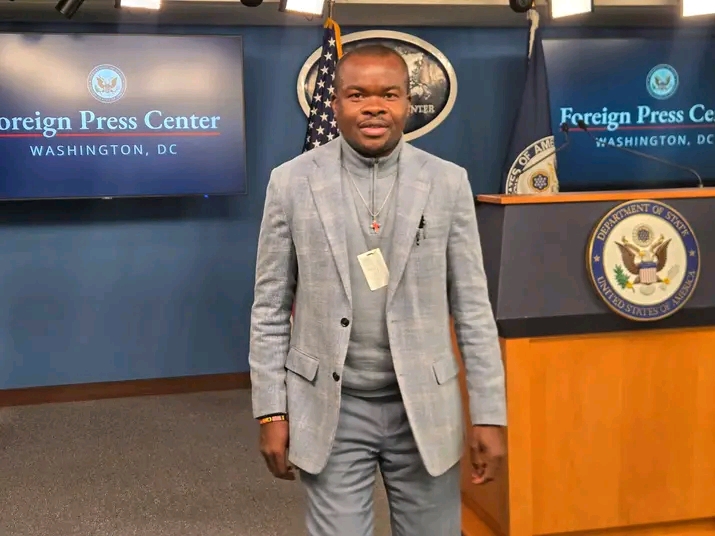
Niger’s 37 Dead: When Poverty Meets the Failure of the State, by Boniface Ihiasota
I can’t understand how about 37 people died in the custody of the state within hours of being arrested for allegedly engaging in illegal mining. It is unsettling not merely because of the number of lives lost, but because of what the incident in Minna, Niger State, says about the relationship between poverty, law enforcement and the Nigerian state.
Between September 15 and 16, 2026, the Nigeria Security and Civil Defence Corps reportedly arrested scores of suspected illegal miners during enforcement operations in the M.I. Wushishi and Lukoto areas of Minna. On Thursday, September 17, 37 of those detained were found dead in NSCDC custody. The exact cause of death has not been conclusively established. The NSCDC initially referred to a suspected disease outbreak, while survivors alleged that overcrowding and poor ventilation caused detainees to struggle for breath. The bodies were taken to the General Hospital, Minna, for medical examination and autopsy.
In a country where public outrage can quickly become a substitute for evidence, the temptation is to pronounce judgment before investigators establish what happened. But there is an equally dangerous temptation to hide behind an investigation when the circumstances demand immediate accountability. The men and boys who died were suspects, not convicts.
Even if every one of them had been guilty of illegal mining, the state had a duty to keep them alive and treat them humanely while they were in custody. The law does not confer a licence to punish suspects outside the judicial process. A person does not lose his right to life because he has been accused of breaking the law.
Niger State is endowed with gold and other mineral resources, but much of the artisanal mining economy exists at the intersection of poverty, unemployment, weak regulation and insecurity. For many young Nigerians, particularly in impoverished communities, mining is not an ideological rebellion against the state. It is often a desperate attempt to make money where legitimate economic opportunities are scarce.
That does not make illegal mining lawful. It does, however, make the phenomenon more complicated than a security problem.
Some reports have indicated that several of those detained were between 14 and 18 years old. Women in Mining Nigeria has called for the ages and identities of the deceased to be independently verified, alongside independent monitoring of autopsies. If the presence of children among those arrested is confirmed, another uncomfortable question emerges: where were the schools, families, social protection systems and economic alternatives that should have kept children away from hazardous mining sites? Nigeria cannot police poverty out of existence.
The protests that followed the deaths in Minna on Friday, September 18, further demonstrated how quickly mistrust between citizens and security agencies can turn tragedy into confrontation. The Niger State Government imposed a curfew as unrest spread, while police and other security personnel were deployed.
President Bola Ahmed Tinubu subsequently directed a comprehensive investigation. On September 19, Interior Minister Olubunmi Tunji-Ojo announced a 10-member independent committee chaired by retired DSS Deputy Director-General Jonathan Kure, with Professor Isa Hayatu Chiroma, SAN, as secretary. Professor Olayinka Buhari, a histopathologist and former Chief Medical Director of the University of Ilorin Teaching Hospital, is among the members. The committee is expected to establish the identities of the dead, examine their arrest and detention, determine the circumstances of their deaths and identify any negligence or misconduct. Twenty-one NSCDC officers, including the Niger State Commandant, Suberu Siyaka Aniviye, have also been suspended pending the investigation.
That investigation must be more than another government exercise that produces a report and then disappears into an archive. The families deserve names. They deserve facts. They deserve to know how their relatives died. And where wrongdoing is established, they deserve justice.
There is a mining economy that needs regulation rather than perpetual chaos; communities that need legitimate livelihoods; children who need schools instead of mine sites; and security institutions that need stronger standards for detention, medical response, ventilation and protection of human life.
The lesson from Minna is therefore not simply that illegal mining must be stopped. It is that enforcement without institutional responsibility can produce another tragedy while attempting to prevent one.
A government that asks citizens to obey the law must demonstrate that those enforcing the law are equally bound by it.
From the Diaspora, this is perhaps the most troubling reflection: the true measure of a state is not how forcefully it can arrest the vulnerable, but how responsibly it treats them after they fall into its hands.
The 37 who died in Minna should not become another statistic in Nigeria’s long catalogue of preventable deaths. Their deaths should become a test of whether accountability in Nigeria is capable of reaching those who wield the authority of the state.
Because when a suspect enters government custody, the responsibility of government does not diminish. It begins.

Kaduna’s Security Question, by Alabidun Shuaib AbdulRahman
There are some arguments in Nigeria that should never be allowed to remain where they began. They start on television, move to social media, acquire partisan colours and eventually disappear beneath the next political controversy. But the recent exchange between the Minister of Defence, General Christopher Musa, and former Kaduna State Governor, Nasir El-Rufai, is too serious to be treated that way. It touches something much deeper than the political relationship between two men. It touches Kaduna. And Kaduna has a long memory.
On September 3, 2026, Musa appeared on Channels Television’s Politics Today and spoke in unusually strong terms about El-Rufai’s years as governor. He accused the former governor of dividing Kaduna, creating a situation in which people from the southern part of the state could not freely live in the northern part and vice versa. More seriously, Musa said he could not be happy with somebody who had “deliberately planned” the killing of his people in Southern Kaduna. He also referred to El-Rufai’s past comments about payments made to people involved in the violence. If I must say, that is a very heavy allegation to come from a serving Minister of Defence.
El-Rufai’s family has demanded that Musa produce evidence to substantiate the allegation or retract it within seven days, while his lawyers have also demanded an apology and compensation. That response is understandable. But it should not end the conversation. In fact, it should begin a more serious one.
Musa has a responsibility to explain what he meant and, more importantly, what evidence supports it. If he possesses intelligence reports, official communications, witnesses, operational records or any other material capable of establishing that a former governor deliberately planned killings, Nigerians deserve to know that such evidence exists and that it is being properly investigated. If there is no evidence, then the allegation should be withdrawn.
This is not about protecting El-Rufai. It is about protecting the credibility of public office. A Defence Minister cannot make an allegation of this magnitude and expect Nigerians to treat it as ordinary political rhetoric. The office he occupies gives his words an institutional weight that cannot simply be separated from the Nigerian security establishment. Yet, while Musa must answer for the allegation he has made, El-Rufai cannot reasonably expect his own record in Kaduna to be placed beyond examination.
When Nasir El-Rufai became governor in May 2015, he inherited a state already deeply fractured by years of ethnic, religious and communal crises. Southern Kaduna had experienced serious violence before he arrived at Government House. The historical grievances surrounding Zangon Kataf, Kaura, Kauru, Jema’a, Kajuru, Kachia and neighbouring areas were not created by his administration.
This clarification is important because political arguments often suffer from selective memory. A governor can inherit a problem without creating it. But once he governs a state for eight years, he must also accept responsibility for the decisions made under his watch and for the outcomes of those decisions. El-Rufai governed Kaduna between 2015 and 2023. During that period, the state witnessed some of its most painful episodes of communal violence and the gradual entrenchment of banditry and kidnapping.
In November 2016, violence in parts of Southern Kaduna killed dozens of people and displaced thousands. The government responded with security deployments, arrests and attempts at dialogue. The following month, El-Rufai said his administration had traced some of those involved in the violence to neighbouring countries and other parts of the Sahel. He also spoke publicly about compensation and payments intended to resolve disputes and persuade some of those involved to stop the violence.
That admission has become part of the political argument today because there is a significant difference between a government negotiating with people involved in violence, compensating victims or making payments as part of an attempt to end hostilities, and deliberately planning the killing of citizens. The first can be debated as a matter of public policy. The second is a grave allegation that requires proof.
The clarity matters because Nigeria has become dangerously comfortable with treating allegations as facts whenever they suit a political narrative. That is what Kaduna has suffered from for too long.
The violence in Kajuru in February 2019 is a good example. Scores of people were killed in attacks and reprisals involving communities in the area. The casualty figures and competing narratives differed, as they often do in communal conflicts, but the underlying reality was unmistakable: people were killed, homes were destroyed and communities were pushed deeper into fear and distrust.
Those who lived through that period do not need politicians to remind them that Kaduna was bleeding. What they need is an honest explanation of why the state has continued to experience violence despite years of government intervention. That question becomes even more important because the insecurity did not disappear with El-Rufai’s departure from office.
He left Government House on May 29, 2023. On March 7, 2024, gunmen attacked schools in Kuriga, in Chikun Local Government Area, and abducted schoolchildren and teachers. Initial reports put the number of abducted pupils at 287, although subsequent official figures placed the number at 137. The victims were eventually rescued in Zamfara State on March 24.
Kuriga was more than another kidnapping incident. It was a reminder that Kaduna’s security crisis had outlived the administration that had governed the state for eight years.
Also, in March 2024, residents of Kajuru Station in Kajuru Local Government Area reported that gunmen had abducted scores of people in yet another attack on the community. It was another illustration of the vulnerability of rural Kaduna, where communities are often separated from major security formations by difficult terrain, poor roads and vast stretches of forest.
By July 2026, the situation remained sufficiently dangerous to produce another tragedy in Kauru Local Government Area. Residents reported that at least 30 people, including eight children, were killed when attackers invaded Naridon village. Houses were burnt and the attackers reportedly escaped before security forces arrived. Thirty people. Eight of them children. That should be enough to remind everyone that the argument over El-Rufai is only one small part of a much larger problem.
The family that loses a father in Naridon does not care whether the responsibility lies with a former governor, the current governor, the Federal Government or a local security commander. The parents of the children abducted from Kuriga did not care which political party was in power. They wanted their children back. That is the human dimension that is often lost when Kaduna becomes a subject of political debate.
The danger of discussing insecurity exclusively through the language of political blame is that it creates the illusion that removing one person will solve the problem. Kaduna’s experience proves otherwise. El-Rufai left. The insecurity remained. Although it might not be like before.
Governor Uba Sani inherited it. The military continued its operations. Security agencies continued to deploy personnel. Yet communities continued to experience attacks, kidnapping and displacement. This does not absolve El-Rufai of responsibility for his own administration. It simply demonstrates that the crisis is bigger than him. The same argument applies to Uba Sani.
He cannot be blamed for creating a problem that predates him, but after more than three years in office, his administration must also be judged by whether it is succeeding in making vulnerable communities safer.
The Federal Government must face the same lense of scrutiny. General Christopher Musa (rtd) himself understands the complexity of the problem. As Chief of Defence Staff, he acknowledged the difficulties faced by security forces in dealing with kidnappers and armed groups operating from vast forests. Intelligence failures, misinformation from informants, difficult terrain and the mobility of criminal networks have repeatedly complicated military operations.
That is perhaps closer to the real Kaduna problem than the political argument currently dominating public discussion. The state does not merely have a problem of soldiers. It has a problem of intelligence. It has a problem of policing. It has a problem of criminal networks. It has a problem of porous borders and weapons trafficking. It has a problem of forests that provide concealment. It has a problem of communities that sometimes fear security agencies almost as much as they fear criminals. And it has a problem of trust.
The other problem is that Kaduna’s insecurity cannot be reduced to religion. Religion has undoubtedly shaped some of the state’s historical conflicts, and ethnic identity has often been weaponised. But the contemporary security crisis is also deeply connected to criminality, land disputes, cattle rustling, kidnapping for ransom, illegal arms flows and the economics of rural insecurity.
As expected of him, Musa should provide evidence for his allegation against El-Rufai. If the evidence exists, it should be investigated without fear or favour. If it does not, the allegation should be withdrawn. El-Rufai, on the other hand, should accept that his administration’s security policies and decisions will remain legitimate subjects of public scrutiny. The passage of time does not erase the record of a government.
Governor Uba Sani must equally accept that inheriting insecurity is not an excuse for allowing it to become permanent and the Federal Government must recognise that Kaduna is not merely another state requiring periodic military deployments. It is one of the places where Nigeria’s entire security architecture is being tested.
The country needs to understand the networks behind the violence, not merely the men carrying rifles. It needs to know who finances them, who supplies weapons, who provides information, who negotiates ransom and who benefits from communities being driven away from their farms. Until that ecosystem is dismantled, Nigeria may continue to defeat individual criminal groups without defeating the criminal economy that produces them.
Alabidun is a media practitioner and can be reached via alabidungoldenson@gmail.com

The Dark Lessons From Anambra, by Boniface Ihiasota
There are crimes that shock a society because they violate the law, and there are others that leave a deeper wound because they violate the very foundations on which society is built. The disturbing case involving a 36-year-old woman, Anulika Onyeanusia, in Onitsha, Anambra State, belongs to the latter category.
On Friday, September 11, 2026, the Anambra State Police Command confirmed Onyeanusia’s arrest after a disturbing video allegedly showed her sexually abusing a minor with sex toys. Police spokesperson, SP Tochukwu Ikenga, said operatives also rescued four children, aged two, three, six and nine, and recovered sex toys and other items believed to be relevant to the investigation. Her husband was also being questioned to establish whether he had any connection with the alleged offence.
That is what is officially established. Other reports have carried additional allegations, including claims that more than one daughter was abused and that some of the material was uploaded to a pornographic platform for money. Those claims should remain allegations until investigators establish the facts. The identities of the children should equally remain protected.
But beyond the police investigation lies a larger question: what happens to a society when the place where a child expects protection becomes the place of greatest danger?
In many Nigerian cultures, motherhood is surrounded by a moral reverence that goes beyond biology. The mother is expected to be the first teacher, protector and emotional refuge. The family home, despite its imperfections, is traditionally regarded as the child’s safest space. To sexually exploit a child within that space is therefore not merely an individual moral failure. It represents a profound betrayal of trust.
Culture, however, cannot be invoked selectively. Respect for motherhood cannot become a shield against accountability, just as the preservation of family reputation must never be placed above the protection of a child. A family that hides abuse to avoid shame does not preserve its honour; it transfers the shame to the victim and allows the violence to continue.
The psychological consequences can be devastating. A child sexually abused by a stranger may at least understand that the offender was an outsider. Abuse by a parent or trusted caregiver can destroy the child’s understanding of safety itself. Research on child sexual abuse has associated such experiences with serious psychological and social consequences, while Nigeria’s own research literature acknowledges that the true burden of child sexual abuse remains difficult to determine because many cases never reach formal institutions.
The damage can follow the child into adulthood. Shame, anxiety, depression, difficulties with trust and intimacy, distorted ideas about relationships and persistent feelings of guilt can become part of the aftermath. None of these outcomes is inevitable, and early professional intervention can make a substantial difference. That is why the police assurance that the rescued children will receive counselling, care and protection is important. Their recovery must become as important as the prosecution of whoever is responsible.
There is also a digital dimension that Nigerian society can no longer ignore. Once sexual abuse of a child is recorded and distributed online, the trauma can acquire a frightening permanence. Removing the original video does not necessarily erase copies, screenshots or private downloads. A child may therefore face the possibility of encountering evidence of her own abuse years later.
This is why Nigerians must resist the temptation to circulate such material in the name of outrage or evidence. Sharing it further can compound the victim’s exploitation. The proper response is to report it to law enforcement and relevant child-protection authorities.
Legally, Nigeria has no ambiguity about the protection owed to children. Section 32 of the Child Rights Act 2003 criminalises sexual abuse and exploitation of a child and provides for imprisonment upon conviction. The Act also establishes the best interests of the child as a paramount consideration.
The Anambra case should therefore not end with an arrest, a viral controversy and a forgotten headline. It should force families, schools, religious institutions, communities and government agencies to examine how children can disclose abuse safely, how warning signs can be recognised and how survivors can receive long-term psychological support.
A child’s childhood cannot be returned once violated. But society can still decide whether the violation becomes a life sentence of trauma or the beginning of a carefully supported journey towards healing.
The first duty of culture is to protect the vulnerable. The first duty of parenthood is to protect the child. And when either fails, silence is no longer tradition. It is complicity.



Are Killings in Niger State Beyond Ordinary? By Alabidun Shuaib AbdulRahman

Tinubu In Paris: Macron Dinner, Investment Push, Mambilla Victory

US Congressman Stutzman to Peter Obi: I Sense Trust, Honesty in You

Pastor Jerry Eze Defends Miracles At UK Conference Amidst Criticism And Controversy

Diaspora Watch 20th Edition (October 14-20, 2024): Your Trusted Source for Global News and Insights

Tanzanian Man Reportedly Dies And Returns To Life Six Times


-

 Analysis7 days ago
The Dark Lessons From Anambra, by Boniface Ihiasota
-
 News7 days ago
98 Nigerians Killed in South Africa Since 2022, Fresh Deaths Deepen Diplomatic Row
-

 Analysis7 days ago
Kaduna’s Security Question, by Alabidun Shuaib AbdulRahman
-

 News7 days ago
CARICOM backs renewal of Haiti gang force mandate
-

 News7 days ago
US, Colombia negotiate tariff deal — Rubio
-

 Politics7 days ago
US seeks roadmap to restart Russia-Ukraine peace talks — Rubio