
Diplomacy
Bianca Hosts Nigerian Delegation As Shettima Arrives US For UNGA

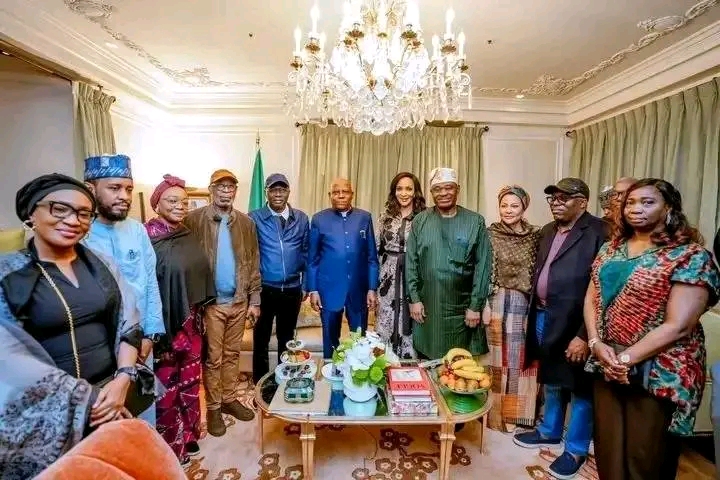
Bianca Hosts Nigerian Delegation As Shettima Arrives US For UNGA
By Boniface Ihiasota, Washington DC
Nigeria’s Minister of Foreign Affairs, Ambassador Bianca Odumegwu-Ojukwu, has welcomed Vice President Kashim Shettima to New York, United States, as he arrived to lead Nigeria’s delegation to the 81st Session of the United Nations General Assembly.
Diaspora Watch Newspaper reports that Shettima arrived in New York on Sunday night to represent President Bola Ahmed Tinubu at the high-level UNGA meetings.
Odumegwu-Ojukwu, who shared photographs of the arrival, said she was honoured to welcome the Vice President, who is expected to coordinate Nigeria’s engagements at the global gathering.
The Vice President’s delegation includes senior government officials and other representatives who will participate in bilateral meetings, high-level discussions and other activities surrounding the UN General Assembly.
The 81st UNGA provides Nigeria with an opportunity to present its positions on issues of international concern and engage world leaders, development partners and multilateral institutions.
Shettima is expected to deliver Nigeria’s national statement during the General Debate as the Federal Government seeks to advance the country’s interests and strengthen its engagements within the international community.


Tinubu In Paris: Macron Dinner, Investment Push, Mambilla Victory
By Alabidun Shuaib AbdulRahman
Nigeria’s President Bola Ahmed Tinubu’s second leg of his three-week European leave in Paris has evolved into more than a stop in the French capital, with high-level diplomatic engagement, renewed investment discussions, digital-economy initiatives and a major arbitration victory for Nigeria converging around the President’s stay.
Tinubu arrived in Paris on Sunday, September 13, after spending the first phase of his annual leave in London. He was received by Nigeria’s Ambassador to France, Ayodele Oke, as the Presidency maintained that the trip was a working vacation ahead of the President’s return to Nigeria.
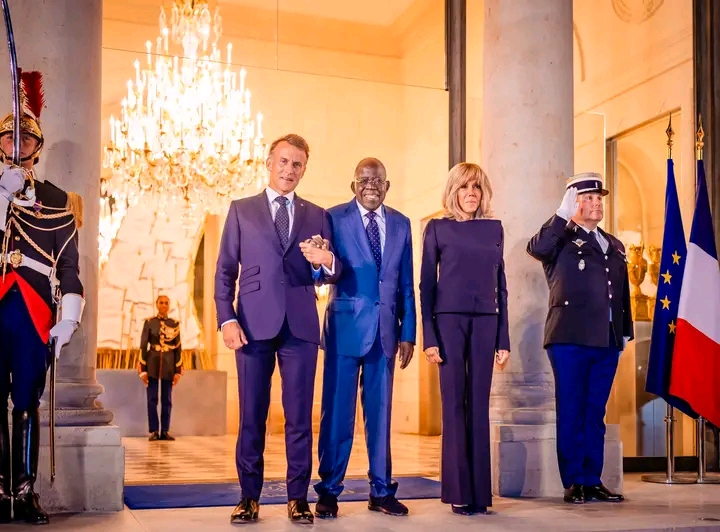
The Paris leg assumed a distinctly diplomatic character on Thursday, September 17, when French President Emmanuel Macron received Tinubu for a private dinner at the Élysée Palace.
Although details of the private discussions were not released, the Presidency said the encounter reflected the longstanding relationship between Nigeria and France and the two countries’ shared commitment to strengthening bilateral cooperation.
Photographs released from the meeting showed Tinubu with Macron and France’s First Lady, Brigitte Macron.
The engagement was significant against the backdrop of a relationship that has expanded considerably since Tinubu assumed office in May 2023.
France’s Ministry for Europe and Foreign Affairs describes Nigeria as an important partner because of its demographic, economic, cultural and political weight in Africa.
The ministry says bilateral relations have intensified substantially since 2014, particularly in economic and cultural affairs.
France also identifies Nigeria as its largest trading partner in sub-Saharan Africa, accounting for about 20 per cent of France’s trade with the region.
Bilateral trade stood at €5.1bn in 2023, according to French government figures.
The latest Macron-Tinubu engagement therefore came against an established diplomatic framework rather than as an isolated presidential encounter.
Tinubu’s previous major engagement with France included his November 2024 state visit, during which the two countries signed declarations of intent covering economic cooperation, sustainable and solidarity-based investment, critical minerals, banking and the cultural and creative industries.
France also recalls Tinubu’s June 2023 visit to Paris for the Summit for a New Global Financial Pact, his first official foreign trip after assuming office.
But the most tangible economic dimension of the current Paris stay emerged on Friday, September 18, when Tinubu met Vincent Bolloré, chairman of the Bolloré Group, for discussions on expanding the French conglomerate’s investments in Nigeria.
According to the Presidency, the discussions covered film, entertainment, fibre-optic infrastructure and the wider digital economy, with the group indicating plans to deepen the localisation of its operations in Nigeria.
The interests of the Bolloré Group include Canal+, MultiChoice and Universal Music Group, giving the meeting implications beyond conventional infrastructure investment and into Nigeria’s rapidly expanding entertainment, media and technology ecosystem.
For Tinubu, the argument is increasingly centred on converting Nigeria’s enormous cultural influence into domestic economic value.
The President said Nigeria’s global cultural reach through Nollywood, Afrobeats, fashion and other creative industries should translate into greater local production, investment, infrastructure and employment.
The Presidency said the discussions were also linked to the administration’s objective of ensuring that more of the value generated by Nigerian talent remains within the country.
The meeting with Bolloré consequently placed the creative economy alongside digital infrastructure as an emerging component of Nigeria’s investment diplomacy.
It was also consistent with another initiative announced during the Paris period: the movement of Nigeria’s Digital Free Zones programme into its implementation phase.
The initiative is designed to enable Nigerian technology and service companies to raise international capital, serve global markets and retain their businesses and intellectual property in Nigeria rather than relocating abroad.
Tinubu directed the Minister of Trade and Investment, Jumoke Oduwole, who is vice-chairman and implementation coordinator of the Presidential Steering Committee on Digital Free Zones, to work with the committee and Itana Innovation to develop a roadmap for the full launch of the programme within 180 days.
At the centre of the initiative is Itana, described by the Presidency as Nigeria’s first Digital Free Zone and already licensed by the Nigeria Export Processing Zones Authority.
The government said the Africa Finance Corporation is backing the $500m Itana Innovation project at Alaro City in Lagos, where an innovation campus, access to capital and ecosystem services are expected to support African digital businesses.
Tinubu’s pitch is that Nigeria should not merely produce the talent powering the global digital economy while the companies, intellectual property, capital and high-value jobs are domiciled elsewhere.
The President said the administration wanted companies to be incorporated, financed and governed from Nigeria while serving customers across Africa and the wider world.
That economic message ran parallel to an important legal development in Paris.
On Thursday, September 17, an International Chamber of Commerce arbitration tribunal sitting in Paris delivered an award in favour of Nigeria in the long-running dispute involving Sunrise Power and Transmission Company Limited over the Mambilla Hydroelectric Power Project in Taraba State.
The case had exposed Nigeria to claims running into billions of dollars.
Sunrise had sought $680m in one aspect of the dispute while a separate arbitration involved claims exceeding $2.7bn relating to the proposed 3,960-megawatt Mambilla project. The tribunal rejected the claims.
According to details reported from the award, the tribunal also rejected Sunrise’s $400m claim arising from a 2020 settlement agreement and ordered Sunrise and its promoter, Leno Adesanya, to reimburse Nigeria 75 per cent of its legal fees and expenses, amounting to about $11.82m.
The dispute dates back to an agreement connected with the proposed Mambilla project and subsequent arbitration proceedings initiated in 2017.
A 2020 settlement agreement later produced another dispute after the government did not make the agreed payment.
Reacting to the ruling, Tinubu commended Attorney-General and Minister of Justice, Lateef Fagbemi, the Federal Ministry of Justice and the Nigerian defence team led by Elizabeth Oger-Gross and Tolu Obamuroh.
He also acknowledged the testimony of former President Olusegun Obasanjo and the late former President Muhammadu Buhari, as well as former ministers Babatunde Fashola and Suleiman Adamu and other witnesses.
Tinubu described the decision as removing what he called the “single biggest legal hurdle” that had paralysed the Mambilla project for years.
The coincidence of the arbitration ruling with the President’s presence in Paris gave the French leg of his European leave an unusual international dimension, even though the arbitration was a judicial proceeding independent of Tinubu’s presidential engagements.
The Mambilla project itself remains one of Nigeria’s most ambitious proposed power developments.
The planned hydroelectric scheme in Taraba has long been associated with the country’s search for large-scale additions to its electricity generation capacity, but contractual and legal disputes have contributed to its prolonged uncertainty.
The developments in Paris also underline the breadth of Nigeria-France relations.
The relationship now extends beyond traditional diplomacy into investment, banking, critical minerals, culture, entertainment, technology and infrastructure.
French authorities have described Nigeria as an indispensable interlocutor in Africa, while successive Nigerian administrations have sought to leverage French capital and expertise across strategic sectors.
For Tinubu, the Paris stop consequently became a meeting point for several strands of his administration’s international economic diplomacy: attracting foreign capital, keeping Nigerian intellectual property at home, expanding the creative economy, strengthening digital infrastructure and protecting the country’s position in international commercial disputes.
Yet the circumstances surrounding the trip have also attracted domestic political attention.
Tinubu left Abuja on August 30 for a three-week annual leave, with London as his first destination and Paris as the second leg.
The Presidency had described the absence as a working vacation and said the President would return to Nigeria at the end of the period.
The President’s stay abroad also generated debate over the constitutional question of presidential delegation during an extended absence, with some political figures questioning why Vice-President Kashim Shettima had not been formally designated Acting President.
Those arguments were publicly advanced by critics and were separate from the diplomatic and economic engagements in Paris.
For France, however, the immediate story has been the continuation of a relationship that has steadily acquired greater strategic and commercial depth.
While for Nigeria, the Paris episode has produced a cluster of developments that extend well beyond a presidential dinner: renewed contact with the Élysée Palace, an investment conversation with one of France’s most influential business groups, an implementation push for digital free zones and an ICC ruling that rejected multibillion-dollar claims connected to one of the country’s biggest proposed power projects.
Saudi Arabia, Turkey, Pakistan sign defence pact amid Middle East tensions
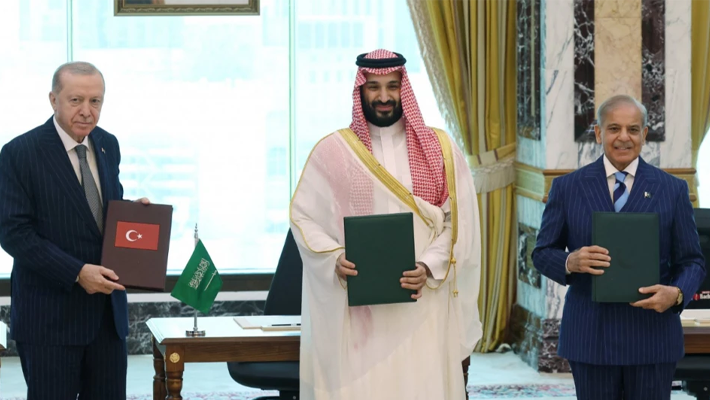
Saudi Arabia, Turkey and Pakistan have signed a landmark joint defence agreement amid heightened tensions in the Middle East, with the three countries declaring that an armed attack against any one of them would be regarded as an attack against all.
The agreement, known as the Mecca Joint Defence Agreement, was signed on Friday, August 7, 2026, in Makkah by Saudi Crown Prince Mohammed bin Salman, Turkish President Recep Tayyip Erdoğan and Pakistani Prime Minister Shehbaz Sharif.
The pact, which formalises nearly a year of negotiations among the three countries, comes amid escalating regional tensions following attacks involving Iran, Israel and the United States and disruptions to energy and commercial routes around the Gulf.
The agreement deepens an already growing military relationship among the three countries, but officials have stressed that it is defensive in nature and is not directed against any particular country.
Turkey brings considerable military and technological capabilities to the partnership as a NATO member with a rapidly expanding indigenous defence industry.
Saudi Arabia contributes its strategic location, financial resources and status as one of the world’s leading oil exporters, while Pakistan provides extensive military experience and is the only nuclear-armed Muslim-majority country.
The pact is also significant against the background of growing uncertainty over the future role of the United States in the Middle East.
The three countries have increasingly sought greater responsibility for regional security as conflicts and geopolitical rivalries continue to test existing security arrangements.
The agreement followed months of negotiations and comes at a particularly sensitive period for the Gulf.
Recent regional hostilities have affected energy infrastructure and commercial shipping routes, while concerns over security around the Strait of Hormuz have increased because of its importance to global oil supplies.
Although the pact establishes a mutual-defence principle, details of the precise mechanisms for implementing the commitment have not been fully disclosed.
Questions remain over the extent to which the three countries will coordinate intelligence, conduct joint military exercises or establish mechanisms for responding collectively to an attack.
The agreement nevertheless marks a major development in the security calculations of the Middle East and South Asia.
Saudi Arabia has historically relied heavily on its strategic relationship with the United States for security, while Turkey remains a major NATO military power. Pakistan, meanwhile, has maintained longstanding defence relationships with both Saudi Arabia and Turkey.
The new arrangement could therefore provide the three countries with an additional framework for military cooperation without necessarily replacing their existing international alliances.
The pact also reflects the growing importance of Saudi-Turkish relations. Ankara and Riyadh have expanded political, economic and defence cooperation in recent years after a period of strained relations.
Pakistan, for its part, has maintained close military and political ties with Saudi Arabia and has deepened defence cooperation with Turkey, including military training and defence-industrial collaboration.
The three-way agreement is expected to strengthen those existing relationships while giving them a more formal strategic dimension.
The signatories have insisted that the agreement is intended to strengthen collective deterrence and protect their sovereignty rather than establish a sectarian military bloc.
However, its timing has inevitably raised questions about its implications for the wider balance of power, particularly amid tensions involving Iran and Israel.
The emergence of the pact also comes as Gulf states reassess their security arrangements in response to the changing regional environment.
For Saudi Arabia, the agreement offers another layer of strategic security.
For Turkey, it expands Ankara’s military and diplomatic influence beyond its immediate neighbourhood.
For Pakistan, it provides an opportunity to deepen its role in Middle Eastern security while strengthening its strategic partnership with two economically and politically influential countries.
The agreement is therefore more than a bilateral military arrangement extended to a third country.
It represents a significant attempt by three influential Muslim-majority states to build a stronger framework for collective security at a time of growing uncertainty across the region.
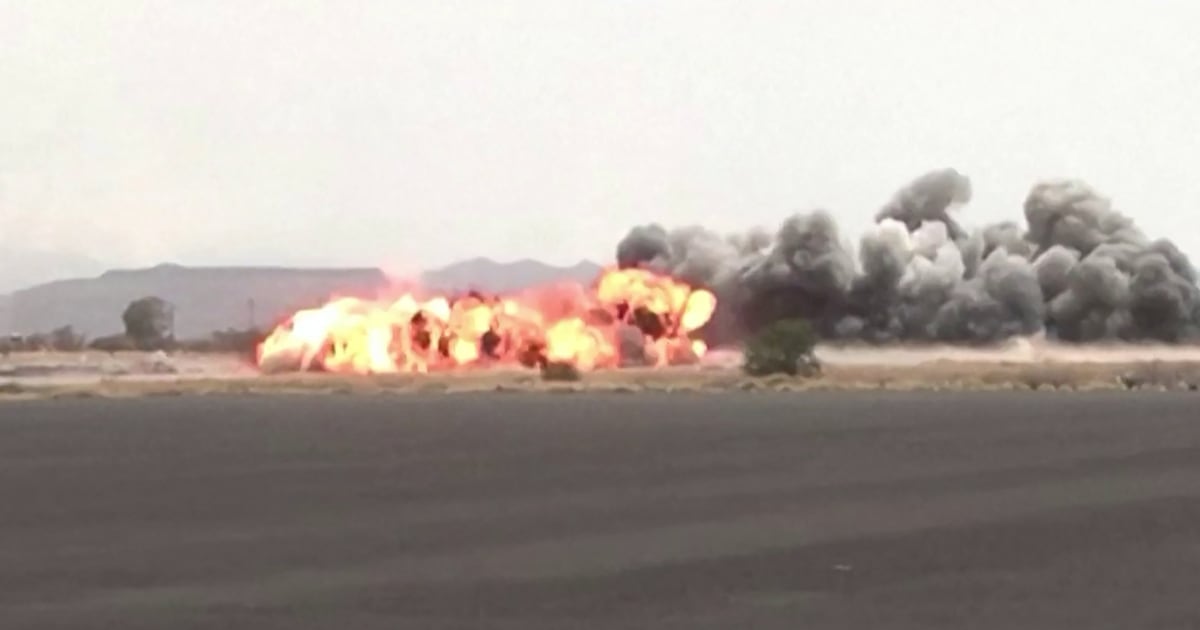
Houthis Claim Missile Strike on Saudi Arabia After Riyadh Bombs Yemen
Iran-backed Houthi rebels on Saturday claimed responsibility for a missile attack on Saudi Arabia’s southern Jizan province, hours after Riyadh carried out air strikes on Houthi positions in Yemen, marking a fresh escalation in the widening Middle East conflict.
The Houthis, through their Ansarollah media platform on Telegram, said the missile attack triggered fires in Jizan and described it as retaliation for Saudi air raids on the Yemeni port city of Hodeida and the nearby Kamaran Island on Friday.
“The Saudi enemy’s targeting of civilian facilities in Hodeida and Kamaran Island constitutes a dangerous escalation,” the group said, adding that the attacks “will not go unanswered.”
Saudi authorities issued emergency alerts for Jizan Province following the reported missile strike but had yet to officially confirm the attack or announce casualties as of Saturday.
The latest exchange of hostilities came amid rising regional tensions involving Iran, the United States and their allies, although there were no reports of fresh US or Iranian air strikes overnight for the first time in two weeks.
The development followed nearly two weeks of sustained military action by Washington, which had carried out 13 consecutive nights of strikes against Iranian targets.
Iran, in turn, has launched multiple drone attacks targeting US military facilities and bases across the Middle East.
Meanwhile, diplomatic efforts appeared to continue behind the scenes as a delegation from Oman arrived in Tehran for talks centred on the strategic Strait of Hormuz, according to Iran’s state-run IRNA news agency.
Oman controls the southern coastline of the vital waterway, through which a significant portion of the world’s crude oil exports passes.
Speaking at the White House on Friday, US President Donald Trump said negotiations with Tehran were ongoing but warned that Washington remained prepared to intensify military action if diplomacy failed.
“We are talking to them. I think they’re being serious… but that doesn’t mean we get there,” Trump said.
The US President added that Washington had two options: continuing military operations or reaching a negotiated settlement.
“There’s a military exit where we just keep going… or there’s a smarter strategy that you make a deal,” he said, adding, “We’re locked and loaded. We’re ready to go.”
The US military also disclosed that it had disabled a commercial tanker in the Gulf of Oman after the vessel allegedly attempted several times to breach the American blockade on Iranian ports.
US Central Command spokesman Capt. Tim Hawkins said the tanker ignored repeated warnings before US forces fired into its engine room, preventing it from continuing its voyage to Iran.
The incident marked the second commercial vessel disabled by the US since it reinstated its maritime blockade on Iranian ports earlier this month.
The renewed threat to shipping routes in the Red Sea and the Strait of Hormuz has continued to fuel concerns in global energy markets.
Crude oil prices climbed above $100 per barrel earlier this week on fears of supply disruptions before retreating below $97 on Friday after two Chinese-chartered supertankers successfully navigated the Bab el-Mandeb Strait without incident.
Diplomatic activity is also expected to intensify in the coming days, with the United States and the United Kingdom scheduled to host a high-level conference in London next week on maritime security in the Strait of Hormuz.
US Defence Secretary Pete Hegseth and Chairman of the Joint Chiefs of Staff Gen. Dan Caine are expected to attend the meeting.
The conference will precede Israeli Prime Minister Benjamin Netanyahu’s scheduled visit to the White House on Tuesday, where regional security and the escalating conflict with Iran are expected to dominate discussions.
The latest violence has further undermined the June memorandum of understanding reached between Washington and Tehran, which sought to halt hostilities and reopen the Strait of Hormuz.
The agreement effectively collapsed after renewed attacks on shipping in the strategic waterway prompted retaliatory US strikes, with Trump later declaring the ceasefire “over.”


Are Killings in Niger State Beyond Ordinary? By Alabidun Shuaib AbdulRahman

Tinubu In Paris: Macron Dinner, Investment Push, Mambilla Victory

US Congressman Stutzman to Peter Obi: I Sense Trust, Honesty in You

Pastor Jerry Eze Defends Miracles At UK Conference Amidst Criticism And Controversy

Diaspora Watch 20th Edition (October 14-20, 2024): Your Trusted Source for Global News and Insights

Tanzanian Man Reportedly Dies And Returns To Life Six Times


-

 Analysis7 days ago
The Dark Lessons From Anambra, by Boniface Ihiasota
-
 News7 days ago
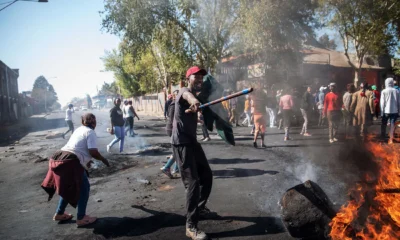
98 Nigerians Killed in South Africa Since 2022, Fresh Deaths Deepen Diplomatic Row
-
 Analysis7 days ago
Kaduna’s Security Question, by Alabidun Shuaib AbdulRahman
-
 News7 days ago
CARICOM backs renewal of Haiti gang force mandate
-
 News7 days ago
US, Colombia negotiate tariff deal — Rubio
-
 Politics7 days ago
US seeks roadmap to restart Russia-Ukraine peace talks — Rubio