
Health
Trump Proposes Five-Way Split of Childhood Vaccines

Trump Proposes Five-Way Split of Childhood Vaccines
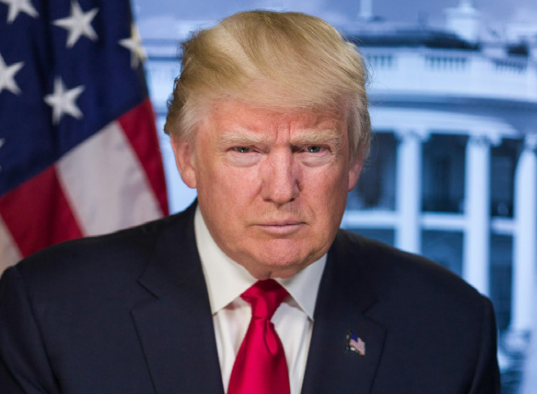
President Donald Trump has proposed splitting some childhood vaccines into five separate doses administered six months apart, a plan that vaccine experts say could leave children inadequately protected if the individual doses contain too little vaccine.
Trump made the proposal on Friday while speaking about his administration’s plans to alter the United States childhood immunisation schedule.
He said children could receive doses labelled one through five, with each containing what he described as about 20 per cent of the usual amount.
“Instead of a child going in and having a tremendous amount of different vaccines pumped into a big proportion of the body … we’re going to recommend that they do five doses marked one, two, three, four, five and that they be given in six-month intervals,” Trump said.
Trump did not identify all the vaccines that would be affected. He specifically referred to the polio vaccine, which he described as having been “amazing”.
However, vaccine specialist Dr Paul Offit, director of the Vaccine Education Centre at the Children’s Hospital of Philadelphia, said the proposed approach would not provide the intended protection.
Offit explained that vaccines are developed through dose-response studies to determine the smallest quantity capable of producing a protective immune response.
“You don’t want to give too much, where you know you don’t need all that, and you don’t want to give too little,” he said.
He told CNN that administering vaccines at doses below the level required to generate an immune response could make them ineffective rather than safer.
Trump also linked the proposed changes to autism, saying he expected them to lead to a “massive reduction” in autism.
However, decades of scientific research have found no causal link between childhood vaccines and autism.
The President’s comments came amid broader efforts by his administration to alter federal childhood vaccination policy.
In August, Trump signed an executive order seeking changes to the childhood immunisation schedule, including separating the measles, mumps and rubella vaccine into individual shots.
The administration has argued that the changes would reduce the number of vaccines given to children and address concerns about the existing schedule.
Health and Human Services Secretary Robert F. Kennedy Jr., who was with Trump as he outlined the proposal, has also backed changes to federal vaccine policy.
Kennedy spoke on Thursday at a conference organised by Children’s Health Defense, an organisation associated with vaccine scepticism.








DRC gets 70,000 Ebola vaccine doses as trial targets Bundibugyo virus
The Democratic Republic of Congo has received 70,000 doses of the Ervebo Ebola vaccine from the global vaccine stockpile as health authorities intensify efforts to contain an outbreak of Bundibugyo virus disease.
The doses were released by the International Coordinating Group on Vaccine Provision following a request from the DRC government last week.
The development comes amid uncertainty over the effectiveness of Ervebo against the Bundibugyo strain, which is different from the Zaire ebolavirus for which the vaccine was originally developed and licensed.
Of the 70,000 doses, 20,000 have been allocated for a Phase 3 clinical trial designed to assess the vaccine’s potential impact against the Bundibugyo virus, while 50,000 doses will be administered to frontline and health workers in line with recommendations from the World Health Organisation’s Strategic Advisory Group of Experts on Immunization.
The effectiveness of Ervebo against Bundibugyo virus in humans is currently unknown.
However, preliminary laboratory and animal studies have suggested that the vaccine could offer some protection, prompting researchers to investigate its potential through the clinical trial.
The trial is expected to generate evidence that could guide future decisions on the use of Ervebo in outbreaks involving the Bundibugyo strain.
Health authorities have also stressed the importance of informed consent, saying people offered the vaccine must be adequately informed about its potential risks, benefits and limitations in relation to the current outbreak.
The ICG is made up of the WHO, International Federation of Red Cross and Red Crescent Societies, Médecins Sans Frontières and UNICEF, while Gavi, the Vaccine Alliance, funds the global vaccine stockpile.
The WHO and Africa Centres for Disease Control and Prevention welcomed the allocation, supporting the DRC’s efforts to protect affected communities and contain the outbreak through a community-led response.
Both organisations said they would continue to support the DRC government in protecting communities, saving lives and generating scientific evidence that could strengthen Africa’s preparedness for future viral outbreaks.
The Bundibugyo outbreak has renewed attention on the need for effective vaccines and rapid scientific responses to emerging infectious diseases, with the outcome of the DRC trial expected to provide important information for future outbreak control.
Africa CDC, WHO demand urgent scale-up of DRC Ebola response
The Africa Centres for Disease Control and Prevention and the World Health Organisation have called for an urgent scale-up of the community-led response to the Ebola outbreak in the Democratic Republic of the Congo.
The organisations said the response must focus on early detection, contact tracing, access to treatment, protection of frontline health workers and faster deployment of resources to affected communities.
The call followed a joint high-level mission to Uganda and the DRC on August 4 and 5, led by the WHO Director-General, Dr Tedros Adhanom Ghebreyesus; Director-General of Africa CDC, Dr Jean Kaseya; and WHO Regional Director for Africa, Dr Mohamed Janabi.
The delegation visited Kampala, Bunia and Kinshasa, where it held discussions with government officials, response coordinators, health workers, community representatives and development partners.
In Uganda, the delegation commended the country for successfully containing local transmission after it declared the end of its outbreak on July 28.
Uganda recorded 20 confirmed cases and two deaths, while all identified contacts completed their follow-up.
The organisations said Uganda’s experience demonstrated the importance of early detection, rapid contact tracing, coordinated government action, community engagement and effective cross-border surveillance.
However, they warned that continued transmission in the DRC meant neighbouring countries remained at risk and should maintain surveillance, laboratory readiness and cross-border coordination.
The delegation subsequently travelled to Bunia, the epicentre of the outbreak in Ituri Province, where it met provincial authorities, health workers, community leaders and response partners.
It also visited the Rwangole Ebola Treatment Centre to assess its readiness to expand access to timely and quality care.
The delegation stressed that communities would play a central role in containing the outbreak, urging authorities to ensure that residents receive accurate information from trusted sources and can report suspected cases and seek treatment without fear.
It also identified community, religious, women and youth leaders as critical partners in building confidence and ensuring that response measures reflect local realities.

US raises Ebola response to highest level as Congo outbreak worsens
The United States Centers for Disease Control and Prevention has raised its emergency response to the ongoing Ebola outbreak in the Democratic Republic of Congo to its highest activation level, citing growing concerns over the rapid spread of the disease, even as it maintained that the risk to the American public remains low.
The CDC announced on Friday that it had elevated its emergency operations to Level 1, its highest response category, a designation reserved for the most critical public health emergencies requiring the agency’s maximum personnel and resources.
The decision follows a sharp increase in infections linked to the Bundibugyo strain of the Ebola virus, which has so far infected more than 1,200 people in the Democratic Republic of Congo and claimed 321 lives.
The outbreak has also spread across the border into Uganda, where 20 confirmed cases have been recorded, according to the World Health Organization.
The WHO said the current outbreak has produced the highest number of cases recorded within the first month of any Ebola outbreak.
Despite the escalation, the CDC stressed that the likelihood of the virus spreading within the United States remains low.
Speaking during a media briefing, the CDC’s Ebola Incident Manager, Dr. Satish Pillai, said the agency had already deployed 19 personnel overseas to strengthen response efforts in the affected countries.
According to him, the deployed experts are supporting more than 125 CDC staff already working through the agency’s country offices in the Democratic Republic of Congo and Uganda.
He said the teams were collaborating with health ministries in both countries on disease surveillance, laboratory testing, airport exit screening, data analysis and the training of frontline health workers.
The CDC noted that Level 1 emergency activation has previously been used during major public health and humanitarian crises, including Hurricane Katrina in 2005, the 2009-2010 H1N1 swine flu pandemic, the 2014-2016 West African Ebola epidemic and the 2016-2017 Zika virus outbreak.
Meanwhile, the White House is seeking more than $1.4bn in emergency funding from the US Congress to strengthen the country’s response to the expanding outbreak.
According to a Trump administration official, the proposed funding package includes $800m to establish a quarantine facility in Kenya for Americans who may have been exposed to the Ebola virus while abroad.


Are Killings in Niger State Beyond Ordinary? By Alabidun Shuaib AbdulRahman

Tinubu In Paris: Macron Dinner, Investment Push, Mambilla Victory

US Congressman Stutzman to Peter Obi: I Sense Trust, Honesty in You

Pastor Jerry Eze Defends Miracles At UK Conference Amidst Criticism And Controversy

Diaspora Watch 20th Edition (October 14-20, 2024): Your Trusted Source for Global News and Insights

Tanzanian Man Reportedly Dies And Returns To Life Six Times


-

 Analysis7 days ago
The Dark Lessons From Anambra, by Boniface Ihiasota
-
 News7 days ago
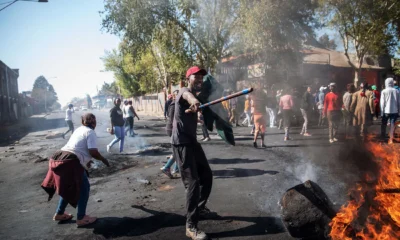
98 Nigerians Killed in South Africa Since 2022, Fresh Deaths Deepen Diplomatic Row
-

 Analysis7 days ago
Kaduna’s Security Question, by Alabidun Shuaib AbdulRahman
-
 News7 days ago
CARICOM backs renewal of Haiti gang force mandate
-
 News7 days ago
US, Colombia negotiate tariff deal — Rubio
-

 Politics7 days ago
US seeks roadmap to restart Russia-Ukraine peace talks — Rubio