
Analysis
Wike and the Abuja Master Plan, by Alabidun Shuaib AbdulRahman

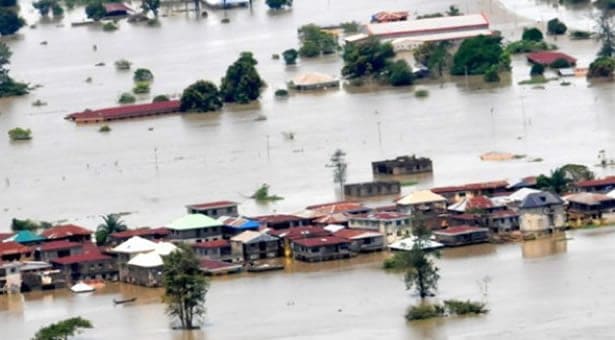
Wike and the Abuja Master Plan, by Alabidun Shuaib AbdulRahman
Last week, I wrote about the danger of Abuja gradually drifting towards the urban failures that have made Jakarta synonymous with flooding, poor drainage, disappearing waterways and the painful consequences of allowing development to outrun planning. The argument was not that Abuja is Jakarta. It was that cities, despite differences in geography, can repeat one another’s mistakes.
Events in Nepal this week have supplied an even more sobering reason for Abuja and Nigeria to take that warning seriously. What happened in Nepal on Wednesday, August 26, 2026, was not an ordinary rainy-season flood. A section of a glacier near Langtang Lirung in the Himalayas collapsed, sending an enormous mass of ice and rock crashing into the Lhende Khola river. The resulting torrent became a deadly mixture of water, mud, rock and debris that raced through valleys and settlements on the Nepal-China border. Reuters reported that the disaster destroyed roads, bridges, houses, power installations and the vital Gyirong border infrastructure, while hundreds were killed and nearly 1,000 people remained missing.
By Friday, August 28, the situation had become even more frightening. A lake created when debris blocked the river had begun overflowing, forcing rescue operations to be suspended because of the danger of another surge. Nepalese and Chinese authorities were already warning of further flooding.
The immediate lesson is not that Abuja has glaciers. It does not. Neither should anyone suggest that a Himalayan glacial collapse can simply be transplanted into Nigeria. The lesson is more fundamental and much closer to home: disasters become catastrophic when natural hazards meet vulnerable settlements, weak planning, inadequate infrastructure and institutions that respond after the damage instead of preparing before it.
Nepal has always been vulnerable to floods, landslides and other natural disasters. Its mountainous terrain makes communities particularly exposed during heavy rainfall. In September 2024, devastating rains killed at least 192 people across the country, with 56 deaths recorded in the Kathmandu Valley alone. At the time, poor urban planning and climate change are said to be the factors that worsened the flooding.
The current disaster has a different immediate trigger, but the wider warning remains the same. Scientists say climate change is increasingly destabilising high mountain environments by changing patterns of ice melt, freezing and thawing. Nepal has lost nearly one-third of its glacier ice over about three decades, according to figures cited by Reuters, while warming conditions are making compound disasters involving floods, landslides and ice or rock avalanches increasingly dangerous.
Nepal has experienced another disturbing glacial-origin flood as recently as July 2025, when the drainage of a supraglacial lake in Tibet triggered flooding along the Bhote Koshi River, killing people and destroying the Friendship Bridge between Nepal and China.
This is what climate change is doing to the meaning of disaster preparedness. The old assumption was that if you knew the rainy season, you knew roughly what to expect. That assumption is becoming increasingly unreliable. Extreme weather is becoming more complicated. Rainfall can interact with landslides. Rivers can suddenly change course. Infrastructure can become a trap. A drainage system designed for yesterday’s rainfall may be hopelessly inadequate for tomorrow’s storm.
Nigeria must understand this before another tragedy teaches us the lesson in the most expensive way possible. And Abuja, of all Nigerian cities, should understand it first. The Federal Capital was not supposed to grow like an accidental settlement. It was conceived as a planned city. The Abuja Master Plan was developed in 1979, with the Central Area plan subsequently developed in the early 1980s under Japanese architect Kenzo Tange. Its philosophy was based on organised land use, functional districts, green spaces, transportation networks and controlled development.
Its population has expanded dramatically. Its satellite towns have exploded. Its roads have stretched into areas that were once largely undeveloped. Real estate has become one of the city’s most aggressive economic activities. Natural drainage corridors have come under pressure. Green areas have been converted. Buildings have appeared in places that ought to remain open for environmental reasons. The question, therefore, is no longer whether Abuja needs its master plan reviewed. It is why the review has taken so long.
Wike has spoken about the need to review the Abuja Master Plan since 2024. In September that year, he spoke about the need to improve infrastructure, including storm-water and wastewater drainage, while discussing the review of the city’s planning framework.
Yet here we are in August 2026, and the flooding question remains sufficiently serious for stakeholders to be demanding a comprehensive review of the 1979 plan. The FCT Administration itself has now said it is reviewing the plan to reflect the current realities of the capital. That raises an uncomfortable question. If the need for an updated plan was recognised in 2024, why is Abuja still dealing with the consequences of a planning framework conceived nearly half a century ago?
This is not an argument against Wike’s achievements. Since assuming office as FCT Minister in August 2023, he has pushed roads, bridges and other infrastructure projects with an urgency that has visibly altered parts of the capital. That record should be acknowledged. But this is precisely why the argument has become more important. A road is not a city. A bridge is not a city. A beautiful interchange is not a city.
A city is a system. Water must have somewhere to go. Trees and wetlands must have somewhere to survive. Waste must have somewhere to be collected. Buildings must have somewhere they are legally permitted to stand. Roads must be designed alongside drainage. New estates must be connected to adequate infrastructure. Population growth must be anticipated rather than discovered after the fact. This is why the recent flooding in Abuja should not be reduced to the politics of demolition.
On August 18, Wike ordered the demolition of structures built on designated waterways following flooding in parts of the capital. During an inspection of flood-affected areas, the FCT Administration said it discovered a structure on a drainage area whose allocation had been revoked years earlier. That is not merely a story about one illegal structure. It is a story about the failure of a system.
If a piece of land reserved for drainage can be allocated, revoked and later occupied by a structure, then something went wrong at several points in the chain of governance. Someone approved something. Someone failed to enforce something. Someone looked away. Someone built where building was not supposed to happen. Demolition is necessary in some circumstances, but demolition after the damage has occurred is the most expensive form of planning.
That is why Wike’s administration should use the current moment to do something much bigger than clearing waterways. Abuja needs a comprehensive flood and climate resilience plan incorporated into the new master plan. Every major drainage corridor should be mapped and legally protected. Flood plains should be clearly identified. Wetlands and green areas should be treated as infrastructure, not vacant land. Development approvals should take storm-water management seriously. Satellite towns should be integrated into the same planning system rather than allowed to grow independently until their problems become Abuja’s problems.
The public should know which areas are protected waterways. Developers should know the rules before buying land. Government officials should know that approving an illegal structure will have consequences. And influential Nigerians should not be allowed to believe that their influence gives them a private exemption from public planning laws.
The recent flooding has already triggered demands from Abuja stakeholders for the desilting of drainage channels, enforcement against encroachment and a comprehensive review of the 1979 Master Plan. These demands should not be dismissed as another seasonal reaction.
The capital cannot continue to operate with a planning philosophy designed for a city that no longer exists. Wike has spent considerable political capital and public resources improving Abuja’s physical infrastructure. He should now spend the same energy modernising the rules that determine how that infrastructure interacts with the environment.
Otherwise, there is a danger that today’s roads will become tomorrow’s channels for faster-moving floodwater, and today’s new developments will become tomorrow’s flood-prone neighbourhoods. Nepal did not become vulnerable to climate-related disasters overnight.
Cities decline gradually. A wetland disappears here. A drainage channel is narrowed there. A green area is converted somewhere else. An unauthorised building is tolerated because the owner is powerful. A master plan is left unchanged for another year. A drainage project is postponed. Another road is constructed without adequate storm-water infrastructure. Then one day the rain comes. And everybody asks how it happened. Abuja still has the advantage of being able to prevent that question from becoming inevitable.
Wike has said he is reviewing the master plan. Nigerians should now demand that the review be completed, published, debated and implemented, not merely announced. The time for another committee, another promise and another inspection after another flood is gone.
The Nepal disaster is a tragedy, but it is also a warning from a distance. For Abuja, the message could not be clearer. Prepare before the water comes. Because when the flood eventually arrives, it will not ask who approved the building, who ignored the drainage, who postponed the master plan or which administration made the mistake. It will simply come. And by then, politics will be irrelevant.
Alabidun is a media practitioner and can be reached via alabidungoldenson@gmail.com




Analysis
Nigeria’s 2027 Elections and the Unfinished Business of Diaspora Voting, by Boniface Ihiasota
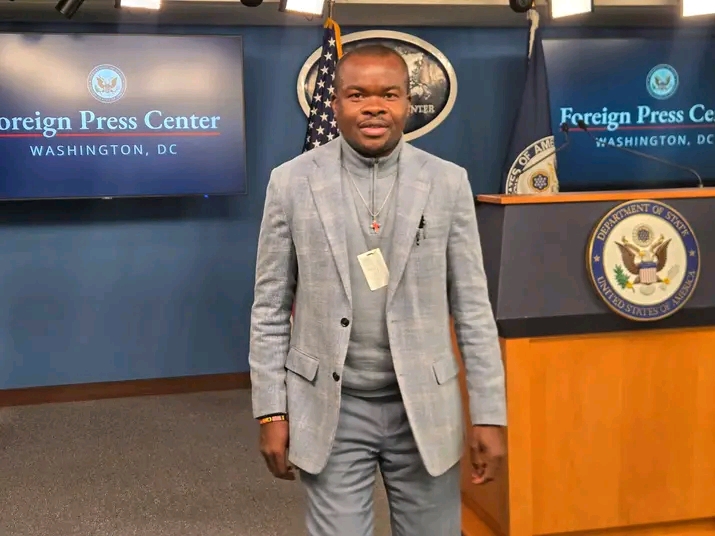
Nigeria’s 2027 Elections and the Unfinished Business of Diaspora Voting, by Boniface Ihiasota
As Nigeria approaches the 2027 general elections, millions of Nigerians living abroad face a familiar democratic dilemma: they remain emotionally, economically and socially connected to their homeland, yet their ability to influence its political leadership through the ballot remains restricted. From London to Washington, Toronto to Johannesburg, and Dubai to other global cities, Nigerians in the diaspora have compelling reasons to prepare for the elections, even as the country continues to grapple with the legal barriers to diaspora voting.
The 2027 elections, scheduled for January 16, according to the Independent National Electoral Commission, will determine the leadership responsible for steering Nigeria through critical economic, security and governance challenges. The decisions made in Abuja and state capitals will affect citizens regardless of whether they live in Nigeria or abroad. These include exchange-rate policies, taxation, education, healthcare, security, investment regulations and the protection of property rights. Nigerians abroad therefore have legitimate reasons to follow the electoral process closely and demand accountability from those seeking public office.
However, preparation must begin with an important distinction: political participation is not the same as having a legally recognised opportunity to cast a ballot from overseas. Nigeria’s electoral framework has historically not provided for out-of-country voting. Although diaspora voting has featured in national debates and legislative proposals, the legal and administrative obstacles have remained significant.
The consequences extend beyond symbolism. Nigeria’s diaspora contributes to the economy through remittances, investment, professional expertise and business networks. The World Bank’s Migration and Development Brief estimated that Nigeria received approximately $20.9bn in personal remittances in 2022. Such financial contributions demonstrate the continuing relationship between Nigerians abroad and households at home. Yet economic contribution does not automatically translate into electoral influence. The challenge is how to ensure that citizens who contribute to national development can participate meaningfully in decisions about the country’s future.
The National Assembly has previously considered constitutional changes intended to enable diaspora voting. In March 2022, however, the proposed constitutional amendment was rejected during the legislative review process. The Nigerians in Diaspora Commission has criticised the setback, arguing that Nigerians abroad should not remain excluded from the democratic process. Subsequent proposals have continued to raise questions about electronic voting, voter verification, cybersecurity, electoral transparency and the practical cost of organising overseas polls. These concerns deserve serious consideration, but they should lead to workable solutions rather than indefinite postponement.
For Nigerians abroad, preparation for 2027 must therefore go beyond waiting for permission to vote. They can monitor INEC announcements, follow legislative developments, examine candidates’ records and scrutinise policy proposals. They can participate in lawful political discussions, support credible civic education initiatives, challenge misinformation and encourage relatives at home to make informed electoral decisions. Diaspora professionals can also contribute expertise in technology, election administration, cybersecurity and public accountability without becoming instruments of partisan manipulation.
Political parties should equally recognise that Nigerians abroad are not merely sources of remittances or occasional audiences for campaign speeches. They are citizens with knowledge of different governance systems, public institutions and economic practices. Their experiences can enrich national debate, provided their contributions are grounded in Nigeria’s realities rather than assumptions that foreign models can be transferred without adaptation.
The question surrounding the 2027 elections is not simply whether Nigerians abroad care about their country. Their sustained economic and personal connections already demonstrate that commitment. The more difficult question is whether Nigeria’s democratic institutions will create a credible, transparent and legally sound framework that allows eligible citizens overseas to exercise their electoral rights.
Until such arrangements are enacted and implemented, Nigerians abroad must remain informed, organised and engaged while respecting the law governing the elections. Democracy should not be reduced to the act of casting a ballot; it also requires informed scrutiny, civic responsibility and sustained demands for accountability. But these activities cannot permanently substitute for the right to vote.

Africa’s Resources Must Build Africa, by Alabidun Shuaib AbdulRahman
Across Africa lie enormous deposits of oil, gas, uranium, gold, lithium, cobalt, copper, diamonds and other strategic minerals, yet many of the countries sitting on these resources continue to struggle with poverty, unemployment, weak industrialisation and the steady movement of their young people towards Europe, North America and other destinations in search of better opportunities.
For decades, much of Africa’s natural wealth has travelled outward as raw material, while the greater economic value created through processing, refining, manufacturing and technology has accumulated elsewhere. Africa has supplied the resources that feed global industries, but has too often remained at the lower end of the economic chain, buying back finished products at prices far removed from what it earned when those raw materials left its soil.
That contradiction is becoming increasingly difficult to ignore because of what is happening in Niger Republic. Since General Abdourahamane Tiani came to power following the July 26, 2023 coup, his government has increasingly pursued greater control over Niger’s natural resources. What initially appeared to be part of the broader political rupture between Niamey and its former colonial power, France, has gradually developed into a wider policy of resource nationalism.
On June 19, 2025, Niger’s Council of Ministers approved the nationalisation of Société des Mines de l’Aïr, SOMAÏR, the uranium company operating at Arlit in the Agadez region. SOMAÏR was established in 1968 and began uranium production in 1971. Before nationalisation, French nuclear company Orano held 63.4 per cent, while Niger’s state mining company, SOPAMIN, held 36.6 per cent.
Between 1971 and 2024, SOMAÏR produced 81,861 tonnes of uranium, of which 80,518 tonnes were commercialised. Figures presented by the Nigerien government showed that Orano had taken 86.3 per cent of the commercialised production, while SOPAMIN accounted for 9.2 per cent.
In August 2026, the government took another step. It awarded the In Azaoua large-scale uranium mining permit in Arlit to Teloua Safeguarding Uranium Mining Company, TSUMCO, the state company created to replace SOMAÏR and continue operations over the former SOMAÏR perimeter. At its August 21 meeting, the Council of Ministers also approved the reassignment of another uranium permit, Madaouela I, to the state-linked Madaouela Mining Company.
The government has adopted a similar approach in the petroleum sector. On June 12, 2026, Niger’s Petroleum Minister, Hamadou Tini, announced that the government was reviewing the hydrocarbons code and preparing a new production-sharing contract model. He said the reforms were intended to strengthen the state’s negotiating capacity and increase the economic benefits accruing to Niger. He also disclosed plans to review provisions relating to cost recovery by petroleum operators and stressed the importance of training Nigerien professionals capable of negotiating more effectively with international companies.
Niger has also established MAZOUMAWA National Gold Company as part of its attempt to strengthen national control over gold resources and the country’s gold value chain. In January 2026, its Director-General, Abdou Ousseini, said the company intended to contribute to gold exploitation while controlling the valorisation and value chains of gold in Niger. The company had two exploration permits in the Dan Issa area and had collected more than 6,000 samples for analysis.
There is, therefore, something much bigger than the Niger-France dispute at stake. It is the ownership of Africa’s economic future.
For generations, the structure has remained remarkably familiar. Africa digs, pumps, cuts and exports. Someone elsewhere processes, refines, manufactures, finances and markets. The finished product eventually returns to African consumers at a considerably higher price.
That arrangement is not entirely without benefits. Foreign companies bring capital, technology, technical expertise, international markets and, in some cases, infrastructure that many African countries would struggle to provide on their own. The problem begins when that relationship becomes permanent, when Africa remains trapped at the extraction end of the value chain while the greater economic benefits of its resources accumulate elsewhere.
The African Union has recognised this problem for years through initiatives such as the African Mining Vision and its commodities strategy. The objective is for Africa to move from being primarily a supplier of raw materials towards greater value addition, stronger local content, higher returns from commodities and meaningful participation in global value chains.
The African Development Bank estimates that Africa possesses about 30 per cent of the world’s mineral reserves and could capture more than 10 per cent of the projected $16tn revenues from key green minerals by 2030. Yet the same institution reported that Africa received about $190.7bn in financial inflows in 2022 while losing approximately $587bn through financial leakages.
The implication is clear: Africa does not necessarily need to chase away foreign investors. It needs to become a better negotiator, a more capable participant and, ultimately, a stronger owner of the industries built around its own resources.
Botswana offers an important illustration. Its diamond industry was not built by simply shutting foreign capital out. Debswana, the company at the centre of Botswana’s diamond production, is jointly owned by the Government of Botswana and De Beers, with each holding 50 per cent. The partnership has become a major contributor to Botswana’s GDP, foreign exchange earnings and government revenue and employs about 5,000 staff and 6,000 contractors.
Tanzania has pursued another route by giving the state a minimum 16 per cent non-dilutable free-carried interest in mining companies, alongside taxation, royalties and other government participation mechanisms. Its local-content framework also seeks to ensure that Tanzanian companies participate in supplying goods and services to the mining industry.
Ghana has moved in a different direction. Rather than nationalising its gold mines, it has sought to increase domestic participation through regulation. Its 2025 local-content framework required surface mining operations to be undertaken by wholly Ghanaian-owned contractors, while underground contract mining requires at least 50 per cent Ghanaian ownership.
Zimbabwe’s lithium policy provides perhaps an even clearer example of beneficiation as a development strategy. After banning exports of unprocessed lithium ore in 2022, Zimbabwe announced in June 2025 that it would prohibit the export of lithium concentrates from January 1, 2027. The objective is to encourage greater domestic processing. Zimbabwe is Africa’s leading lithium producer, while Chinese-owned companies have invested more than $1bn in the country’s lithium sector since 2021.
If lithium is increasingly important to batteries and energy storage, Zimbabwe wants more of the economic activity generated by that demand to take place within Zimbabwe rather than elsewhere. That is precisely the direction Africa needs to consider.
The International Energy Agency reported in October 2025 that Africa captures less than one per cent of the value generated from manufacturing clean-energy technologies and their components, despite supplying around 75 per cent of global manganese, 70 per cent of cobalt and nearly 20 per cent of copper. The IEA estimates that moving into beneficiation, processing and manufacturing could raise the market value of minerals produced in Africa to about $120bn by 2040.
This is why the African Union’s Africa Green Minerals Strategy, adopted in March 2025, is significant. The strategy calls for Africa to move beyond raw mineral exports towards value addition at source, regional industrialisation, local beneficiation, job creation and economic diversification. The AU’s African Forum on Mining subsequently called for stronger continental bargaining power and high-level African critical-minerals diplomacy to ensure that mineral agreements prioritise local value addition rather than simply facilitate the export of raw materials.
Niger, therefore, should not be judged simply by whether its nationalisation policy succeeds or fails. Its experiment should be watched for what it reveals about both the possibilities and dangers of greater resource control.
National ownership does not automatically produce efficient management. A government can own a mine and still mismanage it. It can control petroleum and still import refined products. It can take over gold operations while communities around the mines remain poor. It can remove foreign companies and replace foreign inefficiency with domestic corruption.
Niger itself has already encountered some of these complications. Orano has pursued arbitration over the nationalisation of its interest in SOMAÏR. In September 2025, Reuters reported that about 1,500 tonnes of uranium, valued at roughly $270m, remained stockpiled at the former SOMAÏR mine. Orano had begun arbitration proceedings and warned against the material being transferred or sold without authorisation.
A country seeking greater control over its resources needs competent geologists, engineers, lawyers, accountants, negotiators, regulators and financial institutions. It needs reliable electricity, roads, railways and ports. It needs research institutions capable of developing technology. It needs transparent contracts and systems through which citizens can know what governments receive from their natural resources and how those revenues are spent.
Without these foundations, nationalisation can become an expensive political gesture. But Africa should not allow the imperfections of resource nationalism to become an excuse for maintaining a system in which the continent remains primarily an exporter of raw materials.
Nigeria illustrates the urgency. The country has oil, gas, gold, lithium, iron ore, coal and other minerals, but its economic history has repeatedly demonstrated the danger of exporting natural resources without developing sufficient downstream capacity.
The Tinubu administration has increasingly emphasised local processing and value addition in critical minerals. In July 2026, President Bola Tinubu commissioned a $250m lithium mining and processing plant in Nasarawa State with a capacity of 6,000 tonnes of lithium processing per day. It was described as Africa’s largest lithium processing facility.
Nigeria should not stop at processing lithium. It should be thinking about the battery industry, electric vehicles, energy-storage systems, industrial chemicals, research and the skilled workforce required to support those industries.
The same thinking should apply across Africa. A Congolese citizen living beside cobalt deposits should have access to opportunities created by cobalt. A Zambian living around copper mines should benefit from industries built around copper. A Ghanaian should see gold not merely as something extracted and exported, but as an opportunity for refining, jewellery, financial services and manufacturing. A Nigerien should be able to look at uranium and see engineering, science, technology and industrial opportunities. And a Nigerian should be able to look at oil and gas without accepting that the country’s natural destiny is simply to export crude and import refined products.
If Africa can retain more value from its resources, that value can help finance universities, technical schools, electricity, transport infrastructure, healthcare, manufacturing and technology. Those investments can create productive employment. Productive employment can reduce the economic pressure pushing young Africans towards foreign shores.
The real lesson from Niger, therefore, is not that every African government should wake up tomorrow and nationalise every foreign-owned mine, oilfield or industrial operation. That would be a simplistic reading of what is happening. The lesson is that the old bargain deserves serious reconsideration.
Africa should welcome investors, but it should negotiate better. It should welcome technology, but build its own capacity. It should welcome international capital, but ensure that African capital also grows. It should permit extraction, but demand value addition. It should collect royalties and taxes, but also build industries around the resources generating them.
Will Africa Follow Niger Republic? By Alabidun Shuaib AbdulRahman
Africa’s greatest economic contradiction is buried beneath its own soil. Across the continent lie enormous deposits of oil, gas, uranium, gold, lithium, cobalt, copper, diamonds and other strategic minerals, yet many of the countries sitting on these resources continue to struggle with poverty, unemployment, weak industrialisation and the steady movement of their young people towards Europe, North America and other destinations in search of better opportunities.
For decades, much of Africa’s natural wealth has travelled outward as raw material, while the greater economic value created through processing, refining, manufacturing and technology has accumulated elsewhere. Africa has supplied the resources that feed global industries, but has too often remained at the lower end of the economic chain, buying back finished products at prices far removed from what it earned when those raw materials left its soil.
That contradiction is becoming increasingly difficult to ignore because of what is happening in Niger Republic. Since General Abdourahamane Tiani came to power following the July 26, 2023 coup, his government has increasingly pursued greater control over Niger’s natural resources. What initially appeared to be part of the broader political rupture between Niamey and its former colonial power, France, has gradually developed into a wider policy of resource nationalism.
On June 19, 2025, Niger’s Council of Ministers approved the nationalisation of Société des Mines de l’Aïr, SOMAÏR, the uranium company operating at Arlit in the Agadez region. SOMAÏR was established in 1968 and began uranium production in 1971. Before nationalisation, French nuclear company Orano held 63.4 per cent, while Niger’s state mining company, SOPAMIN, held 36.6 per cent.
Between 1971 and 2024, SOMAÏR produced 81,861 tonnes of uranium, of which 80,518 tonnes were commercialised. Figures presented by the Nigerien government showed that Orano had taken 86.3 per cent of the commercialised production, while SOPAMIN accounted for 9.2 per cent.
In August 2026, the government took another step. It awarded the In Azaoua large-scale uranium mining permit in Arlit to Teloua Safeguarding Uranium Mining Company, TSUMCO, the state company created to replace SOMAÏR and continue operations over the former SOMAÏR perimeter. At its August 21 meeting, the Council of Ministers also approved the reassignment of another uranium permit, Madaouela I, to the state-linked Madaouela Mining Company.
The government has adopted a similar approach in the petroleum sector. On June 12, 2026, Niger’s Petroleum Minister, Hamadou Tini, announced that the government was reviewing the hydrocarbons code and preparing a new production-sharing contract model. He said the reforms were intended to strengthen the state’s negotiating capacity and increase the economic benefits accruing to Niger. He also disclosed plans to review provisions relating to cost recovery by petroleum operators and stressed the importance of training Nigerien professionals capable of negotiating more effectively with international companies.
Niger has also established MAZOUMAWA National Gold Company as part of its attempt to strengthen national control over gold resources and the country’s gold value chain. In January 2026, its Director-General, Abdou Ousseini, said the company intended to contribute to gold exploitation while controlling the valorisation and value chains of gold in Niger. The company had two exploration permits in the Dan Issa area and had collected more than 6,000 samples for analysis.
There is, therefore, something much bigger than the Niger-France dispute at stake. It is the ownership of Africa’s economic future.
For generations, the structure has remained remarkably familiar. Africa digs, pumps, cuts and exports. Someone elsewhere processes, refines, manufactures, finances and markets. The finished product eventually returns to African consumers at a considerably higher price.
That arrangement is not entirely without benefits. Foreign companies bring capital, technology, technical expertise, international markets and, in some cases, infrastructure that many African countries would struggle to provide on their own. The problem begins when that relationship becomes permanent, when Africa remains trapped at the extraction end of the value chain while the greater economic benefits of its resources accumulate elsewhere.
The African Union has recognised this problem for years through initiatives such as the African Mining Vision and its commodities strategy. The objective is for Africa to move from being primarily a supplier of raw materials towards greater value addition, stronger local content, higher returns from commodities and meaningful participation in global value chains.
The African Development Bank estimates that Africa possesses about 30 per cent of the world’s mineral reserves and could capture more than 10 per cent of the projected $16tn revenues from key green minerals by 2030. Yet the same institution reported that Africa received about $190.7bn in financial inflows in 2022 while losing approximately $587bn through financial leakages.
The implication is clear: Africa does not necessarily need to chase away foreign investors. It needs to become a better negotiator, a more capable participant and, ultimately, a stronger owner of the industries built around its own resources.
Botswana offers an important illustration. Its diamond industry was not built by simply shutting foreign capital out. Debswana, the company at the centre of Botswana’s diamond production, is jointly owned by the Government of Botswana and De Beers, with each holding 50 per cent. The partnership has become a major contributor to Botswana’s GDP, foreign exchange earnings and government revenue and employs about 5,000 staff and 6,000 contractors.
Tanzania has pursued another route by giving the state a minimum 16 per cent non-dilutable free-carried interest in mining companies, alongside taxation, royalties and other government participation mechanisms. Its local-content framework also seeks to ensure that Tanzanian companies participate in supplying goods and services to the mining industry.
Ghana has moved in a different direction. Rather than nationalising its gold mines, it has sought to increase domestic participation through regulation. Its 2025 local-content framework required surface mining operations to be undertaken by wholly Ghanaian-owned contractors, while underground contract mining requires at least 50 per cent Ghanaian ownership.
Zimbabwe’s lithium policy provides perhaps an even clearer example of beneficiation as a development strategy. After banning exports of unprocessed lithium ore in 2022, Zimbabwe announced in June 2025 that it would prohibit the export of lithium concentrates from January 1, 2027. The objective is to encourage greater domestic processing. Zimbabwe is Africa’s leading lithium producer, while Chinese-owned companies have invested more than $1bn in the country’s lithium sector since 2021.
If lithium is increasingly important to batteries and energy storage, Zimbabwe wants more of the economic activity generated by that demand to take place within Zimbabwe rather than elsewhere. That is precisely the direction Africa needs to consider.
The International Energy Agency reported in October 2025 that Africa captures less than one per cent of the value generated from manufacturing clean-energy technologies and their components, despite supplying around 75 per cent of global manganese, 70 per cent of cobalt and nearly 20 per cent of copper. The IEA estimates that moving into beneficiation, processing and manufacturing could raise the market value of minerals produced in Africa to about $120bn by 2040.
This is why the African Union’s Africa Green Minerals Strategy, adopted in March 2025, is significant. The strategy calls for Africa to move beyond raw mineral exports towards value addition at source, regional industrialisation, local beneficiation, job creation and economic diversification. The AU’s African Forum on Mining subsequently called for stronger continental bargaining power and high-level African critical-minerals diplomacy to ensure that mineral agreements prioritise local value addition rather than simply facilitate the export of raw materials.
Niger, therefore, should not be judged simply by whether its nationalisation policy succeeds or fails. Its experiment should be watched for what it reveals about both the possibilities and dangers of greater resource control.
National ownership does not automatically produce efficient management. A government can own a mine and still mismanage it. It can control petroleum and still import refined products. It can take over gold operations while communities around the mines remain poor. It can remove foreign companies and replace foreign inefficiency with domestic corruption.
Niger itself has already encountered some of these complications. Orano has pursued arbitration over the nationalisation of its interest in SOMAÏR. In September 2025, Reuters reported that about 1,500 tonnes of uranium, valued at roughly $270m, remained stockpiled at the former SOMAÏR mine. Orano had begun arbitration proceedings and warned against the material being transferred or sold without authorisation.
A country seeking greater control over its resources needs competent geologists, engineers, lawyers, accountants, negotiators, regulators and financial institutions. It needs reliable electricity, roads, railways and ports. It needs research institutions capable of developing technology. It needs transparent contracts and systems through which citizens can know what governments receive from their natural resources and how those revenues are spent.
Without these foundations, nationalisation can become an expensive political gesture. But Africa should not allow the imperfections of resource nationalism to become an excuse for maintaining a system in which the continent remains primarily an exporter of raw materials.
Nigeria illustrates the urgency. The country has oil, gas, gold, lithium, iron ore, coal and other minerals, but its economic history has repeatedly demonstrated the danger of exporting natural resources without developing sufficient downstream capacity.
The Tinubu administration has increasingly emphasised local processing and value addition in critical minerals. In July 2026, President Bola Tinubu commissioned a $250m lithium mining and processing plant in Nasarawa State with a capacity of 6,000 tonnes of lithium processing per day. It was described as Africa’s largest lithium processing facility.
Nigeria should not stop at processing lithium. It should be thinking about the battery industry, electric vehicles, energy-storage systems, industrial chemicals, research and the skilled workforce required to support those industries.
The same thinking should apply across Africa. A Congolese citizen living beside cobalt deposits should have access to opportunities created by cobalt. A Zambian living around copper mines should benefit from industries built around copper. A Ghanaian should see gold not merely as something extracted and exported, but as an opportunity for refining, jewellery, financial services and manufacturing. A Nigerien should be able to look at uranium and see engineering, science, technology and industrial opportunities. And a Nigerian should be able to look at oil and gas without accepting that the country’s natural destiny is simply to export crude and import refined products.
If Africa can retain more value from its resources, that value can help finance universities, technical schools, electricity, transport infrastructure, healthcare, manufacturing and technology. Those investments can create productive employment. Productive employment can reduce the economic pressure pushing young Africans towards foreign shores.
The real lesson from Niger, therefore, is not that every African government should wake up tomorrow and nationalise every foreign-owned mine, oilfield or industrial operation. That would be a simplistic reading of what is happening. The lesson is that the old bargain deserves serious reconsideration.
Africa should welcome investors, but it should negotiate better. It should welcome technology, but build its own capacity. It should welcome international capital, but ensure that African capital also grows. It should permit extraction, but demand value addition. It should collect royalties and taxes, but also build industries around the resources generating them.
Alabidun is a media practitioner and can be reached via alabidungoldenson@gmail.com


Riyadh Airport Attacks Threaten Oil, Global Trade

Nigeria’s 2027 Elections and the Unfinished Business of Diaspora Voting, by Boniface Ihiasota

Africa’s Resources Must Build Africa, by Alabidun Shuaib AbdulRahman

Pastor Jerry Eze Defends Miracles At UK Conference Amidst Criticism And Controversy

Diaspora Watch 20th Edition (October 14-20, 2024): Your Trusted Source for Global News and Insights

Tanzanian Man Reportedly Dies And Returns To Life Six Times


-

 News7 days ago
Trump’s Bomber Pullout: Iran Threat Tests US-UK Security Alliance
-

 News7 days ago
Former German spy chief arrested over alleged espionage
-
 Analysis7 days ago
Will Africa Follow Niger Republic? By Alabidun Shuaib AbdulRahman
-
 News7 days ago
Caribbean states seek stronger regional aviation safety oversight
-

 News7 days ago
10-Year-Old Rainikemba Igbokwe Publishes First Book, Small Boy, Big God
-
 Analysis7 days ago
The Ondo Air Crash and the Cost of Losing Those Who Protect Nigeria, by Boniface Ihiasota