
Analysis
The Ondo Air Crash and the Cost of Losing Those Who Protect Nigeria, by Boniface Ihiasota

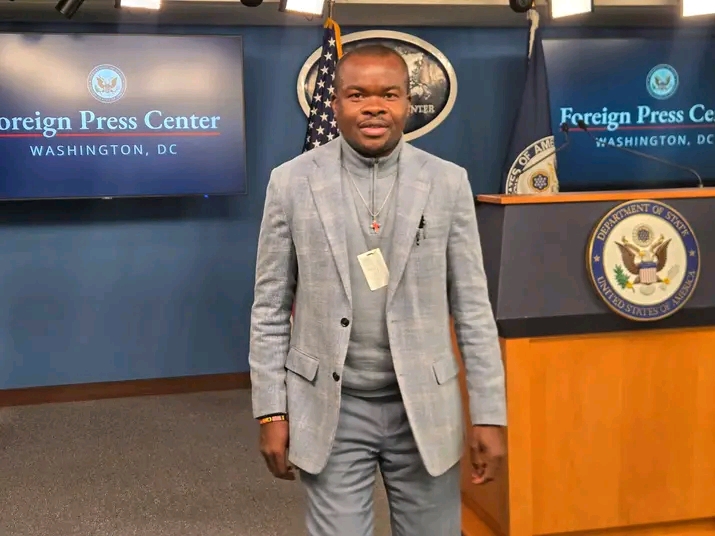
The Ondo Air Crash and the Cost of Losing Those Who Protect Nigeria, by Boniface Ihiasota
The Nigerian Air Force aircraft crash in Igbokoda, Ondo State, has once again confronted Nigeria with a painful question that goes beyond mourning: how much does the country truly value the lives of the men and women entrusted with protecting it?
The tragedy occurred on Monday, October 5, 2026, when an NAF ATR-42 aircraft, tail number NGR 931, disappeared from radar at about 9:13am while travelling from Benin City, Edo State, to Lagos. The aircraft eventually crashed in a swampy area close to the Naval Base in Igbokoda, headquarters of Ilaje Local Government Area. The Nigerian Air Force confirmed that it was on a routine mission.
It is important to correct one early description of the incident. Initial reports from Igbokoda referred to a helicopter, largely because residents saw a military aircraft go down. The NAF subsequently established that the aircraft was an ATR-42, a twin-engine turboprop platform used by the service for intelligence, surveillance and reconnaissance as well as other military operations.
The human cost is devastating. There was initially confusion over the number of people aboard. The Minister of Aviation and Aerospace Development, Festus Keyamo, reported 25 passengers and seven crew members, making 32 people. President Bola Tinubu’s statement also referred to 25 passengers and seven crew members. However, the NAF’s subsequent release on October 6 identified 20 passengers and five crew members, 25 people in all, and confirmed that there were no survivors.
That discrepancy itself deserves clarification. In a tragedy involving human lives, figures cannot be treated as mere administrative details. Families deserve certainty about who was aboard, while the public deserves an authoritative account of what happened. The investigation must therefore establish not only the cause of the crash but also the definitive passenger and crew manifest.
President Tinubu has already ordered a thorough investigation, while the NAF has directed a comprehensive inquiry into the circumstances surrounding the accident. The Nigerian Safety Investigation Bureau has said the crash, involving a military aircraft, falls outside its statutory mandate unless formally invited by the military.
This is where the tragedy must become more than another funeral and another condolence statement.
Nigeria’s military aviation history contains too many painful reminders of what happens when questions surrounding aircraft serviceability, maintenance, operational pressure, training, procurement and institutional accountability are not subjected to sustained scrutiny. An investigation should therefore not become a bureaucratic exercise whose final report disappears into official archives. It must establish what happened, why it happened and, most importantly, what will change.
The ATR-42 involved also carries an important history. In July 2020, the NAF announced the reactivation of another ATR-42 after it had accumulated 5,000 operational hours. The aircraft underwent major maintenance in Germany, described by the Air Force as its first periodic depot maintenance after 10 years of operation. That history does not establish the cause of the Igbokoda crash, but it demonstrates why aircraft maintenance and serviceability must remain central to any serious investigation.
The 25 people officially confirmed dead were not simply numbers. They were pilots, technicians, military personnel and civilians. The NAF’s published list includes Squadron Leader MI Aburime, the flight captain; Squadron Leader AP Man-Ugwueje and Flight Lieutenant IS Bako, both identified as co-pilots; two aircraft technicians and 20 passengers.
Nigeria has rightly mourned them. President Tinubu also declared three days of national mourning and ordered flags to fly at half-mast. But genuine remembrance should extend beyond ceremonies.
Those who fly into danger to defend Nigeria deserve an aviation system in which their safety is treated as a national security priority. The Igbokoda crash should therefore compel Nigeria to ask uncomfortable questions, demand transparent answers and implement whatever corrective measures the investigation produces.
A nation cannot adequately honour its fallen defenders by mourning them today and forgetting the lessons of their deaths tomorrow.






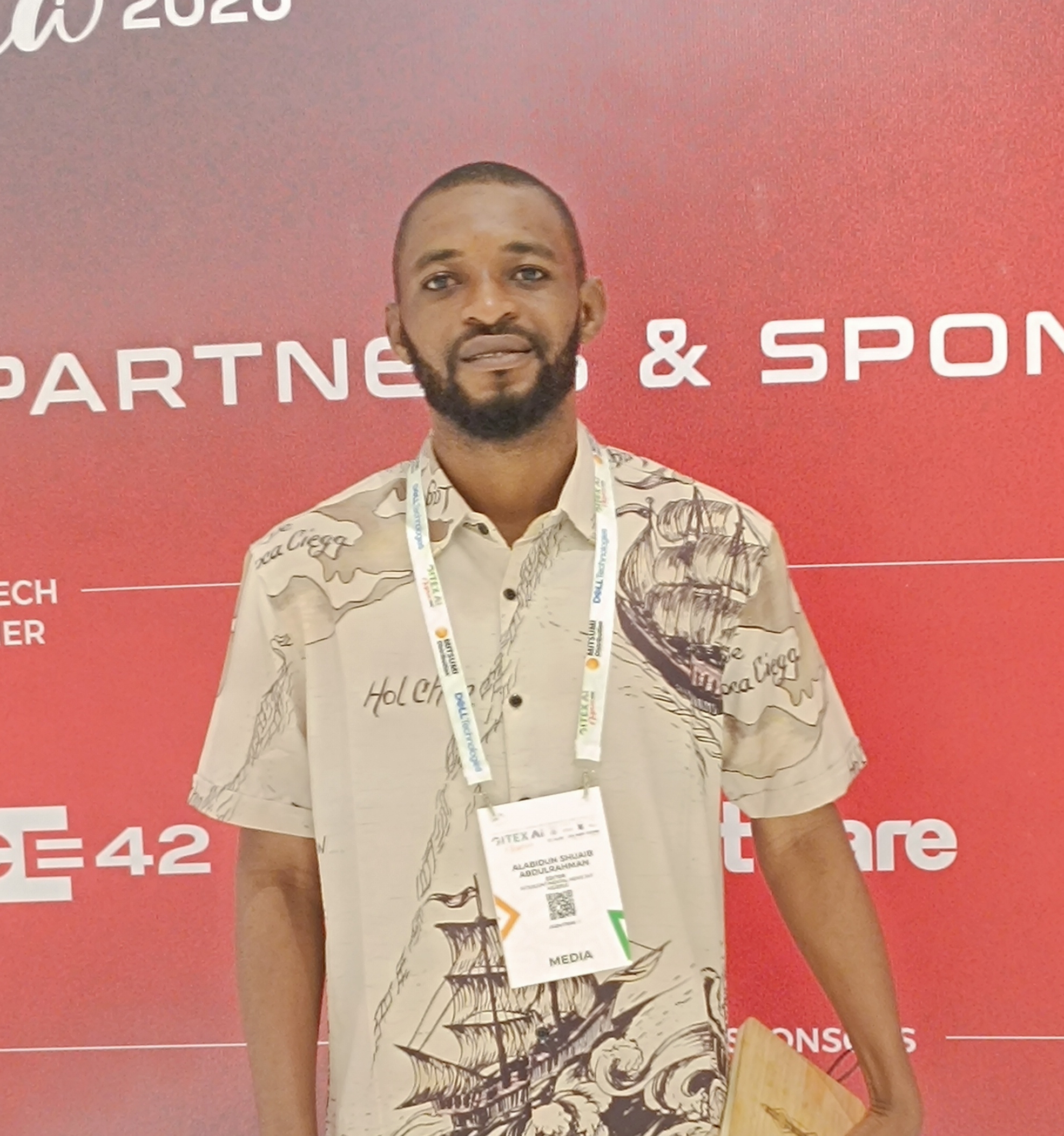
Will Africa Follow Niger Republic? By Alabidun Shuaib AbdulRahman
Africa’s greatest economic contradiction is buried beneath its own soil. Across the continent lie enormous deposits of oil, gas, uranium, gold, lithium, cobalt, copper, diamonds and other strategic minerals, yet many of the countries sitting on these resources continue to struggle with poverty, unemployment, weak industrialisation and the steady movement of their young people towards Europe, North America and other destinations in search of better opportunities.
For decades, much of Africa’s natural wealth has travelled outward as raw material, while the greater economic value created through processing, refining, manufacturing and technology has accumulated elsewhere. Africa has supplied the resources that feed global industries, but has too often remained at the lower end of the economic chain, buying back finished products at prices far removed from what it earned when those raw materials left its soil.
That contradiction is becoming increasingly difficult to ignore because of what is happening in Niger Republic. Since General Abdourahamane Tiani came to power following the July 26, 2023 coup, his government has increasingly pursued greater control over Niger’s natural resources. What initially appeared to be part of the broader political rupture between Niamey and its former colonial power, France, has gradually developed into a wider policy of resource nationalism.
On June 19, 2025, Niger’s Council of Ministers approved the nationalisation of Société des Mines de l’Aïr, SOMAÏR, the uranium company operating at Arlit in the Agadez region. SOMAÏR was established in 1968 and began uranium production in 1971. Before nationalisation, French nuclear company Orano held 63.4 per cent, while Niger’s state mining company, SOPAMIN, held 36.6 per cent.
Between 1971 and 2024, SOMAÏR produced 81,861 tonnes of uranium, of which 80,518 tonnes were commercialised. Figures presented by the Nigerien government showed that Orano had taken 86.3 per cent of the commercialised production, while SOPAMIN accounted for 9.2 per cent.
In August 2026, the government took another step. It awarded the In Azaoua large-scale uranium mining permit in Arlit to Teloua Safeguarding Uranium Mining Company, TSUMCO, the state company created to replace SOMAÏR and continue operations over the former SOMAÏR perimeter. At its August 21 meeting, the Council of Ministers also approved the reassignment of another uranium permit, Madaouela I, to the state-linked Madaouela Mining Company.
The government has adopted a similar approach in the petroleum sector. On June 12, 2026, Niger’s Petroleum Minister, Hamadou Tini, announced that the government was reviewing the hydrocarbons code and preparing a new production-sharing contract model. He said the reforms were intended to strengthen the state’s negotiating capacity and increase the economic benefits accruing to Niger. He also disclosed plans to review provisions relating to cost recovery by petroleum operators and stressed the importance of training Nigerien professionals capable of negotiating more effectively with international companies.
Niger has also established MAZOUMAWA National Gold Company as part of its attempt to strengthen national control over gold resources and the country’s gold value chain. In January 2026, its Director-General, Abdou Ousseini, said the company intended to contribute to gold exploitation while controlling the valorisation and value chains of gold in Niger. The company had two exploration permits in the Dan Issa area and had collected more than 6,000 samples for analysis.
There is, therefore, something much bigger than the Niger-France dispute at stake. It is the ownership of Africa’s economic future.
For generations, the structure has remained remarkably familiar. Africa digs, pumps, cuts and exports. Someone elsewhere processes, refines, manufactures, finances and markets. The finished product eventually returns to African consumers at a considerably higher price.
That arrangement is not entirely without benefits. Foreign companies bring capital, technology, technical expertise, international markets and, in some cases, infrastructure that many African countries would struggle to provide on their own. The problem begins when that relationship becomes permanent, when Africa remains trapped at the extraction end of the value chain while the greater economic benefits of its resources accumulate elsewhere.
The African Union has recognised this problem for years through initiatives such as the African Mining Vision and its commodities strategy. The objective is for Africa to move from being primarily a supplier of raw materials towards greater value addition, stronger local content, higher returns from commodities and meaningful participation in global value chains.
The African Development Bank estimates that Africa possesses about 30 per cent of the world’s mineral reserves and could capture more than 10 per cent of the projected $16tn revenues from key green minerals by 2030. Yet the same institution reported that Africa received about $190.7bn in financial inflows in 2022 while losing approximately $587bn through financial leakages.
The implication is clear: Africa does not necessarily need to chase away foreign investors. It needs to become a better negotiator, a more capable participant and, ultimately, a stronger owner of the industries built around its own resources.
Botswana offers an important illustration. Its diamond industry was not built by simply shutting foreign capital out. Debswana, the company at the centre of Botswana’s diamond production, is jointly owned by the Government of Botswana and De Beers, with each holding 50 per cent. The partnership has become a major contributor to Botswana’s GDP, foreign exchange earnings and government revenue and employs about 5,000 staff and 6,000 contractors.
Tanzania has pursued another route by giving the state a minimum 16 per cent non-dilutable free-carried interest in mining companies, alongside taxation, royalties and other government participation mechanisms. Its local-content framework also seeks to ensure that Tanzanian companies participate in supplying goods and services to the mining industry.
Ghana has moved in a different direction. Rather than nationalising its gold mines, it has sought to increase domestic participation through regulation. Its 2025 local-content framework required surface mining operations to be undertaken by wholly Ghanaian-owned contractors, while underground contract mining requires at least 50 per cent Ghanaian ownership.
Zimbabwe’s lithium policy provides perhaps an even clearer example of beneficiation as a development strategy. After banning exports of unprocessed lithium ore in 2022, Zimbabwe announced in June 2025 that it would prohibit the export of lithium concentrates from January 1, 2027. The objective is to encourage greater domestic processing. Zimbabwe is Africa’s leading lithium producer, while Chinese-owned companies have invested more than $1bn in the country’s lithium sector since 2021.
If lithium is increasingly important to batteries and energy storage, Zimbabwe wants more of the economic activity generated by that demand to take place within Zimbabwe rather than elsewhere. That is precisely the direction Africa needs to consider.
The International Energy Agency reported in October 2025 that Africa captures less than one per cent of the value generated from manufacturing clean-energy technologies and their components, despite supplying around 75 per cent of global manganese, 70 per cent of cobalt and nearly 20 per cent of copper. The IEA estimates that moving into beneficiation, processing and manufacturing could raise the market value of minerals produced in Africa to about $120bn by 2040.
This is why the African Union’s Africa Green Minerals Strategy, adopted in March 2025, is significant. The strategy calls for Africa to move beyond raw mineral exports towards value addition at source, regional industrialisation, local beneficiation, job creation and economic diversification. The AU’s African Forum on Mining subsequently called for stronger continental bargaining power and high-level African critical-minerals diplomacy to ensure that mineral agreements prioritise local value addition rather than simply facilitate the export of raw materials.
Niger, therefore, should not be judged simply by whether its nationalisation policy succeeds or fails. Its experiment should be watched for what it reveals about both the possibilities and dangers of greater resource control.
National ownership does not automatically produce efficient management. A government can own a mine and still mismanage it. It can control petroleum and still import refined products. It can take over gold operations while communities around the mines remain poor. It can remove foreign companies and replace foreign inefficiency with domestic corruption.
Niger itself has already encountered some of these complications. Orano has pursued arbitration over the nationalisation of its interest in SOMAÏR. In September 2025, Reuters reported that about 1,500 tonnes of uranium, valued at roughly $270m, remained stockpiled at the former SOMAÏR mine. Orano had begun arbitration proceedings and warned against the material being transferred or sold without authorisation.
A country seeking greater control over its resources needs competent geologists, engineers, lawyers, accountants, negotiators, regulators and financial institutions. It needs reliable electricity, roads, railways and ports. It needs research institutions capable of developing technology. It needs transparent contracts and systems through which citizens can know what governments receive from their natural resources and how those revenues are spent.
Without these foundations, nationalisation can become an expensive political gesture. But Africa should not allow the imperfections of resource nationalism to become an excuse for maintaining a system in which the continent remains primarily an exporter of raw materials.
Nigeria illustrates the urgency. The country has oil, gas, gold, lithium, iron ore, coal and other minerals, but its economic history has repeatedly demonstrated the danger of exporting natural resources without developing sufficient downstream capacity.
The Tinubu administration has increasingly emphasised local processing and value addition in critical minerals. In July 2026, President Bola Tinubu commissioned a $250m lithium mining and processing plant in Nasarawa State with a capacity of 6,000 tonnes of lithium processing per day. It was described as Africa’s largest lithium processing facility.
Nigeria should not stop at processing lithium. It should be thinking about the battery industry, electric vehicles, energy-storage systems, industrial chemicals, research and the skilled workforce required to support those industries.
The same thinking should apply across Africa. A Congolese citizen living beside cobalt deposits should have access to opportunities created by cobalt. A Zambian living around copper mines should benefit from industries built around copper. A Ghanaian should see gold not merely as something extracted and exported, but as an opportunity for refining, jewellery, financial services and manufacturing. A Nigerien should be able to look at uranium and see engineering, science, technology and industrial opportunities. And a Nigerian should be able to look at oil and gas without accepting that the country’s natural destiny is simply to export crude and import refined products.
If Africa can retain more value from its resources, that value can help finance universities, technical schools, electricity, transport infrastructure, healthcare, manufacturing and technology. Those investments can create productive employment. Productive employment can reduce the economic pressure pushing young Africans towards foreign shores.
The real lesson from Niger, therefore, is not that every African government should wake up tomorrow and nationalise every foreign-owned mine, oilfield or industrial operation. That would be a simplistic reading of what is happening. The lesson is that the old bargain deserves serious reconsideration.
Africa should welcome investors, but it should negotiate better. It should welcome technology, but build its own capacity. It should welcome international capital, but ensure that African capital also grows. It should permit extraction, but demand value addition. It should collect royalties and taxes, but also build industries around the resources generating them.
Alabidun is a media practitioner and can be reached via alabidungoldenson@gmail.com
Democracy Not Africa’s Answer, by Alabidun Shuaib AbdulRahman
There is a question Africa has avoided for too long because it is politically uncomfortable and historically sensitive: is democracy, as it is presently practised across much of the continent, actually capable of delivering the Africa that Africans need? The question is not an argument for dictatorship. No! It is not a defence of military coups, one-party states or governments that silence citizens. It is not even an argument that Africans do not deserve the right to choose their leaders. They do.
But after decades of elections, constitutions, political parties and changes of government, it is legitimate to ask whether the political model Africa inherited and subsequently reproduced has become more important to African leaders than the outcomes it is supposed to produce.
The fact remains, Africa’s problem is no longer simply who wins elections. It is what happens after the election. Across the continent, citizens are confronting unemployment, insecurity, failing public services, inflation, weak currencies, poor electricity supply, inadequate healthcare, infrastructure deficits, declining purchasing power and the persistent inability of governments to transform enormous natural wealth into broad prosperity. Meanwhile, political competition is often reduced to the struggle for control of the state and its resources.
The evidence of growing frustration is difficult to dismiss. In its latest survey covering 38 African countries in 2024 and 2025, Afrobarometer found that only 47 per cent of respondents considered their country a democracy and only 38 per cent were satisfied with the way democracy was working. Yet 64 per cent still preferred democracy and majorities rejected one-person rule, one-party rule and military rule. Only 36 per cent qualified as what Afrobarometer called “committed democrats”, meaning respondents who both preferred democracy and rejected all three authoritarian alternatives. The report suggests that Africans are not necessarily tired of democracy. They are increasingly tired of the failure of governments that call themselves democratic.
For years, African political elites have treated elections as the utmost evidence of democratic success. Four or five years pass, citizens vote, results are announced, winners celebrate and losers complain. Then government continues. But democracy cannot be reduced to the mechanics of voting. A ballot paper does not put food on a table. It does not generate electricity. It does not secure a village from armed groups. It does not build a functioning railway, hospital or university. It does not process minerals into finished products or turn unemployed young people into productive workers.
The World Bank’s 2025 Country Policy and Institutional Assessment found that governance remains one of the areas in which Sub-Saharan Africa has improved more slowly than other regions. The Bank reported that poor government effectiveness continues to undermine infrastructure and public-service delivery, while deficiencies in transparency, accountability, budget execution and internal controls remain serious obstacles to development.
Consider Nigeria. The country has crude oil, natural gas, vast agricultural land, a huge population, a large consumer market and substantial human capital. Yet electricity remains unreliable, manufacturing struggles with high operating costs, public infrastructure is inadequate and millions of Nigerians remain trapped in poverty. Governments change, slogans change and development plans change, but the structural problems survive the politicians who supposedly came to solve them.
The Democratic Republic of Congo presents an even more painful contradiction. It possesses some of the world’s most important deposits of cobalt, copper and other minerals essential to the modern economy. Yet enormous mineral wealth has coexisted with poverty, weak infrastructure and instability.
Africa therefore does not merely have a resource problem. It has a state-capacity problem. The continent has resources. What it repeatedly lacks is the institutional machinery to convert resources into sustained prosperity. This should force Africans to reconsider what they mean by democracy. Perhaps the more useful political question is not whether a government was elected, but whether the institutions of that government are strong enough to protect public resources from political capture, whether public officials can be held accountable, whether policies survive changes of administration and whether citizens have meaningful influence between elections.
Disappointingly, the answer will not be found in military government. Africa has travelled that road before. The coups that swept across Africa after independence produced governments that often promised discipline, national renewal and an end to corruption. In many cases, they eventually reproduced the same failures they had condemned. Military rule is not a development strategy. Soldiers can seize power, but they cannot manufacture competent institutions merely by wearing uniforms.
The answer may instead lie in redesigning democratic government itself. Africa should examine a form of government that combines democracy with strong federalism, substantial decentralisation, consensus-building, professional public administration and direct participation by citizens. Switzerland provides perhaps the clearest developed-country example of what such an arrangement can look like.
Since becoming a federal state in 1848, Switzerland has organised political authority across the Confederation, 26 cantons and more than 2,000 communes. The principle is straightforward: government should remain as close to the people as possible, with powers transferred upward only where necessary. Its seven-member Federal Council operates collectively, with decisions based on consensus rather than the political dominance of one president. Swiss citizens also vote directly on particular issues through referendums and popular initiatives. Switzerland is not Africa, and no serious person should suggest copying its constitution wholesale. But the underlying principle deserves attention.
Why should one politician in a nation’s capital control an extraordinary concentration of resources and appointments in a country as geographically and culturally diverse as Nigeria? Why should communities wait for federal intervention to solve problems that can be managed locally? Why should political parties compete primarily for the presidency when development takes place in towns, villages, municipalities and regions?
Decentralisation is ultimate here. It will make government visible. It also makes failure harder to hide. A local government that controls its resources and responsibilities can be judged directly by the people living under it. A state or province can be compared with another. Competition can become a competition over public-service delivery rather than merely over political patronage.
Although decentralisation alone is not enough. Africa also needs a professional state. And this is where Singapore offers another useful lesson. Its political circumstances are very different from those of African countries though.
When Lee Kuan Yew became Singapore’s first Prime Minister in 1959, the country faced severe unemployment, overcrowding and economic uncertainty. Nearly 70 per cent of the population lived in slums, according to Singapore’s historical records, and unemployment was in double digits. After Singapore became independent on August 9, 1965, its leaders faced the additional problem of having virtually no natural resources and no large domestic market. They responded with long-term economic planning, industrialisation, infrastructure development, education and an aggressive drive to attract international investment.
The Economic Development Board, established in 1961, became a central instrument of industrialisation. Singapore developed Jurong as an industrial estate, invested heavily in infrastructure and deliberately positioned itself as an export-oriented economy. By 1970, the country had moved close to full employment.
Even at that, Singapore’s story must not be romanticised. Its political model, civil liberties record and historical circumstances are different from those of African states. But one lesson is difficult to dispute: development requires a state capable of implementing decisions consistently over decades. That is precisely what many African political systems struggle to achieve.
A new administration frequently arrives with a new programme, a new slogan and a new set of political appointees. Long-term projects are abandoned, renamed or redesigned. Institutions become vulnerable to political interference. Public servants learn that political loyalty may matter more than professional competence.
Africa cannot build a century-long future on four-year political calculations. What the continent needs is a democratic system that protects the people’s right to choose but prevents every election from becoming a complete reset of the state.
Imagine an African federation in which elected governments could change, but national development strategies could not be casually abandoned. Imagine independent institutions managing public finances, elections, justice and natural resources without becoming instruments of whoever occupies the executive office. Imagine regions controlling significant resources while remaining constitutionally bound to national standards on education, healthcare, security and human rights. That would still be democracy. But it would be a more institutional democracy. It would also address one of Africa’s most destructive political habits: the obsession with the individual leader.
Too much of African politics revolves around presidents. Their photographs dominate government buildings. Their names appear on projects funded with public money. Their approval is sought for matters that should be handled by institutions. Political succession becomes a national crisis because the system is built around personalities rather than rules.
The continent’s 54 states contain hundreds of ethnic groups, languages, religions, political traditions and historical experiences. A rigid political template imposed uniformly across all of them is unlikely to produce identical outcomes. Nigeria is not Botswana. Ghana is not Ethiopia. Kenya is not Morocco. Senegal is not South Africa. Africa therefore needs a political philosophy rather than a single imported constitutional costume.
Africa’s answer may lie in a democratic order redesigned around its own realities: federal where appropriate, decentralised where practical, participatory where necessary, professional in administration, disciplined in public finance and relentless about long-term development.
The objective should not be to discover a government that looks African. It should be to build governments that work for Africans.
Alabidun is a media practitioner and can be reached via alabidungoldenson@gmail.com
Ortom’s 23 Vehicles and the Dangerous Culture of Public Entitlement, by Boniface Ihiasota
There are moments when a country does not need another corruption report, another audit or another international ranking to understand the depth of its governance crisis. Sometimes, all it needs is a single conversation. The recent controversy involving former Benue State Governor, Samuel Ortom, and 23 government vehicles provides one such uncomfortable moment.
In an interview on Arise Television recently, Ortom said 23 vehicles seized from him after he left office were legitimately allocated to him by the Benue State Government. He explained that the State Executive Council had approved the allocation of the vehicles to him and other officials because they had been in use for more than four years. He said he challenged their seizure in court and that the court ordered the return of the vehicles and awarded him N5m in damages. He also accused the administration of his successor, Governor Hyacinth Alia, of political persecution and disregard for the rule of law.
There is, however, a crucial distinction that must not be lost in the public argument. Ortom’s assertion that the vehicles were legitimately allocated to him is his account of the matter. Earlier, in July 2023, the Alia administration announced the recovery of more than 30 vehicles from an automobile workshop in Makurdi as part of an assets-recovery exercise targeting property allegedly taken from the previous administration. Ortom’s aide, Terver Akase, described the exercise at the time as persecution and maintained that former officials had been allowed to buy their official vehicles.
The matter had already entered the courts in June 2023, when Ortom and his deputy, Benson Abounu, challenged the assets-recovery process before the Benue State High Court in Makurdi. They asked the court to determine whether property allegedly allocated to them as entitlements and remuneration could still be regarded as government property.
This history matters because Nigeria’s problem is larger than Samuel Ortom, Hyacinth Alia or 23 vehicles. It is the disturbing culture that allows public office to blur the line between what belongs to the state and what belongs to the individual occupying an office.
The fundamental question should not merely be whether a former governor can legally acquire an official vehicle after leaving office. The more important question is whether a system in which senior public officials can acquire dozens of government vehicles at the end of their tenure serves the public interest.
Nigeria is a country where many public schools lack basic facilities, where primary healthcare centres struggle with equipment and personnel, where roads remain unfinished and where millions of citizens live with inadequate access to essential services. Against that background, the spectacle of political office holders arguing over who has the right to keep government vehicles is more than an administrative dispute. It is a window into the mindset surrounding public resources.
There is nothing inherently wrong with disposing of government assets that have reached the end of their useful administrative life. Governments everywhere sell surplus or obsolete property. The problem begins when public assets are transferred in ways that appear designed principally to benefit the people leaving office rather than the institution they served.
There is also a troubling contradiction in the political language surrounding the dispute. Ortom has invoked the rule of law to demand compliance with a court judgment. That principle is fundamental. If a competent court has ordered the return of the vehicles and the payment of damages, the judgment should be obeyed or properly challenged through the appellate process. No government should selectively respect judicial decisions.
But the rule of law must also extend beyond the courtroom. It should include transparent procedures for disposing of public property, proper valuation, accountability to citizens and institutions strong enough to prevent public officials from converting state resources into personal benefits.
The controversy is particularly revealing because Ortom governed Benue for eight years, from 2015 until May 29, 2023, before Hyacinth Alia succeeded him. Their administrations have since been involved in a prolonged political and institutional confrontation over government finances, assets and the conduct of the previous administration.
In June 2026, another chapter was added when a Benue State commission of inquiry reported an alleged N139.8bn discrepancy in the state’s finances between 2015 and 2023. Ortom rejected the findings through his media aide, describing the inquiry as politically motivated and legally flawed. The commission, chaired by retired Justice Jubril Idrisu, said it had examined financial records and conducted public hearings before reaching its conclusions.
Citizens should therefore resist the temptation to reduce the entire matter to whether Ortom is right and Alia is wrong, or vice versa. That would merely reproduce the politics that created the problem.
The deeper issue is whether Nigerian public office is still understood as stewardship. A government vehicle purchased with public money does not become morally private merely because an office holder has driven it for four years. A government house does not become a family inheritance because somebody occupied it for eight years. Public office is temporary; public property belongs to the public.
Nigeria will not change merely because another administration promises to recover assets from its predecessor. If every incoming government recovers vehicles from former officials only to acquire its own fleet of benefits when its tenure ends, then nothing fundamental has changed. The actors have changed; the culture remains.


Caribbean states seek stronger regional aviation safety oversight

Will Africa Follow Niger Republic? By Alabidun Shuaib AbdulRahman

The Ondo Air Crash and the Cost of Losing Those Who Protect Nigeria, by Boniface Ihiasota

Pastor Jerry Eze Defends Miracles At UK Conference Amidst Criticism And Controversy

Diaspora Watch 20th Edition (October 14-20, 2024): Your Trusted Source for Global News and Insights

Tanzanian Man Reportedly Dies And Returns To Life Six Times


-
 Diplomacy1 week ago
When Two Powerful Heads Meet …
-

 Politics1 week ago
Lee backs Trump-Kim talks, seeks phased North Korea denuclearisation
-
 News1 week ago
PIF, CARICOM formalise partnership to advance SIDS priorities
-
 Analysis1 week ago
Ortom’s 23 Vehicles and the Dangerous Culture of Public Entitlement, by Boniface Ihiasota
-
 Politics1 week ago
Russia may launch limited NATO attack in months, Danish intelligence warns
-
 Politics1 week ago
EDITORIAL: African Leaders Must Speak to the World With Sovereign Power