
Politics
Lee backs Trump-Kim talks, seeks phased North Korea denuclearisation

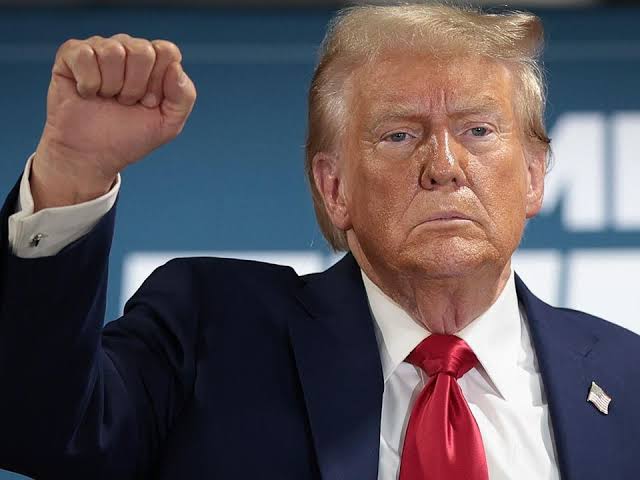
Lee backs Trump-Kim talks, seeks phased North Korea denuclearisation
South Korean President Lee Jae Myung has backed renewed talks between United States President Donald Trump and North Korean leader Kim Jong Un, saying a meeting between the two leaders could provide an opportunity to restart diplomatic engagement over the Korean Peninsula.
Addressing the 81st United Nations General Assembly in New York, Lee said Trump’s willingness to engage Kim represented an opportunity for change and expressed hope that dialogue between Washington and Pyongyang could resume.
Lee said Seoul wanted to use renewed US-North Korea engagement as a basis for broader discussions aimed at formally ending the Korean War and establishing a lasting peace regime on the Korean Peninsula.
The Korean War ended in 1953 with an armistice rather than a peace treaty, meaning the two Koreas remain technically at war.
Lee said his government would pursue a phased approach to North Korea’s nuclear programme, beginning with efforts to halt further development of its nuclear and missile capabilities, followed by reductions and, ultimately, the goal of a denuclearised Korean Peninsula.
The South Korean leader has previously acknowledged that achieving complete denuclearisation in a single step would be difficult given North Korea’s development of nuclear weapons and missile technology.
Lee’s call for dialogue came as Trump reaffirmed his willingness to engage with Pyongyang during a meeting with the South Korean president on the sidelines of the UN General Assembly.
The two leaders held a 30-minute summit in New York on Tuesday, during which they discussed North Korea, defence cooperation and several strategic projects between Washington and Seoul.
South Korean National Security Adviser Wi Sung-lac said Trump reaffirmed his commitment to dialogue with North Korea during the meeting.
The discussions also covered South Korea’s plans concerning nuclear-powered submarines, uranium enrichment and spent nuclear-fuel reprocessing, as well as the transfer of wartime operational control of South Korean forces from Washington to Seoul.
The leaders also discussed cooperation in shipbuilding and progress on strategic investment projects linked to the two countries’ economic relationship.
However, efforts to revive negotiations with Pyongyang face significant obstacles.
Kim Jong Un’s sister, Kim Yo Jong, has rejected the prospect of denuclearisation negotiations, while North Korea continues to expand its nuclear and missile capabilities.
Pyongyang has also maintained that its nuclear weapons programme is essential to its national security.
Trump met Kim three times during his first administration, including summits in Singapore and Vietnam, but those meetings failed to produce a lasting agreement on denuclearisation.
Lee has nonetheless continued to advocate a step-by-step approach, arguing that gradual measures could create conditions for rebuilding trust between the two Koreas and Washington.
His administration has also sought to reduce tensions with Pyongyang while maintaining South Korea’s alliance with the United States.
The South Korean President said the immediate objective should be to halt further advances in North Korea’s nuclear and missile programmes, before pursuing reductions and eventually a nuclear-free Korean Peninsula.
The latest diplomatic push comes amid renewed North Korean missile activity and growing concern over the country’s expanding military capabilities.
Lee’s position places Seoul in a role of encouraging dialogue between Washington and Pyongyang while maintaining close security cooperation with the United States.








Russia may launch limited NATO attack in months, Danish intelligence warns
Russia could launch a limited military attack against one or more NATO countries in the coming months, although the risk remains low, Denmark’s Defence Intelligence Service has warned.
In its latest threat assessment released on Thursday, the Danish Defence Intelligence Service said the risk of a limited Russian military attack was “low but growing” as Moscow becomes increasingly willing to take risks against Western countries.
The agency said a possible attack could involve isolated strikes with long-range weapons against infrastructure supporting Ukraine or the deployment of a small number of Russian troops into a neighbouring NATO country, potentially without national insignia.
According to the assessment, such an operation could be designed to divert European resources away from Ukraine and create divisions within NATO if member states failed to agree on a collective response.
The intelligence service, however, said there were no indications that Russia was preparing an outright invasion of a NATO country.
It assessed that a full-scale invasion remained highly unlikely, although it could not be completely ruled out.
Such an operation would require Russia to build up the necessary forces over several months, making preparations difficult to conceal.
The warning comes amid growing concerns among European governments over alleged Russian hybrid operations, including sabotage, cyberattacks and other activities targeting infrastructure and institutions supporting Ukraine.
DDIS said Russia was expected to intensify its hybrid campaign against Western countries and NATO, with attacks potentially causing greater damage than previous operations.
The agency said possible attacks could include destructive cyber operations capable of disrupting vital societal functions and sabotage attacks carrying a high risk of casualties.
The assessment also comes after a fire at a Starlink ground station in Poland, which Polish authorities described as an act of sabotage.
Poland’s Deputy Prime Minister and Digital Affairs Minister, Krzysztof Gawkowski, said it had not been established who was responsible for the incident but that several indications pointed towards what he described as Russia’s evolving approach to attacks.
Russia has previously denied involvement in similar sabotage incidents.
NATO members bordering Russia include Finland, Norway, Poland, Estonia, Latvia and Lithuania, putting the Baltic and northern European regions at the centre of concerns over possible Russian military or hybrid operations.
DDIS said Russia’s objective in any limited action could be to test NATO’s willingness to respond collectively while avoiding an escalation that would trigger a broader military confrontation.
The warning follows similar concerns from European intelligence officials about Moscow’s willingness to conduct more assertive operations against NATO countries.
The Danish assessment said Russia could seek to exploit disagreements among NATO members, particularly if the Kremlin believed the alliance would struggle to respond collectively to an attack.
Despite the warning, Danish intelligence said there was no indication of an imminent Russian full-scale attack on NATO.
The agency’s assessment therefore distinguishes between a limited military operation, which it considers a low but growing risk, and a major invasion, which it considers highly unlikely.
The report comes more than four years after Russia launched its full-scale invasion of Ukraine in February 2022, with the continuing conflict reshaping European security calculations and prompting NATO members to increase defence spending and preparedness.
EDITORIAL: African Leaders Must Speak to the World With Sovereign Power
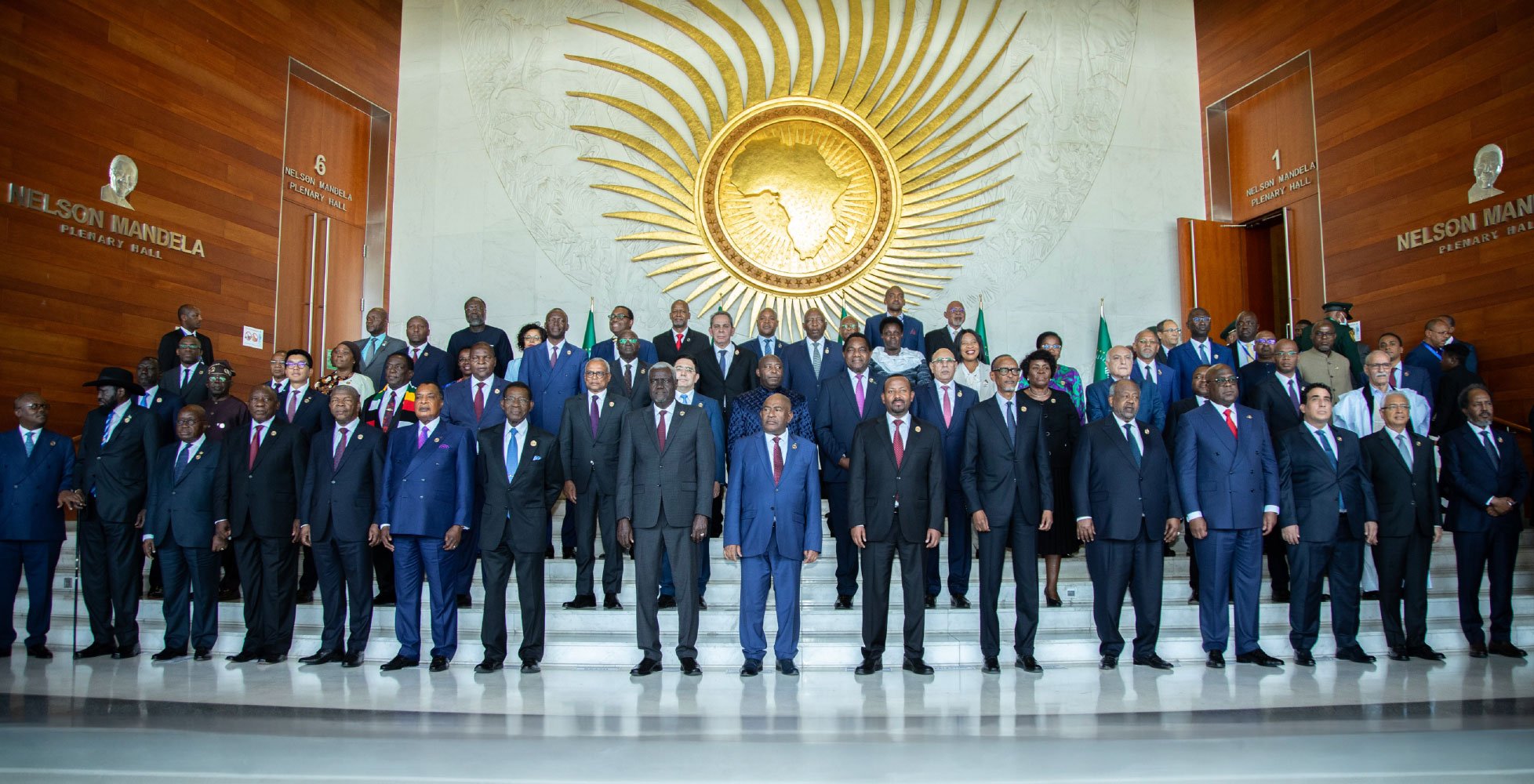
Every September, African leaders travel to New York for the United Nations General Assembly with long lists of grievances: insecurity, debt, climate change, unfair trade, underdevelopment, weak representation in global institutions and the need for greater investment. Their concerns are legitimate. But after decades of presenting Africa largely as a continent in need of assistance, the time has come for a change in posture. African leaders must stop approaching the United Nations primarily with appeals and begin negotiating with the confidence of a continent that understands its strategic value.
This does not mean abandoning international cooperation. It means changing the terms of engagement. Africa is not merely a recipient of global decisions. It is home to 54 countries, more than a quarter of UN member states, vast natural resources, enormous renewable-energy potential and one of the world’s youngest populations. The African Union’s Agenda 2063 explicitly envisions Africa as a strong, united, resilient and influential global player, capable of taking greater responsibility for financing its own development and improving its position in global governance.
The clearest example is the campaign for reform of the UN Security Council. Africa has consistently argued through the Ezulwini Consensus and Sirte Declaration for at least two permanent seats with full prerogatives, including the veto while it exists, alongside five non-permanent seats. In May 2026, African Union Commission Chairperson Mahmoud Ali Youssouf described the demand not as a request for favour but as the correction of a historical injustice.
That is the language of sovereign power: clear interests, defined objectives and collective bargaining. It should extend beyond Security Council reform.
African governments should arrive at international forums with measurable continental positions on debt, trade, technology, climate finance, critical minerals, agriculture, migration and infrastructure. They should negotiate collectively where collective strength exists, rather than allowing external actors to deal with 54 African states separately and on unequal terms.
The continent’s financial predicament makes this urgency impossible to ignore. The UN has noted that African countries can face borrowing costs as much as eight times those of developed economies, while the continent confronts enormous financing needs and persistent debt pressures. Africa therefore needs not merely more promises of assistance but a stronger voice in determining how the international financial system operates.
Yet sovereignty also begins at home. African leaders cannot credibly demand a transformed global order while tolerating weak institutions, corruption, policy inconsistency, excessive dependence on raw-material exports and inadequate domestic resource mobilisation. Agenda 2063 itself calls for Africa to take greater responsibility for financing its development.
The continent possesses bargaining assets. Critical minerals required for the energy transition, agricultural land, markets, strategic waterways, human capital and enormous renewable-energy potential give Africa considerable relevance to the world’s future economy. But resources become geopolitical leverage only when African states develop the institutions, infrastructure, industrial capacity and collective strategies required to use them.
The United Nations should therefore hear African leaders not merely asking what the world can do for Africa, but explaining what Africa is prepared to contribute and what it expects in return. Partnerships should be negotiated around mutual interests, technology transfer, local value addition, financing conditions and measurable development outcomes.
The 81st UN General Assembly has already placed African representation firmly on the global agenda. The President of the General Assembly has acknowledged that Africa remains underrepresented in the Security Council and said the continent should no longer be made to wait indefinitely for meaningful representation.
The opportunity now belongs to African leadership. The continent does not need louder speeches for their own sake. It needs coordinated positions, disciplined diplomacy, credible institutions and the political courage to negotiate from strength. Africa should go to the UN with demands, certainly. But it should also go with assets, commitments, alliances and alternatives.
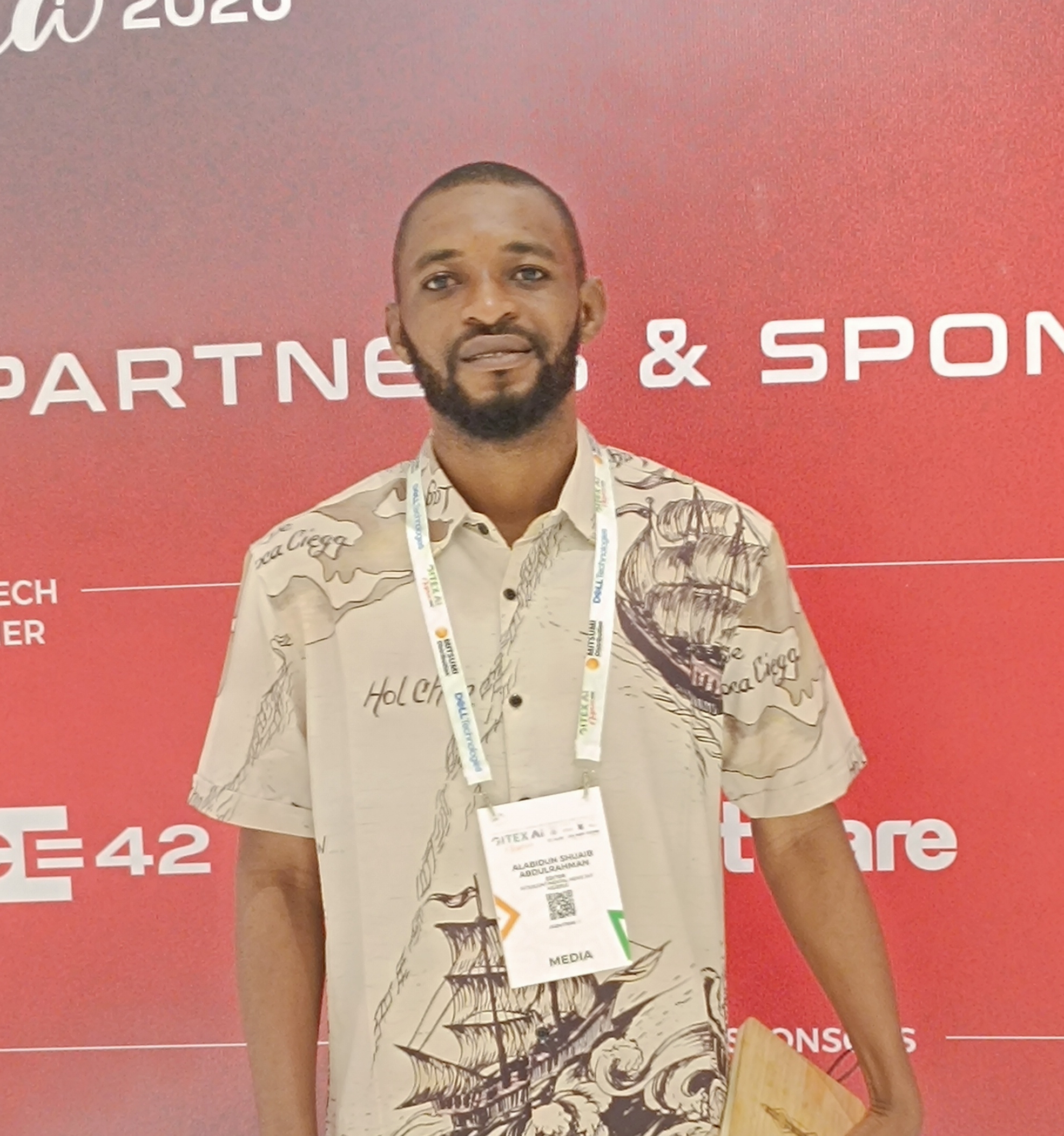
Democracy Not Africa’s Answer, by Alabidun Shuaib AbdulRahman
There is a question Africa has avoided for too long because it is politically uncomfortable and historically sensitive: is democracy, as it is presently practised across much of the continent, actually capable of delivering the Africa that Africans need? The question is not an argument for dictatorship. No! It is not a defence of military coups, one-party states or governments that silence citizens. It is not even an argument that Africans do not deserve the right to choose their leaders. They do.
But after decades of elections, constitutions, political parties and changes of government, it is legitimate to ask whether the political model Africa inherited and subsequently reproduced has become more important to African leaders than the outcomes it is supposed to produce.
The fact remains, Africa’s problem is no longer simply who wins elections. It is what happens after the election. Across the continent, citizens are confronting unemployment, insecurity, failing public services, inflation, weak currencies, poor electricity supply, inadequate healthcare, infrastructure deficits, declining purchasing power and the persistent inability of governments to transform enormous natural wealth into broad prosperity. Meanwhile, political competition is often reduced to the struggle for control of the state and its resources.
The evidence of growing frustration is difficult to dismiss. In its latest survey covering 38 African countries in 2024 and 2025, Afrobarometer found that only 47 per cent of respondents considered their country a democracy and only 38 per cent were satisfied with the way democracy was working. Yet 64 per cent still preferred democracy and majorities rejected one-person rule, one-party rule and military rule. Only 36 per cent qualified as what Afrobarometer called “committed democrats”, meaning respondents who both preferred democracy and rejected all three authoritarian alternatives. The report suggests that Africans are not necessarily tired of democracy. They are increasingly tired of the failure of governments that call themselves democratic.
For years, African political elites have treated elections as the utmost evidence of democratic success. Four or five years pass, citizens vote, results are announced, winners celebrate and losers complain. Then government continues. But democracy cannot be reduced to the mechanics of voting. A ballot paper does not put food on a table. It does not generate electricity. It does not secure a village from armed groups. It does not build a functioning railway, hospital or university. It does not process minerals into finished products or turn unemployed young people into productive workers.
The World Bank’s 2025 Country Policy and Institutional Assessment found that governance remains one of the areas in which Sub-Saharan Africa has improved more slowly than other regions. The Bank reported that poor government effectiveness continues to undermine infrastructure and public-service delivery, while deficiencies in transparency, accountability, budget execution and internal controls remain serious obstacles to development.
Consider Nigeria. The country has crude oil, natural gas, vast agricultural land, a huge population, a large consumer market and substantial human capital. Yet electricity remains unreliable, manufacturing struggles with high operating costs, public infrastructure is inadequate and millions of Nigerians remain trapped in poverty. Governments change, slogans change and development plans change, but the structural problems survive the politicians who supposedly came to solve them.
The Democratic Republic of Congo presents an even more painful contradiction. It possesses some of the world’s most important deposits of cobalt, copper and other minerals essential to the modern economy. Yet enormous mineral wealth has coexisted with poverty, weak infrastructure and instability.
Africa therefore does not merely have a resource problem. It has a state-capacity problem. The continent has resources. What it repeatedly lacks is the institutional machinery to convert resources into sustained prosperity. This should force Africans to reconsider what they mean by democracy. Perhaps the more useful political question is not whether a government was elected, but whether the institutions of that government are strong enough to protect public resources from political capture, whether public officials can be held accountable, whether policies survive changes of administration and whether citizens have meaningful influence between elections.
Disappointingly, the answer will not be found in military government. Africa has travelled that road before. The coups that swept across Africa after independence produced governments that often promised discipline, national renewal and an end to corruption. In many cases, they eventually reproduced the same failures they had condemned. Military rule is not a development strategy. Soldiers can seize power, but they cannot manufacture competent institutions merely by wearing uniforms.
The answer may instead lie in redesigning democratic government itself. Africa should examine a form of government that combines democracy with strong federalism, substantial decentralisation, consensus-building, professional public administration and direct participation by citizens. Switzerland provides perhaps the clearest developed-country example of what such an arrangement can look like.
Since becoming a federal state in 1848, Switzerland has organised political authority across the Confederation, 26 cantons and more than 2,000 communes. The principle is straightforward: government should remain as close to the people as possible, with powers transferred upward only where necessary. Its seven-member Federal Council operates collectively, with decisions based on consensus rather than the political dominance of one president. Swiss citizens also vote directly on particular issues through referendums and popular initiatives. Switzerland is not Africa, and no serious person should suggest copying its constitution wholesale. But the underlying principle deserves attention.
Why should one politician in a nation’s capital control an extraordinary concentration of resources and appointments in a country as geographically and culturally diverse as Nigeria? Why should communities wait for federal intervention to solve problems that can be managed locally? Why should political parties compete primarily for the presidency when development takes place in towns, villages, municipalities and regions?
Decentralisation is ultimate here. It will make government visible. It also makes failure harder to hide. A local government that controls its resources and responsibilities can be judged directly by the people living under it. A state or province can be compared with another. Competition can become a competition over public-service delivery rather than merely over political patronage.
Although decentralisation alone is not enough. Africa also needs a professional state. And this is where Singapore offers another useful lesson. Its political circumstances are very different from those of African countries though.
When Lee Kuan Yew became Singapore’s first Prime Minister in 1959, the country faced severe unemployment, overcrowding and economic uncertainty. Nearly 70 per cent of the population lived in slums, according to Singapore’s historical records, and unemployment was in double digits. After Singapore became independent on August 9, 1965, its leaders faced the additional problem of having virtually no natural resources and no large domestic market. They responded with long-term economic planning, industrialisation, infrastructure development, education and an aggressive drive to attract international investment.
The Economic Development Board, established in 1961, became a central instrument of industrialisation. Singapore developed Jurong as an industrial estate, invested heavily in infrastructure and deliberately positioned itself as an export-oriented economy. By 1970, the country had moved close to full employment.
Even at that, Singapore’s story must not be romanticised. Its political model, civil liberties record and historical circumstances are different from those of African states. But one lesson is difficult to dispute: development requires a state capable of implementing decisions consistently over decades. That is precisely what many African political systems struggle to achieve.
A new administration frequently arrives with a new programme, a new slogan and a new set of political appointees. Long-term projects are abandoned, renamed or redesigned. Institutions become vulnerable to political interference. Public servants learn that political loyalty may matter more than professional competence.
Africa cannot build a century-long future on four-year political calculations. What the continent needs is a democratic system that protects the people’s right to choose but prevents every election from becoming a complete reset of the state.
Imagine an African federation in which elected governments could change, but national development strategies could not be casually abandoned. Imagine independent institutions managing public finances, elections, justice and natural resources without becoming instruments of whoever occupies the executive office. Imagine regions controlling significant resources while remaining constitutionally bound to national standards on education, healthcare, security and human rights. That would still be democracy. But it would be a more institutional democracy. It would also address one of Africa’s most destructive political habits: the obsession with the individual leader.
Too much of African politics revolves around presidents. Their photographs dominate government buildings. Their names appear on projects funded with public money. Their approval is sought for matters that should be handled by institutions. Political succession becomes a national crisis because the system is built around personalities rather than rules.
The continent’s 54 states contain hundreds of ethnic groups, languages, religions, political traditions and historical experiences. A rigid political template imposed uniformly across all of them is unlikely to produce identical outcomes. Nigeria is not Botswana. Ghana is not Ethiopia. Kenya is not Morocco. Senegal is not South Africa. Africa therefore needs a political philosophy rather than a single imported constitutional costume.
Africa’s answer may lie in a democratic order redesigned around its own realities: federal where appropriate, decentralised where practical, participatory where necessary, professional in administration, disciplined in public finance and relentless about long-term development.
The objective should not be to discover a government that looks African. It should be to build governments that work for Africans.
Alabidun is a media practitioner and can be reached via alabidungoldenson@gmail.com


Lee backs Trump-Kim talks, seeks phased North Korea denuclearisation

Russia may launch limited NATO attack in months, Danish intelligence warns

EDITORIAL: African Leaders Must Speak to the World With Sovereign Power

Pastor Jerry Eze Defends Miracles At UK Conference Amidst Criticism And Controversy

Diaspora Watch 20th Edition (October 14-20, 2024): Your Trusted Source for Global News and Insights

Tanzanian Man Reportedly Dies And Returns To Life Six Times


-
 Diplomacy1 week ago
Bianca Hosts Nigerian Delegation As Shettima Arrives US For UNGA
-
 News1 week ago
US Congressman Stutzman to Peter Obi: I Sense Trust, Honesty in You
-

 News1 week ago
CARICOM Pushes Reparations Agenda, Unveils Revised Ten-Point Plan
-

 Analysis1 week ago
Are Killings in Niger State Beyond Ordinary? By Alabidun Shuaib AbdulRahman
-
 Analysis1 week ago
Niger’s 37 Dead: When Poverty Meets the Failure of the State, by Boniface Ihiasota
-
 Diplomacy1 week ago
Tinubu In Paris: Macron Dinner, Investment Push, Mambilla Victory