
Diplomacy
When Two Powerful Heads Meet …

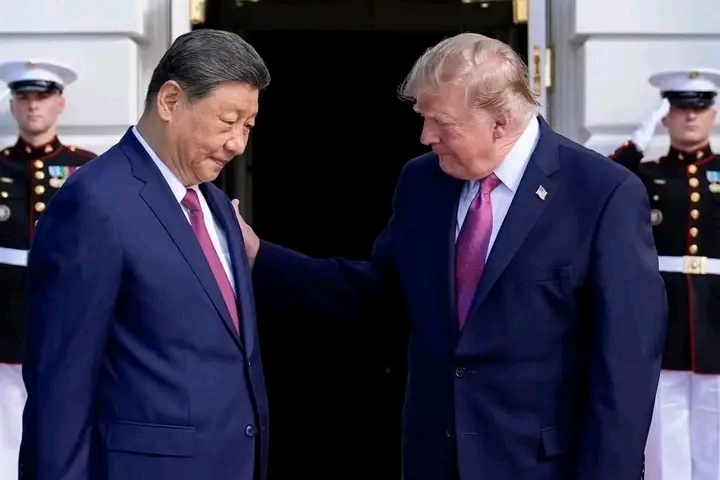
When Two Powerful Heads Meet …
By Boniface Ihiasota, Washington DC and Alabidun Shuaib AbdulRahman, Nigeria
When United States President Donald Trump welcomed Chinese President Xi Jinping to Washington this week, the world watched not merely two presidents meeting, but two competing centres of global power attempting to put limits on a relationship increasingly defined by economic rivalry, technological competition and strategic mistrust.
Xi arrived in the United States on Wednesday, September 23, 2026, for a three-day state visit at Trump’s invitation. The visit, which ended on Friday, September 25, was the first visit by a Chinese president to the White House in more than a decade and the first time a Chinese leader had made two formal state visits to the United States.
On Thursday, September 24, Trump and Xi stood together at the White House during a formal state arrival ceremony, followed by bilateral discussions and a state dinner. On Friday, they met again over tea before visiting the National Archives, where they viewed documents connected with the history of the United States.
The ceremony conveyed warmth. The substance of the talks revealed something more complicated.
The meeting produced agreements and additional channels for cooperation, particularly in trade, investment, artificial intelligence and law enforcement. But it did not resolve the principal disputes that have placed Washington and Beijing on a strategic collision course.
Diaspora Watch Newspaper reports that the United States and China have spent years imposing tariffs and restrictions on each other’s goods, creating uncertainty for manufacturers, farmers, technology companies and consumers. The two governments had already reached a framework during Trump’s May 2026 visit to Beijing, but implementation remained uneven before Xi’s arrival in Washington.
During the September meeting, the two countries operationalised the US-China Board of Trade and Board of Investment, mechanisms created during the May summit.
Under the Board of Trade, Washington and Beijing reached consensus on recommendations for more favourable tariff treatment covering $30bn of non-sensitive goods in each direction. The products include American agricultural goods, fish and seafood, logs and wood products, cosmetics and medical devices, as well as Chinese consumer products such as small appliances, toys, holiday decorations and children’s car seats.
China also agreed to import at least 10 million metric tonnes of American coal in both 2027 and 2028.
On paper, the arrangement represents a substantial commercial opportunity. But it would be premature to describe it as the end of the US-China trade conflict.
Reuters reported that the wider trade truce was extended for only two months, meaning that some of the most difficult questions remain subject to further negotiations. The two governments therefore appear to have chosen continuity over confrontation without yet reaching a permanent economic settlement. That is perhaps the most revealing aspect of the meeting. The relationship is not being reset. It is being managed.
For China, access to the American market remains important. For the United States, Chinese manufacturing capacity and supply chains remain difficult to replace quickly. Both governments consequently have reasons to negotiate even while they continue to prepare for greater competition.
The question of rare-earth minerals illustrates the problem. China occupies a dominant position in important parts of the global rare-earth supply chain. The minerals are used in electronics, electric vehicles, advanced manufacturing and defence-related technologies. Washington has increasingly regarded its dependence on Chinese processing capacity as a strategic vulnerability.
The White House said the two countries were continuing discussions over shortages involving rare earths and other critical minerals, with the objective of returning shipments to appropriate levels. The issue has therefore moved beyond conventional trade policy.
For Washington, critical minerals are now linked to economic and national security. For Beijing, control over important supply chains provides negotiating leverage at a time when the United States is attempting to restrict China’s access to some advanced technologies. That produces an unusual form of interdependence.
America possesses enormous financial, technological and military capabilities. China possesses enormous manufacturing capacity and occupies critical positions in several global supply chains. Neither country can easily ignore the other’s leverage.
Artificial intelligence added another layer to the discussion. Washington and Beijing are competing intensely over AI, a technology that is increasingly relevant to economic productivity, scientific research, communications and national security. Yet both governments also recognise that competition in such a rapidly developing field requires channels for communication.
The two sides agreed to establish a US-China “Super Intelligence” dialogue to discuss the risks and benefits associated with emerging technologies, with another exchange expected by November. They also agreed to establish a bilateral communication channel for incidents involving such technologies.
The significance lies not in the creation of a new diplomatic label, but in the recognition that technological competition can generate risks that neither side can manage in isolation.
The United States wants to preserve its technological advantages. China wants to expand its own technological capabilities and reduce dependence on American technology. Those objectives have not changed.
What has changed, at least temporarily, is the effort to create a mechanism through which the two governments can communicate while that competition continues. The same pattern emerged in discussions on law enforcement.
The White House said China had introduced export controls on two additional fentanyl precursor chemicals and that Chinese authorities had arrested 21 Chinese citizens in August following information supplied by US law enforcement. Washington has pressed Beijing for stronger action against the supply of precursor chemicals linked to illicit fentanyl production in North America.
For Trump, the issue has direct domestic significance. For Beijing, cooperation provides an opportunity to demonstrate that engagement with Washington can produce practical results even when disagreements persist elsewhere.
But perhaps the most difficult subject remains Taiwan. China regards Taiwan as part of its territory and opposes moves towards Taiwanese independence. The United States does not maintain formal diplomatic relations with Taiwan but has longstanding unofficial relations with Taipei and provides defensive support to the island.
Xi used the Washington meeting to restate Beijing’s position on Taiwan and national reunification. Reporting from the talks showed that the issue remained among the major areas of disagreement between the two governments. No new settlement emerged.
That is significant because Taiwan is not simply a question of sovereignty between Beijing and Taipei. It sits at the intersection of American security commitments, Chinese national policy, military strategy and the global semiconductor industry.
A serious crisis around the island could disrupt shipping, technology supply chains and financial markets while creating the possibility of direct confrontation between American and Chinese forces.
The absence of a new agreement on Taiwan therefore does not mean the issue has become less important. It demonstrates the limits of the current rapprochement.
The same caution applies to Iran. Trump raised China’s relationship with Tehran during the Washington talks and warned Beijing against supporting Iran, according to US Ambassador to China David Perdue.
Reuters reported that Trump received assurances from Xi that China would not provide such support, amid American concerns over Chinese-Iranian economic and military links.
The discussion illustrates another reality of the US-China relationship: bilateral diplomacy increasingly takes place against the background of conflicts and alliances elsewhere.
Washington and Beijing are not merely negotiating about their own economies. Their policies affect Russia, Iran, North Korea, Taiwan, international shipping and the broader balance of power.
The two leaders also discussed Russia, North Korea and Iran and agreed to support each other as hosts of the G20 and APEC meetings. The White House said Trump and Xi intend to attend each other’s summits.
Yet the most striking feature of the summit may have been what did not happen as there was no comprehensive trade settlement. There was no breakthrough over Taiwan. There was no end to the technology rivalry. There was no agreement that fundamentally altered the strategic competition between Washington and Beijing.
Reuters described the summit as producing few major public breakthroughs, while noting that the meeting was heavily focused on personal diplomacy and symbolism. That should not necessarily be interpreted as a failure of diplomacy.
Relations between major powers are rarely transformed by one meeting. More often, summits create mechanisms for managing disagreements and preventing them from escalating.
In that sense, the most important product of the Trump-Xi meeting may be the continuation of dialogue.
The alternative would be a relationship in which economic retaliation, technology restrictions, military manoeuvres and diplomatic disagreements occur without reliable channels between the two governments.
For two countries with enormous military capabilities and competing interests across the Indo-Pacific, such a situation would carry significant risks. The personal relationship between Trump and Xi is therefore only one component of the equation.
Trump has demonstrated a preference for leader-to-leader negotiations and tangible economic outcomes. Xi operates within a Chinese political system built around long-term strategic planning and the pursuit of what Beijing describes as national rejuvenation.
The two leaders can therefore reach tactical understandings without necessarily sharing the same long-term objectives.
Trump wants an economic relationship he considers fairer to American workers, farmers and businesses. Xi wants continued access to international markets while resisting what Beijing regards as attempts to constrain China’s technological and strategic rise. Those objectives overlap in some areas and collide in others. The result is a relationship that can simultaneously produce cooperation and confrontation. The Washington summit demonstrated precisely that contradiction.
The two countries can agree on coal purchases while competing over energy and technology. They can cooperate against illicit drug trafficking while imposing restrictions on strategic exports. They can establish an AI communication channel while competing intensely for technological leadership. They can discuss global stability while remaining divided over Taiwan.
That is the nature of the contemporary US-China relationship. It is neither a new Cold War in the traditional sense nor a normal commercial partnership. It is a complicated combination of economic interdependence, strategic competition and selective cooperation.



Tinubu In Paris: Macron Dinner, Investment Push, Mambilla Victory
By Alabidun Shuaib AbdulRahman
Nigeria’s President Bola Ahmed Tinubu’s second leg of his three-week European leave in Paris has evolved into more than a stop in the French capital, with high-level diplomatic engagement, renewed investment discussions, digital-economy initiatives and a major arbitration victory for Nigeria converging around the President’s stay.
Tinubu arrived in Paris on Sunday, September 13, after spending the first phase of his annual leave in London. He was received by Nigeria’s Ambassador to France, Ayodele Oke, as the Presidency maintained that the trip was a working vacation ahead of the President’s return to Nigeria.
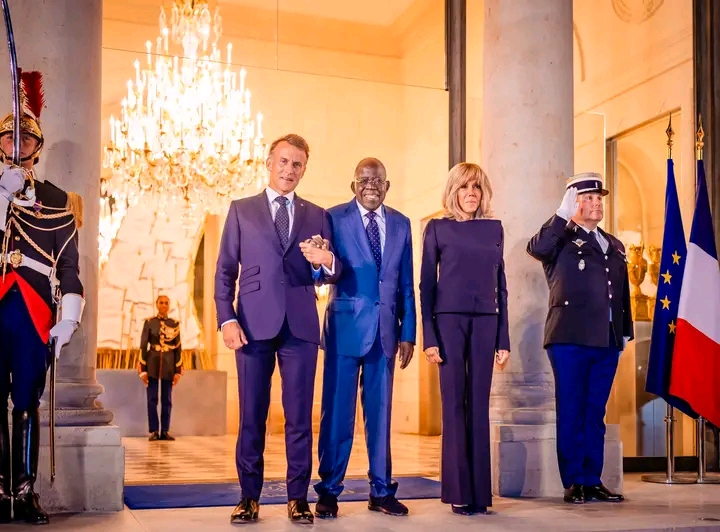
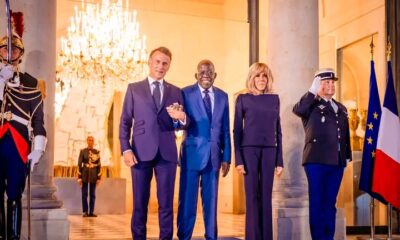
The Paris leg assumed a distinctly diplomatic character on Thursday, September 17, when French President Emmanuel Macron received Tinubu for a private dinner at the Élysée Palace.
Although details of the private discussions were not released, the Presidency said the encounter reflected the longstanding relationship between Nigeria and France and the two countries’ shared commitment to strengthening bilateral cooperation.
Photographs released from the meeting showed Tinubu with Macron and France’s First Lady, Brigitte Macron.
The engagement was significant against the backdrop of a relationship that has expanded considerably since Tinubu assumed office in May 2023.
France’s Ministry for Europe and Foreign Affairs describes Nigeria as an important partner because of its demographic, economic, cultural and political weight in Africa.
The ministry says bilateral relations have intensified substantially since 2014, particularly in economic and cultural affairs.
France also identifies Nigeria as its largest trading partner in sub-Saharan Africa, accounting for about 20 per cent of France’s trade with the region.
Bilateral trade stood at €5.1bn in 2023, according to French government figures.
The latest Macron-Tinubu engagement therefore came against an established diplomatic framework rather than as an isolated presidential encounter.
Tinubu’s previous major engagement with France included his November 2024 state visit, during which the two countries signed declarations of intent covering economic cooperation, sustainable and solidarity-based investment, critical minerals, banking and the cultural and creative industries.
France also recalls Tinubu’s June 2023 visit to Paris for the Summit for a New Global Financial Pact, his first official foreign trip after assuming office.
But the most tangible economic dimension of the current Paris stay emerged on Friday, September 18, when Tinubu met Vincent Bolloré, chairman of the Bolloré Group, for discussions on expanding the French conglomerate’s investments in Nigeria.
According to the Presidency, the discussions covered film, entertainment, fibre-optic infrastructure and the wider digital economy, with the group indicating plans to deepen the localisation of its operations in Nigeria.
The interests of the Bolloré Group include Canal+, MultiChoice and Universal Music Group, giving the meeting implications beyond conventional infrastructure investment and into Nigeria’s rapidly expanding entertainment, media and technology ecosystem.
For Tinubu, the argument is increasingly centred on converting Nigeria’s enormous cultural influence into domestic economic value.
The President said Nigeria’s global cultural reach through Nollywood, Afrobeats, fashion and other creative industries should translate into greater local production, investment, infrastructure and employment.
The Presidency said the discussions were also linked to the administration’s objective of ensuring that more of the value generated by Nigerian talent remains within the country.
The meeting with Bolloré consequently placed the creative economy alongside digital infrastructure as an emerging component of Nigeria’s investment diplomacy.
It was also consistent with another initiative announced during the Paris period: the movement of Nigeria’s Digital Free Zones programme into its implementation phase.
The initiative is designed to enable Nigerian technology and service companies to raise international capital, serve global markets and retain their businesses and intellectual property in Nigeria rather than relocating abroad.
Tinubu directed the Minister of Trade and Investment, Jumoke Oduwole, who is vice-chairman and implementation coordinator of the Presidential Steering Committee on Digital Free Zones, to work with the committee and Itana Innovation to develop a roadmap for the full launch of the programme within 180 days.
At the centre of the initiative is Itana, described by the Presidency as Nigeria’s first Digital Free Zone and already licensed by the Nigeria Export Processing Zones Authority.
The government said the Africa Finance Corporation is backing the $500m Itana Innovation project at Alaro City in Lagos, where an innovation campus, access to capital and ecosystem services are expected to support African digital businesses.
Tinubu’s pitch is that Nigeria should not merely produce the talent powering the global digital economy while the companies, intellectual property, capital and high-value jobs are domiciled elsewhere.
The President said the administration wanted companies to be incorporated, financed and governed from Nigeria while serving customers across Africa and the wider world.
That economic message ran parallel to an important legal development in Paris.
On Thursday, September 17, an International Chamber of Commerce arbitration tribunal sitting in Paris delivered an award in favour of Nigeria in the long-running dispute involving Sunrise Power and Transmission Company Limited over the Mambilla Hydroelectric Power Project in Taraba State.
The case had exposed Nigeria to claims running into billions of dollars.
Sunrise had sought $680m in one aspect of the dispute while a separate arbitration involved claims exceeding $2.7bn relating to the proposed 3,960-megawatt Mambilla project. The tribunal rejected the claims.
According to details reported from the award, the tribunal also rejected Sunrise’s $400m claim arising from a 2020 settlement agreement and ordered Sunrise and its promoter, Leno Adesanya, to reimburse Nigeria 75 per cent of its legal fees and expenses, amounting to about $11.82m.
The dispute dates back to an agreement connected with the proposed Mambilla project and subsequent arbitration proceedings initiated in 2017.
A 2020 settlement agreement later produced another dispute after the government did not make the agreed payment.
Reacting to the ruling, Tinubu commended Attorney-General and Minister of Justice, Lateef Fagbemi, the Federal Ministry of Justice and the Nigerian defence team led by Elizabeth Oger-Gross and Tolu Obamuroh.
He also acknowledged the testimony of former President Olusegun Obasanjo and the late former President Muhammadu Buhari, as well as former ministers Babatunde Fashola and Suleiman Adamu and other witnesses.
Tinubu described the decision as removing what he called the “single biggest legal hurdle” that had paralysed the Mambilla project for years.
The coincidence of the arbitration ruling with the President’s presence in Paris gave the French leg of his European leave an unusual international dimension, even though the arbitration was a judicial proceeding independent of Tinubu’s presidential engagements.
The Mambilla project itself remains one of Nigeria’s most ambitious proposed power developments.
The planned hydroelectric scheme in Taraba has long been associated with the country’s search for large-scale additions to its electricity generation capacity, but contractual and legal disputes have contributed to its prolonged uncertainty.
The developments in Paris also underline the breadth of Nigeria-France relations.
The relationship now extends beyond traditional diplomacy into investment, banking, critical minerals, culture, entertainment, technology and infrastructure.
French authorities have described Nigeria as an indispensable interlocutor in Africa, while successive Nigerian administrations have sought to leverage French capital and expertise across strategic sectors.
For Tinubu, the Paris stop consequently became a meeting point for several strands of his administration’s international economic diplomacy: attracting foreign capital, keeping Nigerian intellectual property at home, expanding the creative economy, strengthening digital infrastructure and protecting the country’s position in international commercial disputes.
Yet the circumstances surrounding the trip have also attracted domestic political attention.
Tinubu left Abuja on August 30 for a three-week annual leave, with London as his first destination and Paris as the second leg.
The Presidency had described the absence as a working vacation and said the President would return to Nigeria at the end of the period.
The President’s stay abroad also generated debate over the constitutional question of presidential delegation during an extended absence, with some political figures questioning why Vice-President Kashim Shettima had not been formally designated Acting President.
Those arguments were publicly advanced by critics and were separate from the diplomatic and economic engagements in Paris.
For France, however, the immediate story has been the continuation of a relationship that has steadily acquired greater strategic and commercial depth.
While for Nigeria, the Paris episode has produced a cluster of developments that extend well beyond a presidential dinner: renewed contact with the Élysée Palace, an investment conversation with one of France’s most influential business groups, an implementation push for digital free zones and an ICC ruling that rejected multibillion-dollar claims connected to one of the country’s biggest proposed power projects.
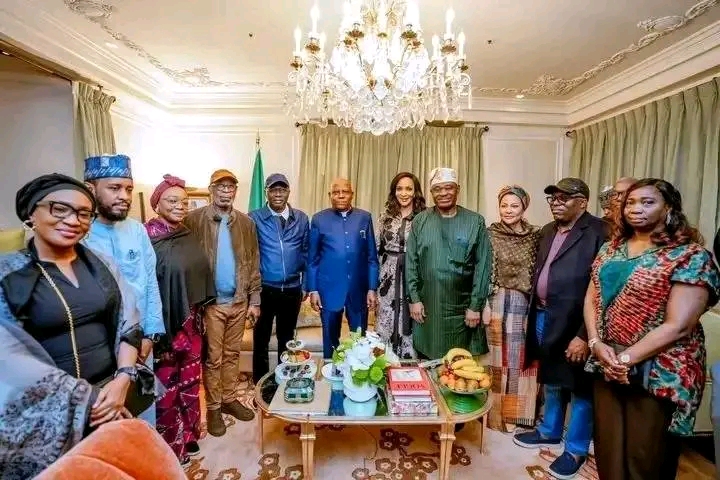
Bianca Hosts Nigerian Delegation As Shettima Arrives US For UNGA
By Boniface Ihiasota, Washington DC
Nigeria’s Minister of Foreign Affairs, Ambassador Bianca Odumegwu-Ojukwu, has welcomed Vice President Kashim Shettima to New York, United States, as he arrived to lead Nigeria’s delegation to the 81st Session of the United Nations General Assembly.
Diaspora Watch Newspaper reports that Shettima arrived in New York on Sunday night to represent President Bola Ahmed Tinubu at the high-level UNGA meetings.
Odumegwu-Ojukwu, who shared photographs of the arrival, said she was honoured to welcome the Vice President, who is expected to coordinate Nigeria’s engagements at the global gathering.
The Vice President’s delegation includes senior government officials and other representatives who will participate in bilateral meetings, high-level discussions and other activities surrounding the UN General Assembly.
The 81st UNGA provides Nigeria with an opportunity to present its positions on issues of international concern and engage world leaders, development partners and multilateral institutions.
Shettima is expected to deliver Nigeria’s national statement during the General Debate as the Federal Government seeks to advance the country’s interests and strengthen its engagements within the international community.
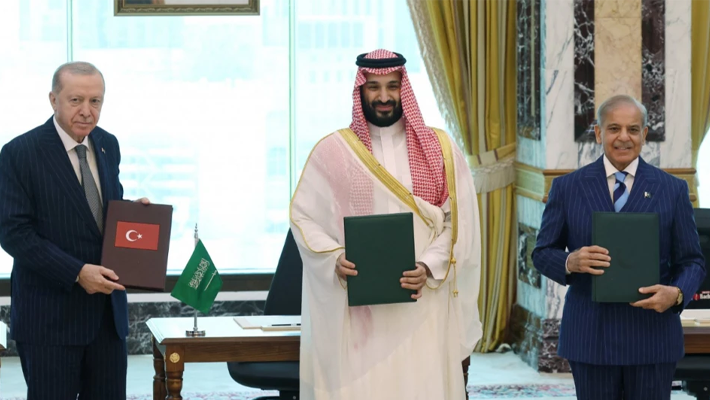
Saudi Arabia, Turkey, Pakistan sign defence pact amid Middle East tensions
Saudi Arabia, Turkey and Pakistan have signed a landmark joint defence agreement amid heightened tensions in the Middle East, with the three countries declaring that an armed attack against any one of them would be regarded as an attack against all.
The agreement, known as the Mecca Joint Defence Agreement, was signed on Friday, August 7, 2026, in Makkah by Saudi Crown Prince Mohammed bin Salman, Turkish President Recep Tayyip Erdoğan and Pakistani Prime Minister Shehbaz Sharif.
The pact, which formalises nearly a year of negotiations among the three countries, comes amid escalating regional tensions following attacks involving Iran, Israel and the United States and disruptions to energy and commercial routes around the Gulf.
The agreement deepens an already growing military relationship among the three countries, but officials have stressed that it is defensive in nature and is not directed against any particular country.
Turkey brings considerable military and technological capabilities to the partnership as a NATO member with a rapidly expanding indigenous defence industry.
Saudi Arabia contributes its strategic location, financial resources and status as one of the world’s leading oil exporters, while Pakistan provides extensive military experience and is the only nuclear-armed Muslim-majority country.
The pact is also significant against the background of growing uncertainty over the future role of the United States in the Middle East.
The three countries have increasingly sought greater responsibility for regional security as conflicts and geopolitical rivalries continue to test existing security arrangements.
The agreement followed months of negotiations and comes at a particularly sensitive period for the Gulf.
Recent regional hostilities have affected energy infrastructure and commercial shipping routes, while concerns over security around the Strait of Hormuz have increased because of its importance to global oil supplies.
Although the pact establishes a mutual-defence principle, details of the precise mechanisms for implementing the commitment have not been fully disclosed.
Questions remain over the extent to which the three countries will coordinate intelligence, conduct joint military exercises or establish mechanisms for responding collectively to an attack.
The agreement nevertheless marks a major development in the security calculations of the Middle East and South Asia.
Saudi Arabia has historically relied heavily on its strategic relationship with the United States for security, while Turkey remains a major NATO military power. Pakistan, meanwhile, has maintained longstanding defence relationships with both Saudi Arabia and Turkey.
The new arrangement could therefore provide the three countries with an additional framework for military cooperation without necessarily replacing their existing international alliances.
The pact also reflects the growing importance of Saudi-Turkish relations. Ankara and Riyadh have expanded political, economic and defence cooperation in recent years after a period of strained relations.
Pakistan, for its part, has maintained close military and political ties with Saudi Arabia and has deepened defence cooperation with Turkey, including military training and defence-industrial collaboration.
The three-way agreement is expected to strengthen those existing relationships while giving them a more formal strategic dimension.
The signatories have insisted that the agreement is intended to strengthen collective deterrence and protect their sovereignty rather than establish a sectarian military bloc.
However, its timing has inevitably raised questions about its implications for the wider balance of power, particularly amid tensions involving Iran and Israel.
The emergence of the pact also comes as Gulf states reassess their security arrangements in response to the changing regional environment.
For Saudi Arabia, the agreement offers another layer of strategic security.
For Turkey, it expands Ankara’s military and diplomatic influence beyond its immediate neighbourhood.
For Pakistan, it provides an opportunity to deepen its role in Middle Eastern security while strengthening its strategic partnership with two economically and politically influential countries.
The agreement is therefore more than a bilateral military arrangement extended to a third country.
It represents a significant attempt by three influential Muslim-majority states to build a stronger framework for collective security at a time of growing uncertainty across the region.


Ortom’s 23 Vehicles and the Dangerous Culture of Public Entitlement, by Boniface Ihiasota

When Two Powerful Heads Meet …
Goldbet Casino w Polsce – Automaty, gry stołowe i kasyno na żywo

Pastor Jerry Eze Defends Miracles At UK Conference Amidst Criticism And Controversy

Diaspora Watch 20th Edition (October 14-20, 2024): Your Trusted Source for Global News and Insights

Tanzanian Man Reportedly Dies And Returns To Life Six Times


-
 Diplomacy1 week ago
Bianca Hosts Nigerian Delegation As Shettima Arrives US For UNGA
-
 News1 week ago
US Congressman Stutzman to Peter Obi: I Sense Trust, Honesty in You
-

 News1 week ago
CARICOM Pushes Reparations Agenda, Unveils Revised Ten-Point Plan
-

 Analysis1 week ago
Are Killings in Niger State Beyond Ordinary? By Alabidun Shuaib AbdulRahman
-
 Analysis1 week ago
Niger’s 37 Dead: When Poverty Meets the Failure of the State, by Boniface Ihiasota
-
 Diplomacy1 week ago
Tinubu In Paris: Macron Dinner, Investment Push, Mambilla Victory