



Are Killings in Niger State Beyond Ordinary? By Alabidun Shuaib AbdulRahman There is something increasingly unsettling about what is happening in Niger State. It is...



Kaduna’s Security Question, by Alabidun Shuaib AbdulRahman There are some arguments in Nigeria that should never be allowed to remain where they began. They start...



The Dark Lessons From Anambra, by Boniface Ihiasota There are crimes that shock a society because they violate the law, and there are others that...



Wike and the Abuja Master Plan, by Alabidun Shuaib AbdulRahman Last week, I wrote about the danger of Abuja gradually drifting towards the urban failures...



Tobi Amusan’s Legacy After the World Record Falls, by Boniface Ihiasota There are moments in sport when a stopwatch does more than record time. It records the changing of an era. That was the drama that unfolded in Zurich on Thursday, August 27, 2026, when American Olympic champion Masai Russell ran 12.09 seconds to erase Tobi Amusan’s world record in the women’s 100m hurdles. For Nigerians watching from home and across the diaspora, it was a moment of conflicting emotions. The green-and-white pride associated with Amusan’s name suddenly had a new number attached to it. Yet, perhaps more importantly, the Zurich race demonstrated that sporting greatness is not diminished simply because a record is eventually broken. Russell’s 12.09 seconds was extraordinary. She lowered Amusan’s 12.12-second world record by three hundredths of a second, with no assisting wind recorded. Reuters reported that Russell pulled decisively clear after the final hurdle to complete one of the defining performances of the 2026 athletics season. But the story of Zurich is not simply about an American taking a Nigerian record. It is about two exceptional athletes meeting at different points of their careers and, in doing so, reminding the world why records exist in the first place: to be challenged. Four years earlier, on July 24, 2022, Amusan had stunned the athletics world at Hayward Field in Eugene, Oregon. She ran 12.12 seconds in the semi-final of the World Athletics Championships, with a legal tailwind of 0.9 metres per second, establishing a new world record. World Athletics subsequently ratified the performance. That evening transformed Amusan from a brilliant Nigerian hurdler into a global sporting icon. She went on to win the world title, completing a remarkable championship after having endured fourth-place finishes at the 2019 World Championships and the Tokyo 2020 Olympics. Her 12.12 remained the benchmark for four years. And perhaps that is why her performance in Zurich deserves more attention than the silver medal beside her name. With the world record literally disappearing in front of her, Amusan did not collapse under the weight of history. Instead, she produced her fastest performance of the 2026 season, clocking 12.23 seconds to finish second behind Russell. Sport has a cruel habit of reducing athletes to medals, rankings and numbers. But behind every record is a human being who has spent years training, sacrificing and competing against limits that most people will never understand. Amusan’s 12.12 was not merely a number on a results sheet. It represented years of Nigerian athletic excellence and a moment when an African woman stood at the summit of one of the world’s most competitive sporting disciplines. Russell has now inherited that summit. At 12.09, she has also announced something potentially more significant: the possibility that the women’s 100m hurdles may be entering another extraordinary era. Russell had already run 12.14 earlier in 2026, the second-fastest performance in history at the time, before producing the world record in Zurich. For the Nigerian diaspora, therefore, this should not be remembered as the night Nigeria lost a record. It should be remembered as the night Tobi Amusan’s record became part of athletics history. Amusan has already changed how young Nigerian athletes see the hurdles. She has shown that an athlete from Ijebu-Ode can rise through international competition and become the fastest woman ever over the 100m hurdles. Her name will remain attached to the record books as the athlete who broke the barrier first. Russell’s achievement does not erase Amusan’s chapter. It begins a new one. And perhaps the most beautiful part of Zurich was that Amusan was there when history moved forward. She did not merely watch her record fall; she answered with a season’s best. ...
Before Wike Turns Abuja City to Jakarta, by Alabidun Shuaib AbdulRahman There is something deeply unsettling about watching Abuja, a city conceived as one of...
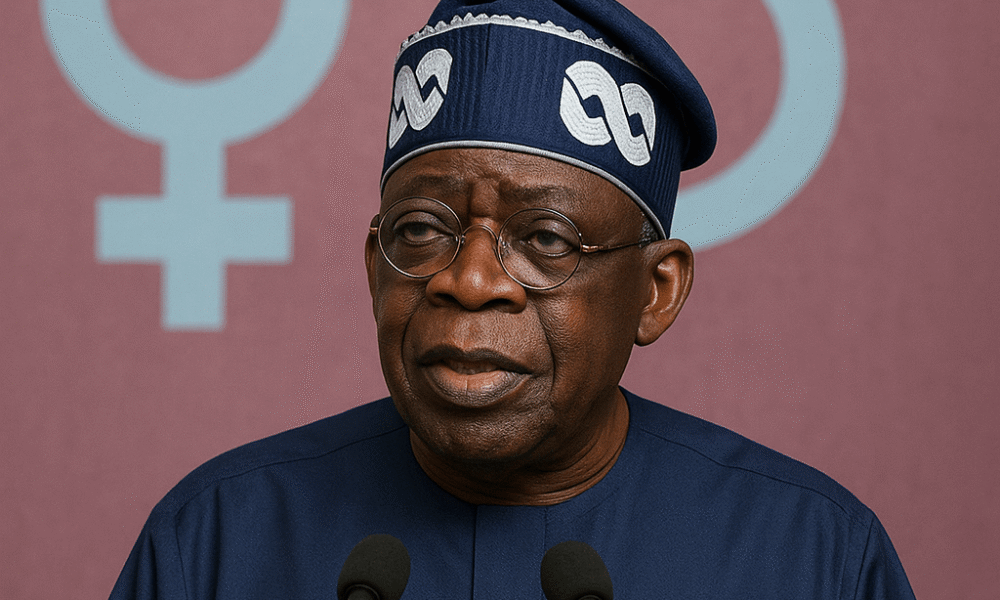

Tinubu, EFCC and the Danger of Political Interference, by Alabidun Shuaib AbdulRahman There are moments when the intention behind an official decision may be defensible,...



Obasanjo, Atiku and the Burden of Broken Trust, by Alabidun Shuaib AbdulRahman In politics, alliances are often built on interests, sustained by necessity and destroyed...



Tinubu Takes the Bull by the Horns on Insecurity, by Alabidun Shuaib AbdulRahman President Bola Ahmed Tinubu’s approval of a major restructuring of the Nigerian...
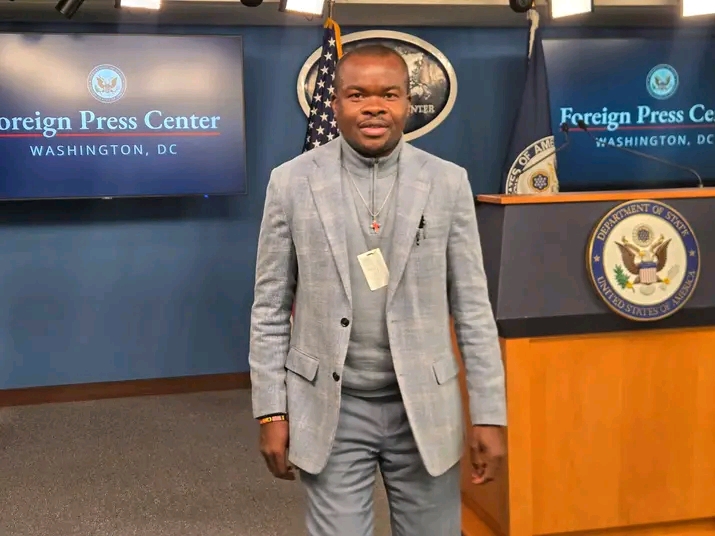


Let the Bishop’s Visit Heal Us — A Call for Peace Among Mbaise Sons and Daughters in the Diaspora By Boniface Ihiasota Publisher/Correspondent, Foreign Press...



Understanding Kwara’s New Security Landscape, by Alabidun Shuaib AbdulRahman There are journeys that leave you with more questions than answers. There are also journeys that...



The Economics of Terrorism in Nigeria, by Alabidun Shuaib AbdulRahman The Nigerian state has spent well over a decade chasing terrorists through forests, mountains and...