
Analysis
Let the Bishop’s Visit Heal Us — A Call for Peace Among Mbaise Sons and Daughters in the Diaspora

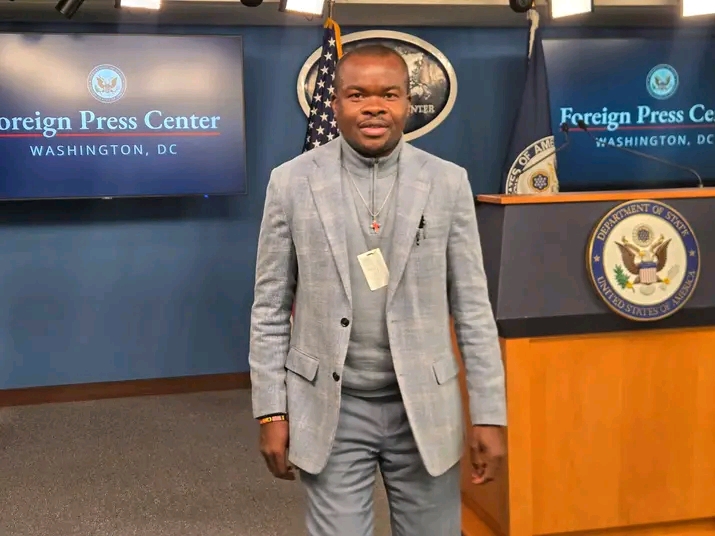
Let the Bishop’s Visit Heal Us — A Call for Peace Among Mbaise Sons and Daughters in the Diaspora
By Boniface Ihiasota
Publisher/Correspondent, Foreign Press Center, Washington D.C.
Excel Global Media Group Inc, USA
The first episcopal visit of His Lordship, Rt. Rev. Simeon Okezuo Nwobi, Catholic Bishop of Ahiara Diocese, to the DMV is more than a Mass. More than a reception. More than protocol.
It is a divine appointment.
On Sunday, July 12, 2026, at 3:00 PM, the people of Mbaise in DC, Maryland, Virginia, and neighboring states will gather at St. Matthias Catholic Church, Lanham, to welcome our Bishop. Friendship Hall will open its doors. But the real question is: Will we open our hearts?
At a time when our Mbaise diaspora community is blessed with numbers, talent, and resources, we are also burdened by something far less holy — division. The whispers have grown louder than our prayers. Gossip travels faster than goodwill. Clans compete where they should collaborate. Brothers ignore brothers. Sisters wound sisters with words. We are building houses side by side in Maryland, Virginia, and D.C., yet building walls between our hearts.
This cannot be our story in a foreign land.
I appeal to His Lordship: Let this visit be a moment of soul searching for all of us. Use your shepherd’s staff not only to bless an altar, but to gather a scattered flock. Preach to us again the Gospel we know but too often forget — _“Love one another as I have loved you.”_ John 13:34 did not come with exceptions for village meetings, title disputes, or WhatsApp arguments.
Mbaise people are known for faith, resilience, and intellect. We produced bishops, professors, doctors, builders. But what does it profit us to gain the whole DMV and lose our brotherhood? Our children are watching. They are learning how to be Igbo in America from us. Are we teaching them unity or enmity?
Let St. Matthias on July 12 be remembered not just as the place we welcomed our Bishop, but as the ground where healing began. Let every son and daughter of Mbaise who enters Friendship Hall that day become a witness to a new covenant: That from this day, we will eschew hate. We will kill gossip before it kills our community. We will disagree without destroying.
Division is easy. Anybody can pull down. Peace is the hard, holy work of builders. And we are _Ndi Mbaise_ — we are builders.
Bishop Nwobi, you carry the moral authority of Ahiara Diocese. We, your children abroad, carry the weight of survival in a foreign land. Neither is easy. But together, we can make this diaspora a cathedral of love, not a courtyard of conflict.
I call on every Mbaise union, every age grade, every family, every individual: Come to the drawing board. The Bishop is coming. The Church doors are open. The moment is now.
Let us leave Friendship Hall as brothers and sisters, not just by blood, but by bond. Let us pursue our good, and the good of the community at large. For in the end, _“Umunna bu ike”_ — but only when _Umunna_ is at peace.
May this visit not just welcome a Bishop. May it restore a people.
I come in peace.




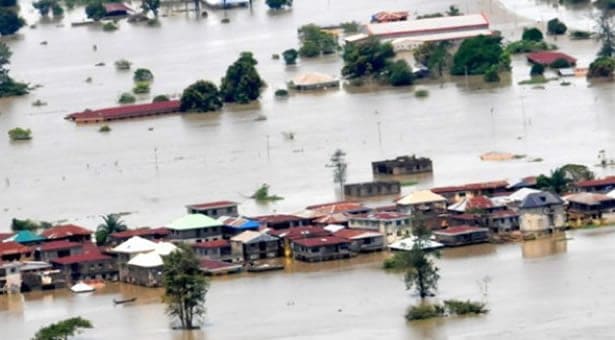
Wike and the Abuja Master Plan, by Alabidun Shuaib AbdulRahman
Last week, I wrote about the danger of Abuja gradually drifting towards the urban failures that have made Jakarta synonymous with flooding, poor drainage, disappearing waterways and the painful consequences of allowing development to outrun planning. The argument was not that Abuja is Jakarta. It was that cities, despite differences in geography, can repeat one another’s mistakes.
Events in Nepal this week have supplied an even more sobering reason for Abuja and Nigeria to take that warning seriously. What happened in Nepal on Wednesday, August 26, 2026, was not an ordinary rainy-season flood. A section of a glacier near Langtang Lirung in the Himalayas collapsed, sending an enormous mass of ice and rock crashing into the Lhende Khola river. The resulting torrent became a deadly mixture of water, mud, rock and debris that raced through valleys and settlements on the Nepal-China border. Reuters reported that the disaster destroyed roads, bridges, houses, power installations and the vital Gyirong border infrastructure, while hundreds were killed and nearly 1,000 people remained missing.
By Friday, August 28, the situation had become even more frightening. A lake created when debris blocked the river had begun overflowing, forcing rescue operations to be suspended because of the danger of another surge. Nepalese and Chinese authorities were already warning of further flooding.
The immediate lesson is not that Abuja has glaciers. It does not. Neither should anyone suggest that a Himalayan glacial collapse can simply be transplanted into Nigeria. The lesson is more fundamental and much closer to home: disasters become catastrophic when natural hazards meet vulnerable settlements, weak planning, inadequate infrastructure and institutions that respond after the damage instead of preparing before it.
Nepal has always been vulnerable to floods, landslides and other natural disasters. Its mountainous terrain makes communities particularly exposed during heavy rainfall. In September 2024, devastating rains killed at least 192 people across the country, with 56 deaths recorded in the Kathmandu Valley alone. At the time, poor urban planning and climate change are said to be the factors that worsened the flooding.
The current disaster has a different immediate trigger, but the wider warning remains the same. Scientists say climate change is increasingly destabilising high mountain environments by changing patterns of ice melt, freezing and thawing. Nepal has lost nearly one-third of its glacier ice over about three decades, according to figures cited by Reuters, while warming conditions are making compound disasters involving floods, landslides and ice or rock avalanches increasingly dangerous.
Nepal has experienced another disturbing glacial-origin flood as recently as July 2025, when the drainage of a supraglacial lake in Tibet triggered flooding along the Bhote Koshi River, killing people and destroying the Friendship Bridge between Nepal and China.
This is what climate change is doing to the meaning of disaster preparedness. The old assumption was that if you knew the rainy season, you knew roughly what to expect. That assumption is becoming increasingly unreliable. Extreme weather is becoming more complicated. Rainfall can interact with landslides. Rivers can suddenly change course. Infrastructure can become a trap. A drainage system designed for yesterday’s rainfall may be hopelessly inadequate for tomorrow’s storm.
Nigeria must understand this before another tragedy teaches us the lesson in the most expensive way possible. And Abuja, of all Nigerian cities, should understand it first. The Federal Capital was not supposed to grow like an accidental settlement. It was conceived as a planned city. The Abuja Master Plan was developed in 1979, with the Central Area plan subsequently developed in the early 1980s under Japanese architect Kenzo Tange. Its philosophy was based on organised land use, functional districts, green spaces, transportation networks and controlled development.
Its population has expanded dramatically. Its satellite towns have exploded. Its roads have stretched into areas that were once largely undeveloped. Real estate has become one of the city’s most aggressive economic activities. Natural drainage corridors have come under pressure. Green areas have been converted. Buildings have appeared in places that ought to remain open for environmental reasons. The question, therefore, is no longer whether Abuja needs its master plan reviewed. It is why the review has taken so long.
Wike has spoken about the need to review the Abuja Master Plan since 2024. In September that year, he spoke about the need to improve infrastructure, including storm-water and wastewater drainage, while discussing the review of the city’s planning framework.
Yet here we are in August 2026, and the flooding question remains sufficiently serious for stakeholders to be demanding a comprehensive review of the 1979 plan. The FCT Administration itself has now said it is reviewing the plan to reflect the current realities of the capital. That raises an uncomfortable question. If the need for an updated plan was recognised in 2024, why is Abuja still dealing with the consequences of a planning framework conceived nearly half a century ago?
This is not an argument against Wike’s achievements. Since assuming office as FCT Minister in August 2023, he has pushed roads, bridges and other infrastructure projects with an urgency that has visibly altered parts of the capital. That record should be acknowledged. But this is precisely why the argument has become more important. A road is not a city. A bridge is not a city. A beautiful interchange is not a city.
A city is a system. Water must have somewhere to go. Trees and wetlands must have somewhere to survive. Waste must have somewhere to be collected. Buildings must have somewhere they are legally permitted to stand. Roads must be designed alongside drainage. New estates must be connected to adequate infrastructure. Population growth must be anticipated rather than discovered after the fact. This is why the recent flooding in Abuja should not be reduced to the politics of demolition.
On August 18, Wike ordered the demolition of structures built on designated waterways following flooding in parts of the capital. During an inspection of flood-affected areas, the FCT Administration said it discovered a structure on a drainage area whose allocation had been revoked years earlier. That is not merely a story about one illegal structure. It is a story about the failure of a system.
If a piece of land reserved for drainage can be allocated, revoked and later occupied by a structure, then something went wrong at several points in the chain of governance. Someone approved something. Someone failed to enforce something. Someone looked away. Someone built where building was not supposed to happen. Demolition is necessary in some circumstances, but demolition after the damage has occurred is the most expensive form of planning.
That is why Wike’s administration should use the current moment to do something much bigger than clearing waterways. Abuja needs a comprehensive flood and climate resilience plan incorporated into the new master plan. Every major drainage corridor should be mapped and legally protected. Flood plains should be clearly identified. Wetlands and green areas should be treated as infrastructure, not vacant land. Development approvals should take storm-water management seriously. Satellite towns should be integrated into the same planning system rather than allowed to grow independently until their problems become Abuja’s problems.
The public should know which areas are protected waterways. Developers should know the rules before buying land. Government officials should know that approving an illegal structure will have consequences. And influential Nigerians should not be allowed to believe that their influence gives them a private exemption from public planning laws.
The recent flooding has already triggered demands from Abuja stakeholders for the desilting of drainage channels, enforcement against encroachment and a comprehensive review of the 1979 Master Plan. These demands should not be dismissed as another seasonal reaction.
The capital cannot continue to operate with a planning philosophy designed for a city that no longer exists. Wike has spent considerable political capital and public resources improving Abuja’s physical infrastructure. He should now spend the same energy modernising the rules that determine how that infrastructure interacts with the environment.
Otherwise, there is a danger that today’s roads will become tomorrow’s channels for faster-moving floodwater, and today’s new developments will become tomorrow’s flood-prone neighbourhoods. Nepal did not become vulnerable to climate-related disasters overnight.
Cities decline gradually. A wetland disappears here. A drainage channel is narrowed there. A green area is converted somewhere else. An unauthorised building is tolerated because the owner is powerful. A master plan is left unchanged for another year. A drainage project is postponed. Another road is constructed without adequate storm-water infrastructure. Then one day the rain comes. And everybody asks how it happened. Abuja still has the advantage of being able to prevent that question from becoming inevitable.
Wike has said he is reviewing the master plan. Nigerians should now demand that the review be completed, published, debated and implemented, not merely announced. The time for another committee, another promise and another inspection after another flood is gone.
The Nepal disaster is a tragedy, but it is also a warning from a distance. For Abuja, the message could not be clearer. Prepare before the water comes. Because when the flood eventually arrives, it will not ask who approved the building, who ignored the drainage, who postponed the master plan or which administration made the mistake. It will simply come. And by then, politics will be irrelevant.
Alabidun is a media practitioner and can be reached via alabidungoldenson@gmail.com

Tobi Amusan’s Legacy After the World Record Falls, by Boniface Ihiasota
There are moments in sport when a stopwatch does more than record time. It records the changing of an era. That was the drama that unfolded in Zurich on Thursday, August 27, 2026, when American Olympic champion Masai Russell ran 12.09 seconds to erase Tobi Amusan’s world record in the women’s 100m hurdles.
For Nigerians watching from home and across the diaspora, it was a moment of conflicting emotions. The green-and-white pride associated with Amusan’s name suddenly had a new number attached to it. Yet, perhaps more importantly, the Zurich race demonstrated that sporting greatness is not diminished simply because a record is eventually broken.
Russell’s 12.09 seconds was extraordinary. She lowered Amusan’s 12.12-second world record by three hundredths of a second, with no assisting wind recorded. Reuters reported that Russell pulled decisively clear after the final hurdle to complete one of the defining performances of the 2026 athletics season.
But the story of Zurich is not simply about an American taking a Nigerian record. It is about two exceptional athletes meeting at different points of their careers and, in doing so, reminding the world why records exist in the first place: to be challenged.
Four years earlier, on July 24, 2022, Amusan had stunned the athletics world at Hayward Field in Eugene, Oregon. She ran 12.12 seconds in the semi-final of the World Athletics Championships, with a legal tailwind of 0.9 metres per second, establishing a new world record. World Athletics subsequently ratified the performance.
That evening transformed Amusan from a brilliant Nigerian hurdler into a global sporting icon. She went on to win the world title, completing a remarkable championship after having endured fourth-place finishes at the 2019 World Championships and the Tokyo 2020 Olympics. Her 12.12 remained the benchmark for four years.
And perhaps that is why her performance in Zurich deserves more attention than the silver medal beside her name. With the world record literally disappearing in front of her, Amusan did not collapse under the weight of history. Instead, she produced her fastest performance of the 2026 season, clocking 12.23 seconds to finish second behind Russell.
Sport has a cruel habit of reducing athletes to medals, rankings and numbers. But behind every record is a human being who has spent years training, sacrificing and competing against limits that most people will never understand. Amusan’s 12.12 was not merely a number on a results sheet. It represented years of Nigerian athletic excellence and a moment when an African woman stood at the summit of one of the world’s most competitive sporting disciplines.
Russell has now inherited that summit. At 12.09, she has also announced something potentially more significant: the possibility that the women’s 100m hurdles may be entering another extraordinary era. Russell had already run 12.14 earlier in 2026, the second-fastest performance in history at the time, before producing the world record in Zurich.
For the Nigerian diaspora, therefore, this should not be remembered as the night Nigeria lost a record. It should be remembered as the night Tobi Amusan’s record became part of athletics history.
Amusan has already changed how young Nigerian athletes see the hurdles. She has shown that an athlete from Ijebu-Ode can rise through international competition and become the fastest woman ever over the 100m hurdles. Her name will remain attached to the record books as the athlete who broke the barrier first.
Russell’s achievement does not erase Amusan’s chapter. It begins a new one. And perhaps the most beautiful part of Zurich was that Amusan was there when history moved forward. She did not merely watch her record fall; she answered with a season’s best.
That is how champions respond when the world changes around them. The record now belongs to Masai Russell. But the legacy of Tobi Amusan remains unmistakably Nigerian.
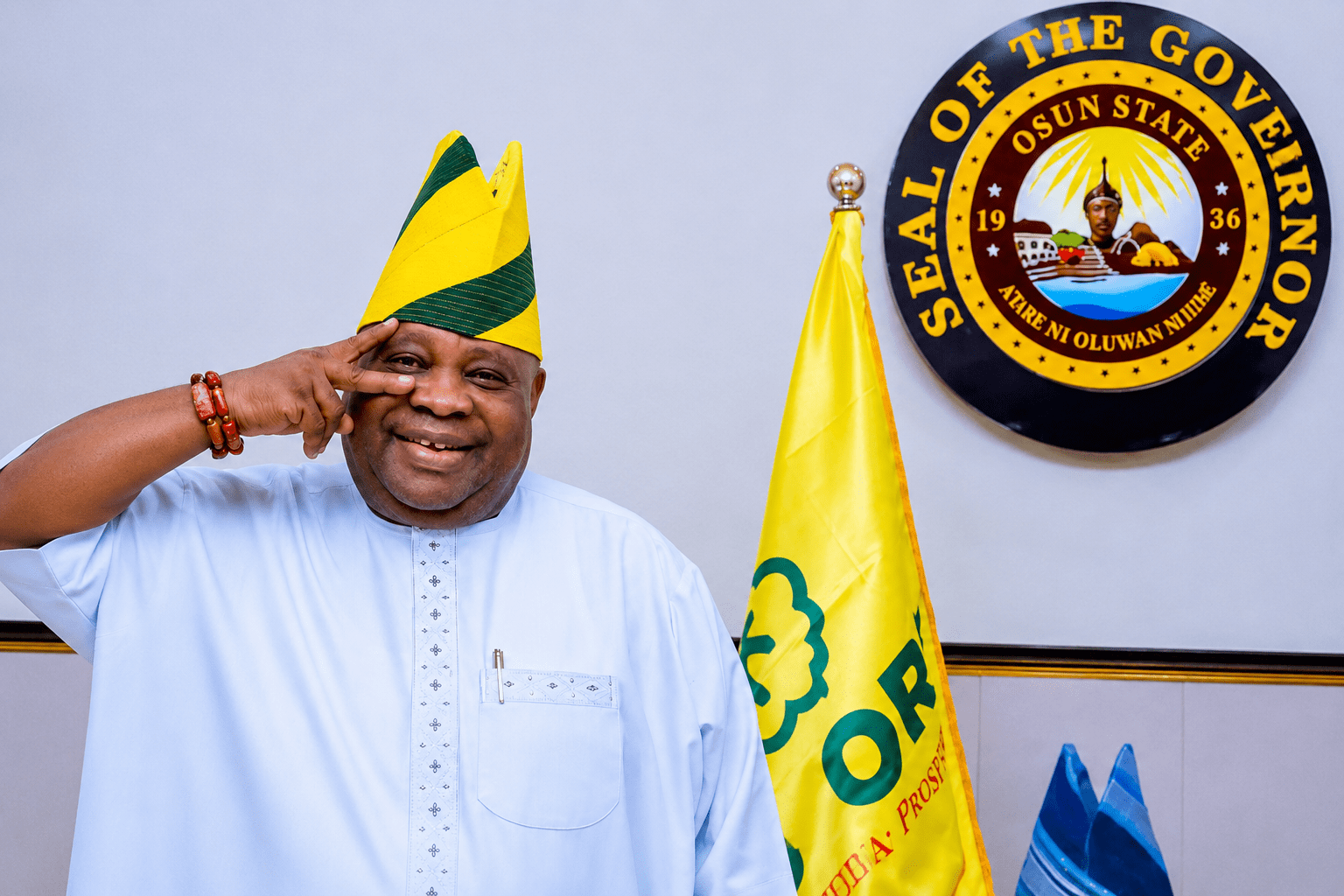
Adeleke’s Osun Victory: What It Means for Nigeria’s 2027 Elections
By Alabidun Shuaib AbdulRahman, Abuja, Nigeria
The re-election of Osun State Governor, Ademola Adeleke, has delivered more than a second term for the incumbent. It has produced a political signal that parties, presidential aspirants and strategists preparing for the 2027 general elections cannot afford to ignore.
Adeleke’s victory on the platform of the Accord Party is particularly significant because it came against a combination of political, institutional and structural obstacles. He defeated the candidate of the ruling All Progressives Congress, Bola Oyebamiji, by 511,067 votes to 444,815, a margin of 66,252 votes. The governor won 19 of the state’s 30 local government areas, while the APC candidate won 11.
The result is, therefore, not simply another off-cycle governorship election. It is a warning against assuming that control of the Federal Government automatically translates into electoral dominance at the state level.
A victory against formidable odds
Perhaps the most striking feature of Adeleke’s victory was the platform on which he contested.
The governor won his first term in 2022 under the Peoples Democratic Party but eventually left the party and contested his re-election under the Accord Party. That was a considerable political gamble. The PDP had historically been an important platform in Osun, while Accord had no comparable electoral weight in the state.
Yet Adeleke transformed what could have been a political liability into an electoral vehicle.
His victory also followed months of political uncertainty surrounding the Accord Party. In June, a Federal High Court judgment deregistering the party created questions about whether Adeleke would be able to contest on its platform. The governor’s camp rejected the development and pursued legal remedies, insisting that the party would remain on the ballot.
That episode demonstrated an important feature of Nigerian politics: electoral machinery is not necessarily the same thing as political popularity.
A party may have a weak national structure but become electorally formidable when a popular incumbent or candidate, political organisation and grassroots network are placed behind it.
Adeleke’s campaign also had to contend with the internal crisis within the PDP. The party’s Osun structure was embroiled in a leadership dispute over support for the governor’s re-election, with rival factions issuing conflicting directives.
Instead of allowing those problems to consume his campaign, Adeleke effectively built his own political structure around the election.
That may ultimately prove to be one of the most important lessons from Osun.
Federal might is not enough
The election also carries a message for the APC.
The party controls the Federal Government, but that advantage did not translate into victory in Osun.
For months, Adeleke and his supporters had warned against attempts to deploy federal institutions for partisan advantage. The governor specifically argued that federal power should be used for governance rather than electoral manipulation.
The significance of that argument became even greater when the EFCC froze an account belonging to the Osun State Government shortly before the election. The development generated political controversy and became another issue around which the election was contested.
Regardless of the competing arguments surrounding the action, the political lesson is clear: the closer an election gets, the more sensitive the public becomes to the actions of federal institutions.
For the APC, the Osun result should therefore trigger serious introspection ahead of 2027.
Federal incumbency gives a party enormous resources and visibility, but voters ultimately retain the power to separate federal politics from state politics.
Adeleke has also changed the South-West equation
Osun has traditionally been an important component of the South-West political equation.
The APC’s dominance in much of the region has often created the impression that the party possesses an almost automatic electoral advantage there. But Adeleke’s victory shows that the South-West remains politically competitive.
The governor did not merely defeat the APC. He did so after changing parties and without relying on the traditional strength of the PDP structure.
That raises a crucial question ahead of 2027: Can opposition politicians build electoral coalitions that transcend party labels? The Osun experience suggests that they can.
A popular candidate with an effective grassroots organisation can potentially survive the weakness of his party if voters are sufficiently convinced about his personal record, political identity and campaign message.
This could become particularly important in 2027, when the presidential contest is expected to be shaped not only by party structures but also by alliances, defections and personality-driven campaigns.
A message for Tinubu and the APC
Interestingly, Adeleke has publicly backed President Bola Tinubu for the 2027 presidential election despite being outside the APC. The development was reported in March and the governor reaffirmed his support for Tinubu’s re-election bid again immediately after he was announced.
That creates an unusual political configuration.
Adeleke has defeated Tinubu’s party in a governorship election but has simultaneously expressed support for Tinubu’s presidential ambition.
This demonstrates that Nigerian electoral politics is becoming increasingly transactional and candidate-driven. State-level contests may not necessarily reproduce presidential alliances.
In other words, a governor can oppose the President’s party in a state election without necessarily opposing the President at the national level.
That distinction will matter enormously in 2027.
If similar arrangements emerge across the country, the presidential election could produce alliances that cut across conventional party boundaries.
The PDP should be worried — but not entirely defeated
The outcome is also a complicated development for the PDP.
On one hand, the party can point to the fact that a governor who won his first term under its platform has retained his seat. On the other hand, Adeleke did not win under the PDP. He won under Accord. That distinction should worry the opposition party.
If popular politicians begin to believe that they can win elections by creating alternative platforms rather than depending on established parties, the traditional political parties may lose some of their bargaining power.
The PDP’s internal crisis in Osun before the election only reinforces the problem.
For the party to remain competitive in 2027, it must address its factional disputes, candidate-selection problems and leadership disagreements. Otherwise, politicians may increasingly seek alternative platforms.
The real winner: the voter?
There is another dimension to the Osun result that deserves attention.
Adeleke’s victory came in an election involving 15 political parties and more than one million accredited voters. The final result showed a competitive contest rather than a one-sided political coronation.
Adeleke secured 511,067 votes, while Oyebamiji of APC obtained 444,815.
The 66,252-vote margin is substantial, but it is not overwhelming when placed against the size of the electorate.
That means the APC cannot dismiss the result as an insignificant defeat, just as Adeleke cannot interpret it as an unlimited mandate.
The governor has won another four years, but the election has demonstrated that a sizeable portion of Osun voters still preferred the opposition candidate. The lesson for 2027 is that every serious vote will matter.
What Osun tells us about 2027
The first major lesson is that incumbency remains powerful, but it is not invincible. Adeleke used the advantages of incumbency, his administration’s record and his personal popularity to overcome a major party disadvantage.
Second, party affiliations may become less important than candidates and coalitions.
The Accord Party’s victory in Osun is particularly instructive because it demonstrates that a relatively small political platform can become competitive when attached to a sitting governor with a strong electoral base.
Third, internal party crisis can cost elections.
The PDP’s troubles and the APC’s inability to convert its federal dominance into a state victory should serve as warnings to the major parties.
Fourth, the South-West should not be treated as a political monolith.
The region will remain central to the 2027 presidential contest, but Osun has demonstrated that voters can make different choices at different electoral levels.
Finally, the credibility of electoral institutions will be critical.
The controversies preceding the election, including the dispute over Accord’s legal status and concerns surrounding political and security developments, underline the importance of INEC and security agencies maintaining public confidence. Although President Tinubu had charged security chiefs to ensure maximum security and urged INEC to guarantee a free and fair election.
The bigger political warning
Adeleke’s second-term victory should not be interpreted as a prediction that the APC will lose the 2027 presidential election. That would be an overstatement. Neither should it be interpreted as proof that opposition parties have suddenly become stronger than the ruling party.
What Osun has done is more important: it has challenged the assumption that electoral outcomes can be predetermined by party dominance, federal power or political calculations made in Abuja.
The 2027 election will ultimately be decided state by state, ward by ward and polling unit by polling unit.
The Osun electorate has shown that voters can reward an incumbent even when he changes political platforms and can reject a candidate backed by the dominant party.
For President Tinubu and the APC, the message is unmistakable: the 2027 election cannot be won by assuming that incumbency alone guarantees victory.
For the opposition, the lesson is equally sobering: Adeleke’s formula cannot simply be copied. A strong personality, an effective grassroots organisation, a credible campaign and a candidate capable of building alliances were all necessary.
The Osun election has therefore changed the political conversation ahead of 2027. Adeleke has secured another four years.
But perhaps his most important achievement is that, in defeating the political establishment in Osun, he has demonstrated that Nigeria’s next general election may be far more competitive, unpredictable and candidate-driven than many of the country’s political calculations currently suggest.


DRC gets 70,000 Ebola vaccine doses as trial targets Bundibugyo virus

Jamaica Set to Host 20th Caribbean Week of Agriculture

Trump’s policies may cost US $700bn in clean energy investment – Report

Pastor Jerry Eze Defends Miracles At UK Conference Amidst Criticism And Controversy

Diaspora Watch 20th Edition (October 14-20, 2024): Your Trusted Source for Global News and Insights

Tanzanian Man Reportedly Dies And Returns To Life Six Times


-

 News6 hours ago
Kidney for Cash: Inside Nigeria’s Shadowy Organ Trade
-

 Analysis8 hours ago
Tobi Amusan’s Legacy After the World Record Falls, by Boniface Ihiasota
-
 News5 hours ago
Jamaica Set to Host 20th Caribbean Week of Agriculture
-
 Analysis7 hours ago
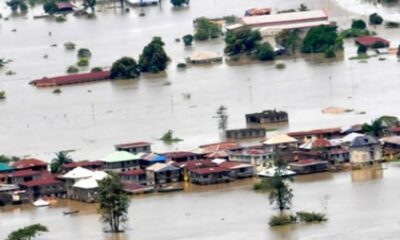
Wike and the Abuja Master Plan, by Alabidun Shuaib AbdulRahman
-
 News5 hours ago
Trump’s policies may cost US $700bn in clean energy investment – Report
-
 Health5 hours ago
DRC gets 70,000 Ebola vaccine doses as trial targets Bundibugyo virus