
News
Kidney for Cash: Inside Nigeria’s Shadowy Organ Trade


Kidney for Cash: Inside Nigeria’s Shadowy Organ Trade
For unemployed and financially distressed young Nigerians struggling to survive in overcrowded communities around Abuja, the offer can sound like a lifeline: surrender a kidney and walk away with quick cash.
But behind the promise of easy money is an alleged network of recruiters, intermediaries and prospective recipients that has brought Nigeria’s largely hidden organ trade into sharp focus.
Investigations and court proceedings obtained by Diaspora Watch Newspaper have exposed allegations of young Nigerians being recruited to surrender kidneys for sums reaching about N1m (one million naira), with some alleged victims reporting that they received less after payments to intermediaries.
The revelations have raised serious questions about the exploitation of economically vulnerable Nigerians, the protection of minors and the effectiveness of safeguards governing organ donation and transplantation.
At the centre of the controversy is Alliance Hospital in Abuja, which has faced allegations over the removal of kidneys from three people, including two alleged minors.
The hospital and other defendants have denied wrongdoing and pleaded not guilty to criminal charges filed by the National Agency for the Prohibition of Trafficking in Persons, NAPTIP.
The case remains before the court.
A trade hidden in plain sight
The alleged organ-trafficking network came to public attention through investigations into young people from communities around Mararaba and Masaka in Nasarawa State, satellite settlements bordering the Federal Capital Territory.
Mararaba, located along the Abuja-Keffi highway, is home to a large population of young Nigerians drawn from different parts of the country in search of employment and better economic opportunities.
For some residents battling unemployment, debt and poverty, the prospect of receiving hundreds of thousands of naira can be difficult to resist.
It is within such communities that alleged kidney agents are said to have operated through friendship networks and personal contacts.
Rather than openly advertising their activities, recruiters allegedly approach people they believe are desperate for money and present kidney donation as a quick way out of financial difficulties.
The recruitment process, according to accounts contained in previous investigations, could begin with an ordinary conversation between friends or acquaintances before the prospective donor was introduced to an intermediary.
The N1m promise
One figure repeatedly featured in testimonies from alleged victims is N1m.
But investigators found no evidence that N1m represents a fixed or universally established price for kidneys in Nigeria’s black market.
Rather, it emerged repeatedly as the amount allegedly promised or paid to some donors in the Abuja-related cases.
In one reported case, an alleged victim, Aminu Yahuza, received N1m after undergoing kidney removal.
Another alleged donor, Yahaya Musa, told a court that he had expected N1m but eventually received N880,000.
The difference, according to his testimony, was linked to payments made within the network.
From victims to recruiters
One of the most disturbing elements of the investigation was the alleged involvement of former donors in recruiting new victims.
Daily Trust’s investigation reported that a broker identified by the pseudonym “Mayor” recruited agents to search for potential kidney donors.
Some alleged agents were themselves young men who had previously surrendered a kidney.
Having experienced the process, they were allegedly able to persuade others that the procedure was an easy route to quick money.
The model created a chain in which one vulnerable person could become the recruiter of another.
The alleged network therefore did not necessarily require strangers to walk into hospitals seeking to sell organs. It could operate through friendships, relatives and community relationships.
Minors allegedly caught in the network
The most disturbing allegations involve people who were reportedly below 18 when their kidneys were removed.
In 2023, the case of Oluwatobi Adedoyin, a teenager from Masaka in Karu Local Government Area of Nasarawa State, generated public attention after reports that he had been recruited for kidney removal.
Another alleged victim, Yahaya Musa, also testified in court about the circumstances surrounding the removal of his kidney.
Musa told the court that an agent had informed him about a hospital where he could sell his kidney for N1m.
He reportedly received N880,000 after the operation.
His testimony forms part of the evidence being considered in the criminal proceedings. The allegations involving minors have heightened concerns about the effectiveness of age verification and consent procedures in Nigeria’s transplant system.
Hospital denies allegations
Alliance Hospital has consistently rejected allegations that it recruited donors or participated in an illegal organ-trafficking operation.
The hospital’s Chief Medical Director, Dr Christopher Otabor, said the facility did not source donors for recipients.
According to the hospital, patients bring their prospective donors, who are then subjected to medical examinations and compatibility tests.
The hospital has also maintained that donors must meet its legal and medical requirements, including being adults, giving consent and providing documentation.
Its position is that it complied with the applicable procedures and did not induce people financially to donate organs. The allegations are now being tested in court.
In March 2024, NAPTIP arraigned the hospital and four other defendants on an 11-count charge connected with alleged organ trafficking and kidney removal. All the defendants pleaded not guilty.
NAPTIP steps in
The allegations eventually prompted intervention by Nigerian authorities. NAPTIP investigated the reported cases and proceeded with criminal charges.
The Federal Ministry of Health also directed the Medical and Dental Council of Nigeria to investigate the involvement of medical practitioners and hospitals in the controversy.
The Nigerian Medical Association also intervened following the public allegations. The official response demonstrates that the controversy did not remain solely within the media.
The poverty factor
At the heart of the alleged trade is a problem much bigger than transplantation. It is poverty.
The young people identified in investigations were largely struggling with unemployment and financial hardship.
For someone without a stable income, N1m can appear to offer an escape from immediate financial pressure. But the decision is irreversible.
A kidney removed cannot be restored when the money is exhausted.
Some alleged victims have subsequently complained of persistent pain and reduced ability to undertake strenuous work.
The consequences raise questions about whether financially induced “consent” can genuinely be regarded as voluntary when a person is facing extreme economic hardship.
Regulation under scrutiny
Nigeria has a legitimate and growing transplant sector, but the alleged cases expose the need for stronger safeguards against commercial organ trafficking.
The Declaration of Istanbul, adopted internationally to combat organ trafficking and transplant tourism, emphasises the ethical principle that organ donation should not become a commercial transaction.
The World Health Organisation has similarly called for systems that protect donors and recipients from exploitation and trafficking.
For Nigeria, enforcing those principles requires more than obtaining affidavits and consent forms.
Authorities must be able to establish how a donor was recruited, whether money changed hands and whether the donor is acting freely.
The age of the donor must also be independently verified, particularly where the donor and recipient are unrelated.
What government must do
The Federal Government now faces an opportunity to confront the wider problem exposed by the allegations.
NAPTIP, the Ministry of Health, the Medical and Dental Council of Nigeria, the police and state health authorities need stronger coordination in investigating suspected organ trafficking.
Transplant centres should be subjected to regular independent audits of donor and recipient records.
They should also establish mechanisms for confidentially interviewing prospective donors away from recipients, recruiters and hospital personnel before transplantation.
Such interviews could help investigators identify coercion, deception or financial inducement that may otherwise remain hidden behind apparently valid documentation.
More importantly, enforcement must move beyond the hospitals where transplantation takes place.
The recruiters and brokers who allegedly identify vulnerable Nigerians are a critical link in the chain.
Breaking that link could prevent potential victims from ever reaching the operating table.
A warning beneath the allegations
The kidney-trafficking controversy should not be dismissed as another isolated criminal case. It is a warning about what can happen when poverty meets desperation and organised exploitation.
The alleged victims did not wake up one morning and decide that they wanted to lose a kidney.
For some, the decision was reportedly presented as a solution to unemployment, debt and financial hardship. That is what makes the alleged trade particularly troubling.

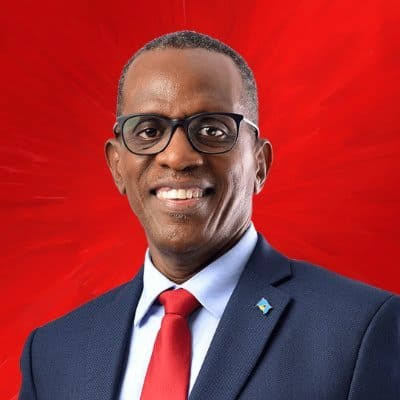
CARICOM assesses regional capacity to produce four key products
The Caribbean Community (CARICOM) has set up four assessment teams to determine whether member states can meet regional demand for paints, hydraulic cement, glass bottles and bitumen.
The teams will meet between October 12 and 27 to examine production capacity, market demand and the competitiveness of regional products against imports from outside the Caribbean.
Their findings are expected to guide regional trade ministers in determining future tariff policies for the four products.
The teams were established by the Council for Trade and Economic Development (COTED) at its 62nd regular meeting in June 2026.
The Assistant Secretary-General of CARICOM Single Market and Trade, Ambassador Wayne McCook, said the teams had been directed to conduct thorough assessments while considering the interests of manufacturers, consumers and other stakeholders.
“The Council has directed the assessment teams to be rigorous in examining the regional supply and demand for products and give careful consideration to the sensitivities of all stakeholders and consumers who rely on a stable and predictable supply of the products being assessed,” McCook said.
The assessments will examine the competitiveness of trade among CARICOM member states compared with imports from other regions, including the impact of the Common External Tariff, non-tariff barriers and logistics costs.
The teams will also review the application of CARICOM’s Rules of Origin criteria to the products and seek contributions from public and private sector stakeholders, consumers and civil society groups.
The petroleum bitumen assessment team comprises representatives from Barbados, Grenada, Guyana, Jamaica, Suriname and Trinidad and Tobago.
The team examining other hydraulic cement comprises Antigua and Barbuda, Barbados, Guyana, Jamaica and Trinidad and Tobago.
The glass bottles team includes Barbados, Grenada, Guyana, Jamaica, Suriname and Trinidad and Tobago.
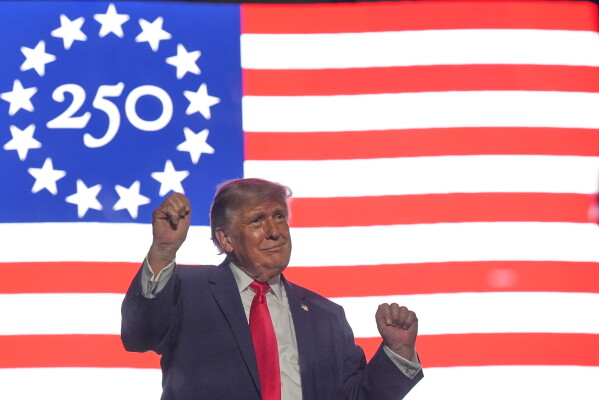
Trump Rules Out Iran Deal as US Weighs Fresh Military Strikes
United States President Donald Trump has said he no longer wants a deal with Iran amid reports that the US military is preparing for possible fresh strikes against the country in the coming weeks.
Trump made the statement during a campaign rally with Republican candidates in San Antonio, Texas, suggesting that Tehran was willing to make major concessions to end the conflict.
“I think the deal isn’t really something that I want to do, but they’re willing to offer us anything to stop,” Trump said.
He, however, commended his special envoy to the Middle East, Steve Witkoff, for his role in the ongoing diplomatic efforts, saying the envoy was “doing very well.”
The development came as NBC News reported that Trump and his national security team had discussed the possibility of resuming large-scale military operations against Iran in the coming weeks.
The report, citing a US official and another person familiar with the discussions, indicated that Washington was considering further military action despite ongoing efforts to end the conflict.
Similarly, Axios reported that a possible resumption of hostilities could involve extensive bombing of Iranian energy facilities, infrastructure and nuclear targets.
The reports also raised concerns about the potential political implications of renewed military operations ahead of the US midterm elections.
Trump’s approval ratings have reportedly declined amid mounting public concerns over the rising cost of living, particularly soaring petrol and diesel prices.
Earlier in the week, the president blamed uncertainty over Iran’s leadership for difficulties in the negotiations, arguing that Washington did not know who was making decisions on behalf of Tehran.
Iranian officials rejected the claim, with Foreign Ministry spokesman Esmail Baghaei accusing US officials of sending contradictory signals.
Baghaei argued that the problem stemmed from what he described as Washington’s inconsistent positions and mixed messages during the negotiations.
Meanwhile, crude oil prices have remained elevated despite a recovery in oil exports from the Middle East towards levels recorded before the conflict.
According to commodity intelligence firm Kpler, combined crude oil shipments from the Gulf, excluding Iran, alongside volumes from Saudi Arabia and the United Arab Emirates, had recovered to approximately 18.5 million barrels per day.
Kpler’s lead freight analyst, Matt Wright, said the normalisation of oil shipments no longer depended entirely on a diplomatic agreement.
“Normalisation no longer needs to wait for a deal,” Wright said.
He, however, forecast a slower and uneven recovery if the conflict continued, suggesting that shipping operations would increasingly adapt to prevailing conditions rather than wait for a diplomatic breakthrough.
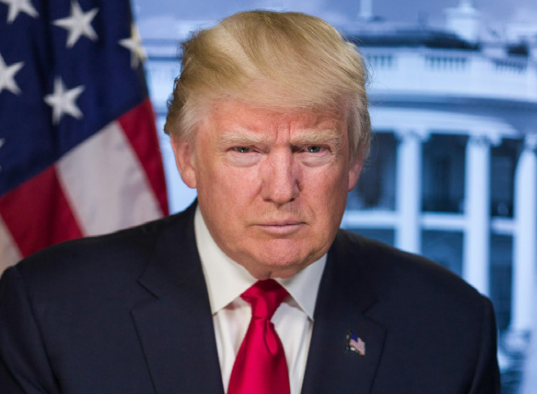
Trump’s fuel price cuts face hurdles ahead of midterm elections
United States President Donald Trump is facing mounting pressure to reduce petrol and diesel prices ahead of the November midterm elections, as rising energy costs continue to weigh on households and businesses.
Trump has announced several measures aimed at easing the burden on consumers, including temporary tax relief on red-dyed diesel used for off-road purposes and efforts to encourage the release of oil reserves.
However, analysts say the measures may offer only limited relief, with the disruption of global energy supplies caused by the conflict involving the United States, Israel and Iran continuing to drive up prices.
The rising cost of fuel has become a major political concern for the Trump administration, with voters increasingly worried about the cost of transportation, food and other essential goods.
Polls indicate widespread dissatisfaction with Trump’s handling of the economy and the war in Iran, putting Republican candidates under pressure ahead of the November elections.
Global oil supplies have been disrupted by the conflict, which has severely affected the movement of crude oil and refined petroleum products through the Strait of Hormuz.
Although crude oil flows have approached pre-war levels, prices remain above $100 per barrel, contributing to higher petrol and diesel costs.
David Ruisard, pricing manager at commodities intelligence firm Argus, attributed the increase in diesel prices to the Middle East conflict and Russia’s ongoing war with Ukraine.
He estimated that about 60 per cent of the increase in diesel prices from approximately $3 to $6 per gallon was connected to disruptions around the Strait of Hormuz, while the Russia-Ukraine conflict accounted for the remaining 40 per cent.
Oxford Economics’ chief US economist, Michael Pearce, said higher energy costs had contributed significantly to inflation this year, putting additional pressure on households and businesses.
He explained that rising energy prices and interest rates were squeezing household budgets while increasing operating costs for businesses.
However, Patrick De Haan, head of petroleum analysis at fuel price tracking website GasBuddy, said petrol and diesel prices had recorded modest declines in recent days, partly due to measures introduced by the Trump administration.
One of the measures announced by Trump allows red-dyed diesel, which is normally reserved for off-road use and is exempt from federal highway fuel taxes, to be used on public roads without the usual federal levies during the temporary relief period.
Ruisard, however, warned that the measure could create complications for trucking companies once the relief expires.
He explained that the red dye was difficult to remove from fuel tanks and that businesses found using the dyed fuel after the exemption ended could face substantial penalties for tax evasion.
He also warned that increased consumption could deplete supplies normally reserved for agricultural machinery, rail operators and other off-road users.


CARICOM assesses regional capacity to produce four key products

Trump Rules Out Iran Deal as US Weighs Fresh Military Strikes

Trump’s fuel price cuts face hurdles ahead of midterm elections

Pastor Jerry Eze Defends Miracles At UK Conference Amidst Criticism And Controversy

Diaspora Watch 20th Edition (October 14-20, 2024): Your Trusted Source for Global News and Insights

Tanzanian Man Reportedly Dies And Returns To Life Six Times


-
 News1 week ago
Trump’s Bomber Pullout: Iran Threat Tests US-UK Security Alliance
-

 News1 week ago
Former German spy chief arrested over alleged espionage
-
 News1 week ago
Caribbean states seek stronger regional aviation safety oversight
-

 Analysis1 week ago
Will Africa Follow Niger Republic? By Alabidun Shuaib AbdulRahman
-
 Analysis1 week ago
The Ondo Air Crash and the Cost of Losing Those Who Protect Nigeria, by Boniface Ihiasota
-
 News1 week ago
Tinubu declares three days’ mourning over NAF crash