
Diaspora
Bolivia Plunged Into Deadly Violence as Anti-government Protests Escalate

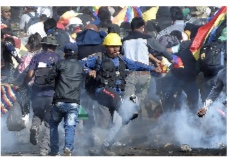
Bolivia is grappling with a national crisis as anti-government protests turn deadly, claiming multiple lives and threatening the country’s fragile stability.
At least four first responders—three police officers and a firefighter—have lost their lives in confrontations between protesters and authorities.
Justice Minister Cesar Siles confirmed the deaths, stating that some officers were reportedly shot.
The violent turn has shifted the government’s view of the protests, with Siles describing the situation as involving “paramilitary groups” that require a firm response.
The protests are fueled largely by supporters of former President Evo Morales, who was barred from contesting the upcoming August 17 election by the electoral tribunal.
Morales’ supporters argue that his disqualification is politically motivated and unjust, deepening tensions within the ruling MAS party.
Bolivia’s economic situation has worsened, with high inflation and dwindling foreign reserves intensifying public frustration.
Many citizens feel abandoned by a government they believe has failed to uphold the country’s once-celebrated economic model. Morales warned that without urgent change, Bolivia risks falling into “total collapse.”
The government’s response has become increasingly militarized, with tanks and heavily armed security forces deployed to affected areas.
Businesses have been forced to shut down, and transportation has come to a standstill, disrupting daily life and economic activities.
…
In Nixing EV Standards, Trump Strikes at Two Foes: California and Elon Musk
In a move with far-reaching environmental and political consequences, President Donald Trump has officially rolled back federal recognition of California’s electric vehicle (EV) mandates.
With this decision, Trump not only dismantled key climate goals established under the Biden administration but also took aim at two familiar opponents: the state of California and tech mogul Elon Musk.
At a ceremonial signing event, Trump nullified rules that would have required California—and other states following its lead—to significantly increase the share of zero-emission vehicles.
Under the now-repealed standards, 35 percent of all new vehicle sales in California would have needed to be emission-free by 2026, with that figure rising to 68 percent by 2030 and 100 percent by 2035.
Trump cast the previous rules as a dangerous overreach by environmental extremists and accused the Biden administration of outsourcing American auto policy to California.
“Under the previous administration, the federal government gave left-wing radicals in California dictatorial powers to control the future of the entire car industry all over the country — all over the world, actually,” Trump said.
“This horrible scheme would effectively abolish the internal combustion engine, which most people prefer.”
The former president warned that forcing electric vehicles onto the market would lead to soaring energy costs and strain power grids.
“Energy prices would likewise soar as the radical left forced more electric vehicles onto the grid while blocking approvals for new power plants,” he added. “The result would be rolling blackouts and a collapse of our power systems.”
The decision triggered an immediate backlash from California’s leadership, with Governor Gavin Newsom vowing to fight back.
“Trump’s all-out assault on California continues,” a spokesperson for Newsom said.
“We are suing to stop this latest illegal action by a President who is a wholly owned subsidiary of big polluters.” California, along with several other states that follow its environmental standards, has already filed lawsuits to preserve their autonomy in setting stricter emissions goals.
The rollback also marks a sharp blow to Elon Musk, whose electric vehicle company, Tesla, stands to lose significant ground under a weakened regulatory framework.
Once seen as an unlikely ally of Trump, Musk has since become a vocal critic. Trump, in turn, mocked the billionaire during the announcement, saying, “Now, I know why Elon doesn’t like me so much. Which he does, actually.”
He continued, “I used to say, ‘I’m amazed that he’s endorsing me,’ because that can’t be good for him. He makes electric cars, and we’re saying, ‘You’re not going to be able to make electric cars. You can make them, but it’ll be by the market.’”
Trump also hinted at expanding tariffs on imported vehicles beyond the current 25 percent.
“If they want a Mercedes-Benz, you’re going to have it made here,” he said. “Otherwise, they’re going to pay a very big tariff. I might go up with that tariff in the not-too-distant future.”
The significance of Trump’s move goes beyond partisan battles. For decades, California has set the pace for U.S. environmental standards, with 17 states typically adopting its emissions benchmarks.
Repealing California’s EV mandate and federal fuel economy rules effectively stalls national momentum for cleaner transportation and undermines confidence in the EV market.
Environmental groups describe it as a direct attack on efforts to curb climate change and reduce dependence on fossil fuels.
Tesla, which has thrived under policies that incentivize electric vehicles, now faces a political and economic climate increasingly hostile to its business model.
The rollback, combined with the removal of federal EV tax credits and expanded tariffs, could dampen demand and make electric cars less affordable for American consumers.



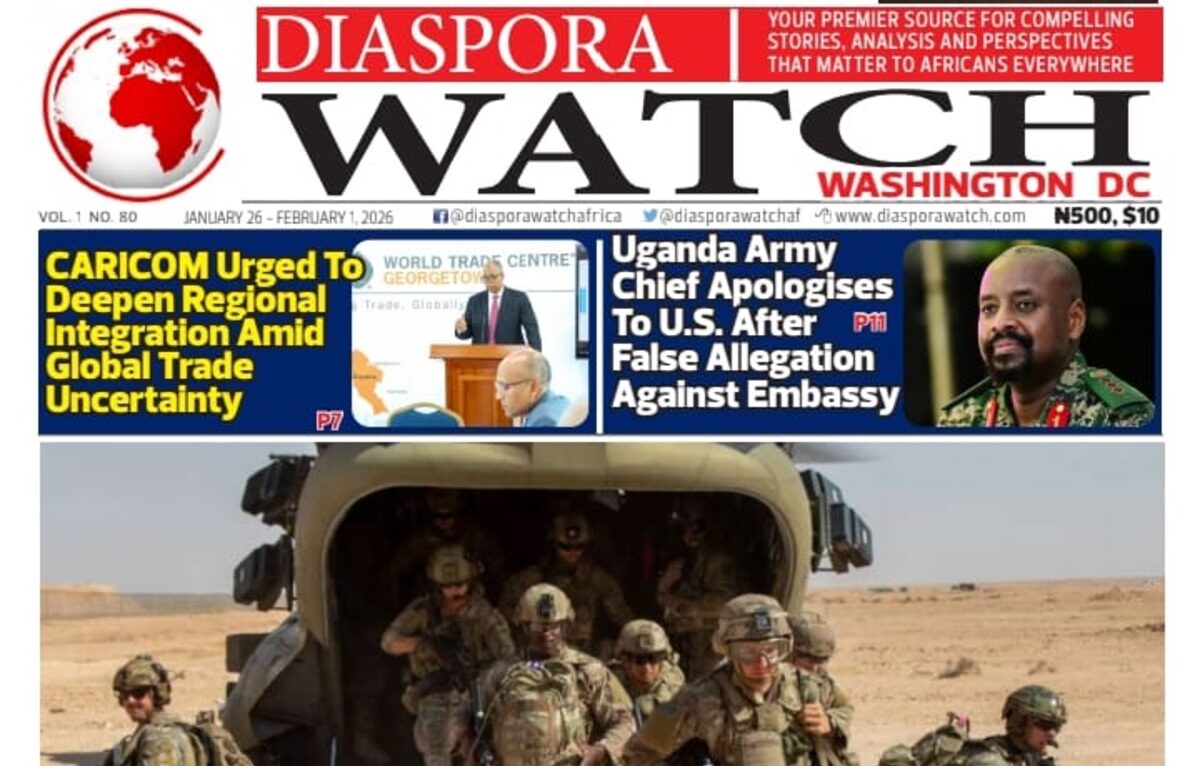
Diaspora Watch Newspaper has released its 81st edition, delivering a sharp, authoritative and globally attuned package of journalism that interrogates power, policy and influence at a critical moment in international affairs.
Diaspora Watch FREE DIGITAL VIEW: https://diasporawatch.com/3d-flip-book/diaspora-watch-vol-81/
On-Demand Print: https://www.magcloud.com/browse/issue/3259915?__r=1069759
SUBSCRIBE TO DIASPORA WATCH NOW ON THE LINK BELOW: https://diasporawatch.com/subscribe-to-diaspora-watch-newspaper/
This latest edition captures the shifting dynamics of global security, diplomacy and governance, with a lead focus on deepening U.S.–Nigeria security engagement against the backdrop of rising terror threats. The report probes the strategic calculations behind the move and what it means for regional stability, sovereignty and counter-terrorism cooperation in West Africa.
Beyond security, the edition reflects the volatility of a world in transition. From renewed uncertainty in Libya following reports surrounding Muammar Gaddafi’s son, to mounting tensions in the United States over federal immigration enforcement and public protest, Diaspora Watch situates breaking developments within their broader political and social contexts.
The newspaper also turns attention to the future, spotlighting technological innovation aimed at Africa’s digital inclusion, as well as urgent calls for stronger regional integration in the Caribbean amid global trade headwinds. Energy policy debates, evolving diplomatic relations between Africa and the United States, and the deepening humanitarian emergency in the Democratic Republic of Congo are examined with clarity, balance and depth.
Rounding out the edition is a culture-driven back-page story that blends politics, celebrity and controversy, underscoring how influence and perception increasingly intersect in the global public space.
With its 81st edition, Diaspora Watch Newspaper reinforces its position as a trusted platform for diaspora-focused journalism—bold in perspective, rigorous in reporting and committed to telling Africa’s story within a rapidly changing world.
Stay connected with the world around you – read Diaspora Watch today!
Celebrating African excellence and spotlighting pressing global issues.
#DiasporaWatch #AfricaInFocus #GlobalNews #CulturalVoices #AfricanPerspective

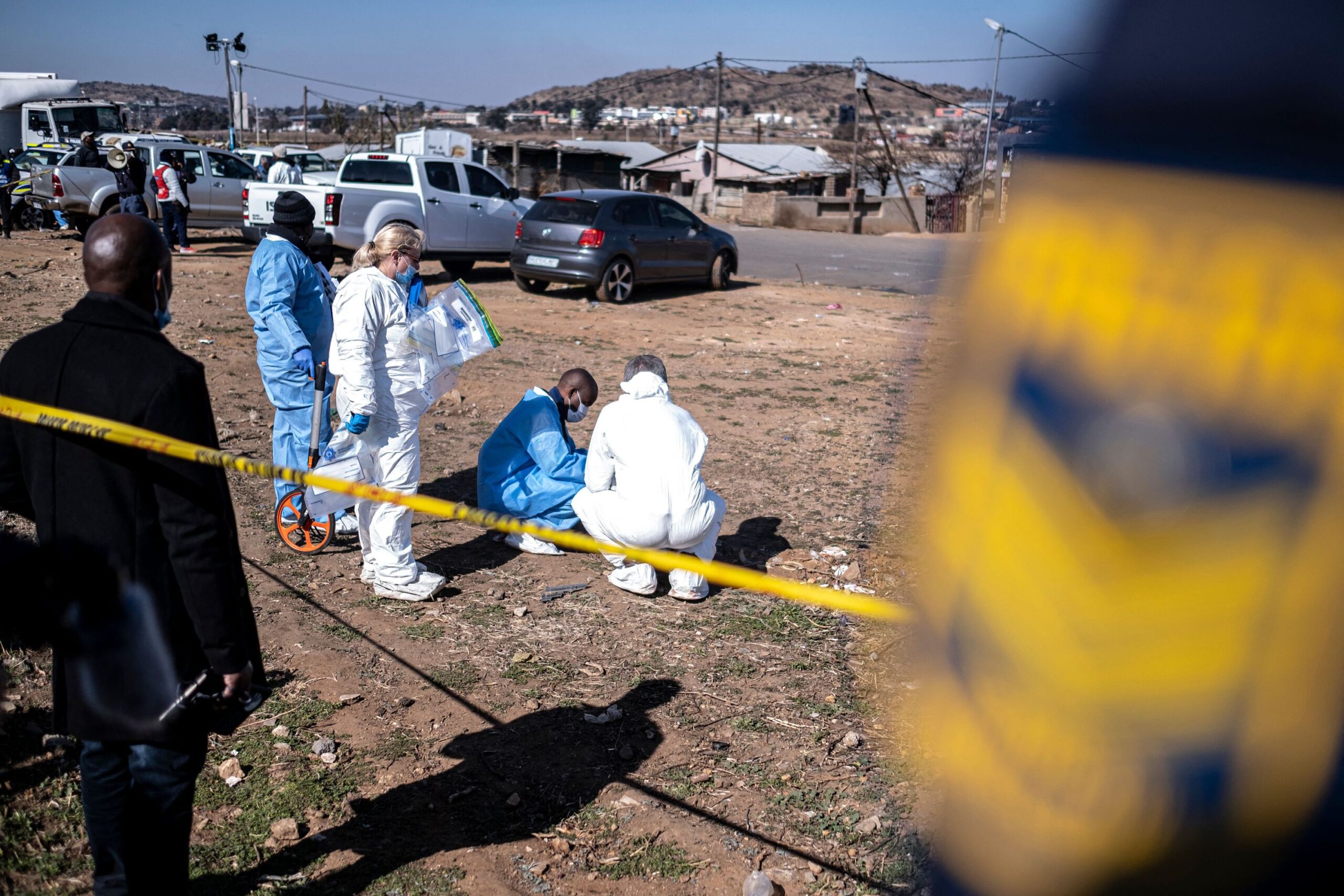
11 Killed, 14 Injured in Mass Shooting at South African Hostel
At least 11 people, including a three-year-old child, have been killed in a mass shooting at a hostel in Saulsville township, west of Pretoria, South Africa’s capital.
Police spokesperson Brigadier Athlenda Mathe said three unidentified gunmen stormed the premises around 4:30am on Saturday and fired “randomly” at a group of people who were drinking.
A 12-year-old boy and a 16-year-old girl were also among the dead.
Mathe confirmed that 25 people were shot in total, with 14 others wounded.
No arrests have been made, and the motive for the attack remains unclear.
Authorities described the venue as an “illegal shebeen,” noting that many mass shootings in the country occur in such unlicensed liquor spots.
Police shut down 12,000 illegal outlets between April and September and arrested more than 18,000 people nationwide.
South Africa continues to battle soaring violent crime.
According to UN data, the country recorded a murder rate of 45 per 100,000 people in 2023–24, while police statistics show that 63 people were killed daily between April and September.
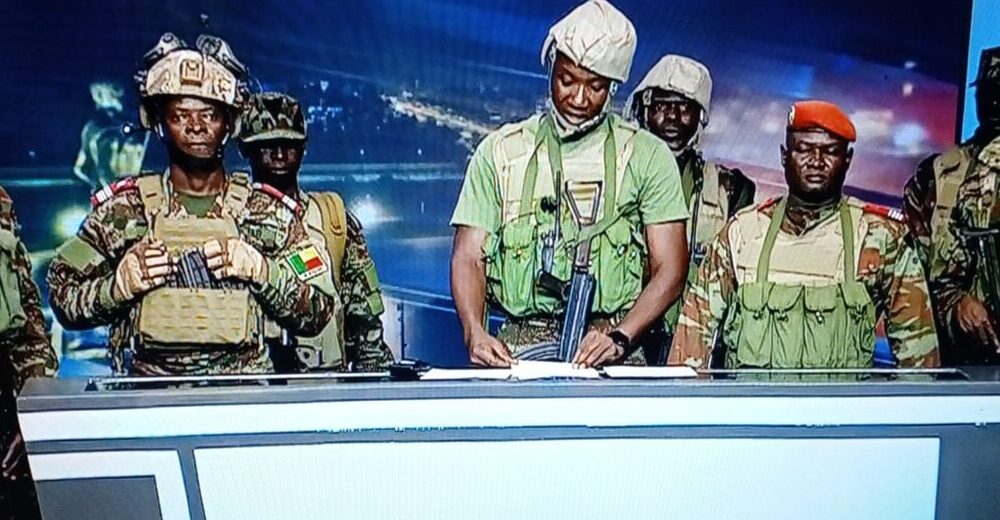
Benin Foils Military Coup Attempt, 14 Arrested
The government of Benin says it has thwarted an attempted coup after a group of soldiers tried to seize power in the early hours of Sunday.
Interior Minister Alassane Seidou, in a televised address, said the armed forces “remained committed to the republic” as loyalist troops moved swiftly to suppress what he described as “a mutiny aimed at destabilising the state and its institutions.”
Earlier, the renegade soldiers, led by Lt-Col Pascal Tigri, briefly took over the national television station and announced that President Patrice Talon had been removed.
It was reported that gunfire erupted near the presidential residence in Porto-Novo, while journalists at the state broadcaster were held hostage for several hours.
A presidential adviser later confirmed that Talon was safe, dismissing rumours that he had sought refuge at the French embassy.
French diplomats also denied the reports.
Government spokesperson Wilfried Leandre Houngbedji told Reuters that 14 people had been arrested so far.
A journalist in Cotonou said 12 of those detained were involved in storming the TV station, including a previously dismissed soldier.
The attempted takeover triggered heavy security deployment across Cotonou, with helicopters hovering overhead and major roads cordoned off.
Foreign embassies, including those of France, Russia, and the United States, issued advisories urging citizens to stay indoors.
In their broadcast, the rebel soldiers accused Talon of neglecting worsening insecurity in northern Benin, where militants linked to Islamic State and al-Qaeda have carried out deadly attacks near the borders with Niger and Burkina Faso.
They also protested rising taxes, cuts to public healthcare, and alleged political repression.
President Talon, 67, who came to power in 2016 and is expected to leave office next year after his second term, has faced growing criticism over democratic backsliding, including the barring of key opposition figures and recent constitutional amendments.
Sunday’s events add to a worrying pattern of military takeovers across West Africa, with recent coups in Burkina Faso, Guinea, Mali, Niger, and, just last week, Guinea-Bissau.
Ecowas, the AU, and Nigeria have all condemned the attempted coup in Benin, calling it a threat to regional stability.
Nigeria described the failed plot as a “direct assault on democracy” and commended Benin’s security forces for protecting the constitutional order.



Diaspora Watch Vol. 81

Examining Nigeria’s Health System and Preventable Deaths, by Alabidun Shuaib AbdulRahman

Chief Chukwuma Johnbosco and the Making of a Purpose-Driven Leader

Pastor Jerry Eze Defends Miracles At UK Conference Amidst Criticism And Controversy

Diaspora Watch 20th Edition (October 14-20, 2024): Your Trusted Source for Global News and Insights

Tanzanian Man Reportedly Dies And Returns To Life Six Times


-
 Milestone4 days ago
Chief Chukwuma Johnbosco and the Making of a Purpose-Driven Leader
-
 Sports5 days ago
Ex-Sri Lanka Star Jayasuriya Named in USA Squad for T20 World Cup
-
 News4 days ago
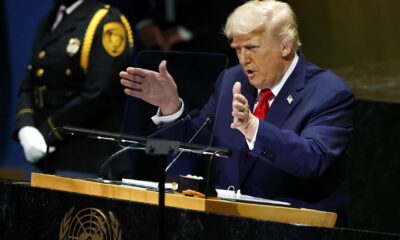
US Sends Troops to Nigeria Over Rising Terror Threats
-

 Sports5 days ago
Lens Edge Le Havre to Reclaim Ligue 1 Top Spot
-

 Sports5 days ago
Justin Rose Sets 36-Hole Record, Opens Four-Shot Lead at Torrey Pines
-
 News4 days ago
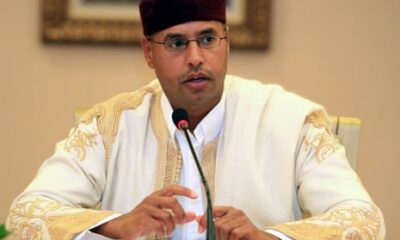
Muammar Gaddafi’s Son, Saif al-Islam, Reportedly Shot Dead in Libya