
Analysis
In Honour of Our Fallen Heroes, by Alabidun Shuaib AbdulRahman

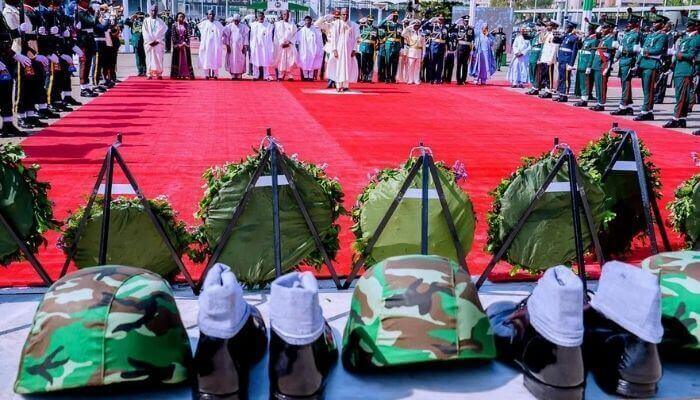
In Honour of Our Fallen Heroes, by Alabidun Shuaib AbdulRahman
Every nation is sustained by the quiet courage of those who stand between order and chaos. In Nigeria, that burden has rested heavily on the shoulders of the Armed Forces and other security personnel for decades, but especially in the past fifteen years of relentless insecurity. From the creeks of the Niger Delta to the forests of North West and North East to the highways of the North Central, Nigerian soldiers, airmen, sailors and policemen have borne the brunt of a war that is often unseen by those who sleep peacefully at night. To speak in honour of our fallen heroes is not merely to rehearse grief; it is to confront, honestly and courageously, the meaning of sacrifice, the demands of honour and the moral obligation of welfare owed to those who gave everything and to the families they left behind.
Nigeria’s contemporary security challenges did not begin yesterday. The Boko Haram insurgency, which escalated violently after 2009, has remained one of the deadliest conflicts on the African continent. According to data from the Armed Conflict Location and Event Data Project (ACLED), tens of thousands of lives have been lost to the insurgency, with security personnel accounting for a significant proportion of the casualties. Names like Giwa Barracks, Baga, Monguno and Marte are etched into the collective memory of the military not just as locations, but as reminders of intense battles where many soldiers paid the supreme price. One such name that still resonates is Lieutenant Colonel Muhammad Abu Ali, a gallant armoured corps officer who was killed in action on 4 November 2016 near Malam Fatori in Borno State while leading troops against Boko Haram fighters. His death symbolised the kind of front-line leadership that defines true military honour: commanding from the front, sharing risks with subordinates, and refusing the safety of distance.
Beyond the North East, the expanding frontiers of insecurity have claimed more lives. On 29 June 2022, Nigeria was shaken by the deadly ambush in Shiroro Local Government Area of Niger State, where at least 34 soldiers were killed by bandits while on a stabilisation mission. The scale of that single loss was a sobering reminder that the battlefield had shifted, and that sacrifice was no longer confined to one theatre of operation. Similar tragedies have followed. In March 2024, 17 soldiers lost their lives in Okuama community, Delta State, during a peace mission gone wrong, prompting national outrage and renewed debates about rules of engagement, intelligence failures and community-military relations. Each of these incidents added fresh names to a growing roll of honour, while also raising uncomfortable questions about preparedness, equipment and support for those sent into harm’s way.
Yet, sacrifice is not only measured in deaths. Thousands of Nigerian service personnel have returned from operations with life-altering injuries, trauma and scars that are invisible but enduring. The Defence Headquarters has repeatedly acknowledged the psychological toll of prolonged deployments, particularly in counter-insurgency operations where lines between combatants and civilians are blurred. The fallen heroes, therefore, represent not only those who died, but also those whose lives were irreversibly changed in service to the nation. To honour them meaningfully is to recognise that sacrifice is cumulative, personal and often lifelong.
Honour, however, must not be reduced to rhetoric. Every 15th of January, Nigeria observes Armed Forces Remembrance Day (now Armed Forces Celebration and Remembrance Day), a tradition rooted in the commemoration of soldiers who died in the First and Second World Wars and later expanded to include those lost in peacekeeping missions and internal security operations.
On 15 January 2026, President Bola Ahmed Tinubu through Vice President Kashim Shettima laid a wreath at the National Arcade in Abuja and reaffirmed the nation’s gratitude to its fallen heroes, describing them as “the pillars upon which our peace rests.” Similar ceremonies took place across states, from Lagos to Enugu, Kaduna to Kwara, accompanied by solemn words and military parades. These rituals matter. They reaffirm national memory and signal state recognition. But honour loses meaning if it ends at symbolism.
True honour is institutional and continuous. It is reflected in how promptly families of the fallen are informed, how respectfully remains are handled, how transparently benefits are processed and how consistently promises are kept. Over the years, allegations of delayed entitlements and neglected widows have surfaced, sometimes fuelling public anger and mistrust. The Nigerian Army and the Ministry of Defence have responded by clarifying welfare frameworks and insisting that official policies are robust. According to the Ministry of Finance and the Ministry of Defence, families of deceased service members are entitled to death benefits, gratuity, pensions, burial expenses and payments under the Group Life Insurance Scheme, a statutory policy that mandates life insurance coverage for all public servants, including military personnel.
In October 2023, President Tinubu approved an assurance policy valued at about ₦18 billion to cover life insurance benefits for fallen heroes, reinforcing the administration’s stated commitment to military welfare. In March 2024, the federal government also bestowed posthumous national honours on the 17 soldiers killed in Delta State, alongside promises of housing support and educational scholarships for their children. Several state governments have complemented federal efforts. Lagos State has sustained its scholarship scheme for children of fallen officers, while Ogun, Edo and other states have publicly pledged financial and social support to bereaved families during recent remembrance events.
These measures are commendable, and fairness demands that government be acknowledged where it has taken concrete steps. Welfare frameworks today are more clearly articulated than they were a decade ago, and there is greater public scrutiny of how military benefits are administered. Nonetheless, the test of honour lies not in policy documents but in lived experience. A widow who waits years for entitlements, or a child of a fallen soldier who drops out of school due to lack of support, represents a moral failure that no wreath-laying ceremony can erase. Honour must therefore be defended daily through efficient institutions, accountable processes and humane engagement with those who bear the cost of loss.
The argument for improved welfare is not sentimental; it is strategic. Nations that neglect the families of their fallen undermine morale among serving personnel. Soldiers who see that the state stands firmly by its promises fight with greater confidence and commitment. Conversely, perceived neglect breeds cynicism and erodes trust. Nigeria’s security challenges demand motivated, professional and resilient forces, and welfare is a critical pillar of that resilience. This is why calls by veterans’ groups, civil society organisations and commentators for continuous review of military welfare policies should not be dismissed as noise. They are part of a necessary civic conversation about national priorities.
There is also an ethical dimension that transcends strategy. The social contract between the state and its defenders is unique. When a citizen in uniform dies in service, the state inherits a moral responsibility to the dependants left behind. This responsibility does not expire with news cycles or budgetary constraints. It endures across administrations and economic fluctuations. In many ways, how a nation treats its fallen heroes’ families is a mirror of its values.
To be clear, honouring fallen heroes does not mean glorifying war or romanticising death. It means acknowledging the harsh realities of service and committing to reduce avoidable losses through better intelligence, equipment, training and leadership. It also means ensuring that when loss does occur, it is met with compassion, justice and sustained support. Sacrifice should never be cheapened by neglect, nor should honour be diluted by inconsistency.
As Nigeria continues to confront insecurity in multiple forms, the roll call of fallen heroes reminds us that peace is neither abstract nor free. It is paid for in blood, courage and broken families. To write in their honour is to insist that remembrance must translate into responsibility. The fallen cannot speak for themselves, but the living can speak through policies that work, institutions that care and a national conscience that refuses to forget. In doing so, Nigeria does not only honour its fallen heroes; it affirms the worth of every life pledged in defence of the nation.
Alabidun is a media practitioner and can be reached via alabidungoldenson@gmail.com






Where Lies the Integrity of INEC Chairman? By Boniface Ihiasota
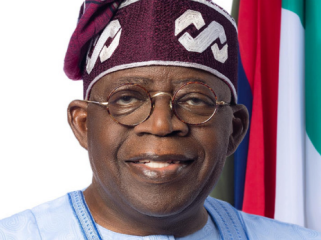
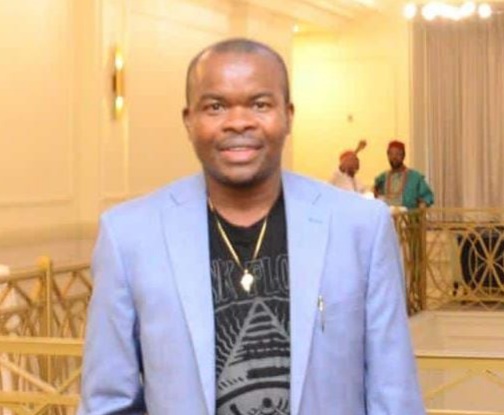
From the vantage point of the diaspora, where institutions are often judged less by rhetoric and more by credibility, Nigeria’s electoral process continues to raise uneasy questions. At the centre of this scrutiny is the Independent National Electoral Commission, INEC and its current chairman, Professor Joash Amupitan, whose tenure, though relatively new, is already entangled in controversy that strikes at the very heart of electoral neutrality.
Amupitan assumed office in October 2025, following his nomination by President Bola Ahmed Tinubu and confirmation by the Senate on October 16, 2025. His appointment was framed as a technocratic choice—an academic, a Senior Advocate of Nigeria, and, in the words of the presidency, an “apolitical” figure expected to restore confidence in the electoral system. Yet, barely six months into his tenure, that expectation is being tested by a controversy rooted not in policy decisions, but in digital footprints.
The storm centres on a series of alleged past activities on the social media platform X (formerly Twitter), linked to an account bearing his name. The most cited instance dates back to March 18, 2023, during the Lagos State gubernatorial elections. On that day, Dayo Israel, a prominent figure in the ruling All Progressives Congress, posted about electoral success in a previously opposition-leaning area. A reply attributed to an account carrying Amupitan’s name reportedly read: “Victory is sure.”
That single phrase—brief, seemingly innocuous—has since taken on outsized significance. For critics, it is not just about the words themselves, but what they imply: a possible alignment, however subtle, with a political party that the electoral umpire is expected to regulate with strict neutrality. The African Democratic Congress (ADC), through its spokesperson Bolaji Abdullahi, has described the resurfaced interaction as a “grave affront” to the integrity of the electoral system and has gone as far as demanding Amupitan’s resignation.
The controversy deepened in April 2026 when conflicting narratives emerged. On one hand, some digital analyses and commentaries claimed that the account in question bore traces consistent with Amupitan’s online identity prior to his appointment. On the other, INEC issued a categorical denial. In a statement released on April 10, 2026, the commission insisted that the chairman “does not own or operate any personal account on X” and described the allegations as “entirely baseless” and a “fabrication.” The commission further alleged that cybercriminals had been impersonating the chairman and warned that those responsible would face prosecution under the Cybercrimes Act.
This duality—accusation and denial—captures the essence of the current dilemma. In the absence of definitive proof, the debate has shifted from fact to perception. And in matters of electoral integrity, perception is often as consequential as reality.
From a diaspora perspective, this is where the concern becomes most pronounced. Electoral bodies are not judged solely by their legal correctness, but by the confidence they inspire. In countries where institutions are deeply trusted, even minor controversies are addressed swiftly and transparently to prevent erosion of credibility. In Nigeria, however, where trust in electoral processes has historically been fragile, such controversies carry amplified consequences.
It is important to acknowledge that no conclusive evidence has established that Amupitan personally operated the controversial X account. The timeline itself complicates the narrative. The alleged posts date back to 2023, two years before his appointment as INEC chairman. At that time, he was a law professor, not a public electoral official. The question, therefore, is not simply whether the account existed, but whether past expressions—if indeed they were his—should disqualify him from holding an office that demands absolute neutrality.
Yet, public office has its own moral burden. The chairman of INEC is not just an administrator; he is the custodian of democratic legitimacy. His credibility must be beyond reproach, not only in action but in history. Even the perception of partisanship, however distant, becomes a liability.
INEC’s defence rests on a familiar but critical claim: impersonation. In an era where digital identity can be easily manipulated, the existence of fake accounts is not implausible. The commission has stated that several such accounts have been identified and reported to security agencies. But this explanation, while plausible, does not entirely settle public anxiety. It shifts the burden to verification, a process that is often slow and inconclusive in Nigeria’s digital and legal landscape.
Ultimately, the question remains unresolved: where lies the integrity of the INEC chairman? It lies, perhaps, not in the binary of guilt or innocence, but in the response to doubt. Integrity, in this context, is demonstrated through transparency, openness to scrutiny, and a willingness to subject oneself to independent verification.
For Amupitan, the challenge is immediate and defining. He must not only lead elections; he must lead trust. In a system already burdened by suspicion, he cannot afford the luxury of ambiguity. Every action, every clarification, every silence will be interpreted through the lens of credibility.
From the diaspora, the hope remains that Nigeria’s electoral institution can rise above these recurring cycles of doubt. But hope, as history has shown, is not enough. Integrity must not only exist—it must be seen, tested, and, above all, believed.

What Are Our Universities Producing? By Alabidun Shuaib AbdulRahman
There was a time in Nigeria when education was not merely a pathway to employment but a cultural badge of intellectual distinction. The University of Ibadan in the 1960s did not simply produce graduates; it produced thinkers. Today, however, a quiet but consequential shift has occurred. The Nigerian educational system appears to be producing more certificates than competence, more graduates than thinkers, and more qualifications than knowledge. This raises a difficult but necessary question: what exactly are we learning?
To interrogate this question meaningfully, one must begin with the most honest indicator of national priorities which is budgetary allocation. Education funding is not just a fiscal decision; it is a philosophical statement about what a country values. In Nigeria, that statement has been consistently ambiguous. In the 2025 federal budget, education received roughly 7 percent of total allocation, a figure far below the 15–20 percent benchmark recommended by UNESCO. This is not an anomaly but a pattern. Historical data shows that between 1960 and 2023, Nigeria’s average allocation to education hovered around 5.94 percent, significantly below global standards.
Even more revealing is the comparative picture. Between 1999 and 2021, countries such as Ghana, Kenya, and Senegal consistently outperformed Nigeria in educational investment, with Ghana allocating over 24 percent on average, and Kenya exceeding 21 percent. These figures are not just statistical contrasts; they are explanatory variables. They help explain why Nigeria, despite being Africa’s most populous nation, struggles to produce globally competitive graduates at scale.
Paradoxically, Nigeria’s education budget has increased significantly in absolute terms. From ₦602 billion in 2019 to about ₦1.59 trillion in 2024, government spending on education has nearly tripled. Yet, outcomes have remained largely stagnant. Classrooms remain overcrowded, infrastructure is inadequate, and teacher quality is inconsistent. The problem, therefore, is not merely how much is spent, but how it is spent. A large portion of the budget is consumed by recurrent expenditure like salaries and administrative costs, leaving minimal investment in research, infrastructure, and innovation.
This funding structure has profound implications for universities, which are supposed to serve as engines of knowledge production and innovation. Nigeria currently has over 200 universities, spanning federal, state, and private ownership. On paper, this expansion suggests progress. In reality, it reflects a quantitative response to demand without a corresponding qualitative framework. The proliferation of universities has not translated into global competitiveness. Rankings consistently show Nigerian universities trailing behind their African counterparts, with limited presence in global top-tier listings.
The issue here is not merely about rankings, but about what rankings represent. Globally competitive universities are evaluated based on research output, citation impact, faculty quality, international collaboration, and graduate employability. Nigerian universities struggle in these areas, largely due to underfunding and systemic inefficiencies. Research funding, for instance, accounts for less than 1 percent of Nigeria’s GDP, a figure that severely constrains innovation.
What, then, is expected of universities in a global context? At their core, universities are not degree-awarding factories; they are knowledge ecosystems. Institutions like the University of Cape Town in South Africa or the University of Nairobi in Kenya have increasingly aligned their curricula with global standards, emphasizing research, critical thinking, and interdisciplinary learning. Nigeria’s universities, by contrast, often remain trapped in outdated curricular models that prioritize rote memorization over analytical reasoning.
This pedagogical gap is perhaps the most critical dimension of the certification-versus-education debate. In many Nigerian classrooms, success is measured by the ability to reproduce information rather than to interrogate it. Students are trained to pass examinations, not to solve problems. The result is a generation of graduates who possess certificates but lack the competencies required in a global knowledge economy.
To understand the gravity of this issue, one must consider the expectations placed on graduates in today’s world. The 21st-century workforce demands more than subject-specific knowledge. It requires critical thinking, digital literacy, adaptability, collaboration, and innovation. Employers are increasingly interested in what graduates can do, not just what they know. In this context, a certificate becomes merely an entry point, not a guarantee of competence.
Nigeria’s educational system, however, often operates on an outdated assumption—that possession of a degree equates to employability. This assumption is increasingly untenable. With a literacy rate estimated between 62 and 70 percent and significant disparities in educational quality, the system produces graduates who are often ill-equipped for global competition. The consequence is a widening gap between education and employment, a gap that manifests in high graduate unemployment and underemployment rates.
A comparative look at other African nations further underscores this point. Countries like Tunisia and South Africa allocate approximately 20 percent of their budgets to education and have invested heavily in curriculum reform and teacher training. Botswana and Namibia emphasize continuous teacher development and critical thinking skills, while Mauritius has integrated technology into its educational framework. These countries are not without challenges, but they demonstrate a deliberate alignment between educational policy and global standards.
Nigeria’s challenge is not simply that it lags behind; it is that it has not clearly defined what it aims to achieve with its educational system. Is the goal to produce graduates in large numbers, or to produce globally competitive individuals? The current trajectory suggests the former. The emphasis on expanding access to higher education, while commendable, has not been matched by a commitment to quality assurance.
This disparity between access and quality is at the heart of the certification dilemma. The more universities are established without adequate funding and oversight, the more diluted the value of the degree becomes. A certificate, in this context, risks becoming a symbol of attendance rather than achievement.
Yet, it would be overly simplistic to attribute all responsibility to government policy. The culture of learning itself must also be interrogated. In many instances, students approach education as a transactional process—attend lectures, pass exams, obtain a certificate. Intellectual curiosity, independent research, and critical inquiry are often secondary considerations. This cultural orientation is both a product of the system and a contributor to its perpetuation.
The role of educators is equally significant. Teacher quality remains a critical determinant of educational outcomes. In Nigeria, only a small percentage of teachers are considered highly trained, and the teacher-student ratio remains high, particularly in public institutions. Without substantial investment in teacher training and professional development, any attempt at systemic reform is likely to be superficial.
Infrastructure also plays a crucial role. A university without functional laboratories, libraries, and digital resources cannot effectively compete in a global knowledge economy. Yet, many Nigerian institutions operate with facilities that are decades behind contemporary standards. This infrastructural deficit is not merely a logistical issue; it is a constraint on intellectual development.
The global standard for universities today extends beyond teaching to include research and community impact. Universities are expected to generate knowledge that addresses societal challenges. In this regard, Nigeria’s universities face a dual challenge: limited funding and limited integration with industry. The absence of strong university-industry linkages means that research often remains theoretical, with little practical application.
This disconnect further reinforces the certification culture. When education is not linked to real-world outcomes, it becomes an abstract exercise. Students learn to pass exams, not to solve problems. Graduates enter the workforce with theoretical knowledge but limited practical skills, creating a mismatch between supply and demand.
To move beyond certification, Nigeria must undertake a fundamental rethinking of its educational philosophy. This requires not only increased funding but also strategic investment. Resources must be directed toward infrastructure, research, teacher training, and curriculum reform. Universities must be granted greater autonomy to innovate, while also being held accountable for outcomes.
Equally important is the need to redefine success within the educational system. Success should not be measured solely by graduation rates or the number of degrees awarded, but by the quality of graduates produced. Are they capable of critical thinking? Can they adapt to new challenges? Are they equipped to contribute meaningfully to society?
Until those questions are answered with honesty and urgency, the certificates will continue to accumulate, but the knowledge they are meant to represent will remain elusive.
Understanding South Africa’s Xenophobic Violence, by Alabidun Shuaib AbdulRahman
There is a tendency to explain xenophobic violence in South Africa as a spontaneous eruption of anger by frustrated citizens. That explanation is convenient, but it is incomplete. What has unfolded repeatedly across Johannesburg, Durban, Pretoria and other urban centres over the past three decades is not random. It is patterned, predictable, and rooted in deeper structural contradictions within South Africa’s post-apartheid society. To understand it fully is to confront an uncomfortable reality: xenophobia in South Africa is as much about internal failure as it is about external scapegoating, and as much about forgotten history.
Since the formal end of apartheid in 1994, South Africa has occupied a paradoxical position on the continent. It is Africa’s most industrialised economy, yet one of its most unequal societies. It is a democracy born out of global solidarity, yet one that has struggled to extend that same spirit to fellow Africans. These contradictions form the backdrop against which xenophobic violence has evolved.
The early years of democracy created powerful expectations. South Africa was imagined as a land of opportunity, and for many Africans, it became exactly that. Migrants from Nigeria, Zimbabwe, Mozambique, Somalia, Ethiopia and beyond moved into the country in search of economic advancement and stability. Nigerians, in particular, established themselves in commerce, education, entertainment and professional services, becoming one of the most visible African communities in the country.
South Africa’s structural inequality remained largely intact after apartheid. By the late 1990s, unemployment had become entrenched, especially among the youth. Informal settlements expanded, service delivery lagged, and frustration grew. In this environment, the presence of foreign nationals—many of whom operated small businesses in townships and informal markets—became a focal point for resentment.
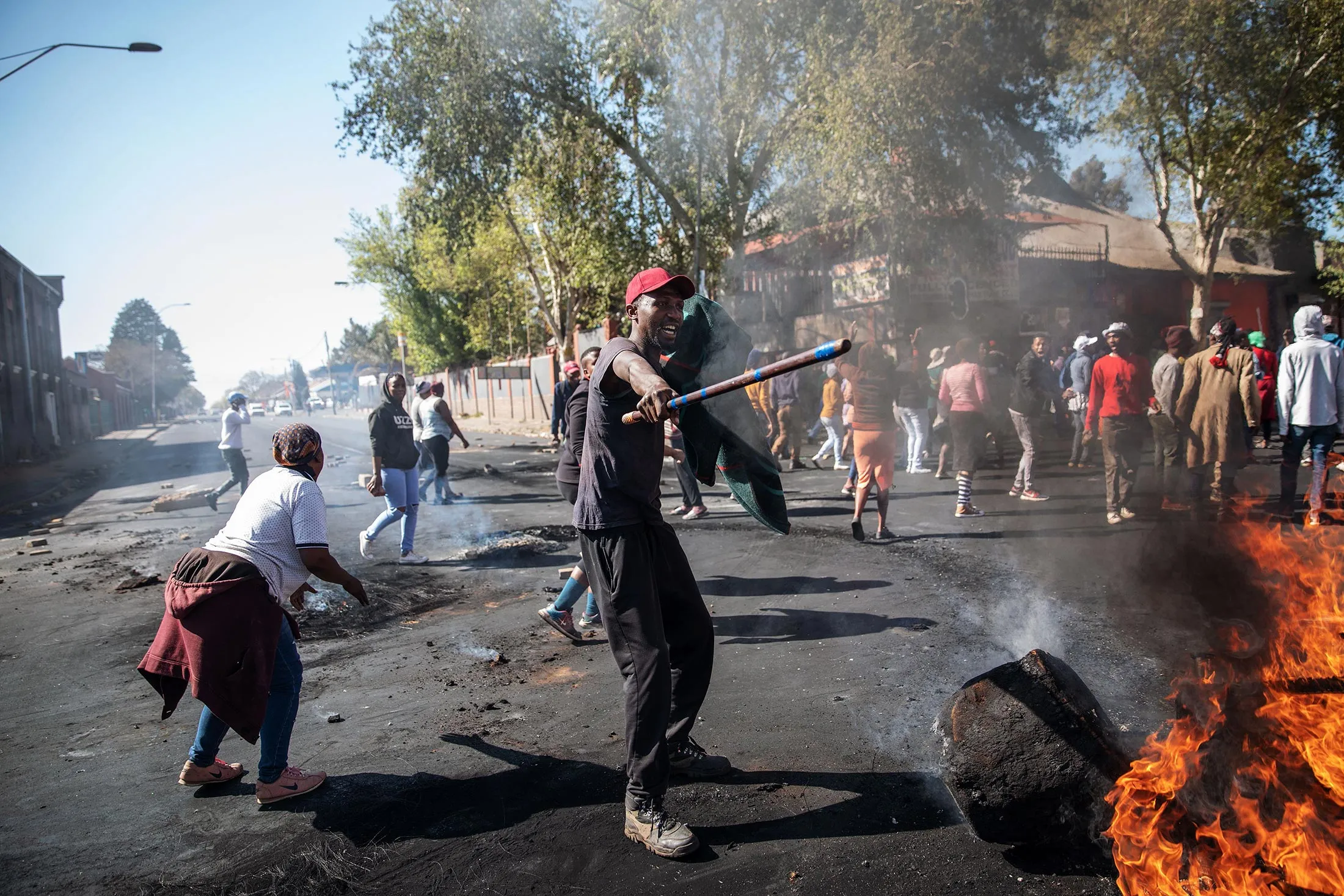
The first major signal that this resentment could turn violent came in May 2008. What began as localised misunderstandings in Alexandra township near Johannesburg quickly escalated into nationwide attacks. Over the course of weeks, violence spread to multiple provinces, leaving at least 60 people dead and displacing tens of thousands. Shops owned by foreign nationals were looted, homes were destroyed, and entire communities were forced to flee. The victims were overwhelmingly African migrants, reflecting that the violence was not about race in the traditional South African sense, but about nationality and belonging.
The 2008 attacks were widely condemned, both domestically and internationally. The government responded with security deployments and humanitarian assistance, but the underlying causes were not resolved. Instead, the violence established a template that would be repeated in subsequent years.
In April 2015, xenophobic attacks erupted again, beginning in Durban and spreading to other parts of KwaZulu-Natal and Gauteng provinces. At least seven people were killed, and thousands were displaced. The violence followed controversial remarks attributed to Zulu King Goodwill Zwelithini, who was reported to have suggested that foreigners should leave South Africa. Regardless of the intended meaning, the statement resonated with existing anti-immigrant sentiment and contributed to the escalation.
By 2017, the pattern had become more targeted. Nigerian-owned businesses in Pretoria and Johannesburg were attacked, with shops looted and properties destroyed. Nigerians, already burdened by negative stereotypes linking them to crime, found themselves increasingly singled out. These stereotypes, often amplified by social media and sensational reporting, created a climate in which collective punishment was normalised.
The 2019 wave of violence marked another turning point. Attacks in Johannesburg and surrounding areas led to deaths, widespread looting, and renewed diplomatic rifts. The scale and intensity of the violence prompted strong reactions from affected countries, particularly Nigeria. The Nigerian government recalled its High Commissioner from Pretoria and boycotted the World Economic Forum on Africa in Cape Town. There were also retaliatory incidents in Nigeria, where South African-owned businesses were targeted by angry youths.
Behind these episodic eruptions lies a consistent pattern of human and economic loss. Over the years, hundreds of people have been killed, thousands displaced, and billions of naira worth of property destroyed. Nigerian victims alone have suffered disproportionately, with over a hundred deaths recorded within a short span between 2016 and 2018. These figures are not merely statistics; they represent lives disrupted, families broken, and dreams deferred.
Yet, to focus solely on the violence without examining its historical context is to miss a critical dimension of the story. South Africa’s liberation from apartheid was not achieved in isolation. It was the product of sustained international and continental support, in which Nigeria played a leading role.
From the 1960s through the early 1990s, Nigeria positioned itself as a central actor in the anti-apartheid struggle. It provided financial assistance to liberation movements such as the African National Congress, hosted South African exiles, and funded scholarships for thousands of students who could not pursue education at home due to apartheid restrictions. These efforts were not incidental; they were embedded in Nigeria’s foreign policy, which prioritised African liberation and unity.
The country’s commitment extended beyond financial support. In 1976, following the Soweto uprising, Nigeria intensified its diplomatic campaign against apartheid. By 1979, it had nationalised British Petroleum assets in protest against Western engagement with the apartheid regime. Nigeria also played a significant role at the United Nations, advocating for sanctions and contributing to the global isolation that eventually forced the apartheid government to negotiate.
These actions came at a cost. Nigeria sacrificed economic opportunities and diplomatic relationships in pursuit of a broader African cause. The expectation was not repayment, but recognition of a shared destiny. When Nelson Mandela was released in 1990 and later elected president in 1994, that expectation seemed justified.
However, the post-apartheid reality has complicated that narrative. Xenophobic violence has raised difficult questions about the durability of African solidarity. It has exposed the limits of historical memory in shaping contemporary behaviour.
To understand why xenophobia persists, one must examine the structural drivers within South Africa. Economic inequality remains central. The country consistently ranks among the most unequal in the world, with a Gini coefficient that reflects deep disparities in wealth and opportunity. Unemployment rates, particularly among young people, remain high. In such conditions, competition for resources becomes intense, and migrants are often perceived as competitors.
This perception is reinforced by political rhetoric. In times of economic stress, blaming foreigners can be politically expedient. It shifts attention away from governance failures and redirects public anger toward a vulnerable group. Over time, this narrative becomes entrenched, shaping public attitudes and legitimising hostility.
Law enforcement challenges further exacerbate the problem. While the South African government has condemned xenophobic violence and, at times, deployed security forces to restore order, the prosecution of perpetrators has been inconsistent. The result is a cycle of violence followed by temporary calm, without meaningful prosecution. This pattern creates a sense of impunity, encouraging future attacks.
There is also a psychological dimension that cannot be ignored. The transition from apartheid to democracy did not automatically resolve issues of identity and belonging. During apartheid, the struggle against a common oppressor created a sense of unity among black South Africans. In the post-apartheid era, that unifying force has dissipated, leaving space for new forms of exclusion.
Foreign Africans, despite their shared history, have been positioned as outsiders. The term “makwerekwere,” often used derogatorily to describe African migrants, reflects this sense of otherness. It is a linguistic marker of exclusion, one that reinforces the idea that not all Africans are equal within the African space.
For Nigerians, the challenge is compounded by perception. While many Nigerians in South Africa are law-abiding entrepreneurs, professionals and students, a minority involved in criminal activities has shaped public perception disproportionately. This perception has been amplified by media narratives and online discourse, creating a stereotype that is both persistent and damaging.
The result is a community that is simultaneously visible and vulnerable. Nigerian businesses are often among the first targets during xenophobic attacks, and Nigerian nationals frequently bear the brunt of violence. This dynamic reiterates the intersection of economic competition, social perception, and political narrative.
The implications extend beyond South Africa. Xenophobic violence has strained diplomatic relations, particularly between Nigeria and South Africa. These two countries are not just regional powers; they are central to the continent’s economic and political future. This issue between them have ripple effects across Africa, affecting trade, investment, and regional cooperation.
At a broader level, xenophobia challenges the very idea of Pan-Africanism. It raises fundamental questions about the feasibility of continental integration in the face of internal divisions. Initiatives such as the African Continental Free Trade Area depend on the free movement of people, goods, and services. Xenophobic violence undermines these goals, creating barriers where there should be bridges.
Addressing this crisis requires more than condemnation. It demands a comprehensive approach that tackles both immediate triggers and underlying causes. Economic reforms must prioritise inclusion, ensuring that growth translates into opportunities for all residents. Political leaders must exercise restraint in their rhetoric, avoiding narratives that scapegoat migrants.
Law enforcement must be strengthened to ensure proper prosecution. Without consequences, violence will continue to recur. At the same time, there is a need for sustained public education—an effort to reconnect South Africans with their own history and the role that other African nations played in their liberation.
For Nigeria, the response must be measured but firm. Protecting its citizens abroad is a fundamental responsibility, but so is maintaining diplomatic engagement. The relationship between Nigeria and South Africa remains too important to be defined by periodic crises.
In the final analysis, understanding South Africa’s xenophobic violence requires a willingness to confront uncomfortable truths. It is not enough to attribute the problem to ignorance or anger. It is a product of structural inequality, political dynamics, and historical amnesia.
The tragedy lies not only in the violence itself, but in what it represents: a breakdown of the solidarity that once defined Africa’s struggle for freedom. If that solidarity is to be restored, it will require more than memory. It will require action, leadership, and a renewed commitment to the idea that Africa’s future is shared.
Until then, xenophobic violence will remain a recurring wound—one that continues to undermine both South Africa’s promise and Africa’s collective aspiration.


Where Lies the Integrity of INEC Chairman? By Boniface Ihiasota

CARICOM backs UN resolution recognising slavery as crime against humanity

What Are Our Universities Producing? By Alabidun Shuaib AbdulRahman

Pastor Jerry Eze Defends Miracles At UK Conference Amidst Criticism And Controversy

Diaspora Watch 20th Edition (October 14-20, 2024): Your Trusted Source for Global News and Insights

Tanzanian Man Reportedly Dies And Returns To Life Six Times


-

 News4 days ago
NEWS
-

 Trending1 week ago
Diaspora Watch – Vol. 87
-

 News1 week ago
Artemis II Crew Captures Stunning Images of Earth Midway to Moon
-
 News1 week ago
Melania Trump Rallies 45 Nations on AI-powered Education
-
 Analysis1 week ago
Understanding South Africa’s Xenophobic Violence, by Alabidun Shuaib AbdulRahman
-
 News1 week ago
US, Iran Search for Missing Airman After Warplane Downed