
Analysis
Savannah Shield and the Security Recalibration of Kwara State

Savannah Shield and the Security Recalibration of Kwara State
By Alabidun Shuaib AbdulRahman
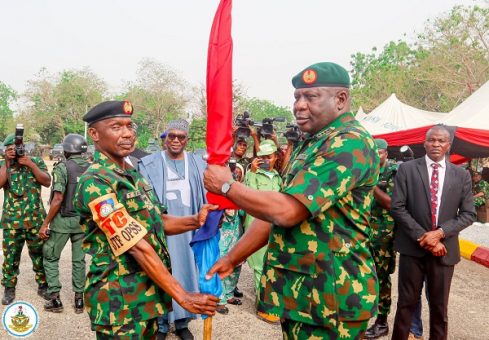
On Thursday, 19 February 2026, at the historic Sobi Barracks in Ilorin, Kwara State did more than launch a security operation. It signalled a recalibration. The formal flag-off of Operation Savannah Shield by Governor AbdulRahman AbdulRazaq alongside the Chief of Defence Staff, General Olufemi Oluyede, the Chief of Army Staff, Lieutenant General Waidi Shaibu, senior Nigerian Army commanders and heads of security agencies represented a strategic adjustment to a changing threat landscape.
Having covered Nigeria’s major military theatres for nearly a decade — from Operation Sharan Daji to Operation Accord and to Operation Sahel Sanity and now Hadarin Daji in the North-West to Operation Delta Safe in the South-South and Operation Safe Haven and Operation Whirl Stroke in the North-Central — I have come to understand that recalibration, not reaction, defines sustainable security. Savannah Shield is best understood within that framework: a preventive correction designed to interrupt an emerging trajectory before it hardens into crisis.
Kwara’s security story over the past two years has been one of gradual but undeniable pressure. Between 2024 and 2025, reported kidnapping incidents along the Ilorin–Jebba–Mokwa corridor and rural incursions in parts of Kaiama and Baruten Local Government Areas raised alarm within security circles. National crime tracking datasets and internal security briefings presented in Abuja in late 2025 reflected a broader pattern: North-Central Nigeria recorded an increase in abduction cases year-on-year, mirroring spillover effects from the North-West’s entrenched banditry networks.
Kwara was not yet a frontline theatre. But it was no longer peripheral. Geography partly explains the vulnerability. The state shares strategic boundaries with Niger State to the north and Kogi to the east, while expansive savannah woodland and forest belts — particularly near Kainji Lake — provide concealment corridors. In conflict reporting, terrain is destiny. In Zamfara, forests became staging grounds for bandits. In Kaduna, forest belts enabled mobile kidnapping cells. Kwara’s terrain, if left insufficiently policed, risked similar exploitation.
It is important to distinguish threat types accurately. Kwara is not contending with a large-scale ideological insurgency akin to Boko Haram’s campaign in Borno. The dominant security pattern has been criminal banditry — kidnapping for ransom, cattle rustling and sporadic attacks targeting vulnerable communities. Yet the distinction offers little comfort if criminal enclaves begin to entrench themselves. Across Nigeria, the line between economic criminality and violent extremism has proven porous when safe havens emerge.
Operation Savannah Shield therefore represents an anticipatory defence. Its structure reflects lessons from other theatres. Rather than a fragmented deployment, it integrates the Nigerian Army, Nigeria Police Force, Nigeria Security and Civil Defence Corps and intelligence services under coordinated planning. Area domination patrols, forest clearance missions and rapid-response operations are being conducted simultaneously with intelligence gathering and surveillance.
The February 19 launch was not ceremonial theatre. It followed months of consultation between the Kwara State Government and federal authorities. Governor AbdulRahman AbdulRazaq’s engagement with the Presidency and defence leadership secured additional military reinforcement. The visible presence of the Chief of Defence Staff at the launch conveyed federal seriousness — a signal that Kwara’s recalibration had national backing.
From a factual standpoint, the state government has not limited itself to rhetoric. In the 2025 fiscal cycle, budgetary allocations supporting security logistics were increased. Confirmed procurement of patrol vehicles and communication equipment enhanced operational mobility. Community policing initiatives were expanded, and liaison structures strengthened between security agencies and traditional institutions.
Mobility and intelligence are operational currencies. In Kaduna between 2021 and 2023, the integration of aerial surveillance and ground coordination under Operation Thunder Strike reduced high-profile highway kidnappings along key corridors. In Zamfara, initial fragmentation under Operation Hadarin Daji slowed results until unified command structures were enforced. Kwara appears to have internalised those lessons from inception.
Since the launch of Operation Savannah Shield, early field reports suggest measurable improvements in patrol visibility along previously vulnerable routes. Residents in parts of Kwara North have reported increased security presence compared with late 2025. Security officials privately confirm that sustained patrol cycles have disrupted criminal mobility patterns. While comprehensive operational statistics remain confidential for tactical reasons, the qualitative indicators point to stabilisation momentum.
But recalibration demands depth, not just deployment. The sustainability question looms large. Military offensives can suppress activity; lasting stability depends on institutional reinforcement. The Nigeria Police Force in Kwara must build intelligence capacity and data-driven crime mapping systems to assume long-term stabilisation roles once immediate military pressure reduces threat intensity.
In every theatre I have covered, gains proved fragile when civilian policing capacity lagged behind military success.
Judicial coordination is equally critical. Arrested suspects must face timely prosecution. Kaduna’s experience in strengthening prosecution processes between 2022 and 2023 offers a useful blueprint. Deterrence is anchored not merely in arrest numbers but in the certainty of consequence. Kwara’s Ministry of Justice must align operational tempo with judicial throughput.
Security recalibration also intersects with economic policy. Kwara’s northern agricultural belt contributes significantly to food production. When insecurity disrupts planting and harvesting cycles, economic ripple effects follow — affecting markets, employment and food inflation. By stabilising rural communities, Savannah Shield safeguards both livelihoods and macroeconomic resilience.
Inter-state coordination will determine whether recalibration endures. Criminal networks relocate under pressure. I observed this dynamic in the North-West, where offensives in one state displaced bandits into neighbouring territories. Kwara must institutionalise intelligence-sharing protocols with Niger, Kogi, Oyo and Osun to prevent displacement cycles. A shield is only as strong as its perimeter.
Public communication deserves commendation. Transparent advisories and engagement with community leaders have sustained trust. In conflict zones, misinformation amplifies fear and undermines operations. Kwara’s measured communication approach counters panic while reinforcing cooperation.
Of course, realism tempers optimism. Security operations demand sustained funding. Logistics, fuel, maintenance and personnel welfare cannot be episodic. If Savannah Shield is to remain effective beyond its launch phase, fiscal consistency must accompany strategic clarity.
Yet what distinguishes Savannah Shield is not perfection but intent backed by structure. The recalibration is evident in three dimensions: anticipatory deployment before escalation, integrated command rather than siloed action, and alignment between security and development policy.
From a regional lens, the significance is broader. North-Central Nigeria is a strategic hinge between insurgency-prone North-East and bandit-dominated North-West. Preventing entrenchment in relatively stable states like Kwara strengthens national security coherence. Savannah Shield contributes to that containment logic.
After nearly a decade reporting from Nigeria’s security corridors, I have learned that the most meaningful victories are incremental. They manifest in reopened schools, functioning markets and uninterrupted farming seasons. They are measured in the quiet return of routine.
Kwara’s recalibration signals an understanding that waiting invites escalation. Acting early reduces long-term cost — human and economic. The February 19 launch was therefore less about spectacle and more about strategic timing.
Savannah Shield is not a silver bullet. No operation is. But it is a structured assertion that Kwara will not surrender its harmony to creeping insecurity. It is a commitment that governance will adapt to emerging threats rather than deny them.
In a national landscape often fatigued by crisis headlines, Kwara’s approach offers a measured alternative: acknowledge vulnerability, mobilise partnership, invest in logistics, align institutions and communicate transparently.
Security recalibration is not merely about raising a shield. It is about strengthening the arm that holds it and reinforcing the society it protects. If sustained with discipline, institutional learning and inter-state cooperation, Savannah Shield can become more than an operation. It can become a model of preventive governance in North-Central Nigeria and beyond.
Alabidun is a media practitioner and can be reached via alabidungoldenson@gmail.com







Analysis
Let the Bishop’s Visit Heal Us — A Call for Peace Among Mbaise Sons and Daughters in the Diaspora
Let the Bishop’s Visit Heal Us — A Call for Peace Among Mbaise Sons and Daughters in the Diaspora
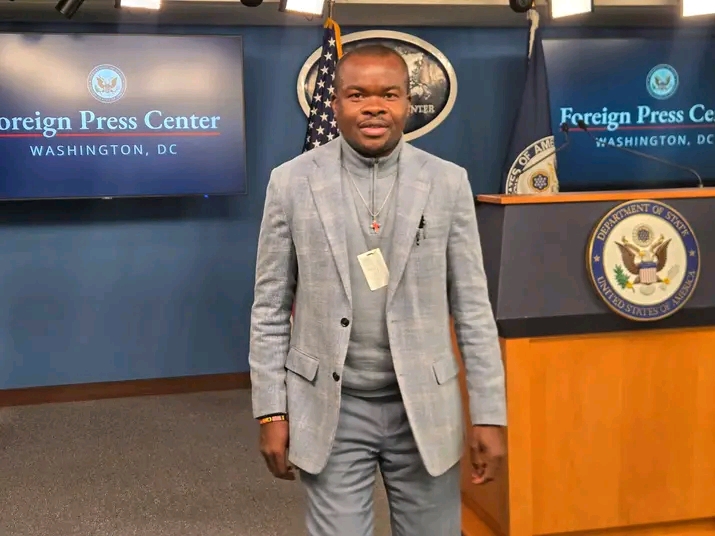
By Boniface Ihiasota
Publisher/Correspondent, Foreign Press Center, Washington D.C.
Excel Global Media Group Inc, USA
The first episcopal visit of His Lordship, Rt. Rev. Simeon Okezuo Nwobi, Catholic Bishop of Ahiara Diocese, to the DMV is more than a Mass. More than a reception. More than protocol.
It is a divine appointment.
On Sunday, July 12, 2026, at 3:00 PM, the people of Mbaise in DC, Maryland, Virginia, and neighboring states will gather at St. Matthias Catholic Church, Lanham, to welcome our Bishop. Friendship Hall will open its doors. But the real question is: Will we open our hearts?
At a time when our Mbaise diaspora community is blessed with numbers, talent, and resources, we are also burdened by something far less holy — division. The whispers have grown louder than our prayers. Gossip travels faster than goodwill. Clans compete where they should collaborate. Brothers ignore brothers. Sisters wound sisters with words. We are building houses side by side in Maryland, Virginia, and D.C., yet building walls between our hearts.
This cannot be our story in a foreign land.
I appeal to His Lordship: Let this visit be a moment of soul searching for all of us. Use your shepherd’s staff not only to bless an altar, but to gather a scattered flock. Preach to us again the Gospel we know but too often forget — _“Love one another as I have loved you.”_ John 13:34 did not come with exceptions for village meetings, title disputes, or WhatsApp arguments.
Mbaise people are known for faith, resilience, and intellect. We produced bishops, professors, doctors, builders. But what does it profit us to gain the whole DMV and lose our brotherhood? Our children are watching. They are learning how to be Igbo in America from us. Are we teaching them unity or enmity?
Let St. Matthias on July 12 be remembered not just as the place we welcomed our Bishop, but as the ground where healing began. Let every son and daughter of Mbaise who enters Friendship Hall that day become a witness to a new covenant: That from this day, we will eschew hate. We will kill gossip before it kills our community. We will disagree without destroying.
Division is easy. Anybody can pull down. Peace is the hard, holy work of builders. And we are _Ndi Mbaise_ — we are builders.
Bishop Nwobi, you carry the moral authority of Ahiara Diocese. We, your children abroad, carry the weight of survival in a foreign land. Neither is easy. But together, we can make this diaspora a cathedral of love, not a courtyard of conflict.
I call on every Mbaise union, every age grade, every family, every individual: Come to the drawing board. The Bishop is coming. The Church doors are open. The moment is now.
Let us leave Friendship Hall as brothers and sisters, not just by blood, but by bond. Let us pursue our good, and the good of the community at large. For in the end, _“Umunna bu ike”_ — but only when _Umunna_ is at peace.
May this visit not just welcome a Bishop. May it restore a people.
I come in peace.
Understanding Kwara’s New Security Landscape, by Alabidun Shuaib AbdulRahman
There are journeys that leave you with more questions than answers. There are also journeys that challenge the assumptions carefully built from social media commentaries, political arguments and sensational headlines. Kwara’s security story belongs in that category.
For months, the dominant narrative has oscillated between two extremes. On one side are those who insist that the state has become a model of coordinated security response under Governor AbdulRahman AbdulRazaq. On the other are critics who argue that nothing has changed because kidnappings still occur, farmers are occasionally attacked and some communities continue to live under the shadow of fear. The truth, as is often the case, lies somewhere in between.
Security is perhaps the most difficult sector to evaluate because its greatest achievements are rarely visible. A school can be commissioned. A road can be measured in kilometres. A hospital can be counted in beds. But how does one measure an attack that never happened because intelligence intercepted the perpetrators? How does one quantify the confidence of a farmer who returns to his farmland after months of uncertainty? How do you calculate the value of a market that gradually comes alive again because armed patrols now dominate routes that were once deserted?
These questions came to mind while reflecting on the evolving security landscape across Kwara North and parts of Kwara South during my tour in the days leading to this year’s Eid-el-Adha (Big Sallah) celebration.
What became obvious is that the conversation should no longer be about whether insecurity exists. It does. The more useful debate is whether Kwara today is better prepared to confront it than it was a few years ago. That distinction matters.
The events of February 3 and 4, 2026, remain one of the darkest moments in the state’s contemporary history. Terrorists descended on Woro and Nuku Communities in Kaiama Local Government Area, killing scores of residents, burning homes, destroying livelihoods and abducting others after months of reported threats to the communities. The attacks left entire families shattered and forced many survivors into displacement. Estimates of the death toll varied, but humanitarian agencies and international media reported that well over 160 people were killed, making it one of the deadliest attacks in Nigeria this year.
The attack fundamentally altered Kwara’s security conversation. It was no longer about isolated kidnappings or criminal gangs seeking ransom. It exposed the growing danger of extremist elements exploiting the vast forests around Kaiama, Baruten and neighbouring parts of Niger State.
The immediate aftermath painted a heartbreaking picture. Reports showed that Woro, once a thriving agrarian community, became largely deserted as survivors fled in search of safety. Only a fraction of the population remained behind to bury the dead and protect what little was left. Shops were shut. Schools stopped functioning. Farming activities halted almost completely. A community that had once depended on agriculture suddenly found itself battling for survival.
It was against this backdrop that the Governor AbdulRazaq administration faced perhaps its greatest security test.
To be fair, no state government possesses constitutional control over the military, police or intelligence agencies. Governors are called chief security officers largely by convention rather than operational authority. Yet citizens naturally hold them accountable whenever insecurity escalates. Rather than retreat into constitutional excuses, the administration adopted a multi-layered response.
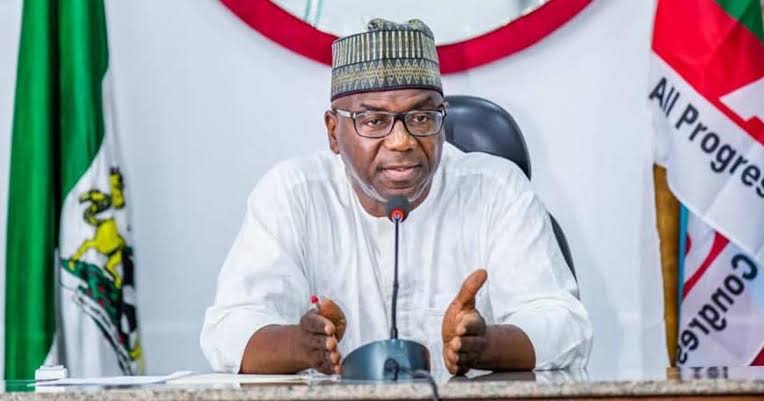
As was relayed by both Traditional Rulers of Woro and Babanla, Alhaji Saliu Bio Umar and Oba Aliyu Alabi Yusuf (Arojojoye II) during my tour to their respective domain said Governor AbdulRahman AbdulRazaq visited the affected communities shortly after the attacks, describing the killings as a deliberate massacre and assuring residents that the government would not abandon them.
He subsequently engaged President Bola Tinubu and federal security authorities, pushing for stronger military intervention in the affected axis. That engagement resulted in the approval and eventual launch of Operation Savannah Shield, a joint military operation involving the Nigerian Army, Navy and Air Force to secure Kwara and adjoining parts of Niger State.
Operation Savannah Shield did not emerge in isolation. It came after months of increasing concern over terrorist infiltration into the forests stretching across Kaiama, Baruten and Edu Local Government Areas. The operation introduced additional troops, armoured assets, aerial surveillance, intelligence-driven operations and coordinated patrols aimed at dismantling criminal enclaves around the Kainji axis.
The operation was also consistent with the Federal Government’s broader security strategy for the first half of 2026, during which Kwara featured prominently among the country’s operational flashpoints alongside Borno, Yobe, Taraba, Katsina, Zamfara, Sokoto, Plateau, Benue, Niger, Oyo and Kaduna.
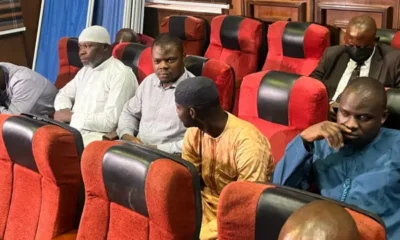
According to the Joint Security Press Briefing by the Defence Headquarters and other national security agencies on Thursday, 2nd of July, 2026, troops conducted 14,221 coordinated security operations nationwide between January and June 2026. These operations resulted in the neutralisation of 1,597 terrorists and insurgents, the rescue of 1,516 kidnapped victims, the recovery of 451 firearms, 16,726 rounds of ammunition, and 161 explosives and Improvised Explosive Devices (IEDs). Intelligence-driven raids, clearance missions and rescue operations specifically covered flashpoints that included Kwara, demonstrating the state’s strategic importance in the national counter-insurgency effort.
But military deployments alone do not tell the whole story. Secretary to the State Government, Professor Mamman Saba Jibril, during an interview with some Defence Editors in Ilorin in May said “Long before the Woro tragedy, the Kwara State Government had consistently invested in strengthening security logistics. Through Operation Harmony, the administration procured patrol vehicles, distributed motorcycles to all sixteen local government areas, supported communication equipment, provided operational logistics and sustained collaboration with the Nigeria Police Force, the Nigerian Army, the Department of State Services, the Nigeria Security and Civil Defence Corps, the Nigeria Immigration Service and local vigilante groups. These interventions were designed to improve mobility, intelligence gathering and rapid response across vulnerable communities.”
Those investments complemented rather than replaced federal security operations. The administration’s sustained logistical support enabled security agencies to improve operational mobility across the difficult terrain stretching from Kaiama through Baruten to Edu. Equally important was the growing integration of local vigilantes, hunters and community intelligence networks with conventional security agencies, recognising that defeating armed groups operating inside forests requires both military capability and local knowledge.
Critics are quick to ask an understandable question: if all these interventions exist, why do kidnappings still occur? It is a fair question. Yet it also reflects the temptation to judge security by isolated incidents rather than broader trajectories.
No serious security analyst measures success by expecting absolute zero crime. Even countries with the world’s most sophisticated policing systems continue to confront organised criminality. The relevant question is whether institutions are becoming stronger, whether response times are improving, whether intelligence networks are expanding and whether communities are regaining confidence.
In Kwara, evidence suggests cautious but measurable progress. Beyond the increased visibility of troops and security patrols, law enforcement agencies have recorded concrete operational successes. During the first half of 2026, the Nigeria Police Force dismantled a 33-member criminal network involved in terrorism, cattle rustling and violent attacks in Kwara State. Intelligence-led policing also intensified across the forest corridors linking Oyo, Ogun, Ondo, Ekiti, Kwara and Kogi States—routes long exploited by kidnappers, terrorists and armed gangs. In another major breakthrough, police dismantled a railway vandalism syndicate operating across Nasarawa, Bauchi and Kwara States, recovering approximately 60 tonnes of vandalised railway materials valued at about ₦400 million, thereby disrupting another organised criminal network.
Several communities that experienced disruption earlier in the year are gradually witnessing the return of commercial transport, weekly markets and farming activities under increased security presence. Farmers who abandoned portions of their farmlands are slowly returning, though many still do so with understandable caution. Commercial vehicles that once avoided certain routes now operate under the reassurance of military patrols and security checkpoints. Confidence remains fragile, but it is no longer absent.
The emotional scars, however, remain visible. The people of Woro continue to appeal to government at every level not merely to rebuild houses but to rescue those still abducted during the attacks. Families remain hopeful that missing relatives will someday return. Their request is simple: security operations should continue until every criminal network responsible for the tragedy is dismantled and those still in captivity regain their freedom. That appeal reminds everyone that security is ultimately about people rather than statistics.
Another lesson emerging from Kwara’s experience is that security cannot be divorced from economic development. Kaiama, Baruten, Edu and parts of Patigi constitute important agricultural belts. Whenever insecurity keeps farmers away from their fields, the consequences extend far beyond those communities. Food production declines, rural incomes collapse and local markets weaken. It is therefore unsurprising that Governor AbdulRazaq has repeatedly linked security operations with food security, arguing that protecting farming communities is as much an economic imperative as it is a law enforcement responsibility.
There is also a quieter aspect of the administration’s intervention that rarely attracts headlines. Traditional rulers, community leaders, hunters and local vigilante formations have become increasingly integrated into intelligence gathering.
Security agencies understand that the first indication of suspicious movement often comes not from technology but from local residents who know their environment intimately. Nationally, this community-centred approach has become a key pillar of military operations. Between January and June 2026, the Armed Forces conducted 33 peacebuilding initiatives, 13 public sensitisation campaigns and 33 stakeholder engagement meetings involving traditional rulers, religious leaders and community stakeholders. Kwara has increasingly benefited from this collaborative security model.
None of this suggests that government has solved every problem. It has not.
Remote communities still require greater security presence. Forest surveillance must become even more sophisticated. Border management around the Benin Republic axis deserves continued strengthening. More permanent security formations may still be necessary in vulnerable areas. Victims of terrorism require sustained rehabilitation beyond emergency relief. Yet fairness also demands acknowledging what has changed.
Professor Mamman Saba Jibril further noted during the interview that Kwara of today is not confronting insecurity with the same institutional capacity it possessed a few years ago, affirming operational mobility has expanded through improved logistics and state support. “Federal and state collaboration has deepened considerably. Intelligence coordination among the Armed Forces, Nigeria Police Force, Department of State Services, Nigeria Security and Civil Defence Corps, Nigeria Immigration Service and local security volunteers has become more structured,” Jibril emphasized.
The dismantling of a 33-member criminal network in Kwara, intensified military operations within the Kainji axis and sustained intelligence-led operations across vulnerable communities underscore a more proactive security posture than previously existed. These developments do not erase tragedy, but they significantly improve the state’s capacity to prevent future attacks and respond more effectively when threats emerge.
Ultimately, security is measured not only by the absence of attacks but by the resilience of institutions. Kwara’s experience over the past year illustrates this reality. The February massacre in Woro and Nuku exposed dangerous vulnerabilities, but it also triggered one of the most coordinated security responses the state has witnessed in recent years. Military deployments increased, intelligence sharing improved, criminal networks were dismantled, and communities previously isolated by fear gradually began reclaiming normal life. While the threat has not disappeared, the institutional response is demonstrably stronger than before. Perhaps that is the real lesson.
Security is not a destination where governments eventually arrive and declare victory. It is a continuous process of adaptation against adversaries who constantly evolve. Every patrol vehicle deployed, every intelligence report acted upon, every community engagement held and every kilometre of forest reclaimed represents another step in that long journey.
Those who insist that nothing has changed ignore these institutional improvements. Those who claim everything is perfect ignore the grief of families still mourning loved ones, the fear of communities rebuilding from trauma and the reality that isolated attacks continue to occur. The wiser position lies between both extremes.
Kwara’s new security landscape is neither the paradise described by enthusiastic supporters nor the hopeless battlefield portrayed by relentless critics. It is a state confronting an evolving threat with increasing resolve, improved coordination and sustained investment, while recognising that the journey towards lasting peace is still unfinished. Beyond the gunfire and beyond the politics, perhaps that is the story that deserves to be told.
Alabidun is a Journalist and Editor and can be reached via alabidungoldenson@gmail.com
The Politics of Akara and Kuli-Kuli Empowerment, by Boniface Ihiasota
In a country battling one of its worst economic crises in decades, every statement and public programme from those in positions of leadership carries enormous symbolic weight. Nigerians are not only listening to what their leaders say; they are also measuring whether government actions reflect the daily struggles of ordinary citizens. That is why the recent empowerment initiative championed by Nigeria’s First Lady, Senator Oluremi Tinubu, has generated widespread criticism across the country.
The initiative, which encouraged women to embrace small-scale ventures such as akara frying, corn roasting and similar petty businesses, may have been conceived as a grassroots poverty alleviation programme. Across Nigeria, countless women have built respectable livelihoods through food vending and other micro-enterprises. There is dignity in honest labour, and no profession should be ridiculed.
However, the criticism is not directed at these occupations themselves. Rather, it is about the apparent disconnect between the scale of Nigeria’s economic challenges and the kind of empowerment being promoted by the nation’s highest office dedicated to women.
Since President Bola Ahmed Tinubu assumed office on May 29, 2023, his administration has implemented sweeping economic reforms, including the removal of petrol subsidy and the liberalisation of the foreign exchange market. While these policies were presented as necessary for long-term economic recovery, they have also contributed to soaring inflation, rising transportation costs and an unprecedented increase in the prices of food and essential commodities. Millions of Nigerian households have seen their purchasing power eroded.
According to the National Bureau of Statistics, food inflation has consistently remained among the highest components of the country’s inflation figures over the past two years. For many families, survival has become a daily struggle rather than a long-term economic plan.
Against this backdrop, many Nigerians expected empowerment programmes that would focus on access to affordable credit, vocational training in technology and manufacturing, agricultural value chains, digital entrepreneurship and medium-scale business development. Such interventions would not only provide immediate relief but also create pathways for sustainable wealth creation.
Instead, the emphasis on traditional petty trading has been interpreted by many as lowering the aspirations of Nigerian women at a time when countries across Africa are investing heavily in innovation, digital skills and industrial development.
The First Lady’s office occupies a unique position in Nigeria’s governance structure. Although it is not a constitutional office, it has historically been used to champion major social causes. Previous First Ladies have led campaigns on maternal health, education, HIV/AIDS awareness, women’s rights and humanitarian interventions. Consequently, every initiative launched from the office inevitably attracts national scrutiny.
Critics have also pointed to previous public engagements involving the First Lady, including the distribution of vehicles to party women leaders at periods when the country was grappling with serious security concerns, including the abduction of schoolchildren in different parts of northern Nigeria. Whether fair or not, such images reinforce a perception that political elites remain insulated from the hardships confronting ordinary Nigerians.
Perception matters in governance. Leadership is not merely about implementing programmes; it is equally about understanding the emotional pulse of the people. At a time when many women are university graduates, professionals, innovators and entrepreneurs seeking access to finance, markets and modern business opportunities, public messaging should inspire ambition rather than reinforce subsistence.
Constructive criticism should not be mistaken for ethnic or partisan hostility. Democratic accountability requires citizens to question public officials irrespective of tribe, religion or political affiliation. Holding leaders accountable strengthens democracy rather than weakens it.
The challenge before Nigeria is not whether women should sell akara, roast corn or produce local snacks. Many successful businesses have humble beginnings. The real question is whether government should limit its vision of women’s economic empowerment to survival-level enterprises while millions seek opportunities to participate meaningfully in a modern economy.
Nigerian women deserve policies that match their talents, education and aspirations. Empowerment should not simply help citizens survive poverty; it should equip them to escape it permanently. That is the standard by which every government initiative should be measured.


Imo Ex-Lawmaker’s Son Irvin Ibejiako Called to Nigerian Bar

Let the Bishop’s Visit Heal Us — A Call for Peace Among Mbaise Sons and Daughters in the Diaspora

Uddy, Kylie celebrate colourful Igbo-American traditional wedding in California

Pastor Jerry Eze Defends Miracles At UK Conference Amidst Criticism And Controversy

Diaspora Watch 20th Edition (October 14-20, 2024): Your Trusted Source for Global News and Insights

Tanzanian Man Reportedly Dies And Returns To Life Six Times


-

 News5 days ago
Faith, Fellowship as Ojiegbe Hosts Ahiara Bishop in Maryland
-
 News5 days ago
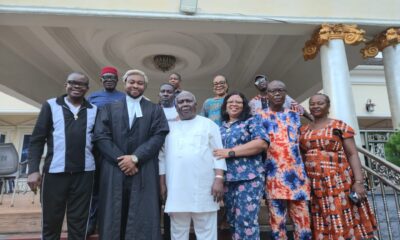
Imo Ex-Lawmaker’s Son Irvin Ibejiako Called to Nigerian Bar
-
 News5 days ago
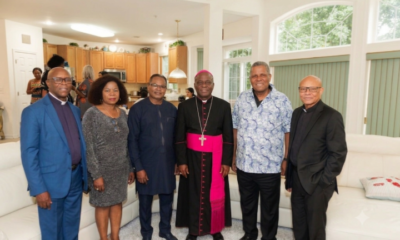
MbaiseUSA DMV chapter hosts Ahiara bishop ahead of 2026 convention
-
 Extra5 days ago
Uddy, Kylie celebrate colourful Igbo-American traditional wedding in California
-
 Analysis5 days ago
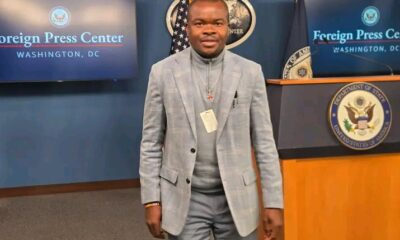
Let the Bishop’s Visit Heal Us — A Call for Peace Among Mbaise Sons and Daughters in the Diaspora
-
 Analysis5 days ago
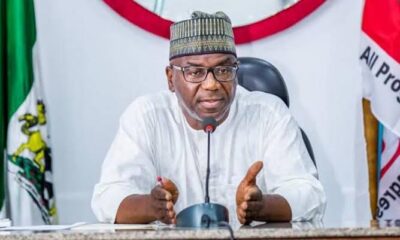
Understanding Kwara’s New Security Landscape, by Alabidun Shuaib AbdulRahman