
Trending
Insecurity Claims 1,420 Lives, 537 Kidnapped Across Nigeria in Q1 2025


Insecurity Claims 1,420 Lives, 537 Kidnapped Across Nigeria in Q1 2025
Nigeria continues to face a deepening security crisis, with 1,420 people killed and 537 others kidnapped in various incidents across the country in the first quarter of 2025 alone. This is according to data from *HumAngle’s* March 2025 Conflict Tracker, cited by *WikkiTimes*.
The report documented 475 insecurity incidents nationwide between January and March, spanning all six geopolitical zones. However, the brunt of the violence was borne by the northern part of the country, particularly the Northwest and North-Central regions. These two zones accounted for nearly half of all recorded incidents and over 50% of the total fatalities.
### Northern Nigeria Remains Epicenter of Violence
The data paints a grim picture of the security situation in northern Nigeria. In March alone, the region recorded 243 out of 363 reported deaths. The Northwest zone reported the highest casualties, with 130 deaths, followed by the North-Central with 94 and the Northeast with 19. This accounts for nearly 67% of all fatalities nationwide for the month.
The high levels of violence in the North have been attributed to a range of factors including banditry, terrorism, communal clashes, and attacks by armed groups. States like Zamfara, Kaduna, Niger, and Borno continue to be hotspots for deadly attacks and mass abductions, with rural communities particularly vulnerable.
In addition to killings and kidnappings, the report noted a rise in displacement and destruction of property, further compounding the humanitarian crisis in affected areas.
### Southern Nigeria Also Affected
While the North remains the worst hit, insecurity is far from being a regional issue. The South also recorded significant casualties, albeit at a lower scale. In March, the South-West zone reported 52 deaths, the South-South recorded 50, and the South-East 18—bringing the total southern death toll for the month to 120.
In the southern regions, insecurity often takes the form of cult clashes, armed robbery, political violence, and occasional communal disputes. In the South-East, the activities of separatist groups and their confrontations with security agencies have continued to claim lives and destabilize communities.
### A National Crisis Without Adequate Response
Security analysts and civil society groups have repeatedly raised concerns over the federal government’s perceived lack of decisive and coordinated response to the growing insecurity. Despite increased military operations and repeated assurances from security agencies, the crisis has shown little sign of abating.
The HumAngle report underscores what many Nigerians already feel—an ongoing cycle of violence with limited accountability and inconsistent protection for civilians. It also calls into question the effectiveness of existing security strategies and the need for a more inclusive, community-driven approach to peacebuilding.
### The Human Cost
Beyond the numbers, the human cost of Nigeria’s insecurity crisis is staggering. Families are torn apart, livelihoods destroyed, and entire communities displaced. Many victims of kidnappings remain unaccounted for, with families often forced to pay ransoms amid silence from authorities.
As the country approaches the mid-year mark, the figures from the first quarter serve as a sobering reminder of the urgency with which Nigeria’s security architecture needs reform, and the importance of placing citizens’ safety at the heart of national policy.











Diaspora Watch Newspaper is pleased to announce the release of its 98th edition, presenting readers with another rich blend of impactful stories, insightful analyses and inspiring human-interest features from across the world.
Leading this edition is the heartwarming cover story, “Godchildren Honour Emmanuel and Joy Ojiribe at 40th Anniversary Celebration in US,” which chronicles the remarkable legacy of love, faith, mentorship and family built over four decades by the celebrated couple, culminating in a memorable celebration attended by loved ones and admirers.
Diaspora Watch FREE Digital View: https://diasporawatch.com/3d-flip-book/diaspora-watch-vol-98/
On Demand Print: https://www.magcloud.com/browse/issue/3359332?__r=1069759
SUBSCRIBE TO DIASPORA WATCH NOW ON THE LINK BELOW!!!
https://diasporawatch.com/subscribe-to-diaspora-watch-newspaper/
The edition also brings readers up to speed on major international developments, including US President Donald Trump’s announcement of an Intel-Apple chip deal, Ghana’s move towards a local takeover of Gold Fields’ Tarkwa mine, CARICOM’s renewed commitment to improving citizens’ lives under incoming Chair Pierre, the possibility of cocoa prices rising above $10,000 per tonne once again, a comprehensive 14-Point Roadmap to De-escalation and Reconstruction, Singapore’s impressive 38.4 per cent growth in non-oil exports driven by artificial intelligence, and warnings from Kew scientists that AI and digitalization could play a crucial role in preventing global plant extinction.
On the back page, readers will find the inspiring story of Adenugba, who has been honored with the African Diaspora Fashion Platform Award, recognizing excellence, creativity and outstanding contributions to fashion within the global African diaspora community.
As always, Diaspora Watch Newspaper remains committed to delivering credible journalism, promoting African excellence, strengthening diaspora engagement and providing readers with balanced perspectives on global affairs, business, innovation and development.
The 98th edition is now available to readers across print and digital platforms. We invite everyone to pick up a copy and stay informed on the stories shaping Africa, the diaspora and the wider world.
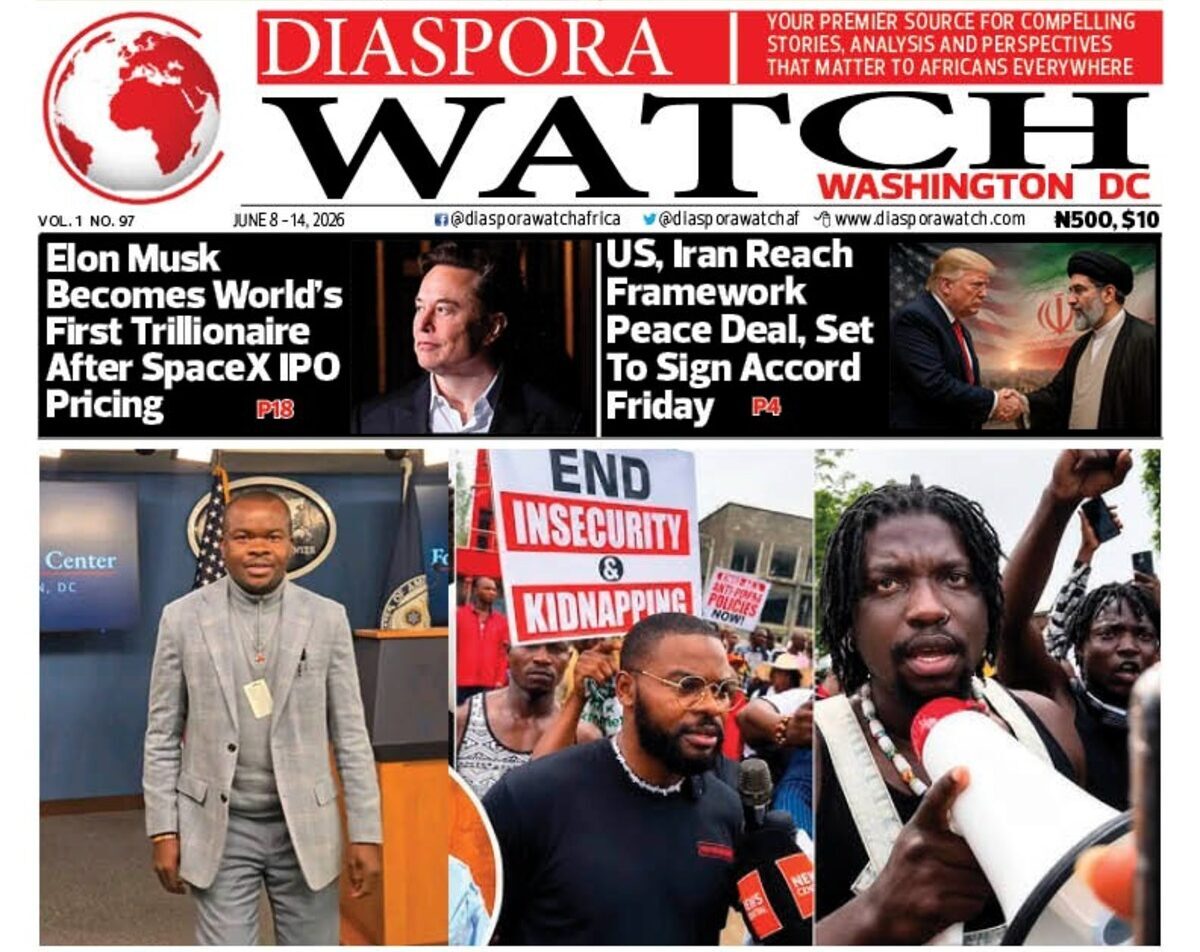
Diaspora Watch Newspaper is pleased to announce the release of its 97th edition, featuring a compelling lineup of global headlines, in-depth analyses, and thought-provoking commentary that reflect the evolving dynamics of politics, business, society, and culture across continents.
Leading the edition is a powerful open letter addressed to social media activist VDM and Nigeria’s younger generation, calling for renewed civic engagement and transformative leadership in shaping the country’s future.
Diaspora Watch FREE Digital View: https://diasporawatch.com/3d-flip-book/diaspora-watch-vol-97/
On Demand Print: https://www.magcloud.com/browse/issue/3353015?__r=1069759
SUBSCRIBE TO DIASPORA WATCH NOW ON THE LINK BELOW!!!
https://diasporawatch.com/subscribe-to-diaspora-watch-newspaper/
It also features the historic financial milestone achieved by Elon Musk, who has reportedly become the world’s first trillionaire following the landmark pricing of the SpaceX IPO. The development underscores the accelerating power of private space innovation and global capital markets.
In international diplomacy, attention is drawn to emerging reports of a framework peace agreement between the United States and Iran, with both nations expected to formalize the accord later this week—an outcome that could significantly reshape geopolitical tensions in the Middle East.
Europe also features prominently, as Norwegian authorities sentence the son of the Crown Princess to four years in prison for rape, a case that has sparked intense national debate on accountability and privilege within royal circles.
Across the Atlantic and beyond, economic and social developments dominate the headlines. From inflationary pressures and trade disruptions threatening Caribbean growth, to South Korea’s stock market surge attracting millions of first-time investors, the global economy remains in a state of rapid transformation and uncertainty.
In Russia, new restrictions on surveillance linked to President Vladimir Putin have been introduced amid growing concerns over artificial intelligence and digital monitoring, highlighting the expanding intersection between governance and emerging technologies.
Sporting tensions at the World Cup opener have been overshadowed by xenophobia-related controversies, raising fresh questions about inclusivity and fan conduct on the global stage.
On the entertainment front, global pop star Ariana Grande makes headlines after reportedly objecting to the use of her music by the White House, adding to ongoing debates about artistic rights and political messaging.
Diaspora Watch Newspaper continues to uphold its commitment to delivering credible, balanced, and impactful journalism that connects diaspora communities with critical global developments.
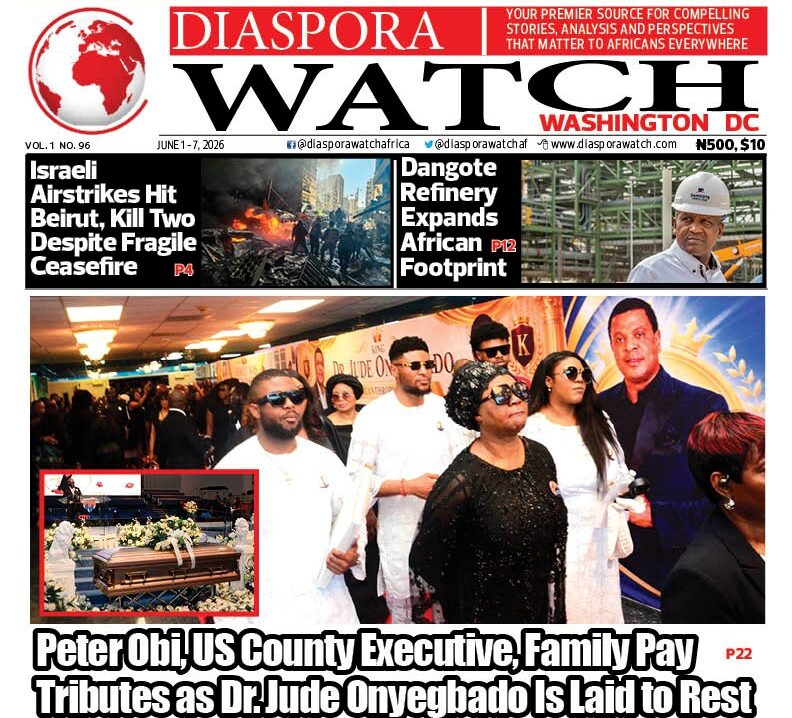
Diaspora Watch Newspaper is pleased to announce the release of its 96th Edition, a compelling and comprehensive publication that brings readers in the diaspora and beyond closer to the stories shaping nations, communities, and the global landscape.
Leading this week’s edition is an emotional and widely attended farewell to renowned medical professional and community leader, Dr. Jude Onyegbado, whose funeral drew tributes from family members, political figures, and international dignitaries.
Diaspora Watch FREE Digital View: https://diasporawatch.com/3d-flip-book/diaspora-watch-vol-96-2/
On Demand Print: https://www.magcloud.com/browse/issue/3349504?__r=1069759
SUBSCRIBE TO DIASPORA WATCH NOW ON THE LINK BELOW!!!
https://diasporawatch.com/subscribe-to-diaspora-watch-newspaper/
In our lead story, “Peter Obi, US County Executive, Family Pay Tributes as Dr. Jude Onyegbado Is Laid to Rest,” readers will gain insight into the life, legacy, and enduring impact of a man whose contributions transcended borders.
The edition also provides extensive coverage of significant geopolitical and policy developments across the globe. From South Africa, President Cyril Ramaphosa unveils a far-reaching migration enforcement strategy aimed at addressing growing concerns over illegal immigration and border security. The policy shift is expected to have implications across the African continent and beyond.
In the Middle East, tensions continue to escalate as Iran launches a fresh barrage of missiles against Israel while pledging a sustained campaign of attacks. The newspaper examines the implications of the latest developments on regional stability and international diplomacy. Complementing this report is coverage of renewed violence in Lebanon, where Israeli airstrikes reportedly struck Beirut, resulting in fatalities despite an already fragile ceasefire arrangement.
On the economic front, readers will find an in-depth report on the continued expansion of Dangote Refinery and its growing influence across Africa’s energy sector. The development underscores the increasing role of African-owned industrial enterprises in driving regional economic transformation and energy security.
The publication also explores ongoing diplomatic efforts in Eastern Europe, where Volodymyr Zelenskyy has called for a direct meeting with Vladimir Putin while proposing a ceasefire aimed at creating a pathway toward peace amid the prolonged conflict.
Humanitarian concerns receive significant attention as Diaspora Watch reports on the tragic deaths of 49 migrants who reportedly succumbed to thirst after their transport vehicle broke down in the Niger Desert, highlighting the persistent dangers faced by migrants undertaking perilous journeys across Africa.
In the United States, the newspaper analyzes the passage of a landmark $70 billion immigration enforcement bill by the Senate, marking a major legislative victory for President Donald Trump and signaling potential changes in America’s immigration landscape.
On the Back Page, readers will discover a groundbreaking scientific breakthrough as researchers unveil an artificial intelligence-designed vaccine that could help protect humanity against future pandemics. The report explores how emerging technologies are transforming medical research and accelerating global preparedness for future health threats.
As always, Diaspora Watch Newspaper remains committed to delivering credible journalism, insightful analysis, and impactful stories that connect the African diaspora with developments at home and around the world.
The 96th Edition is now available to readers worldwide.


Our Tinubu Has Run Away Again?

CARICOM begins consultations on regional biodiversity strategy

On The Sharafadeen Alli Lap Controversy, by Boniface Ihiasota

Pastor Jerry Eze Defends Miracles At UK Conference Amidst Criticism And Controversy

Diaspora Watch 20th Edition (October 14-20, 2024): Your Trusted Source for Global News and Insights

Tanzanian Man Reportedly Dies And Returns To Life Six Times


-
 News1 week ago
Kidney for Cash: Inside Nigeria’s Shadowy Organ Trade
-

 Analysis1 week ago
Tobi Amusan’s Legacy After the World Record Falls, by Boniface Ihiasota
-
 Analysis1 week ago
Wike and the Abuja Master Plan, by Alabidun Shuaib AbdulRahman
-

 News1 week ago
Trump’s policies may cost US $700bn in clean energy investment – Report
-
 News1 week ago
Jamaica Set to Host 20th Caribbean Week of Agriculture
-
 News1 day ago
Our Tinubu Has Run Away Again?