
News
Islamabad Talks Collapse: What Next for US-Iran Relations?

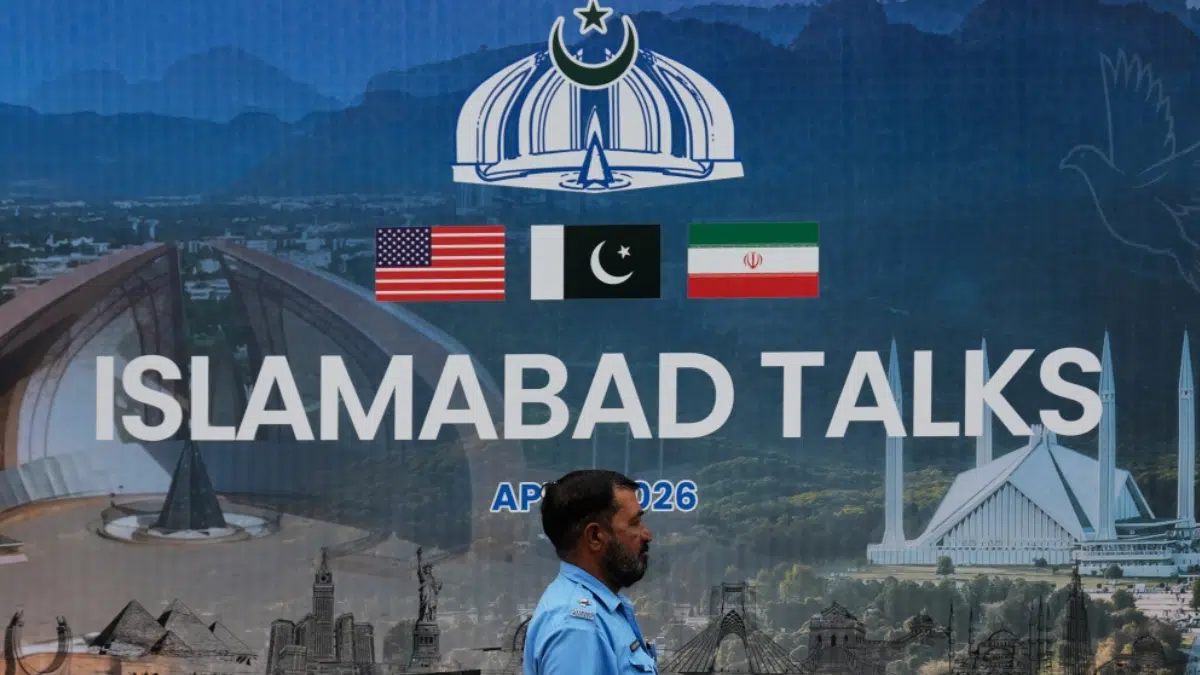
Islamabad Talks Collapse: What Next for US-Iran Relations?
Twenty-one hours of intense negotiations in Islamabad have failed to end 47 years of hostility between the United States and Iran, as high-level talks concluded without a deal, raising fresh concerns over a possible escalation of bombardments in the Middle East.
The marathon meeting, held amid a fragile pause in weeks of conflict, was widely seen as a long shot, given the deep-rooted mistrust and complex disagreements between both sides, particularly over Iran’s nuclear programme and control of the strategic Strait of Hormuz.
Analysts say describing the talks as a failure understates the magnitude of the issues at stake, ranging from longstanding suspicions about Tehran’s nuclear ambitions to the economic disruptions triggered by tensions around the vital global shipping route.
Despite the deadlock, the meeting marked a significant diplomatic shift, as both sides broke a longstanding political taboo by agreeing to sit across the same table, a move that had remained uncertain until hours before the talks began.
The immediate concern now centres on the fate of the tenuous two-week ceasefire that had temporarily eased global fears following threats by US President, Donald Trump, to take drastic military action against Iran.
Although US Vice-President, JD Vance, declared at dawn that Washington had presented its “final and best offer,” reports indicate that informal contacts may have continued even after the official close of the session.
Details of what transpired during the closed-door discussions in a secured Islamabad hotel remain undisclosed, but Vance insisted that the core demand of the US was a firm commitment from Iran to abandon any pursuit of nuclear weapons capability.
Iran, however, maintained its stance, with officials rejecting what they described as “excessive demands,” while reiterating their right to uranium enrichment, even as they signalled a willingness to continue diplomatic engagement.
With both sides leaving the talks convinced of their strategic advantage and unwilling to concede critical positions, the crisis now hangs in the balance, as the international community watches whether Washington will escalate pressure or return to the negotiating table in search of a breakthrough.








Starmer Shelves Chagos Islands Deal Amid Trump Opposition
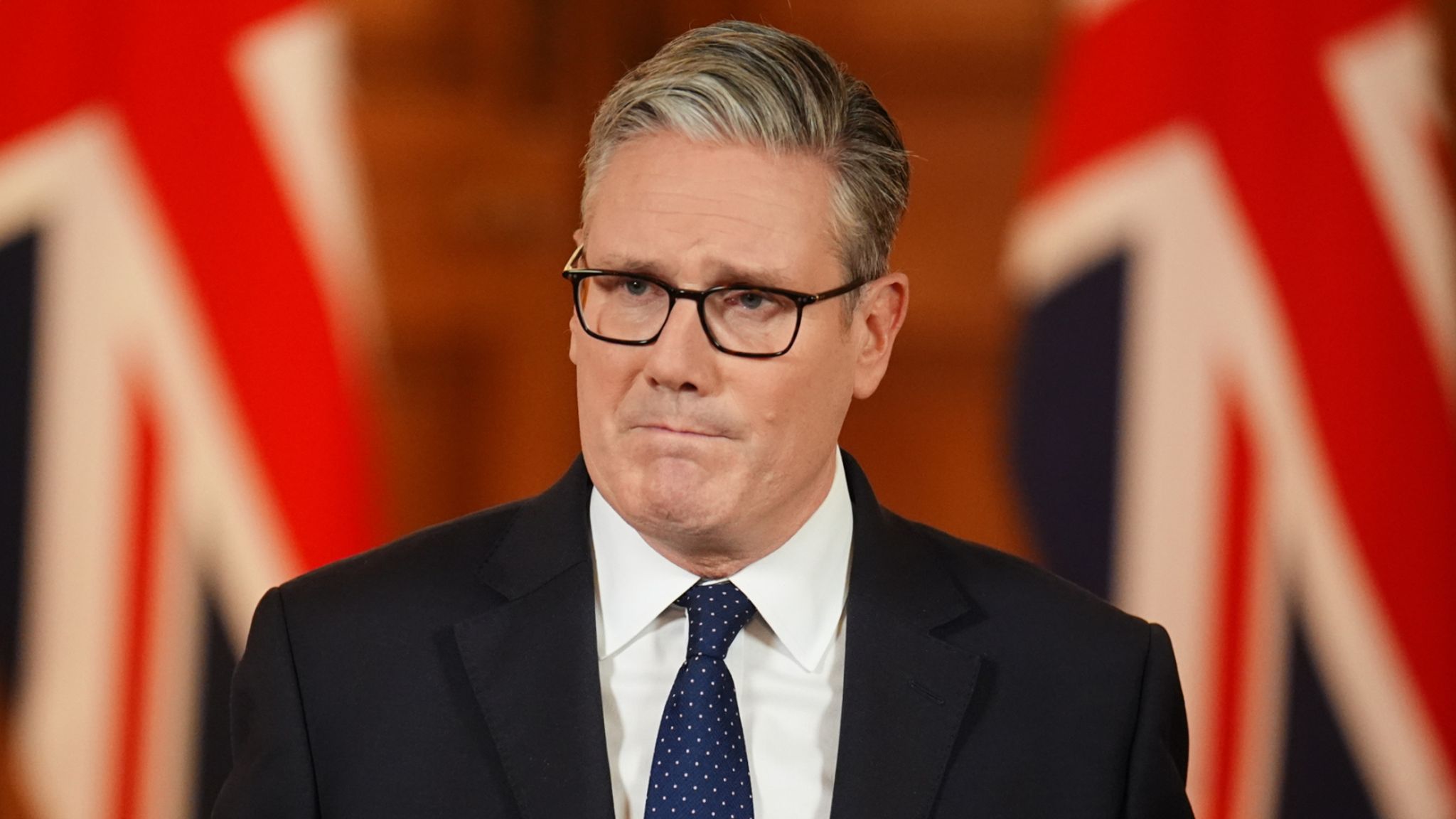
British Prime Minister Sir Keir Starmer has shelved the proposed Chagos Islands sovereignty deal following deteriorating relations with United States President Donald Trump and the absence of formal US approval required to finalise the agreement.
The controversial pact, which would have transferred sovereignty of the British Indian Ocean Territory to Mauritius, stalled after Washington failed to complete a legally required exchange of letters confirming its backing.
Officials said without the document, the treaty cannot proceed.
The deal, signed in May 2025, also included provisions for the UK to lease back the strategic military base on Diego Garcia for an average cost of £101m annually.
However, growing political resistance in Washington and Trump’s public criticism—calling it an “act of total weakness”—have complicated its implementation.
The islands, located in the Indian Ocean, host a key UK-US military installation regarded as vital to Western strategic interests.
While UK officials insist the arrangement was designed to secure long-term operational stability, they acknowledged time has run out to pass the enabling legislation before Parliament is prorogued.
A government spokesperson maintained that the agreement was not entirely dead, stressing that it remains the “best way” to safeguard the future of the Diego Garcia base.
However, they added that the deal would only proceed with explicit US support, with discussions still ongoing between London, Washington and Port Louis.
The opposition Conservative Party welcomed the suspension, with leader Kemi Badenoch describing the plan as misguided and economically unjustifiable, while arguing that national interest should take precedence over diplomatic pressure.
Meanwhile, former Foreign Office official Lord Simon McDonald said the government had “no other choice” given the breakdown in transatlantic consensus.
Mauritius has reacted cautiously, with Attorney General Gavin Glover saying the delay reflected strained UK-US relations but insisting the agreement could still be revived in future.
Chagossian groups, however, continue to express concern over their long-standing exclusion from the islands and uncertainty over their right of return.

Court convicts 386 Boko Haram, ISWAP suspects, adjourns 112 cases
Nearly 400 individuals have been convicted in Nigeria over links to militant Islamist groups, following a series of mass trials held at the Federal High Court in Abuja.
The convictions, announced on Friday, involved suspects accused of affiliations with Boko Haram and its splinter faction, Islamic State West Africa Province.
According to officials, a total of 386 defendants were found guilty and handed sentences ranging from five years imprisonment to life terms.
Two suspects were acquitted, eight were discharged, while 112 cases were adjourned for further hearing.
The trials, which involved over 500 defendants, form part of ongoing efforts by the Federal Government to tackle terrorism and insecurity across the country.
The suspects were arraigned on charges including direct participation in attacks, as well as providing support to insurgents through funding, arms supply, intelligence, and logistics.
Authorities disclosed that five of the accused persons pleaded guilty at the commencement of proceedings.
Their offences reportedly included supplying food, selling livestock, and providing information to the militant groups.
Nigeria has continued to grapple with a protracted insurgency in its North-East region since 2009, when Boko Haram launched an armed campaign that has left tens of thousands dead and displaced over two million people, according to humanitarian agencies.
The mass convictions come amid mounting pressure on the government to address worsening insecurity across Africa’s most populous nation. Security forces are currently engaged on multiple fronts, battling not only Islamist insurgents but also bandit groups, separatist agitators, and kidnapping syndicates operating in different parts of the country.
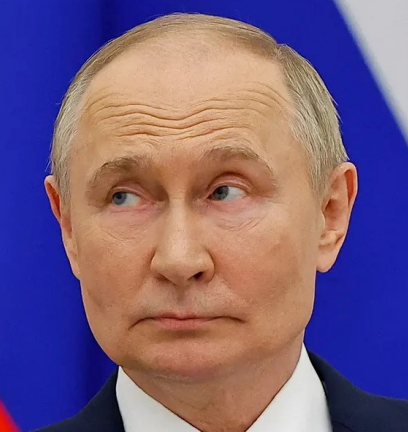
Russia, Ukraine Trade Blame Over Massive Easter Ceasefire Violations
Russia and Ukraine have accused each other of breaching a short-lived Easter ceasefire, with both sides reporting hundreds of violations during the truce declared to mark Orthodox celebrations.
Ukraine’s military, in a statement on Sunday, alleged that Russian forces committed no fewer than 2,299 violations since the ceasefire took effect on Saturday afternoon, including the killing of four unarmed soldiers in what it described as a grave breach of international humanitarian law.
However, Russia’s defence ministry countered the claims, accusing Ukrainian forces of carrying out 1,971 violations, including multiple attempted counter-attacks in the Dnipropetrovsk region.
Ukrainian President, Volodymyr Zelensky, had earlier maintained that Kyiv would respond “symmetrically” to any aggression during the truce, while expressing hope that the ceasefire could be extended beyond Easter to revive stalled peace negotiations.
But Moscow swiftly rejected any extension, with Russian President, Vladimir Putin, indicating that military operations would resume fully after the holiday.
Ukraine further accused Russian troops operating in the Kharkiv region of executing four of its soldiers after disarming them, an incident local prosecutors described as a “war crime,” while authorities released drone imagery purportedly showing the victims.
In another development, officials in Ukraine’s Sumy region reported that a Russian drone strike hit an ambulance overnight, leaving three medics injured, underscoring the continued vulnerability of civilian infrastructure even during the ceasefire.
Russia, on its part, said Ukrainian forces launched fresh assaults on positions in the Pokrovsk and Otradne areas, while claiming it had successfully repelled attempted advances in Sumy and Donetsk regions.
Despite the mutual accusations, both sides confirmed a rare point of cooperation, announcing the exchange of 175 prisoners of war each, including civilians, even as scepticism persists among troops and residents over the possibility of a lasting ceasefire in a conflict that has dragged on since 2022.



What Are Our Universities Producing? By Alabidun Shuaib AbdulRahman

Starmer Shelves Chagos Islands Deal Amid Trump Opposition

Court convicts 386 Boko Haram, ISWAP suspects, adjourns 112 cases

Pastor Jerry Eze Defends Miracles At UK Conference Amidst Criticism And Controversy

Diaspora Watch 20th Edition (October 14-20, 2024): Your Trusted Source for Global News and Insights

Tanzanian Man Reportedly Dies And Returns To Life Six Times


-

 News3 days ago
NEWS
-

 Trending7 days ago
Diaspora Watch – Vol. 87
-

 News1 week ago
Artemis II Crew Captures Stunning Images of Earth Midway to Moon
-
 News1 week ago
Melania Trump Rallies 45 Nations on AI-powered Education
-
 News1 week ago
US, Iran Search for Missing Airman After Warplane Downed
-
 Analysis1 week ago
Understanding South Africa’s Xenophobic Violence, by Alabidun Shuaib AbdulRahman