
News
CARICOM pushes unified response to global shifts, backs Guyana’s COP35 bid

CARICOM pushes unified response to global shifts, backs Guyana’s COP35 bid
The Caribbean Community, CARICOM has called for urgent and coordinated action to confront mounting global uncertainties, as it concluded its 50th Regular Meeting of the Conference of Heads of Government in Basseterre, Basseterre, St Kitts and Nevis.
The four-day summit, held from February 24 to 27 under the chairmanship of St Kitts and Nevis Prime Minister, Dr Terrance Drew, brought together regional leaders to deliberate on security, economic integration, external trade, reparations and the situation in Haiti.
In her opening remarks, CARICOM Secretary-General, Dr Carla Barnett, urged member states to take advantage of opportunities presented by the shifting global order.
She said as new markets emerge and strategic alliances are recalibrated, the Region must engage with clarity and cohesion in areas such as energy transition, digital infrastructure, climate resilience and technology to attract investments aligned with its development priorities.
Outgoing Chairman and Jamaica’s Prime Minister, Andrew Holness, said the speed of global change was outpacing regional coordination, warning that climate shocks, criminal networks and technological disruption were evolving faster than existing policy and regulatory frameworks.
“The question before us is not whether CARICOM can endure, but whether it can deliver for our people with urgency and relevance in a rapidly changing world,” he said.
President of Suriname, Jennifer Geerlings-Simons, and Prime Minister of Trinidad and Tobago, Kamla Persad-Bissessar, also stressed the need for regional unity, describing it as a necessity in the face of economic volatility, climate insecurity and geopolitical shifts.
During the meeting, Heads of Government held discussions with the United States Secretary of State, Marco Rubio, and agreed on the need to establish a 21st-century cooperation framework covering migration, security cooperation, trade and investment, disaster recovery and technical assistance.
Leaders noted that the US remains a valued partner and welcomed Washington’s commitment to reinvigorate traditional ties within the Western Hemisphere.
The Conference also engaged Saudi Arabia and the United Arab Emirates on expanded economic collaboration, including structured mechanisms to unlock opportunities in the digital economy, climate resilience, water security and infrastructure development.
In a major financial boost, Afreximbank announced an increase in its global limit for CARICOM initiatives from $3bn to $5bn, as the Region seeks to strengthen economic ties with Africa and expand trade and investment flows.
On Haiti, the Conference reaffirmed its commitment to supporting stability and free and fair elections, and expressed appreciation to Kenya for leading the Multinational Security Support mission, now transitioned to a Gang Suppression Force authorised by the United Nations Security Council.
The Bahamas and Jamaica were also commended for contributing personnel and operational support.
Heads of Government reiterated their steadfast backing for the sovereignty and territorial integrity of Belize and Guyana in border matters before the International Court of Justice, calling on all parties to respect and implement the court’s decisions when delivered.
On regional security, leaders welcomed progress on model legislation for criminal justice reform and the offer by the United Nations Development Programme to support the expansion of a Police Record Management Information System across member states.
On economic integration, the Conference approved the inclusion of additional professions under the free movement of skilled nationals within the CARICOM Single Market and Economy and adopted amendments to the Revised Treaty of Chaguaramas to streamline Rules of Origin adjustments.
Heads of Government also approved a CARICOM Industrial Policy and Strategy Framework aimed at fostering competitive and sustainable industries across the Region.
In a significant climate development, the Conference agreed to support Guyana’s bid to host COP35 in 2030.
The leaders expressed appreciation to the Government and people of St Kitts and Nevis for hosting the landmark 50th meeting and accepted Saint Lucia’s invitation to host the 51st Regular Meeting from July 5 to 8, 2026.





Irish Government Jet Takes Suspected Crime Boss Kinahan Back to Dublin
The Irish government jet conveying suspected organised crime boss, Daniel Kinahan, has departed Dubai for Dublin, where he is expected to face a charge of directing a criminal organisation.
Kinahan, 49, was arrested in the United Arab Emirates in April following an extradition request from Ireland and is being returned to the country to face prosecution.
Flight tracking data showed that the government aircraft conveying him departed Dubai at 1:19pm local time on Sunday and was expected to arrive in Dublin before 7pm.
Upon arrival, Kinahan is expected to be formally charged before being taken into custody by members of the Irish police, known as gardaí, for an appearance before the Special Criminal Court.
The non-jury court, which comprises three judges, is expected to hear the case on Sunday evening amid a major security operation surrounding his return.
Irish authorities have deployed armed gardaí, members of the Irish Defence Forces and personnel from the Irish Prison Service for the operation.
The Irish Prison Service had also acquired a bulletproof and bombproof vehicle ahead of the extradition to facilitate the movement of prisoners considered to pose a high security risk.
Kinahan is expected to arrive at Casement Aerodrome in Baldonnel, Dublin, before being transferred to custody.
Irish broadcaster RTÉ News reported that security arrangements had been intensified ahead of his arrival, while facilities at the maximum-security Portlaoise Prison in County Laois had also been upgraded in anticipation of his detention on remand.
Kinahan has spent months challenging efforts to extradite him from the UAE to Ireland, but his appeals were unsuccessful.
His extradition has been welcomed by the governments of Ireland and the UAE, which have described the development as evidence of growing judicial cooperation between the two countries.
Irish Justice Minister, Jim O’Callaghan, described the extradition as a “landmark of judicial cooperation” between Ireland and the UAE.
O’Callaghan also commended the UAE judicial authorities for what he described as their professionalism, efficiency and diligence throughout the extradition proceedings.
His UAE counterpart, Abdullah bin Sultan bin Awad Al Nuaimi, said the case demonstrated the UAE’s commitment to international efforts to combat transnational organised crime.
The extradition was made possible under an existing agreement between Ireland and the UAE.
The agreement had previously been used to extradite Sean McGovern, described by authorities as a senior lieutenant in the Kinahan organised crime group. McGovern was sentenced to 24 years in prison in June after being convicted of directing the activities of a criminal organisation.
Kinahan cartel
Irish and international law enforcement agencies have for years linked Kinahan to the Kinahan organised crime group, which authorities accuse of involvement in international drug trafficking, firearms trafficking and gangland violence.
The UK National Crime Agency has previously alleged that the group was responsible for importing tonnes of drugs and firearms across the world and had links to more than a dozen gangland murders.
Former Garda Commissioner Drew Harris estimated that the organisation had generated more than €1bn globally through its criminal activities.
The United States Treasury Department in 2022 imposed sanctions on Kinahan and other members of his family after identifying them as leaders of what it described as the Kinahan organised crime cartel.
US authorities have also compared the organisation with major international criminal groups including Italy’s Camorra, Mexico’s Los Zetas and Japan’s Yakuza.
A reward of up to $5m was subsequently offered by the US authorities for information leading to the arrest or conviction of the three senior figures associated with the organisation: Daniel Kinahan, his father, Christopher Kinahan Snr, 65, and his brother, Christopher Kinahan Jnr.
Kinahan became a target in a long-running gangland feud in Ireland and survived an assassination attempt at Dublin’s Regency Hotel in 2016.
The attack, which occurred during a boxing weigh-in, intensified a feud between rival criminal groups that authorities have linked to 18 deaths.
Kinahan subsequently left Ireland and lived in Spain before relocating to Dubai.
Meanwhile, the NCA has previously prosecuted several alleged associates of the organisation in the United Kingdom.
In 2022, Thomas Kavanagh, whom the agency described as responsible for running the group’s criminal operations in Britain, was sentenced to 21 years in prison.
Gary Vickery and Daniel Canning were sentenced to 20 years and 19-and-a-half years respectively.
The NCA said evidence presented during the case showed that the men were involved in cocaine imports estimated at up to £23.4m and cannabis imports valued at about £6.4m.
Despite the allegations against him, Kinahan has denied being a crime boss.
His lawyer previously said Kinahan had no criminal record or convictions and maintained that allegations portraying him as a senior figure in organised crime were false and unsupported by evidence.
Netanyahu Defies Trump?
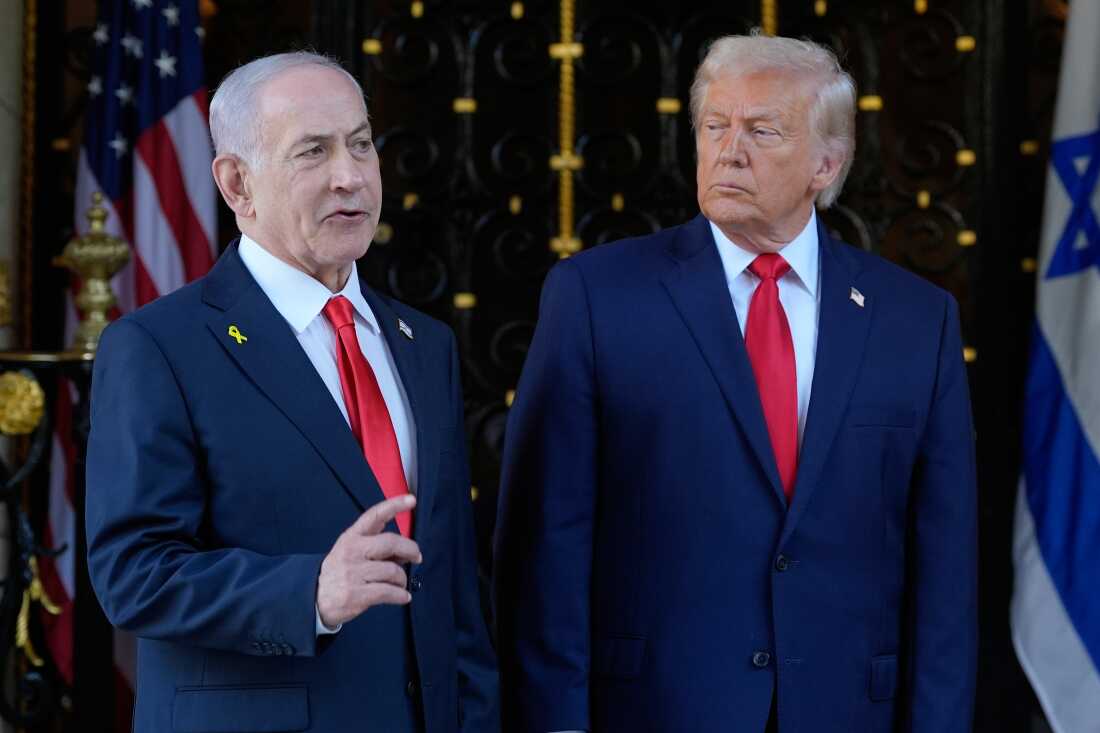
Israeli Prime Minister Benjamin Netanyahu has rejected United States President Donald Trump’s 15-point Gaza peace plan, insisting that Israeli forces will not withdraw from the territory until Hamas is “genuinely” disarmed.
Netanyahu made the position known on Sunday during an Israeli cabinet meeting, dealing another setback to Trump’s efforts to secure a lasting ceasefire and political settlement in Gaza.
“Israel rejects the 15-point document,” Netanyahu said, adding that the Israeli military “will not carry out any withdrawal until Hamas is genuinely disarmed and will continue to thwart threats against our forces and our citizens.”
The Israeli leader’s declaration puts him at odds with the framework announced by Trump, which envisages the disarmament of Hamas and other armed groups, an Israeli military withdrawal and the reconstruction of the war-ravaged Gaza Strip.
Trump’s Board of Peace said last month that an agreement had been reached for the “complete disarmament” of Hamas and other armed groups operating in Gaza.
However, Hamas has maintained that surrendering its heavy weapons must be tied to an Israeli withdrawal and an end to what it described as “all forms of aggression” against Palestinians in the territory.
Israel has continued military strikes in Gaza despite agreeing to an initial ceasefire in October last year, with the dispute over disarmament and Israeli troop withdrawals emerging as one of the biggest obstacles to the implementation of the proposed peace framework.
Netanyahu said Israel would not accept what he described as a “fictitious disarmament” of Hamas, stressing that the group must be genuinely stripped of its military capability before Israeli forces leave.
He disclosed that discussions were ongoing between his government and American officials over the way forward, but indicated that significant differences remained.
“They have ideas; some of them are acceptable to us and some are not, and we know how to stand our ground on these matters,” Netanyahu said.
The Israeli prime minister’s rejection is likely to further complicate Trump’s attempt to implement the Gaza roadmap, which was unveiled in September last year as a comprehensive framework for ending the conflict and establishing a pathway towards reconstruction and long-term security.
Under the proposal, a Board of Peace would oversee implementation of the agreement, while Hamas and other armed groups would be disarmed, Israeli forces would withdraw and Gaza would undergo extensive reconstruction.
The latest development also comes at a politically sensitive period for Netanyahu, with Israeli elections approaching and pressure mounting from members of his far-right governing coalition to abandon or renegotiate the Gaza plan.
National Security Minister Itamar Ben Gvir has been among the most vocal critics, dismissing the draft agreement as “not acceptable” and urging Netanyahu to take a harder position.
Netanyahu’s insistence that Hamas must first be disarmed before any Israeli military withdrawal therefore reflects both the security demands of his government and the political pressure within his coalition.
The disagreement could place further strain on relations between Netanyahu and Trump, who has presented the Gaza initiative as a major diplomatic achievement and a potential pathway to lasting peace in the Middle East.
Spain battles political fallout as 60,000 migrants overwhelm Ceuta border
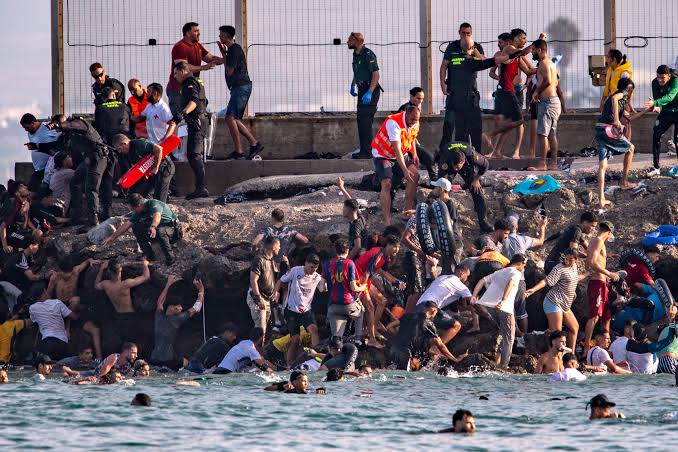
Spain is facing mounting political pressure after an estimated 60,000 migrants crossed from Morocco into the Spanish enclave of Ceuta within 24 hours, triggering one of the country’s worst border crises in recent years.
The unprecedented influx overwhelmed local infrastructure, forced businesses to shut down and disrupted daily life in the North African territory.
Spanish Prime Minister Pedro Sánchez condemned the mass crossing, describing it as “a violation of Spain’s territorial integrity,” as security forces reinforced the border.
Residents expressed frustration over the scale of the influx, saying the territory lacked the resources to cope with such a large number of arrivals.
Although thousands of migrants have reportedly returned voluntarily to Morocco, officials said shortages of food and essential supplies continued to affect the enclave.
The crisis has also reignited political debate across Europe over border security and migration policy, with some politicians calling for tougher controls along the European Union’s external frontiers.
The humanitarian toll also continued to rise, with officials confirming that at least 57 people died during the border surge.
Many of those who crossed into Ceuta said they were fleeing unemployment and economic hardship in Morocco in search of better opportunities in Europe.


RWE abandons US offshore wind projects in $1.2bn Trump deal

Saudi Arabia, Turkey, Pakistan sign defence pact amid Middle East tensions

Africa CDC, WHO demand urgent scale-up of DRC Ebola response

Pastor Jerry Eze Defends Miracles At UK Conference Amidst Criticism And Controversy

Diaspora Watch 20th Edition (October 14-20, 2024): Your Trusted Source for Global News and Insights

Tanzanian Man Reportedly Dies And Returns To Life Six Times


-
 Milestone1 week ago
Nigerian bags HVAC Engineering degree in US, lands full-time job
-
 News1 week ago
CARICOM chair renews reparations demand
-
 Analysis1 week ago
Lessons from the Catholic Bishops’ Visit to Tinubu, by Boniface Ihiasota
-
 Analysis1 week ago
Obasanjo, Atiku and the Burden of Broken Trust, by Alabidun Shuaib AbdulRahman
-
 News1 week ago
Hamas agrees to disarm as Gaza withdrawal deal gains momentum
-

 Opinion1 week ago
EDITORIAL: Tackling Poverty in Africa