
News
Kaigama Calls On Nigerian Leaders To Confess, Apologize, And Return Looted Funds

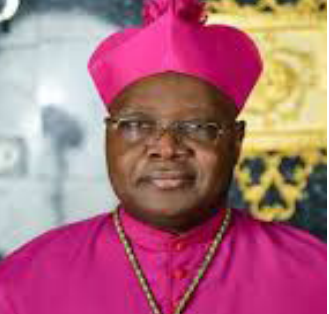
The Archbishop of the Catholic Archdiocese of Abuja, Ignatius Kaigama, has made a passionate appeal to Nigerian leaders to confess their sins, apologize for their wrongdoings, and return stolen funds. Speaking during a sermon at St. Charles Lwanga Catholic Parish in Apo, Abuja, at St. Charles Lwanga Catholic Parish in Apo, Abuja, Kaigama emphasized the need for leaders to take responsibility for their actions and work towards healing and reconciliation in the country.
The Archbishop’s call comes at a time when Nigeria is grappling with numerous challenges, including corruption, insecurity, and economic hardship. He urged leaders to reflect on their actions and seek forgiveness from God and the people they have wronged.
Kaigama’s message resonated with many Nigerians who feel that the country’s leaders have failed to address the nation’s problems. “We need to confess our sins and ask for forgiveness,” Kaigama said. “We must apologize for our wrongdoings and make amends. This is the only way we can move forward as a nation.”
The Archbishop’s call for confession and apology is seen as a bold step towards accountability and transparency in governance. Many Nigerians hope that leaders will heed Kaigama’s message and work towards a more just and equitable society.
As the country continues to face numerous challenges, Kaigama’s message serves as a reminder that true change begins with individual responsibility and a willingness to make things right.


US Threatens New Tariffs on UK, EU, China, 57 Others
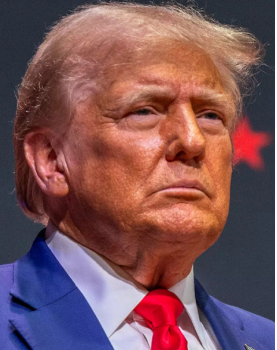
The United States has announced plans to impose fresh tariffs of between 10 and 12.5 per cent on imports from dozens of countries over concerns that they have failed to do enough to curb the trade in goods produced through forced labour.
The move marks the second major tariff initiative by the administration of President Donald Trump since the US Supreme Court struck down a significant portion of his earlier import duties in February.
According to the US Trade Department, the proposed tariffs would affect 60 trading partners that collectively account for almost all goods imported into the United States.
The department said the measures were aimed at countries that have either failed to prohibit the importation of goods made with forced labour or have not effectively enforced existing restrictions.
Announcing the proposal, US Trade Representative Jamieson Greer said the continued trade in goods linked to forced labour created unfair competition for American workers.
“It creates a dynamic where American workers are forced to compete globally on an unlevel playing field,” Greer stated.
The proposed tariffs have yet to take effect, as the Trump administration is expected to complete the necessary legal and regulatory processes before implementation.
The action follows an investigation launched in March by Greer into whether major US trading partners had taken adequate measures to prevent the importation of products made wholly or partly through forced labour.
Findings from the investigation indicated that 54 countries had “failed to impose a legal prohibition on the importation of goods produced wholly or in part with forced labour and to effectively enforce such a prohibition.”
The report further stated that six trading partners — the European Union, Canada, Ecuador, Indonesia, Mexico and Pakistan — had failed to effectively enforce existing bans on imports linked to forced labour.
Under the proposal, a 10 per cent tariff would be imposed on imports from countries and blocs including the European Union, United Kingdom, Canada, Mexico, Pakistan, Argentina, Bangladesh, Cambodia, Guatemala, Malaysia and Taiwan.
The remaining 45 countries, including China and India, would face higher duties of 12.5 per cent.
Reacting to the announcement, the British government maintained that it was taking steps to address forced labour concerns within supply chains, while China rejected allegations that goods produced through forced labour were entering global markets.
The European Union, however, described the proposed tariffs as unjustified.
An Indian trade analyst characterised the move as a pressure tactic aimed at strengthening Washington’s position in ongoing trade negotiations with New Delhi.
Israeli Airstrikes Hit Beirut, Kill Two Despite Fragile Ceasefire
Israel on Sunday launched airstrikes on southern Beirut, marking the first attack on the Lebanese capital since a ceasefire brokered by the United States last week, as tensions between Israel, Hezbollah and Iran continued to escalate.
Lebanon’s Ministry of Health said two people were killed and at least 20 others injured, including women and children, after Israeli warplanes struck two apartment buildings in Beirut’s southern suburb of Dahieh, a stronghold of the Iran-backed Hezbollah movement.
The strikes came amid renewed hostilities following a wave of missile attacks launched by Iran against Israel on Sunday night, which Tehran said was retaliation for increasing Israeli military operations in southern Lebanon and the outskirts of Beirut.
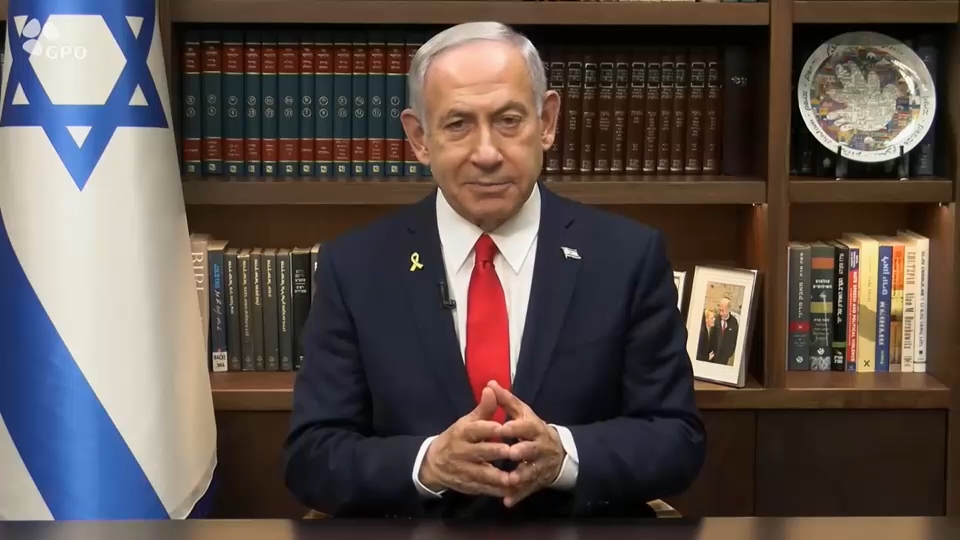
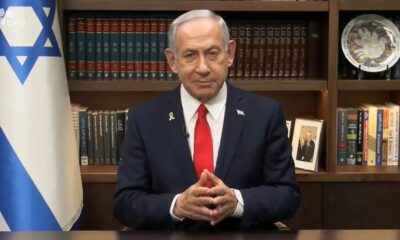
Israeli Prime Minister Benjamin Netanyahu defended the attacks, saying the targets were Hezbollah facilities operating within the Lebanese capital.
“We struck terrorist headquarters in the Dahieh district of Beirut in response to Hezbollah’s firing at Israeli territory,” Netanyahu said.
The latest bombardment shattered the lower floors of a residential building, leaving apartments exposed and scattering debris, concrete and twisted metal across nearby streets.
Videos circulating on social media showed residents and emergency responders rushing to the scene to rescue victims trapped beneath the rubble.
Health officials in Lebanon confirmed that four women and four children were among those injured in the attack.
An Arabic-language statement issued by an Israeli military spokesman on X indicated that the operation could continue, describing the targeted sites as Hezbollah military infrastructure.
“To be continued,” the spokesman wrote.
The Israeli military also announced that it intercepted two projectiles fired from Lebanon into Israeli territory earlier on Sunday.
Hezbollah later claimed responsibility for rocket attacks targeting Israeli artillery positions at Yiftah Barracks and troops stationed near al-Marj Pond.
The group said the attacks were carried out in response to what it described as repeated Israeli violations of the ceasefire and continued assaults on villages in southern Lebanon.
Reacting to the Beirut strikes, Iranian lawmaker and foreign policy committee spokesman Ebrahim Rezaie warned that Israel would face consequences.
He said Iran would deliver a “decisive and painful response” to the attack.
The renewed violence threatens a fragile truce reached on June 3 after intense diplomatic efforts led by Washington and supported by Qatar.
Prior to the ceasefire, Israel had threatened a major offensive in Dahieh, prompting thousands of residents to flee the area and triggering urgent diplomatic interventions aimed at preventing a wider regional conflict.
United States President Donald Trump had previously announced that there would be “no troops going to Beirut” following discussions with Netanyahu, while Washington reportedly urged Israel to exercise restraint.
Iran Launches Fresh Missile Barrage on Israel, Vows “Full Week of Continuous Strikes”
Iran has fired multiple waves of missiles towards northern Israel in a sharp escalation of regional tensions, with Tehran warning that the attacks mark “the beginning of a full week of continuous strikes.”
The Islamic Revolutionary Guard Corps (IRGC) said the operation would continue in waves, signalling a prolonged confrontation as fears grow of a wider Middle East conflict.
However, most of the incoming missiles were reportedly intercepted by Israel’s air defence systems, with authorities later allowing residents to leave shelters. No immediate casualties were reported.
The Israeli military said it is prepared for a forceful response, with its chief of staff warning that the country would “strike the enemy with determination as soon as the order is given.”
A military spokesman also described Iran’s action as a “grave mistake,” amid mounting pressure on Israel’s leadership to respond decisively.
The latest exchange follows earlier Israeli strikes on Hezbollah-linked targets in southern Beirut, a move that further inflamed regional tensions and raised expectations of retaliation from Iran and its allies.
The developments have intensified concerns over the widening scope of the conflict across multiple fronts in the Middle East.
According to reports from Fox News, United States President Donald Trump urged Iran to de-escalate, saying: “That’s enough. Get back to the table.”
He was also quoted as expressing displeasure over Israel’s strikes in Beirut, telling the network he was “not happy” about the escalation.


US Threatens New Tariffs on UK, EU, China, 57 Others

Owo Verdict and the Death Warrant Question, by Alabidun Shuaib AbdulRahman

Commercialisation of Banditry and Its Consequences for Nigeria, by Boniface Ihiasota

Pastor Jerry Eze Defends Miracles At UK Conference Amidst Criticism And Controversy

Diaspora Watch 20th Edition (October 14-20, 2024): Your Trusted Source for Global News and Insights

Tanzanian Man Reportedly Dies And Returns To Life Six Times


-

 Diaspora1 week ago
BCD Fashion House Presents The World Cup Fashion Show and Gala
-

 News4 days ago
Peter Obi, US County Executive, Family Pay Tributes as Dr. Jude Onyegbado Is Laid to Rest
-
 Analysis4 days ago
Commercialisation of Banditry and Its Consequences for Nigeria, by Boniface Ihiasota
-
 News4 days ago
Iran Launches Fresh Missile Barrage on Israel, Vows “Full Week of Continuous Strikes”
-
 News4 days ago
Israeli Airstrikes Hit Beirut, Kill Two Despite Fragile Ceasefire
-
 News4 days ago
Ramaphosa Unveils Tough New Migration Crackdown Amid Rising Xenophobic Attacks