
Business
U.S. Sanctions Hit Firms Across Asia, Middle East Over Iran Oil Links


U.S. Sanctions Hit Firms Across Asia, Middle East Over Iran Oil Links
In a fresh move to intensify pressure on the Iranian regime, the United States Government has imposed sanctions on several foreign entities allegedly involved in the trade and transportation of Iranian petroleum and petrochemical products, a decision seen as part of Washington’s continued clampdown on Tehran’s funding of destabilising activities across the Middle East.
The sanctions, announced by the U.S. Department of State on Tuesday, target companies operating across multiple jurisdictions, including the United Arab Emirates, China, Türkiye, India, and Indonesia.
The affected entities, according to Washington, engaged in significant transactions involving the purchase, sale, transport, or marketing of Iranian-origin oil and petrochemicals in violation of international sanctions.
The U.S. authorities accused these companies of deploying deceptive practices such as dark shipping and falsified documentation to facilitate the movement of Iranian petroleum products to third-party buyers.
Vessels associated with these transactions reportedly conducted ship-to-ship transfers and engaged in activities that obscured their locations in a bid to evade detection.
The sanctions were implemented pursuant to Executive Order 13846, which provides the legal framework for the U.S. Government to reimpose restrictions on actors supporting Iran’s energy sector.
Washington maintains that revenue derived from these transactions continues to bankroll Iran’s nuclear ambitions, terrorism financing, and internal repression.
The U.S. also sanctioned a China-based crude oil terminal for what it described as a demonstrated pattern of receiving Iranian-origin crude from designated vessels.
It noted that the activities of the sanctioned firms undermine freedom of navigation and contribute to global instability.
The scope of the sanctions extended beyond crude oil to the petrochemical sector, which Washington described as a growing source of illicit revenue for the Iranian government.
Several firms based in India, Türkiye, and the UAE were identified as having imported millions of dollars’ worth of petrochemicals originating from Iran over a period stretching from early 2024 to mid-2025.
These companies, acting either as intermediaries or end buyers, were said to have played key roles in concealing the Iranian origin of the products before they reached their final destinations.
Following the designations, all properties and interests in property of the affected entities within the United States or in possession of U.S. persons have been frozen.
American individuals and businesses are now prohibited from engaging in any transactions with the sanctioned parties unless authorised by the U.S. Treasury’s Office of Foreign Assets Control (OFAC).
The prohibition also covers the provision or receipt of funds, goods, or services to or from any blocked individual or company.
The U.S. Government emphasised that while the sanctions are robust, their ultimate aim is not punitive but corrective.
It stated that individuals or entities affected by the designations could petition for removal from the sanctions list, provided they demonstrate a change in behaviour in line with U.S. laws and foreign policy objectives.
This latest move signals Washington’s resolve to disrupt Iran’s energy-related revenue networks and enforce international norms concerning the non-proliferation of nuclear weapons and support for global security.

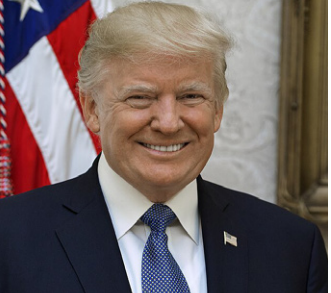
Trump Seeks $152m to Reopen Alcatraz Prison, Faces Opposition
United States President, Donald Trump, has proposed a $152m (£115m) allocation in the 2027 fiscal budget to reopen the infamous Alcatraz Island prison, sparking criticism from lawmakers and policy experts.
The facility, located near the Golden Gate Bridge in San Francisco, was once one of America’s most notorious maximum-security prisons but has since been converted into a major tourist attraction.
According to details of the proposal, the funds would cover the first phase of rebuilding the prison into a “state-of-the-art secure facility,” as part of a broader $1.7bn investment plan for the Federal Bureau of Prisons.
However, the plan has drawn sharp criticism from several California politicians, including former Speaker of the House, Nancy Pelosi, who described the proposal as “absurd” and a waste of public funds.
Pelosi said, “Rebuilding Alcatraz into a modern prison is a stupid notion that would be nothing more than a waste of taxpayer dollars and an insult to the intelligence of the American people.”
The prison, which was shut down in 1963 due to high operational costs, is currently managed by the National Park Service and generates about $60m annually from tourism.
Critics have also highlighted logistical challenges, noting that the island lacks basic infrastructure such as running water and sewage systems, with all supplies needing to be transported by boat.
Historical data from the Bureau of Prisons indicates that Alcatraz was nearly three times more expensive to operate than other federal prisons before its closure.
Concerns have also been raised over the potential loss of a historic landmark if the site is reconverted into a correctional facility, a position echoed by several San Francisco officials.
Despite the backlash, Trump had earlier announced via his Truth Social platform that he had directed relevant agencies, including the Department of Justice, FBI, and Homeland Security, to commence plans to rebuild and expand the prison to house “America’s most ruthless and violent offenders.”
Originally established as a naval defence fort, Alcatraz later served as a military prison before becoming a federal penitentiary in the 1930s.
It once housed notorious criminals such as Al Capone, Mickey Cohen, and George Kelly.
The proposal is subject to approval by the US Congress.
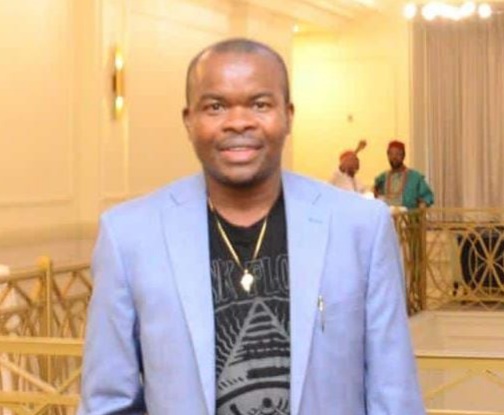
Nigeria’s Stakes in a Fractured Middle East, by Boniface Ihiasota
As confrontation among the United States, Israel and Iran deepen, the tremors are being felt far beyond the Middle East. What may appear, at first glance, as a distant geopolitical rivalry carries significant consequences for economies like Nigeria’s, for Nigerians working across the Gulf, and for a government already grappling with fiscal, security and inflationary pressures at home.
The rivalry between Israel and Iran has simmered for decades, manifesting through proxy conflicts in Lebanon, Syria and Gaza. The United States, Israel’s closest ally, has repeatedly confronted Iran over its nuclear programme, regional influence and support for armed groups. Periodic flare-ups — including airstrikes, missile exchanges and targeted assassinations — have raised fears of a broader regional war. Each escalation has renewed concerns about the stability of the Gulf, which remains the artery of the global oil market.
The Strait of Hormuz, a narrow shipping lane between Oman and Iran, is one of the most strategic chokepoints in the world. According to the U.S. Energy Information Administration, roughly 20 per cent of global petroleum liquids consumption — about 20 million barrels per day — transits through that corridor. Any threat to traffic through the Strait immediately sends oil prices upward. In previous episodes of heightened tension, Brent crude prices have jumped sharply within days of military confrontations.
For Nigeria, higher oil prices present a paradox. Crude oil still accounts for the overwhelming bulk of Nigeria’s export earnings — typically between 80 and 90 per cent — and about half of government revenues. When global prices rise above budget benchmarks, the Federation Account stands to gain additional inflows. In times of fiscal strain, such windfalls can temporarily ease pressure on foreign reserves and public finances.
However, history teaches caution. Oil price spikes driven by conflict are often volatile and short-lived. Markets respond quickly to diplomatic signals, ceasefire talks or de-escalation efforts. Nigeria’s production constraints further limit how much benefit can be captured. The country has struggled in recent years to consistently meet its OPEC quota due to oil theft, pipeline vandalism and infrastructure challenges. Without sustained production above 1.5 million barrels per day, revenue gains from price increases may not fully translate into fiscal stability.
Beyond government revenue, there is the inflationary dimension. Rising global oil prices increase the cost of refined petroleum imports, shipping and logistics. Although Nigeria is expanding domestic refining capacity, it still imports a portion of its refined products. Higher energy costs globally can translate into higher prices for food, manufactured goods and transportation. In an economy already facing elevated inflation, any additional imported cost pressure could worsen living standards.
There is also the human dimension. Millions of Nigerians reside and work across the Gulf Cooperation Council countries, particularly in the United Arab Emirates, Saudi Arabia and Qatar. Remittances from Nigerians abroad are a critical pillar of household income and foreign exchange. The World Bank has estimated Nigeria’s annual remittance inflows in recent years at around $20 billion, making it one of the largest recipients in Sub-Saharan Africa. Any prolonged regional instability that disrupts employment, air travel or financial flows in the Gulf would directly affect Nigerian families.
During previous Middle Eastern crises, airspace closures and airline suspensions disrupted travel routes that many Nigerians rely upon for business, education and pilgrimage. Escalation between major regional powers raises the risk of similar disruptions. The Nigerian government must therefore maintain accurate records of its citizens in vulnerable areas and strengthen consular responsiveness.
Security considerations also demand attention. Nigeria is a religiously diverse society with historical sensitivities that can be inflamed by international events. Conflicts in the Middle East sometimes trigger protests or polarised rhetoric at home. Authorities must be vigilant to ensure that global tensions are not exploited by local actors to deepen sectarian divides or spread misinformation. In an age of social media amplification, narratives from distant battlefields can travel rapidly and distort domestic discourse.
Diplomatically, Nigeria occupies a delicate position. As Africa’s largest economy and a longstanding contributor to United Nations peacekeeping missions, Nigeria traditionally supports peaceful resolution of disputes and adherence to international law. Escalation between the United States, Israel and Iran will test the country’s diplomatic balancing act, particularly given its economic ties to Western partners and its solidarity with developing nations in multilateral forums.
Preparation, therefore, is essential. Fiscal prudence must accompany any temporary oil windfall. Excess revenues, if realised, should strengthen reserves and reduce debt vulnerabilities rather than fund unsustainable spending. Production security in the Niger Delta must remain a priority to ensure that Nigeria can benefit legitimately from favourable market conditions. The Central Bank and fiscal authorities must also anticipate currency volatility linked to global risk sentiment.
At the same time, diaspora engagement should be proactive. Clear communication channels, emergency response planning and coordination with host governments can mitigate risks to Nigerians abroad. Intelligence and community outreach at home will help preserve social cohesion.
The confrontation among the United States, Israel and Iran may unfold thousands of kilometres away, but its economic currents, security implications and political symbolism flow directly toward Nigeria. In an interconnected global system, distance offers no insulation. What remains within Nigeria’s control is preparedness — the capacity to convert short-term opportunity into long-term stability, and to shield its citizens from the unintended consequences of distant wars.
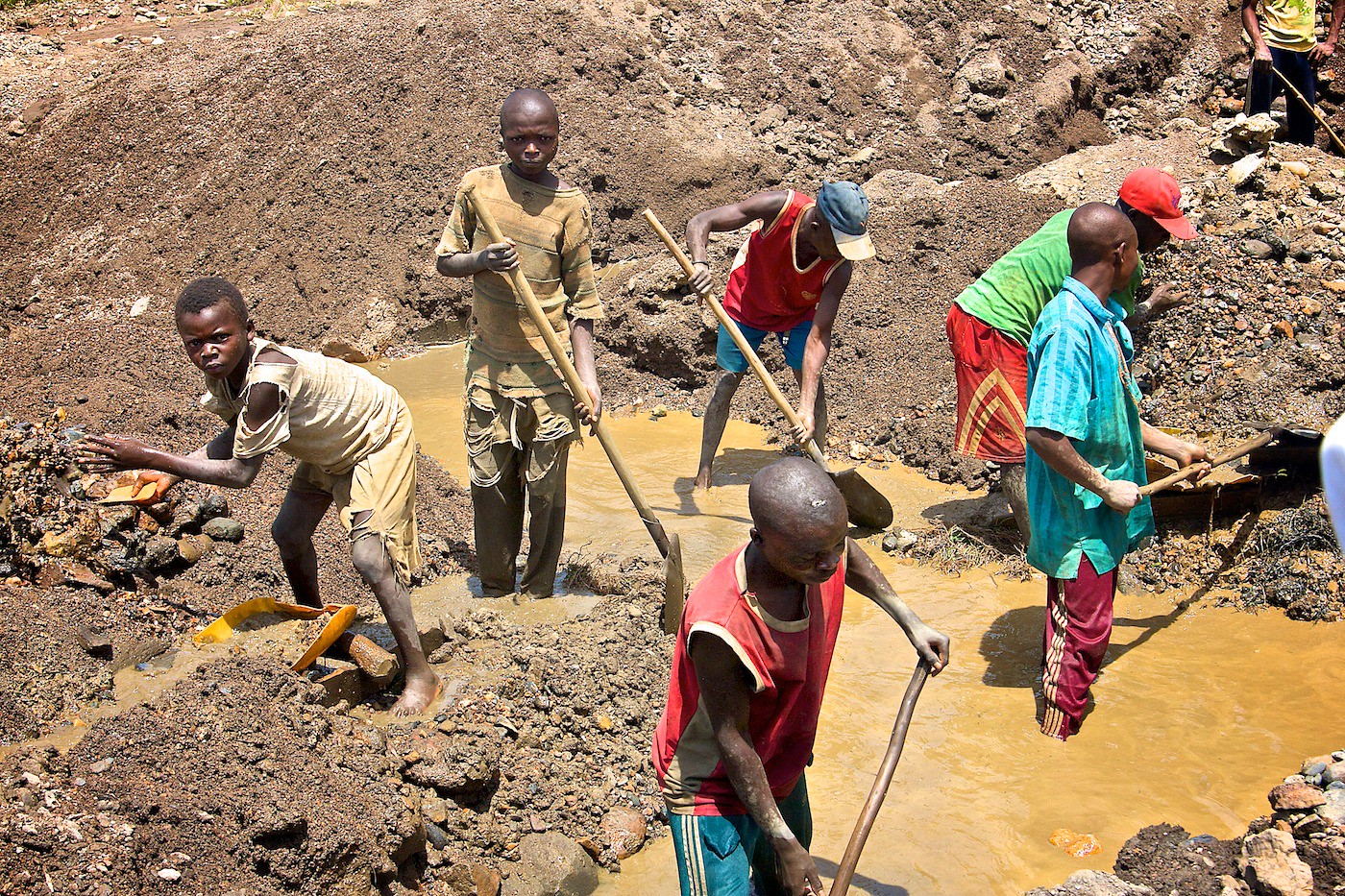
Over 200 Killed in DR Congo Coltan Mine Landslide
More than 200 people, including 70 children, have died following a landslide at a coltan mining site in Rubaya, eastern Democratic Republic of Congo, the government said on Wednesday.
The tragedy struck on Tuesday after heavy rains in the rebel-controlled area, with authorities blaming the M23 rebels for allowing unsafe, illegal mining.
Rescue operations were hampered by dangerous conditions, officials added.
Rubaya, the country’s largest source of coltan, holds about 15% of the world’s supply of the mineral used in electronics. Many injured miners have been evacuated to hospitals in Goma.
The toll could not be independently verified due to restricted access, disrupted communications, and ongoing insecurity in the region.



Pastor Jerry Eze Defends Miracles At UK Conference Amidst Criticism And Controversy

Diaspora Watch 20th Edition (October 14-20, 2024): Your Trusted Source for Global News and Insights

Tanzanian Man Reportedly Dies And Returns To Life Six Times


-

 Trending3 days ago
Diaspora Watch – Vol. 87
-

 News3 days ago
Artemis II Crew Captures Stunning Images of Earth Midway to Moon
-
 News3 days ago
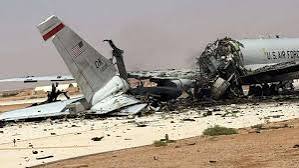
US, Iran Search for Missing Airman After Warplane Downed
-
 Analysis3 days ago
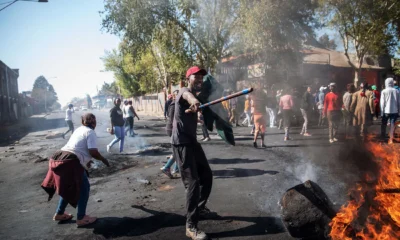
Understanding South Africa’s Xenophobic Violence, by Alabidun Shuaib AbdulRahman
-

 News3 days ago
Melania Trump Rallies 45 Nations on AI-powered Education
-

 Diaspora5 days ago
Diaspora Diva – Duckie Thot