
Business
US Home Prices Soar To New Heights: Redfin Data Reveals Record-Breaking Numbers


The US housing market continues to defy expectations, with home prices reaching unprecedented levels, according to the latest data from Redfin. The real estate brokerage firm’s findings indicate that the median home price in the United States has surged to an all-time high, signaling a remarkable turnaround in the market since the pandemic-induced slump.
As of last month, the median home price in the US stood at a staggering $405,000, surpassing the previous peak recorded in June 2022. This remarkable upswing represents a 5.5% increase from the same period last year and a 2.5% rise from the previous month.
The Redfin report highlights the persisting supply and demand imbalance as a primary driver of the price surge. With more buyers entering the market and a shortage of available homes, sellers are reaping the benefits of a highly competitive landscape. The data reveals that the average US home sold for approximately 1.5% above its list price, a clear indication of the intense bidding wars prevalent in the market.
The West Coast, particularly California and Washington, continues to lead the charge in terms of price growth. In San Francisco, the median home price skyrocketed to a whopping $1.4 million, while in Seattle, it reached $820,000. Other notable mentions include New York, where the median home price hit $550,000, and Miami, which saw a record-breaking $430,000.
While the luxury segment is driving the overall price growth, the affordable and mid-range segments are also experiencing significant appreciation. The Redfin data shows that homes priced between $400,000 and $700,000
witnessed the most substantial price increases, with a 7.5% year-over-year jump.
Experts attribute the sustained price growth to various factors, including low mortgage rates, a robust economy, and the ongoing migration to suburban areas. As remote work becomes increasingly prevalent, buyers are seeking larger homes with more amenities, further fueling the demand for upscale properties.
However, concerns about affordability and sustainability are growing. With home prices outpacing wage growth, many potential buyers are finding it challenging to enter the market. The Redfin report notes that the average homebuyer needs to spend approximately 28% of their income on mortgage payments, exceeding the traditional affordability threshold of 20%.
As the housing market continues to break records, industry experts are keeping a close eye on the potential risks and challenges ahead. While the current momentum is undeniable, concerns about a potential price correction and the long-term implications of the affordability crisis are simmering just below the surface.
For now, however, the US housing market remains a seller’s paradise, with home prices showing no signs of slowing down. As the market continues to evolve, one thing is certain – the US housing landscape is undergoing a significant transformation, and the implications will be far-reaching


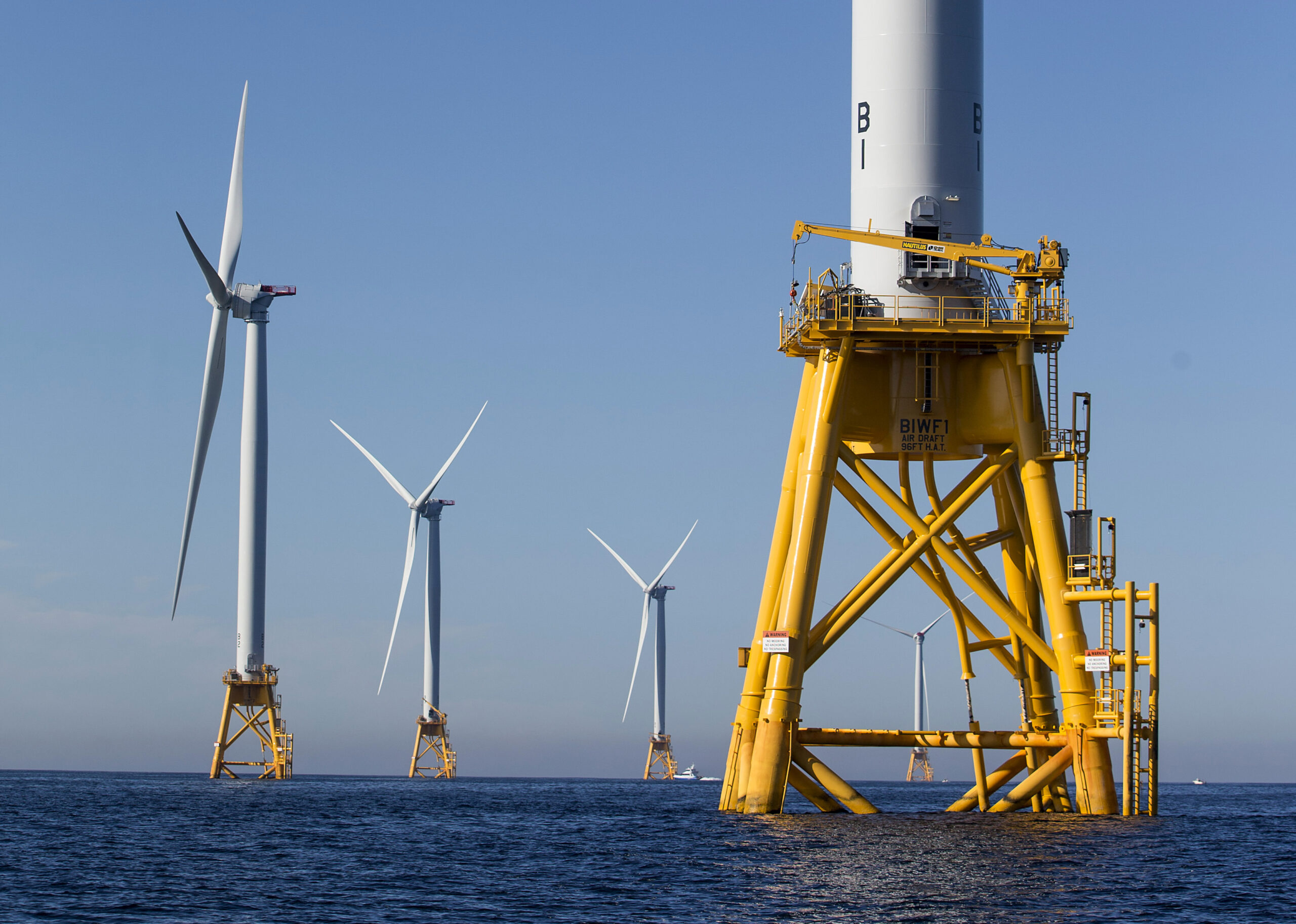
RWE abandons US offshore wind projects in $1.2bn Trump deal
German energy giant RWE has agreed to abandon its offshore wind projects in the United States under a $1.2bn deal with the administration of President Donald Trump, in another major setback for the country’s offshore wind industry.
Under the agreement, RWE will relinquish its offshore wind leases off California and Louisiana, as well as in the New York Bight, an area between New York and New Jersey that has been regarded as one of the most promising locations for offshore wind development in the United States.
The company said there was no foreseeable path to securing permits for the projects under the current regulatory environment.
RWE said it would redirect its investment towards conventional energy projects, including about $900m for a liquefied natural gas export terminal in Louisiana.
The agreement is the latest in a series of deals under the Trump administration aimed at ending or restructuring offshore wind projects in the United States.
The development reflects a dramatic shift in American energy policy since Trump returned to the White House, with the administration placing greater emphasis on oil and gas production while challenging the expansion of renewable energy.
Trump has repeatedly criticised wind energy and has made increased domestic fossil-fuel production a major part of his energy policy.
Interior Secretary Doug Burgum welcomed the RWE agreement, saying the administration was pursuing an energy system based on what he described as economic practicality rather than dependence on subsidies.
RWE, however, stressed that the agreement did not represent a withdrawal from the American energy market.
The company plans to invest about €17bn over the next six years to expand its power-generation capacity in the United States.
The latest agreement therefore represents a strategic adjustment rather than a complete retreat from the American market, with RWE shifting its investment towards areas it believes can operate under the current policy environment.
In March 2026, the Department of the Interior reached an agreement with French energy company TotalEnergies that resulted in the termination of its offshore wind projects, with the company redirecting investment towards an LNG facility in Texas and conventional oil activities in the Gulf of Mexico.
The administration also reached a $129m agreement with Duke Energy last month that resulted in the termination of the company’s offshore wind lease in the Carolina Long Bay area.
The RWE agreement is therefore part of a broader policy pattern rather than an isolated corporate decision.
The administration has argued that offshore wind projects depend excessively on government support and can impose higher costs on consumers.

Rubio vows US will keep protecting Gulf shipping, says diplomacy with Iran still possible
By Boniface Ihiasota, Washington DC
United States Secretary of State, Marco Rubio on Wednesday said Washington would continue military operations to safeguard international shipping routes from Iranian attacks while insisting that the U.S. remained open to a diplomatic resolution of the crisis.
Rubio, who spoke to journalists in Manila, accused Iran of undermining previous commitments by continuing attacks on commercial vessels transiting a key international waterway.
He said Tehran had failed to uphold an earlier understanding that called for unrestricted maritime navigation, arguing that the latest attacks demonstrated Iran was “not serious” about diplomacy.
“We remain open to diplomacy. We remain open to working it out in a negotiated way. But right now, they don’t seem to be serious about that,” Rubio said.
According to him, the U.S. military would continue targeting sites allegedly used to launch attacks against commercial shipping while protecting vessels passing through the strategic maritime corridor.
“Ships are trying to go through the straits, and they’re getting blown up. The United States is defending that shipping and degrading Iran’s ability to target global shipping,” he said.
Rubio also rejected suggestions that Washington’s objective was to force Iran into submission, arguing instead that the U.S. was determined to prevent Tehran from acquiring nuclear weapons.
He claimed Iran had spent decades investing heavily in missiles, drones and proxy groups instead of addressing domestic economic challenges, including soaring inflation and rising food prices.
The U.S. Secretary of State urged more countries to join efforts to secure international shipping lanes, saying many nations depended more heavily on the affected maritime route than the United States.
Although Washington had not made fresh requests during meetings with Asian allies in Manila, Rubio disclosed that previous discussions had explored possible contributions, including naval mine-clearing capabilities.
He maintained that the U.S. would prefer a negotiated settlement but insisted that freedom of navigation could not be compromised.
Rubio also confirmed he would meet Russian Foreign Minister Sergey Lavrov to discuss the war in Ukraine, saying Washington remained willing to play a constructive role in efforts to end the conflict while pursuing cooperation with Moscow on other strategic issues.
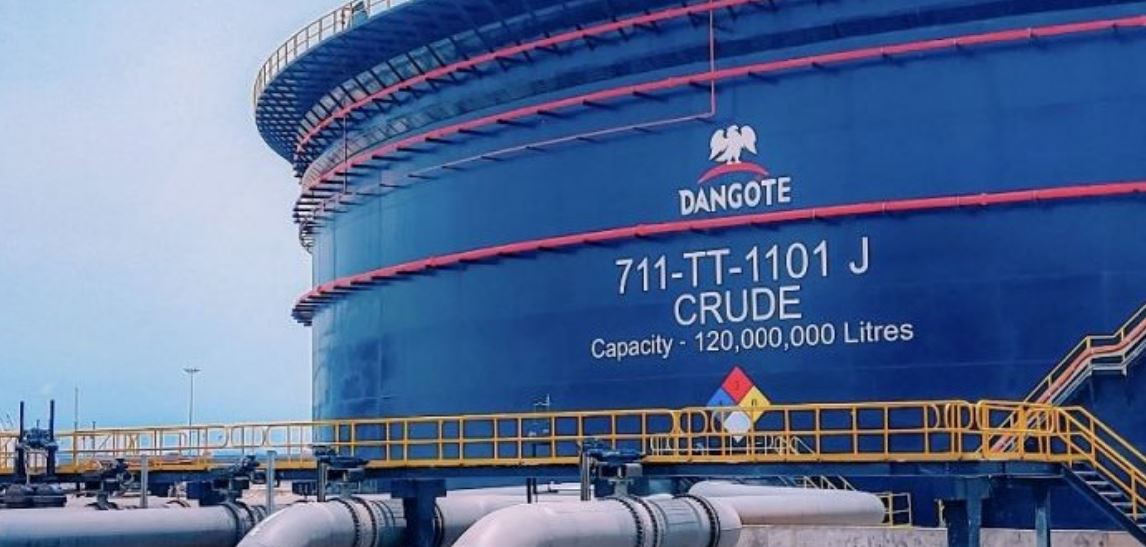
Marketers Import Dangote-Refined Fuel Through Togo Hub
Nigerian fuel marketers are increasingly importing refined petroleum products produced by the Dangote Petroleum Refinery through an offshore trading hub in Lomé, Togo, in a development that underscores the refinery’s growing influence on fuel supply across West Africa.
The disclosure was made by Matthew Tracey-Cook of S&P Global during a webinar organised by the Major Energies Marketers Association of Nigeria.
The webinar, themed “West Africa Pricing and Flows in the Context of the War,” examined evolving fuel supply chains and pricing trends within the region.
Speaking during the session, Tracey-Cook said refined products from the Dangote Refinery are being exported on a coastal basis to Lomé before being re-imported into Nigeria by fuel marketers.
According to him, the trend reflects the increasingly interconnected relationship between the Lagos-based refinery and the offshore ship-to-ship trading hub in Togo.
He noted that despite Dangote’s growing capacity to supply the domestic market directly, some marketers continue to source products through Lomé, a development that may be linked to pricing differences between local and international markets.
Tracey-Cook, however, stressed that the Togolese hub remains a strategic logistics centre for fuel distribution across West Africa.
According to him, the facility continues to handle significant fuel volumes and remains slightly larger than it was in 2024.
He added that volumes transacted through Lomé surged in certain periods, particularly in November and December 2025, surpassing volumes recorded on several other regional supply routes.
The S&P Global official explained that the hub plays a vital role in regional fuel distribution by receiving large medium-range tankers and transferring cargoes to smaller vessels capable of accessing ports with limited infrastructure.

1win withdrawal takes how long? Steps and methods explained

Lee backs Trump-Kim talks, seeks phased North Korea denuclearisation

Russia may launch limited NATO attack in months, Danish intelligence warns

Pastor Jerry Eze Defends Miracles At UK Conference Amidst Criticism And Controversy

Diaspora Watch 20th Edition (October 14-20, 2024): Your Trusted Source for Global News and Insights

Tanzanian Man Reportedly Dies And Returns To Life Six Times


-

 News5 days ago
PIF, CARICOM formalise partnership to advance SIDS priorities
-

 Diplomacy5 days ago
When Two Powerful Heads Meet …
-
News7 days ago
Thor Fortune casino móvil España – juego desde smartphone y tablet
-

 Analysis5 days ago
Ortom’s 23 Vehicles and the Dangerous Culture of Public Entitlement, by Boniface Ihiasota
-

 Analysis5 days ago
Democracy Not Africa’s Answer, by Alabidun Shuaib AbdulRahman
-
 Politics5 days ago
Lee backs Trump-Kim talks, seeks phased North Korea denuclearisation