
News
From Tragedy To Turmoil: The UK’s Struggle To Contain Violence And Hate

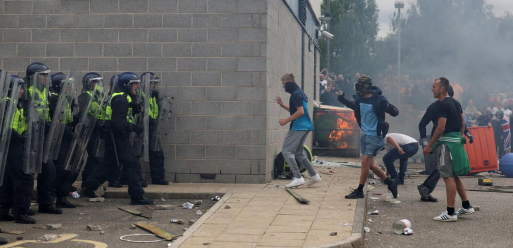
The fatal stabbing of three young girls at a dance class in Southport, England, has sparked the worst unrest in the UK in over a decade. Misinformation online, far-right ideologies, and anti-immigration sentiment have fueled the violence, which has spread across England and Northern Ireland.
On July 29, Bebe King, six, Elsie Dot Stancombe, seven, and Alice da Silva Aguiar, nine, were killed in a knife attack at a Taylor Swift-themed dance and yoga event. Eight more children and two adults were injured. Later that day, police said they had arrested a 17-yearold from a village nearby and that they were not treating the incident as terror-related.
Almost immediately after the attack, social media posts falsely speculated that the suspect was an asylum seeker who arrived in the UK on a boat in 2023, with an incorrect name being widely circulated. There were also unfounded rumors that he was Muslim. In fact, as the BBC and other media outlets reported, the suspect was born in Wales to Rwandan parents.
The violence spread rapidly, with riots breaking out in towns and cities across England and Northern Ireland. Far-right influencers amplified false claims about the attacker’s identity, reaching a large audience. Tommy Robinson, founder of the English Defence League, posted inflammatory messages to his nearly a million followers.
Riots have taken place in Plymouth, Sunderland, Belfast, and other locations, with crowds attacking mosques, accommodation housing asylum seekers, cars, and buildings. Police are investigating a racially motivated hate crime in south Belfast.
Communities have responded with peaceful anti-racism protests, clean-up operations, and shows of solidarity. Thousands gathered on Wednesday, August 7, to promote unity and peace.
The government has promised to tackle the disorder, working with social media companies to remove misinformation and disinformation. Over 600 arrests have been made, with more than 150 people charged, including children as young as 11. Prosecutors are considering terrorism offences for some suspects.
The UK is grappling with a nuanced picture of local coordination and online influence, with far-right rioters, frustrated locals, and counter-protesters involved. As the nation struggles to come to terms with the violence, one thing is clear: the deadly consequences of misinformation and far-right extremism will not be tolerated.
The unrest has prompted concern from outside the UK, with Malaysia, Nigeria, Australia, and India issuing travel advisories. Police Federation chair Tiffany Lynch estimated over 100 police officers had been injured, some receiving hospital treatment.
The government has promised to make over 500 new prison places available to ensure those taking part in the violence can be jailed. Business Secretary Jonathan Reynolds visited a riot-hit library in Liverpool, pledging support.
Faith leaders in Merseyside have called for calm and peacefulness, remembering that there is “far more that unites than divides us”. Fundraisers have been launched for those affected, with one surpassing its initial target in 15 minutes.


Spain battles political fallout as 60,000 migrants overwhelm Ceuta border
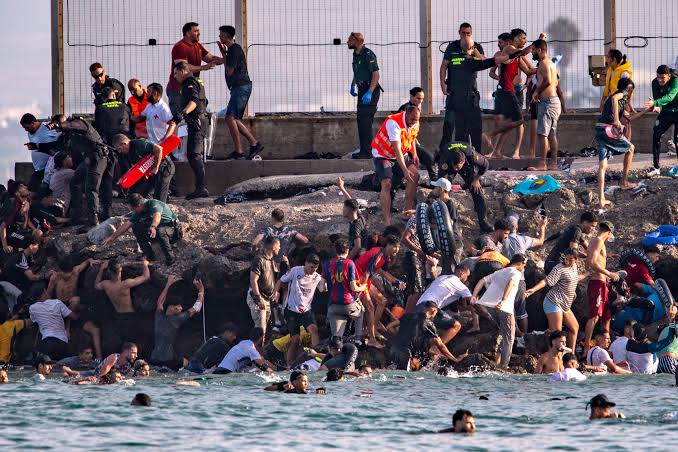
Spain is facing mounting political pressure after an estimated 60,000 migrants crossed from Morocco into the Spanish enclave of Ceuta within 24 hours, triggering one of the country’s worst border crises in recent years.
The unprecedented influx overwhelmed local infrastructure, forced businesses to shut down and disrupted daily life in the North African territory.
Spanish Prime Minister Pedro Sánchez condemned the mass crossing, describing it as “a violation of Spain’s territorial integrity,” as security forces reinforced the border.
Residents expressed frustration over the scale of the influx, saying the territory lacked the resources to cope with such a large number of arrivals.
Although thousands of migrants have reportedly returned voluntarily to Morocco, officials said shortages of food and essential supplies continued to affect the enclave.
The crisis has also reignited political debate across Europe over border security and migration policy, with some politicians calling for tougher controls along the European Union’s external frontiers.
The humanitarian toll also continued to rise, with officials confirming that at least 57 people died during the border surge.
Many of those who crossed into Ceuta said they were fleeing unemployment and economic hardship in Morocco in search of better opportunities in Europe.
Hamas agrees to disarm as Gaza withdrawal deal gains momentum
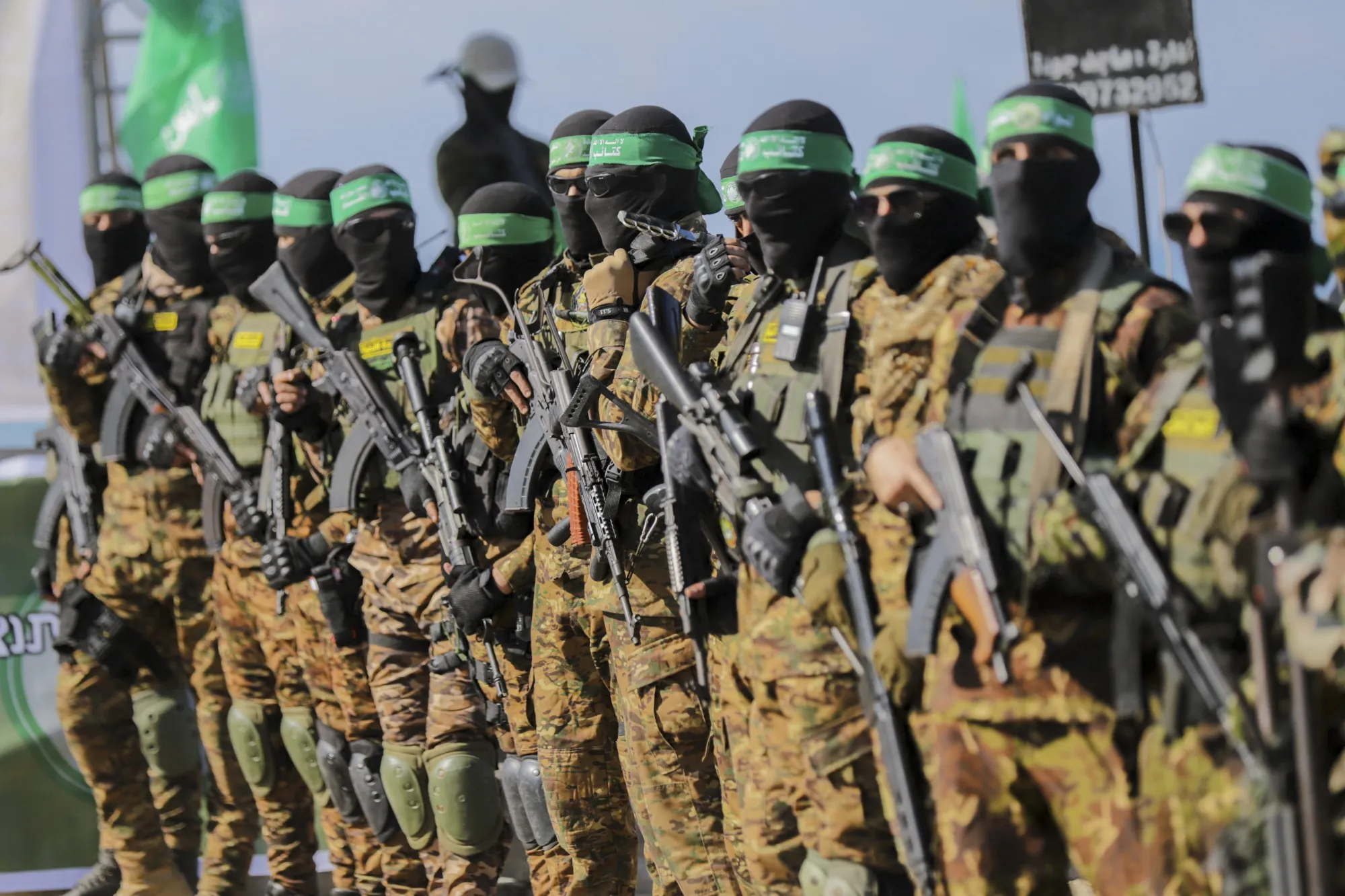
Hamas has agreed to surrender its weapons under a new internationally backed roadmap aimed at ending the war in Gaza, paving the way for a phased withdrawal of Israeli troops and reviving stalled ceasefire negotiations.
The proposed agreement, announced on Friday, marks a major political breakthrough after months of negotiations over Hamas’ future military role and Israel’s insistence on the group’s complete disarmament before any troop withdrawal.
United States President Donald Trump welcomed the development, describing it as a “major milestone” and saying the agreement provides for Hamas’ “complete disarmament.”
According to the roadmap, Hamas will hand over its weapons to the National Committee for Administration of Gaza, a new governing body expected to oversee civil administration and internal security in the territory.
The agreement also provides for a gradual Israeli military withdrawal, with both processes to be implemented simultaneously under international verification.
A member of Hamas’ negotiating team, Ghazi Hamad, said the movement accepted the arrangement “for the sake of our people in the Gaza Strip,” adding that the new governing committee—not Israel—would supervise the disarmament process.
The Board of Peace, which facilitated the negotiations, confirmed that Hamas had accepted a detailed implementation roadmap and said the governing committee would soon begin assuming authority in Gaza.
However, the deal has already exposed political divisions in Israel.
Far-right National Security Minister Itamar Ben Gvir rejected the proposal, describing it as “unacceptable” and warning that it could allow Hamas to regroup.
Although Israeli officials have yet to formally endorse the agreement, political sources maintained that Israel would only proceed with troop withdrawal if Hamas undergoes genuine and verifiable disarmament.
European Union foreign policy chief Kaja Kallas welcomed the agreement but cautioned that significant work remained before lasting peace could be achieved.
United Nations Secretary-General António Guterres also described the announcement as one of the few positive developments in the Middle East conflict in recent weeks.
Egypt is expected to host another round of talks involving the United States, Qatar and Turkey to finalise implementation of the ceasefire roadmap.
Despite the diplomatic breakthrough, violence has continued in Gaza, with local health officials reporting that fresh Israeli airstrikes killed at least four people, including two children, highlighting the fragile security situation.
CARICOM chair renews reparations demand
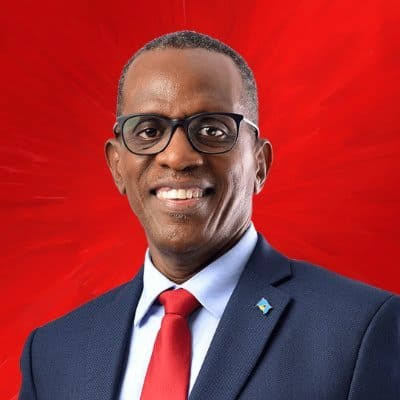
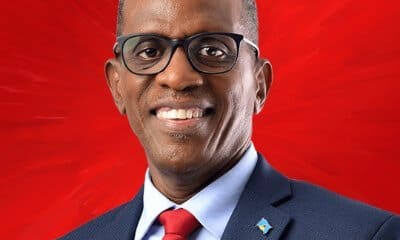
Chairman of the Caribbean Community, CARICOM and Prime Minister of Saint Lucia, Philip J. Pierre, has renewed the region’s call for reparatory justice, insisting that emancipation remains incomplete without economic freedom, opportunity and social justice.
In his Emancipation Day 2026 message, Pierre said freedom was won through the courage and sacrifice of enslaved Africans whose struggle laid the foundation for today’s Caribbean societies.
He noted, however, that the abolition of slavery did not end injustice, as formerly enslaved people entered freedom without land, wealth or compensation, while those who benefited from slavery prospered.
Pierre maintained that the Caribbean’s pursuit of reparations was not driven by revenge but by the search for truth and justice, describing it as part of the region’s unfinished journey towards genuine emancipation.
He urged Caribbean governments to create stronger economies by supporting entrepreneurship, agriculture, food security, clean energy and youth development, saying political independence must be matched with economic empowerment.
The CARICOM chairman also called on citizens across the region to honour their ancestors by building more united, prosperous and inclusive societies capable of securing lasting freedom for future generations.


EDITORIAL: Tackling Poverty in Africa

Spain battles political fallout as 60,000 migrants overwhelm Ceuta border

Hamas agrees to disarm as Gaza withdrawal deal gains momentum

Pastor Jerry Eze Defends Miracles At UK Conference Amidst Criticism And Controversy

Diaspora Watch 20th Edition (October 14-20, 2024): Your Trusted Source for Global News and Insights

Tanzanian Man Reportedly Dies And Returns To Life Six Times


-
 Milestone7 days ago
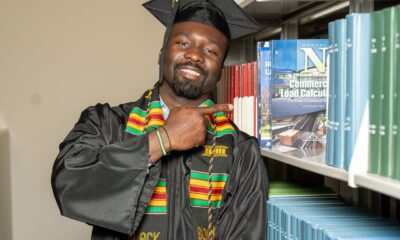
Nigerian bags HVAC Engineering degree in US, lands full-time job
-
 News7 days ago
CARICOM chair renews reparations demand
-
 Analysis7 days ago
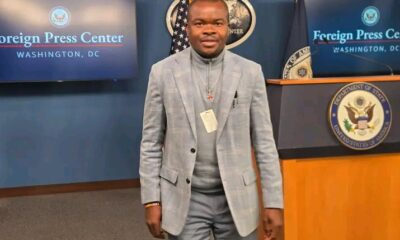
Lessons from the Catholic Bishops’ Visit to Tinubu, by Boniface Ihiasota
-
 Analysis7 days ago
Obasanjo, Atiku and the Burden of Broken Trust, by Alabidun Shuaib AbdulRahman
-
 News7 days ago
Hamas agrees to disarm as Gaza withdrawal deal gains momentum
-
 Opinion6 days ago
EDITORIAL: Tackling Poverty in Africa