
Environment
Drowning In Freedom: The Powerful Story Of Igbo Landing


In the sweltering heat of May 1803, a group of enslaved Igbo people made a bold decision that would etch their names in the annals of history. On the coast of St. Simons Island in Georgia, they chose death over a life of bondage, wading into the marshy waters of Dunbar Creek and drowning. This mass suicide, one of the largest in the history of chattel slavery, was a powerful act of resistance against the institution that sought to strip them of their autonomy and humanity.
The events at Igbo Landing, as it came to be known, have been passed down through generations in oral tradition, with elements of the supernatural infused into the narrative. But behind the folklore lies a tragic story of resilience and defiance in the face of unimaginable cruelty.
The Igbo people, numbering around 75, had survived the treacherous Middle Passage on board the Wanderer, a vessel that transported countless West Africans to the Americas. They were sold to plantation owners Thomas Spalding and John Couper for a mere $100 each, their lives reduced to mere commodities.
Somewhere near Dunbar Creek, the Igbo throng rose up against their captors, forcing three of them overboard. The exact details of that fateful day are lost to history, but the outcome is clear: an unknown number of Igbo people, possibly led by their chief, walked into the waters and drowned.
The mass suicide at Igbo Landing has influenced a range of cultural works, from Julie Dash’s seminal film Daughters of the Dust to Toni Morrison’s novel Song of Solomon. The Saint Simons African American Heritage Coalition works tirelessly to preserve the memory and oral histories of Igbo Landing.
Today, the IIgbo people, numbering around 20 million, have a rich cultural heritage. Traditionally subsistence farmers, they have a strong sense of ethnic identity and a history of autonomy. Their story is one of resilience, of a people who refused to be erased.
The site of Igbo Landing remains sacred or haunted, a testament to the enduring power of the human spirit. As we remember the events of that fateful day, we honor the memory of those who chose death over enslavement, and we acknowledge the ongoing struggle for freedom and autonomy that continues to this day

Environment
Appalachian Trail records 17 million visits as conservancy expands climate protection efforts


Appalachian Trail records 17 million visits as conservancy expands climate protection efforts
By Boniface Ihiasota, Washington DC
The Appalachian Trail Conservancy has said the iconic U.S. hiking route attracted about 17 million recreational visits in 2025, as it unveiled plans to strengthen conservation efforts amid growing concerns over climate change and biodiversity loss.
Chairman of the conservancy’s board, Jim LaTorre, disclosed this during a briefing organised by the U.S. Foreign Press Center on Wednesday, describing the 2,200-mile Appalachian Trail as one of America’s most significant public-private conservation successes.
According to him, the trail ranked as the ninth most visited destination among the 433 sites managed by the U.S. National Park Service last year.
LaTorre said the organisation was shifting beyond trail maintenance to protecting the wider Appalachian landscape, warning that climate change was rapidly altering wildlife migration patterns across North America.
He explained that scientific projections indicated mammals, reptiles and amphibians would increasingly move towards higher elevations as temperatures rise, making the Appalachian mountain range a critical ecological corridor.
“The Appalachian Trail is becoming a virtual superhighway for biodiversity survival,” he said, adding that preserving connected landscapes would be essential to protecting wildlife habitats in the coming decades.
The conservancy said the trail, which stretches from Georgia to Maine, is now protected by about 370,000 acres of conserved land following decades of federal and community-led preservation efforts.
LaTorre described the trail as a model of cooperative management involving the National Park Service, state agencies, local authorities and thousands of volunteers.
He said about 30 volunteer trail clubs contribute more than 150,000 hours of maintenance work annually, representing an estimated value of over $5m each year.
Providing insights into trail usage, LaTorre said between 3,000 and 4,000 people attempt to hike the entire trail annually, but only about one-third complete the journey, which typically takes between four and six months.
He added that international hikers account for between six and eight per cent of annual through-hikers, with visitors from Canada, the United Kingdom, Germany and the Netherlands making up the largest foreign contingents.
The conservancy also hinted its growing international partnerships, saying it had shared expertise on long-distance trail management with organisations in Japan, Scotland, Iceland, Ireland, New Zealand, South Africa and several other countries.
Responding to questions, LaTorre dismissed suggestions of a major expansion of the Appalachian Trail, saying there were no active plans to extend the route despite occasional discussions about linking it with other hiking trails.
He also urged visitors to embrace responsible recreation, stressing that the trail should remain a place of solitude and environmental appreciation rather than entertainment.
“We prefer that the trail not be viewed as a big party place. It’s a place of solitude, a place to experience nature and escape the pressures of everyday life,” he said.
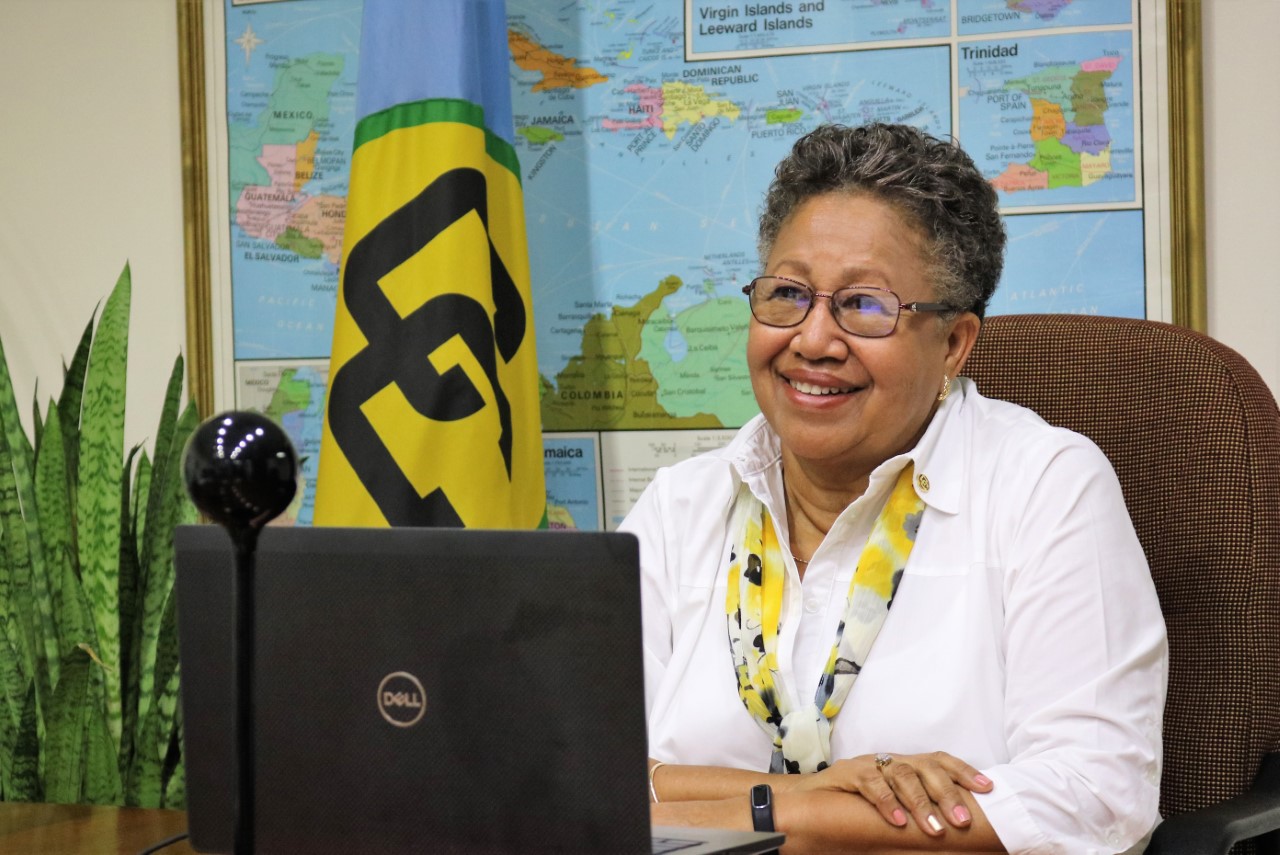
Hurricane Melissa: CARICOM Reaffirms Support for Jamaica, Haiti
CARICOM Secretary-General, Dr Carla Barnett, has restated the Community’s solidarity with Jamaica and Haiti following the devastation caused by Hurricane Melissa, saying the disaster reinforces the urgent need to strengthen regional resilience against climate change.
Dr Barnett made the remarks at the opening of the 61st Regular Meeting of the Council for Trade and Economic Development (COTED), where she also highlighted the importance of the CARICOM Single Market and Economy (CSME) in supporting sustainable growth amid recurring climate shocks.
She expressed sympathy to the Governments and people of Jamaica and Haiti over the loss of lives and widespread damage caused by the storm.
She commended the response of regional bodies, including the Caribbean Disaster Emergency Management Agency (CDEMA), the Caribbean Public Health Agency (CARPHA), private sector groups and other regional partners.
The Secretary-General also referenced the recent visit of four CARICOM Heads of Government to Jamaica as a strong demonstration of regional unity and a signal of continued support.
“The experience leaves us in no doubt about the urgency of addressing the existential threats posed by climate change and the need to redouble our efforts to build resilience and foster sustainable development across our Region,” she said.
“Strengthening our trade and economic performance is a critical part of this, and COTED must continue to play its important role in this regard.”
Chairing the meeting, Belize’s Minister of State for Foreign Trade, Hon. Marconi Leal, noted that the Region was dealing with complex global and domestic challenges that continue to test the resilience of individual Member States.
He said Hurricane Melissa further exposed the Caribbean’s vulnerability to climate threats, stressing the need for deeper cooperation and coordinated recovery efforts.
Minister Leal said COTED would deliberate on critical issues, including advancing the free movement of CARICOM nationals, implementing the Community’s Industrial Policy and Strategy 2035, and support measures under Article 164 of the Revised Treaty of Chaguaramas.
The 61st Regular Meeting of COTED reaffirmed CARICOM’s commitment to strengthening regional trade, deepening economic integration and advancing sustainable development across the Community.

Spain Introduces Disaster Preparedness Lessons for Children
In a bold move to strengthen climate resilience, Spain has announced compulsory disaster preparedness lessons for schoolchildren across the country.
The initiative, unveiled on Thursday by the Spanish government, is designed to equip children with knowledge and survival skills in the face of floods, wildfires, earthquakes and volcanic eruptions, which experts say are becoming more frequent due to the worsening climate emergency.
The development comes after a summer of devastating forest fires claimed four lives, and less than a year after catastrophic floods left more than 220 people dead in eastern Spain.
According to the Ministry of Education, the new programme will cover not only natural disasters but also industrial, nuclear and chemical accidents, as well as emergencies involving the transportation of hazardous materials.
Over 8 million pupils in 25,000 schools will benefit from the compulsory training, which will begin this academic year.
Lessons will be delivered through videos, infographics and other teaching tools, with children in infant and primary schools receiving a minimum of two hours, while older students will undergo at least four hours.
“Infant school children aged three, four and five will learn to recognise alarms and spot early signs of danger, as well as basic safety principles,” the ministry said in a statement.
“Older children will be taught how to seek higher ground during floods and to take cover under desks during earthquakes.”
The ministry added that students would also be educated on identifying disinformation during emergencies, a growing concern in the digital age.
Speaking at the launch in Cuenca, Prime Minister Pedro Sánchez stressed the importance of preparing young people to face disasters worsened by climate change.
“If we don’t want to bequeath our children a Spain that’s grey from fire and flames, or a Spain that’s brown from floods, then we need a Spain that’s greener,” Sánchez declared on September 1, calling for a “great state pact” to tackle the climate crisis.
The lessons form part of a 10-point government plan to safeguard Spain, which experts say lies on the frontline of Europe’s climate challenges.



RWE abandons US offshore wind projects in $1.2bn Trump deal

Saudi Arabia, Turkey, Pakistan sign defence pact amid Middle East tensions

Africa CDC, WHO demand urgent scale-up of DRC Ebola response

Pastor Jerry Eze Defends Miracles At UK Conference Amidst Criticism And Controversy

Diaspora Watch 20th Edition (October 14-20, 2024): Your Trusted Source for Global News and Insights

Tanzanian Man Reportedly Dies And Returns To Life Six Times


-

 Milestone1 week ago
Nigerian bags HVAC Engineering degree in US, lands full-time job
-

 News1 week ago
CARICOM chair renews reparations demand
-

 Analysis1 week ago
Lessons from the Catholic Bishops’ Visit to Tinubu, by Boniface Ihiasota
-

 Analysis1 week ago
Obasanjo, Atiku and the Burden of Broken Trust, by Alabidun Shuaib AbdulRahman
-

 News1 week ago
Hamas agrees to disarm as Gaza withdrawal deal gains momentum
-

 Opinion1 week ago
EDITORIAL: Tackling Poverty in Africa