
Health
Caribbean Public Health Agency Leads Regional Charge Against Pandemics With Pandemic Fund Project

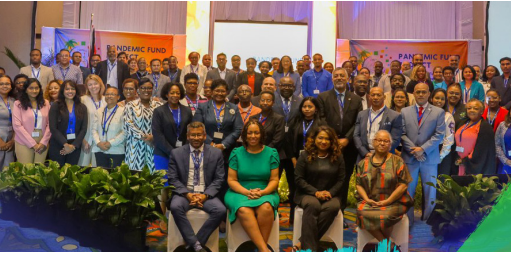
The Caribbean region, known for its vibrant culture and stunning natural beauty, has long been vulnerable to the rapid transboundary spread of infectious diseases. In recent years, the region has faced numerous pandemics and outbreaks, including COVID-19, Cholera, HIV, Dengue, Chikungunya, Zika, Norovirus, SARS, and H1N1, which have had profound human, economic, and social impacts.
However, in a groundbreaking effort to strengthen regional health security, the Caribbean Public Health Agency (CARPHA) has brought together 22 Member States, regional agencies, and international partners to tackle the scourge of pandemics. The three-day Regional Stakeholder Consultation Workshop on the Pandemic Fund Project, held from August 5-7, 2024, at the Hilton Trinidad Hotel and Conference Centre, marked a significant milestone in the region’s fight against infectious diseases.
“The past few years have underscored the critical need for robust mechanisms to respond to global health crises, and the Pandemic Fund Project is a pivotal step in addressing this need, aimed at enhancing our preparedness and response capacities for future pandemics,” said Dr. Mark Sami, Director, Corporate Services, CARPHA, and Chair of the opening ceremony.
The workshop featured keynote addresses from esteemed leaders, including Mr. Terrence Deyalsingh, Honourable Minister of Health, Trinidad and Tobago, who emphasized the importance of regional collaboration in addressing global public health threats.
“Gaps in health systems both nationally and regionally must be reduced to address global public health threats, which we know are almost certain to occur. Through this regional pandemic fund project, the region is in safe hands,” said Minister Deyalsingh.
Ms. Alison Drayton, Assistant Secretary-General, CARICOM, highlighted the significance of the Pandemic Fund Project in safeguarding the health and well-being of the Caribbean people.
“Our region cannot afford to endure the repercussions of another pandemic, which would have devastating impacts on education, healthcare, the economy, and mental health. The Pandemic Fund Project holds immense significance in safeguarding our region’s health and well-being,” said Drayton.
Dr. Lisa Indar, Ad Interim Executive Director, and Project Director of the Pandemic Fund, CARPHA, emphasized the project’s transformative potential in enhancing the region’s response to pandemics.
“The Pandemic Fund Project will change the way the Caribbean responds to pandemics, epidemics, and outbreaks. It will lend crucial impetus to PPR activities that have started at CARPHA, and will result in robust, regional, integrated surveillance and early warning and response systems, and enhanced laboratory and workforce capacities,” said Dr. Indar.
Read also : Caribbean Public Health Agency Donates Essential Supplies To Grenada And St. Vincent After Hurricane Beryl
The Caribbean Public Health Agency’s Pandemic Fund Project marks a new era in regional health security, demonstrating the power of collective action in combating pandemics. As the region moves forward, the project’s success will depend on the continued dedication of all partners involved.
“The Pandemic Fund is excited to support this landmark project. The project’s focus on strengthening surveillance and early warning, laboratory systems, and workforce capacity is vital to building pandemic resilience in the Caribbean. Together, through initiatives like this project, we are laying the groundwork for a safer, healthier future,” said Dr. Priya Basu, Executive Head of the Pandemic Fund at the World Bank.
With the support of the Pandemic Fund, the Caribbean is poised to become a model for pandemic resilience, safeguarding the health and well-being of its people and contributing to global health security.
The Caribbean region’s united effort to combat pandemics through the Pandemic Fund Project marks a significant milestone in the region’s fight against infectious diseases. As the region moves forward, it is crucial that all partners remain committed to the project’s goals, working collectively towards a health-secure future.
“By working together, we can not only address the immediate threats of pandemics but also strengthen our global health infrastructure for generations to come,” said Dr. Mark Sami.
The success of the Pandemic Fund Project will depend on the continued dedication of all partners involved, but one thing is certain – the Caribbean region is now better equipped to face the challenges of pandemics and outbreaks, and is poised to become a model for regional health security



Africa CDC, WHO demand urgent scale-up of DRC Ebola response
The Africa Centres for Disease Control and Prevention and the World Health Organisation have called for an urgent scale-up of the community-led response to the Ebola outbreak in the Democratic Republic of the Congo.
The organisations said the response must focus on early detection, contact tracing, access to treatment, protection of frontline health workers and faster deployment of resources to affected communities.
The call followed a joint high-level mission to Uganda and the DRC on August 4 and 5, led by the WHO Director-General, Dr Tedros Adhanom Ghebreyesus; Director-General of Africa CDC, Dr Jean Kaseya; and WHO Regional Director for Africa, Dr Mohamed Janabi.
The delegation visited Kampala, Bunia and Kinshasa, where it held discussions with government officials, response coordinators, health workers, community representatives and development partners.
In Uganda, the delegation commended the country for successfully containing local transmission after it declared the end of its outbreak on July 28.
Uganda recorded 20 confirmed cases and two deaths, while all identified contacts completed their follow-up.
The organisations said Uganda’s experience demonstrated the importance of early detection, rapid contact tracing, coordinated government action, community engagement and effective cross-border surveillance.
However, they warned that continued transmission in the DRC meant neighbouring countries remained at risk and should maintain surveillance, laboratory readiness and cross-border coordination.
The delegation subsequently travelled to Bunia, the epicentre of the outbreak in Ituri Province, where it met provincial authorities, health workers, community leaders and response partners.
It also visited the Rwangole Ebola Treatment Centre to assess its readiness to expand access to timely and quality care.
The delegation stressed that communities would play a central role in containing the outbreak, urging authorities to ensure that residents receive accurate information from trusted sources and can report suspected cases and seek treatment without fear.
It also identified community, religious, women and youth leaders as critical partners in building confidence and ensuring that response measures reflect local realities.

US raises Ebola response to highest level as Congo outbreak worsens
The United States Centers for Disease Control and Prevention has raised its emergency response to the ongoing Ebola outbreak in the Democratic Republic of Congo to its highest activation level, citing growing concerns over the rapid spread of the disease, even as it maintained that the risk to the American public remains low.
The CDC announced on Friday that it had elevated its emergency operations to Level 1, its highest response category, a designation reserved for the most critical public health emergencies requiring the agency’s maximum personnel and resources.
The decision follows a sharp increase in infections linked to the Bundibugyo strain of the Ebola virus, which has so far infected more than 1,200 people in the Democratic Republic of Congo and claimed 321 lives.
The outbreak has also spread across the border into Uganda, where 20 confirmed cases have been recorded, according to the World Health Organization.
The WHO said the current outbreak has produced the highest number of cases recorded within the first month of any Ebola outbreak.
Despite the escalation, the CDC stressed that the likelihood of the virus spreading within the United States remains low.
Speaking during a media briefing, the CDC’s Ebola Incident Manager, Dr. Satish Pillai, said the agency had already deployed 19 personnel overseas to strengthen response efforts in the affected countries.
According to him, the deployed experts are supporting more than 125 CDC staff already working through the agency’s country offices in the Democratic Republic of Congo and Uganda.
He said the teams were collaborating with health ministries in both countries on disease surveillance, laboratory testing, airport exit screening, data analysis and the training of frontline health workers.
The CDC noted that Level 1 emergency activation has previously been used during major public health and humanitarian crises, including Hurricane Katrina in 2005, the 2009-2010 H1N1 swine flu pandemic, the 2014-2016 West African Ebola epidemic and the 2016-2017 Zika virus outbreak.
Meanwhile, the White House is seeking more than $1.4bn in emergency funding from the US Congress to strengthen the country’s response to the expanding outbreak.
According to a Trump administration official, the proposed funding package includes $800m to establish a quarantine facility in Kenya for Americans who may have been exposed to the Ebola virus while abroad.


Parents have been advised to adopt simple, creative activities to keep toddlers engaged during the summer holidays, as experts warn that boredom and inactivity can affect children’s development and behavior.
The advice follows concerns that many parents struggle to manage toddlers’ high energy and curiosity when schools are closed and outdoor play becomes limited due to harsh weather conditions.
Child development specialists noted that engaging toddlers in playful, home-based activities not only keeps them occupied but also supports their mental, physical and emotional growth during the holiday period.
Among the recommended activities is water play, which involves allowing children to interact with water
using cups, spoons and toys, a method said to improve motor skills and coordination while keeping them cool and entertained.
Experts also noted coloring, storytelling and building blocks as effective ways to boost creativity, focus and imagination, stressing that such activities encourage children to express themselves and gradually improve their attention span.
Other suggested activities include indoor obstacle courses, pretend play, music and dance sessions, as well as simple sorting games, all of which help toddlers develop physical strength, communication abilities and problem-solving skills.
They emphasized that play remains a critical tool for early childhood development, stressing that toddlers learn more effectively through interactive and enjoyable experiences than through formal teaching methods, as it enhances brain development, language acquisition, social skills and creativity.


Rubio Reveals Late-Night Calls, Says No ‘Typical Day’ as US Security Chief

Chiemela Nathan: The ‘Girl With an Agenda’ Who Turned Excellence Into Leadership

CARICOM Urges Youths to Build Skills, Embrace Entrepreneurship

Pastor Jerry Eze Defends Miracles At UK Conference Amidst Criticism And Controversy

Diaspora Watch 20th Edition (October 14-20, 2024): Your Trusted Source for Global News and Insights

Tanzanian Man Reportedly Dies And Returns To Life Six Times


-

 News3 days ago
Five Years on the Throne: Reflecting on the Reign of the Olu of Warri, by Boniface Ihiasota
-

 Analysis3 days ago
Adeleke’s Osun Victory: What It Means for Nigeria’s 2027 Elections
-
 Milestone3 days ago
Chiemela Nathan: The ‘Girl With an Agenda’ Who Turned Excellence Into Leadership
-
 Analysis3 days ago
Before Wike Turns Abuja City to Jakarta, by Alabidun Shuaib AbdulRahman
-
 News3 days ago
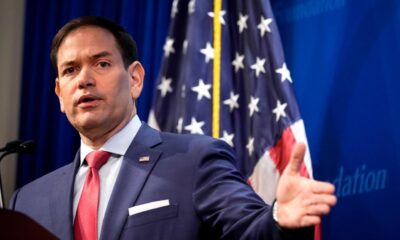
Rubio Reveals Late-Night Calls, Says No ‘Typical Day’ as US Security Chief
-

 News3 days ago
Harry, Meghan to return to Britain with children six years after royal exit