
News
At Least 129 Killed in Mass Prison Break Attempt in DR Congo

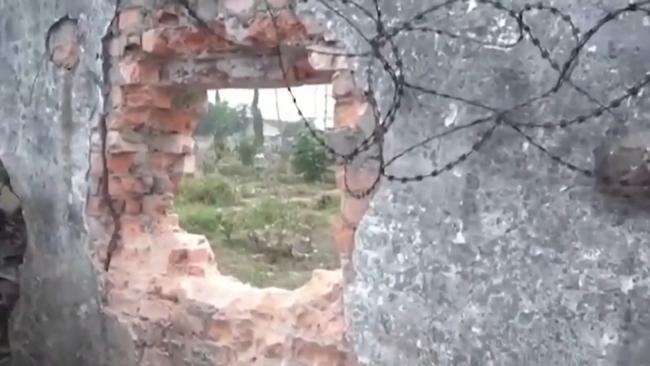
A devastating attempted mass breakout from the largest prison in the Democratic Republic of Congo has left at least 129 people dead, with many more injured. The incident occurred at Makala Central Prison in Kinshasa, where prisoners tried to break out en masse at around 2 a.m. local time (9 p.m. ET) on Monday. According to Interior Minister Jacquemain Shabani Lukoo Bihango, 24 people were killed by gunshot after warning, while others died from jostling, suffocation, and rape. 59 people are receiving medical care, and extensive damage has been reported to several prison buildings
“The provisional human toll stands at 129 dead including 24 by gunshot after warning. The others died by jostling, suffocation and some women were raped,” Bihango said. One Kinshasa resident, Daddi Soso, told Agence France-Presse that gunfire rang out for several hours during the incident and that he later saw security vehicles removing bodies from the scene. Graphic videos circulating on social media showed dozens of bloodied corpses on the ground.
The prison, which was built to hold 1,500 people, was severely overcrowded with over 12,000 inmates, mostly pretrial detainees. The attempted breakout is the latest in a series of violent attacks on jails in the central African nation. Several prison buildings, including offices, the registry, the infirmary, and food depots, were destroyed by fires during the attempted prison break.
Interior minister Bihango convened a crisis meeting of the country’s defense and security services on Tuesday after receiving instructions from the country’s “senior hierarchy. “The government is relieved “by the restored calm,” he said, adding that investigations into the incident are ongoing. Justice Minister Constant Mutamba condemned the prison break attempt as a “pre-meditated act of sabotage.”
Read also : Kenya Court Orders Extradition Of Man Accused Of Murdering Girlfriend In US
Mutamba barred public prosecutors from transferring any inmates to Makala prison “until further notice” as part of a series of measures he announced to tackle over-crowding at the country’s prisons. In a statement on X, the European Union called for “an independent and rapid investigation to shed light on these tragic events and establish responsibilities. “Prison breaks are common in the DRC, with several attacks launched on correctional facilities in recent years. In 2017, more than 50 inmates, including the leader of a religious sect, broke free from the Makala prison following an invasion by the group.
In 2020, a rebel group linked to ISIS claimed responsibility for a jailbreak that freed nearly 1,000 inmates from a prison in Beni, in northeastern DRC. At least 11 people, including security personnel, were killed in that attack. Another prison break was recorded the following year at Matadi, one of the country’s oldest prisons, which saw the escape of 189 prisoners. More than 200 other detainees escaped from the same prison in 2022 after seizing weapons from the facility’s armory.












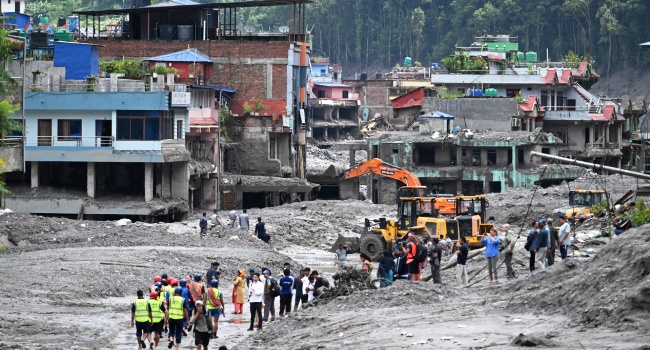
Nepal flood: Two rescued after nine days trapped in hydropower tunnel
Two workers trapped inside a hydropower tunnel in Nepal have been rescued alive nine days after devastating flash floods struck the Nepal-China border region.
The rescued workers, identified as Sanjaya Shah and Kabir Maharjan, were pulled from the Trishuli 3A Hydropower Plant after rescuers heard voices from inside the tunnel early Friday.
Dramatic scenes showed emergency workers cheering as the two men were brought out of the mud-filled tunnel and taken to safety.
Authorities said the two workers sustained injuries to their hands and legs, possibly while crawling through the tunnel.
They were airlifted to a hospital in Kathmandu for treatment.
The rescue has raised hopes that other workers feared trapped in the extensive network of hydropower tunnels could also be found alive.
At least 39 other people are expected to be rescued from the tunnel after rescuers reportedly heard more voices from underground.
More than 150 people remain feared trapped at several hydropower sites along Nepal’s Trishuli River following the disaster.
The floods have already killed more than 1,200 people, while thousands of others remain missing.
Engineers involved in the rescue operation have been pumping air into the tunnels as emergency teams search through the mud and debris for survivors.
The wife of one of the rescued workers, Hirashova, said the family had been overwhelmed with fear and had struggled to eat or drink while waiting for news.
“I saw the photos on Facebook. I was very happy. They are bringing him to the army hospital in Kathmandu. I am heading towards the hospital,” she said.
“We couldn’t properly eat or drink for 10 days. We were very scared. Now we are all happy. We are even crying.”
The flash floods struck after what was initially thought to be an earthquake triggered a massive surge of water and debris through the mountainous region, destroying buildings, roads and vehicles.
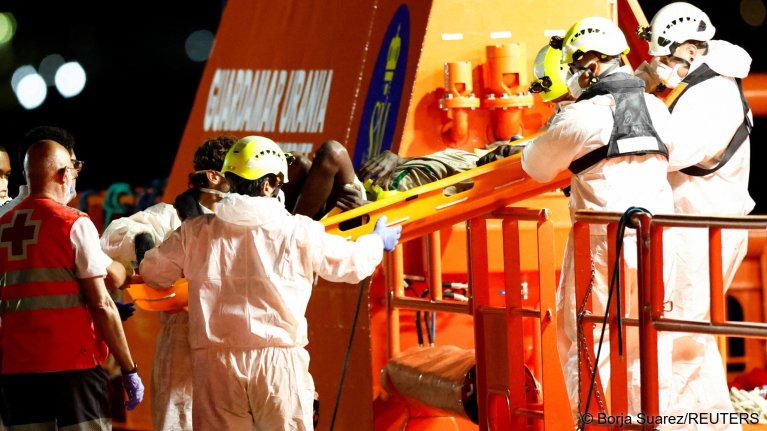
83 feared dead as boat drifts for 27 days on Atlantic
At least 83 people, including a baby, are feared dead after a migrant boat carrying more than 100 people spent 27 days adrift in the Atlantic Ocean before being located off Spain’s Canary Islands.
Spanish Maritime Rescue teams found the vessel about 65 nautical miles southwest of Arguineguín, a coastal town on Gran Canaria.
Forty-four survivors and five dead bodies were found aboard the vessel, which is believed to have departed The Gambia in West Africa in early August.
Human rights activist and founder of the Spanish charity Caminando Fronteras, Helena Maleno Garzón, said 83 people had died during the perilous voyage.
However, Spanish Maritime Rescue said it could not independently verify how many people were originally on board.
The rescuers said the 44 survivors were men from sub-Saharan Africa.
Five bodies discovered on the boat could not be recovered because of difficult sea conditions.
“Once the rescue was complete, adverse weather conditions in the area — featuring 20-knot winds and 2.5m waves — made it impossible to recover the five bodies found on board the vessel,” Maritime Rescue said.
Three of the survivors were airlifted to hospital in critical condition, while the others were taken by sea to Gran Canaria, where they arrived in the early hours of Thursday.
The tragedy has renewed concerns over the dangers faced by migrants attempting to reach Spain through the Atlantic route from West Africa.
Canary Islands President Fernando Clavijo condemned the latest deaths, saying the region could not accept the loss of lives as normal.
“It is intolerable that lives continue to be lost. The Canaries cannot get used to or accept as normal the fact that the Atlantic continues to be a death trap,” Clavijo said in a post on X.
The Atlantic migration route from West Africa to the Canary Islands is considered one of the world’s most dangerous migration crossings.
Thousands of migrants attempt the journey each year in search of safety and better economic opportunities in Europe, despite the risks posed by rough seas, strong currents, inadequate vessels and the enormous distance involved.
Many of the boats used for the crossing are poorly equipped for long journeys, leaving passengers vulnerable to dehydration, starvation, exposure and drowning when vessels lose their way or suffer mechanical problems.
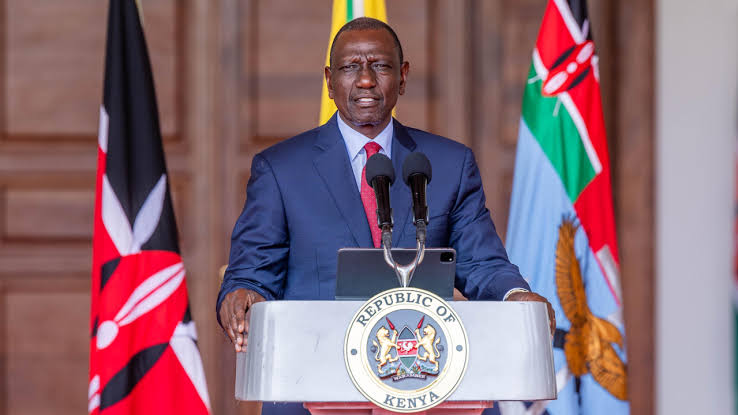
Ruto orders foreign traders out of Kenya’s small businesses
Kenyan President William Ruto has ordered foreign nationals operating small-scale businesses in the country to shut down their operations, saying the move is necessary to protect local traders and hawkers.
Ruto, who made the declaration at the State House in Nairobi on Wednesday, said his administration would also fast-track legislation restricting foreigners from engaging in certain categories of small-scale trade.
“From next week, all foreign traders doing those small businesses should close them,” the President said while addressing representatives of small-scale traders.
He, however, stressed that Kenya remained open to foreign investment, arguing that foreign investors should establish businesses capable of creating jobs and expanding production rather than competing with Kenyans in petty trading.
Ruto specifically cited Chinese nationals, questioning why foreigners would travel to Kenya to operate hawking businesses and small shops.
“It cannot be that a person comes from China or elsewhere to be a hawker or open a small shop,” he said.
The President said his administration had worked to improve Kenya’s economy and investor confidence, insisting that such efforts were not intended to attract foreigners into businesses traditionally operated by Kenyans.
The exact number of foreign nationals engaged in small-scale trading in Kenya, and the number who could be affected by the proposed crackdown, remains unclear.
The announcement comes amid growing concerns over the increasing presence of migrants from other African countries in Kenya’s informal economy.
Kenya hosts about 857,000 registered refugees and asylum seekers, according to government figures, with nearly 14 per cent living in urban areas.
Although Kenyan law allows refugees to work and operate businesses, they are required to obtain the necessary documentation, including special permits for employment or business activities.
Migrants from neighbouring countries are also prominent in sectors such as barbering, salons, construction, motorcycle transport, street vending and the sale of clothes, food and household goods.
Many migrants have moved to Kenya because of conflict or economic hardship in their home countries, while others benefit from the relatively free movement of people within the eight-member East African Community.
The growing competition has occasionally triggered tensions between foreign migrants and Kenyan traders, particularly over access to jobs and business opportunities.
In July, a confrontation between a Kenyan man and a Burundian trader in Nairobi sparked widespread criticism after the Kenyan accused the trader of taking opportunities meant for locals.
The incident prompted regional conflict-prevention expert Fred Ngoga to call for the protection of Burundian nationals in Kenya.
Kenya’s Foreign Ministry subsequently sought to reassure Burundians and other East Africans living in the country.
Ruto’s latest directive is expected to generate debate, particularly given Kenya’s position as a major regional economic hub and its role in promoting East African integration.
The move also comes amid growing concerns about xenophobia and anti-migrant sentiment in parts of Africa, including South Africa, where protests against undocumented migrants have intensified.


Nepal flood: Two rescued after nine days trapped in hydropower tunnel

83 feared dead as boat drifts for 27 days on Atlantic

Ruto orders foreign traders out of Kenya’s small businesses

Pastor Jerry Eze Defends Miracles At UK Conference Amidst Criticism And Controversy

Diaspora Watch 20th Edition (October 14-20, 2024): Your Trusted Source for Global News and Insights

Tanzanian Man Reportedly Dies And Returns To Life Six Times


-
 News6 days ago
Kidney for Cash: Inside Nigeria’s Shadowy Organ Trade
-

 Analysis6 days ago
Tobi Amusan’s Legacy After the World Record Falls, by Boniface Ihiasota
-
 Analysis6 days ago
Wike and the Abuja Master Plan, by Alabidun Shuaib AbdulRahman
-

 News6 days ago
Trump’s policies may cost US $700bn in clean energy investment – Report
-

 News6 days ago
Jamaica Set to Host 20th Caribbean Week of Agriculture
-

 Health6 days ago
DRC gets 70,000 Ebola vaccine doses as trial targets Bundibugyo virus