
News
Trump-Ramaphosa Clash Reflects Global Racial Politics and Strategic Misalignment

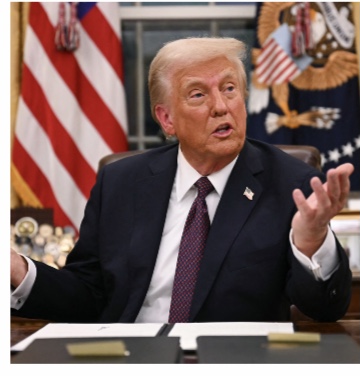
Trump-Ramaphosa Clash Reflects Global Racial Politics and Strategic Misalignment
1. Ideological Signaling and Domestic Politics
Trump’s decision to admit 59 White South Africans as refugees—couched in language invoking “White genocide”—can be seen as ideological signaling to his political base. The “White genocide” narrative is a well-documented conspiracy theory that circulates in far-right circles. By echoing this rhetoric in a high-profile diplomatic setting, Trump appears to be leveraging foreign policy for domestic political gain, particularly among voters who feel threatened by changing racial demographics or are sympathetic to narratives of White victimization.
This move also aligns with a broader populist strategy: presenting himself as a protector of embattled groups (in this case, White South Africans), while casting liberal governments, both foreign and domestic, as complicit or negligent in addressing violence or perceived injustice.
2. Racial Framing and the Misuse of Crime Statistics
Trump’s framing of South African violence as racially motivated overlooks the socio-economic context in which crime occurs. South Africa, a country still grappling with the legacies of apartheid, has widespread violence rooted in inequality, poverty, and a strained justice system. Ramaphosa’s response—that the majority of crime victims are Black South Africans—highlights this reality.
Trump’s narrative selectively isolates cases involving White victims and amplifies them to construct a racialized crisis. This manipulation of data not only distorts the complexity of crime in South Africa but also perpetuates harmful stereotypes that undermine reconciliation efforts in post-apartheid society.
3. Diplomatic Fallout and International Relations
The public nature of Trump’s accusations—complete with videos and media clippings—breaks from typical diplomatic protocol, where sensitive matters are discussed discreetly to preserve bilateral respect. By presenting these materials in the Oval Office and effectively confronting Ramaphosa in front of the press, Trump shifted the tone from dialogue to accusation.
This could have longer-term consequences for U.S.–South Africa relations. South Africa has sought to position itself as a global mediator and regional leader; Trump’s statements risk delegitimizing its government’s authority and international standing by implying complicity in racially targeted violence.
4. Humanitarian Implications
This episode raises important questions about how the United States defines and administers refugee status. Refugee protections are intended for individuals facing persecution on the basis of race, religion, nationality, membership in a particular social group, or political opinion. If Trump’s administration interpreted White South Africans as meeting this standard based on contested or ideologically loaded claims, it may signal a politicization of refugee criteria.
This sets a concerning precedent: if refugee admissions are guided not by humanitarian need but by ideological alignment or political utility, the integrity of asylum as a protection mechanism could be compromised.
5. Broader Context: Race, Power, and Narrative Control
At its core, the incident reflects a power struggle over narrative. Trump attempts to control the global conversation on race by re-centering White grievance, a theme that has resonance in parts of the Western world undergoing demographic and cultural shifts. Ramaphosa, in contrast, asserts a narrative grounded in post-colonial sovereignty and national complexity.
The friction arises from two incompatible visions of reality: one that seeks to universalize a sense of White vulnerability, and another that emphasizes shared national challenges over racialized victimhood. This encounter becomes a proxy battlefield for larger questions of who gets to define racism, victimhood, and justice in the 21st century.







CARICOM Accredits New UK Ambassador
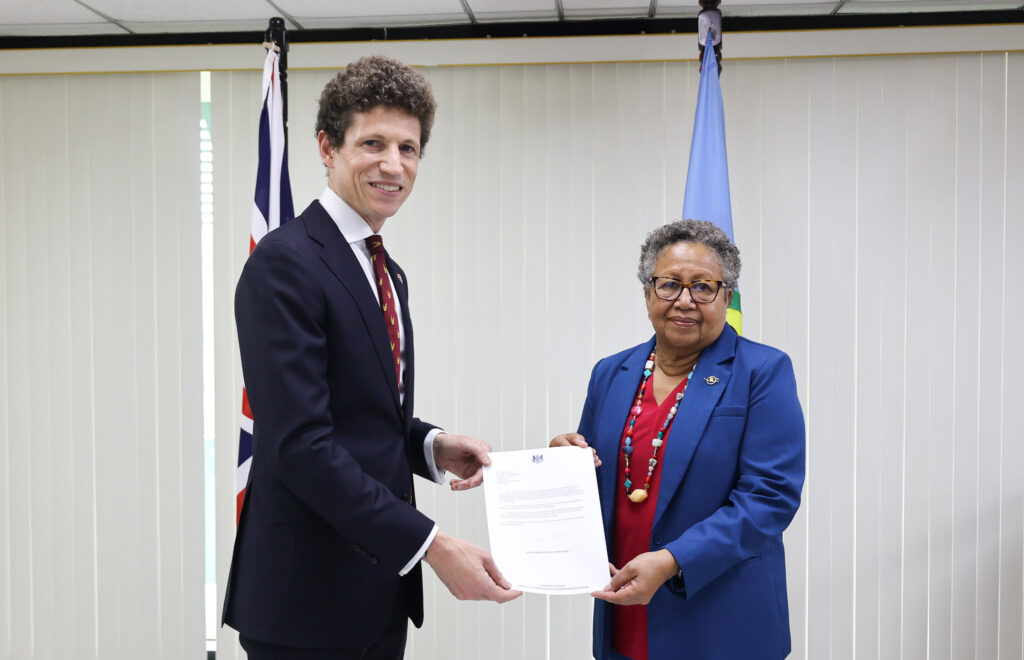
The Secretary-General of the Caribbean Community, Carla Barnett, has accredited the new United Kingdom Ambassador to CARICOM, Joseph Guy Fisher.
Barnett performed the accreditation during a ceremony held on May 4 at the CARICOM Secretariat Headquarters in Georgetown.
Speaking at the event, Barnett described the United Kingdom as a vital partner to CARICOM amid evolving global geopolitical challenges.
She identified key areas of collaboration between CARICOM and the UK to include efforts to combat illicit trade in small arms and light weapons, maritime security and climate change.
The Secretary-General also referenced discussions held during the recently concluded 12th UK-Caribbean Forum in London, where both sides explored issues surrounding economic resilience, renewable energy and citizen security.
According to her, the forum also adopted a plan of action aimed at ensuring that commitments reached under the various areas of cooperation produce tangible benefits for citizens of the Caribbean Community.
Barnett used the occasion to seek continued British support for Haiti amid its security and humanitarian crisis.
“The scale of the insecurity and humanitarian challenges requires the sustained commitment of our international partners,” she said.
She further stated that CARICOM welcomed the growing international consensus on reparatory justice and looked forward to further discussions during the upcoming Commonwealth Heads of Government Meeting scheduled to hold in Antigua and Barbuda later this year.
In his remarks, Fisher described CARICOM as an important regional organisation and a longstanding partner of the UK.
He expressed optimism about strengthening ties between both sides through shared history, people-to-people connections and commitment to regional cooperation and multilateral engagement.
The envoy also noted existing UK partnerships with CARICOM in areas such as climate adaptation, resilience, sustainable development and regional coordination during climate-related emergencies.
Fisher said his tenure would focus on listening and learning while ensuring that UK-CARICOM cooperation remains aligned with the priorities of the Caribbean Community and built on mutual respect and trust.
Trump Threatens Higher Tariffs on EU if Trade Talks Fail
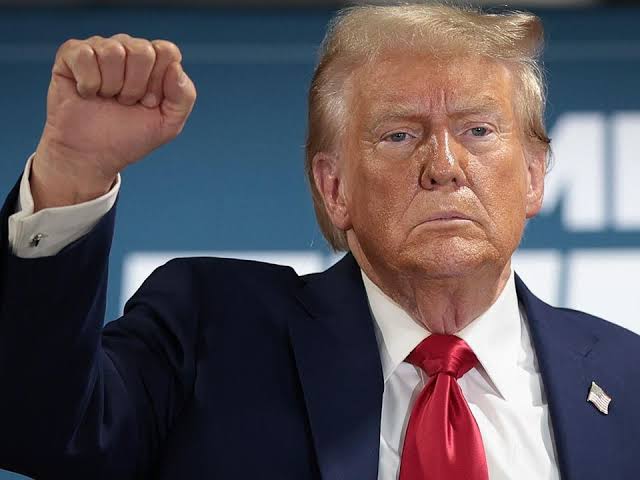
United States President, Donald Trump, has threatened to impose “much higher” tariffs on the European Union if the bloc fails to remove its levies on American goods before July 4, escalating fresh tensions in transatlantic trade relations.
Trump issued the warning after a phone conversation with European Commission President Ursula von der Leyen, stating that the EU must agree to zero tariffs on U.S. exports or face steep economic consequences.
“I agreed to give her until our Country’s 250th Birthday or, unfortunately, their Tariffs would immediately jump to much higher levels,” Trump said.
In response, von der Leyen said the European Union was making “good progress towards tariff reduction” ahead of the deadline, while reaffirming commitment to ongoing negotiations between both sides.
The tariff dispute comes amid renewed uncertainty over a trade agreement reached last year between Washington and Brussels, which initially proposed a 15 per cent tariff on EU exports to the United States, while Trump had earlier pushed for a 30 per cent levy on European goods.
Although the deal received conditional backing from the European Parliament in March, lawmakers inserted safeguards requiring assurances that the United States would also honour its commitments, particularly concerning steel and aluminium exemptions.
Under the proposed arrangement, EU legislators insisted they would only accept zero tariffs on U.S. goods if European exports made with steel and aluminium were excluded from Trump’s global 50 per cent tariffs on the metals.
Despite parliamentary progress, final approval still depends on agreement from all 27 EU member states, while further negotiations are expected to continue later this month in Strasbourg.
Ahead of Trump’s latest comments, European Parliament chief negotiator Bernd Lange said discussions were progressing but warned that “there is still some way to go.”
However, tensions were further complicated hours after Trump’s threat when a United States trade court ruled that his latest 10 per cent global tariffs were not justified under U.S. trade law, potentially opening the door to further legal challenges.
The court ruling, though limited in scope, questioned the legal basis used by the Trump administration under Section 122 of the 1974 Trade Act, which allows temporary tariffs to address balance of payments deficits.
Trump had previously introduced the sweeping 10 per cent levy in February, following earlier legal and political disputes over his so-called “freedom day” tariffs.
While the court decision does not immediately block the tariffs nationwide, it applies to import duties involving two companies and could encourage wider legal opposition.
With negotiations ongoing and legal uncertainty mounting, analysts say the dispute signals a renewed phase of economic friction between the United States and the European Union.
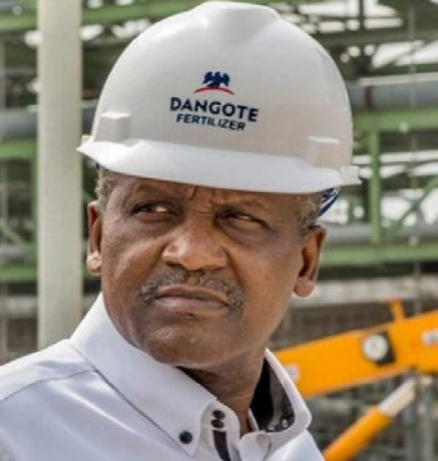
Dangote Unveils Plan for 20,000MW Power Project
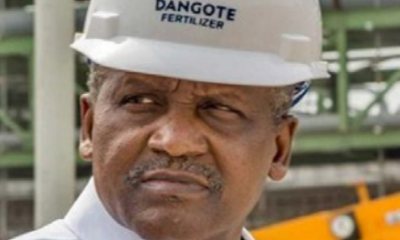
Africa’s richest man, Aliko Dangote, has announced plans to build a 20,000-megawatt power project, marking a major expansion of his industrial interests beyond oil refining, cement and fertiliser production.
Dangote disclosed the plan during an interview with Makhtar Diop, managing director of the International Finance Corporation, saying the project forms part of efforts to address Africa’s persistent energy deficit.
“We are now going into power… 20,000 megawatts,” he said, adding that the continent’s most urgent needs remain energy, fertilisers and industrial inputs.
Although he did not provide details on financing or implementation timelines, the proposed project, if realised, would significantly transform Nigeria’s struggling power sector, where generation remains inconsistent despite an installed capacity of about 13,000MW.
Dangote said Africa’s development priorities are clear, stressing that “the needs of Africa are petroleum products and fertilisers.”
According to him, his conglomerate is also expanding aggressively in fertiliser production and related industrial ventures.
“Today, in about two and a half years, we will be the largest fertiliser company in the world. We are putting up 12 million tons of urea. We are opening up mines of potash and phosphate in Congo and Brazil. We are building the biggest deep-sea port with an 18-meter draft. We are doing LNG,” he said.
The billionaire industrialist added that the expansion drive is being supported by stronger cash flows and improved financial flexibility within his business empire.
“We are now actually free of assets, and we can actually raise more money. Our cash flow now is very, very strong,” he said.
The announcement comes amid the ongoing expansion of the Dangote Refinery, which is currently being scaled up toward a capacity of 1.4 million barrels per day, further cementing its position as one of the largest refining facilities in the world.


CARICOM Accredits New UK Ambassador

Trump Threatens Higher Tariffs on EU if Trade Talks Fail

Dangote Unveils Plan for 20,000MW Power Project

Pastor Jerry Eze Defends Miracles At UK Conference Amidst Criticism And Controversy

Diaspora Watch 20th Edition (October 14-20, 2024): Your Trusted Source for Global News and Insights

Tanzanian Man Reportedly Dies And Returns To Life Six Times


-
 Diaspora1 week ago
Diaspora Watch – Vol. 91
-
 Extra2 days ago
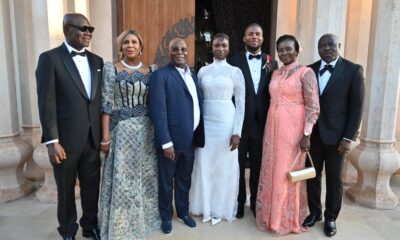
Ezeibe–Lassina Wedding Draws Top African Dignitaries To Marrakech, Morocco
-
 Analysis2 days ago
NDC As A New Bride, by Alabidun Shuaib AbdulRahman
-
 Analysis2 days ago
Bianca Ojukwu and Nigeria’s Firm Stand Against South African Xenophobia
-
 News2 days ago
Trump Rejects Iran’s Peace Response, Says Proposal ‘Totally Unacceptable’
-
 Business1 day ago
Dangote Unveils Plan for 20,000MW Power Project