
News
Bloodbath in Benue: Amnesty International Calls on Nigerian Government to End Killings, Prosecute Perpetrators

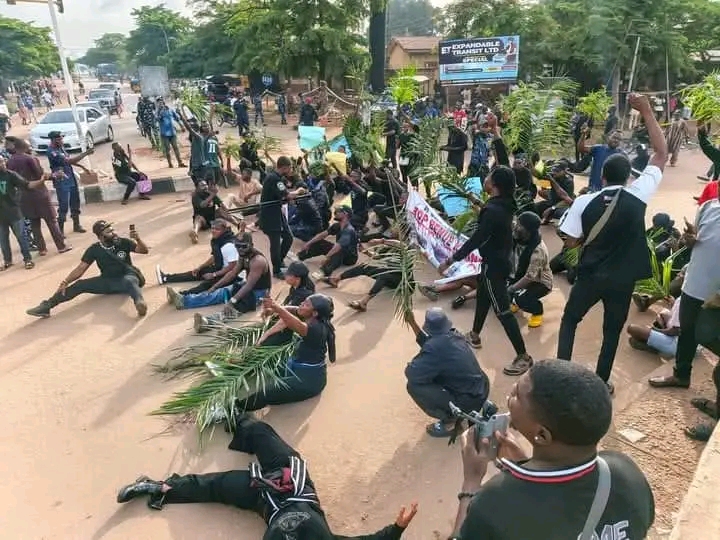
Bloodbath in Benue: Amnesty International Calls on Nigerian Government to End Killings, Prosecute Perpetrators
The global human rights watchdog, Amnesty International, has issued a strong call to the Nigerian authorities to urgently halt the ongoing bloodshed in Benue State, following the recent massacre of over 100 people in Yelewata community.
According to Amnesty, the attack, which began late Friday, June 13, and continued into the early hours of Saturday, June 14, 2025, is yet another stark reminder that the Nigerian government’s security strategy in the state is failing.
“The horrifying killing of over 100 people by gunmen that invaded Yelewata… shows the security measures government claims to be implementing in the state are not working,” Amnesty International said in a statement.
Survivors of the attack recount a night of unimaginable horror. Many families, according to eyewitnesses, were locked inside their homes and set ablaze. Charred remains of victims, including children and elderly residents, littered the community by dawn. Dozens of others sustained life-threatening injuries, many of whom are yet to receive adequate medical attention. Scores are still missing, raising fears that the actual death toll may rise significantly in the coming days.
The attack on Yelewata is just the latest in a disturbing pattern of deadly violence sweeping across Benue State in recent years. Amnesty International said it has been documenting the increasing frequency and brutality of attacks carried out by gunmen, often referred to locally as bandits or unidentified armed herders.
“These killings have been carried out with utter impunity,” the organization said. “The Nigerian authorities’ failure to stem the violence is costing people their lives and livelihoods.”
The organization warned that if the federal government continues to treat these attacks with what it described as “institutional indifference,” the crisis could deepen further.
Amnesty expressed particular concern about the impact of the violence on the region’s already fragile food security. Most of the victims of the attacks are rural farmers, whose displacement is already disrupting agricultural activities across several local government areas in the state.
“Massive displacement caused by the attacks is threatening the livelihoods of thousands and may worsen the food crisis,” the organization warned.
In Yelewata, residents described how attackers stormed the village in large numbers, wielding firearms, machetes, and petrol bombs. Local sources said the assault was carried out with a level of coordination that suggests a premeditated plan and, possibly, external support or internal sabotage.
One eyewitness told reporters that the attackers moved from house to house, shooting indiscriminately and setting buildings on fire. “People were screaming, begging for their lives, but the gunmen didn’t care. They set homes ablaze with people inside,” the witness said.
Despite these repeated atrocities, Amnesty noted that little to no progress has been made in bringing the perpetrators to justice. Communities remain vulnerable, with little protection from law enforcement or the military.
“The Nigerian authorities must immediately end the almost daily bloodshed in Benue state and bring the actual perpetrators to justice,” Amnesty’s statement read.
The human rights body called for an independent investigation into the Yelewata massacre and previous attacks in the region. It emphasized the need for transparency, justice for victims, and accountability for those who fail in their duty to protect the citizens.
The Benue State Government has yet to provide a full casualty figure or comment on the latest killings at the time of this report. However, community leaders and civil society organizations have continued to raise the alarm, urging both state and federal governments to act swiftly.
Security experts and analysts have long warned that the Nigerian government’s reactive approach to violence in the Middle Belt region is unsustainable. Without a proactive, intelligence-led strategy that addresses both immediate security concerns and the underlying issues—such as land use conflicts, displacement, and ethnic tensions—the violence is likely to escalate further.
Meanwhile, families in Yelewata are left to mourn their dead, search for the missing, and piece together what remains of their shattered lives. For them, justice seems like a distant hope in a nation where impunity has often been the rule rather than the exception.
Amnesty International’s renewed appeal places the spotlight once more on President Bola Tinubu’s administration and its commitment to ending insecurity in the country. As communities continue to count their dead, all eyes will be on Abuja—waiting to see if action will follow this time.


US Threatens New Tariffs on UK, EU, China, 57 Others
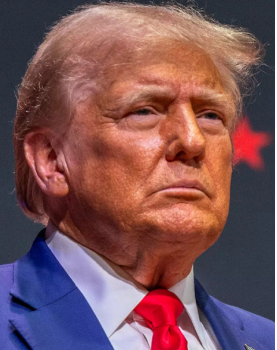
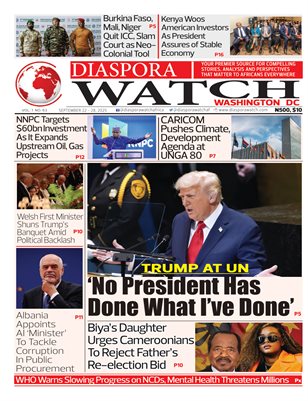
The United States has announced plans to impose fresh tariffs of between 10 and 12.5 per cent on imports from dozens of countries over concerns that they have failed to do enough to curb the trade in goods produced through forced labour.
The move marks the second major tariff initiative by the administration of President Donald Trump since the US Supreme Court struck down a significant portion of his earlier import duties in February.
According to the US Trade Department, the proposed tariffs would affect 60 trading partners that collectively account for almost all goods imported into the United States.
The department said the measures were aimed at countries that have either failed to prohibit the importation of goods made with forced labour or have not effectively enforced existing restrictions.
Announcing the proposal, US Trade Representative Jamieson Greer said the continued trade in goods linked to forced labour created unfair competition for American workers.
“It creates a dynamic where American workers are forced to compete globally on an unlevel playing field,” Greer stated.
The proposed tariffs have yet to take effect, as the Trump administration is expected to complete the necessary legal and regulatory processes before implementation.
The action follows an investigation launched in March by Greer into whether major US trading partners had taken adequate measures to prevent the importation of products made wholly or partly through forced labour.
Findings from the investigation indicated that 54 countries had “failed to impose a legal prohibition on the importation of goods produced wholly or in part with forced labour and to effectively enforce such a prohibition.”
The report further stated that six trading partners — the European Union, Canada, Ecuador, Indonesia, Mexico and Pakistan — had failed to effectively enforce existing bans on imports linked to forced labour.
Under the proposal, a 10 per cent tariff would be imposed on imports from countries and blocs including the European Union, United Kingdom, Canada, Mexico, Pakistan, Argentina, Bangladesh, Cambodia, Guatemala, Malaysia and Taiwan.
The remaining 45 countries, including China and India, would face higher duties of 12.5 per cent.
Reacting to the announcement, the British government maintained that it was taking steps to address forced labour concerns within supply chains, while China rejected allegations that goods produced through forced labour were entering global markets.
The European Union, however, described the proposed tariffs as unjustified.
An Indian trade analyst characterised the move as a pressure tactic aimed at strengthening Washington’s position in ongoing trade negotiations with New Delhi.
Israeli Airstrikes Hit Beirut, Kill Two Despite Fragile Ceasefire
Israel on Sunday launched airstrikes on southern Beirut, marking the first attack on the Lebanese capital since a ceasefire brokered by the United States last week, as tensions between Israel, Hezbollah and Iran continued to escalate.
Lebanon’s Ministry of Health said two people were killed and at least 20 others injured, including women and children, after Israeli warplanes struck two apartment buildings in Beirut’s southern suburb of Dahieh, a stronghold of the Iran-backed Hezbollah movement.
The strikes came amid renewed hostilities following a wave of missile attacks launched by Iran against Israel on Sunday night, which Tehran said was retaliation for increasing Israeli military operations in southern Lebanon and the outskirts of Beirut.
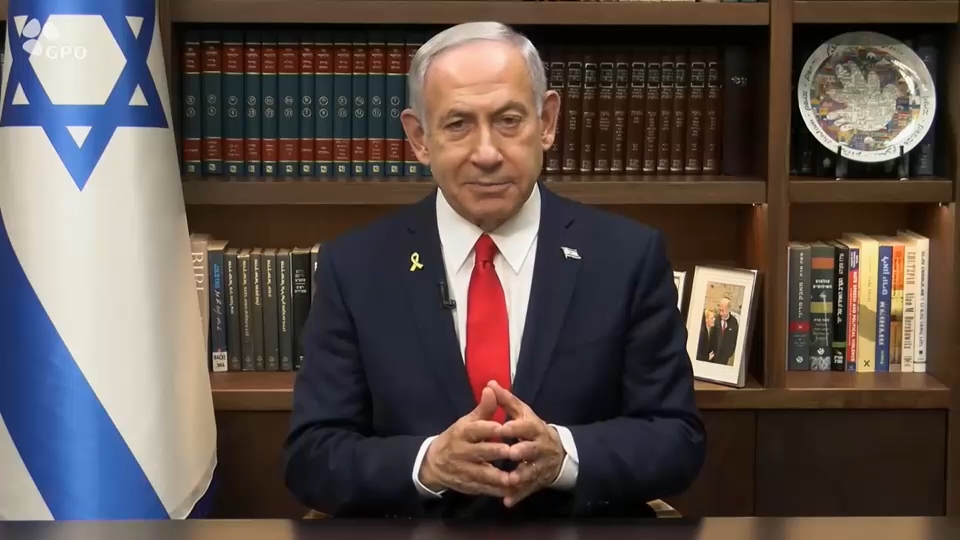
Israeli Prime Minister Benjamin Netanyahu defended the attacks, saying the targets were Hezbollah facilities operating within the Lebanese capital.
“We struck terrorist headquarters in the Dahieh district of Beirut in response to Hezbollah’s firing at Israeli territory,” Netanyahu said.
The latest bombardment shattered the lower floors of a residential building, leaving apartments exposed and scattering debris, concrete and twisted metal across nearby streets.
Videos circulating on social media showed residents and emergency responders rushing to the scene to rescue victims trapped beneath the rubble.
Health officials in Lebanon confirmed that four women and four children were among those injured in the attack.
An Arabic-language statement issued by an Israeli military spokesman on X indicated that the operation could continue, describing the targeted sites as Hezbollah military infrastructure.
“To be continued,” the spokesman wrote.
The Israeli military also announced that it intercepted two projectiles fired from Lebanon into Israeli territory earlier on Sunday.
Hezbollah later claimed responsibility for rocket attacks targeting Israeli artillery positions at Yiftah Barracks and troops stationed near al-Marj Pond.
The group said the attacks were carried out in response to what it described as repeated Israeli violations of the ceasefire and continued assaults on villages in southern Lebanon.
Reacting to the Beirut strikes, Iranian lawmaker and foreign policy committee spokesman Ebrahim Rezaie warned that Israel would face consequences.
He said Iran would deliver a “decisive and painful response” to the attack.
The renewed violence threatens a fragile truce reached on June 3 after intense diplomatic efforts led by Washington and supported by Qatar.
Prior to the ceasefire, Israel had threatened a major offensive in Dahieh, prompting thousands of residents to flee the area and triggering urgent diplomatic interventions aimed at preventing a wider regional conflict.
United States President Donald Trump had previously announced that there would be “no troops going to Beirut” following discussions with Netanyahu, while Washington reportedly urged Israel to exercise restraint.
Iran Launches Fresh Missile Barrage on Israel, Vows “Full Week of Continuous Strikes”
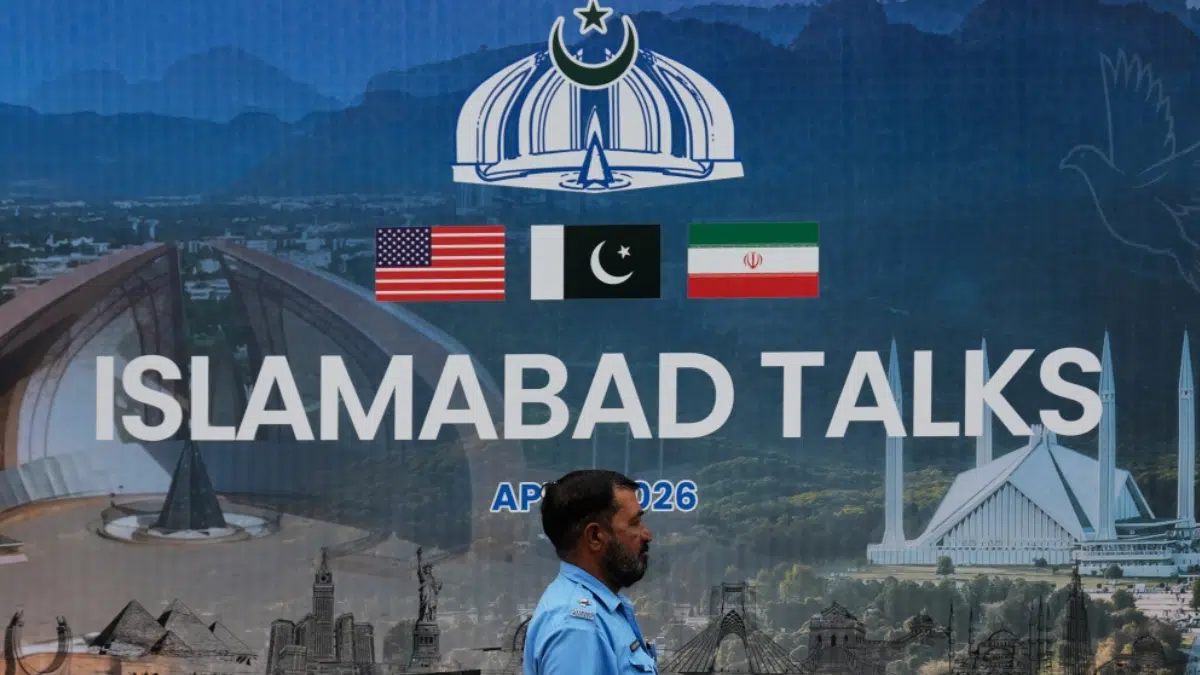
Iran has fired multiple waves of missiles towards northern Israel in a sharp escalation of regional tensions, with Tehran warning that the attacks mark “the beginning of a full week of continuous strikes.”
The Islamic Revolutionary Guard Corps (IRGC) said the operation would continue in waves, signalling a prolonged confrontation as fears grow of a wider Middle East conflict.
However, most of the incoming missiles were reportedly intercepted by Israel’s air defence systems, with authorities later allowing residents to leave shelters. No immediate casualties were reported.
The Israeli military said it is prepared for a forceful response, with its chief of staff warning that the country would “strike the enemy with determination as soon as the order is given.”
A military spokesman also described Iran’s action as a “grave mistake,” amid mounting pressure on Israel’s leadership to respond decisively.
The latest exchange follows earlier Israeli strikes on Hezbollah-linked targets in southern Beirut, a move that further inflamed regional tensions and raised expectations of retaliation from Iran and its allies.
The developments have intensified concerns over the widening scope of the conflict across multiple fronts in the Middle East.
According to reports from Fox News, United States President Donald Trump urged Iran to de-escalate, saying: “That’s enough. Get back to the table.”
He was also quoted as expressing displeasure over Israel’s strikes in Beirut, telling the network he was “not happy” about the escalation.


US Threatens New Tariffs on UK, EU, China, 57 Others

Owo Verdict and the Death Warrant Question, by Alabidun Shuaib AbdulRahman

Commercialisation of Banditry and Its Consequences for Nigeria, by Boniface Ihiasota

Pastor Jerry Eze Defends Miracles At UK Conference Amidst Criticism And Controversy

Diaspora Watch 20th Edition (October 14-20, 2024): Your Trusted Source for Global News and Insights

Tanzanian Man Reportedly Dies And Returns To Life Six Times


-
 Analysis1 week ago
When Silence is no Longer Golden, by Boniface Ihiasota
-

 Diaspora5 days ago
BCD Fashion House Presents The World Cup Fashion Show and Gala
-

 News1 week ago
Africa’s 14-Year-Old Sets Sights on LA Gold
-

 News17 hours ago
Peter Obi, US County Executive, Family Pay Tributes as Dr. Jude Onyegbado Is Laid to Rest
-
 Analysis1 week ago
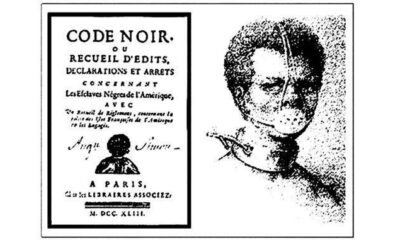
Code Noir: The Law That Turned Black Humanity Into Property, by Alabidun Shuaib AbdulRahman
-
 News1 week ago
Court Clears UK Over Scrapped Rwanda Migrant Pact