
News
Court Clears UK Over Scrapped Rwanda Migrant Pact


Court Clears UK Over Scrapped Rwanda Migrant Pact
The United Kingdom has secured a major legal victory after an international arbitration tribunal ruled that it would not be required to pay Rwanda more than £100m in compensation over the cancellation of the controversial migrant relocation agreement.
The ruling ended a dispute that emerged after Prime Minister Keir Starmer’s Labour government scrapped the asylum partnership shortly after assuming office, bringing to a close a policy championed by former Conservative administrations.
Rwanda had argued that the UK breached the terms of the agreement and sought compensation for substantial costs incurred in preparing to receive asylum seekers under the scheme.
However, lawyers representing the UK told the tribunal at The Hague’s Permanent Court of Arbitration that it was “entirely logical” for a new government to abandon the policy after Labour won power and that no further payments were owed under the arrangement.
The tribunal ultimately sided with Britain, rejecting Rwanda’s claims for financial relief.
Reacting to the verdict, a spokesperson for the Rwandan government said Kigali respected the ruling and considered the matter closed.
The spokesperson, however, noted that a dissenting opinion by Professor Mohamed Abdel Wahab suggested the legal issues before the tribunal were complex and open to differing interpretations, particularly regarding whether exchanges between the two governments in November 2024 had legally altered the financial terms of the agreement.
During the proceedings, Rwanda’s Minister of Justice and Attorney General, Emmanuel Ugirashebuja, had argued that the East African nation committed significant resources to the partnership only for Britain to withdraw from its obligations.
He also accused the UK government of failing to formally notify Rwanda before abandoning the programme, saying Rwandan authorities first learned of the decision through media reports.
The asylum deal was initially unveiled in 2022 by former Prime Minister Boris Johnson and later championed by his successor, Rishi Sunak, as a key measure to deter migrants from crossing the English Channel in small boats.
Under the arrangement, asylum seekers who arrived in Britain illegally from safe countries such as France were to be relocated to Rwanda, where their claims would be processed.
Successful applicants would have been allowed to remain in the African country.
The policy, however, faced persistent legal challenges from human rights groups and campaigners.
Its first scheduled deportation flight in June 2022 was halted minutes before take-off following intervention by the European Court of Human Rights, triggering a lengthy series of court battles in the UK.
Following Labour’s victory in the 2024 general election, Starmer fulfilled a campaign promise by scrapping the scheme, declaring it “dead and buried.”
The government later introduced a voluntary removals programme under which failed asylum seekers were offered up to £3,000 to relocate to Rwanda. Only four migrants reportedly accepted the offer.
Responding to the tribunal’s decision, a UK government spokesperson said ministers had successfully defended Britain’s position and remained focused on tightening border controls and reducing illegal migration.
“We are focused on delivering vital reforms to restore order and control to our borders, including removing the incentives drawing illegal migrants to Britain and scaling up removals of those with no right to be here,” the spokesperson said.
The ruling also reignited political debate in Britain, with Shadow Home Secretary Chris Philp welcoming the verdict while criticising Labour for abandoning the Rwanda scheme.
Philp argued that the cancellation had contributed to record levels of illegal Channel crossings and asylum applications.
But refugee advocates maintained that the policy was ineffective. Imran Hussain, Director of External Affairs at the Refugee Council, said the programme created confusion within the asylum system by delaying decisions and leaving applicants in limbo.
He urged the government to prioritise a faster and more efficient asylum process capable of determining quickly who should remain in Britain and who should be returned to their home countries.









Riyadh Airport Attacks Threaten Oil, Global Trade
By Alabidun Shuaib AbdulRahman, Nigeria
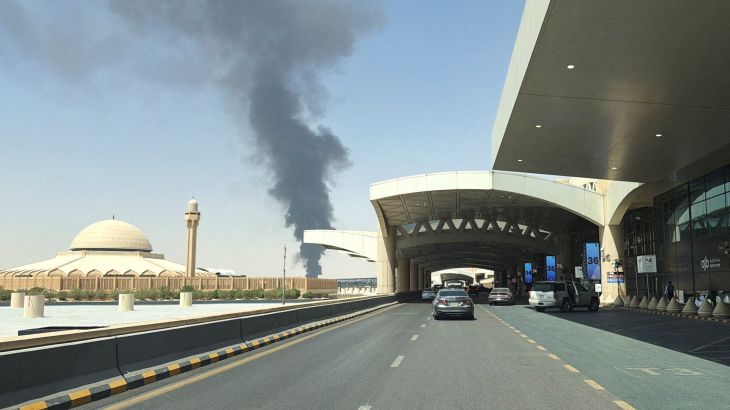
The repeated attacks on Saudi Arabia’s King Khalid International Airport in Riyadh have escalated a regional security crisis with potentially far-reaching consequences for global oil supplies, international trade, aviation, investment and economic stability. With at least 12 people killed and more than 300 injured in Saturday’s attack, followed by another reported strike on Sunday, October 11, the unfolding crisis has placed one of the world’s most strategically important energy-producing countries under renewed pressure.
The immediate concern is the safety of civilians and the protection of critical infrastructure. The broader question, however, is whether the confrontation involving Saudi Arabia and Yemen’s Houthi movement will remain contained or develop into a wider conflict capable of disrupting international commerce and energy supplies.
Saudi authorities reported that the Saturday attack killed 12 people and injured 309 others. The Saudi-led coalition subsequently reported another attack on the airport on Sunday, when an unidentified projectile reportedly struck Terminal 4 and caused a fire. Saudi air defences also intercepted a cruise missile near the airport. The facility’s operations remained suspended following the deadly Saturday attack, according to Reuters reporting on October 11.
The Houthis had warned airlines, passengers and airport workers against using Saudi airports and airspace, describing the area as a potential theatre of military operations. The movement’s warning, coupled with the renewed attacks, has raised concerns about the safety of commercial aviation and the reliability of transport connections across the Gulf.
The attacks come as Saudi Arabia seeks to strengthen its position as a global investment destination, tourism hub and international logistics centre under its Vision 2030 economic diversification programme. The kingdom has invested heavily in infrastructure, entertainment, tourism and other sectors intended to reduce its dependence on oil revenues.
Oil Markets Face Renewed Uncertainty
Saudi Arabia’s importance to the international oil market makes any escalation involving the kingdom a concern for governments, energy companies and consumers worldwide.
According to the United States Energy Information Administration, Saudi Arabia exported approximately seven million barrels of crude oil per day in 2023, accounting for 34 per cent of OPEC’s crude oil exports that year. The agency also reported that Asia received approximately 75 per cent of Saudi Arabia’s crude oil exports, with China, Japan, South Korea and India among its leading customers.
These figures illustrate why instability involving Saudi Arabia can have consequences far beyond the Middle East. Major Asian economies depend on Gulf energy supplies to support electricity generation, transportation, manufacturing and industrial production.
However, an important distinction must be made between an attack on an airport and a disruption to oil production or exports. The reported strikes on King Khalid International Airport do not, by themselves, establish that Saudi oil facilities have been damaged or that crude oil shipments have been interrupted.
The principal economic risk is that the conflict could expand to energy infrastructure, export terminals, pipelines or maritime routes used to transport petroleum.
Such an escalation could cause traders to factor a higher geopolitical risk premium into oil prices. The resulting price movements would depend on the scale of any actual supply disruption, the availability of alternative supplies and the market’s assessment of how long the conflict might last.
The stakes are particularly high because international oil markets are sensitive to disruptions at strategic transportation chokepoints.
The Strait of Hormuz, located between Iran and Oman, is one of the world’s most important oil transit routes. The EIA estimated that approximately 20.9 million barrels per day of petroleum liquids passed through the strait in the first quarter of 2025. Its September 2026 outlook subsequently reported that the volume fell to 4.9 million barrels per day in the second quarter of 2026 amid severe regional constraints.
The figures demonstrate the potential consequences of prolonged instability in the Gulf, although the latest airport attacks should not be confused with the separate developments affecting the Strait of Hormuz.
Any further escalation that threatens oil-producing facilities or maritime transport could intensify uncertainty over supply availability and prices.
For importing countries, the consequences could include higher fuel costs, increased transportation expenses and renewed inflationary pressure. Manufacturers could face more expensive energy inputs, while airlines, shipping companies and agricultural businesses could experience higher operating costs.
Oil-producing countries might benefit from increased export earnings if prices rise, but such gains would depend on their ability to maintain production and deliver crude to international markets.
Red Sea and Bab el-Mandeb: The Trade Connection
The threat to global trade extends beyond aviation because the conflict is unfolding in a region containing some of the world’s most important maritime routes.
The Bab el-Mandeb Strait connects the Gulf of Aden to the Red Sea, providing a gateway towards the Suez Canal and Mediterranean Sea. It is an important passage for commercial shipping between Asia and Europe.
The EIA estimated that approximately 4.2 million barrels per day of crude oil and petroleum products passed through Bab el-Mandeb in the first half of 2025. This represented a substantial decline from 2023 levels amid disruptions to regional shipping.
The same agency estimated that approximately 4.9 million barrels per day of crude oil and petroleum products moved through the Suez Canal and the SUMED pipeline during the first half of 2025.
These figures illustrate the strategic importance of the wider Red Sea corridor to international energy transportation.
If attacks and security threats spread further across the region, shipping companies could face increased insurance premiums, delays, rerouting costs and uncertainty over the safety of vessels and crews.
Ships unable to use the Suez Canal and Red Sea corridor safely may need to travel around the Cape of Good Hope at the southern tip of Africa. Such diversions can increase voyage distances, fuel consumption and delivery times.
The additional expenses may be passed to importers, manufacturers and consumers through higher freight charges and product prices.
For businesses operating with tight delivery schedules, even a temporary disruption can affect inventory management, production planning and contractual obligations. The consequences could be particularly significant for developing economies that rely on imported fuel, machinery, food products and industrial inputs.
African countries are not insulated from such disruptions. Many depend on international shipping to obtain petroleum products, fertilisers, pharmaceuticals, electronics and manufacturing equipment. Higher freight and energy costs can place pressure on their foreign-exchange reserves, trade balances and domestic prices.
Nevertheless, the extent of the impact would vary from country to country according to import dependence, alternative supply routes, exchange-rate conditions and the ability of governments and businesses to absorb higher costs.
The Riyadh airport attacks have not, on their own, established a new disruption to maritime traffic. Their significance lies in the wider security environment in which aviation threats, military operations and risks to regional transport networks are developing simultaneously.
Saudi Arabia’s Economic Ambitions at Risk
The attacks also present a challenge to Saudi Arabia’s economic diversification programme.
Through Vision 2030, the kingdom has sought to develop industries that can generate employment, attract private investment and reduce dependence on petroleum revenues.
Tourism, entertainment, logistics, technology, manufacturing and international events are central to this ambition.
Riyadh’s growing role as a host for international conferences and business gatherings reflects the government’s effort to establish the kingdom as a destination for global commerce.
However, these industries depend on the movement of people, goods and capital. International businesses need reliable transport connections, while tourists and event organisers require confidence that destinations are accessible and reasonably secure.
Political Implications and the Risk of Wider War
The political consequences could prove as significant as the economic effects.
United States President Donald Trump said Washington was considering joining Saudi Arabia’s offensive operations against the Houthis. His comments raise the possibility of a broader American military role in a confrontation that has already placed civilian infrastructure and international transport at risk.
British Defence Secretary Wes Streeting also suggested that the United Kingdom could potentially provide further support to Saudi Arabia.
Neither possibility should be treated as confirmation of a settled decision to participate in offensive military operations. The precise nature of any additional assistance remains important, particularly given the risk of further escalation.
What It Means for Nigeria and Africa
For Nigeria, the developments present both potential economic opportunities and significant risks.
As an oil-producing country, Nigeria could benefit from higher international crude prices through increased export earnings and government revenue, provided production and exports remain stable.
However, higher oil prices do not automatically translate into improved living standards. The domestic impact depends on production volumes, foreign-exchange availability, public expenditure, petroleum product prices and the extent to which additional revenue reaches the wider economy.
If global energy prices rise sharply, Nigerian businesses could face higher transportation, logistics and production costs. These expenses may feed into food prices, manufacturing costs and the prices of goods transported across the country.
The effects could be more difficult for countries that rely heavily on imported petroleum products and have limited fiscal capacity to absorb price shocks.
African governments should therefore monitor developments in international energy markets, review emergency preparedness and strengthen their capacity to manage external economic shocks.

Caribbean states seek stronger regional aviation safety oversight
More than 70 Caribbean aviation stakeholders have called for deeper regional cooperation and pooled technical expertise to strengthen aviation safety oversight across the region.
The call was made on Thursday at a one-day high-level symposium convened by the Caribbean Community Secretariat in collaboration with the International Civil Aviation Organisation and hosted by the Government of Guyana and the Guyana Civil Aviation Authority at the Arthur Chung Convention Centre.
The symposium, which focused on “Strengthening Caribbean Aviation Safety: Regional Cooperation, Resilient Oversight and Sustainable Capacity Development,” brought together ministers responsible for air transport and civil aviation, directors general of civil aviation authorities, government officials, regional institutions, international and development partners, and aviation industry representatives.
Participants said Caribbean states, particularly small administrations, face difficulties maintaining specialised technical expertise and resources needed to meet international aviation safety obligations.
They consequently emphasised the need to strengthen the Caribbean Aviation Safety and Security Oversight System, a CARICOM institution established to assist member states in meeting international standards that may be difficult for individual administrations to sustain.
The participants reviewed the draft CASSOS Roadmap and Action Matrix to 2035, which is expected to address the sustainability of civil aviation authorities, regulatory harmonisation, air transport services under the Multilateral Air Services Agreement, financing, timelines and mechanisms for monitoring implementation.
Strategic partners, including the International Civil Aviation Organisation, European Union Aviation Safety Agency, United States Federal Aviation Administration, Transport Canada and the United Kingdom, also shared perspectives on strengthening regional aviation safety cooperation.
Airlines, private-sector representatives and revenue authorities provided industry perspectives during the discussions.
Speakers at the opening session stressed that Caribbean states have the same international aviation obligations as much larger countries despite operating with smaller populations, markets and technical workforces.
They argued that regional cooperation would enable states to pool expertise and resources while retaining their individual responsibilities under international law.
One of the speakers said, “Our national civil aviation authorities face increasing regulatory demands, technological change, workforce constraints and financial pressures. For small administrations, these realities reinforce a fundamental truth — regional cooperation is indispensable.”
The symposium also noted the importance of aviation connectivity to Caribbean economies, particularly for tourism, trade, investment, emergency response and social integration.
“For small island and low-lying coastal developing states, connectivity is not a convenience, it is a necessity,” another speaker said.
Participants further noted that the Chicago Convention places ultimate responsibility for aviation safety oversight on individual sovereign states, while regional arrangements could strengthen rather than diminish that responsibility.
“Under the Chicago Convention, ultimate responsibility for safety oversight rests with each sovereign State. Yet regional arrangements do not diminish sovereignty; they reinforce it,” a speaker said.
The meeting was also told that effective aviation safety oversight depends not only on regulations and procedures but on the availability of adequately trained personnel with sufficient time and authority to implement them.
The stakeholders are expected to use the discussions to further develop the CASSOS roadmap towards 2035 and establish a more sustainable framework for regional aviation safety oversight.

10-Year-Old Rainikemba Igbokwe Publishes First Book, Small Boy, Big God
A 10-year-old fifth-grade pupil, Rainikemba Igbokwe, has joined the growing community of young authors with the publication of his first book, Small Boy, Big God, a 47-page, 10-chapter inspirational work aimed at encouraging children to dream boldly and use their gifts positively.
The book, published on August 31, 2026, presents a faith-based message centred on the belief that age should not limit a child’s dreams, potential or capacity to make a meaningful contribution to society.
Rainikemba, who is passionate about writing, singing, dancing, playing and worshipping God, is described by his family as a child whose faith and desire to encourage others have shaped his early interest in writing.
In the book, the young author seeks to inspire children to believe in themselves, develop their talents, have faith and, most importantly, find the courage to begin pursuing their dreams regardless of their age.
Speaking about his inspiration, Rainikemba’s outlook is summed up in his simple choice of role model: “God.”
His parents, Mayor Lucky Igbokwe and Divine Maduike Igbokwe, described the publication as a significant milestone in their son’s development, expressing pride in seeing his passion for writing and faith translated into a published book.
For Mayor Lucky Igbokwe, the achievement represents more than the publication of a book.
He said it demonstrates what children can accomplish when their interests are recognised, encouraged and nurtured from an early age.
He said Rainikemba’s achievement should serve as encouragement to parents and families to pay attention to the abilities of their children and provide the support required for those talents to develop.
His mother, Divine Maduike Igbokwe, also expressed pride in her son’s accomplishment, describing the publication as a reflection of his love for God, writing and his desire to encourage other children.
She said the family was particularly encouraged by the message behind Small Boy, Big God, which seeks to remind children that their age does not determine the size of their dreams or the impact they can make.
The 47-page book contains 10 chapters and was published on August 31, 2026, marking what is expected to be the beginning of Rainikemba’s literary journey.
At just 10, the young author has already developed ambitions that extend beyond writing. He hopes to become a teacher, pastor and missionary, while also harbouring the dream of becoming President one day.
Those ambitions, according to his profile, are connected to his desire to teach, serve, inspire and positively influence other people.
Rainikemba’s interests also extend beyond books. He enjoys playing, singing and dancing, while worshipping God remains an important part of his daily life and personal identity.
His decision to identify God as his role model further reflects the central place of faith in his outlook and in the message of his debut publication.
Small Boy, Big God therefore seeks to speak directly to children who may believe that their age makes their dreams too ambitious or their voices too small to matter.
Through the book, Rainikemba encourages young readers to recognise their abilities, believe in themselves and take the first step towards their aspirations.
The publication also comes at a time when conversations around children’s literacy, creativity and early development increasingly emphasise the importance of giving young people opportunities to express themselves beyond the conventional classroom environment.
For Rainikemba, however, the achievement is personal. His first book provides an early expression of what he believes children can become when they are encouraged to dream, create and act on their convictions.
The young author hopes that his work will reach other children and encourage them to discover and use their own gifts.


Riyadh Airport Attacks Threaten Oil, Global Trade

Nigeria’s 2027 Elections and the Unfinished Business of Diaspora Voting, by Boniface Ihiasota

Africa’s Resources Must Build Africa, by Alabidun Shuaib AbdulRahman

Pastor Jerry Eze Defends Miracles At UK Conference Amidst Criticism And Controversy

Diaspora Watch 20th Edition (October 14-20, 2024): Your Trusted Source for Global News and Insights

Tanzanian Man Reportedly Dies And Returns To Life Six Times


-

 News7 days ago
Trump’s Bomber Pullout: Iran Threat Tests US-UK Security Alliance
-
 News7 days ago
Former German spy chief arrested over alleged espionage
-
 Analysis7 days ago
Will Africa Follow Niger Republic? By Alabidun Shuaib AbdulRahman
-

 News7 days ago
Caribbean states seek stronger regional aviation safety oversight
-
 News7 days ago
Tinubu declares three days’ mourning over NAF crash
-

 News7 days ago
10-Year-Old Rainikemba Igbokwe Publishes First Book, Small Boy, Big God