
Insights
Reframing Nigeria’s Banditry Crisis: From Emotional Narratives to Strategic Clarity

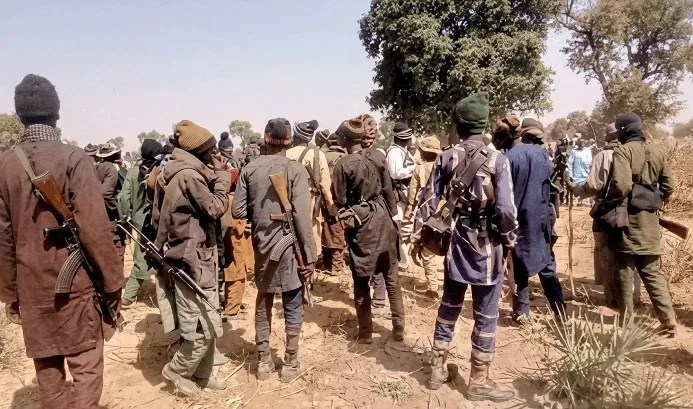
Nigeria Banditry is once again trapped in a familiar and dangerous cycle: confronting a grave national security threat through emotionally charged narratives, partisan framings, and poorly differentiated solutions that blur the line between grievance and criminality. The armed banditry plaguing Northern Nigeria—particularly across the North-West and parts of the North-Central—has generated an avalanche of commentary for and against dialogue with bandits. While supporters of dialogue are often cast as well-intentioned, their opponents frequently argue that such a stance is insensitive to the victims of banditry.
This essay intervenes in that conversation. Its purpose is not to provoke a sterile debate between advocates of ‘dialogue’ and proponents of ‘kinetic action,’ nor to dismiss non-kinetic tools wholesale. Rather, it seeks to interrogate the assumptions, misdiagnoses, and conceptual errors that increasingly shape public discourse on banditry, often in ways that undermine Nigeria’s national security rather than strengthen it. What is urgently required is clarity of threat, precision of categorisation, and discipline in policy response. Banditry in Northern Nigeria is neither monolithic nor reducible to a single narrative of grievance. Treating it as such—through emotional understanding, ethnic profiling, or indiscriminate calls for amnesty—risks legitimising violent criminal enterprises, emboldening perpetrators, and eroding the state’s monopoly over the use of force.
I write neither as a passive observer nor as a theorist detached from the theatre of violence. Before entering public service, I spent over a decade as a journalist covering conflict and insecurity in Northern Nigeria. I later served as Spokesperson to the Government of Kaduna State and pioneer Commissioner of Internal Security and Home Affairs. For nearly a decade, I was a member—and later Secretary—of the State Security Council, actively involved in security operations, liaison between the Government of Kaduna State and security forces, coordination of intelligence gathering and internal security, among other responsibilities.
My work took me repeatedly into frontline areas: Birnin Gwari and its adjoining corridors; the forests and flashpoints of Zamfara, Katsina, and Niger States; and into out-of-reach locations in Chikun, Igabi, Giwa, Kajuru, Kachia, Kagarko, Kauru, Kubau, and other high-risk zones across the state and beyond. My submission is, essentially, a summary of the practical knowledge from my involvement.
Banditry in Northern Nigeria today is not primarily a grievance-based phenomenon seeking political redress. It is a violent, profit-driven criminal ecosystem that has evolved into a quasi-corporate enterprise, with diversified revenue streams, transnational arms supply chains, and entrenched leadership structures. To treat it otherwise is to misread the threat.
Banditry is not new to Northern Nigeria. Historical accounts trace cattle rustling and armed robbery as far back as 1891 around Dansadau, where some traditional rulers were accused of colluding with bandits. Cross-border criminality involving some Tuareg, Fulani, Gobirawa, and Asebenawa actors existed during the colonial period, but these activities were limited in scale and lethality, constrained by the absence of widespread small arms proliferation.
The contemporary mutation of banditry emerged gradually but decisively in the post-2011 period. What began as rural criminality—cattle rustling, highway robbery, and communal disputes—metastasised into mass kidnapping, village annihilation, sexual violence, arms and drug trafficking, territorial control, and many other challenges. The turning point was not merely grievance but weaponisation: the transition from sticks and swords to pump-action rifles and, eventually, AK-47s and other high-calibre weapons.
Scholarly work, including that of Dr. Murtala Rufai, identifies Alhaji Kundu and Buhari Tsoho (Buharin Daji) as architects of the first modern bandit gang. Their operations expanded rapidly across Zamfara and neighbouring states, eventually spawning over 120 gangs by 2021. Between 2011 and 2021 alone, these groups reportedly killed over 12,000 people, displaced tens of thousands, destroyed entire villages, and stole hundreds of thousands of livestock.
Crucially, the early victims of modern banditry were Fulani herders whose cattle were rustled en masse by bandits of the same Fulani extraction. Eventually, these legitimate cattle owners resorted to self-help by also acquiring low-calibre weapons to protect their livestock from being rustled by the bandits, as police and traditional rulers’ interventions failed and the authorities turned a blind eye—not seeing the dangers ahead and just perceiving the development as usual intra-Fulani herders feud. In return, because of their contacts and resources, the bandits started acquiring automatic weapons and overpowered these legitimate cattle owners and massively rustled their cattle. It also got to a stage where bandits were kidnapping these cattle owners and demanding herds of cattle or its equivalent in cash as ransom. Many cattle owners who had no herds of cattle to present nor money to pay as ransom were killed, and some of their daughters and wives were forcibly taken as sex slaves. This trend impoverished these owners, driving many of their kin to join banditry to recover stolen cattle. Others joined gangs like the ‘Kungiyar Gayu’ to demand pastoral unity and justice in response to cattle rustling, extortions, allegations of injustices by local traditional rulers, police partialities, politicians, local court corruption, and other abnormal practices that exposed them to extreme poverty without a source of livelihood. Some were also brainwashed by bandits to join banditry in the name of resisting a perceived agenda against their ethnicity in view of social discrimination and stereotyping.
As I have previously argued, the first main targets of Kundu and Tsoho’s gang were the legitimate Fulani cattle owners. Once they were finished with them, they turned to rustling the farming cattle (Shanun Huda) of Hausa farmers, alongside killings, kidnappings, gender-based violence of the Hausa women, confiscation of properties, and the destruction of farms. In response, Hausa farming communities formed volunteer groups, commonly referred to as ‘Yan-Sakai’ or ‘Yan-Banga’.
The excesses of these volunteers—generalising and categorising all Fulani, including herders who were also victims, as complicit—drew a dangerous ethnic battle line. The rural Fulani herders could no longer access towns and markets, while Hausa farming communities could not access their farms deep in the forest. Markets became inaccessible. Farms were abandoned. Forests became battlefields. This development set in motion killings and counter-killings, even as cattle rustling intensified. In the midst of this, kidnapping for ransom emerged, with bandits carrying out abductions and the ‘Yan-Sakai’ organizing counter attacks—excesses that affect the innocent based on shared ethnicity. This dynamic further compounds the crisis, as aggrieved innocents seek vengeance, since there is no justice system to dispense justice, while the bandits and ‘Yan-Sakai’ pursue their own, parallel cycles of retribution.
The ‘Yan-Sakai’ killing of a Fulani leader, Alhaji Isshe of Chilin village in Maru Local Government Area of Zamfara State—an event recorded as occurring on 16th August 2012—marked a decisive escalation. As Rufai noted in his thesis, they carried out the public murder on the accusation that he was harboring criminals and rustlers. Reprisal followed reprisal. What began as criminality hardened into an ethnicised cycle of violence, even as bandit gangs expanded operations against all communities regardless of identity. By the time the government acted, the criminality had become entrenched across several centres of gravity in Zamfara State and neighbouring corridors. Kidnapping and attacks intensified around 2013 and resurged in 2016 across Zamfara, Kaduna, Katsina, Kebbi, Sokoto, Niger, Plateau, and Benue.
A major obstacle to an effective response has been the tendency of some media sections to fracture the banditry narrative along ethnic and religious lines: one story for Zamfara and Katsina, another for non-Hausa communities in Plateau and Benue.
The criminality perpetrated by the bandits—for instance, in Benue and Plateau states—further ignited the long-standing farmers-herders, land-grabbing, and indigene-settler tensions and crises, which usually take on religious and ethnic dimensions because the farmers are largely non-Fulani Christians while the herders are Fulani Muslims. This escalation occurred despite a positive history of Fulani-Tiv and Fulani-Berom relations built on complementary farming and pastoralism over time.
The good side of Tiv and Fulani brotherhood was well captured by Akiga Sai (1898-1959) in his book ‘History of the Tiv’. The exact passage is: “Besieged with animosity from their neighbours, the Tiv pulled out from their neighbors, the Tiv pulled out from their midst and migrated north-east, if one uses a modern compass, until they met with another alien group called Fulani and mingled with them. The Fulani never troubled them by interfering with their way of life. They formed close bonds with each other. In case of any attack by another group, the Fulani would easily repel such an attack. The Tiv marvelled at the dexterity with which the Fulani fought and defeated aggressor ethnic groups and nicknamed the Fulani pul, meaning ‘conqueror’ in the Tiv language.”
Akiga Sai was a man of historic firsts. He was the first Tiv man to declare himself a Christian in 1912 and was among the first group of four to be baptised in 1917. He became the first Tiv to read and write, edited the first Tiv newsletter (Mwanger u Tiv) published by the Gaskiya Corporation, served as the first Tiv elected politician in the Northern House of Assembly, was one of the delegates sent to the London constitutional conference in 1953, and authored the first book ever written by a Tiv person. He completed the Tiv language manuscript for his book, ‘History of the Tiv’, in 1935. An edited English translation by Rupert East was first published by the International African Institute in 1939 under the title ‘Akiga’s Story: the Tiv tribe as seen by one of its members.’
In a separate 2016 article on Nigerian linguistics, the scholar Farooq Kperogi notes: “Again, although the Fulani and the Berom of Plateau State see themselves as belonging to the furthest poles of northern Nigeria’s political and cultural divide, especially in light of the recent internecine ethnic conflict in Plateau State, they not only belong to the larger Niger Congo language family (to which many languages in central and southern Nigeria belong); they actually belong to the same Atlantic Congo subfamily of the Niger Congo family.”
These historical and linguistic ties underscore how the contemporary framing of conflict along rigid ethnic lines is dangerous, one that bandits and partisan narratives exploit. Much as there’s a problem, the better part of the past can be used in reframing narratives to halt bloodshed and exploit the strengths of diversities and the ubiquitous of all humans.
Furthermore, the fact that banditry is perpetrated by criminals whose ethnic identity is traceable to Fulani has exacerbated the problem. I have argued elsewhere that, despite the symbiotic nature of banditry and farmers-herders conflicts, there is a fundamental difference between the two; and all parties (farmers and herders communities) are ultimately victims of the banditry perpetrated by these criminals and their collaborators who are driven by economics and terror. The book ‘The Root Cause of Farmers-Herders Crisis in North Central Nigeria’ by Plangshak Musa Suchi and Sallek Yaks Musa explores this problematic nexus in greater detail.
The media’s selective framing fuels polarization and obscures the underlying criminal logic that drives the violence. Banditry is not tribal or identity-based violence but a form of terrorism and criminality perpetrated by criminal elements who must be viewed and treated as such. Ethnic profiling weakens the collective battle against crime, complicates counter-banditry campaigns, and strengthens the bandits’ emotional narratives.
At its core, contemporary banditry is sustained by money. What began as cattle rustling evolved into a sophisticated criminal economy with multiple income streams: ransom payments, cattle sales, arms trafficking, illegal mining, protection levies, forced taxation, mercenary killings, drug peddling, and collaboration with transnational criminal networks across borders. Some kingpins transitioned from field operations into full-time arms dealing, supplying weapons not only to their own gangs but to other criminal actors. In certain forest corridors, weapons became easier to obtain than food. The accumulation of wealth allowed bandits to establish shadow governance structures in ungoverned spaces and thrive in their lucrative enterprise of crime.
Faced with mass casualties and public pressure, several state governments in the past turned to dialogue and peace accords. Early attempts at negotiation were documented, such as a reported meeting with the bandit leader Buharin Daji at Gobirawa Chali village in December 2016. Zamfara, Katsina, and others experimented repeatedly with negotiations, arms surrender ceremonies, and promises of reintegration. Key events include a peace agreement in Katsina on 15th January 2017, a major surrender ceremony in Zamfara on 16th December 2019, and another peace accord enacted by the Zamfara state government in 2019. Each time, violence temporarily subsided—only to return with greater ferocity.
Former Governor Aminu Bello Masari’s frustration was telling: peace accords rarely lasted beyond a few months. Bandits regrouped, rearmed, and resumed operations. In Kaduna State, an attempt to suggest dialogue was rebuffed, and the state maintained an outright rejection of negotiation—a stance hardened by major attacks in 2021 and 2022. This position stemmed from a hard-earned assessment: financially incentivised criminals have little reason to abandon lucrative violence. Dialogue is not inherently wrong. Its error lies in misapplication.
A central failure in Nigeria’s discourse is the refusal to distinguish between categories of armed actors involved in the banditry cycle. There exists a group of low-risk non-state actors: individuals who armed themselves defensively after suffering attacks from bandits or vigilantes, as earlier discussed. They do not engage in predatory kidnapping but in violence associated with the repercussions of attacks and criminality perpetrated by bandits. These actors and communities can be engaged through dialogue, disarmament, and state protection, alongside an emphasis on recourse to the law and the avoidance of stereotyping that creates chains of serial attacks and counter-attacks resulting in killings and displacement while banditry flourishes.
But there is a second group: heavily armed, profit-driven bandit networks responsible for mass killings as hired mercenaries; serial kidnappings of students, citizens and expatriates; cattle rustling; attacks on schools and hospitals to cripple education and healthcare service delivery; attacks and killings of worshippers at mosques and churches, as well as at markets, farms, and rivers during fishing; the burning of communities and territorial control; the displacement of communities; the enslavement of community members to run errands and service their logistical needs for petrol and food; and the conscription of others from these enslaved communities into armed banditry and other related crimes. They impose protection levies on communities and levies for the clearing of farms, farming, and harvesting. They engage in armed robbery, maintain informant networks that aid targeted kidnappings, and coerce communities to place their wards on routine sentry duty to report security force movements while forbidding them from volunteering information or responding to official inquiries—a directive enforced by the threat of execution. They are also involved in illegal mining, procuring and trafficking in arms and drugs, carrying out joint operations and fusing with ideologically based terror groups, attacks on critical national infrastructure, and gender-based violence, including the impunity with which they make minors and married women into sex slaves, and attacks on security forces—carting away arms and committing other forms of violent attacks for monetary gain and objectives that undermine national security and Nigeria’s sovereignty. These actors operate criminal franchises.
Appeasement or kid-glove approaches only strengthen them, as practical study shows they rush to embrace truces when weakened by the coercive power of the state, buying time to restock and rebalance their armoury. Within this category are those they conscripted; if these individuals surrender voluntarily and give up their arms, it should be honoured while they are profiled, further disarmed, and processed as guaranteed by law and protocols.
Advocates of dialogue often underestimate the intelligence advantage held by security agencies. Lawful interception, human intelligence networks, and post-operation verification provide a far clearer picture of bandit intentions than any forest-level engagement. For those familiar with security management trends, these capabilities provide intelligence agencies with crucial advantages. They enable the collection of real-time details and background intelligence on armed groups, putting strategic communications, tactics, and decoys at the agencies’ fingertips—all without the knowledge of the groups themselves or of the commenting public. Bandits stage theatrical performances for emissaries: choreographed displays of arms, rehearsed grievances, emotional appeals. These are psychological operations designed to conceal their real motive, which is fundamentally criminal and nothing more. What emissaries hear is not truth—it is an emotional narrative, as many advocates do not engage in post-intelligence verification that security agencies conduct and from which they glean actionable intelligence.
Nigeria has paid dearly for ignoring early warning signs: Maitatsine, Boko Haram, and now banditry. Each followed the same trajectory—dismissal, appeasement, escalation, catastrophe. Recent statistics underline the cost. According to a report issued by the National Bureau of Statistics (NBS) in December 2024, which calls for deeper reflection on the economy of banditry, between May 2023 and April 2024, the nation recorded more than 600,000 deaths from insecurity, with 614,937 citizens killed nationwide. The North-West had the highest figure with 206,030, followed by the North-East with 188,992, while the least was recorded in the South-West at 15,693. The Bureau, in the said report which has not been countered, added that 2,235,954 Nigerians were kidnapped and a total of ₦2,231,772,563,507 (approximately $1,438,040,707) was paid in ransom.
The report stated that the North-West remained dominant in Nigeria’s kidnap-for-ransom landscape, recording 425 incidents, or 42.6 per cent of total cases nationwide. The region also accounted for 2,938 victims, representing 62.2 per cent of all abducted persons. This report and the recent one issued by SBM Intelligence in December 2025 are worrisome, presenting a clear scenario and a sign that the nation must tread with caution.
Banditry in Northern Nigeria is not a misunderstanding to be resolved through sentiment and politicking. It is a national security threat that demands conceptual clarity, differentiated responses, and state resolve. Dialogue has a place—but only where actors are willing to genuinely disengage. Criminal enterprises masquerading as aggrieved must be confronted with lawful, proportionate, and decisive force. Nigeria’s future security depends not on emotional understanding, but on strategic honesty.
To move forward, Nigeria must formally abandon the tendency to treat “bandits” as a single category. A national threat differentiation doctrine should be adopted across federal and state security architecture, clearly distinguishing between low-risk armed non-state actors, who are defensive and grievance-driven, and high-risk entrepreneurial bandit networks, which are profit-driven, transnationally connected, and heavily armed criminal franchises. This distinction should guide who may be engaged, who must be disarmed, and who must be confronted with the might of the state. Without this clarity, dialogue and force will continue to be applied blindly, with counterproductive results.
Consequently, dialogue, reconciliation, and reintegration must be surgically applied, not morally universalised. Engagement should be limited to individuals who do not engage in kidnapping for ransom, do not command armed groups, have no history of mass killings or sexual violence, and are willing to submit to biometric registration, vetting, and monitoring. Such processes must be embedded within formal Demobilisation, Disarmament and Reintegration (DDR) frameworks, not ad hoc political expediency arrangements. Any negotiation with high-value bandit leaders constitutes strategic appeasement and should be reconsidered.
The bandit economy survives on cash flow. Therefore, payments by communities for “peace,” protection, access to farms, mining, or ceasefires must be officially discouraged because they are indirect terror financing and a source of oxygen for the crisis. Communities must be protected so that survival payments and ransom do not become their only option, and networks in communities involved in ceasefire payments or facilitation ought to be dismantled. Ending violence requires cutting revenue, and no line enabling or sustaining a revenue source should be taken lightly.
For entrenched, profit-driven bandit groups, force must be lawful, precise, relentless, and intelligence-led. Operations should prioritise command nodes, arms supply chains, logistics corridors, financial intermediaries, and forest-based staging areas. This is not collective punishment; it is targeted state enforcement of the monopoly of violence.
The Kaduna-bound train attack of 2022 and similar incidents demonstrate a dangerous convergence between bandit networks and ideological terrorist elements. Nigeria must treat this convergence as an early-stage insurgency risk, disrupt funding overlaps, shared training, and weapons transfers, and prevent bandit networks from evolving into full-spectrum terrorist organisations, as happened with Boko Haram. History shows the cost of ignoring this phase is catastrophic.
Bandits thrive where the state is absent. Security operations must be followed immediately by permanent security presence, the reopening of schools and health facilities, the restoration of markets and rural livelihoods, and the reinstatement of administrative control through courts and civil authority. Clearing operations without holding and governing will only recycle violence.
Furthermore, the state must lead a deliberate narrative reset. Official communication should describe banditry as criminal violence—a threat to the common good that must be addressed. Media framing that profiles entire communities must be actively discouraged, and law enforcement actions must be visibly even-handed. While community self-defence emerged from necessity, its excesses escalated violence. The security outfits being established by some states must be regulated and trained in human rights and rules of engagement, placed under clear legal authority, and held accountable for abuses. Unregulated activities compound the crisis and fuel cycles of attacks.
Nigeria’s history—Maitatsine, Boko Haram, now banditry—reveals a pattern of ignored warnings. Intelligence assessments must translate into early action, not delayed consensus. Political hesitation in the face of clear threat indicators must be treated as a national security failure. Prevention is always cheaper—in lives, legitimacy, and resources—than containment.
Finally, Nigeria must stop debating banditry primarily as a sociological misunderstanding. It is a violent criminal economy, and a threat to national security and all the negative consequences earlier discussed. The central lesson from the foregoing is simple: If emotional narratives continue to override intelligence, law, and experience, the country risks repeating the very mistakes that produced its gravest security catastrophes.













Nigeria’s Democracy and the Aluta Continua, by Alabidun Shuaib AbdulRahman
On June 12 every year, Nigerians are invited to celebrate democracy, reflect on the nation’s political journey and renew faith in the ideals upon which the country was founded. Yet beyond the ceremonies and speeches lies a deeper question: what exactly does democracy mean in the Nigerian context?
More than six decades after independence and twenty-seven years after the restoration of civil rule, democracy remains both an achievement and an aspiration. It is an achievement because generations of Nigerians fought, sacrificed and, in some cases, paid the ultimate price to secure the right of self-government. It remains an aspiration because the promise of democracy is yet to be fully realised in the lives of millions of citizens.
This contradiction explains why the phrase “Aluta Continua” continues to resonate. The struggle did not end with independence in 1960. It did not end with the departure of military rulers in 1999. It continues wherever Nigerians seek justice, accountability, opportunity and dignity.
The story of Nigerian democracy cannot be understood without revisiting the long road to independence. British colonial rule, formally consolidated through the amalgamation of the Northern and Southern Protectorates by Lord Frederick Lugard in 1914, created a political entity that brought together hundreds of ethnic nationalities under a single administrative framework. While colonial authorities justified their presence as a civilising mission, the primary objective was economic and strategic.
Nigerians were largely excluded from meaningful participation in governance, while political and economic decisions were taken in the interest of the colonial power. Resistance emerged gradually but steadily. Early nationalists recognised that political freedom was essential if Nigerians were to determine their own destiny.
Among the pioneers of this struggle was Herbert Macaulay, whose political activism laid the foundation for organised nationalism. He challenged colonial policies and inspired a generation of political thinkers who believed that Nigerians deserved self-rule. His efforts were later advanced by figures such as Nnamdi Azikiwe, Obafemi Awolowo and Ahmadu Bello, whose influence shaped the political landscape of the emerging nation. Azikiwe used journalism and political mobilisation to awaken nationalist consciousness. Awolowo articulated a vision of federalism, social welfare and regional development that remains influential today. Ahmadu Bello championed political modernisation in Northern Nigeria while seeking to preserve cultural identity within a rapidly changing environment.
The struggle for independence was not the work of politicians alone. Women, labour leaders, students and intellectuals played indispensable roles. Funmilayo Ransome-Kuti became a formidable voice against colonial oppression and social injustice. Margaret Ekpo mobilised women in the Eastern Region and expanded political participation beyond elite circles. Labour leader Michael Imoudu demonstrated the power of collective action through workers’ movements that challenged exploitative conditions. Anthony Enahoro’s historic motion for self-government in 1953 accelerated constitutional negotiations that eventually culminated in independence. These individuals represented different regions, ideologies and social classes, yet they were united by the conviction that Nigerians should govern themselves.
When independence finally arrived on October 1, 1960, it generated enormous optimism. The lowering of the British flag and the raising of Nigeria’s green-white-green banner symbolised the triumph of self-determination. However, political independence did not automatically translate into democratic consolidation. The years that followed revealed the difficulties of nation-building in a diverse society struggling to reconcile competing interests. Ethnic crises, electoral controversies and regional rivalries undermined the stability of the First Republic. The military coup of January 15, 1966 abruptly ended Nigeria’s first democratic experiment and ushered in a prolonged era of military intervention.
The consequences were profound. The Nigerian Civil War, fought between 1967 and 1970, tested the very survival of the federation. Although the war ended with the preservation of national unity, it exposed deep fractures that continue to influence political discourse. Military governments that followed promised order, discipline and development, yet their rule often concentrated power in ways that weakened democratic institutions. Successive regimes governed through decrees rather than popular consent. Civil liberties were restricted, political opposition was suppressed and public accountability diminished. While some military administrations pursued ambitious development projects, they could not substitute authoritarian command for democratic legitimacy.
Ironically, military rule also produced some of the most determined defenders of democracy. Throughout the 1980s and 1990s, journalists, lawyers, academics, labour activists and students confronted authoritarian governments. Newspapers challenged censorship despite the risk of closure. Human rights advocates defended constitutional freedoms despite harassment and imprisonment. University campuses became centres of political resistance. The slogan “Aluta Continua” became a rallying cry for citizens who believed that freedom required constant vigilance. It reflected a collective understanding that democracy was not merely a constitutional arrangement but a moral and political struggle.
No event illustrates this struggle more vividly than the annulment of the June 12, 1993 presidential election. Widely regarded as Nigeria’s freest and fairest election, the poll was won by Moshood Kashimawo Olawale Abiola, a businessman and philanthropist whose victory transcended ethnic and religious divisions. The decision by the military government to cancel the election triggered widespread outrage. Demonstrations erupted across the country. Civil society organisations intensified their campaigns. Pro-democracy activists faced detention, exile and intimidation. Abiola himself was imprisoned after declaring his mandate and eventually died in custody in 1998. His sacrifice transformed him into an enduring symbol of democratic resistance.
The restoration of civilian rule in 1999 marked a turning point. For the first time since independence, Nigeria began to experience a prolonged period of constitutional governance. Elections were held regularly. Political parties competed for power. Civil society expanded its influence. Courts increasingly became arenas for resolving electoral disputes. The peaceful transfer of power from one political party to another in 2015 was particularly significant, demonstrating that democratic transitions could occur without violence or military intervention. Compared with many periods in its history, Nigeria today enjoys greater political openness and civic participation.
Yet democracy cannot be judged solely by institutional survival. For the average Nigerian, democracy is meaningful only when it improves daily life. A citizen struggling with unemployment, insecurity, daily survival et al is unlikely to be impressed.
According to democratic theory, democracy is government of the people, by the people and for the people. In practice, however, many Nigerians perceive democracy as government of politicians, by politicians and for politicians.
Democracy, in its truest sense, must extend beyond elections. It must create conditions under which citizens can pursue their aspirations with confidence. It must guarantee equal protection under the law. It must ensure that public resources are used for public benefit rather than private enrichment. It must translate political rights into social and economic opportunities.
This is where contemporary Nigeria confronts its greatest challenge. Many citizens feel disconnected from the democratic process because they perceive governance as serving elite interests. Corruption continues to undermine public trust. Infrastructure deficits constrain economic growth. Insecurity threatens lives and livelihoods across various regions. Youth unemployment remains a source of frustration despite the country’s immense human potential. These realities fuel scepticism about whether democracy has delivered on its promises. They also reveal the difference between democratic procedures and democratic outcomes.
Nevertheless, abandoning democracy is not the answer. The failures associated with democratic governance are often failures of leadership and institutions rather than failures of democracy itself. History demonstrates that authoritarian alternatives rarely produce sustainable solutions. The challenge is therefore to deepen democracy rather than retreat from it. This requires stronger institutions, greater transparency, an independent judiciary, credible elections and active citizenship. It requires leaders who understand that public office is a trust rather than an entitlement. It also requires citizens who remain engaged beyond election day and insist that government remains accountable.
The freedom fighters who challenged colonial rule understood that independence was not an end in itself. They envisioned a society in which liberty would create opportunities for development, justice and national progress. The pro-democracy activists who confronted military dictatorship shared a similar belief. They understood that democracy was valuable not because it guaranteed perfection but because it provided the framework through which citizens could peacefully pursue collective aspirations. Their struggles remain relevant because the central questions they confronted have not disappeared.
Nigeria’s democratic journey is therefore best understood as an unfinished project. The country has travelled a remarkable distance from colonial subjugation and military authoritarianism. Yet the destination envisioned by generations of patriots remains ahead. The true meaning of democracy for the ordinary Nigerian is not merely the right to vote every four years. It is the assurance that government exists to serve the people, protect their freedoms and expand their opportunities. Until that promise is fully realised, the spirit of resistance, engagement and hope embodied in “Aluta Continua” will remain essential. The struggle continues not because democracy has failed, but because its highest ideals have yet to be fully achieved.
Alabidun is a media practitioner and can be reached via alabidungoldenson@gmail.com
Owo Verdict and the Death Warrant Question, by Alabidun Shuaib AbdulRahman
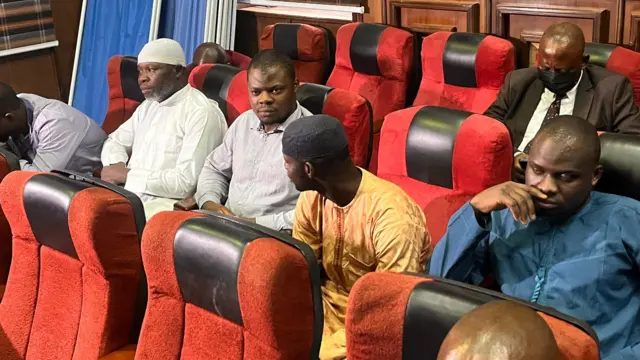
On June 3, 2026, Justice Emeka Nwite of the Federal High Court, Abuja, delivered what may become one of the most consequential terrorism judgments in Nigeria’s recent history. Four men — Idris Abdulmalik Omeiza, Al Qasim Idris, Jamiu Abdulmalik and Abdulhaleem Idris — were sentenced to death by hanging for their roles in the June 5, 2022 massacre at St. Francis Catholic Church, Owo, Ondo State. A fifth defendant was discharged and acquitted for lack of evidence.
The attack remains one of the most horrific acts of terrorism ever recorded in Southern Nigeria. Worshippers were concluding Pentecost Sunday Mass when gunmen opened fire and detonated explosives. More than 40 people were killed, while over 100 sustained injuries. Children, women and entire families were among the victims.
The judgment was widely celebrated as a victory for justice, a triumph for diligent investigation and a demonstration that terrorism can be successfully prosecuted in Nigeria. Yet beneath the applause lies a difficult question that successive governments have carefully avoided: will these death sentences ever be carried out? That question extends far beyond Owo.
It goes to the very heart of Nigeria’s counterterrorism strategy and exposes one of the biggest contradictions in the country’s criminal justice system. Nigeria has become increasingly successful at convicting terrorists. What it has not demonstrated with equal consistency is the willingness to enforce the ultimate punishment prescribed by law.
The consequence is a justice system that often stops at conviction. For victims and their families, that distinction matters. For terrorists and would-be terrorists, it matters even more.
The Boko Haram insurgency, which began in 2009, has become one of Africa’s deadliest conflicts. Thousands have been killed and millions displaced across Borno, Yobe and Adamawa States. Entire communities have been erased from the map. Schools, churches, mosques and markets have been attacked. The humanitarian consequences have stretched across the Lake Chad Basin and beyond.
For years, however, Nigeria struggled to convert arrests into convictions. The turning point came with the establishment of specialised terrorism trials, particularly at the Kainji Detention Facility in Niger State. Since 2017, successive phases of mass terrorism prosecutions have sought to address the backlog of Boko Haram and ISWAP suspects held in custody.
The figures are revealing. Between 2017 and 2018, Nigerian courts convicted 163 terrorism suspects while 887 others were discharged or acquitted after evidence failed to support the allegations against them. Those acquittals were significant because they demonstrated that the courts were not functioning as mere conveyor belts for convictions but were insisting on evidentiary standards.
The process accelerated in July 2024 when another 125 Boko Haram fighters and terrorism financiers were convicted during Phase Five of the Kainji trials. Eighty-five of those convicted were found guilty of terrorism financing offences, while others were convicted for terrorism-related crimes and offences linked to international criminal law.
Subsequent phases have produced additional convictions, making Nigeria’s terrorism prosecution programme one of the largest judicial counterterrorism efforts on the African continent. Yet convictions alone do not tell the whole story. The real dilemma begins after sentencing.
Under Nigerian law, a death sentence does not automatically translate into execution. The convicted person is entitled to exhaust all appeal processes up to the Supreme Court where applicable. Even after the judicial process is concluded, the sentence still requires executive authorisation through a death warrant.
This is where politics enters the courtroom. Governors and presidents frequently find themselves caught between legal obligations and political realities. Human-rights organisations oppose executions on moral grounds. International partners often discourage the use of capital punishment. Religious leaders remain divided. Civil society groups raise concerns about miscarriages of justice. Consequently, death warrants are rarely signed.
The result is a peculiar legal contradiction. Courts pronounce death sentences. Governments preserve the sentences. But executions seldom occur. The condemned remain on death row indefinitely.
The most notable exception in contemporary Nigeria occurred in June 2013 when authorities in Edo State executed four condemned prisoners at Benin Prison after then Governor Adams Oshiomhole signed execution warrants. Human-rights organisations described the hangings as the first known executions in Nigeria since 2006. The action generated immediate national and international controversy. What followed is instructive.
Rather than encouraging wider enforcement of death sentences, the Edo executions appeared to deepen official caution across the federation. Governors became increasingly reluctant to sign warrants, fearing political backlash and international condemnation. Since then, Nigeria has largely operated a de facto execution moratorium despite retaining capital punishment in its statute books.
This ambiguity raises serious questions. Can a state maintain the death penalty as a lawful punishment while simultaneously refusing to implement it? Can a sentence remain credible if everyone understands that it is unlikely to be carried out? Can deterrence exist where punishment lacks certainty?
The Owo massacre was not a spontaneous crime. According to court findings, the convicted men belonged to a terrorist network, participated in planning meetings and executed a coordinated attack involving firearms and explosives against unarmed worshippers. The court also convicted them on counts relating to terrorism financing, hostage-taking, kidnapping and membership of a terrorist organisation.
These are not ordinary criminal offences. Terrorism is designed to intimidate populations, undermine state authority and destabilise society itself. That reality explains why many countries impose exceptional penalties for terrorism-related offences. The issue, therefore, is not whether Nigeria should execute the Owo convicts tomorrow.
The issue is whether Nigeria should continue operating a system in which courts impose punishments that governments appear unwilling to enforce. A mature democracy cannot indefinitely inhabit such a contradiction.
There are only two intellectually coherent options. The first is retention with enforcement. If Nigeria believes terrorism warrants capital punishment, then the state must develop the political courage to implement lawful sentences after all appeals have been exhausted.
The second is abolition through legislation. If policymakers conclude that executions are inconsistent with contemporary human-rights standards, then death sentences should be replaced with life imprisonment without parole for the gravest terrorism offences.
What undermines confidence is the current middle ground. The uncertainty affects victims as much as it affects convicts.
Families who lost loved ones in Owo, Chibok, Baga, Dapchi, Madagali and countless other communities deserve clarity about what justice means under Nigerian law. The rule of law depends not merely on convictions but on consistency.
The Owo judgment has therefore done more than punish four terrorists. It has reopened a national conversation that Nigeria has postponed for too long. The country has invested billions of naira in intelligence gathering, military operations, counter-radicalisation programmes, detention facilities, prosecutions and rehabilitation initiatives. It has improved investigative capacity. It has strengthened terrorism legislation. It has demonstrated increasing competence in securing convictions.
What remains unresolved is the final stage of it. The Owo case now stands as a test. Not simply of the guilt of the convicted men, which the court has already determined, but of the Nigerian state’s willingness to reconcile law with policy.
Whether the answer ultimately favours execution or abolition, one fact is beyond dispute. Justice cannot permanently exist in suspension.
A nation fighting terrorism cannot afford ambiguity where certainty is required. The families who buried their loved ones after that dark Pentecost Sunday in Owo deserve justice. And Nigeria deserves a criminal justice system courageous enough to decide what it truly believes about the death penalty.
Alabidun is a media practitioner and can be reached via alabidungoldenson@gmail.com
On the Killing of ISIS Second-in-Command in Nigeria, by Alabidun Shuaib AbdulRahman
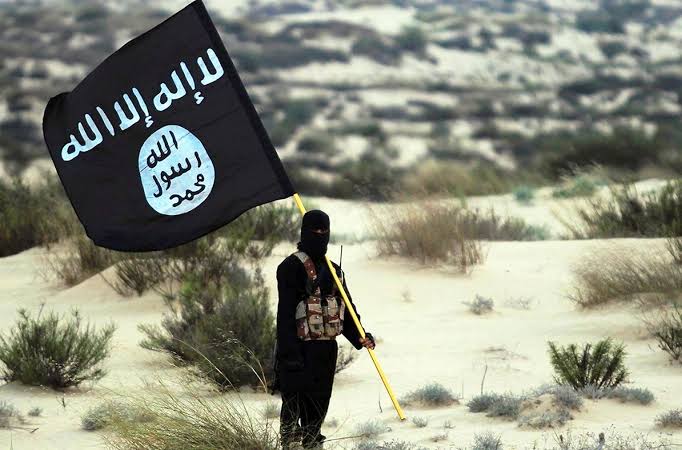
For years, the global war against terrorism was framed largely through the lens of the Middle East — Iraq, Syria, Afghanistan and the broader Arabian Peninsula. Yet, in the last decade, the epicentre of extremist violence has quietly shifted toward Africa, particularly the Sahel and the Lake Chad Basin. The reported killing of Abu-Bilal al-Minuki, described by both American and Nigerian authorities as the second-in-command of the Islamic State, ISIS globally, therefore represents far more than another battlefield casualty. It is a defining moment in the evolution of terrorism and counterterrorism in Africa.
On May 16, 2026, the United States and Nigeria announced a joint military operation that reportedly eliminated al-Minuki in the Lake Chad Basin, one of the most volatile theatres of insurgency in Africa. United States President Donald Trump described the operation as “meticulously planned and very complex,” while President Bola Tinubu hailed it as a major blow against the Islamic State network operating across West Africa.
The significance of the operation lies not merely in the elimination of a single terrorist commander, but in what it reveals about the changing architecture of global jihadism. Africa is no longer a peripheral front in extremist warfare; it has become its strategic centre of gravity.
Abu-Bilal al-Minuki was not an ordinary insurgent commander. Security assessments and intelligence reports linked him to the Islamic State West Africa Province, the ISWAP faction that emerged after Boko Haram’s split in 2016. He was reportedly involved in coordinating logistics, financing, propaganda operations and regional expansion across the Sahel. American authorities had designated him a “Specially Designated Global Terrorist” in 2023, an indication of the seriousness with which United States viewed his activities.
According to multiple intelligence-linked reports, al-Minuki was born in Borno State around 1982 and rose through the ranks of Boko Haram before aligning with the Islamic State network after Boko Haram pledged allegiance to ISIS in 2015. It was believed that his alias “al-Minuki” or “Mainok” derived from Mainok town in Borno State, following the regional tradition of identifying individuals by hometowns or clan affiliations.
This detail is important because it underscores a painful truth Nigeria has long struggled to confront: terrorism in the country is not simply an imported ideology; it is also a product of domestic fractures linking weak governance, ideological radicalisation, porous borders and decades of state neglect in the North-East among others.
The Lake Chad Basin itself has become one of the world’s most dangerous ungoverned spaces. Spanning Nigeria, Chad, Niger and Cameroon, the region’s marshlands and difficult terrain have enabled insurgent groups to establish fortified enclaves largely beyond the reach of conventional military operations. It is within this environment that ISWAP evolved from a regional insurgency into an internationally connected terror franchise.
The rise of ISWAP marked a strategic shift from Boko Haram’s earlier indiscriminate brutality. While Boko Haram under Abubakar Shekau relied heavily on mass civilian killings, village burnings and suicide bombings, ISWAP adopted a more calculated approach. It targeted military formations, imposed taxation systems in occupied communities and sought to present itself as an alternative governing authority. That strategic sophistication reportedly made figures like al-Minuki invaluable to ISIS central leadership.
What perhaps alarmed Western intelligence agencies most was the increasing integration between African jihadist networks and the broader Islamic State structure. American officials reportedly linked al-Minuki to ISIS’s General Directorate of Provinces and the al-Furqan media apparatus, structures central to the group’s global coordination and propaganda. This explains why his killing has drawn such international attention.
For Nigeria, however, the matter goes beyond global security calculations. The country has endured nearly two decades of insurgency since Boko Haram launched its violent uprising in 2009. According to estimates from humanitarian agencies and conflict monitoring groups, more than 35,000 people have been killed directly by the insurgency, while millions have been displaced across the North-East. Entire communities have been erased, agricultural systems disrupted and local economies destroyed.
The insurgency also exposed serious institutional weaknesses within Nigeria’s security architecture. Successive governments repeatedly claimed victory over terrorists, only for attacks to intensify afterward. Indeed, the controversy surrounding al-Minuki’s death illustrates this credibility challenge. Nigerian military sources had reportedly listed a commander bearing similar names among insurgents killed in Kaduna operations in 2024. The Presidency later explained that the earlier identification was likely a case of mistaken identity or battlefield misattribution.
Such contradictions have historically fuelled public scepticism. Nigerians have heard repeated declarations about the elimination of notorious terrorist leaders, only for those same figures to resurface later. The late Boko Haram leader, Abubakar Shekau, was reportedly declared dead multiple times before his actual death was confirmed in 2021. This pattern has understandably weakened public confidence in official military claims. Yet, if current reports are accurate, the elimination of al-Minuki would indeed represent a major operational success.
Still, history teaches that terrorism rarely collapses because of the death of a single leader. Terrorist organisations are designed to survive decapitation strikes. Leadership replacement mechanisms are usually embedded within their structures. In many cases, younger and even more radical commanders emerge after senior figures are killed.
The United States learned this lesson after the killing of Osama bin Laden in 2011. Al-Qaeda weakened but did not disappear. The death of ISIS founder Abu Bakr al-Baghdadi in 2019 similarly failed to extinguish the group. Instead, ISIS decentralised further, shifting operational focus toward Africa where fragile states, weak borders and local grievances created fertile conditions for expansion.
Indeed, security analysts now estimate that a substantial percentage of ISIS-linked attacks globally occur in sub-Saharan Africa. This is a deeply troubling development for Nigeria because it means the country increasingly occupies a frontline position in global counterterrorism efforts. The implications are both strategic and political.
Strategically, Nigeria’s military partnership with the United States appears to be entering a new phase. The joint operation against al-Minuki signals growing intelligence sharing, surveillance cooperation and operational coordination between both countries.
This is notable because relations between the two countries had recently experienced friction over allegations concerning religious persecution and broader security concerns. Yet, the al-Minuki operation suggests that mutual security interests ultimately prevailed over diplomatic disagreement.
However, foreign military cooperation also raises difficult sovereignty questions. Nigeria must avoid becoming excessively dependent on external powers for internal security management. Counterterrorism support is valuable, but no foreign partner can permanently secure Nigeria if the country fails to address the internal conditions feeding extremism. And this is perhaps the most important lesson from the al-Minuki episode. Terrorism in Nigeria cannot be defeated solely through military force.
Military operations may eliminate commanders, destroy camps and recover territories, but they do not automatically erase extremist ideology. The North-East crisis has always been multidimensional. In several insurgency-affected communities, the Nigerian state remains largely absent except through military presence. Schools are inadequate, hospitals scarce and infrastructure severely underdeveloped. In such environments, extremist groups exploit grievances and recruit vulnerable youths with alarming ease.
The challenge becomes even more dangerous when insurgency merges with banditry, arms trafficking and transnational organised crime. The Sahel today is experiencing precisely this convergence. Terrorist groups increasingly finance themselves through kidnapping, smuggling and illegal taxation networks. The ideological and criminal dimensions reinforce each other. This is why the killing of al-Minuki should not become an excuse for premature triumphalism. Rather, it should serve as an opportunity for sober reflection.
Nigeria must now ask itself difficult questions. Why has the insurgency endured for nearly seventeen years? Why do extremist groups continue regenerating despite repeated military offensives? Why do fragile communities remain vulnerable to radicalisation? And perhaps most importantly, what kind of post-conflict reconstruction framework truly exists for the North-East?
Counterterrorism victories are meaningful only when they translate into lasting civilian security. The humanitarian cost of the insurgency remains staggering. Millions remain displaced. Thousands of children have lost access to education. Farmers in many communities still cannot safely cultivate their lands. Women and girls continue facing profound vulnerabilities within displacement camps. These realities are often overshadowed whenever attention shifts toward high-profile terrorist killings.
There is also the broader African dimension. The instability stretching from Nigeria through Niger, Mali, Burkina Faso and Chad reflects a continental security crisis that conventional military responses alone cannot solve. Governance deficits, military coups, climate stress, ethnic rivalries and economic despair collectively create conditions in which extremist networks flourish. Africa’s terrorism crisis is therefore inseparable from its governance crisis.
This reality explains why ISIS increasingly views Africa as its future operational base. Weak institutions create strategic opportunities. Vast ungoverned territories provide safe havens. Fragile states offer limited resistance. Unless African governments collectively address these structural weaknesses, extremist networks will continue adapting regardless of how many commanders are eliminated.
For grieving communities across the North-East, every disrupted terror network matters. Every prevented attack matters. Every dismantled command structure matters. The operation demonstrates that coordinated intelligence and military cooperation can produce significant results.
The true test will lie in what follows next, whether Nigeria can consolidate tactical gains into strategic stability; whether communities devastated by conflict can be genuinely rehabilitated; whether governance can return to neglected territories; and whether the cycle of radicalisation can finally be broken.
Alabidun is a media practitioner and can be reached via alabidungoldenson@gmail.com



CARICOM must impact citizens’ lives, says incoming Chair Pierre

Marketers Import Dangote-Refined Fuel Through Togo Hub

Ghana eyes local takeover of Gold Fields’ Tarkwa mine

Pastor Jerry Eze Defends Miracles At UK Conference Amidst Criticism And Controversy

Diaspora Watch 20th Edition (October 14-20, 2024): Your Trusted Source for Global News and Insights

Tanzanian Man Reportedly Dies And Returns To Life Six Times


-

 Tech1 week ago
Elon Musk Becomes World’s First Trillionaire After SpaceX IPO Pricing
-

 Diplomacy1 week ago
Trade Disruptions, Inflation Threaten Caribbean Growth — Barnett
-
 Analysis1 week ago
An Open Letter to VDM and the Generation That Could Change Nigeria
-

 News1 week ago
Russia Restricts Putin Surveillance Over AI Fears
-

 Milestone22 hours ago
Godchildren Honour Emmanuel and Joy Ojiribe at 40th Anniversary Celebration in US
-

 Features1 week ago
Diaspora Watch Vol. 96