
Insights
Reframing Nigeria’s Banditry Crisis: From Emotional Narratives to Strategic Clarity

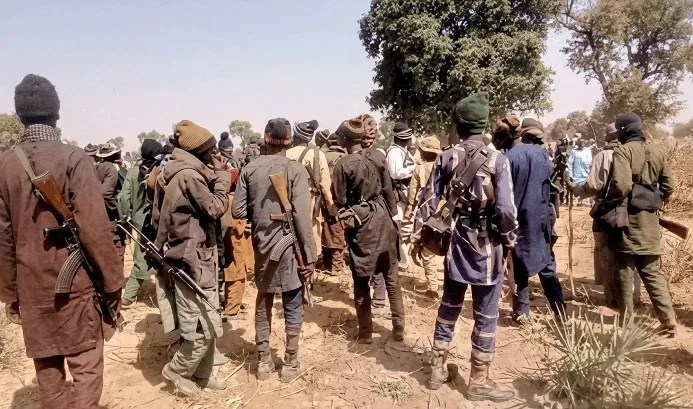
Nigeria Banditry is once again trapped in a familiar and dangerous cycle: confronting a grave national security threat through emotionally charged narratives, partisan framings, and poorly differentiated solutions that blur the line between grievance and criminality. The armed banditry plaguing Northern Nigeria—particularly across the North-West and parts of the North-Central—has generated an avalanche of commentary for and against dialogue with bandits. While supporters of dialogue are often cast as well-intentioned, their opponents frequently argue that such a stance is insensitive to the victims of banditry.
This essay intervenes in that conversation. Its purpose is not to provoke a sterile debate between advocates of ‘dialogue’ and proponents of ‘kinetic action,’ nor to dismiss non-kinetic tools wholesale. Rather, it seeks to interrogate the assumptions, misdiagnoses, and conceptual errors that increasingly shape public discourse on banditry, often in ways that undermine Nigeria’s national security rather than strengthen it. What is urgently required is clarity of threat, precision of categorisation, and discipline in policy response. Banditry in Northern Nigeria is neither monolithic nor reducible to a single narrative of grievance. Treating it as such—through emotional understanding, ethnic profiling, or indiscriminate calls for amnesty—risks legitimising violent criminal enterprises, emboldening perpetrators, and eroding the state’s monopoly over the use of force.
I write neither as a passive observer nor as a theorist detached from the theatre of violence. Before entering public service, I spent over a decade as a journalist covering conflict and insecurity in Northern Nigeria. I later served as Spokesperson to the Government of Kaduna State and pioneer Commissioner of Internal Security and Home Affairs. For nearly a decade, I was a member—and later Secretary—of the State Security Council, actively involved in security operations, liaison between the Government of Kaduna State and security forces, coordination of intelligence gathering and internal security, among other responsibilities.
My work took me repeatedly into frontline areas: Birnin Gwari and its adjoining corridors; the forests and flashpoints of Zamfara, Katsina, and Niger States; and into out-of-reach locations in Chikun, Igabi, Giwa, Kajuru, Kachia, Kagarko, Kauru, Kubau, and other high-risk zones across the state and beyond. My submission is, essentially, a summary of the practical knowledge from my involvement.
Banditry in Northern Nigeria today is not primarily a grievance-based phenomenon seeking political redress. It is a violent, profit-driven criminal ecosystem that has evolved into a quasi-corporate enterprise, with diversified revenue streams, transnational arms supply chains, and entrenched leadership structures. To treat it otherwise is to misread the threat.
Banditry is not new to Northern Nigeria. Historical accounts trace cattle rustling and armed robbery as far back as 1891 around Dansadau, where some traditional rulers were accused of colluding with bandits. Cross-border criminality involving some Tuareg, Fulani, Gobirawa, and Asebenawa actors existed during the colonial period, but these activities were limited in scale and lethality, constrained by the absence of widespread small arms proliferation.
The contemporary mutation of banditry emerged gradually but decisively in the post-2011 period. What began as rural criminality—cattle rustling, highway robbery, and communal disputes—metastasised into mass kidnapping, village annihilation, sexual violence, arms and drug trafficking, territorial control, and many other challenges. The turning point was not merely grievance but weaponisation: the transition from sticks and swords to pump-action rifles and, eventually, AK-47s and other high-calibre weapons.
Scholarly work, including that of Dr. Murtala Rufai, identifies Alhaji Kundu and Buhari Tsoho (Buharin Daji) as architects of the first modern bandit gang. Their operations expanded rapidly across Zamfara and neighbouring states, eventually spawning over 120 gangs by 2021. Between 2011 and 2021 alone, these groups reportedly killed over 12,000 people, displaced tens of thousands, destroyed entire villages, and stole hundreds of thousands of livestock.
Crucially, the early victims of modern banditry were Fulani herders whose cattle were rustled en masse by bandits of the same Fulani extraction. Eventually, these legitimate cattle owners resorted to self-help by also acquiring low-calibre weapons to protect their livestock from being rustled by the bandits, as police and traditional rulers’ interventions failed and the authorities turned a blind eye—not seeing the dangers ahead and just perceiving the development as usual intra-Fulani herders feud. In return, because of their contacts and resources, the bandits started acquiring automatic weapons and overpowered these legitimate cattle owners and massively rustled their cattle. It also got to a stage where bandits were kidnapping these cattle owners and demanding herds of cattle or its equivalent in cash as ransom. Many cattle owners who had no herds of cattle to present nor money to pay as ransom were killed, and some of their daughters and wives were forcibly taken as sex slaves. This trend impoverished these owners, driving many of their kin to join banditry to recover stolen cattle. Others joined gangs like the ‘Kungiyar Gayu’ to demand pastoral unity and justice in response to cattle rustling, extortions, allegations of injustices by local traditional rulers, police partialities, politicians, local court corruption, and other abnormal practices that exposed them to extreme poverty without a source of livelihood. Some were also brainwashed by bandits to join banditry in the name of resisting a perceived agenda against their ethnicity in view of social discrimination and stereotyping.
As I have previously argued, the first main targets of Kundu and Tsoho’s gang were the legitimate Fulani cattle owners. Once they were finished with them, they turned to rustling the farming cattle (Shanun Huda) of Hausa farmers, alongside killings, kidnappings, gender-based violence of the Hausa women, confiscation of properties, and the destruction of farms. In response, Hausa farming communities formed volunteer groups, commonly referred to as ‘Yan-Sakai’ or ‘Yan-Banga’.
The excesses of these volunteers—generalising and categorising all Fulani, including herders who were also victims, as complicit—drew a dangerous ethnic battle line. The rural Fulani herders could no longer access towns and markets, while Hausa farming communities could not access their farms deep in the forest. Markets became inaccessible. Farms were abandoned. Forests became battlefields. This development set in motion killings and counter-killings, even as cattle rustling intensified. In the midst of this, kidnapping for ransom emerged, with bandits carrying out abductions and the ‘Yan-Sakai’ organizing counter attacks—excesses that affect the innocent based on shared ethnicity. This dynamic further compounds the crisis, as aggrieved innocents seek vengeance, since there is no justice system to dispense justice, while the bandits and ‘Yan-Sakai’ pursue their own, parallel cycles of retribution.
The ‘Yan-Sakai’ killing of a Fulani leader, Alhaji Isshe of Chilin village in Maru Local Government Area of Zamfara State—an event recorded as occurring on 16th August 2012—marked a decisive escalation. As Rufai noted in his thesis, they carried out the public murder on the accusation that he was harboring criminals and rustlers. Reprisal followed reprisal. What began as criminality hardened into an ethnicised cycle of violence, even as bandit gangs expanded operations against all communities regardless of identity. By the time the government acted, the criminality had become entrenched across several centres of gravity in Zamfara State and neighbouring corridors. Kidnapping and attacks intensified around 2013 and resurged in 2016 across Zamfara, Kaduna, Katsina, Kebbi, Sokoto, Niger, Plateau, and Benue.
A major obstacle to an effective response has been the tendency of some media sections to fracture the banditry narrative along ethnic and religious lines: one story for Zamfara and Katsina, another for non-Hausa communities in Plateau and Benue.
The criminality perpetrated by the bandits—for instance, in Benue and Plateau states—further ignited the long-standing farmers-herders, land-grabbing, and indigene-settler tensions and crises, which usually take on religious and ethnic dimensions because the farmers are largely non-Fulani Christians while the herders are Fulani Muslims. This escalation occurred despite a positive history of Fulani-Tiv and Fulani-Berom relations built on complementary farming and pastoralism over time.
The good side of Tiv and Fulani brotherhood was well captured by Akiga Sai (1898-1959) in his book ‘History of the Tiv’. The exact passage is: “Besieged with animosity from their neighbours, the Tiv pulled out from their neighbors, the Tiv pulled out from their midst and migrated north-east, if one uses a modern compass, until they met with another alien group called Fulani and mingled with them. The Fulani never troubled them by interfering with their way of life. They formed close bonds with each other. In case of any attack by another group, the Fulani would easily repel such an attack. The Tiv marvelled at the dexterity with which the Fulani fought and defeated aggressor ethnic groups and nicknamed the Fulani pul, meaning ‘conqueror’ in the Tiv language.”
Akiga Sai was a man of historic firsts. He was the first Tiv man to declare himself a Christian in 1912 and was among the first group of four to be baptised in 1917. He became the first Tiv to read and write, edited the first Tiv newsletter (Mwanger u Tiv) published by the Gaskiya Corporation, served as the first Tiv elected politician in the Northern House of Assembly, was one of the delegates sent to the London constitutional conference in 1953, and authored the first book ever written by a Tiv person. He completed the Tiv language manuscript for his book, ‘History of the Tiv’, in 1935. An edited English translation by Rupert East was first published by the International African Institute in 1939 under the title ‘Akiga’s Story: the Tiv tribe as seen by one of its members.’
In a separate 2016 article on Nigerian linguistics, the scholar Farooq Kperogi notes: “Again, although the Fulani and the Berom of Plateau State see themselves as belonging to the furthest poles of northern Nigeria’s political and cultural divide, especially in light of the recent internecine ethnic conflict in Plateau State, they not only belong to the larger Niger Congo language family (to which many languages in central and southern Nigeria belong); they actually belong to the same Atlantic Congo subfamily of the Niger Congo family.”
These historical and linguistic ties underscore how the contemporary framing of conflict along rigid ethnic lines is dangerous, one that bandits and partisan narratives exploit. Much as there’s a problem, the better part of the past can be used in reframing narratives to halt bloodshed and exploit the strengths of diversities and the ubiquitous of all humans.
Furthermore, the fact that banditry is perpetrated by criminals whose ethnic identity is traceable to Fulani has exacerbated the problem. I have argued elsewhere that, despite the symbiotic nature of banditry and farmers-herders conflicts, there is a fundamental difference between the two; and all parties (farmers and herders communities) are ultimately victims of the banditry perpetrated by these criminals and their collaborators who are driven by economics and terror. The book ‘The Root Cause of Farmers-Herders Crisis in North Central Nigeria’ by Plangshak Musa Suchi and Sallek Yaks Musa explores this problematic nexus in greater detail.
The media’s selective framing fuels polarization and obscures the underlying criminal logic that drives the violence. Banditry is not tribal or identity-based violence but a form of terrorism and criminality perpetrated by criminal elements who must be viewed and treated as such. Ethnic profiling weakens the collective battle against crime, complicates counter-banditry campaigns, and strengthens the bandits’ emotional narratives.
At its core, contemporary banditry is sustained by money. What began as cattle rustling evolved into a sophisticated criminal economy with multiple income streams: ransom payments, cattle sales, arms trafficking, illegal mining, protection levies, forced taxation, mercenary killings, drug peddling, and collaboration with transnational criminal networks across borders. Some kingpins transitioned from field operations into full-time arms dealing, supplying weapons not only to their own gangs but to other criminal actors. In certain forest corridors, weapons became easier to obtain than food. The accumulation of wealth allowed bandits to establish shadow governance structures in ungoverned spaces and thrive in their lucrative enterprise of crime.
Faced with mass casualties and public pressure, several state governments in the past turned to dialogue and peace accords. Early attempts at negotiation were documented, such as a reported meeting with the bandit leader Buharin Daji at Gobirawa Chali village in December 2016. Zamfara, Katsina, and others experimented repeatedly with negotiations, arms surrender ceremonies, and promises of reintegration. Key events include a peace agreement in Katsina on 15th January 2017, a major surrender ceremony in Zamfara on 16th December 2019, and another peace accord enacted by the Zamfara state government in 2019. Each time, violence temporarily subsided—only to return with greater ferocity.
Former Governor Aminu Bello Masari’s frustration was telling: peace accords rarely lasted beyond a few months. Bandits regrouped, rearmed, and resumed operations. In Kaduna State, an attempt to suggest dialogue was rebuffed, and the state maintained an outright rejection of negotiation—a stance hardened by major attacks in 2021 and 2022. This position stemmed from a hard-earned assessment: financially incentivised criminals have little reason to abandon lucrative violence. Dialogue is not inherently wrong. Its error lies in misapplication.
A central failure in Nigeria’s discourse is the refusal to distinguish between categories of armed actors involved in the banditry cycle. There exists a group of low-risk non-state actors: individuals who armed themselves defensively after suffering attacks from bandits or vigilantes, as earlier discussed. They do not engage in predatory kidnapping but in violence associated with the repercussions of attacks and criminality perpetrated by bandits. These actors and communities can be engaged through dialogue, disarmament, and state protection, alongside an emphasis on recourse to the law and the avoidance of stereotyping that creates chains of serial attacks and counter-attacks resulting in killings and displacement while banditry flourishes.
But there is a second group: heavily armed, profit-driven bandit networks responsible for mass killings as hired mercenaries; serial kidnappings of students, citizens and expatriates; cattle rustling; attacks on schools and hospitals to cripple education and healthcare service delivery; attacks and killings of worshippers at mosques and churches, as well as at markets, farms, and rivers during fishing; the burning of communities and territorial control; the displacement of communities; the enslavement of community members to run errands and service their logistical needs for petrol and food; and the conscription of others from these enslaved communities into armed banditry and other related crimes. They impose protection levies on communities and levies for the clearing of farms, farming, and harvesting. They engage in armed robbery, maintain informant networks that aid targeted kidnappings, and coerce communities to place their wards on routine sentry duty to report security force movements while forbidding them from volunteering information or responding to official inquiries—a directive enforced by the threat of execution. They are also involved in illegal mining, procuring and trafficking in arms and drugs, carrying out joint operations and fusing with ideologically based terror groups, attacks on critical national infrastructure, and gender-based violence, including the impunity with which they make minors and married women into sex slaves, and attacks on security forces—carting away arms and committing other forms of violent attacks for monetary gain and objectives that undermine national security and Nigeria’s sovereignty. These actors operate criminal franchises.
Appeasement or kid-glove approaches only strengthen them, as practical study shows they rush to embrace truces when weakened by the coercive power of the state, buying time to restock and rebalance their armoury. Within this category are those they conscripted; if these individuals surrender voluntarily and give up their arms, it should be honoured while they are profiled, further disarmed, and processed as guaranteed by law and protocols.
Advocates of dialogue often underestimate the intelligence advantage held by security agencies. Lawful interception, human intelligence networks, and post-operation verification provide a far clearer picture of bandit intentions than any forest-level engagement. For those familiar with security management trends, these capabilities provide intelligence agencies with crucial advantages. They enable the collection of real-time details and background intelligence on armed groups, putting strategic communications, tactics, and decoys at the agencies’ fingertips—all without the knowledge of the groups themselves or of the commenting public. Bandits stage theatrical performances for emissaries: choreographed displays of arms, rehearsed grievances, emotional appeals. These are psychological operations designed to conceal their real motive, which is fundamentally criminal and nothing more. What emissaries hear is not truth—it is an emotional narrative, as many advocates do not engage in post-intelligence verification that security agencies conduct and from which they glean actionable intelligence.
Nigeria has paid dearly for ignoring early warning signs: Maitatsine, Boko Haram, and now banditry. Each followed the same trajectory—dismissal, appeasement, escalation, catastrophe. Recent statistics underline the cost. According to a report issued by the National Bureau of Statistics (NBS) in December 2024, which calls for deeper reflection on the economy of banditry, between May 2023 and April 2024, the nation recorded more than 600,000 deaths from insecurity, with 614,937 citizens killed nationwide. The North-West had the highest figure with 206,030, followed by the North-East with 188,992, while the least was recorded in the South-West at 15,693. The Bureau, in the said report which has not been countered, added that 2,235,954 Nigerians were kidnapped and a total of ₦2,231,772,563,507 (approximately $1,438,040,707) was paid in ransom.
The report stated that the North-West remained dominant in Nigeria’s kidnap-for-ransom landscape, recording 425 incidents, or 42.6 per cent of total cases nationwide. The region also accounted for 2,938 victims, representing 62.2 per cent of all abducted persons. This report and the recent one issued by SBM Intelligence in December 2025 are worrisome, presenting a clear scenario and a sign that the nation must tread with caution.
Banditry in Northern Nigeria is not a misunderstanding to be resolved through sentiment and politicking. It is a national security threat that demands conceptual clarity, differentiated responses, and state resolve. Dialogue has a place—but only where actors are willing to genuinely disengage. Criminal enterprises masquerading as aggrieved must be confronted with lawful, proportionate, and decisive force. Nigeria’s future security depends not on emotional understanding, but on strategic honesty.
To move forward, Nigeria must formally abandon the tendency to treat “bandits” as a single category. A national threat differentiation doctrine should be adopted across federal and state security architecture, clearly distinguishing between low-risk armed non-state actors, who are defensive and grievance-driven, and high-risk entrepreneurial bandit networks, which are profit-driven, transnationally connected, and heavily armed criminal franchises. This distinction should guide who may be engaged, who must be disarmed, and who must be confronted with the might of the state. Without this clarity, dialogue and force will continue to be applied blindly, with counterproductive results.
Consequently, dialogue, reconciliation, and reintegration must be surgically applied, not morally universalised. Engagement should be limited to individuals who do not engage in kidnapping for ransom, do not command armed groups, have no history of mass killings or sexual violence, and are willing to submit to biometric registration, vetting, and monitoring. Such processes must be embedded within formal Demobilisation, Disarmament and Reintegration (DDR) frameworks, not ad hoc political expediency arrangements. Any negotiation with high-value bandit leaders constitutes strategic appeasement and should be reconsidered.
The bandit economy survives on cash flow. Therefore, payments by communities for “peace,” protection, access to farms, mining, or ceasefires must be officially discouraged because they are indirect terror financing and a source of oxygen for the crisis. Communities must be protected so that survival payments and ransom do not become their only option, and networks in communities involved in ceasefire payments or facilitation ought to be dismantled. Ending violence requires cutting revenue, and no line enabling or sustaining a revenue source should be taken lightly.
For entrenched, profit-driven bandit groups, force must be lawful, precise, relentless, and intelligence-led. Operations should prioritise command nodes, arms supply chains, logistics corridors, financial intermediaries, and forest-based staging areas. This is not collective punishment; it is targeted state enforcement of the monopoly of violence.
The Kaduna-bound train attack of 2022 and similar incidents demonstrate a dangerous convergence between bandit networks and ideological terrorist elements. Nigeria must treat this convergence as an early-stage insurgency risk, disrupt funding overlaps, shared training, and weapons transfers, and prevent bandit networks from evolving into full-spectrum terrorist organisations, as happened with Boko Haram. History shows the cost of ignoring this phase is catastrophic.
Bandits thrive where the state is absent. Security operations must be followed immediately by permanent security presence, the reopening of schools and health facilities, the restoration of markets and rural livelihoods, and the reinstatement of administrative control through courts and civil authority. Clearing operations without holding and governing will only recycle violence.
Furthermore, the state must lead a deliberate narrative reset. Official communication should describe banditry as criminal violence—a threat to the common good that must be addressed. Media framing that profiles entire communities must be actively discouraged, and law enforcement actions must be visibly even-handed. While community self-defence emerged from necessity, its excesses escalated violence. The security outfits being established by some states must be regulated and trained in human rights and rules of engagement, placed under clear legal authority, and held accountable for abuses. Unregulated activities compound the crisis and fuel cycles of attacks.
Nigeria’s history—Maitatsine, Boko Haram, now banditry—reveals a pattern of ignored warnings. Intelligence assessments must translate into early action, not delayed consensus. Political hesitation in the face of clear threat indicators must be treated as a national security failure. Prevention is always cheaper—in lives, legitimacy, and resources—than containment.
Finally, Nigeria must stop debating banditry primarily as a sociological misunderstanding. It is a violent criminal economy, and a threat to national security and all the negative consequences earlier discussed. The central lesson from the foregoing is simple: If emotional narratives continue to override intelligence, law, and experience, the country risks repeating the very mistakes that produced its gravest security catastrophes.













Like Ant, Like AbdulRahman AbdulRazaq, by Alabidun Shuaib AbdulRahman
There is something deceptive about the ant. Put it beside a lion and it looks almost insignificant. Put it beside an elephant and it virtually disappears. It has no roar, no intimidating physique, no majestic stride and certainly no dramatic entrance. Yet the ant survives. More than that, it organises, adapts, carries burdens several times its body weight and, when confronted by obstacles, rarely wastes time fighting the obstacle head-on. It finds another route.
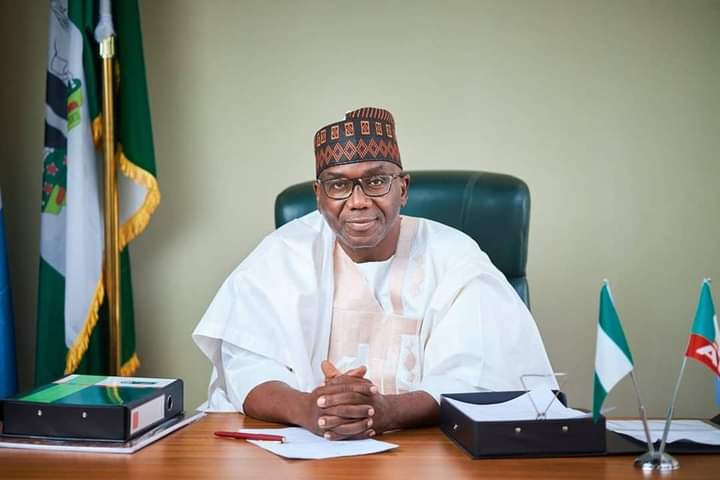
That, to my mind, is perhaps the most revealing metaphor for understanding the political career of Kwara State Governor, AbdulRahman AbdulRazaq. This is not an attempt to turn the governor into a political saint. He is not one. Neither is it an argument that he has won every political battle. He has not. His administration and political conduct have attracted criticisms, some of them legitimate, and his political camp has suffered setbacks. But there is one feature of his political journey that is difficult to ignore: AbdulRahman AbdulRazaq has repeatedly been underestimated.
Those who dismissed him as merely a wealthy businessman entering a political arena dominated by established political structures have had to revise their calculations more than once. The journey began in earnest in 2018 when he emerged as the All Progressives Congress governorship candidate for the 2019 election. It was hardly an ordinary political contest. Kwara had for decades been associated with the political influence of the Saraki family, and the 2019 election was shaping up to be a battle over whether that influence would continue to determine the direction of the state.
AbdulRazaq entered that contest as the candidate of a growing opposition movement that had adopted the slogan “O To Ge” — enough is enough. On March 9, 2019, the slogan acquired electoral meaning when AbdulRazaq defeated the PDP candidate, Razak Atunwa, by a huge margin. AbdulRazaq secured 331,546 votes against Atunwa’s 114,754 and, remarkably, won in all 16 local government areas of the state.
That was not simply an election victory. It was the collapse of a political arrangement that many people had considered almost impossible to dislodge. AbdulRazaq became the beneficiary and symbol of that political revolution. But winning power is one thing. Keeping it is another.
The coalition that produced the 2019 victory contained powerful personalities and competing interests. Among the people who eventually found themselves on the opposite side of the governor was Lai Mohammed, the former Information and Culture Minister and one of the most influential figures in the Kwara APC. Bashir Omolaja Bolarinwa, who had served as chairman of the state APC, also became involved in the internal struggle over the control and direction of the party. Gbemisola Saraki, another important political figure from the Saraki political family, was similarly associated with the factional disputes that emerged within the party. The disagreements were sometimes bitter and very public.
The internal crisis produced accusations, counter-accusations, rival tendencies and arguments over who truly controlled the party structure. At different points, it looked as though the internal issues could become more dangerous to AbdulRazaq than the opposition outside the APC. But the governor survived.
Also, on January 2, 2020, the Kwara State Government demolished the property known as Ile Arugbo, which was associated with the late Dr Olusola Saraki. The government argued that the property stood on land that had been illegally allocated and had been earmarked for government use. The Saraki family rejected the government’s position and challenged the action in court. The dispute became far larger than a disagreement over property.
For many people, Ile Arugbo became a physical symbol of the struggle between the political past and the present in Kwara. It was impossible to discuss the demolition without discussing the larger confrontation between the political establishment associated with the Saraki family and the new order represented by AbdulRazaq. Yet again, AbdulRazaq endured. Perhaps that is where the ant analogy becomes useful.
The ant does not defeat the elephant by pretending to be an elephant. It survives because it understands its limitations. It moves differently. It relies on persistence, organisation and patience. When one route is blocked, it looks for another.
AbdulRazaq’s political career has displayed something similar. He has not always responded to political pressure by attempting to overpower it. Sometimes he has simply waited for the political terrain to change.
The 2023 election was perhaps the clearest demonstration of that political dexterity. By then, the O To Ge coalition had lost much of the unity that characterised its 2019 campaign. Politicians who had once stood together against the Saraki establishment had moved in different directions. Some remained in the APC, some joined other parties and others developed independent political ambitions. Ordinarily, that should have presented the incumbent with a formidable problem. It did not.
Interestingly, on March 18, 2023, AbdulRazaq was re-elected with 273,424 votes, defeating the PDP candidate, Yaman Abdullahi, who scored 155,490 votes. The governor was declared winner in all 16 local government areas.
The significance of that election goes beyond the numbers because in 2019, AbdulRazaq had ridden a powerful anti-establishment wave to Government House. In 2023, he had to defend an administration whose honeymoon was long over, against an opposition that believed the fragmentation of the O To Ge coalition had created an opportunity. He still won.
That victory also demonstrated something else about AbdulRazaq’s political style. He has shown an ability to accommodate people who were previously on the other side of the political fence when circumstances change.
Politics is not a marriage ceremony, they say. There are no vows that prevent yesterday’s opponent from becoming tomorrow’s ally. That reality has become particularly relevant in the build-up to 2027. One of the most interesting names in the unfolding political drama is Senator Saliu Mustapha.
Mustapha was not always an opponent of AbdulRazaq. He was part of the APC establishment and supported the governor’s re-election in 2023. Today, the two men are political adversaries.
The senator has left the APC and emerged as the PDP candidate for Kwara Central for his re-election bid, the same seat that AbdulRazaq is seeking after leaving the Government House.
Mustapha has already expressed confidence that he will defeat the governor on election day, even declaring that the victory would come before 1pm. Such confidence is perfectly normal in politics. Every candidate must believe he can win. But confidence is not a substitute for votes, and 2027 will surely be decided by the electorate.
As it stands, hovering over the entire contest is the name of Bukola Saraki, who once occupied the seat both Mustapha and AbdulRazaq are jostling to get. No serious examination of Kwara politics can simply write Saraki out of the story. Whatever one’s opinion of him may be, his political influence and historical role in the state remain too significant to ignore.
The man who helped lead the political revolt that displaced the Saraki establishment in 2019 is now seeking election in Kwara Central, the same senatorial district that Saraki once represented. Saraki, meanwhile, has returned to active political engagement in the state and has been involved in efforts to rebuild the PDP ahead of 2027. It is therefore tempting to describe 2027 as a simple rematch between old enemies.
The 2027 election will test that contest in an entirely new way. In 2019, AbdulRazaq was the challenger riding a popular wave against an entrenched political establishment. In 2023, he was an incumbent defending his record. In 2027, he will be a departing governor asking voters to give him another platform from which to continue influencing the politics of the state. The electorate will have legitimate questions.
They will ask what his administration achieved. They will judge his record on infrastructure, education, healthcare, workers’ welfare, rural development, youth opportunities and other matters that directly affect their lives.
His opponents will remind voters about the APC crisis. They will point to the defection of Saliu Mustapha. They will invoke Saraki. They will argue that the coalition that brought AbdulRazaq to power has fractured beyond repair.
AbdulRazaq’s response will ultimately have to be more than political arithmetic. He will need to convince voters that his relevance deserves another chapter. And if his political history is any guide, he may not do it by shouting louder than his opponents. He may simply continue moving. That is why the ant is such a fitting metaphor.
The ant is not impressive because of its size. Its strength lies elsewhere. It understands that persistence can defeat intimidation, that organisation can compensate for weakness and that patience can sometimes achieve what aggression cannot.
AbdulRazaq’s political career since 2018 has offered several examples of that principle. He entered the political arena as an unlikely challenger and helped dismantle a political order that had dominated Kwara for decades. He survived bitter disagreements with former allies. He weathered the Ile Arugbo controversy. He defeated the opposition again in 2023 despite the fragmentation of the political coalition that produced his first victory. And now, as his governorship approaches its constitutional end, he is preparing for another electoral battle.
He may not be the lion in the Kwara political jungle. He has never needed to be. He has behaved more like the ant: small enough to be underestimated, patient enough to endure, organised enough to survive and persistent enough to keep moving when others assume the journey has ended. Whether he will win in 2027 remains unknown.
Alabidun is an Abuja-based media practitioner and can be reached via alabidungoldenson@gmail.com
Wike and the Abuja Master Plan, by Alabidun Shuaib AbdulRahman
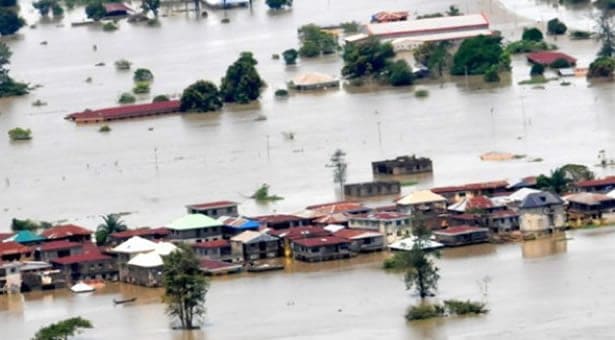
Last week, I wrote about the danger of Abuja gradually drifting towards the urban failures that have made Jakarta synonymous with flooding, poor drainage, disappearing waterways and the painful consequences of allowing development to outrun planning. The argument was not that Abuja is Jakarta. It was that cities, despite differences in geography, can repeat one another’s mistakes.
Events in Nepal this week have supplied an even more sobering reason for Abuja and Nigeria to take that warning seriously. What happened in Nepal on Wednesday, August 26, 2026, was not an ordinary rainy-season flood. A section of a glacier near Langtang Lirung in the Himalayas collapsed, sending an enormous mass of ice and rock crashing into the Lhende Khola river. The resulting torrent became a deadly mixture of water, mud, rock and debris that raced through valleys and settlements on the Nepal-China border. Reuters reported that the disaster destroyed roads, bridges, houses, power installations and the vital Gyirong border infrastructure, while hundreds were killed and nearly 1,000 people remained missing.
By Friday, August 28, the situation had become even more frightening. A lake created when debris blocked the river had begun overflowing, forcing rescue operations to be suspended because of the danger of another surge. Nepalese and Chinese authorities were already warning of further flooding.
The immediate lesson is not that Abuja has glaciers. It does not. Neither should anyone suggest that a Himalayan glacial collapse can simply be transplanted into Nigeria. The lesson is more fundamental and much closer to home: disasters become catastrophic when natural hazards meet vulnerable settlements, weak planning, inadequate infrastructure and institutions that respond after the damage instead of preparing before it.
Nepal has always been vulnerable to floods, landslides and other natural disasters. Its mountainous terrain makes communities particularly exposed during heavy rainfall. In September 2024, devastating rains killed at least 192 people across the country, with 56 deaths recorded in the Kathmandu Valley alone. At the time, poor urban planning and climate change are said to be the factors that worsened the flooding.
The current disaster has a different immediate trigger, but the wider warning remains the same. Scientists say climate change is increasingly destabilising high mountain environments by changing patterns of ice melt, freezing and thawing. Nepal has lost nearly one-third of its glacier ice over about three decades, according to figures cited by Reuters, while warming conditions are making compound disasters involving floods, landslides and ice or rock avalanches increasingly dangerous.
Nepal has experienced another disturbing glacial-origin flood as recently as July 2025, when the drainage of a supraglacial lake in Tibet triggered flooding along the Bhote Koshi River, killing people and destroying the Friendship Bridge between Nepal and China.
This is what climate change is doing to the meaning of disaster preparedness. The old assumption was that if you knew the rainy season, you knew roughly what to expect. That assumption is becoming increasingly unreliable. Extreme weather is becoming more complicated. Rainfall can interact with landslides. Rivers can suddenly change course. Infrastructure can become a trap. A drainage system designed for yesterday’s rainfall may be hopelessly inadequate for tomorrow’s storm.
Nigeria must understand this before another tragedy teaches us the lesson in the most expensive way possible. And Abuja, of all Nigerian cities, should understand it first. The Federal Capital was not supposed to grow like an accidental settlement. It was conceived as a planned city. The Abuja Master Plan was developed in 1979, with the Central Area plan subsequently developed in the early 1980s under Japanese architect Kenzo Tange. Its philosophy was based on organised land use, functional districts, green spaces, transportation networks and controlled development.
Its population has expanded dramatically. Its satellite towns have exploded. Its roads have stretched into areas that were once largely undeveloped. Real estate has become one of the city’s most aggressive economic activities. Natural drainage corridors have come under pressure. Green areas have been converted. Buildings have appeared in places that ought to remain open for environmental reasons. The question, therefore, is no longer whether Abuja needs its master plan reviewed. It is why the review has taken so long.
Wike has spoken about the need to review the Abuja Master Plan since 2024. In September that year, he spoke about the need to improve infrastructure, including storm-water and wastewater drainage, while discussing the review of the city’s planning framework.
Yet here we are in August 2026, and the flooding question remains sufficiently serious for stakeholders to be demanding a comprehensive review of the 1979 plan. The FCT Administration itself has now said it is reviewing the plan to reflect the current realities of the capital. That raises an uncomfortable question. If the need for an updated plan was recognised in 2024, why is Abuja still dealing with the consequences of a planning framework conceived nearly half a century ago?
This is not an argument against Wike’s achievements. Since assuming office as FCT Minister in August 2023, he has pushed roads, bridges and other infrastructure projects with an urgency that has visibly altered parts of the capital. That record should be acknowledged. But this is precisely why the argument has become more important. A road is not a city. A bridge is not a city. A beautiful interchange is not a city.
A city is a system. Water must have somewhere to go. Trees and wetlands must have somewhere to survive. Waste must have somewhere to be collected. Buildings must have somewhere they are legally permitted to stand. Roads must be designed alongside drainage. New estates must be connected to adequate infrastructure. Population growth must be anticipated rather than discovered after the fact. This is why the recent flooding in Abuja should not be reduced to the politics of demolition.
On August 18, Wike ordered the demolition of structures built on designated waterways following flooding in parts of the capital. During an inspection of flood-affected areas, the FCT Administration said it discovered a structure on a drainage area whose allocation had been revoked years earlier. That is not merely a story about one illegal structure. It is a story about the failure of a system.
If a piece of land reserved for drainage can be allocated, revoked and later occupied by a structure, then something went wrong at several points in the chain of governance. Someone approved something. Someone failed to enforce something. Someone looked away. Someone built where building was not supposed to happen. Demolition is necessary in some circumstances, but demolition after the damage has occurred is the most expensive form of planning.
That is why Wike’s administration should use the current moment to do something much bigger than clearing waterways. Abuja needs a comprehensive flood and climate resilience plan incorporated into the new master plan. Every major drainage corridor should be mapped and legally protected. Flood plains should be clearly identified. Wetlands and green areas should be treated as infrastructure, not vacant land. Development approvals should take storm-water management seriously. Satellite towns should be integrated into the same planning system rather than allowed to grow independently until their problems become Abuja’s problems.
The public should know which areas are protected waterways. Developers should know the rules before buying land. Government officials should know that approving an illegal structure will have consequences. And influential Nigerians should not be allowed to believe that their influence gives them a private exemption from public planning laws.
The recent flooding has already triggered demands from Abuja stakeholders for the desilting of drainage channels, enforcement against encroachment and a comprehensive review of the 1979 Master Plan. These demands should not be dismissed as another seasonal reaction.
The capital cannot continue to operate with a planning philosophy designed for a city that no longer exists. Wike has spent considerable political capital and public resources improving Abuja’s physical infrastructure. He should now spend the same energy modernising the rules that determine how that infrastructure interacts with the environment.
Otherwise, there is a danger that today’s roads will become tomorrow’s channels for faster-moving floodwater, and today’s new developments will become tomorrow’s flood-prone neighbourhoods. Nepal did not become vulnerable to climate-related disasters overnight.
Cities decline gradually. A wetland disappears here. A drainage channel is narrowed there. A green area is converted somewhere else. An unauthorised building is tolerated because the owner is powerful. A master plan is left unchanged for another year. A drainage project is postponed. Another road is constructed without adequate storm-water infrastructure. Then one day the rain comes. And everybody asks how it happened. Abuja still has the advantage of being able to prevent that question from becoming inevitable.
Wike has said he is reviewing the master plan. Nigerians should now demand that the review be completed, published, debated and implemented, not merely announced. The time for another committee, another promise and another inspection after another flood is gone.
The Nepal disaster is a tragedy, but it is also a warning from a distance. For Abuja, the message could not be clearer. Prepare before the water comes. Because when the flood eventually arrives, it will not ask who approved the building, who ignored the drainage, who postponed the master plan or which administration made the mistake. It will simply come. And by then, politics will be irrelevant.
Alabidun is a media practitioner and can be reached via alabidungoldenson@gmail.com
Before Wike Turns Abuja City to Jakarta, by Alabidun Shuaib AbdulRahman
There is something deeply unsettling about watching Abuja, a city conceived as one of Africa’s most ambitious experiments in planned urban development, repeatedly surrender parts of itself to floodwater.
The latest flooding in parts of the Federal Capital Territory is not merely another rainy-season inconvenience. It is a warning. And the warning is bigger than the immediate political argument over whether Minister of the Federal Capital Territory, Nyesom Wike, should be blamed for what happened.
The more important question is whether Abuja is gradually developing the same urban pathologies that have made Jakarta a global symbol of uncontrolled urban expansion, disappearing waterways, inadequate drainage, environmental degradation and the expensive consequences of allowing development to outrun planning.
That comparison should not be misunderstood. Abuja is not Jakarta. Abuja is inland, while Jakarta is a coastal megacity battling sea-level rise and severe land subsidence. Parts of North Jakarta, for instance, have recorded subsidence of between 15 and 25 centimetres annually, dramatically worsening its exposure to flooding. But cities do not have to share the same geography to share the same mistakes. That is where Wike must be careful.
The former Rivers State governor has unquestionably changed the physical appearance of Abuja since President Bola Tinubu appointed him FCT minister in August 2023. Roads have been reconstructed, bridges completed, neglected infrastructure revived and several long-abandoned projects pushed towards completion.
By July this year, Wike said the FCT had inaugurated its 50th project since the Tinubu administration came into office. The projects include roads, water infrastructure and other public works across the territory. To be fair to him, that record deserves commendation. However, roads alone do not make a city.
A city is a living system. Its roads, drainage channels, wetlands, parks, residential districts or areas, commercial centres, waterways and population must function together. When one element is aggressively developed while another is ignored, the consequences eventually become visible.
The flooding witnessed in Abuja this August should therefore force a more uncomfortable conversation about the direction of the capital. On August 18, Wike visited flood-affected areas in Maitama and reportedly discovered a structure sitting on a drainage area whose allocation had been revoked in 2011 in the public interest. That discovery is important for a reason that goes beyond the particular building because if a plot officially designated as a drainage area could be allocated, revoked and subsequently developed despite the restriction, then Abuja’s problem is not simply rainfall. It is governance.
And governance is precisely where the Jakarta analogy becomes relevant. Jakarta’s flooding crisis was not created overnight. Years of rapid urbanisation, excessive groundwater extraction, loss of natural absorption areas, pressure on drainage systems and development along waterways combined to produce a crisis that became progressively more difficult and expensive to reverse. The World Resources Institute has noted that Jakarta’s land subsidence averages about 12 centimetres annually, with parts of the northern coast experiencing rates as high as 25 centimetres.
As it stands, Abuja does not face Jakarta’s sinking-land problem. But Abuja faces a related urban danger: the gradual destruction of the spaces through which water is supposed to move. A drainage channel is not an empty piece of land waiting for a developer. A wetland is not idle property. A green area is not necessarily undeveloped land begging for a building. They are components of the city’s natural infrastructure. And once politicians, civil servants, developers and influential residents begin treating them as disposable, the city starts paying the price.
This is why Wike’s decision to order the demolition of structures obstructing designated waterways is both necessary and politically dangerous. To some extent, that is the right principle. But principles become meaningful only when they are applied consistently. If Wike demolishes the house of an ordinary resident while a politically connected developer is allowed to retain an equally illegal structure, then the exercise will become another chapter in Nigeria’s familiar story of selective enforcement.
The minister should therefore resist the temptation to turn the demolition campaign into a spectacle. What Abuja needs is not demolition theatre. It needs urban discipline. There must be a comprehensive audit of drainage corridors, floodplains, wetlands and waterways across the Federal Capital City and the satellite towns. Every questionable allocation should be investigated. Every revoked plot should be reconciled with the physical structures standing on it. And where demolition becomes unavoidable, compensation and relocation questions must be handled according to law and due process.
The Abuja Master Plan was conceived precisely to prevent the kind of urban disorder now threatening the capital. The original plan was formulated in 1979, while the detailed plan for the central district was developed in the early 1980s under the direction of Japanese architect Kenzo Tange. That is one of the ironies of modern Abuja. A city designed with extraordinary attention to order is increasingly being tested by disorder.
The original planners could not have predicted Abuja’s current population pressures, real estate boom, traffic density, climate pressures and sprawling satellite settlements. The city has changed dramatically since the 1970s. Yet the answer cannot be to abandon planning. The answer is to update it. Indeed, an urban planning review has noted that Abuja’s 1979 master plan has remained largely unchanged despite more than four decades of rapid urbanisation. This is where Wike’s legacy will ultimately be judged. Will he merely construct more roads within an old urban framework, or will he help create a modern Abuja capable of surviving the pressures of the next 50 years?
Abuja needs an integrated storm-water management strategy, not sporadic intervention after every major rainfall. Drainage channels must be mapped, cleared and maintained before the rains. Construction permits must be linked to proper hydrological assessments. Developers should be required to demonstrate how their projects will manage storm-water runoff. The administration must also look beyond Maitama, Wuse, Garki and the other affluent districts.
The real test of Abuja’s planning system lies in its rapidly expanding outskirts. Kuje, Gwagwalada, Bwari, Kubwa, Lugbe, Karu and other growth corridors are experiencing enormous development pressures. Wike has invested heavily in connecting these communities with roads and other infrastructure. That is commendable. But every new road creates development pressure. Every new interchange increases land value. Every improved corridor attracts houses, shopping centres, estates, filling stations and commercial activity. Infrastructure therefore creates both opportunity and responsibility.
If roads arrive without drainage, planning enforcement, waste management and environmental protection, today’s infrastructure investment can become tomorrow’s flooding problem. This is how cities drift into crisis. Not because one administration deliberately sets out to destroy them, but because thousands of individual decisions accumulate until the city itself begins to malfunction.
Jakarta offers that warning. Its experience demonstrates that once urban environmental damage reaches a certain point, governments spend enormous sums trying to repair problems that could have been prevented much more cheaply through planning and enforcement. Jakarta has consequently had to undertake massive flood-control interventions while simultaneously confronting the consequences of decades of groundwater extraction and uncontrolled urban expansion.
Abuja still has the advantage Jakarta wishes it had, which is time. Wike should therefore see the August flooding as more than an opportunity to order demolitions. It should be the beginning of a comprehensive Abuja Resilience Strategy. That strategy should combine the enforcement of the master plan with a modern review of the master plan itself. It should protect wetlands, restore drainage corridors, expand green infrastructure, improve waste management and establish a transparent digital register of land allocations and planning approvals.
Most importantly, it must end the culture in which political influence can bend urban planning rules. The Maitama discovery is a warning in this regard. A drainage area revoked more than a decade ago should not later become a building site.
Abuja does not need another powerful minister who can demolish structures. It needs institutions powerful enough to prevent illegal structures from being approved in the first place.
Wike has shown that he understands the politics of physical development. He has demonstrated urgency in pushing contractors and completing projects. His administration has been particularly aggressive about roads and other visible infrastructure, with dozens of projects commissioned. Now he must demonstrate that he understands the politics of urban sustainability.
Wike still has an opportunity to change the trajectory of anyhowness building of structures in the city. He can leave Abuja with hundreds of kilometres of roads and dozens of commissioned projects. Or he can leave something more enduring: a capital whose development respects the ecological systems that make urban life possible.
Alabidun is a media practitioner and can be reached via alabidungoldenson@gmail.com


Our Tinubu Has Run Away Again?

CARICOM begins consultations on regional biodiversity strategy

On The Sharafadeen Alli Lap Controversy, by Boniface Ihiasota

Pastor Jerry Eze Defends Miracles At UK Conference Amidst Criticism And Controversy

Diaspora Watch 20th Edition (October 14-20, 2024): Your Trusted Source for Global News and Insights

Tanzanian Man Reportedly Dies And Returns To Life Six Times


-

 News1 week ago
Kidney for Cash: Inside Nigeria’s Shadowy Organ Trade
-

 Analysis1 week ago
Tobi Amusan’s Legacy After the World Record Falls, by Boniface Ihiasota
-
 Analysis1 week ago
Wike and the Abuja Master Plan, by Alabidun Shuaib AbdulRahman
-
 News2 days ago
Our Tinubu Has Run Away Again?
-

 News1 week ago
Trump’s policies may cost US $700bn in clean energy investment – Report
-
 News1 week ago
Jamaica Set to Host 20th Caribbean Week of Agriculture