
Analysis
NDC As A New Bride, by Alabidun Shuaib AbdulRahman

NDC As A New Bride, by Alabidun Shuaib AbdulRahman
In Nigerian politics, new parties arrive the way comets appear in troubled skies. They appear suddenly, brightly and with exaggerated promises of redemption. Every election cycle births another coalition of disappointed politicians, frustrated elites, restless youths and displaced loyalists seeking what they call a “new direction.” Yet history has not been kind to many of them. Most vanish into the crowded cemetery of political irrelevance even before the next electoral season matures.
But the emergence of the Nigeria Democratic Congress, NDC, appears different in timing, symbolism and political calculations. Whether it ultimately becomes a genuine ideological alternative or merely another temporary shelter for ambitious politicians remains one of the defining political questions ahead of the 2027 general elections. The metaphor of a “new bride” fits perfectly.
In African culture, especially within the Nigerian sociopolitical imagination, a new bride arrives adorned with admiration, expectations, curiosity and suspicion. Everybody wants to see her. Everybody praises her beauty. Everybody speculates about her future. But beyond the wedding glamour lies the difficult burden of sustaining a home. That is precisely the present condition of the NDC in Nigeria’s political arena.
Officially recognised by the Independent National Electoral Commission, INEC on February 5, 2026, the NDC emerged alongside the Democratic Leadership Alliance after a prolonged legal and administrative process. INEC Chairman, Professor Joash Amupitan, disclosed that while DLA passed the conventional registration requirements, the NDC secured recognition through a Federal High Court order from Lokoja, Kogi State. That detail is politically important.
Unlike parties organically nurtured through ideological evolution, the NDC entered the national consciousness through judicial intervention. In Nigeria, where courts increasingly shape political destinies from governorship victories to legislative leadership tussles, the judiciary has become an unofficial co-author of democratic processes.
Nigeria’s political atmosphere today resembles a nation exhausted by recycled promises. The ruling All Progressives Congress, APC continues to face criticism over inflation, insecurity, unemployment and rising public frustration. Meanwhile, the opposition Peoples Democratic Party, PDP remains weakened by prolonged internal crises, leadership disputes and ideological confusion. The Labour Party, despite its emotional 2023 momentum, has struggled to convert populist enthusiasm into durable institutional structure. That vacuum created the perfect political maternity ward for another party. And Nigerians, perpetually hopeful despite repeated disappointments, naturally turned their attention toward the newcomer.
Already, the NDC is being discussed not merely as another registered party among Nigeria’s political parties, but as a possible coalition platform for displaced opposition figures seeking a stronger vehicle for 2027. The discussion intensified dramatically in early May 2026 following the formal defection of two of Nigeria’s most influential opposition politicians, Peter Obi and Rabiu Musa Kwankwaso. Their entrance transformed the NDC overnight from a little-known political organization into a major national conversation.
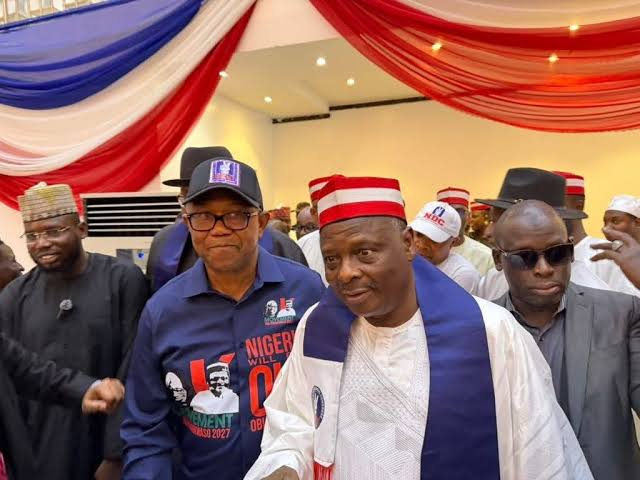
On May 3, 2026, both politicians were formally welcomed into the party during a high-profile political gathering held at the Abuja residence of former Bayelsa State governor, Seriake Dickson, who now serves as the NDC’s national leader. The event attracted political stakeholders, party officials and supporters from different regions of the country. During the gathering, Obi and Kwankwaso received their membership cards and addressed supporters on the future of the party.
Kwankwaso reportedly urged Nigerians interested in contesting future elections to register with the party immediately, while Obi spoke about building “a united, secure and prosperous Nigeria.” The symbolism of that event was impossible to ignore.
Obi remains one of the most influential opposition figures among Nigerian youths, especially after his remarkable performance in the 2023 presidential election under the Labour Party. Kwankwaso, on the other hand, commands a formidable grassroots structure in Northern Nigeria through the Kwankwasiyya movement. Their movement into the NDC instantly gave the party national visibility, regional balance and electoral seriousness. But the NDC did not stop there.
In recent weeks, the party has increased nationwide consultations and political receptions aimed at attracting defectors from other parties. Reports indicate that politicians from the APC, PDP, ADC and other opposition platforms have begun gravitating toward the NDC amid growing dissatisfaction within their former parties.
One of the earliest prominent figures to join was Amanda Pam, a notable Federal Capital Territory politician and former Deputy National Legal Adviser of the PDP. Senator Dickson personally received her into the party in April, describing the NDC as a growing ideological platform for national renewal.
More recently, the party also welcomed activist and social commentator Aisha Yesufu into its fold. On May 6, Yesufu announced her resignation from the ADC and formally declared for the NDC, revealing plans to contest the FCT Senatorial seat under the party’s platform.
Aisha Yesufu is not merely a politician. She represents a generation of activist-driven political consciousness that gained prominence during the Bring Back Our Girls campaign, the EndSARS protests and the Obi political movement of 2023. Her entrance into the NDC signaled the party’s attempt to combine elite political experience with activist energy.
The party has also recorded gains within legislative circles. Several members of the House of Representatives reportedly defected to the NDC shortly after Obi and Kwankwaso joined the party.
In another notable development, serving lawmakers from Edo State, including Natasha Osawaru Idibia, were formally received into the NDC during a political gathering in Abuja where Dickson warned against what he described as “transactional politics.” Former Gombe State Deputy Governor, John Lazarus Yoriyo, also joined the party at the same event. These activities have helped project the image of a party aggressively building momentum ahead of 2027. Yet the “new bride” metaphor remains politically dangerous.
Nigerians have a troubling habit of romanticising political newcomers. Every emerging movement is prematurely treated as a revolutionary salvation before its ideological foundation is properly interrogated. The country witnessed this phenomenon during the formation of the APC in 2013 when many Nigerians celebrated it as the coalition that would permanently rescue the nation from PDP dominance. Yet barely a decade later, many citizens who once celebrated that coalition now lament worsening economic hardship and democratic disappointments.
The NDC must answer difficult questions beyond the excitement of novelty. What exactly does it ideologically represent? Is it socially democratic? Progressively reformist? Or merely an emergency political apartment for frustrated elites seeking electoral shelter and survival?
So far, public discourse surrounding the party appears driven more by personalities than philosophy. That is Nigeria’s recurring democratic tragedy. Parties often revolve around influential politicians rather than coherent ideological convictions. In advanced democracies, voters can reasonably predict policy directions from party identity. In Nigeria, politicians migrate between parties with the emotional attachment of passengers changing commercial buses at Ojota.
Today’s progressive becomes something else tomorrow without ideological explanation. That is why Nigerians increasingly struggle to distinguish one party from another beyond slogans, logos and campaign colours. The NDC therefore faces an urgent intellectual responsibility: defining itself before defections define it.
A political party cannot sustainably survive on borrowed popularity alone. Emotional momentum without ideological infrastructure eventually collapses under the weight of ambition. The Labour Party’s post-2023 internal turmoil demonstrated this reality vividly. Popular movements may win elections, but only organized institutions sustain political relevance. This explains why many observers remain cautiously curious about the NDC.
Although there is undeniably a growing appetite among young Nigerians for alternative politics. Nigeria possesses one of the world’s youngest populations, with a median age below 20 years. Yet governance remains dominated by older political establishments. The frustration among youths over unemployment, inflation, educational instability and migration pressures has intensified demands for political renewal. Under such conditions, a disciplined opposition platform can become electorally dangerous to incumbents. But danger to incumbents alone does not equal democratic transformation.
Nigeria does not merely need another election-winning machine. It needs parties capable of institutionalizing governance culture, respecting internal democracy and nurturing ideological clarity. Without these, power simply changes occupants while dysfunction retains ownership of the system.
This is why the NDC must resist the temptation of becoming merely an anti-APC emotional coalition. Opposition built solely around anger eventually collapses after electoral seasons. Sustainable parties require philosophical substance beyond resentment against incumbents.
Equally important is the moral burden now facing the NDC’s emerging leadership. Nigerians are increasingly skeptical of political migration motivated purely by electoral convenience. When politicians defect without explaining ideological disagreements, citizens interpret movements as elite survival strategies rather than principled repositioning.
Social media discussions surrounding Obi and Kwankwaso’s movement to the NDC reflect this division clearly. While supporters view the party as a fresh opposition alternative, critics argue that repeated defections among Nigerian politicians expose the absence of ideological discipline within the political class. Such skepticism is understandable.
Nigeria’s democratic history contains too many abandoned promises. Yet democracy itself thrives on the possibility of renewal. Citizens cannot permanently surrender political hope simply because previous experiments failed. The challenge lies in balancing optimism with critical vigilance.
That balance is exactly how Nigerians should approach the NDC. Admire the bride if you wish. Celebrate the wedding if necessary. But do not ignore the marriage questions.
Can the party survive beyond electoral convenience? Can it manage internal imbroglio, if any arise? Can it resist godfather domination? Can it build structures beyond social media enthusiasm? Can it offer governance ideas beyond opposition rhetoric? Can it institutionalize internal democracy better than existing parties?
Those questions matter far more than registration certificates and ceremonial declarations. For now, however, the bride remains attractive because she is still largely undefined. And perhaps that is both her greatest strength and most dangerous weakness.
Alabidun is a media practitioner and can be reached via alabidungoldenson@gmail.com









Donald Trump at 80: Assessing His Impact on Africa and Africans, by Boniface Ihiasota
On June 14, 2026, President Donald J. Trump marked his 80th birthday, becoming one of the most consequential and controversial figures in modern American political history. Born on June 14, 1946, in Queens, New York, Trump has served as both the 45th and 47th President of the United States, returning to office on January 20, 2025, after winning the 2024 presidential election.
As Africans and members of the global African diaspora reflect on Trump’s legacy at 80, opinions remain sharply divided. Yet beyond the political debates, there are measurable developments in his administrations that have had direct implications for Africa and Africans.
Perhaps the most significant Africa-related achievement associated with Trump’s current presidency is the United States-brokered peace agreement between the Democratic Republic of Congo and Rwanda. Signed in Washington, D.C., on June 27, 2025, the accord sought to end decades of instability and violence in eastern Congo, a conflict that has claimed millions of lives and displaced countless families across Central Africa.
The agreement involved key African leaders, including Congolese President Félix Tshisekedi and Rwandan President Paul Kagame, with mediation support from U.S. Secretary of State Marco Rubio and presidential envoy Massad Boulos.
For many Africans, the significance of this diplomatic intervention cannot be understated. For over three decades, eastern Congo has remained one of the world’s deadliest conflict zones. While the long-term success of the peace accord will ultimately depend on implementation by the parties involved, the willingness of the Trump administration to invest diplomatic capital in resolving an African conflict represented a notable moment in U.S.-Africa relations.
Economic engagement has also featured prominently in Trump’s approach to Africa. Throughout both his first and second administrations, he emphasized private-sector investment over traditional aid models. His admirers argue that this philosophy encouraged a shift toward trade, entrepreneurship, infrastructure development and business partnerships rather than perpetual dependency on foreign assistance.
Several African governments welcomed greater American interest in strategic minerals, energy resources and manufacturing opportunities as competition intensified between the United States and China for influence on the continent.
Trump’s supporters further point to his administration’s emphasis on national sovereignty and bilateral partnerships. Many African leaders, particularly those advocating stronger national control over economic resources and immigration policies, found aspects of Trump’s political philosophy relatable. His “America First” doctrine, though designed for U.S. interests, sparked conversations across Africa about self-reliance, economic nationalism and the importance of prioritizing domestic development agendas.
For African entrepreneurs in the diaspora, Trump’s broader economic policies, including tax reforms during his first administration and deregulation efforts, were seen by some as creating a business environment that rewarded investment and wealth creation. African-owned businesses in the United States benefited from periods of economic expansion and lower corporate taxation, though economists continue to debate the overall impact of those policies.
Nevertheless, an honest assessment requires acknowledging that Trump’s relationship with Africa has not been without controversy. His immigration policies, visa restrictions and remarks about certain countries generated criticism across the continent and among African diaspora communities.
Critics argue that some policies negatively affected African students, professionals and families seeking opportunities in the United States. Others have questioned reductions in certain aid programmes and humanitarian initiatives.
Yet history often judges leaders not solely by rhetoric but by outcomes. At 80, Trump remains a central figure in global affairs. His role in facilitating the Congo-Rwanda peace process, his administration’s focus on trade and investment, and his influence on debates surrounding sovereignty and economic development have all left an imprint on Africa’s contemporary story.
As Africa continues its rise in the twenty-first century, the continent’s relationship with the United States will remain important regardless of who occupies the White House. Donald Trump’s eightieth birthday provides an opportunity not for partisan celebration or criticism alone, but for thoughtful reflection on a leader whose policies, decisions and diplomacy have shaped conversations far beyond America’s borders.
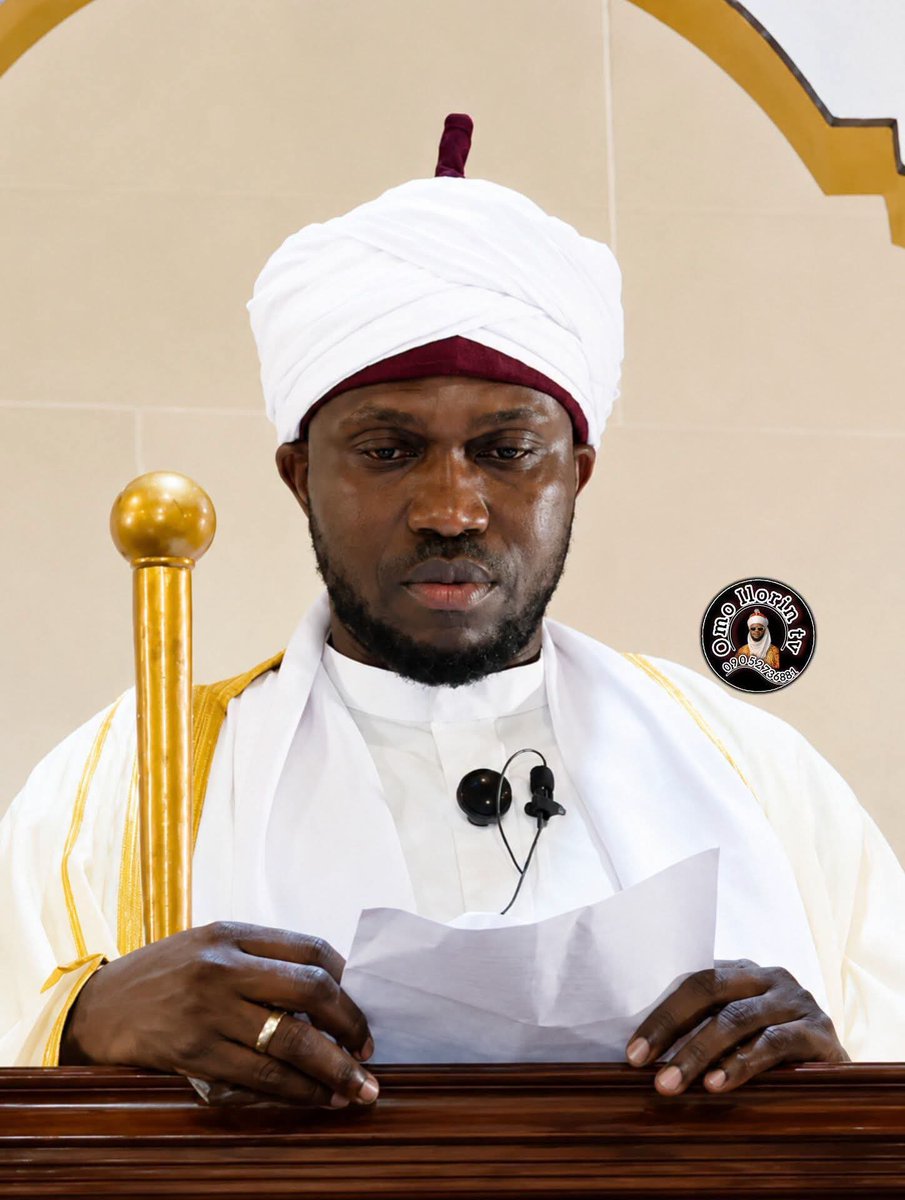
As Ilorin Sets the Pace Again, by Alabidun Shuaib AbdulRahman
When history is written about the evolution of Islamic leadership in Nigeria, the city of Ilorin will always occupy a prominent chapter. Long before modern political boundaries emerged, Ilorin had established itself as a citadel of Islamic scholarship, jurisprudence, learning and spiritual leadership. It is a city where the mosque and the madrasa are not merely institutions but foundations upon which communal life is built. It is therefore unsurprising that the emergence of a new Chief Imam in the ancient emirate has once again demonstrated why Ilorin remains a model of religious harmony, institutional continuity and leadership succession.
The emergence of Sheikh Muhammad Bashir Dasuki Imam Fulani as the 13th Chief Imam of Ilorin is one development that deserves attention beyond the confines of religious circles. It is a significant event in the history of the Ilorin Emirate, not simply because a new spiritual leader has assumed office, but because of the manner in which the transition occurred and what it says about the enduring character of a city that has, for generations, distinguished itself as a centre of Islamic scholarship, institutional stability and communal harmony.
As a proud son of the Ilorin Emirate, I find immense satisfaction in the events that have unfolded since the appointment of the new Chief Imam by the Emir of Ilorin, Maimartaba Sarkin Ilori, Alhaji (Dr.) Ibrahim Sulu-Gambari, CFR, on June 10, 2026. His appointment came after a rigorous selection process involving eminent Islamic scholars from across the emirate. Yet what has attracted even greater attention than the appointment itself is the remarkable atmosphere of consensus that has followed it. In an era when leadership transitions often generate disputes, litigation and factional rivalry, Ilorin has once again shown that established institutions, respect for tradition and commitment to collective interest can triumph over personal ambition
The new Chief Imam is not a stranger to either scholarship or the traditions of the emirate. At 42, Sheikh Dasuki comes from one of the most distinguished clerical lineages in Ilorin. He is the grandson of Sheikh Ibrahim Dasuki Imam Fulani Agaka, the eighth Chief Imam of Ilorin, and the son of Sheikh Maliki bn Dasuki Agaka, who also occupied the revered office.
Before his appointment, he founded Darul Bisharah Arabic and Islamic Studies in Egbejila and served as Imam at the Afusat Oloriegbe Memorial Mosque in Oko-Olowo. His academic credentials include studies at Al-Azhar University, Ahmadu Bello University and Al-Hikmah University. Such a blend of traditional and contemporary Islamic education reflects the very character of Ilorin itself.
Although the passing of his predecessor, Sheikh Muhammad Bashir Soliu, OON, on January 19, 2026, naturally created a vacuum. For forty-three years, beginning from 1983, he occupied one of the most revered religious positions in Northern Nigeria. His tenure was marked by scholarship, moderation and a commitment to preserving the religious heritage of the emirate. Many younger residents of Ilorin grew up knowing no other Chief Imam. His death therefore raised questions about succession and continuity.
Those concerns have since been answered in a manner that should make every son and daughter of the emirate proud.
Rather than generating division, the emergence of Sheikh Muhammad Bashir Dasuki Imam Fulani attracted widespread acceptance. What followed was even more remarkable. The new Chief Imam embarked on visits to leading Islamic scholars and respected clerics across Ilorin. From one part of the city to another, he met prominent religious leaders, sought their prayers and reaffirmed the spirit of brotherhood that has always defined Ilorin’s scholarly community. The responses were overwhelmingly positive. He was received warmly and embraced by scholars whose influence extends across the emirate and beyond. That development is important because it reflects a culture that has been carefully nurtured over centuries.
To appreciate its significance, one must understand what Ilorin represents within the broader Nigerian landscape. Ilorin is not merely the capital of Kwara State. It is one of the most important centres of Islamic learning in West Africa. Historically situated at the intersection of the Northern and Southwestern regions of Nigeria, the city evolved into a meeting point of cultures, languages and traditions. The result was the emergence of a distinct identity that combined Yoruba heritage, Fulani political organisation and Islamic intellectualism. The uniqueness can only be found in Ilorin.
This unique history explains why Ilorin occupies a special place in discussions about Islam in Nigeria. For generations, students travelled from different parts of the country and beyond to study under renowned scholars in the city. Arabic education flourished long before the arrival of formal Western education. Mosques, learning centres and scholarly families became central institutions within society.
The city produced respected scholars whose influence reached far beyond the emirate. The late Sheikh Adam Abdullah Al-Ilory became one of the most influential Islamic scholars of his generation. Sheikh Kamaludeen Al-Adaby pioneered modern approaches to Islamic education. Numerous scholars from Ilorin established schools, wrote books and trained generations of students who later became religious leaders across Nigeria and other parts of West Africa.
The office of Chief Imam has always occupied a central place within this tradition. Successive holders of the office provided spiritual guidance while helping to preserve the intellectual and moral foundations upon which the emirate was built. The institution has survived political transitions, colonial rule, independence and modernisation because it enjoys legitimacy rooted in scholarship and public confidence.
The new Chief Imam himself embodies many aspects of that tradition. Born into a distinguished family of scholars. His emergence therefore represents both continuity and renewal. He inherits a respected institution but also assumes office at a time when religious leadership faces new challenges. The growth of social media, the spread of misinformation among young scholars, declining interest in serious scholarship and increasing pressures on traditional institutions require thoughtful leadership and intellectual depth.
His inaugural khutbah on June 19, 2026, offered some indication of the direction he intends to pursue, having said “I am not perfect. Whenever you see me going astray, do not hesitate to call me back to the right path. Your support, prayers, and cooperation will make my assignment as Chief Imam easier and more successful.” This is thought provoking if I may say.
Those present at the Ilorin Central Mosque observed a recurring emphasis on gratitude to Allah, unity among Muslims, respect for knowledge and the responsibilities associated with leadership. He acknowledged the contributions of his predecessors and stressed the need for cooperation among scholars and members of the community. It is important that this spirit is sustained.
The goodwill that greeted his appointment should become the foundation for a new phase in the development of Islamic scholarship within the emirate. The city already possesses enormous intellectual capital. What is required now is greater investment in preserving historical records, strengthening Arabic education, mentoring younger scholars and ensuring that the traditions of Ilorin remain relevant to contemporary realities.
The preservation of history deserves urgent attention. One of the greatest ironies of Ilorin is that despite its enormous contribution to Islamic civilisation in Nigeria, much of its history remains undocumented. Stories of great scholars, jurists, teachers and community leaders are still preserved largely through oral tradition. The names are known, the achievements remembered, but the records are scattered. Future generations deserve better. A city that produced scholars whose influence reached Saudi, Cairo, Dakar, Khartoum, Mali, Sudan and beyond cannot afford to leave its history at the mercy of memory alone.
This is where the new Chief Imam, the Emirate Council, traditional title holders, Islamic institutions and wealthy sons and daughters of the emirate must find common purpose. The task before them is not merely religious. It is civilisational. The heritage of Ilorin deserves preservation. Its manuscripts deserve protection. Its scholarly traditions deserve documentation. Its intellectual contributions deserve wider recognition.
The scholars of Ilorin also have a responsibility at this critical moment. The city has always been respected because of the quality of its scholarship. Respect was earned through knowledge, discipline, humility and service. The scholars who built the reputation of Ilorin were not men who sought popularity. They sought learning. They did not measure success by applause but by impact. They did not compete for influence on social media platforms. They competed in knowledge, character and service to Islam. That tradition must not be lost.
The challenge facing contemporary scholarship is different from what previous generations confronted. Today, information travels faster than knowledge. Visibility is often mistaken for scholarship. Opinions sometimes compete with learning. Yet the answer remains what it has always been: sound education, intellectual discipline and adherence to the values that distinguished the giants who came before us. If Ilorin is to retain its standing as a centre of learning, its scholars must continue to prioritise substance over popularity and scholarship over sensationalism.
The new Chief Imam himself appears conscious of these realities. Perhaps this explains why one of the most remarkable moments in his inaugural khutbah was his humility. The expectations surrounding his appointment are understandably high. He inherits an office that carries enormous moral authority.
As Sheikh Muhammad Bashir Dasuki Imam Fulani settles fully into his responsibilities, one can only pray that Allaah grants him wisdom, patience, sound health and the strength required for the enormous task ahead. May Allaah guide his judgments, illuminate his path, increase him in knowledge and make him an instrument of unity within the emirate and the wider Muslim community.
May Allaah also preserve the Emir of Ilorin, Alhaji (Dr.) Ibrahim Sulu-Gambari, CFR, whose reign has continued to strengthen the institutions of the emirate. May He preserve the scholars of Ilorin, bless their efforts and reward their sacrifices. May He continue to make Ilorin a beacon of learning, moderation and spiritual excellence for generations yet unborn.
For those of us who call this city home, whether by birth, ancestry or affection, may Allaah be with us in all ramifications.
Alabidun is a media practitioner and can be reached via alabidungoldenson@gmail.com
Nigeria’s Democracy and the Aluta Continua, by Alabidun Shuaib AbdulRahman
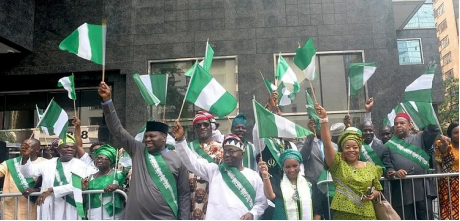
On June 12 every year, Nigerians are invited to celebrate democracy, reflect on the nation’s political journey and renew faith in the ideals upon which the country was founded. Yet beyond the ceremonies and speeches lies a deeper question: what exactly does democracy mean in the Nigerian context?
More than six decades after independence and twenty-seven years after the restoration of civil rule, democracy remains both an achievement and an aspiration. It is an achievement because generations of Nigerians fought, sacrificed and, in some cases, paid the ultimate price to secure the right of self-government. It remains an aspiration because the promise of democracy is yet to be fully realised in the lives of millions of citizens.
This contradiction explains why the phrase “Aluta Continua” continues to resonate. The struggle did not end with independence in 1960. It did not end with the departure of military rulers in 1999. It continues wherever Nigerians seek justice, accountability, opportunity and dignity.
The story of Nigerian democracy cannot be understood without revisiting the long road to independence. British colonial rule, formally consolidated through the amalgamation of the Northern and Southern Protectorates by Lord Frederick Lugard in 1914, created a political entity that brought together hundreds of ethnic nationalities under a single administrative framework. While colonial authorities justified their presence as a civilising mission, the primary objective was economic and strategic.
Nigerians were largely excluded from meaningful participation in governance, while political and economic decisions were taken in the interest of the colonial power. Resistance emerged gradually but steadily. Early nationalists recognised that political freedom was essential if Nigerians were to determine their own destiny.
Among the pioneers of this struggle was Herbert Macaulay, whose political activism laid the foundation for organised nationalism. He challenged colonial policies and inspired a generation of political thinkers who believed that Nigerians deserved self-rule. His efforts were later advanced by figures such as Nnamdi Azikiwe, Obafemi Awolowo and Ahmadu Bello, whose influence shaped the political landscape of the emerging nation. Azikiwe used journalism and political mobilisation to awaken nationalist consciousness. Awolowo articulated a vision of federalism, social welfare and regional development that remains influential today. Ahmadu Bello championed political modernisation in Northern Nigeria while seeking to preserve cultural identity within a rapidly changing environment.
The struggle for independence was not the work of politicians alone. Women, labour leaders, students and intellectuals played indispensable roles. Funmilayo Ransome-Kuti became a formidable voice against colonial oppression and social injustice. Margaret Ekpo mobilised women in the Eastern Region and expanded political participation beyond elite circles. Labour leader Michael Imoudu demonstrated the power of collective action through workers’ movements that challenged exploitative conditions. Anthony Enahoro’s historic motion for self-government in 1953 accelerated constitutional negotiations that eventually culminated in independence. These individuals represented different regions, ideologies and social classes, yet they were united by the conviction that Nigerians should govern themselves.
When independence finally arrived on October 1, 1960, it generated enormous optimism. The lowering of the British flag and the raising of Nigeria’s green-white-green banner symbolised the triumph of self-determination. However, political independence did not automatically translate into democratic consolidation. The years that followed revealed the difficulties of nation-building in a diverse society struggling to reconcile competing interests. Ethnic crises, electoral controversies and regional rivalries undermined the stability of the First Republic. The military coup of January 15, 1966 abruptly ended Nigeria’s first democratic experiment and ushered in a prolonged era of military intervention.
The consequences were profound. The Nigerian Civil War, fought between 1967 and 1970, tested the very survival of the federation. Although the war ended with the preservation of national unity, it exposed deep fractures that continue to influence political discourse. Military governments that followed promised order, discipline and development, yet their rule often concentrated power in ways that weakened democratic institutions. Successive regimes governed through decrees rather than popular consent. Civil liberties were restricted, political opposition was suppressed and public accountability diminished. While some military administrations pursued ambitious development projects, they could not substitute authoritarian command for democratic legitimacy.
Ironically, military rule also produced some of the most determined defenders of democracy. Throughout the 1980s and 1990s, journalists, lawyers, academics, labour activists and students confronted authoritarian governments. Newspapers challenged censorship despite the risk of closure. Human rights advocates defended constitutional freedoms despite harassment and imprisonment. University campuses became centres of political resistance. The slogan “Aluta Continua” became a rallying cry for citizens who believed that freedom required constant vigilance. It reflected a collective understanding that democracy was not merely a constitutional arrangement but a moral and political struggle.
No event illustrates this struggle more vividly than the annulment of the June 12, 1993 presidential election. Widely regarded as Nigeria’s freest and fairest election, the poll was won by Moshood Kashimawo Olawale Abiola, a businessman and philanthropist whose victory transcended ethnic and religious divisions. The decision by the military government to cancel the election triggered widespread outrage. Demonstrations erupted across the country. Civil society organisations intensified their campaigns. Pro-democracy activists faced detention, exile and intimidation. Abiola himself was imprisoned after declaring his mandate and eventually died in custody in 1998. His sacrifice transformed him into an enduring symbol of democratic resistance.
The restoration of civilian rule in 1999 marked a turning point. For the first time since independence, Nigeria began to experience a prolonged period of constitutional governance. Elections were held regularly. Political parties competed for power. Civil society expanded its influence. Courts increasingly became arenas for resolving electoral disputes. The peaceful transfer of power from one political party to another in 2015 was particularly significant, demonstrating that democratic transitions could occur without violence or military intervention. Compared with many periods in its history, Nigeria today enjoys greater political openness and civic participation.
Yet democracy cannot be judged solely by institutional survival. For the average Nigerian, democracy is meaningful only when it improves daily life. A citizen struggling with unemployment, insecurity, daily survival et al is unlikely to be impressed.
According to democratic theory, democracy is government of the people, by the people and for the people. In practice, however, many Nigerians perceive democracy as government of politicians, by politicians and for politicians.
Democracy, in its truest sense, must extend beyond elections. It must create conditions under which citizens can pursue their aspirations with confidence. It must guarantee equal protection under the law. It must ensure that public resources are used for public benefit rather than private enrichment. It must translate political rights into social and economic opportunities.
This is where contemporary Nigeria confronts its greatest challenge. Many citizens feel disconnected from the democratic process because they perceive governance as serving elite interests. Corruption continues to undermine public trust. Infrastructure deficits constrain economic growth. Insecurity threatens lives and livelihoods across various regions. Youth unemployment remains a source of frustration despite the country’s immense human potential. These realities fuel scepticism about whether democracy has delivered on its promises. They also reveal the difference between democratic procedures and democratic outcomes.
Nevertheless, abandoning democracy is not the answer. The failures associated with democratic governance are often failures of leadership and institutions rather than failures of democracy itself. History demonstrates that authoritarian alternatives rarely produce sustainable solutions. The challenge is therefore to deepen democracy rather than retreat from it. This requires stronger institutions, greater transparency, an independent judiciary, credible elections and active citizenship. It requires leaders who understand that public office is a trust rather than an entitlement. It also requires citizens who remain engaged beyond election day and insist that government remains accountable.
The freedom fighters who challenged colonial rule understood that independence was not an end in itself. They envisioned a society in which liberty would create opportunities for development, justice and national progress. The pro-democracy activists who confronted military dictatorship shared a similar belief. They understood that democracy was valuable not because it guaranteed perfection but because it provided the framework through which citizens could peacefully pursue collective aspirations. Their struggles remain relevant because the central questions they confronted have not disappeared.
Nigeria’s democratic journey is therefore best understood as an unfinished project. The country has travelled a remarkable distance from colonial subjugation and military authoritarianism. Yet the destination envisioned by generations of patriots remains ahead. The true meaning of democracy for the ordinary Nigerian is not merely the right to vote every four years. It is the assurance that government exists to serve the people, protect their freedoms and expand their opportunities. Until that promise is fully realised, the spirit of resistance, engagement and hope embodied in “Aluta Continua” will remain essential. The struggle continues not because democracy has failed, but because its highest ideals have yet to be fully achieved.
Alabidun is a media practitioner and can be reached via alabidungoldenson@gmail.com


CARICOM must impact citizens’ lives, says incoming Chair Pierre

Marketers Import Dangote-Refined Fuel Through Togo Hub

Ghana eyes local takeover of Gold Fields’ Tarkwa mine

Pastor Jerry Eze Defends Miracles At UK Conference Amidst Criticism And Controversy

Diaspora Watch 20th Edition (October 14-20, 2024): Your Trusted Source for Global News and Insights

Tanzanian Man Reportedly Dies And Returns To Life Six Times


-
 Milestone3 days ago
Godchildren Honour Emmanuel and Joy Ojiribe at 40th Anniversary Celebration in US
-
 Analysis3 days ago
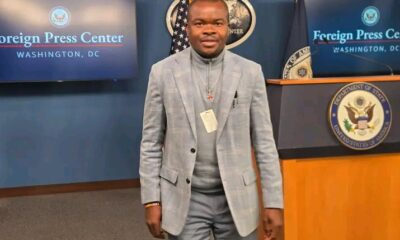
Donald Trump at 80: Assessing His Impact on Africa and Africans, by Boniface Ihiasota
-
 Business3 days ago
Ghana eyes local takeover of Gold Fields’ Tarkwa mine
-
 Analysis3 days ago
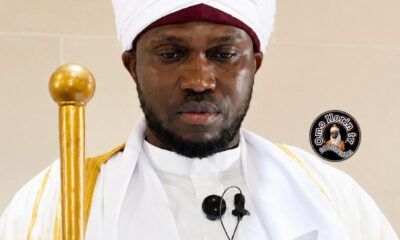
As Ilorin Sets the Pace Again, by Alabidun Shuaib AbdulRahman
-
 Features4 days ago
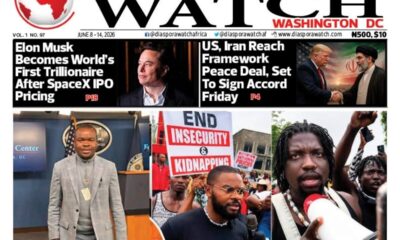
Diaspora Watch Vol. 97
-

 Tech3 days ago
Trump Announces Intel-Apple Chip Deal