
Tech
OpenAl Files for IPO as AI Race Intensifies

OpenAl Files for IPO as AI Race Intensifies
Artificial intelligence giant, OpenAI, has confidentially filed for an initial public offering (IPO), positioning itself for what could become one of the most closely watched stock market debuts in recent history.
The move is expected to pave the way for a massive windfall for early investors, even as the company remains cautious on timing and valuation details.
The filing comes shortly after rival Anthropic announced plans to go public, and just ahead of a planned market debut involving SpaceX, signalling a wave of high-profile listings in the global technology sector.
Together, the three potential offerings could be worth hundreds of billions of dollars, giving investors rare access to some of the world’s most valuable and closely watched artificial intelligence and technology firms.
OpenAI confirmed that it has not yet decided on the timing of its public listing.
Because the filing remains confidential, key details such as the number of shares to be offered and pricing remain undisclosed.
“It may be a while because there are things we want to do that are likely easier as a private company,” the firm said in a statement on its newsroom page. “But the filing gives us the option to go public sooner if that ends up being best.”
A public listing would mark a major shift for the company, opening its financial performance to Wall Street scrutiny at a time when it is investing heavily in artificial intelligence infrastructure, computing capacity and product expansion.
Investor sentiment toward technology stocks has recently shown volatility, with several major equities experiencing sell-offs amid concerns that valuations in the artificial intelligence sector may have risen too quickly.
Over the past year, OpenAI has expanded its revenue strategy beyond its flagship chatbot, ChatGPT, introducing a lower-cost subscription tier priced at about $8 and exploring advertising as a future revenue stream.
Reports suggest the company expects subscriber growth to reach 122 million this year, with advertising projected to become a major income source by 2030.
The company has also broadened its product ecosystem, launching a web browser, exploring consumer hardware development, introducing AI agents capable of coding and managing applications, and expanding into government, healthcare and financial tools.
The IPO filing comes amid intensifying competition in the global AI race, particularly between OpenAI and Anthropic, which recently saw its valuation surge following a major fundraising round that pushed it close to OpenAI’s market standing.







SpaceX to join Nasdaq-100 index July 7
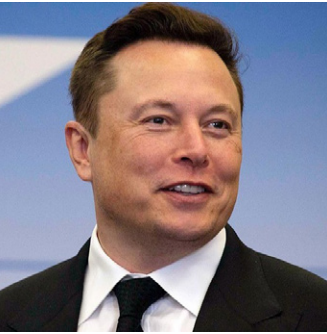
SpaceX will be added to the Nasdaq-100 Index on July 7, following confirmation by exchange operator Nasdaq, a move expected to trigger a surge in passive investment into the aerospace and artificial intelligence company.
The inclusion means exchange-traded funds and other investment vehicles that track the tech-heavy Nasdaq-100 Index will be required to purchase SpaceX shares, a development that typically boosts demand and supports a company’s stock price.
SpaceX, founded by billionaire entrepreneur Elon Musk, made its Nasdaq debut on June 12 and has experienced volatile financial performance in recent years, alternating between periods of losses and modest profits.
The company reported a net loss of $4.9bn in its most recent financial year, underscoring the challenges it continues to face despite strong investor interest in its space technology and artificial intelligence businesses.
The company’s addition to the index comes after Nasdaq, alongside other major index providers including FTSE Russell and MSCI, eased some of its listing eligibility requirements in an effort to attract more companies seeking to list on U.S. exchanges.
The revised criteria include changes to profitability requirements, the waiting period after a company’s initial public offering and the number of publicly traded shares required for inclusion in certain indices.
Meanwhile, S&P Global has maintained a more cautious approach.
The index provider said earlier this month that it would not alter its eligibility requirements for SpaceX to join its flagship indices, including the benchmark S&P 500.
According to S&P Global, the company will not be considered for inclusion in the S&P 500 until it has been publicly listed for at least 12 months.
The development comes as other leading artificial intelligence firms, including OpenAI and Anthropic, are widely expected to pursue initial public offerings either later this year or in 2027, with analysts projecting valuations exceeding $1tn.
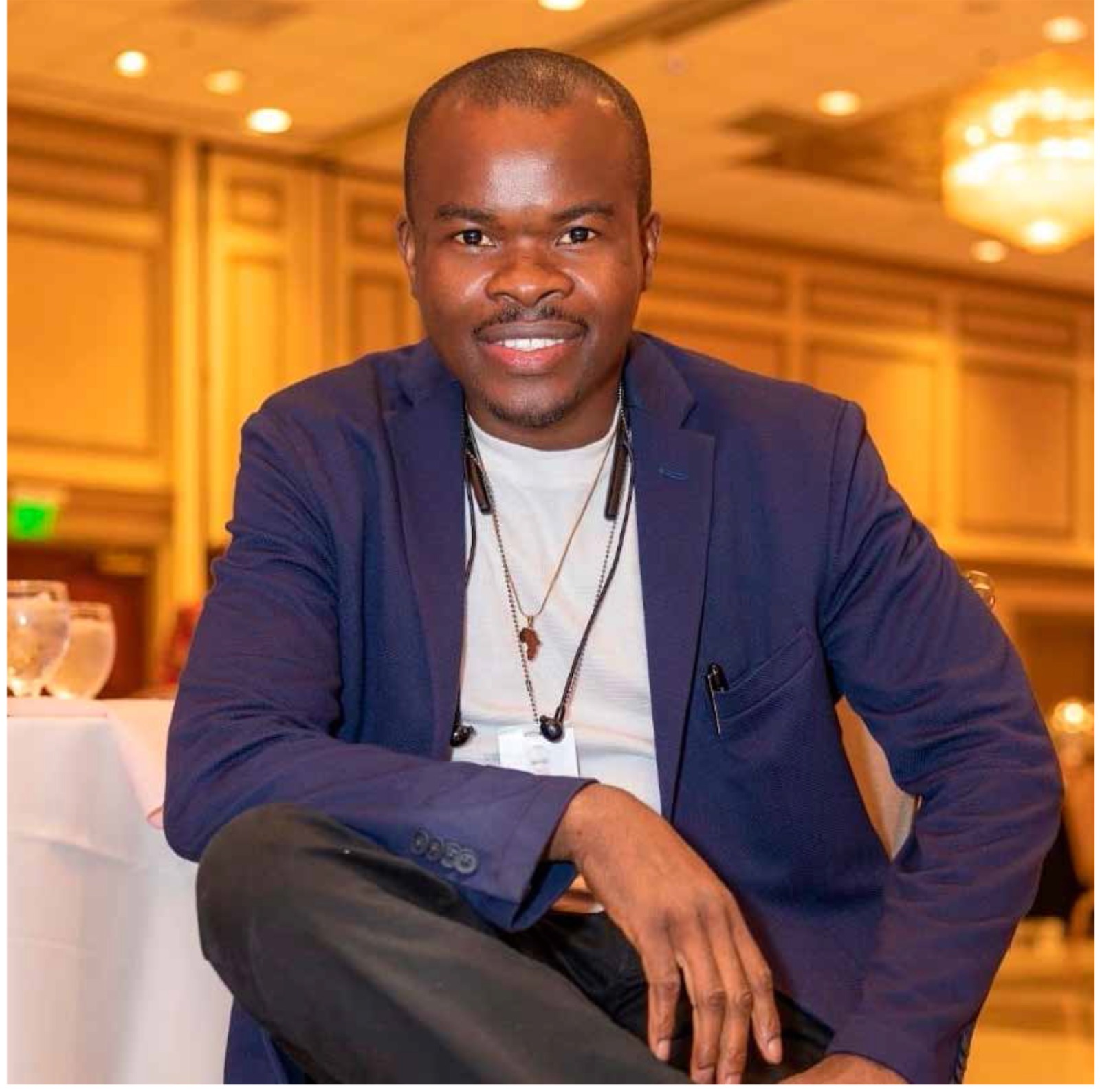
The Trillion-Dollar Moment and What Nigeria Can Learn, by Boniface Ihiasota
The emergence of Elon Musk as the world’s first trillionaire following the historic public listing of SpaceX has opened global debate about wealth, innovation, leadership, and the future of economic development. While reactions range from admiration to concern about wealth concentration, one fact is that the story offers important lessons for developing nations, including Nigeria.
SpaceX made history this month, June 2026 when it launched the largest Initial Public Offering in history, raising a record $75 billion and achieving a valuation of approximately $1.77 trillion. The company’s shares surged during their first day of trading, briefly pushing its market value above $2 trillion and propelling Musk’s net worth beyond the trillion-dollar threshold.
Beyond the staggering figures lies a more profound story. SpaceX began in 2002 as a relatively small aerospace startup with an ambitious mission to reduce the cost of space travel. More than two decades later, the company operates one of the world’s most advanced rocket programs, manages the Starlink satellite network serving millions of customers globally, and has become a major player in artificial intelligence and space technology. Its rise reflects the power of innovation, long-term investment, and an environment that rewards entrepreneurship.
For Nigerians observing from afar, the development raises a critical question: Why do some countries consistently produce globally competitive companies while others struggle to create businesses capable of dominating international markets?
The answer cannot be reduced to one individual or one government. While some supporters of President Donald Trump have pointed to the remarkable growth in Musk’s wealth during the current administration, the reality is that SpaceX’s success is the product of decades of technological development, private investment, government contracts, research institutions, and a business ecosystem that encourages innovation and risk-taking.
This is where the often-quoted observation attributed to Nigerian political leader Peter Obi becomes relevant: “Any country where politicians are richer than business owners is in big trouble.” Whether one agrees entirely with the statement or not, it highlights an important economic principle. Sustainable national prosperity is created when productive enterprises generate wealth through innovation, manufacturing, technology, and services—not when political influence becomes the most lucrative pathway to success.
The United States today remains home to many of the world’s most valuable companies because it has built systems that support entrepreneurship, research, venture capital, and intellectual property protection. Companies such as Tesla, SpaceX, and countless technology startups thrive within an ecosystem where ideas can attract funding and scale globally.
Nigeria possesses enormous human capital, particularly among its youth. Nigerian entrepreneurs continue to make significant contributions in financial technology, digital services, entertainment, and software development. Yet many innovative businesses face challenges ranging from inadequate infrastructure and limited access to capital to regulatory uncertainty and policy inconsistency.
The lesson from the SpaceX story is not that Nigeria needs its own Elon Musk. Rather, Nigeria needs an environment where thousands of innovators can succeed. Economic transformation occurs when governments create conditions that enable businesses to flourish, investors to take risks, and talented young people to build globally competitive enterprises.
The trillion-dollar milestone should therefore be viewed not merely as a celebration of one man’s wealth but as evidence of what can happen when innovation, investment, and ambition intersect within a supportive ecosystem. While Musk’s personal fortune dominates headlines, the broader significance lies in the thousands of employees, engineers, investors, and suppliers who have participated in creating value through technological advancement. Although reports indicate that the IPO created substantial wealth for workers and early stakeholders who shared in the company’s growth journey.
As Nigeria continues its search for economic renewal, the challenge is clear. The future belongs to nations that reward productivity over patronage, innovation over bureaucracy, and enterprise over dependence. Wealth created through ideas, technology, and industry ultimately strengthens a nation far more than wealth accumulated through political powers.

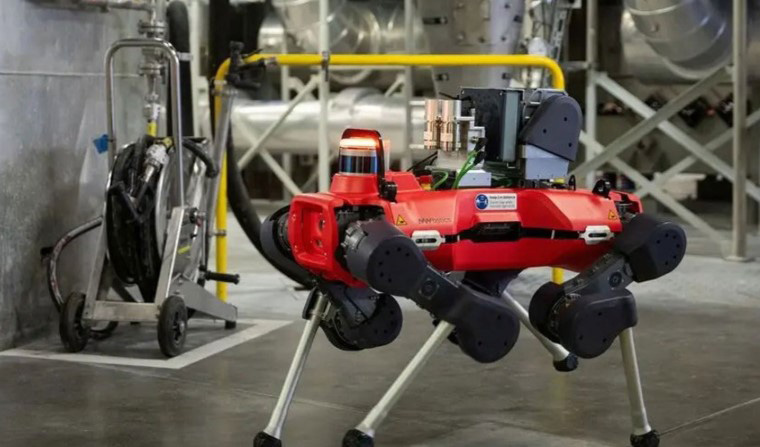
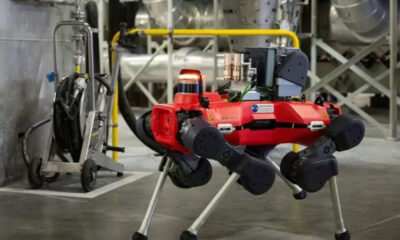
Artificial intelligence is steadily moving beyond software applications into the physical side of business operations, as companies in food production and logistics increasingly deploy data-driven systems to support real-time decision-making. The shift is evident in the latest strategy unveiled by The Hershey
Company during its Investor Day, where the firm outlined plans to embed AI across its operations, from sourcing analytics to plant automation and product fulfilment.
According to the company, the initiative will focus on improving how the business runs behind
the scenes, with AI guiding decisions on procurement and distribution to build “a faster, smarter
and more resilient supply chain powered by automation and AI-enabled decision making.”
Hershey noted that supply chains in the food and snack sector remain under constant pressure due to fluctuating costs, seasonal demand, and retailer expectations for timely and accurate deliveries.
To address these challenges, the company said its digital planning tools would integrate various aspects of the business, helping to reduce waste, optimize inventory levels, and improve service delivery through better data connectivity across the supply chain. Central to the strategy is what Hershey described as “AI-enabled decision-making,” which seeks to link sourcing and delivery systems more closely while deploying automated fulfilment technologies to improve speed to market and handle customized product assortments.
The company also disclosed plans to expand automation within its manufacturing plants, using AI to enhance efficiency and embed intelligence directly into production systems rather than treating it as a separate analytical tool. Industry analysts say the approach reflects a broader trend in which firms are moving from limited AI pilot projects to full-scale integration across core business functions, particularly in sectors reliant on physical goods.
Food manufacturers, including Hershey, continue to grapple with volatile input costs for commodities such as cocoa and sugar, which are influenced by weather conditions, trade dynamics, and supply disruptions, making responsive and data-driven systems increasingly critical. Chief Executive Officer Kirk Tanner said the company’s direction is anchored on growth and execution, noting that the strategy positions Hershey to respond faster to market changes while strengthening operational performance.


EDITORIAL: Tackling Poverty in Africa

Spain battles political fallout as 60,000 migrants overwhelm Ceuta border

Hamas agrees to disarm as Gaza withdrawal deal gains momentum

Pastor Jerry Eze Defends Miracles At UK Conference Amidst Criticism And Controversy

Diaspora Watch 20th Edition (October 14-20, 2024): Your Trusted Source for Global News and Insights

Tanzanian Man Reportedly Dies And Returns To Life Six Times


-
 Milestone5 days ago
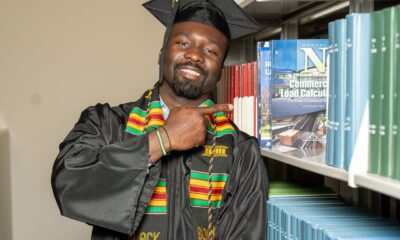
Nigerian bags HVAC Engineering degree in US, lands full-time job
-

 Analysis5 days ago
Lessons from the Catholic Bishops’ Visit to Tinubu, by Boniface Ihiasota
-
 News5 days ago
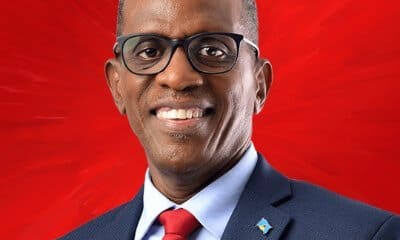
CARICOM chair renews reparations demand
-

 Analysis5 days ago
Obasanjo, Atiku and the Burden of Broken Trust, by Alabidun Shuaib AbdulRahman
-
 News5 days ago
Hamas agrees to disarm as Gaza withdrawal deal gains momentum
-
 Opinion5 days ago
EDITORIAL: Tackling Poverty in Africa