
News
A Model For Unity: CARICOM’s Regional Cooperation Shines In The Caribbean

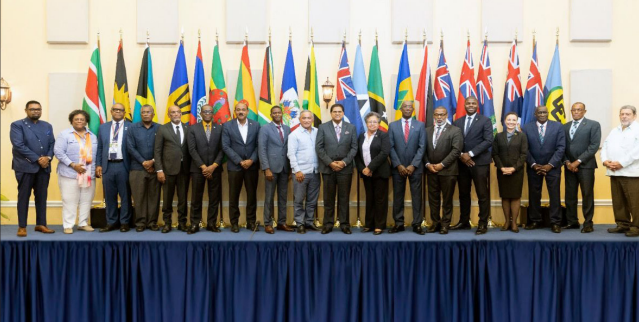
CARICOM: A Beacon Of Regional Unity And Cooperation In The Caribbean
The Caribbean Community (CARICOM) has been a cornerstone of regional cooperation and integration in the Caribbean for over four decades. As the Region faces an increasingly complex and challenging global landscape, CARICOM’s role in fostering a more integrated, prosperous, and secure Caribbean has never been more critical.
The 47th Regular Meeting of the Conference of Heads of Government, held in St. George’s, Grenada, from July 28-30, was a testament to the organization’s unwavering commitment to deepening integration and advancing the interests of its member states. The meeting was marked by several significant milestones, including the admission of Curaçao as the sixth Associate Member, the conferral of the Order of the Caribbean Community on two regional icons, and robust discussions on critical regional issues.
The formal admission of Curaçao as an Associate Member marked a new chapter in regional cooperation. Prime Minister Gilmar Pisas expressed his country’s commitment to contributing to and benefiting from CARICOM membership, highlighting the potential for enhanced economic cooperation, cultural exchange, and collective action on regional challenges.
“Curaçao is proud to join the CARICOM family and contribute to the Region’s development,” Prime Minister Pisas said. “We believe that our membership will strengthen ties between our countries and foster greater cooperation in areas such as trade, tourism, and education.”
The conferral of the Order of the Caribbean Community on Sir Clive Lloyd and former CARICOM Secretary-General, the Honourable Roderick Rainford, OJ, was a poignant reminder of the Region’s rich legacy of achievement. Their contributions to West Indies cricket and regional integration, respectively, serve as inspirations to future generations of Caribbean leaders.
“Sir Clive Lloyd and Ambassador Rainford are shining examples of the Caribbean’s potential for excellence,” CARICOM Secretary-General, Dr. Carla Barnett, said. “Their dedication, passion, and commitment to the Region’s development are an inspiration to us all.”
Chairman of the Conference, Prime Minister Dickon Mitchell, sounded a clarion call to action on climate change, emphasizing the devastating impact of this global phenomenon on the Region. As CARICOM continues to
The Caribbean Community is a beacon of hope for a resilient Caribbean,” Dr. Barnett said. “We will continue to work together to address the challenges we face, seize opportunities for growth and development, and build a brighter future for our Region
advocate for climate justice, its member states remain resolute in their commitment to reducing carbon emissions, promoting sustainable development, and building resilience in the face of uncertainty.
“Climate change is a pressing issue that requires collective action and cooperation,” Prime Minister Mitchell said. “We must work together to address this global challenge and ensure a sustainable future for our Region.”
CARICOM Secretary-General, Dr. Carla Barnett, highlighted the significant role of CARICOM institutions in deepening integration, citing the Caribbean Disaster Emergency Management Agency’s (CDEMA) efforts in relief and recovery as an example. As the Region continues to navigate the complexities of a rapidly changing world, its institutions remain critical to fostering cooperation, promoting economic growth, and advancing the interests of its member states.
“Our institutions are the backbone of our integration process,” Dr. Barnett said. “They provide the framework for cooperation, facilitate the exchange of ideas and best practices, and support the implementation of regional policies and programs.”
Outgoing Chair, President Dr. Mohamed Irfaan Ali, reflected on CARICOM’s accomplishments, including improvements in food and nutrition security, advancements in restoring peaceful governance in Haiti, and efforts to revitalize West Indies cricket. His tenure was marked by a renewed focus on regional cooperation, economic integration, and collective action on regional challenges.
“I am proud of the progress we have made in advancing the Region’s interests,” President Ali said. “We have demonstrated our commitment to cooperation, our resilience in the face of adversity, and our determination to build a better future for our citizens.”
As CARICOM looks to the future, its commitment to fostering a more integrated, prosperous, and secure Caribbean remains unwavering. The 47th Regular Meeting of the Conference of Heads of Government was a testament to the organization’s resolve to deepen regional cooperation, promote economic growth, and advance the interests of its member states.
“The Caribbean Community is a beacon of hope for a resilient Caribbean,” Dr. Barnett said. “We will continue to work together to address the challenges we face, seize opportunities for growth and development, and build a brighter future for our Region.”


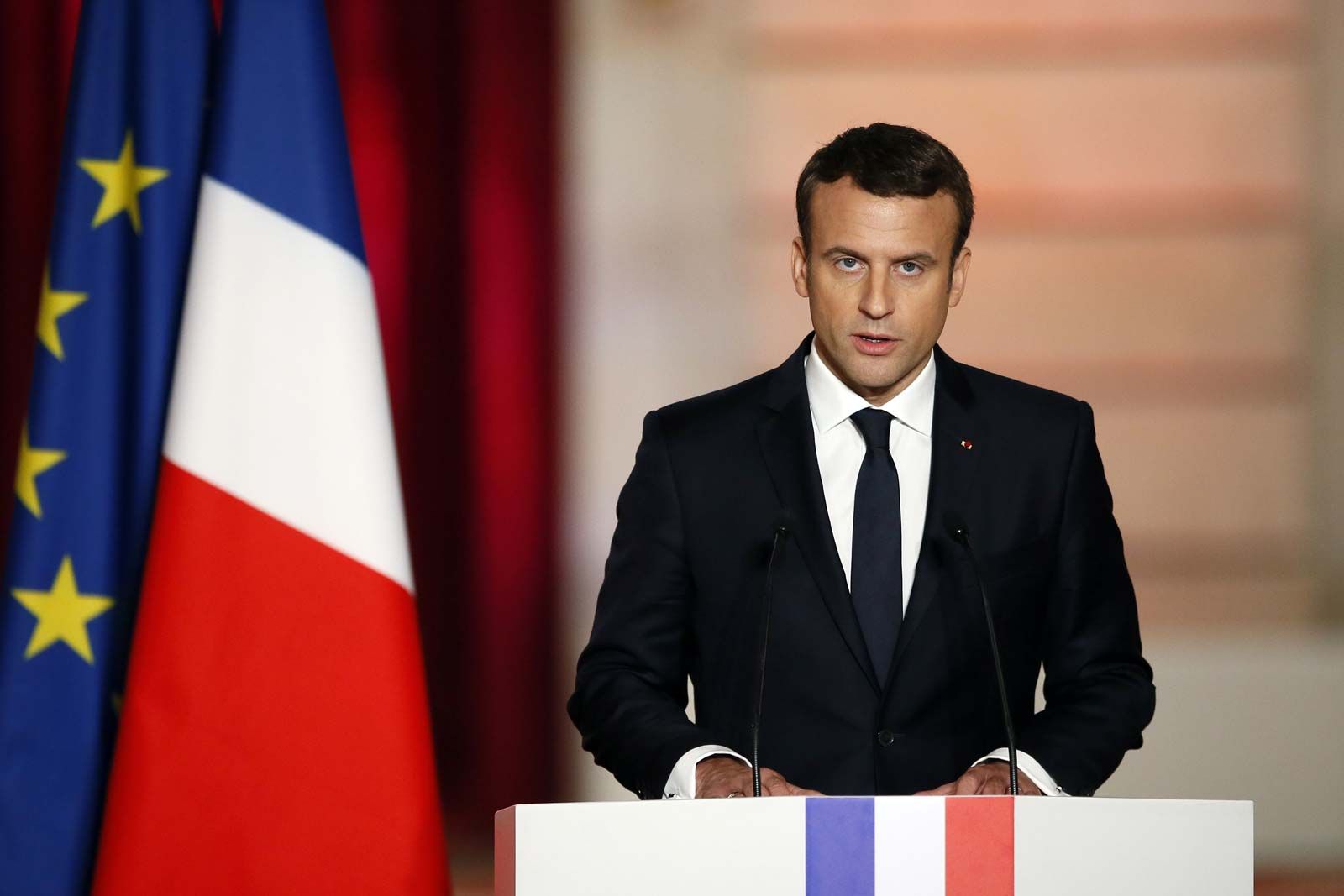
Macron Urges Europe to Act Like a Global Power Amid Rising Threats
French President Emmanuel Macron has renewed his call for Europe to assert itself as a global power, warning that the continent is facing a historic “wake-up call” amid rising geopolitical and economic pressures from China, Russia and even its traditional ally, the United States.
Speaking in an interview with a group of European newspapers ahead of a European Union summit scheduled to hold in Brussels later this week, Macron said Europe must move beyond rhetoric and begin to act decisively like a power, particularly in the areas of economy, finance, defence, security and democratic governance.
According to him, the changing global order demands a more self-reliant and confident Europe.
He noted that while Europe was once content with building a common market and preventing wars, it has consistently shied away from thinking in terms of power, a mindset he said must now change.
Macron used the opportunity to once again push for the creation of EU-wide mutualised loans, arguing that Europe needs a shared debt mechanism to fund its future.
He proposed the issuance of eurobonds to raise hundreds of billions of euros for large-scale industrial investments across the continent.
“The time has come to launch a shared debt capacity to fund our future expenses,” Macron said, adding that Europe needs ambitious programmes capable of financing its best projects in critical sectors.
However, his proposal is expected to face resistance, particularly from Germany and some northern European countries, which have in the past expressed scepticism over mutualised debt.
Critics argue that France is seeking to shift part of its domestic financial burden onto the wider EU, especially given its long-standing challenges with economic reforms.
Macron acknowledged France’s shortcomings, admitting that the country has never had a fully balanced economic model comparable to some northern European economies.
He also conceded that France did not undertake sweeping reforms in the 2010s like Portugal, Spain, Italy and Greece, reforms which he said are now yielding positive results.
Despite this, the French leader insisted that global financial markets are increasingly showing interest in mutualised European debt, partly due to growing uncertainty around the dominance of the US dollar.
He argued that investors are actively seeking credible alternatives and that Europe, with its strong democratic institutions and rule of law, is well positioned to fill that gap.
He contrasted Europe’s democratic appeal with what he described as authoritarian governance in China and what he sees as a gradual distancing of the United States from the principles of the rule of law.
Macron further disclosed that the 27-member European Union needs about €1.2 trillion annually to invest in strategic sectors such as defence and security, clean energy and artificial intelligence.
He urged the bloc to better protect these industries, noting that while China and the United States actively shield their strategic sectors, Europe remains the most open market in the world.
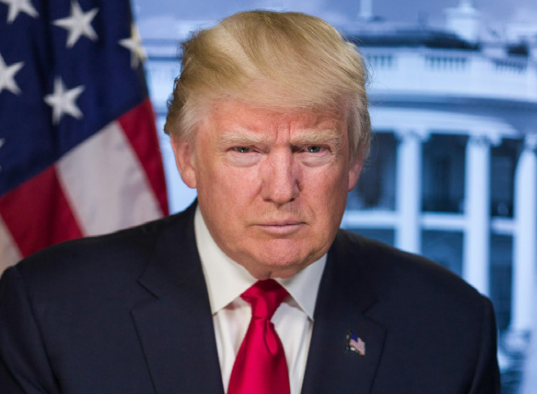
Trade, Tension as Trump Threatens US–Canada Bridge Opening
United States President, Donald Trump, has threatened to block the opening of the Gordie Howe International Bridge linking the US and Canada, insisting that Washington must be “fully compensated” for what he claimed America had given to its northern neighbour.
Trump, in a post on his Truth Social platform, said the bridge would not be allowed to open until Canada treats the United States with what he described as “fairness and respect”.
He also argued that the US should own “at least one half” of the multibillion-dollar infrastructure, claiming that Canada controls both sides of the crossing.
The Gordie Howe International Bridge connects Ontario in Canada with the US state of Michigan and spans the Detroit River.
The project, estimated to cost about 6.4 billion Canadian dollars, is funded by the Canadian government and is being developed by the Windsor-Detroit Bridge Authority, a Canadian federal Crown corporation.
The bridge is to be publicly owned by Canada and the state of Michigan.
Canada’s Prime Minister, Mark Carney, on Tuesday said he had a “positive” conversation with Trump on the issue.
Carney noted that he reminded the US president that Canada paid for the bridge and that it was constructed by both American and Canadian workers using steel sourced from the two countries.
He described the bridge as a strong example of cooperation between the two neighbours and expressed optimism that it would open as scheduled.
According to Carney, Trump suggested that the US ambassador to Canada, Pete Hoekstra, a Michigan native, should help smooth discussions surrounding the project.
Trump’s threat has, however, drawn criticism from US lawmakers in Michigan, who warned of economic consequences.
Michigan Senator, Elissa Slotkin, a Democrat, said blocking the opening of the bridge would be “awful” for the state’s economy, warning that it could lead to higher costs for businesses, weaker supply chains and job losses.
Michigan Governor, Gretchen Whitmer, also rejected Trump’s position, saying the bridge would create jobs and strengthen trade in her state.
Her spokesperson described the project as a product of bipartisan and international cooperation.
Despite Trump’s claim that negotiations would begin immediately, it remains unclear how the US president could legally prevent the opening of the bridge, which is expected to begin operations later this year after final tests and approvals.
Construction began in 2018 after more than a decade of planning and diplomatic wrangling.
Trump also accused former President Barack Obama of allowing construction to begin without the use of US steel, an allegation denied by officials on the Canadian side.
The Mayor of Windsor, Ontario, Drew Dilkens, dismissed the claim, describing it as false and “insane”.

Senegal Police Arrest 14 in Transnational Paedophile Ring Linked to France
Senegalese authorities have arrested 14 people suspected of operating a paedophile gang spanning Senegal and France, police announced.
The group, active since 2017, is accused of organised paedophilia, pimping, rape of minors under 15, sodomy, and intentional transmission of HIV, with victims allegedly forced into unprotected sex with HIV-positive men.
Four suspects reportedly acted under the direction of a French national arrested in France in April 2025, receiving money in return.
Coordinated raids were carried out in Dakar and Kaolack, with evidence seized and the 14 suspects appearing before a judge on Friday.
The operation was conducted with French police support, and authorities urged the public to report information via a toll-free line.


Nigeria’s Tax Reforms and the Diaspora, by Boniface Ihiasota

Zenith Bank, Excel Global Media Discuss Strategic Partnership

Macron Urges Europe to Act Like a Global Power Amid Rising Threats

Pastor Jerry Eze Defends Miracles At UK Conference Amidst Criticism And Controversy

Diaspora Watch 20th Edition (October 14-20, 2024): Your Trusted Source for Global News and Insights

Tanzanian Man Reportedly Dies And Returns To Life Six Times


-
 Business4 days ago
Zenith Bank, Excel Global Media Discuss Strategic Partnership
-
 News4 days ago
Trade, Tension as Trump Threatens US–Canada Bridge Opening
-

 News4 days ago
Senegal Police Arrest 14 in Transnational Paedophile Ring Linked to France
-
 News4 days ago
55 Migrants Perish as Boat Overturns Off Libyan Coast
-
 Analysis4 days ago
Nigeria’s Tax Reforms and the Diaspora, by Boniface Ihiasota
-
 News4 days ago
Kenya to Engage Russia Over Illegal Recruitment of Citizens for Ukraine War