
News
Air India Crash Investigation Takes New Turn as Cockpit Voice Recorder Recovered

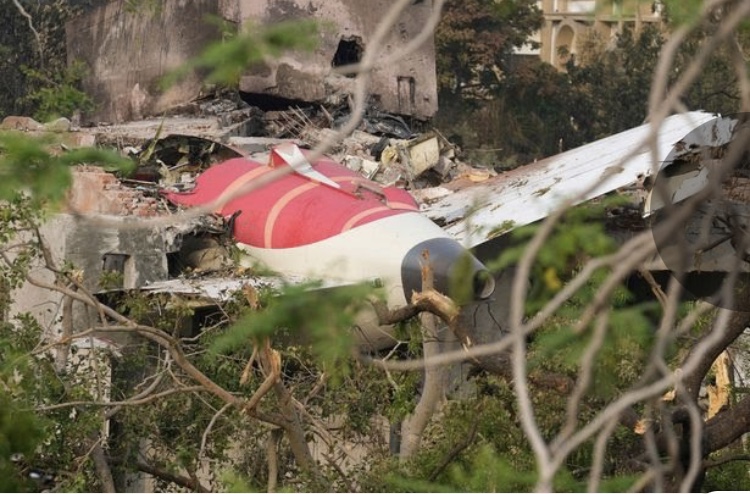
Investigators probing the deadly Air India crash that killed at least 270 people have recovered the cockpit voice recorder (CVR), a crucial step in determining the cause of the accident.
The CVR, along with the flight data recorder (FDR), forms the “black box” of the plane, which is designed to survive crashes and provide vital information for air crash investigations.
The London-bound Air India Boeing 787-8 Dreamliner crashed soon after taking off from Ahmedabad’s Sardar Vallabhbhai Patel International Airport last week, killing most of the 242 passengers and crew members on board.
The investigation is being led by India’s Aircraft Accident Investigation Bureau (AAIB), with assistance from teams from the US and the UK, including the US National Transportation Safety Board (NTSB).
The recovery of the CVR and FDR is a significant development in the investigation, as these devices capture crucial data and audio from the cockpit, including pilot conversations, alarms, and ambient sounds.
The analysis of these recorders will help experts reconstruct the flight’s final moments and determine the cause of the incident.
A high-level committee set up by the Indian government to examine the reasons behind the crash is expected to hold its first meeting soon.
The committee will submit a preliminary report within three months and propose new standard operating procedures (SOPs) to help prevent similar incidents in the future.
As the investigation continues, families of the victims are still grappling with the trauma and pain of their loss.
The process of identifying the victims has been slow and painstaking, with many bodies badly burned in the crash.
Over 90 victims have been identified through DNA matching, and 47 of the identified bodies have been sent to their families.
The former chief minister of Gujarat, Vijay Rupani, was among the identified victims. His funeral will be held with full state honors in Rajkot city.
The investigation into the Air India crash is ongoing, and officials are working to determine the cause of the accident and prevent similar incidents in the future.











Melania Trump blasts ‘lies’ linking her to Epstein
US First Lady Melania Trump made a surprise statement on Thursday denying any knowledge of Jeffrey Epstein’s abuse, or that she herself was a victim of the convicted sex offender.
The 55-year-old’s rare on-camera remarks at the White House came out of the blue, in an extraordinary intervention in a scandal that has long haunted her husband President Donald Trump.
“The lies linking me with the disgraceful Jeffrey Epstein need to end today,” she said. “The individuals lying about me are devoid of ethical standards, humility and respect.”
It was not clear why the Slovenian-born former model decided to give the public statement, and she did not detail any specific allegations about her and the late, convicted sex offender.
Melania and Donald Trump had previously been photographed with Epstein, but she said that she had met her husband independently two years prior to meeting Epstein.
“I am not Epstein’s victim. Epstein did not introduce me to Donald Trump,” Melania Trump said.
She said “fake images and statements about Epstein and me” had been circulating on social media “for years now. Be cautious about what you believe: these images and stories are completely false.”
The first lady also urged Congress to hold a public hearing for survivors of Epstein’s abuse to “give these victims their opportunity to testify under oath.”
But some Epstein survivors and their families, including the brother of Epstein’s main accuser Virginia Giuffre, called the speech a “deflection of responsibility.”
“First Lady Melania Trump is now shifting the burden onto survivors under political conditions that protect those with power” including “the Trump Administration, which has still not fully complied with the Epstein Files Transparency Act,” according to a joint statement posted on social media.
Two of Epstein’s accusers, sisters Maria and Annie Farmer told US media in a separate statement: “We can’t speak for other survivors, but what we want is accountability, transparency and justice.”
The sisters called for the release of “the remaining records held by the Department of Justice including my complete FBI records from 1996.”
Epstein died in federal custody in 2019 while awaiting trial on sex trafficking charges involving minors, but the scandal has repeatedly overshadowed Trump’s second presidency.

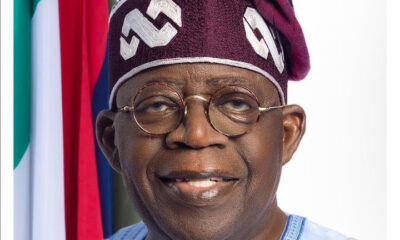
President Bola Tinubu has called on Nigerians and political actors to embrace peaceful politics and strictly adhere to the Electoral Act as the country prepares for another electoral cycle.
In his 2026 Easter message, the President reaffirmed his administration’s commitment to decisively tackle terrorism and banditry through strengthened local initiatives and international partnerships.
Tinubu acknowledged the nation’s lingering security challenges, while commending the efforts of the Armed Forces. He assured citizens that his government was deploying adequate resources and forging strategic alliances with foreign partners to address the threats.
He also referenced his recent visit to Jos, where he commiserated with victims of violence and reassured residents of improved security across the country. The President stressed the importance of unity and collective responsibility, noting that no meaningful development could take place in an atmosphere of fear and instability. He said, “No nation can thrive where fear prevails, and no progress can be sustained
without peace,” urging Nigerians to support lawful efforts and reject forces threatening the nation’s stability.
On the economy, Tinubu defended ongoing reforms, admitting their short-term impact on citizens but insisting they were necessary for long-term growth and prosperity. He expressed optimism that key economic indicators showed Nigeria was on the right path, describing the current phase as a transition
towards a more stable and prosperous future.
Tinubu further urged political stakeholders to act with maturity and responsibility, adding that democracy thrives in an environment defined by restraint, accountability, and informed participation.
The President, therefore, wished Nigerians a Happy Easter, thanked them for their continued support, and pledged his administration’s commitment to justify the confidence reposed in it.
#politics #Tinubu #reforms #terrorism #electoralact

CARICOM Scribe Barnett to Speak at Caribbean Energy Week
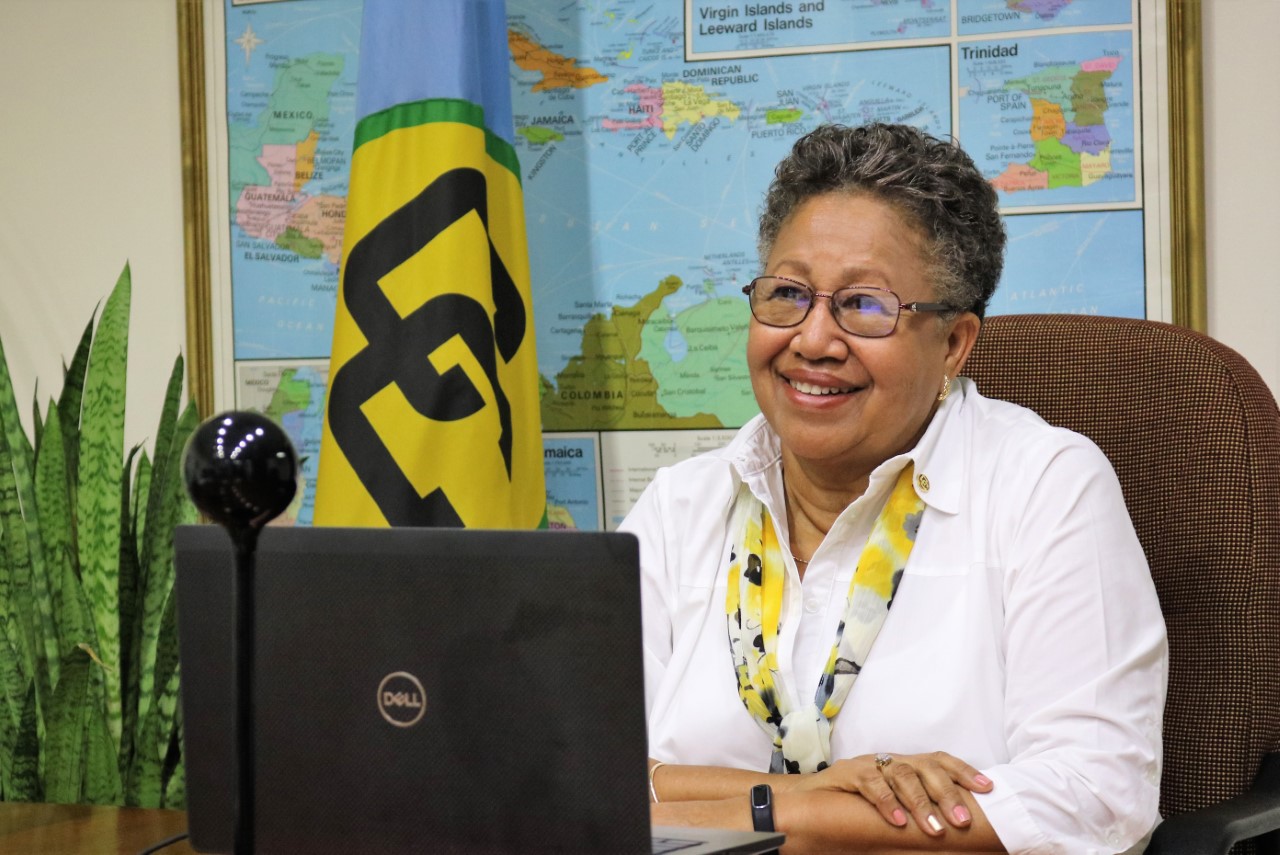
The Secretary-General of the Caribbean Community, Carla Barnett, is set to participate in the 2026 edition of Caribbean Energy Week scheduled to hold in Paramaribo, Suriname.
Barnett is expected to join heads of government, ministers responsible for energy and environment, as well as industry leaders at the high-level forum taking place from March 30 to April 1. She will deliver remarks on the opening day of the event.
Organisers of Caribbean Energy Week 2026 said the forum would bring together stakeholders across hydrocarbons, renewable power, mining and carbon credits to showcase investment-ready projects and deepen regional collaboration.
They noted that the event would serve as a platform to forge strategic partnerships and accelerate investment flows into the Caribbean’s energy sector.
The organisers added that the multinational gathering is also designed to strengthen the region’s ongoing energy transition by harnessing synergies in logistics, technology and partnerships, including engagement with African stakeholders.
Caribbean Energy Week is spearheaded by Energy Capital Power in collaboration with other strategic partners.



Pastor Jerry Eze Defends Miracles At UK Conference Amidst Criticism And Controversy

Diaspora Watch 20th Edition (October 14-20, 2024): Your Trusted Source for Global News and Insights

Tanzanian Man Reportedly Dies And Returns To Life Six Times


-

 Trending5 days ago
Diaspora Watch – Vol. 87
-

 News6 days ago
Artemis II Crew Captures Stunning Images of Earth Midway to Moon
-

 News1 day ago
NEWS
-
 News6 days ago
Melania Trump Rallies 45 Nations on AI-powered Education
-
 News6 days ago
US, Iran Search for Missing Airman After Warplane Downed
-
 Analysis6 days ago
Understanding South Africa’s Xenophobic Violence, by Alabidun Shuaib AbdulRahman