
News
Malawi Mourns Vice President Saulos Chilima’s Tragic Death In Plane Crash

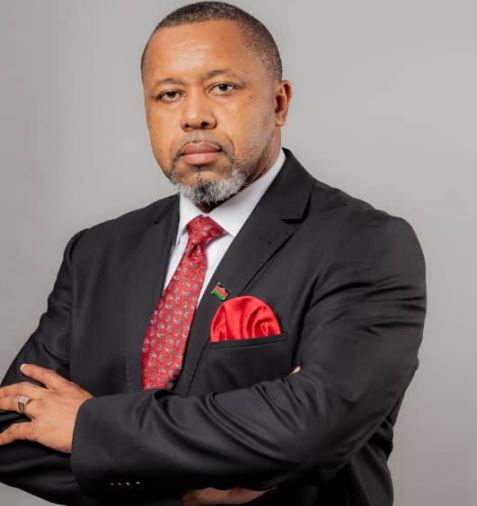
Malawi has been plunged into a state of national mourning following the tragic death of Vice President Saulos Chilima in a plane crash on Monday, June 10, 2024. President Lazarus Chakwera has declared a 21-day national mourning period in honor of Chilima and the nine other passengers who lost their lives in the tragic accident. The plane, a Dornier 228 aircraft, was carrying Chilima and his staff on a short flight from the capital, Lilongwe, to the northern city of Mzuzu to attend the funeral of a former government minister. However, it disappeared from radar and crashed in the Chikangawa Forest in Mzimba District, killing everyone on board. Chilima, 51, was a prominent
figure in Malawian politics and had been serving as Vice President since 2014. He was known for his strong stance against corruption, despite facing charges himself, which were later dropped. His death has sent shockwaves across the country, with many mourning the loss of a dedicated public servant.
The news of Chilima’s death has been met with an outpouring of grief from across the country. Malawians from all
walks of life have been paying their respects, with many gathering at the airport to receive the bodies of the victims. The streets are filled with mourners, and flags are flying at half-mast as a sign of respect. President Chakwera has appointed a ministerial committee to oversee preparations for Chilima’s state funeral, which is expected to be held soon. The government has also declared a 21-day national mourning period, during which all flags will fly at half staff.
The crash has raised questions about the safety of the country’s aviation industry, with many calling for an investigation into the cause of the accident. The government has promised a thorough investigation and has sought the assistance of international experts. As Malawi mourns the loss of its Vice President, the country remains in a state of shock and grief. Chilima’s death is a significant loss to the nation, and his legacy will be remembered for years to come. The 21-day mourning period is a testament to the respect and admiration that Chilima commanded, and it is a fitting tribute to a dedicated public servant who lost his life in the service of his country.


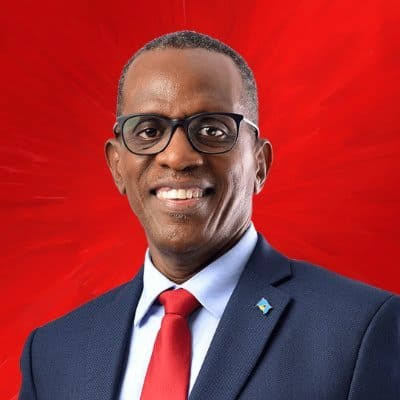
PIF, CARICOM formalise partnership to advance SIDS priorities
The Pacific Islands Forum and the Caribbean Community, CARICOM have formalised a partnership aimed at strengthening cooperation and collective advocacy on issues affecting Small Island and Low-Lying Coastal Developing States.
The two regional blocs signed a Memorandum of Understanding on Wednesday on the margins of the 81st session of the United Nations General Assembly in New York.
The agreement was signed by the PIF Secretary-General, Baron Divavesi Waqa, and the CARICOM Secretary-General, Dr Carla Barnett.
The MoU provides a framework for strengthened cooperation between the two regions, including knowledge and expertise sharing, practical collaboration and collective advocacy on issues of common interest.
Waqa described the agreement as the foundation for a deeper and more structured Pacific-Caribbean partnership.
“Our voices are strongest when we advocate together on issues affecting our peoples and our future,” he said.
“Today’s signing marks the beginning of a stronger partnership between the Pacific and Caribbean, enabling us to advance shared SIDS priorities and ensure they remain visible, influential and action-oriented in global decision-making.”
Barnett said the agreement represented an important step in South-South cooperation between CARICOM and the Pacific Islands Forum.
“This MoU marks a pivotal moment in South-South cooperation between CARICOM and the Pacific Islands Forum,” she said.
According to her, both regions share common vulnerabilities, including the impacts of climate change and economic pressures confronting small island and low-lying coastal states.
She said the formal partnership would strengthen collective advocacy, amplify shared priorities and create practical frameworks for cooperation that would benefit people in both regions.
The MoU also provides a basis for the two organisations to share knowledge and expertise and pursue practical cooperation on issues affecting their member states.
The Pacific Islands Forum comprises 18 member countries and territories and is headquartered in Suva, Fiji.
CARICOM comprises 15 member states and eight associate members and has its headquarters in Georgetown, Guyana.
The partnership comes as small island and low-lying coastal states continue to push for stronger representation and collective action on global issues, particularly climate change, economic vulnerability and sustainable development.
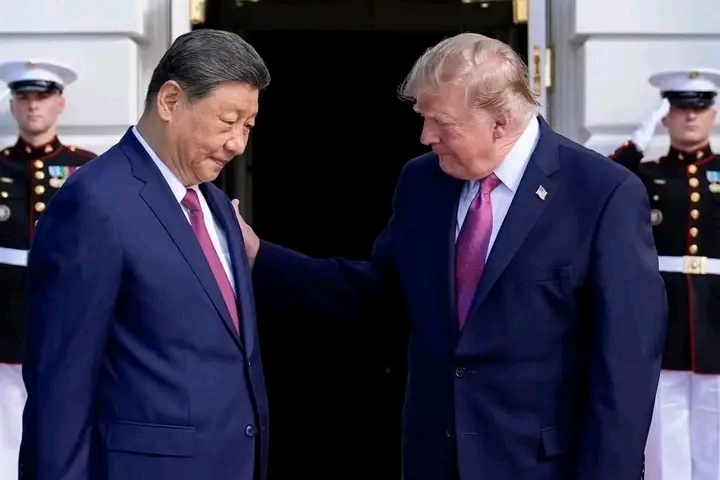
When Two Powerful Heads Meet …
By Boniface Ihiasota, Washington DC and Alabidun Shuaib AbdulRahman, Nigeria
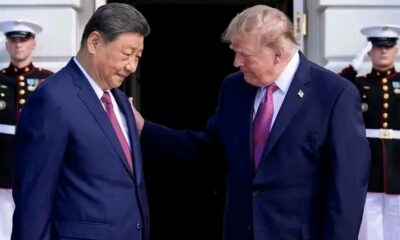
When United States President Donald Trump welcomed Chinese President Xi Jinping to Washington this week, the world watched not merely two presidents meeting, but two competing centres of global power attempting to put limits on a relationship increasingly defined by economic rivalry, technological competition and strategic mistrust.
Xi arrived in the United States on Wednesday, September 23, 2026, for a three-day state visit at Trump’s invitation. The visit, which ended on Friday, September 25, was the first visit by a Chinese president to the White House in more than a decade and the first time a Chinese leader had made two formal state visits to the United States.
On Thursday, September 24, Trump and Xi stood together at the White House during a formal state arrival ceremony, followed by bilateral discussions and a state dinner. On Friday, they met again over tea before visiting the National Archives, where they viewed documents connected with the history of the United States.
The ceremony conveyed warmth. The substance of the talks revealed something more complicated.
The meeting produced agreements and additional channels for cooperation, particularly in trade, investment, artificial intelligence and law enforcement. But it did not resolve the principal disputes that have placed Washington and Beijing on a strategic collision course.
Diaspora Watch Newspaper reports that the United States and China have spent years imposing tariffs and restrictions on each other’s goods, creating uncertainty for manufacturers, farmers, technology companies and consumers. The two governments had already reached a framework during Trump’s May 2026 visit to Beijing, but implementation remained uneven before Xi’s arrival in Washington.
During the September meeting, the two countries operationalised the US-China Board of Trade and Board of Investment, mechanisms created during the May summit.
Under the Board of Trade, Washington and Beijing reached consensus on recommendations for more favourable tariff treatment covering $30bn of non-sensitive goods in each direction. The products include American agricultural goods, fish and seafood, logs and wood products, cosmetics and medical devices, as well as Chinese consumer products such as small appliances, toys, holiday decorations and children’s car seats.
China also agreed to import at least 10 million metric tonnes of American coal in both 2027 and 2028.
On paper, the arrangement represents a substantial commercial opportunity. But it would be premature to describe it as the end of the US-China trade conflict.
Reuters reported that the wider trade truce was extended for only two months, meaning that some of the most difficult questions remain subject to further negotiations. The two governments therefore appear to have chosen continuity over confrontation without yet reaching a permanent economic settlement. That is perhaps the most revealing aspect of the meeting. The relationship is not being reset. It is being managed.
For China, access to the American market remains important. For the United States, Chinese manufacturing capacity and supply chains remain difficult to replace quickly. Both governments consequently have reasons to negotiate even while they continue to prepare for greater competition.
The question of rare-earth minerals illustrates the problem. China occupies a dominant position in important parts of the global rare-earth supply chain. The minerals are used in electronics, electric vehicles, advanced manufacturing and defence-related technologies. Washington has increasingly regarded its dependence on Chinese processing capacity as a strategic vulnerability.
The White House said the two countries were continuing discussions over shortages involving rare earths and other critical minerals, with the objective of returning shipments to appropriate levels. The issue has therefore moved beyond conventional trade policy.
For Washington, critical minerals are now linked to economic and national security. For Beijing, control over important supply chains provides negotiating leverage at a time when the United States is attempting to restrict China’s access to some advanced technologies. That produces an unusual form of interdependence.
America possesses enormous financial, technological and military capabilities. China possesses enormous manufacturing capacity and occupies critical positions in several global supply chains. Neither country can easily ignore the other’s leverage.
Artificial intelligence added another layer to the discussion. Washington and Beijing are competing intensely over AI, a technology that is increasingly relevant to economic productivity, scientific research, communications and national security. Yet both governments also recognise that competition in such a rapidly developing field requires channels for communication.
The two sides agreed to establish a US-China “Super Intelligence” dialogue to discuss the risks and benefits associated with emerging technologies, with another exchange expected by November. They also agreed to establish a bilateral communication channel for incidents involving such technologies.
The significance lies not in the creation of a new diplomatic label, but in the recognition that technological competition can generate risks that neither side can manage in isolation.
The United States wants to preserve its technological advantages. China wants to expand its own technological capabilities and reduce dependence on American technology. Those objectives have not changed.
What has changed, at least temporarily, is the effort to create a mechanism through which the two governments can communicate while that competition continues. The same pattern emerged in discussions on law enforcement.
The White House said China had introduced export controls on two additional fentanyl precursor chemicals and that Chinese authorities had arrested 21 Chinese citizens in August following information supplied by US law enforcement. Washington has pressed Beijing for stronger action against the supply of precursor chemicals linked to illicit fentanyl production in North America.
For Trump, the issue has direct domestic significance. For Beijing, cooperation provides an opportunity to demonstrate that engagement with Washington can produce practical results even when disagreements persist elsewhere.
But perhaps the most difficult subject remains Taiwan. China regards Taiwan as part of its territory and opposes moves towards Taiwanese independence. The United States does not maintain formal diplomatic relations with Taiwan but has longstanding unofficial relations with Taipei and provides defensive support to the island.
Xi used the Washington meeting to restate Beijing’s position on Taiwan and national reunification. Reporting from the talks showed that the issue remained among the major areas of disagreement between the two governments. No new settlement emerged.
That is significant because Taiwan is not simply a question of sovereignty between Beijing and Taipei. It sits at the intersection of American security commitments, Chinese national policy, military strategy and the global semiconductor industry.
A serious crisis around the island could disrupt shipping, technology supply chains and financial markets while creating the possibility of direct confrontation between American and Chinese forces.
The absence of a new agreement on Taiwan therefore does not mean the issue has become less important. It demonstrates the limits of the current rapprochement.
The same caution applies to Iran. Trump raised China’s relationship with Tehran during the Washington talks and warned Beijing against supporting Iran, according to US Ambassador to China David Perdue.
Reuters reported that Trump received assurances from Xi that China would not provide such support, amid American concerns over Chinese-Iranian economic and military links.
The discussion illustrates another reality of the US-China relationship: bilateral diplomacy increasingly takes place against the background of conflicts and alliances elsewhere.
Washington and Beijing are not merely negotiating about their own economies. Their policies affect Russia, Iran, North Korea, Taiwan, international shipping and the broader balance of power.
The two leaders also discussed Russia, North Korea and Iran and agreed to support each other as hosts of the G20 and APEC meetings. The White House said Trump and Xi intend to attend each other’s summits.
Yet the most striking feature of the summit may have been what did not happen as there was no comprehensive trade settlement. There was no breakthrough over Taiwan. There was no end to the technology rivalry. There was no agreement that fundamentally altered the strategic competition between Washington and Beijing.
Reuters described the summit as producing few major public breakthroughs, while noting that the meeting was heavily focused on personal diplomacy and symbolism. That should not necessarily be interpreted as a failure of diplomacy.
Relations between major powers are rarely transformed by one meeting. More often, summits create mechanisms for managing disagreements and preventing them from escalating.
In that sense, the most important product of the Trump-Xi meeting may be the continuation of dialogue.
The alternative would be a relationship in which economic retaliation, technology restrictions, military manoeuvres and diplomatic disagreements occur without reliable channels between the two governments.
For two countries with enormous military capabilities and competing interests across the Indo-Pacific, such a situation would carry significant risks. The personal relationship between Trump and Xi is therefore only one component of the equation.
Trump has demonstrated a preference for leader-to-leader negotiations and tangible economic outcomes. Xi operates within a Chinese political system built around long-term strategic planning and the pursuit of what Beijing describes as national rejuvenation.
The two leaders can therefore reach tactical understandings without necessarily sharing the same long-term objectives.
Trump wants an economic relationship he considers fairer to American workers, farmers and businesses. Xi wants continued access to international markets while resisting what Beijing regards as attempts to constrain China’s technological and strategic rise. Those objectives overlap in some areas and collide in others. The result is a relationship that can simultaneously produce cooperation and confrontation. The Washington summit demonstrated precisely that contradiction.
The two countries can agree on coal purchases while competing over energy and technology. They can cooperate against illicit drug trafficking while imposing restrictions on strategic exports. They can establish an AI communication channel while competing intensely for technological leadership. They can discuss global stability while remaining divided over Taiwan.
That is the nature of the contemporary US-China relationship. It is neither a new Cold War in the traditional sense nor a normal commercial partnership. It is a complicated combination of economic interdependence, strategic competition and selective cooperation.

Goldbet Casino w Polsce – Automaty, gry stołowe i kasyno na żywo
Содержимое
Goldbet to jeden z najpopularniejszych serwisów hazardowych w Polsce, oferujący szeroki wybór gier kasynowych, w tym automaty, gry stołowe i kasyno na żywo. Goldbet Casino to miejsce, gdzie gracze mogą znaleźć swoje ulubione gry i skorzystać z atrakcyjnych promocji, takich jak goldbet kod promocyjny, który pozwala na otrzymanie bonusu powitalnego.
Goldbet to marka, która cieszy się dużym zaufaniem wśród graczy, dzięki swojej przejrzystości i bezpieczeństwu. Goldbet casino oferuje wyjątkowo bogatą ofertę gier, w tym automaty wideo, gry stołowe, takie jak blackjack, ruletka i poker, a także kasyno na żywo, gdzie gracze mogą zagrać z prawdziwymi krupierami. Dzięki goldbet kod promocyjny, nowi gracze mogą otrzymać atrakcyjne bonusy i rozpocząć grę w goldbet casino z większym kapitałem.
W goldbet casino gracze mogą liczyć na profesjonalną obsługę i pomoc w każdej sytuacji. Serwis oferuje także szeroki wybór metod płatności, co ułatwia dokonywanie depozytów i wypłat. Goldbet to także miejsce, gdzie gracze mogą znaleźć informacje o nowych grach i promocjach, a także porady i wskazówki, jak grać odpowiedzialnie i bezpiecznie. Dzięki temu, goldbet casino jest idealnym miejscem dla wszystkich, którzy szukają emocjonujących gier kasynowych i atrakcyjnych promocji, takich jak goldbet kod promocyjny.
Automaty do gier w Goldbet Casino
Goldbet Casino to popularna platforma hazardowa, która oferuje szeroki wybór automatów do gier. Gracze mogą skorzystać z goldbet kod promocyjny, aby uzyskać dostęp do ekskluzywnych promocji i bonusów. Wśród automatów do gier w Goldbet Casino znajdują się takie tytuły, jak Book of Ra, Sizzling Hot czy Lucky Lady’s Charm. Każdy automat został starannie wybrany, aby zapewnić graczom najwyższy poziom rozrywki i szansy na wygraną.
W poniższej tabeli przedstawiamy niektóre z najpopularniejszych automatów do gier w Goldbet Casino:
| Book of Ra | Klasyczny automat z egipską tematyką | 0,10 zł | Sizzling Hot | Prosty, ale emocjonujący automat z owocami | 0,20 zł | Lucky Lady’s Charm | Automat z tematyką magiczną i wyższymi wygranymi | 0,50 zł |
Goldbet casino aplikacja umożliwia graczom dostęp do tych automatów o każdej porze i w każdym miejscu. Wystarczy tylko zainstalować goldbet casino aplikacja na swoim urządzeniu, aby móc grać w automaty do gier w Goldbet Casino. Dodatkowo, gracze mogą skorzystać z goldbet kod promocyjny, aby zwiększyć swoje szanse na wygraną. Goldbet to platforma, która oferuje bezpieczne i uczciwe gry, dzięki czemu gracze mogą czuć się komfortowo i bezpiecznie podczas gry w goldbet casino.
Gry stołowe w ofercie Goldbet Casino
Goldbet Casino to popularna platforma hazardowa, która oferuje szeroki wybór gier stołowych. Gry te są dostępne dla wszystkich zarejestrowanych użytkowników i mogą być played za pomocą goldbet kod promocyjny, który daje możliwość otrzymania atrakcyjnych bonusów.
W ofercie Goldbet Casino znajdują się takie gry stołowe jak ruletka, blackjack, bakarat i poker. Ruletka to jedna z najpopularniejszych gier stołowych, w której gracz stawia zakłady na wynik losowania kulki. Goldbet oferuje różne warianty ruletki, w tym europejską, amerykańską i francuską.
Blackjack to inna popularna gra stołowa, w której gracz ma za zadanie uzyskać jak najwyższą wartość kart, nie przekraczając 21 punktów. Goldbet Casino oferuje różne warianty blackjacka, w tym klasyczny, europejski i amerykański.
Goldbet Casino oferuje również bakarat, który jest grą karcianą, w której gracz stawia zakłady na wynik rozdania kart. Goldbet casino aplikacja umożliwia grę w bakarat na urządzeniach mobilnych, co sprawia, że gra jest jeszcze bardziej dostępna.
Wszystkie gry stołowe w Goldbet Casino są dostępne w trybie na żywo, co oznacza, że gracz może grać z prawdziwymi krupierami w czasie rzeczywistym. Goldbet współpracuje z najlepszymi dostawcami oprogramowania, aby zapewnić najwyższą jakość gier.
Podsumowując, Goldbet Casino oferuje szeroki wybór gier stołowych, które są dostępne dla wszystkich zarejestrowanych użytkowników. Gry te mogą być played za pomocą goldbet kod promocyjny i są dostępne w trybie na żywo, co sprawia, że gra jest jeszcze bardziej emocjonująca. Goldbet casino aplikacja umożliwia grę na urządzeniach mobilnych, co sprawia, że gra jest jeszcze bardziej dostępna.
Kasyno na żywo w Goldbet Casino
Kasyno na żywo w Goldbet https://www.sporttape.pl Casino to wyjątkowa opcja dla graczy, którzy szukają autentycznego doświadczenia hazardowego. Dzięki tej funkcji, gracze mogą uczestniczyć w grach prowadzonych przez prawdziwych krupierów, co dodaje emocji i realizmu do gry. Goldbet Casino oferuje szeroki wybór gier na żywo, w tym ruletkę, blackjacka, pokera i wiele innych. Gracze mogą również skorzystać z goldbet casino aplikacja, aby grać w kasynie na żywo na swoich urządzeniach mobilnych.
W kasynie na żywo Goldbet Casino, gracze mogą korzystać z różnych funkcji, takich jak:
- transmisja wideo w wysokiej jakości
- interakcja z krupierami i innymi graczami
- możliwość obstawiania w czasie rzeczywistym
- dostęp do statystyk i historii gier
Aby zacząć grać w kasynie na żywo, gracze muszą tylko zarejestrować się na stronie goldbet casino i wprowadzić goldbet kod promocyjny, jeśli taki posiadają. Następnie, mogą wybrać grę na żywo, którą chcą zagrać, i rozpocząć emocjonujące doświadczenie hazardowe.
Goldbet Casino – kasyno na żywo dla każdego
Goldbet Casino to idealne miejsce dla graczy, którzy szukają wyjątkowego doświadczenia hazardowego. Kasyno na żywo oferuje emocje, realizm i możliwość interakcji z innymi graczami. Dzięki goldbet casino aplikacja, gracze mogą grać w kasynie na żywo o każdej porze i w każdym miejscu.


Lee backs Trump-Kim talks, seeks phased North Korea denuclearisation

Russia may launch limited NATO attack in months, Danish intelligence warns

EDITORIAL: African Leaders Must Speak to the World With Sovereign Power

Pastor Jerry Eze Defends Miracles At UK Conference Amidst Criticism And Controversy

Diaspora Watch 20th Edition (October 14-20, 2024): Your Trusted Source for Global News and Insights

Tanzanian Man Reportedly Dies And Returns To Life Six Times


-
 Diplomacy3 days ago
When Two Powerful Heads Meet …
-
 News2 days ago
PIF, CARICOM formalise partnership to advance SIDS priorities
-
 Analysis3 days ago
Ortom’s 23 Vehicles and the Dangerous Culture of Public Entitlement, by Boniface Ihiasota
-
News4 days ago
WinPlace Casino GB – Welcome Bonuses and Casino Promotions
-
News4 days ago
Goldbet Casino w Polsce – Dostępne metody płatności i realizacja transakcji
-

 Analysis2 days ago
Democracy Not Africa’s Answer, by Alabidun Shuaib AbdulRahman