
News
Obama Storms Virginia, New Jersey in Last-Minute Push for Democrats


Obama Storms Virginia, New Jersey in Last-Minute Push for Democrats
Former U.S. President Barack Obama has returned to the campaign trail, lending his political weight to two crucial Democratic gubernatorial candidates in Virginia and New Jersey as both states prepare to head to the polls on Tuesday.
Obama, one of the Democratic Party’s most influential voices, is set to headline rallies in Norfolk, Virginia, and Newark, New Jersey, this weekend in support of Abigail Spanberger and Mikie Sherrill, the party’s flagbearers in the high-stakes elections.
The two races are widely viewed as an early test of the national political mood and a referendum on the country’s direction under Donald Trump’s presidency.
In Virginia, Obama will campaign alongside former congresswoman Abigail Spanberger, who is locked in a tight race against Republican Lieutenant Governor Winsome Earle-Sears.
Later in the day, he will appear in Newark to drum up support for Representative Mikie Sherrill, who faces a stiff challenge from Republican Jack Ciattarelli, a former state lawmaker.
Party insiders say the choice of venues both cities with significant Black populations is deliberate, as Obama’s enduring popularity among minority voters remains one of the Democrats’ strongest mobilization tools.
A senior Democratic strategist said Obama’s presence is expected to “inject late momentum into both campaigns,” noting that voter turnout in urban areas could be decisive.
The rallies mark the climax of a weeklong show of force by the Democratic establishment. Several high-profile governors, many seen as potential 2028 presidential hopefuls have already joined the campaign trail to support Spanberger and Sherrill.
Among them are Kentucky Governor Andy Beshear, Maryland’s Wes Moore, Illinois Governor JB Pritzker, Pennsylvania’s Josh Shapiro, and Michigan’s Gretchen Whitmer.
Former Transportation Secretary Pete Buttigieg also campaigned with Sherrill earlier in the week, using the event to criticise the Trump administration’s cancellation of the Gateway Tunnel rail project, a major infrastructure initiative that would have improved transit across the New York–New Jersey corridor.
While both Virginia and New Jersey are traditionally Democratic-leaning, analysts warn that complacency could be costly.
In 2021, Republicans stunned observers when Glenn Youngkin won the Virginia governorship, signalling conservative gains in suburban areas once considered Democratic strongholds.
In New Jersey, Sherrill’s lead has been consistent but narrow. Her opponent, Ciattarelli, has downplayed the impact of Obama’s visit, insisting that his campaign’s strength lies in “grassroots connections with ordinary voters.”
“This is what I refer to as the choreography of campaigns,” Ciattarelli told reporters after casting his vote on Friday. “Our focus is on the people, not on celebrity endorsements.”
The twin elections are being closely monitored in Washington and beyond. Political observers describe them as a barometer of the public mood ahead of the 2026 midterm elections, a critical period that could reshape the balance of power in Congress.
If Democrats secure victories in both states, it could provide a morale boost and signal renewed voter confidence in the party’s leadership.
However, any upset would likely embolden Republicans and fuel debate over Democratic strategy heading into the next national election cycle.
For Obama, this weekend’s appearances mark a return to familiar territory: rallying the Democratic base with his trademark blend of optimism and urgency.
At a private event ahead of the rallies, the former president reportedly told supporters that the upcoming elections are about “keeping the country on the path of inclusion, fairness, and forward progress.”
“Elections are about the future,” Obama said. “And the future we want is one where every American feels seen, valued, and protected.”


CARICOM pushes unified response to global shifts, backs Guyana’s COP35 bid
The Caribbean Community, CARICOM has called for urgent and coordinated action to confront mounting global uncertainties, as it concluded its 50th Regular Meeting of the Conference of Heads of Government in Basseterre, Basseterre, St Kitts and Nevis.
The four-day summit, held from February 24 to 27 under the chairmanship of St Kitts and Nevis Prime Minister, Dr Terrance Drew, brought together regional leaders to deliberate on security, economic integration, external trade, reparations and the situation in Haiti.
In her opening remarks, CARICOM Secretary-General, Dr Carla Barnett, urged member states to take advantage of opportunities presented by the shifting global order.
She said as new markets emerge and strategic alliances are recalibrated, the Region must engage with clarity and cohesion in areas such as energy transition, digital infrastructure, climate resilience and technology to attract investments aligned with its development priorities.
Outgoing Chairman and Jamaica’s Prime Minister, Andrew Holness, said the speed of global change was outpacing regional coordination, warning that climate shocks, criminal networks and technological disruption were evolving faster than existing policy and regulatory frameworks.
“The question before us is not whether CARICOM can endure, but whether it can deliver for our people with urgency and relevance in a rapidly changing world,” he said.
President of Suriname, Jennifer Geerlings-Simons, and Prime Minister of Trinidad and Tobago, Kamla Persad-Bissessar, also stressed the need for regional unity, describing it as a necessity in the face of economic volatility, climate insecurity and geopolitical shifts.
During the meeting, Heads of Government held discussions with the United States Secretary of State, Marco Rubio, and agreed on the need to establish a 21st-century cooperation framework covering migration, security cooperation, trade and investment, disaster recovery and technical assistance.
Leaders noted that the US remains a valued partner and welcomed Washington’s commitment to reinvigorate traditional ties within the Western Hemisphere.
The Conference also engaged Saudi Arabia and the United Arab Emirates on expanded economic collaboration, including structured mechanisms to unlock opportunities in the digital economy, climate resilience, water security and infrastructure development.
In a major financial boost, Afreximbank announced an increase in its global limit for CARICOM initiatives from $3bn to $5bn, as the Region seeks to strengthen economic ties with Africa and expand trade and investment flows.
On Haiti, the Conference reaffirmed its commitment to supporting stability and free and fair elections, and expressed appreciation to Kenya for leading the Multinational Security Support mission, now transitioned to a Gang Suppression Force authorised by the United Nations Security Council.
The Bahamas and Jamaica were also commended for contributing personnel and operational support.
Heads of Government reiterated their steadfast backing for the sovereignty and territorial integrity of Belize and Guyana in border matters before the International Court of Justice, calling on all parties to respect and implement the court’s decisions when delivered.
On regional security, leaders welcomed progress on model legislation for criminal justice reform and the offer by the United Nations Development Programme to support the expansion of a Police Record Management Information System across member states.
On economic integration, the Conference approved the inclusion of additional professions under the free movement of skilled nationals within the CARICOM Single Market and Economy and adopted amendments to the Revised Treaty of Chaguaramas to streamline Rules of Origin adjustments.
Heads of Government also approved a CARICOM Industrial Policy and Strategy Framework aimed at fostering competitive and sustainable industries across the Region.
In a significant climate development, the Conference agreed to support Guyana’s bid to host COP35 in 2030.
The leaders expressed appreciation to the Government and people of St Kitts and Nevis for hosting the landmark 50th meeting and accepted Saint Lucia’s invitation to host the 51st Regular Meeting from July 5 to 8, 2026.
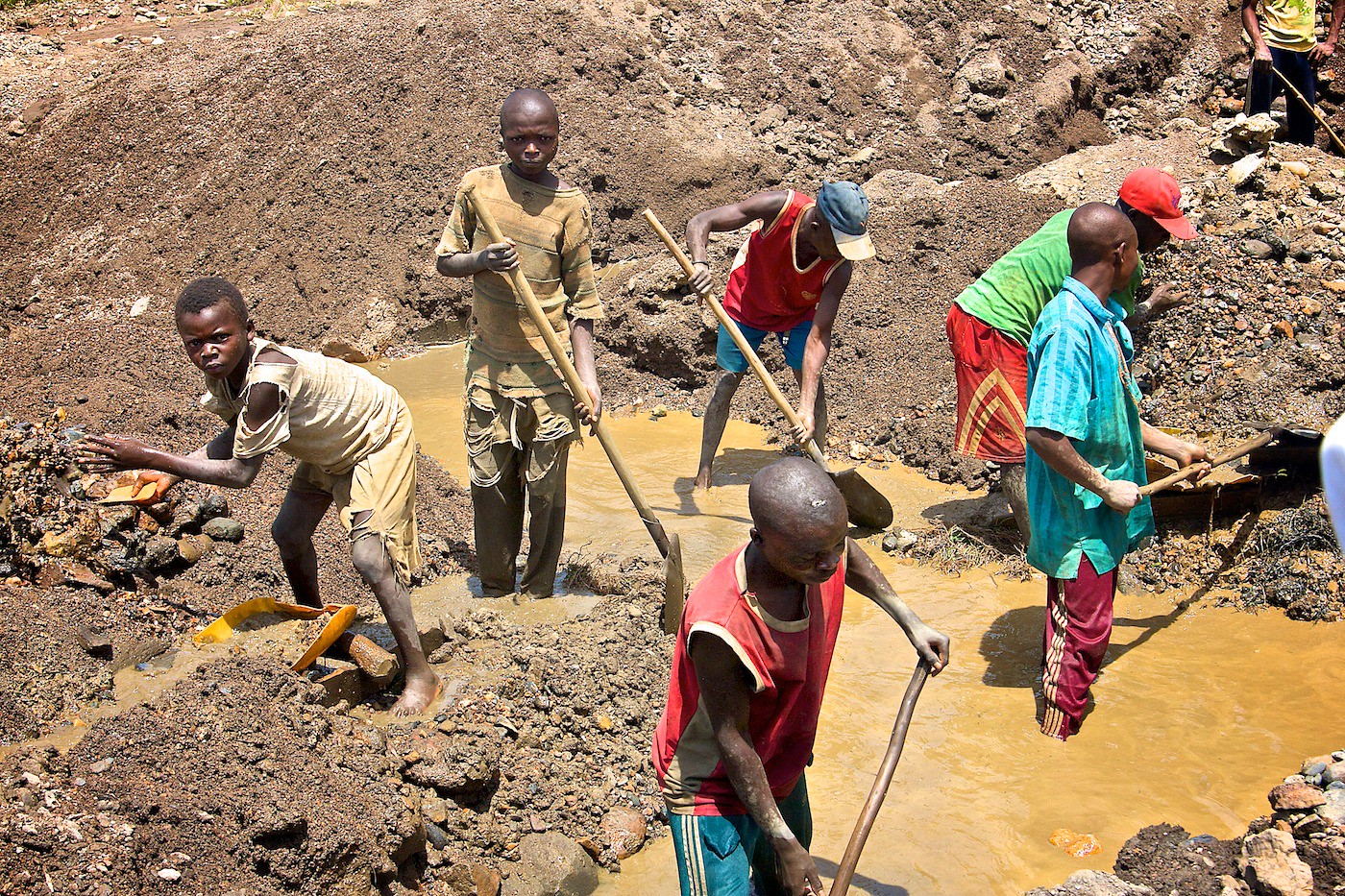
Over 200 Killed in DR Congo Coltan Mine Landslide
More than 200 people, including 70 children, have died following a landslide at a coltan mining site in Rubaya, eastern Democratic Republic of Congo, the government said on Wednesday.
The tragedy struck on Tuesday after heavy rains in the rebel-controlled area, with authorities blaming the M23 rebels for allowing unsafe, illegal mining.
Rescue operations were hampered by dangerous conditions, officials added.
Rubaya, the country’s largest source of coltan, holds about 15% of the world’s supply of the mineral used in electronics. Many injured miners have been evacuated to hospitals in Goma.
The toll could not be independently verified due to restricted access, disrupted communications, and ongoing insecurity in the region.
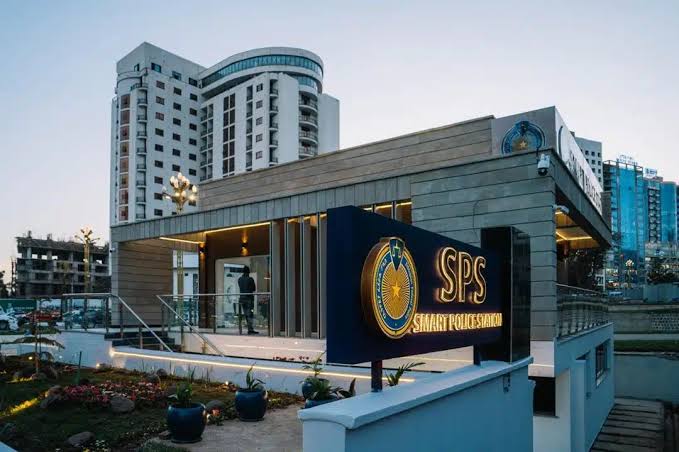
Ethiopia Launches First ‘Smart’ Police Station in Addis Ababa
Ethiopia has opened its first “smart” or unmanned police station in Bole, a pilot project aimed at modernising law enforcement and expanding access to citizens.
Inside the new station, visitors report crimes, traffic incidents, or general concerns via computer tablets.
A remote officer responds in real time, reducing the need for face-to-face interaction.
Commander Demissie Yilma, head of the police technology expansion department, said the system is still in its early stages, with just three reports logged in its first week. “The future police service should be near the citizens,” he noted.
The station forms part of the government’s broader Digital Ethiopia 2030 strategy, which seeks to digitise public services including identity systems, payments, and court processes.
Experts say while digital reforms could boost efficiency and convenience, challenges remain.
Internet access is still low, and older, rural, and low-income populations risk being excluded.
For now, the Bole station is a controlled pilot, with traditional police stations continuing to serve most of the population. Expansion will depend on citizen adoption and digital literacy levels.


CARICOM pushes unified response to global shifts, backs Guyana’s COP35 bid

Nigeria’s Stakes in a Fractured Middle East, by Boniface Ihiasota

The United States, Israel and the Iran Question, by Alabidun Shuaib AbdulRahman

Pastor Jerry Eze Defends Miracles At UK Conference Amidst Criticism And Controversy

Diaspora Watch 20th Edition (October 14-20, 2024): Your Trusted Source for Global News and Insights


