
Diaspora
Oru-Owerri Festival: A Showcase Of Traditional Christmas Of Owerri


Every July, the city of Owerri in Imo State, Nigeria, transforms into a vibrant epicenter of cultural festivities as the Igbo people of five traditional Owerri villages come together to celebrate the Oru-Owerri festival. Known as the “traditional Christmas” of the Owerri people, this festival commemorates the founding of Owere (Owerri) by Ekwem Oha Arugo in the 14th century. With roots tracing back to approximately 1463 AD, the Oru-Owerri festival is a week-long celebration that honors life, love, and unity among the Owere Nchi Ise community.
Understanding the Oru-Owerri festival requires delving into the history of the Owerri people. The festival’s origins can be traced back to the 14th century when Ekwem Oha Arugo, the progenitor of the Owerri people, established the community. Ekwem, who had five children, had a dispute with his kindred while living in Uratta, a location near present-day Owerri.
This conflict led Ekwem to self-imposed exile with his children, during which they settled in a forested area known as Ugwu-Ekwema after finding sustenance and water from the Otamiri River. His children, Amawom, Umurorojo, Umuodum, Umuoyima, and Umuonyeche, later formed the five villages that constitute the Owere Nchi Ise.
The Oru-Owerri festival is crucial in preserving the cultural identity of the Owerri people. It serves as a period of reflection, thanksgiving, and communal bonding. The festival showcases traditional dances, music, and rituals that have been passed down through generations, ensuring that the younger generation remains connected to their heritage. Additionally, the festival strengthens the social fabric of the community by fostering a sense of belonging and unity.
Owerri Municipality, often referred to as the cultural melting pot of Imo State, owes much of its vibrant cultural scene to the Oru-Owerri festival. The festival attracts visitors from various parts of Nigeria and beyond, making it a significant cultural and tourist attraction. The week-long celebration features a series of events, including the roasting and eating of special yams, which marks the commencement of the festivities. This tradition is deeply rooted in the historical journey of Ekwem and his children, symbolizing sustenance and survival.
The traditional ruler of Owerri, His Royal Highness, Eze Emmanuel Njemanze Osuruigbo V, plays a pivotal role in the Oru-Owerri festival. As the custodian of the culture and traditions of the Owerri people, his presence and participation in the festival are highly revered. Visiting dignitaries and important personalities make it a point to pay homage to the traditional ruler, signifying the respect and honor accorded to the cultural leadership in Imo State.
Over the next few days, the city comes alive with music, dance, and colorful processions. The Igbo people dress in their traditional attire, adorned with colorful beads and ornaments. The women wear beautiful wrappers and head ties, while the men wear traditional Igbo clothing. The festival is a celebration of life, love, and peace. It is a
time for the Igbo people to put aside their differences and come together as one. The festival is also a time for the people to honor their ancestors and pay homage to their heritage.
The highlight of the festival is the grand procession, where the Igbo people march through the streets, singing and dancing. The procession is led by the traditional ruler of Owerri, His Royal Highness, Eze Emmanuel Njemanze Osuruigbo V. He is a respected leader and a symbol of unity and strength for the Igbo people. As the festival comes to a close, the Igbo people gather to say farewell and to look forward to the next year’s celebration.
They leave with full hearts and a renewed sense of purpose, knowing that they are part of a larger community that values unity, love, and peace. In a world filled with division and strife, the Oru-Owerri festival is a beacon of hope and unity. It is a celebration of life, and it is a reminder that even in the darkest of times, there is always hope and always something to celebrate.
The festival is a culturally significant event that showcases the Igbo people’s rich cultural heritage. It is a time for the people to come together and celebrate their shared values and traditions. The festival is also a time for the people to reflect on their history and the struggles of their ancestors.
The Oru-Owerri festival is a celebration of the Igbo people’s resilience and strength. It is a testament to their ability to come together and celebrate their shared humanity, even in the face of adversity. The festival is a reminder that unity and love are the keys to a happy and fulfilling life.
In conclusion, the Oru-Owerri festival is a celebration of life, love, and unity amongst the Igbo people. It is a culturally significant event that showcases the Igbo people’s rich cultural heritage and their resilience and strength. The festival is a reminder that even in the darkest of times, there is always hope and always something to
celebrate.


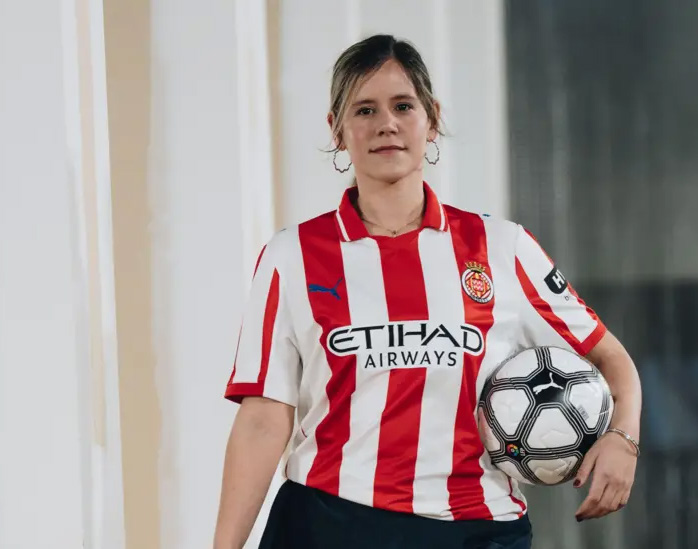
Retro Football Shirts Make Comeback As Clubs, Brands Embrace Nostalgia Ahead 2026 World Cup.
La Liga clubs roll out vintage-inspired kits as global football, fashion industries tap into ‘retro boom’ ahead of expanded World Cup.
As the global football calendar builds toward the 2026 FIFA World Cup across the United States, Canada and Mexico, a wave of nostalgia is sweeping through the sport, with retro-inspired jerseys dominating both elite football and fashion spaces.
In Spain, nearly 40 professional clubs across La Liga’s top two divisions are set to feature specially designed kits inspired by their historical identities.
The uniforms, first unveiled at Madrid Fashion Week, form part of a wider cultural campaign celebrating Spain’s deep-rooted football heritage and its growing intersection with fashion.
The retro trend is not limited to Europe. Ten weeks ahead of the World Cup, the largest in history with 48 teams and 104 matches, global sportswear giants are also leaning heavily into vintage aesthetics.
Adidas, for instance, has released new away kits featuring a 1990s-inspired design language, updated with a modern finish.
The brand’s iconic trefoil logo, absent from World Cup jerseys for over 30 years, has also made a return.
Industry experts say the shift reflects a deeper cultural movement where the past is no longer simply remembered but actively recreated and worn.
Football historian Alex Ireland, author of Pretty Poly: The History of the Football Shirt, noted that replica jerseys were not widely accessible until the 1970s and only became mainstream fashion items in the 1990s.
He explained that earlier designs, such as England’s Euro 1996 away kit, were already being styled for everyday wear beyond stadiums.
Adidas football chief Sam Handy said jerseys are strongly tied to memory and emotion, noting that many fans associate specific kits with defining life moments, especially World Cups.
Collectors and retailers say this emotional attachment has evolved into a booming global market.
Once limited to flea markets and early online resale platforms, vintage football shirts are now a multi-million-dollar industry driven by dedicated platforms such as Classic Football Shirts and Cult Kits.
Co-founder of Cult Kits, David Jones, described today’s buyers as split between nostalgia-driven fans and fashion-conscious consumers adopting football jerseys as lifestyle wear.
Pop culture has further accelerated the trend, with celebrities frequently spotted in vintage national team shirts, turning them into mainstream fashion statements.
Cultural theorists also point to what they describe as “historical nostalgia”, a longing for eras not personally experienced, as a key driver of demand among younger generations.
Adidas says its current design philosophy aims to merge eras rather than separate them, allowing past aesthetics and modern innovation to coexist in a single product line.
The brand noted that its trefoil logo has now returned on multiple World Cup kits for the first time in decades.
One of the most iconic references in the revival remains the United States’ 1994 World Cup away shirt, widely regarded as a cult classic despite initial mixed reactions.
All replicas produced for fans eventually sold out, underscoring its lasting appeal.
For US midfielder Tyler Adams, the goal is clear: to create jerseys that remain iconic decades later, becoming part of football history rather than just seasonal apparel.
From stadiums to streetwear, football shirts are no longer just matchday uniforms, they are cultural artefacts being continuously reimagined for a new generation.
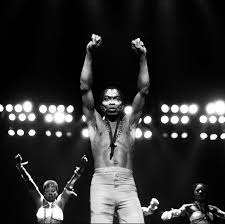
Late Afrobeat Pioneer, Fela Earns Historic Global Recognition.
Late Afrobeat pioneer, Fela Anikulapo-Kuti, has been inducted into the prestigious Rock & Roll Hall of Fame, becoming the first Nigerian artist to receive the honor.
Naija News reports that the announcement marks another major global recognition for the iconic musician, decades after his passing.
Fela was inducted under the “Early Influence” category, alongside renowned global music figures such as Queen Latifah, Celia Cruz, MC Lyte, and Gram Parsons.
The list of inductees was unveiled in the United States during a live broadcast of the popular television show, American Idol.
Also recognized is Nigerian-born British singer, Sade Adu, who will be inducted in the “Performer” category.
She joins a lineup of global stars including Phil Collins, Billy Idol, Iron Maiden, Joy Division/New Order, Oasis, Luther Vandross, and Wu-Tang Clan.
Despite stiff competition, several high-profile nominees failed to make the final list. These include Shakira, Mariah Carey, Lauryn Hill, New Edition, and Pink.
Organizers disclosed that over 1,200 artists, historians, and music industry professionals participated in the voting process.
The induction ceremony is scheduled to take place on November 14 at the Peacock Theatre in Los Angeles.
Fela’s latest recognition comes just months after he made history in January as the first African musician to receive the Grammy Lifetime Achievement Award.
The honor, coming nearly 30 years after his death, further cements his legacy as a global music icon and pioneer of Afrobeat.
It also follows the introduction of the Best African Performance category at the Grammy Awards two years ago, reflecting growing global recognition for African music.

South African sensation, Tyla is fast cementing her place as one of Africa’s most stylish and influential pop exports, blending sound, fashion, and attitude into a global brand. Born Tyla Laura Seethal, the 24-year old star has redefined contemporary African pop with her signature fusion of Amapiano, R&B, and mainstream pop, earning her the unofficial crown as the “Queen of Popiano.”
Her meteoric rise began with the viral success of her 2023 smash hit “Water,” a track that not only dominated charts across continents but also made history on the US Billboard Hot 100. The song’s global appeal, amplified by a TikTok dance wave, positioned Tyla as a new face of African cool, effortlessly merging sonic innovation with a soft, sultry aesthetic that resonates with Gen Z audiences worldwide.
Beyond the music, Tyla’s fashion evolution has become just as captivating. From gracing the stage at the MTV Europe Music Awards to turning heads at the Victoria’s Secret Fashion Show, her style leans into vintage glamour, body-hugging silhouettes, and bold designer statements. Her viral Chanel-inspired red carpet moment further proved she’s not just following trends, she’s setting them.
In 2024, she released herself-titled debut album, which received widespread acclaim and solidified her artistic identity. With awards piling up including multiple wins at the Grammy Awards, Tyla has quickly become one of the youngest African artists to achieve such global recognition, bridging cultures through both sound and style.
Now, with her “We Wanna Party” era and a highly anticipated second album, A-POP, on the horizon, Tyla is stepping into a new phase, bolder, more experimental, and unapologetically global. Whether it’s on stage, on the runway, or on your playlist, one thing is clear: Tyla isn’t just having a moment, she’s defining one.



TRENDING – Diaspora Watch

SPORTS – Diaspora Watch

LIFESTYLE – Diaspora Watch

Pastor Jerry Eze Defends Miracles At UK Conference Amidst Criticism And Controversy

Diaspora Watch 20th Edition (October 14-20, 2024): Your Trusted Source for Global News and Insights