
Diaspora
Panic As 4.7 Magnitude Earthquake Hits Parts Of Kenya

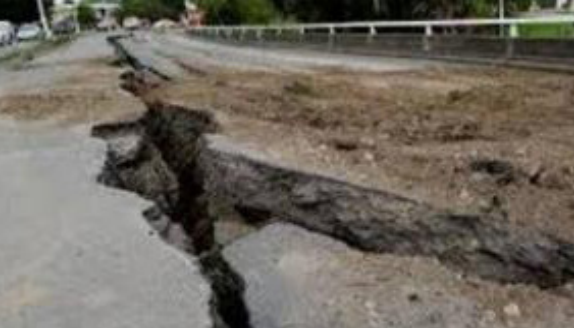
A 4.7-magnitude earthquake rocked parts of Kenya on Tuesday, July 16, 2024, causing widespread panic among residents. The quake, which had a shallow depth of 10 kilometers, hit at around 8:32 pm local time, with its epicenter located near Nairobi, the capital city.
The tremors were felt in various parts of Nairobi, including Kitengela, Ruaka, and Westlands, as well as in other areas such as Isinya, Kajiado County, Kirinyanga, Kisii, Nyeri, and Murang’a. The earthquake lasted for approximately 30 seconds, causing minor incidents such as objects falling from shelves and broken windows.
According to the Kenya Rift Valley and the Kavirondo (Nyanza) Rift, the most seismically active areas in Kenya, earthquakes typically range from local magnitudes (Ml) of 2.0 to 5.0. While the preliminary magnitude, epicenter, and depth of the earthquake are subject to revision as seismologists continue to analyze data and refine their calculations, it is likely that the quake was perceptible to many individuals in the vicinity of the epicenter.
The impact of the earthquake on nearby towns and cities is estimated as follows: Magadi (population 14,500), located 15 km from the epicenter, likely experienced light shaking; Kajiado (population 11,200), situated 67 km from the epicenter, may have felt weak shaking; Ngong (population 9,500), 78 km away from the epicenter, possibly experienced weak shaking as well. Other nearby towns and cities may have felt very weak shaking, including Kikuyu (population 323,900), located 86 km from the epicenter; Narok (population 36,100), 91 km away from the epicenter; Nairobi (population 2,750,500), 95 km away from the epicenter; Limuru (population 159,300), 96 km away from the epicenter; Athi River (population 24,500), 99 km away from the epicenter.
The earthquake caught many residents off guard, leading to a mix of fear and humor in the reactions from the public. This sudden tremor comes after the county experienced an earth tremor in June 2024.
Kenya is not new to earthquakes, with a total of 29 earthquakes with a magnitude of four or above having struck within 300 kilometers of the East African country in the past 10 years. This comes down to a yearly average of two earthquakes per year. The strongest recent quake of the past 10 years occurred on May 3, 2020, with a magnitude of 5 and a depth of 10 kilometers. Before that, a 6.7 earthquake struck on January 6, 1928. It was the strongest earthquake that has rocked Kenya in the past 124 years, according to seismic activity records ².
As the country continues to assess the impact of the earthquake, residents are advised to remain calm and vigilant, taking necessary precautions to ensure their safety. The government has assured the public that it is working closely
with seismologists and other stakeholders to monitor the situation and provide updates as necessary.
In the meantime, the earthquake has left many residents shaken, with some taking to social media to share their experiences and express their gratitude for being safe. While the earthquake has caused minimal damage, it has served as a reminder of the importance of being prepared for natural disasters and taking steps to mitigate their impact.
As the dust settles, Kenya remains vigilant, knowing that earthquakes can strike at any time, without warning. The country will continue to monitor the situation, learning from this experience and working towards building a more resilient and prepared community




BCD Fashion-House

Hawah Kromah, Founder of BCD Fashion House


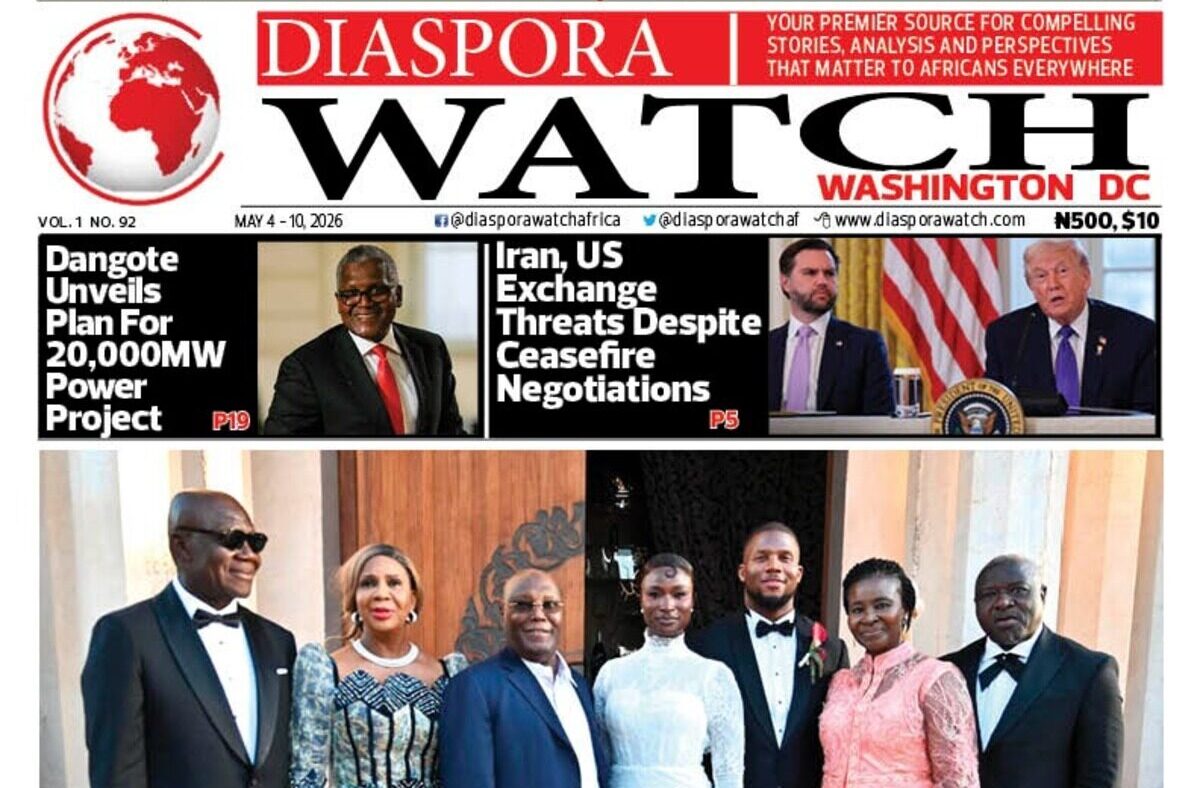
The management of Diaspora Watch Newspaper proudly announces the release of the 92nd edition of the newspaper, a compelling and globally engaging publication that captures the defining political, diplomatic, economic, cultural, and entertainment developments shaping conversations across continents.
This latest edition presents readers with an extraordinary blend of international diplomacy, economic transformation, royal engagements, security concerns, African excellence, and high society glamour, reaffirming Diaspora Watch Newspaper’s commitment to credible journalism, balanced reporting, and insightful global storytelling.
Diaspora Watch FREE Digital View: https://diasporawatch.com/3d-flip-book/diaspora-watch-vol-92/
On Demand Print: https://www.magcloud.com/browse/issue/3327462?__r=1069759
SUBSCRIBE TO DIASPORA WATCH NOW ON THE LINK BELOW!!!
https://diasporawatch.com/subscribe-to-diaspora-watch-newspaper/
Leading the headlines is the intensifying conflict between the United States and Iran as both nations exchange threats despite ongoing ceasefire negotiations, alongside US President Donald Trump rejecting Iran’s peace response and describing the proposal as “totally unacceptable.” The edition also offers deeper insight into the geopolitical implications of the crisis and its potential impact on global stability.
In a celebration of African prestige and international elegance, this edition extensively covers the grand wedding ceremony of Munachi “Muna” Ezeibe and Cherina Zerbo Lassina in Marrakech, Morocco, an event that attracted top African dignitaries, diplomats, business leaders, and influential personalities from across the continent.
Readers will also find exclusive reports on Aliko Dangote’s ambitious 20,000MW power project initiative, a development expected to significantly reshape Africa’s energy landscape and industrial future. Equally noteworthy is the report on Angola’s Cabinda Refinery commencing fuel exports, marking a major milestone in Africa’s refining capacity and economic independence.
The edition further highlights significant global diplomatic and societal developments, including King Charles III hosting the first Buckingham Palace Garden Party of 2026, the accreditation of a new United Kingdom ambassador by CARICOM, and concerns raised by China’s spy agency over the growing “lying flat” culture among young people.
On the back page, readers are treated to dazzling coverage of the 2026 edition of the Africa Magic Viewers’ Choice Awards 2026, where celebrities transformed Lagos into a spectacular runway of glamour, fashion, and unforgettable red-carpet moments.
As always, Diaspora Watch Newspaper remains steadfast in its mission to inform, educate, connect, and amplify global African perspectives through responsible journalism and compelling narratives.
The 92nd edition is now available for readers, stakeholders, institutions, and members of the global diaspora community.
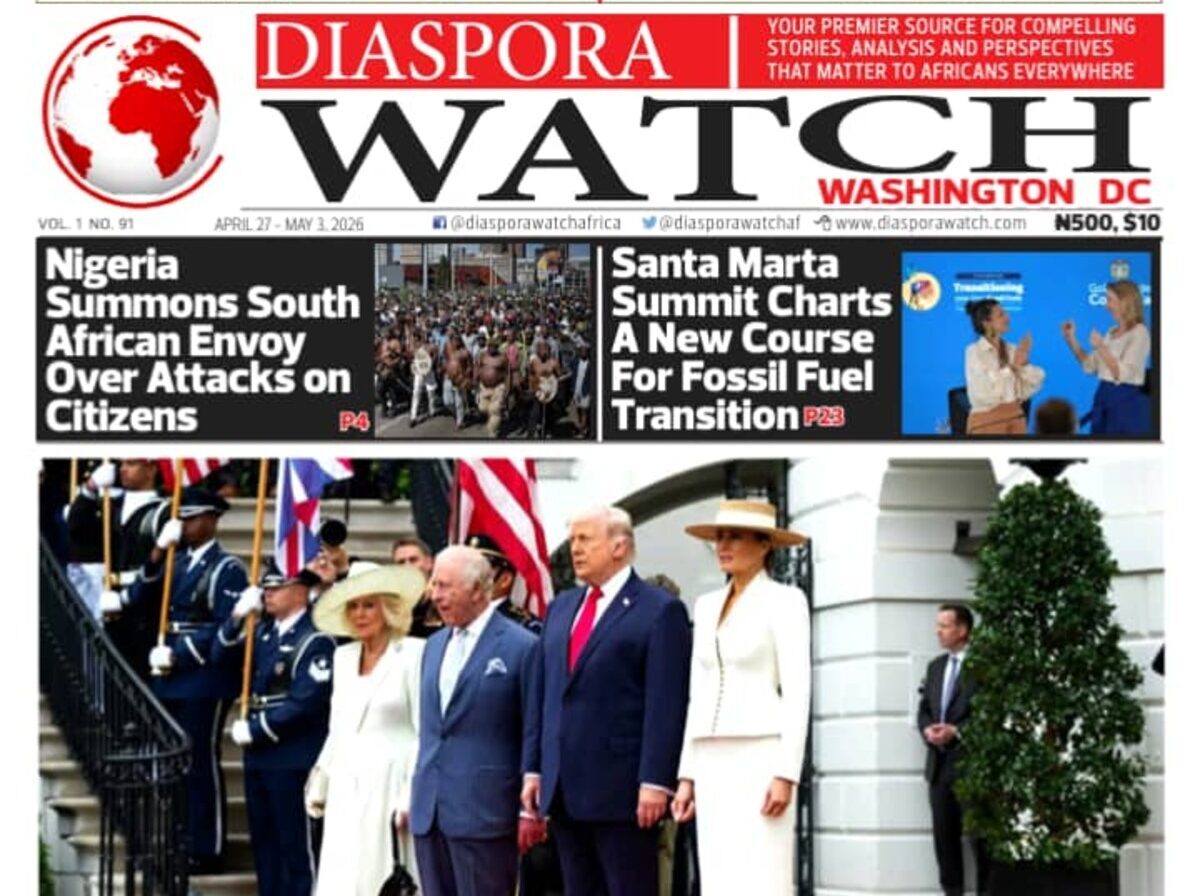
Diaspora Watch Newspaper Releases it’s 91st Edition.
Diaspora Watch Newspaper is proud to announce the release of its 91st edition, delivering a compelling blend of international headlines, geopolitical analysis, and cultural commentary that reflect the dynamic realities shaping the global community.
Diaspora Watch FREE Digital View: https://diasporawatch.com/3d-flip-book/diaspora-watch-vol-91/
On Demand Print: https://www.magcloud.com/browse/issue/3321550?__r=1069759
SUBSCRIBE TO DIASPORA WATCH NOW ON THE LINK BELOW!!!
https://diasporawatch.com/subscribe-to-diaspora-watch-newspaper/
Leading this edition is a major diplomatic spotlight: “Trump Hosts King Charles, Queen Camilla at White House, Hails ‘Unbreakable’ US-UK Ties.” The story examines renewed transatlantic relations and the strategic implications of high-level engagements between the United States and the United Kingdom.
Also featured prominently is Nigeria’s strong diplomatic response to rising tensions in Southern Africa, as the Government summons South Africa’s envoy over reported attacks on its citizens. This development underscores ongoing concerns about the safety and welfare of Nigerians in the diaspora.
In security and defense, the edition reports on the disappearance of two United States troops during military drills in Morocco, raising questions about operational risks and international military cooperation.
On the economic and developmental front, Caribbean leaders take decisive steps toward reducing import dependence through a new food security framework under CARICOM, while the Santa Marta Summit provides fresh momentum for a global transition away from fossil fuels.
Energy discourse is further amplified as the African Petroleum Producers’ Organization advocates for the establishment of regional energy hubs to drive investment in Africa’s oil and gas sector, signaling a strategic shift toward intra-continental collaboration.
In another major geopolitical development, the United States imposes sanctions on former DR Congo President Joseph Kabila over alleged links to the M23 rebel group, reflecting growing international scrutiny over instability in Central Africa.
Meanwhile, tensions in the Middle East deepen as the United Arab Emirates issues a stern warning on Iran’s reliability in managing the Strait of Hormuz, highlighting concerns over global energy security amid escalating US–Tehran relations.
Rounding off the edition on the back page is a cultural reflection from global music icon Jay-Z, who emphasizes authenticity in hip-hop culture with the thought-provoking stance: “Hip-Hop Must Stay Real, Not Trendy.”
Stay informed and ahead of the curve with the 91st edition of Diaspora Watch where we the complex dynamics shaping our world and provide insights into the stories that matter.


The Likes of Kila in Our Society, by Alabidun Shuaib AbdulRahman

CARICOM, Türkiye explore cooperation in trade, energy, food security

Britain restricts Eritrean diplomats, threatens entry ban

Pastor Jerry Eze Defends Miracles At UK Conference Amidst Criticism And Controversy

Diaspora Watch 20th Edition (October 14-20, 2024): Your Trusted Source for Global News and Insights

Tanzanian Man Reportedly Dies And Returns To Life Six Times


-
 Analysis1 week ago
Africa’s Resources Must Build Africa, by Alabidun Shuaib AbdulRahman
-

 Analysis3 days ago
France in Crisis: Anger and Unrest Shake the Nation
-
 News7 days ago
Trump’s fuel price cuts face hurdles ahead of midterm elections
-
 Diplomacy7 days ago
UK, Germany ratify defence treaty amid Russian threat
-
 News7 days ago
CARICOM assesses regional capacity to produce four key products
-
 News7 days ago
Trump Rules Out Iran Deal as US Weighs Fresh Military Strikes