
Opinion
Ram Sentenced To Three Years In Jail For Fatal Attack On Woman In South Sudan

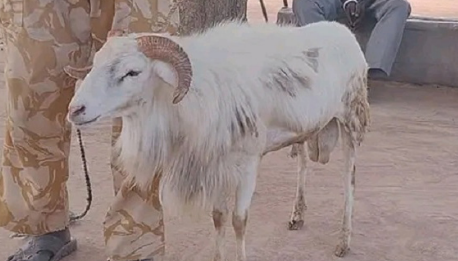
I n a shocking turn of events, a ram has been sentenced to three years in jail for attacking and killing a 45-year-old woman, Adhieu Chaping, in South Sudan. The incident occurred over the weekend in Rumbek East, where the ram allegedly head-butted Chaping multiple times, striking her in the chest and causing fatal injuries.
According to Police major Elijah Mabor, the ram was apprehended and is currently being held at a police station. Traditional leaders have imposed a sentence of three years’ imprisonment on the ram, which will be served at a military camp.
As part of the compensation, the owner of the ram, Duony Manyang Dhal, has agreed to provide five cows to Chaping’s family. Interestingly, the owner and the victim’s family are related and neighbors. Under local law, the ram will be gifted to Chaping’s family once it is released from prison.
The agreement was formalized with a contract signed by both parties, witnessed by community leaders and police. This unprecedented punishment highlights the unique blend of traditional and modern justice systems in South Sudan.
The incident serves as a reminder of the importance of animal control and the need for owners to take responsibility for their animals’ actions.


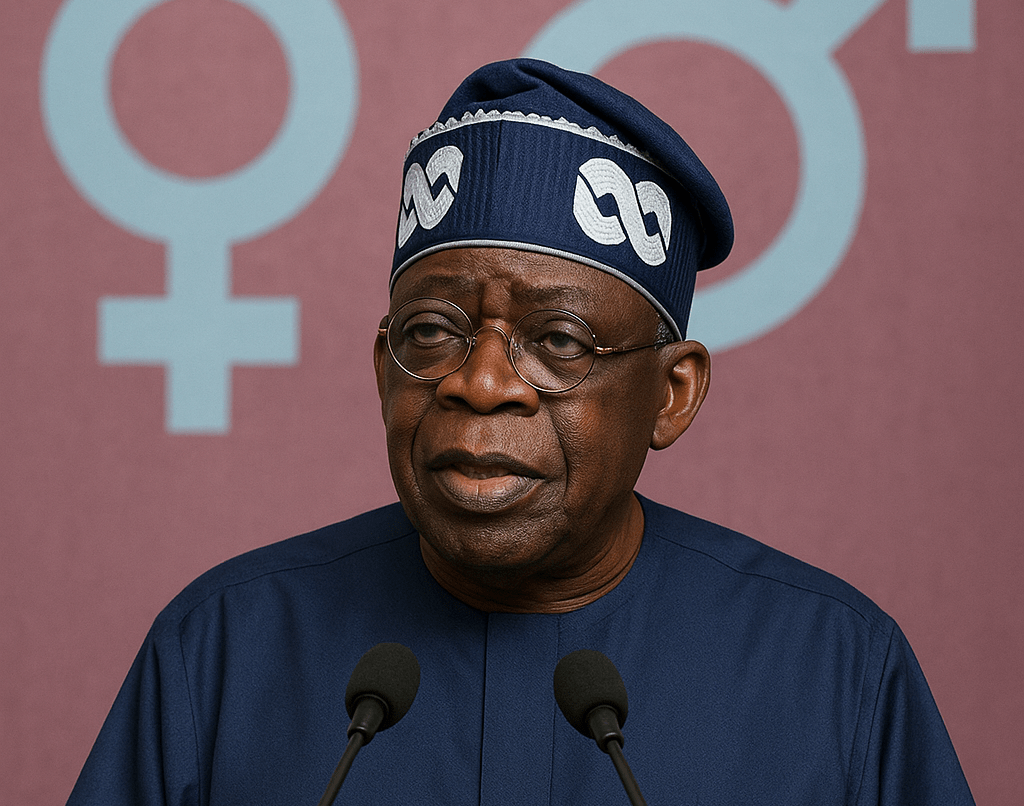
Tinubu, EFCC and the Danger of Political Interference, by Alabidun Shuaib AbdulRahman
There are moments when the intention behind an official decision may be defensible, yet the decision itself opens a door that ought to concern every citizen. President Bola Ahmed Tinubu’s intervention in the Economic and Financial Crimes Commission’s freezing of an Osun State Government account is one of those moments.
On August 6, 2026, with the Osun governorship election only nine days away, Tinubu directed the EFCC to return to court, vacate the order freezing an account belonging to the Osun State Government and discontinue the action it had instituted. The President said he was “deeply embarrassed” not by the EFCC’s exercise of its mandate, which he acknowledged was backed by a court order, but by its timing.
His explanation was understandable. Tinubu said actions taken by federal institutions were ordinarily attributed to him as President, whether or not he had prior knowledge of them. Since the election was approaching, he argued, nothing should be done that could create the impression that the EFCC or another Federal Government agency was being used to influence the election.
The argument is “morally” correct. But it also creates a difficult constitutional and institutional question: where does legitimate presidential concern about an election end and operational interference in an anti-corruption agency begin?
The EFCC did not arbitrarily descend on Osun. The commission said it had observed “huge transfers of funds into different corporate entities” from the state account and had acted to halt what it considered suspicious movement of public money. It argued that the approaching election could not become an excuse for an anti-corruption agency to ignore suspected movement of public funds.
Governor Ademola Adeleke, however, said the account was used for workers’ salaries and had been placed on a “Post No Debit” status. He demanded an explanation from EFCC Chairman Ola Olukoyede and described the action as another assault on Osun’s democracy.
The political atmosphere surrounding the matter had also been poisoned long before the account was frozen. In June, the Diaspora Committee of the All Progressives Congress Governorship Campaign Council in Osun asked the EFCC to freeze accounts allegedly connected with a reported N13.7bn annual ghost-workers payroll scandal. The committee claimed the money could be diverted to finance vote-buying ahead of the August 15 election. That background makes the EFCC’s action politically sensitive. But sensitivity is precisely why institutional independence matters.
The EFCC is a creation of statute. Under the EFCC (Establishment) Act, its chairman and members are appointed by the President, subject to Senate confirmation, while the law also provides for the chairman’s tenure and removal. The Presidency therefore has substantial influence over the commission’s leadership. That, however, does not make the President the operational head of every EFCC investigation.
There is an important distinction between constitutional authority over an institution and operational control of its investigations. A President may appoint the EFCC chairman, exercise statutory powers concerning the office, formulate broad government policy and demand accountability from federal agencies. But an anti-corruption agency must retain sufficient operational independence to determine whom to investigate, what evidence to pursue and what enforcement action to take.
Curiously, Tinubu himself made this case in the same statement. He said that since assuming office in May 2023, he had consistently maintained that anti-corruption and law-enforcement agencies should perform their statutory responsibilities independently and professionally, “without fear or favour, or political interference.” He added that he had deliberately refrained from directing or interfering in EFCC operations. That is why the Osun intervention becomes more concerning.
If a President can intervene in an operational decision because its timing might create an appearance of political interference, then the President has necessarily exercised influence over an operational decision. That does not automatically make the intervention unlawful. But it creates a precedent that future administrations may exploit.
Tinubu may genuinely believe the EFCC action could have been interpreted as an attempt to influence the Osun election. Another President could make the same argument about an investigation involving a governor, a minister, a major campaign financier or a politically influential contractor. If the principle becomes that the Presidency can intervene whenever enforcement action creates political controversy, the exception could eventually swallow the rule.
Nigeria’s history with the EFCC offers enough warnings. The commission was established in 2002 and began operations under President Olusegun Obasanjo, with Nuhu Ribadu becoming its pioneer chairman in 2003. Ribadu’s aggressive pursuit of governors, ministers, bankers and other powerful Nigerians gave the EFCC international prominence. But his controversial removal in 2007 also generated questions about the vulnerability of the commission to presidential and political interests.
Farida Waziri’s tenure produced another controversy. Appointed by President Umaru Musa Yar’Adua in 2008, she was removed by President Goodluck Jonathan on November 23, 2011. Years later, Waziri alleged that Jonathan’s administration had interfered with investigations and that her refusal to back down from a probe contributed to her removal. Though Jonathan rejected the allegation and challenged her to identify whom he had allegedly ordered her not to investigate.
The significance of those disputes is not simply who was right. It is that Nigerians repeatedly witnessed a situation in which the political leadership had enormous influence over the institution expected to investigate politically powerful people.
The Muhammadu Buhari administration provided another example. Buhari appointed Ibrahim Magu as acting EFCC chairman in 2015, despite the controversy that followed the Senate’s rejection of his nomination for substantive confirmation. On July 10, 2020, Buhari approved Magu’s suspension to allow a presidential panel to investigate allegations against him.
Again, the larger issue was institutional. The leadership of the EFCC remained heavily dependent on the Presidency, even though the commission’s work could directly affect members and allies of the governing political establishment. That is the weakness Nigeria has failed to resolve.
The President appoints the EFCC chairman. The commission investigates people who may have enormous political connections. The chairman therefore operates within an institutional structure in which the most powerful political office in the country has significant influence over the leadership of the agency.
This is why the Osun matter cannot be reduced to whether Tinubu had the right to be concerned about the election. Of course, he did. Elections must be protected from intimidation, manipulation and the misuse of state institutions. The harder question is whether that legitimate concern should be exercised through a presidential direction concerning a live EFCC enforcement matter.
There is also an important constitutional distinction regarding Adeleke. Section 308 of the 1999 Constitution grants a sitting governor immunity from civil or criminal proceedings in specified circumstances. But immunity is not exoneration. It does not mean a governor cannot be investigated, that evidence cannot be gathered or that public funds associated with a state government are beyond investigation.
If the EFCC had credible evidence of suspicious transfers, Adeleke’s candidacy should not automatically extinguish the commission’s investigative responsibility. Conversely, the approaching election should not give the EFCC licence to turn an investigation into a political weapon. The law must be stronger than both impulses.
That is why the better solution should have been procedural rather than presidential. If the EFCC had obtained a freezing order from a court and concerns subsequently arose about its timing or effect on essential state services, those concerns could have been presented before the court. If salaries needed to be paid, the government could have sought appropriate judicial relief.
Adeleke, too, must allow due process to take its course. If the EFCC acted unlawfully, the courts provide the remedy. If the allegations are false, evidence and due process should establish that fact.
For Olukoyede, the lesson is equally clear. The EFCC’s greatest asset is not proximity to the President but distance from political instruction. The commission must be prepared to investigate opposition politicians and members of the ruling party, governors and former governors, ministers and political financiers according to the same evidentiary standard.
Tinubu’s intervention, even if motivated by a legitimate desire to protect the integrity of the Osun election, should concern Nigerians. Institutions survive governments. Presidents come and go. Political parties win and lose elections.
If Tinubu truly wants Nigerians to believe that the EFCC is independent, the next step is obvious. He should help build an institutional framework in which no future President will need to intervene to prove that the EFCC is not being used politically. That is the real test of leadership. And that is the difference between fighting corruption under a President and building a country where the fight against corruption does not depend on the President.
Alabidun is a media practitioner and can be reached via alabidungoldenson@gmail.com
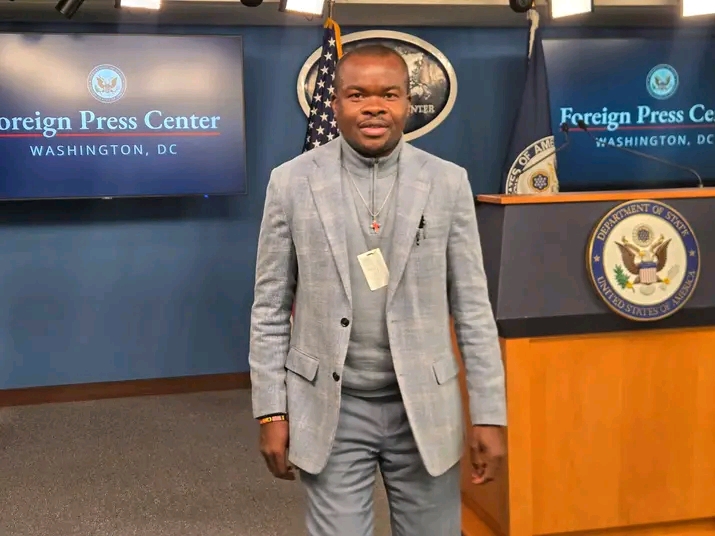
Jingir’s Words and the Challenge of Religious Tolerance, by Boniface Ihiasota
Nigeria’s greatest strength has always been its diversity. Muslims, Christians, traditional worshippers and citizens of other beliefs have lived, worked, traded and built families across the country’s complicated social landscape. That is why recent utterances attributed to Sheikh Sani Yahaya Jingir deserve more than partisan applause or condemnation. They demand reflection.
At an event attended by, among others, Kano State Governor Abba Yusuf and Jigawa State Governor Umar Namadi, Sheikh Jingir renewed his support for a Muslim-Muslim presidential ticket ahead of the 2027 elections. He argued that Muslims should mobilise behind such a ticket and urged his audience to obtain their Permanent Voter Cards. He also referred to those opposed to his position as “infidels” and said Muslims should “show the infidels their limit.”
There is, of course, nothing inherently undemocratic about a Muslim advocating for Muslim candidates. Democracy gives every citizen the right to support candidates according to personal convictions, including religious convictions. The problem begins when political competition is framed as a contest between religious communities, particularly in a country where religious identity has historically been capable of provoking suspicion, fear and violence.
From the perspective of many Nigerians in the diaspora, this language is especially troubling. Those of us watching Nigeria from abroad understand that the country’s image is not determined only by government policies or economic statistics. It is also shaped by how Nigerians treat one another. When influential religious voices appear to portray fellow citizens as outsiders or enemies because of their faith, the damage extends beyond politics.
Nigeria is constitutionally a secular state, and Section 42 of the 1999 Constitution prohibits discrimination against citizens on grounds including religion. The implication is important: political participation is a citizenship right, not a privilege reserved for members of the religious majority.
This is where religious leadership carries an enormous responsibility. A Sheikh, pastor or traditional religious leader does not speak only to those seated before him. His words travel through social media, enter homes, influence young people and can be repeated long after the original gathering has ended.
Femi Fani-Kayode, Nigeria’s ambassador-designate to South Africa, made precisely this point in his reaction to Jingir’s comments, describing the rhetoric as provocative and warning that Nigeria is neither a Muslim nor a Christian country but a secular, multi-religious state. Human-rights lawyer Deji Adeyanju similarly warned on August 10, 2026, that religious rhetoric capable of deepening divisions between Christians and Muslims threatens national cohesion.
The lesson should not be that religious people must abandon their convictions. Quite the opposite. Strong faith should make Nigerians more committed to justice, dignity, compassion and peaceful coexistence. Nigeria does not need religious leaders who pretend that differences do not exist. It needs leaders mature enough to acknowledge those differences without turning them into political weapons.
The 2027 elections will come and go. Presidents will change, parties will win and lose, and politicians will eventually leave office. But Nigeria will remain. Muslims will continue living beside Christians; Christians will continue doing business with Muslims; and millions of families will continue to transcend religious boundaries. That enduring relationship is more important than any political ticket.
From the diaspora, therefore, the message is simple: Nigerians may disagree passionately about candidates, parties and policies, but we must never allow political competition to convince us that our fellow citizens are less Nigerian because they worship differently. Religious freedom means the freedom to believe. Religious tolerance means allowing another citizen to believe differently without treating that difference as a threat. Nigeria needs both.

EDITORIAL: Tackling Poverty in Africa
Poverty remains Africa’s greatest paradox. The continent possesses nearly one-third of the world’s mineral resources, about 60 per cent of the world’s uncultivated arable land, a youthful population projected to exceed two billion by 2050, and enormous renewable energy potential. Yet millions of Africans continue to struggle for daily survival. This contradiction underscores not a shortage of resources but a persistent deficit of governance, inclusive growth and political will.
The scale of the challenge is sobering. According to the World Bank’s Poverty, Prosperity and Planet Report 2024, nearly 700 million people worldwide live in extreme poverty, surviving on less than $2.15 a day. More troubling is the fact that Sub-Saharan Africa, home to just 16 per cent of the global population, accounts for about 67 per cent of the world’s extremely poor people. The region has effectively become the global epicentre of poverty.
Economic growth alone has not translated into prosperity for ordinary Africans. Although African economies have shown resilience in recent years, the World Bank has repeatedly warned that growth remains too weak and too unequal to significantly reduce poverty. Rising public debt, inflation, conflict, climate shocks and governance failures continue to erode development gains across many countries.
The causes of poverty in Africa are well known. Armed conflicts have displaced millions and destroyed livelihoods from Sudan to the eastern Democratic Republic of Congo and the Sahel. Climate change has intensified droughts, floods and food insecurity, particularly in the Horn of Africa. Weak institutions, corruption, inadequate infrastructure and overdependence on commodity exports have further constrained sustainable development. Meanwhile, millions of young Africans enter labour markets every year only to find few productive jobs.
Former United Nations Secretary-General Ban Ki-moon once observed that “there is no development without peace, no peace without development, and neither without respect for human rights.” His words remain profoundly relevant. Peace and security are indispensable foundations for economic progress. Without them, investment declines, education suffers and poverty deepens.
Yet Africa’s future need not be defined by deprivation. Encouraging examples exist across the continent. Countries that have invested consistently in agricultural productivity, financial inclusion, education and digital innovation have demonstrated that poverty can be reduced. Kenya’s mobile money revolution expanded financial access to millions. Ethiopia’s agricultural reforms boosted rural productivity for years before conflict interrupted progress. Rwanda has prioritised healthcare, technology and institutional reforms to improve living standards. These experiences show that sound policies can produce measurable results.
The African Continental Free Trade Area also offers a historic opportunity. By creating the world’s largest free trade area by participating countries, AfCFTA has the potential to stimulate industrialisation, expand intra-African trade, create millions of jobs and reduce dependence on external markets. However, success will depend on governments implementing complementary reforms in transport, energy, customs administration and the rule of law.
Development partners equally have responsibilities, but foreign aid cannot substitute for domestic accountability. As former UN Secretary-General Kofi Annan famously remarked, “Good governance is perhaps the single most important factor in eradicating poverty and promoting development.” African leaders must therefore strengthen institutions, fight corruption relentlessly, improve tax administration, invest in quality education and healthcare, empower women and create an enabling environment for private enterprise.
Ultimately, poverty is not inevitable. It is the consequence of choices made—and sometimes avoided—by governments and institutions. Africa possesses the human capital, natural wealth and entrepreneurial energy to transform its fortunes. What is urgently required is leadership that places citizens above politics, productivity above patronage and long-term development above short-term political gains.
The fight against poverty must now move beyond lofty declarations and conference communiqués. Africans deserve governments that deliver jobs instead of excuses, infrastructure instead of slogans, and opportunities instead of dependency. The continent’s greatest resource is neither oil nor gold, but its people. Investing in them is not merely good economics; it is the surest pathway to Africa’s enduring prosperity.


RWE abandons US offshore wind projects in $1.2bn Trump deal

Saudi Arabia, Turkey, Pakistan sign defence pact amid Middle East tensions

Africa CDC, WHO demand urgent scale-up of DRC Ebola response

Pastor Jerry Eze Defends Miracles At UK Conference Amidst Criticism And Controversy

Diaspora Watch 20th Edition (October 14-20, 2024): Your Trusted Source for Global News and Insights

Tanzanian Man Reportedly Dies And Returns To Life Six Times


-

 Milestone1 week ago
Nigerian bags HVAC Engineering degree in US, lands full-time job
-
 Analysis1 week ago
Lessons from the Catholic Bishops’ Visit to Tinubu, by Boniface Ihiasota
-
 News1 week ago
CARICOM chair renews reparations demand
-
 Analysis1 week ago
Obasanjo, Atiku and the Burden of Broken Trust, by Alabidun Shuaib AbdulRahman
-
 News1 week ago
Hamas agrees to disarm as Gaza withdrawal deal gains momentum
-

 Opinion1 week ago
EDITORIAL: Tackling Poverty in Africa