
Analysis
The Ororification Of Protest

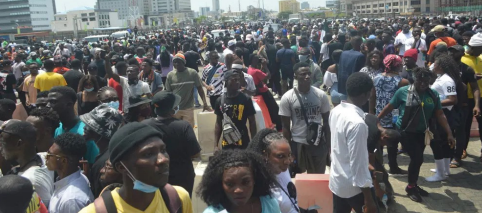
The youths plan a public protest. The land has been feverish with hunger and suffering. The grounds for a protest can’t be more legitimate and compelling. The cost of living has become punishing.The weak naira has pauperised everyone, and the poor have been left without hope. The new government arrived with the old cluelessness. Its mode is the boring Business As Usual.The youths believe that besides pervasive ineptitude, the political class has been chronically aloof and wasteful. Rather than engage the youths, the political class has opted for scaremongering, delegitimisation and demonisation. The government is going for the kitchen sink.
The most troubling tactic is the equation of peaceful protest with violence. Some elders have been co-opted to warn the young not to partake in the protests because they have information that the planners of the protests want to burn the country. Even during the military regimes, students were allowed to protest. The military dictatorships, striving to be seen as humane, didn’t employ this disingenuous tactic.
If every government treated public protests as inevitably destructive then the citizens’ right to protest would have been effectively abolished long ago. It’s heart-wrenching to see politicians and former Rights activists who championed protests under the military say only ugly things about the right to protest. Their forgetfulness is painful. They are carefreely painting protesters as arsonists and vandals even before the protests have started.
It’s been a hard watch these last few days. Security agencies have been addressing press conferences to warn protesters. Those whose duty it is to protect protesters are announcing in advance that they are incapable of performing those duties. The situation is pathetic. At these press conferences, no effort is made to give the protesters the benefit of the doubt. Almost all the security agencies have exhibited a blanket disdain for protesters. Rather than engage in this shameful and self-humiliating scaremongering, the federal government should outlaw the right to protest. In North Korea, nobody can protest. That’s a more honest path. Politicians are always slippery. So seeing self-anointed progressives eulogise the right to protest in one breath and in the next send out messages that protests will destroy the country isn’t all that shocking. But watching noblemen sink into barefaced lying to deny the youths a voice has been unbearable.
It hasn’t stopped at scaremongering. When the government isn’t gathering and persuading traditional and religious leaders to help it delegitimise protests, it’s allowing its officials to engage in naked bigotry and divisiveness. Not long ago, a special adviser to the president pointed accusing fingers at Peter Obi and his supporters. He had no evidence. All he sought was to drive a wedge between ethnic groups to have the protests truncated. The people paid with taxpayers’ funds to promote national unity have sunk into political skulduggery. This recourse to political agbeorism may not end with fishing for advance scapegoats. It has the potential to set up a conflagration between ethnic groups if the peaceful protests are hijacked and derailed by thugs, as is being speculated.
Before this government, opposition parties used to champion or promote public protests against bad governance at the centre. In 2012, President Tinubu and his comrades led pretests against the then President Jonathan, who had partially removed fuel subsidies. Then, it was the duty of the opposition, acting as an electable alternative, to use protests to keep the ruling government in check. Today, protests are taboo. Even opposition leaders are forbidden by bigots in the boys’ quarters of power to engage in any protests.
Nothing has been spared in this attempt to stop the protests. Now, some local priests in Lagos have announced that they will be engaging in a spiritual cleansing called Oro for 15 days. In other words, they have casually outlawed any movements in the evenings for the ten-day period the planners of the protests plan to engage in peaceful protests. The Lagos State Govt has said it wasn’t consulted. Yet, it doesn’t intend to condemn or stop the Oro priests. The Constitution explicitly states that citizens have the right to reside wherever they like and to move freely. Such a constitutional right can only be curtailed by the government in pursuit of overriding public good. The idea that some priestesses or cults can wake up and declare a part of the state out of bounds to residents at certain times without the approval of the state government is ridiculous. To employ such arbitrariness to sabotage the right of free citizens to protest against bad governance is the final descent into anarchy.
These bad precedents being laid cheerfully may seem innocuous. But once they prove effective, they will be exploited on a larger scale to destroy our democracy. It’s noteworthy that Oro is making a second ignoble entrance. During last year’s elections, it was used to scare away and disenfranchise voters who were not indigenes of Ikorodu. This time, it appears it will be used to undermine the protests. Who knows what next this cleansing process might be used to corrode? If some local priests in every town in this country can wake up and prohibit the movement of people as long as they like in the name of one religion or the other, then we are in a mess.
During the Endsars protest, some agents of that government mobilised counter-protesters with cudgels to chase and hound protesters in certain parts of the country. Janjaweed style. They called it fighting fire with fire. If those who protested against the Obasanjo government in the early 2000s were chased away by machete-wielding thugs, all those protests that shaped our political culture during the Adams Oshiomhole NLC days wouldn’t have held. Perhaps we might have killed this protest culture many years ago. Perhaps the ruling APC might have remained in the opposition forever as the PDP had bragged.
If our political leaders no longer believe that protests are part of the democratic culture, they should say it aloud. So that everybody can allow the country to slip into a one-party state, and we all watch peacefully to see where we will end. Since our political leaders now think that protests can never be peaceful and are inherently violent, they should outlaw protests so that the citizens can understand the boundaries of our democracy. We can help them by forgetting that the president and his party leaders led protests in the past. They need not subject themselves to this dehumanising level of hypocrisy. Senator Akpabio can arrange laws and constitutional amendments, like fast food. The governors run the state legislatures like rubber stamps. So they can help with a lightning constitutional alteration. We can quickly amend the constitution and repeal the right to protest until further notice. That is more honest than the scaremongering, shameless witch-hunting, and the bastardisation of a cleansing process like Oro.


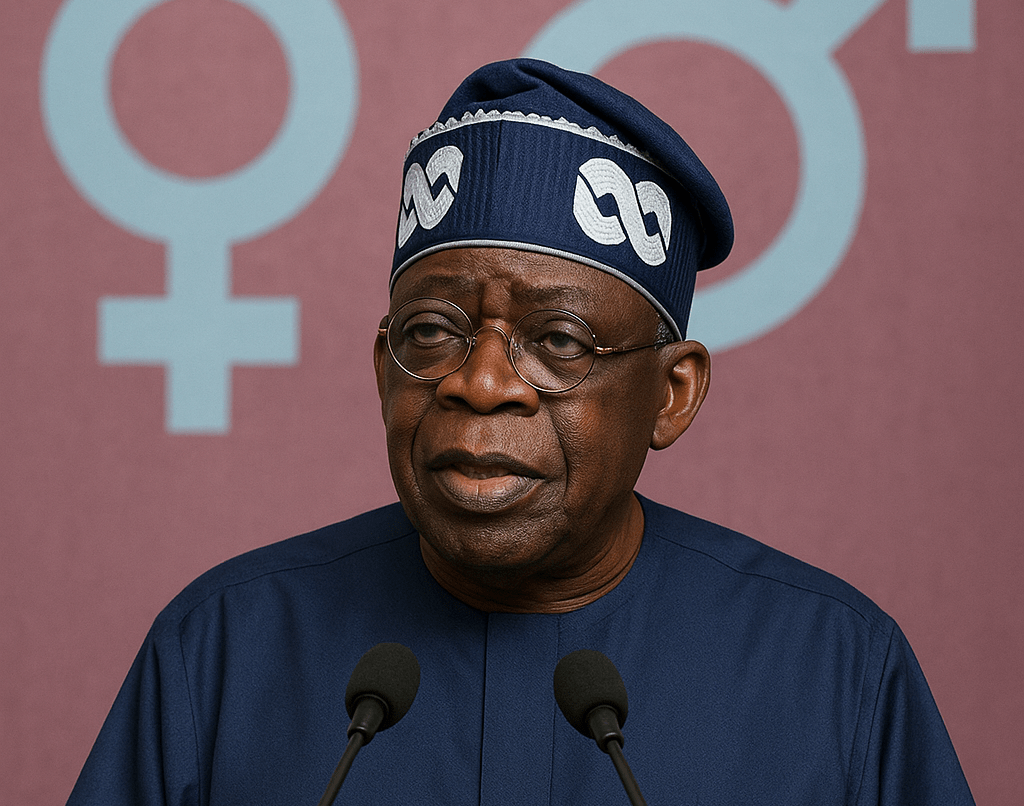
Tinubu, EFCC and the Danger of Political Interference, by Alabidun Shuaib AbdulRahman
There are moments when the intention behind an official decision may be defensible, yet the decision itself opens a door that ought to concern every citizen. President Bola Ahmed Tinubu’s intervention in the Economic and Financial Crimes Commission’s freezing of an Osun State Government account is one of those moments.
On August 6, 2026, with the Osun governorship election only nine days away, Tinubu directed the EFCC to return to court, vacate the order freezing an account belonging to the Osun State Government and discontinue the action it had instituted. The President said he was “deeply embarrassed” not by the EFCC’s exercise of its mandate, which he acknowledged was backed by a court order, but by its timing.
His explanation was understandable. Tinubu said actions taken by federal institutions were ordinarily attributed to him as President, whether or not he had prior knowledge of them. Since the election was approaching, he argued, nothing should be done that could create the impression that the EFCC or another Federal Government agency was being used to influence the election.
The argument is “morally” correct. But it also creates a difficult constitutional and institutional question: where does legitimate presidential concern about an election end and operational interference in an anti-corruption agency begin?
The EFCC did not arbitrarily descend on Osun. The commission said it had observed “huge transfers of funds into different corporate entities” from the state account and had acted to halt what it considered suspicious movement of public money. It argued that the approaching election could not become an excuse for an anti-corruption agency to ignore suspected movement of public funds.
Governor Ademola Adeleke, however, said the account was used for workers’ salaries and had been placed on a “Post No Debit” status. He demanded an explanation from EFCC Chairman Ola Olukoyede and described the action as another assault on Osun’s democracy.
The political atmosphere surrounding the matter had also been poisoned long before the account was frozen. In June, the Diaspora Committee of the All Progressives Congress Governorship Campaign Council in Osun asked the EFCC to freeze accounts allegedly connected with a reported N13.7bn annual ghost-workers payroll scandal. The committee claimed the money could be diverted to finance vote-buying ahead of the August 15 election. That background makes the EFCC’s action politically sensitive. But sensitivity is precisely why institutional independence matters.
The EFCC is a creation of statute. Under the EFCC (Establishment) Act, its chairman and members are appointed by the President, subject to Senate confirmation, while the law also provides for the chairman’s tenure and removal. The Presidency therefore has substantial influence over the commission’s leadership. That, however, does not make the President the operational head of every EFCC investigation.
There is an important distinction between constitutional authority over an institution and operational control of its investigations. A President may appoint the EFCC chairman, exercise statutory powers concerning the office, formulate broad government policy and demand accountability from federal agencies. But an anti-corruption agency must retain sufficient operational independence to determine whom to investigate, what evidence to pursue and what enforcement action to take.
Curiously, Tinubu himself made this case in the same statement. He said that since assuming office in May 2023, he had consistently maintained that anti-corruption and law-enforcement agencies should perform their statutory responsibilities independently and professionally, “without fear or favour, or political interference.” He added that he had deliberately refrained from directing or interfering in EFCC operations. That is why the Osun intervention becomes more concerning.
If a President can intervene in an operational decision because its timing might create an appearance of political interference, then the President has necessarily exercised influence over an operational decision. That does not automatically make the intervention unlawful. But it creates a precedent that future administrations may exploit.
Tinubu may genuinely believe the EFCC action could have been interpreted as an attempt to influence the Osun election. Another President could make the same argument about an investigation involving a governor, a minister, a major campaign financier or a politically influential contractor. If the principle becomes that the Presidency can intervene whenever enforcement action creates political controversy, the exception could eventually swallow the rule.
Nigeria’s history with the EFCC offers enough warnings. The commission was established in 2002 and began operations under President Olusegun Obasanjo, with Nuhu Ribadu becoming its pioneer chairman in 2003. Ribadu’s aggressive pursuit of governors, ministers, bankers and other powerful Nigerians gave the EFCC international prominence. But his controversial removal in 2007 also generated questions about the vulnerability of the commission to presidential and political interests.
Farida Waziri’s tenure produced another controversy. Appointed by President Umaru Musa Yar’Adua in 2008, she was removed by President Goodluck Jonathan on November 23, 2011. Years later, Waziri alleged that Jonathan’s administration had interfered with investigations and that her refusal to back down from a probe contributed to her removal. Though Jonathan rejected the allegation and challenged her to identify whom he had allegedly ordered her not to investigate.
The significance of those disputes is not simply who was right. It is that Nigerians repeatedly witnessed a situation in which the political leadership had enormous influence over the institution expected to investigate politically powerful people.
The Muhammadu Buhari administration provided another example. Buhari appointed Ibrahim Magu as acting EFCC chairman in 2015, despite the controversy that followed the Senate’s rejection of his nomination for substantive confirmation. On July 10, 2020, Buhari approved Magu’s suspension to allow a presidential panel to investigate allegations against him.
Again, the larger issue was institutional. The leadership of the EFCC remained heavily dependent on the Presidency, even though the commission’s work could directly affect members and allies of the governing political establishment. That is the weakness Nigeria has failed to resolve.
The President appoints the EFCC chairman. The commission investigates people who may have enormous political connections. The chairman therefore operates within an institutional structure in which the most powerful political office in the country has significant influence over the leadership of the agency.
This is why the Osun matter cannot be reduced to whether Tinubu had the right to be concerned about the election. Of course, he did. Elections must be protected from intimidation, manipulation and the misuse of state institutions. The harder question is whether that legitimate concern should be exercised through a presidential direction concerning a live EFCC enforcement matter.
There is also an important constitutional distinction regarding Adeleke. Section 308 of the 1999 Constitution grants a sitting governor immunity from civil or criminal proceedings in specified circumstances. But immunity is not exoneration. It does not mean a governor cannot be investigated, that evidence cannot be gathered or that public funds associated with a state government are beyond investigation.
If the EFCC had credible evidence of suspicious transfers, Adeleke’s candidacy should not automatically extinguish the commission’s investigative responsibility. Conversely, the approaching election should not give the EFCC licence to turn an investigation into a political weapon. The law must be stronger than both impulses.
That is why the better solution should have been procedural rather than presidential. If the EFCC had obtained a freezing order from a court and concerns subsequently arose about its timing or effect on essential state services, those concerns could have been presented before the court. If salaries needed to be paid, the government could have sought appropriate judicial relief.
Adeleke, too, must allow due process to take its course. If the EFCC acted unlawfully, the courts provide the remedy. If the allegations are false, evidence and due process should establish that fact.
For Olukoyede, the lesson is equally clear. The EFCC’s greatest asset is not proximity to the President but distance from political instruction. The commission must be prepared to investigate opposition politicians and members of the ruling party, governors and former governors, ministers and political financiers according to the same evidentiary standard.
Tinubu’s intervention, even if motivated by a legitimate desire to protect the integrity of the Osun election, should concern Nigerians. Institutions survive governments. Presidents come and go. Political parties win and lose elections.
If Tinubu truly wants Nigerians to believe that the EFCC is independent, the next step is obvious. He should help build an institutional framework in which no future President will need to intervene to prove that the EFCC is not being used politically. That is the real test of leadership. And that is the difference between fighting corruption under a President and building a country where the fight against corruption does not depend on the President.
Alabidun is a media practitioner and can be reached via alabidungoldenson@gmail.com
Jingir’s Words and the Challenge of Religious Tolerance, by Boniface Ihiasota
Nigeria’s greatest strength has always been its diversity. Muslims, Christians, traditional worshippers and citizens of other beliefs have lived, worked, traded and built families across the country’s complicated social landscape. That is why recent utterances attributed to Sheikh Sani Yahaya Jingir deserve more than partisan applause or condemnation. They demand reflection.
At an event attended by, among others, Kano State Governor Abba Yusuf and Jigawa State Governor Umar Namadi, Sheikh Jingir renewed his support for a Muslim-Muslim presidential ticket ahead of the 2027 elections. He argued that Muslims should mobilise behind such a ticket and urged his audience to obtain their Permanent Voter Cards. He also referred to those opposed to his position as “infidels” and said Muslims should “show the infidels their limit.”
There is, of course, nothing inherently undemocratic about a Muslim advocating for Muslim candidates. Democracy gives every citizen the right to support candidates according to personal convictions, including religious convictions. The problem begins when political competition is framed as a contest between religious communities, particularly in a country where religious identity has historically been capable of provoking suspicion, fear and violence.
From the perspective of many Nigerians in the diaspora, this language is especially troubling. Those of us watching Nigeria from abroad understand that the country’s image is not determined only by government policies or economic statistics. It is also shaped by how Nigerians treat one another. When influential religious voices appear to portray fellow citizens as outsiders or enemies because of their faith, the damage extends beyond politics.
Nigeria is constitutionally a secular state, and Section 42 of the 1999 Constitution prohibits discrimination against citizens on grounds including religion. The implication is important: political participation is a citizenship right, not a privilege reserved for members of the religious majority.
This is where religious leadership carries an enormous responsibility. A Sheikh, pastor or traditional religious leader does not speak only to those seated before him. His words travel through social media, enter homes, influence young people and can be repeated long after the original gathering has ended.
Femi Fani-Kayode, Nigeria’s ambassador-designate to South Africa, made precisely this point in his reaction to Jingir’s comments, describing the rhetoric as provocative and warning that Nigeria is neither a Muslim nor a Christian country but a secular, multi-religious state. Human-rights lawyer Deji Adeyanju similarly warned on August 10, 2026, that religious rhetoric capable of deepening divisions between Christians and Muslims threatens national cohesion.
The lesson should not be that religious people must abandon their convictions. Quite the opposite. Strong faith should make Nigerians more committed to justice, dignity, compassion and peaceful coexistence. Nigeria does not need religious leaders who pretend that differences do not exist. It needs leaders mature enough to acknowledge those differences without turning them into political weapons.
The 2027 elections will come and go. Presidents will change, parties will win and lose, and politicians will eventually leave office. But Nigeria will remain. Muslims will continue living beside Christians; Christians will continue doing business with Muslims; and millions of families will continue to transcend religious boundaries. That enduring relationship is more important than any political ticket.
From the diaspora, therefore, the message is simple: Nigerians may disagree passionately about candidates, parties and policies, but we must never allow political competition to convince us that our fellow citizens are less Nigerian because they worship differently. Religious freedom means the freedom to believe. Religious tolerance means allowing another citizen to believe differently without treating that difference as a threat. Nigeria needs both.
Lessons from the Catholic Bishops’ Visit to Tinubu, by Boniface Ihiasota
The recent visit of the Catholic Bishops’ Conference of Nigeria to President Bola Ahmed Tinubu at the Presidential Villa was more than a ceremonial engagement. It became one of the clearest illustrations yet of the widening gap between official optimism and the daily realities confronting millions of Nigerians. The discussions that followed—and the public reactions they generated—have once again underscored the indispensable role of religious institutions in shaping national conversations on governance, accountability and social justice.
Led by the President of the Catholic Bishops’ Conference of Nigeria, Archbishop Matthew Man-Oso Ndagoso, the bishops used the opportunity to raise concerns over insecurity, economic hardship, unemployment and the general welfare of Nigerians. They also urged President Tinubu to formally invite Pope Leo XIV to Nigeria, arguing that such a visit would strengthen peace, unity and national reconciliation.
President Tinubu, on his part, defended his administration’s reforms, insisting that the difficult decisions taken since assuming office were necessary to rescue the economy from years of structural distortions. He maintained that security architecture was being repositioned and that prosperity would eventually follow the current sacrifices.
Ordinarily, such exchanges between government and faith leaders are healthy in every democracy. However, the conversation assumed greater significance after Cardinal John Onaiyekan publicly disclosed that the President disagreed with many of the bishops’ assessments. According to the Cardinal, the bishops told Tinubu that “the economy is not helping our poor people,” while the President maintained that the economy was improving. The revelation immediately triggered widespread debate across political and religious circles because it exposed two sharply contrasting narratives about the state of the nation.
Yet, facts remain stubborn. Nigeria continues to face severe economic challenges. Inflation has remained elevated over the past two years, food prices have climbed dramatically, and millions of households continue to struggle with declining purchasing power. The World Bank has repeatedly warned that while reforms such as fuel subsidy removal and exchange-rate liberalisation may improve long-term fiscal sustainability, they also impose painful short-term costs on vulnerable citizens unless accompanied by robust social protection measures.
This explains why the bishops’ intervention resonated beyond the Catholic faithful. Religious leaders occupy a unique position in Nigerian society. They interact daily with ordinary citizens who seek assistance through churches, mosques and community organisations. Consequently, their assessment of public suffering often reflects grassroots realities that official statistics may not immediately capture.
The reactions also revealed an important democratic principle. Criticism of government should not automatically be interpreted as political opposition. Throughout Nigeria’s democratic history, both Christian and Muslim leaders have consistently spoken against corruption, insecurity, injustice and poverty irrespective of which party occupies Aso Rock. Their constitutional freedom to speak truth to power remains essential to democratic accountability.
At the same time, government officials equally have the responsibility to explain policies and defend their decisions. Democracy thrives not when everyone agrees but when disagreements are managed through dialogue rather than hostility. The exchange between Tinubu and the bishops should therefore be viewed as evidence that democratic engagement remains alive, provided both sides continue to listen respectfully.
The larger lesson is that perception matters almost as much as policy. Economic indicators may improve on paper, but if ordinary Nigerians cannot afford food, healthcare, education or transportation, public confidence will remain elusive. Governments ultimately earn legitimacy not through optimistic speeches but through measurable improvements in people’s quality of life.
As Nigeria journeys toward the 2027 elections, the meeting between the Catholic bishops and President Tinubu should remind both leaders and citizens that governance is not merely about defending statistics or winning arguments. It is about restoring hope. That hope will be strengthened only when policy outcomes begin to match the lived experiences of the millions whose voices the bishops sought to amplify.


RWE abandons US offshore wind projects in $1.2bn Trump deal

Saudi Arabia, Turkey, Pakistan sign defence pact amid Middle East tensions

Africa CDC, WHO demand urgent scale-up of DRC Ebola response

Pastor Jerry Eze Defends Miracles At UK Conference Amidst Criticism And Controversy

Diaspora Watch 20th Edition (October 14-20, 2024): Your Trusted Source for Global News and Insights

Tanzanian Man Reportedly Dies And Returns To Life Six Times


-
 Milestone1 week ago
Nigerian bags HVAC Engineering degree in US, lands full-time job
-
 News1 week ago
CARICOM chair renews reparations demand
-
 Analysis1 week ago
Lessons from the Catholic Bishops’ Visit to Tinubu, by Boniface Ihiasota
-
 Analysis1 week ago
Obasanjo, Atiku and the Burden of Broken Trust, by Alabidun Shuaib AbdulRahman
-
 News1 week ago
Hamas agrees to disarm as Gaza withdrawal deal gains momentum
-

 Opinion1 week ago
EDITORIAL: Tackling Poverty in Africa