News
Tinubu Sends 32 Additional Ambassadorial Nominees to Senate for Confirmation

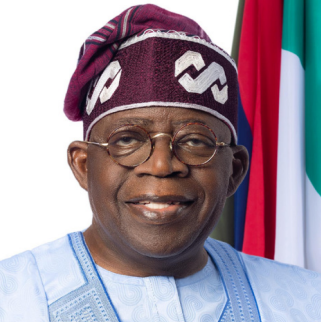
Tinubu Sends 32 Additional Ambassadorial Nominees to Senate for Confirmation
President Bola Ahmed Tinubu has forwarded the names of 32 additional ambassadorial nominees to the Senate for confirmation, days after sending the first batch of three nominees.
In two separate letters addressed to Senate President Godswill Akpabio, President Tinubu requested the Senate to consider and expeditiously confirm 15 nominees as career ambassadors and 17 nominees as non-career ambassadors.
The lists include ten women, four in the career ambassador category and six in the non-career category.
Among the non-career ambassadorial nominees are notable personalities such as Barrister Ogbonnaya Kalu from Abia, a former presidential aide; Reno Omokri (Delta); former Chairman of the Independent National Electoral Commission (INEC), Mahmud Yakubu; former Ekiti First Lady, Erelu Angela Adebayo; and former Enugu Governor, Ifeanyi Ugwuanyi.
Other nominees include Tasiu Musa Maigari, former Speaker of the Katsina House of Assembly; Yakubu N. Gambo, former Plateau State Commissioner and former Deputy Executive Secretary of the Universal Basic Education Commission (UBEC); Professor Nora Ladi Daduut, former Senator from Plateau; Otunba Femi Pedro, former Deputy Governor of Lagos State; Chief Femi Fani-Kayode, former Aviation Minister from Osun State; and Barrister Nkechi Linda Ufochukwu from Anambra State.
The list also features former First Lady of Oyo, Fatima Florence Ajimobi; former Lagos Commissioner, Lola Akande; former Adamawa Senator, Grace Bent; former Governor of Abia, Victor Okezie Ikpeazu; Senator Jimoh Ibrahim from Ondo State; and former Nigerian Ambassador to the Holy See, Paul Oga Adikwu from Benue State.
Nominees for career ambassadorial and high commissioner positions include Enebechi Monica Okwuchukwu (Abia), Yakubu Nyaku Danladi (Taraba), Miamuna Ibrahim Besto (Adamawa), Musa Musa Abubakar (Kebbi), Syndoph Paebi Endoni (Bayelsa), Chima Geoffrey Lioma David (Ebonyi), and Mopelola Adeola-Ibrahim (Ogun).
Other career ambassadorial nominees are Abimbola Samuel Reuben (Ondo), Yvonne Ehinosen Odumah (Edo), Hamza Mohammed Salau (Niger), Shehu Barde (Katsina), Ahmed Mohammed Monguno (Borno), Muhammad Saidu Dahiru (Kaduna), Olatunji Ahmed Sulu Gambari (Kwara), and Wahab Adekola Akande (Osun).
According to the State House, the new nominees are expected to be posted to countries with which Nigeria maintains strategic and robust bilateral relations, including China, India, South Korea, Canada, Mexico, the United Arab Emirates, Qatar, South Africa, Kenya, as well as Permanent Missions such as the United Nations, UNESCO, and the African Union.
Confirmed nominees will learn of their diplomatic assignments after Senate approval.
Last week, President Tinubu had sent three ambassadorial nominees for screening and confirmation: Ambassador Ayodele Oke (Oyo), Ambassador Amin Mohammed Dalhatu (Jigawa), and Retired Colonel Lateef Kayode Are (Ogun).
The three are slated for postings to major diplomatic missions, including the United Kingdom, United States, or France, upon confirmation.
President Tinubu assured that additional nominees for ambassadorial positions would be announced in due course.

Trump Warns Cuba to “Make a Deal” Or …
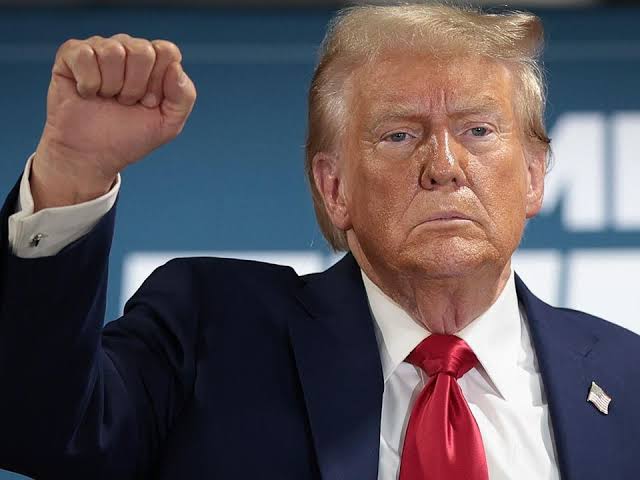
United States President Donald Trump has issued a fresh warning to Cuba, urging the Caribbean nation to “make a deal” or face undisclosed consequences, as Washington intensifies pressure following the seizure of Venezuelan leader Nicolás Maduro.
Trump’s comments came amid escalating tensions in Latin America after a 3 January US raid in Caracas that led to the arrest of Maduro and his wife, Cilia Flores, on drug trafficking and other charges in the United States.
Venezuela, a long-standing ally of Cuba, is believed to supply the island with about 35,000 barrels of oil daily, a crucial lifeline for Cuba’s energy-dependent economy.
However, the Trump administration has moved to disrupt that arrangement, confiscating oil tankers allegedly carrying sanctioned Venezuelan crude.
On Friday, US authorities seized a fifth tanker in what officials say is part of efforts to enforce sanctions on Venezuela.
The moves have reportedly worsened Cuba’s fuel shortages and electricity crisis.
In a post on his Truth Social platform on Sunday, Trump declared an end to the oil-for-support relationship between Havana and Caracas.
“Cuba lived, for many years, on large amounts of OIL and MONEY from Venezuela. In return, Cuba provided ‘Security Services’ for the last two Venezuelan dictators, BUT NOT ANYMORE!” Trump wrote.
“THERE WILL BE NO MORE OIL OR MONEY GOING TO CUBA – ZERO! I strongly suggest they make a deal, BEFORE IT IS TOO LATE.”
The US president did not specify what deal he was proposing or the consequences Cuba might face if it failed to comply.
Cuba’s Foreign Minister, Bruno Rodríguez, swiftly rejected Trump’s remarks, insisting that Cuba has the right to import fuel without external interference.
“Our country retains the absolute right to import fuel from any exporter willing to sell, without interference or subordination to the unilateral coercive measures of the United States,” Rodríguez said.
He added that Cuba does not submit to “blackmail or military coercion against other states.”
President Miguel Díaz-Canel also struck a defiant tone, saying no foreign power could dictate Cuba’s actions.
“No one dictates what we do,” Díaz-Canel said, accusing the US of lacking moral authority. “Those who turn everything into a business, even human lives, have no moral authority to point fingers at Cuba for anything, absolutely anything.”
40 Dead, 119 Injured in Swiss Ski Resort Bar Fire
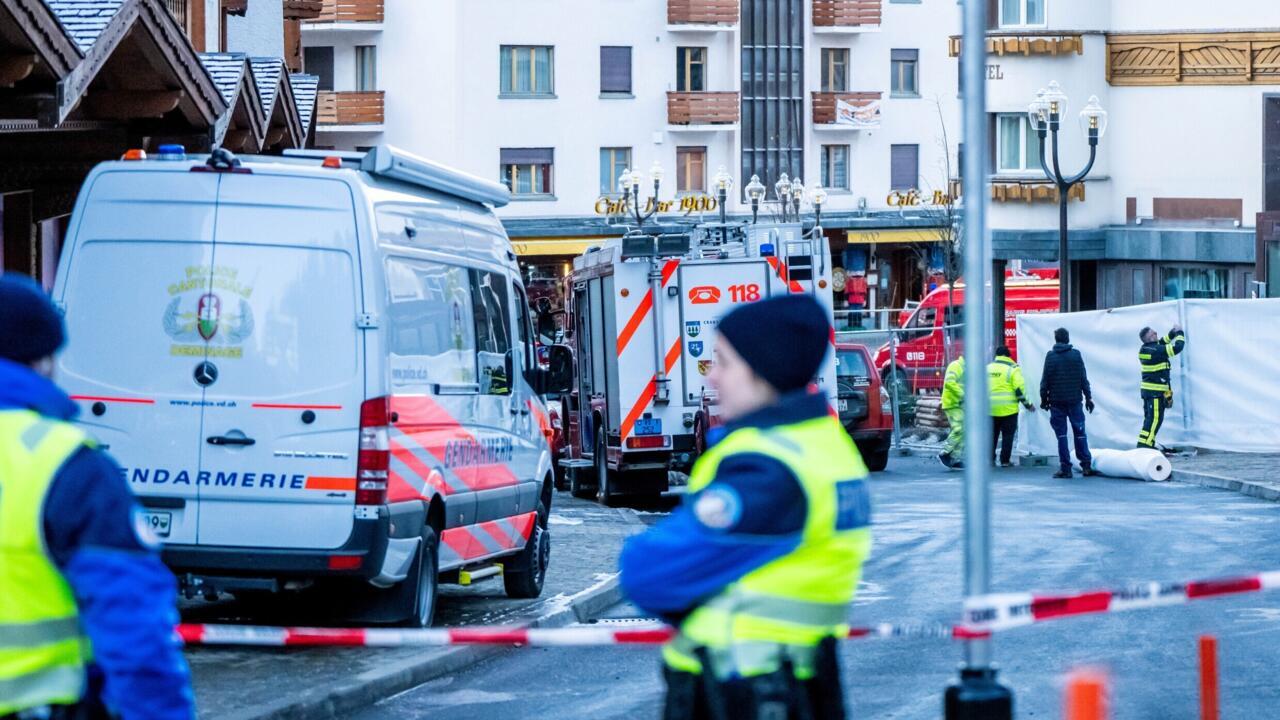
No fewer than 40 persons have been confirmed dead following a devastating fire outbreak at a bar in the Swiss ski resort town of Crans-Montana on New Year’s Eve, Swiss police have said.
Authorities on Sunday confirmed that the bodies of all 40 victims have now been identified.
The victims were aged between 14 and 39 years, with 15 of them under the age of 18.
The youngest victims were a 14-year-old Swiss girl and a 14-year-old French boy.
The deceased were drawn from several nationalities, including Swiss, Italian, Romanian, Turkish, Portuguese, French and Belgian citizens, as well as nationals of the United Kingdom, France and Israel, underscoring the international nature of the tragedy at the popular Alpine resort.
In addition to those killed, 119 people sustained varying degrees of injuries, most of them severe burns.
Police disclosed that six of the injured are in such critical condition that they have not yet been identified.
The fire broke out at Le Constellation bar, a venue known to be popular with young people in Crans-Montana, where the legal drinking age is 16.
A preliminary investigation indicated that sparklers attached to bottles and held too close to the ceiling may have ignited the blaze.
Swiss prosecutors have since opened a criminal investigation into the French couple who managed the bar.
The couple, identified by the media as Jacques and Jessica Moretti, are suspected of manslaughter by negligence, bodily harm by negligence and arson by negligence, according to the Valais regional prosecutor’s office.
The lead prosecutor in Valais canton, Ms Beatrice Pilloud, said investigators are examining whether the acoustic foam installed on the bar’s ceiling contributed to the rapid spread of the fire and whether it complied with existing safety regulations.
Police said no further personal details of the identified victims would be released out of respect for their families.
However, some relatives have begun to speak publicly as the scale of the tragedy sinks in.
On Saturday night, the mother of one of the victims, Ms Brodard-Sitre, announced via Facebook that her 16-year-old son, Arthur Brodard, was among those who died.
In an emotional video message, she said the family could now begin mourning, “knowing that he is in peace and in the light,” adding that her son had “left to party in paradise.”
Earlier, while Arthur was still listed as missing, his mother told local newspaper Le Temps that she had been “living a nightmare,” revealing that some of his friends had suffered burns to nearly half of their bodies.
“There are no words – they went through hell,” she said.
Italian media also identified 16-year-old junior golfer, Emanuele Galeppini, as one of the victims.
The Italian Golf Federation paid tribute to the teenager, describing him as a “young athlete who carried passion and authentic values.”
His father reportedly confirmed that the boy was at Le Constellation on the night of the incident, although Italian authorities had initially declined to confirm his death.
US Denies War With Venezuela as Tensions Rise After Maduro’s Capture
The United States has insisted it is not at war with Venezuela, a day after US forces carried out strikes that led to the capture of Venezuelan President Nicolás Maduro and his wife, Cilia Flores, in an operation that has sharply escalated tensions between the two countries.
US Secretary of State, Marco Rubio, said on Sunday that Washington’s actions should not be interpreted as a declaration of war, stressing that the operation was “limited and targeted.”
His comments came amid international concern over the implications of the US military action and growing uncertainty over Venezuela’s political future.
According to a spokesperson, Maduro and Flores are expected to appear in a US court on Monday, following their arrest.
The charges they will face were not immediately disclosed, but US officials have previously accused Maduro’s government of corruption, drug trafficking and human rights abuses.
Venezuela’s Defence Minister, Vladimir Padrino, confirmed that the US operation resulted in significant casualties, claiming that a large part of Maduro’s security team was killed, alongside what he described as “innocent civilians.”
Padrino condemned the strikes as a violation of Venezuela’s sovereignty and accused Washington of using excessive force.
In Caracas, the Venezuelan government formally denounced what it called “military aggression” by the United States.
In a statement, the Venezuelan armed forces said they remain loyal to interim President Delcy Rodríguez, signaling that Maduro’s allies still retain control of key state institutions despite his capture.
Trump, speaking in an interview with The Atlantic, warned that Rodríguez would “pay a big price” if she “does not do what is right,” a remark that has further inflamed tensions and raised fears of additional US pressure or sanctions.


In Honour of Our Fallen Heroes, by Alabidun Shuaib AbdulRahman
Trump Warns Cuba to “Make a Deal” Or …

Why Always Rivers State? By Alabidun Shuaib AbdulRahman

Pastor Jerry Eze Defends Miracles At UK Conference Amidst Criticism And Controversy

Diaspora Watch 20th Edition (October 14-20, 2024): Your Trusted Source for Global News and Insights