
Politics
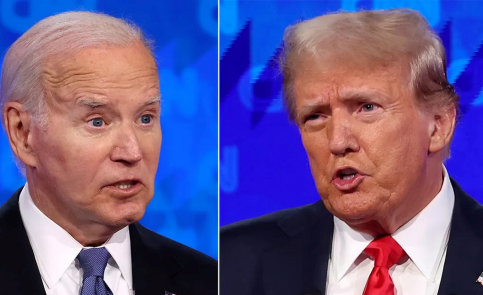
US Shooting Sparks Controversy Over Afghan Vetting as Trump Blames Biden

US Shooting Sparks Controversy Over Afghan Vetting as Trump Blames Biden
A shooting involving two National Guard members by a 29-year-old Afghan national has reignited debate over the United States’ refugee vetting process, even as records show the suspect underwent more than a decade of extensive screening by American intelligence agencies.
The suspect, Rahmanullah Lakanwal, was among nearly 190,000 Afghans evacuated after the U.S. withdrawal from Afghanistan in 2021.
Despite this, President Donald Trump quickly blamed the Biden administration, accusing it of admitting “unknown and unvetted foreigners” into the country and using the incident to justify sweeping immigration measures.
Records indicate that Lakanwal had been subject to continuous vetting over the years.
He began working with the CIA and U.S. military in 2011, undergoing initial security screening.
In 2021, he was vetted by the National Counterterrorism Center prior to evacuation and continued under routine vetting while residing in the United States.
In April 2025, he was granted permanent asylum by the U.S. Citizenship and Immigration Services under the Trump administration.
A senior U.S. official told CNN that multiple rounds of vetting “did not show any ties to terror organizations. He was clean on all checks.”
In reaction to the shooting, the Trump administration announced several policy shifts, including a re-examination of all green cards issued to nationals from 19 “countries of concern,” a review of all asylum cases approved under the Biden administration, and an indefinite suspension of immigration processing for Afghan nationals.
A Trump administration official argued that the Biden-led evacuation process was “inherently flawed,” claiming that “the government was in shambles and in the process of being taken over by the Taliban.”
However, a 2025 Justice Department audit contradicted these claims, finding “no systemic breakdowns” in the Afghan vetting process, while acknowledging that the haste of the evacuation increased potential security risks.
The incident has intensified scrutiny of the 2021 Afghanistan withdrawal and resettlement programme, bringing to the fore tensions between national security priorities and the United States’ obligations to wartime allies.
As investigations into the shooting continue without a determined motive, the case has quickly become a flashpoint in the ongoing debate over U.S. immigration and refugee policies.

CARICOM pushes unified response to global shifts, backs Guyana’s COP35 bid
The Caribbean Community, CARICOM has called for urgent and coordinated action to confront mounting global uncertainties, as it concluded its 50th Regular Meeting of the Conference of Heads of Government in Basseterre, Basseterre, St Kitts and Nevis.
The four-day summit, held from February 24 to 27 under the chairmanship of St Kitts and Nevis Prime Minister, Dr Terrance Drew, brought together regional leaders to deliberate on security, economic integration, external trade, reparations and the situation in Haiti.
In her opening remarks, CARICOM Secretary-General, Dr Carla Barnett, urged member states to take advantage of opportunities presented by the shifting global order.
She said as new markets emerge and strategic alliances are recalibrated, the Region must engage with clarity and cohesion in areas such as energy transition, digital infrastructure, climate resilience and technology to attract investments aligned with its development priorities.
Outgoing Chairman and Jamaica’s Prime Minister, Andrew Holness, said the speed of global change was outpacing regional coordination, warning that climate shocks, criminal networks and technological disruption were evolving faster than existing policy and regulatory frameworks.
“The question before us is not whether CARICOM can endure, but whether it can deliver for our people with urgency and relevance in a rapidly changing world,” he said.
President of Suriname, Jennifer Geerlings-Simons, and Prime Minister of Trinidad and Tobago, Kamla Persad-Bissessar, also stressed the need for regional unity, describing it as a necessity in the face of economic volatility, climate insecurity and geopolitical shifts.
During the meeting, Heads of Government held discussions with the United States Secretary of State, Marco Rubio, and agreed on the need to establish a 21st-century cooperation framework covering migration, security cooperation, trade and investment, disaster recovery and technical assistance.
Leaders noted that the US remains a valued partner and welcomed Washington’s commitment to reinvigorate traditional ties within the Western Hemisphere.
The Conference also engaged Saudi Arabia and the United Arab Emirates on expanded economic collaboration, including structured mechanisms to unlock opportunities in the digital economy, climate resilience, water security and infrastructure development.
In a major financial boost, Afreximbank announced an increase in its global limit for CARICOM initiatives from $3bn to $5bn, as the Region seeks to strengthen economic ties with Africa and expand trade and investment flows.
On Haiti, the Conference reaffirmed its commitment to supporting stability and free and fair elections, and expressed appreciation to Kenya for leading the Multinational Security Support mission, now transitioned to a Gang Suppression Force authorised by the United Nations Security Council.
The Bahamas and Jamaica were also commended for contributing personnel and operational support.
Heads of Government reiterated their steadfast backing for the sovereignty and territorial integrity of Belize and Guyana in border matters before the International Court of Justice, calling on all parties to respect and implement the court’s decisions when delivered.
On regional security, leaders welcomed progress on model legislation for criminal justice reform and the offer by the United Nations Development Programme to support the expansion of a Police Record Management Information System across member states.
On economic integration, the Conference approved the inclusion of additional professions under the free movement of skilled nationals within the CARICOM Single Market and Economy and adopted amendments to the Revised Treaty of Chaguaramas to streamline Rules of Origin adjustments.
Heads of Government also approved a CARICOM Industrial Policy and Strategy Framework aimed at fostering competitive and sustainable industries across the Region.
In a significant climate development, the Conference agreed to support Guyana’s bid to host COP35 in 2030.
The leaders expressed appreciation to the Government and people of St Kitts and Nevis for hosting the landmark 50th meeting and accepted Saint Lucia’s invitation to host the 51st Regular Meeting from July 5 to 8, 2026.
The United States, Israel and the Iran Question, by Alabidun Shuaib AbdulRahman
In the theatre of West Asian geopolitics, few rivalries have proved as enduring, combustible and globally consequential as that between the Islamic Republic of Iran on one side and the United States and Israel on the other. Though there has been no formally declared all-out war between Washington, Tel Aviv and Tehran, what has unfolded over decades is a sustained shadow war—punctuated by assassinations, cyberattacks, proxy confrontations, economic strangulation and calibrated military strikes. To describe it merely as standoff is to understate its strategic depth; to label it a conventional war is to misunderstand its hybrid, multi-layered character.
The roots of hostility between the United States and Iran trace back to 1979. On February 11 of that year, the Iranian Revolution led by Ayatollah Ruhollah Khomeini overthrew Shah Mohammad Reza Pahlavi, a key American ally in the Persian Gulf. The subsequent seizure of the US Embassy in Tehran on November 4, 1979, and the 444-day hostage crisis marked a definitive rupture. Diplomatic relations were severed in April 1980. Since then, relations have oscillated between cautious engagement and open confrontation, but never reconciliation.
For Israel, Iran’s transformation into an ideologically anti-Zionist state posed an existential dilemma. The Islamic Republic’s leadership has consistently refused to recognise Israel and has supported armed groups such as Hezbollah in Lebanon and Hamas in Gaza. This ideological antagonism hardened over time into strategic rivalry, especially as Iran expanded its regional footprint in Iraq, Syria and Lebanon after the 2003 US-led invasion of Iraq.
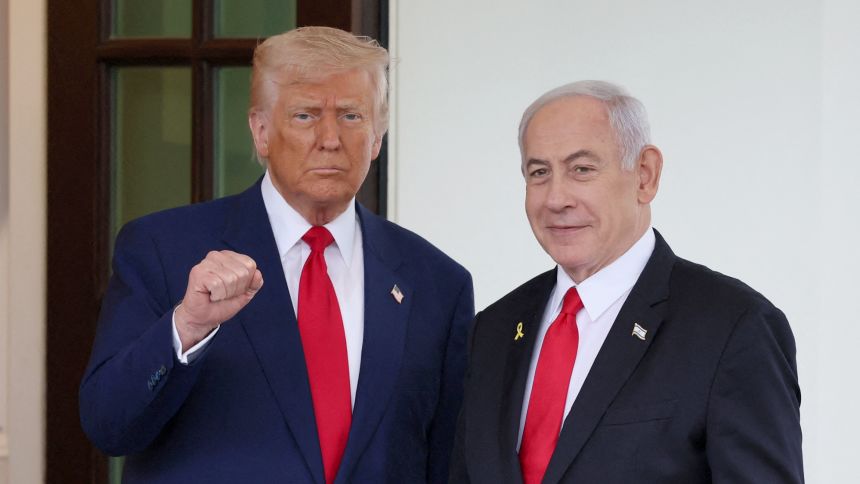
The nuclear question sharpened the conflict. In 2002, revelations about undisclosed Iranian nuclear facilities in Natanz and Arak intensified Western suspicions about Tehran’s intentions. Israel, under successive prime ministers including Ariel Sharon and later Benjamin Netanyahu, framed Iran’s nuclear programme as an existential threat. Netanyahu’s address to the United States Congress on March 3, 2015—delivered in opposition to then-President Barack Obama’s policy—underscored Israel’s resistance to any deal that, in its view, left Iran with nuclear latency.
That deal materialised on July 14, 2015, when Iran and the P5+1 (the United States, United Kingdom, France, Russia, China and Germany) signed the Joint Comprehensive Plan of Action (JCPOA). The agreement imposed strict limits on Iran’s uranium enrichment in exchange for sanctions relief. However, on May 8, 2018, President Donald Trump withdrew the United States from the accord, describing it as “the worst deal ever negotiated.” The reimposition of sweeping sanctions under the “maximum pressure” campaign plunged Iran’s economy into recession and escalated rivalries across the Gulf.
What followed was a cycle of escalation. On January 3, 2020, a US drone strike near Baghdad International Airport killed Major General Qassem Soleimani, commander of Iran’s Quds Force. The strike marked one of the most dramatic overt confrontations between the two states. Iran responded on January 8, 2020, by launching ballistic missiles at US bases in Iraq, injuring dozens of American personnel. The region teetered on the brink of open war, but both sides ultimately calibrated their actions to avoid full-scale conflict.
Parallel to the US-Iran confrontation, Israel intensified what it termed the “campaign between wars” (MABAM), targeting Iranian military infrastructure in Syria. Since 2013, Israel has conducted hundreds of airstrikes aimed at preventing Iran from entrenching itself militarily near Israeli borders. The covert dimension of this war has included cyber operations—most notably the Stuxnet virus, widely attributed to US-Israeli cooperation around 2010, which damaged Iranian centrifuges at Natanz—and assassinations of Iranian nuclear scientists, including Mohsen Fakhrizadeh, killed on November 27, 2020.
Geopolitically, the conflict is nested within broader power realignments. The Abraham Accords, signed on September 15, 2020, normalised relations between Israel and the United Arab Emirates and Bahrain, later joined by Morocco and Sudan. Though framed as peace agreements, they also represented the crystallisation of a tacit anti-Iran coalition among certain Arab states and Israel. Saudi Arabia, while not formally part of the Accords, has long viewed Iran as its principal regional rival, particularly in Yemen and the Gulf.
Iran, for its part, has relied on asymmetric warfare and proxy networks. Hezbollah in Lebanon, the Popular Mobilisation Forces in Iraq, the Houthis in Yemen and various militias in Syria form what analysts describe as Iran’s “Axis of Resistance.” This network enables Tehran to project power without inviting direct conventional confrontation with superior US and Israeli forces.
The world economy sits uncomfortably at the heart of this contest. Iran borders the Strait of Hormuz, through which roughly 20 per cent of global oil supply transits. Any significant disruption would reverberate through energy markets. During periods of heightened crisis—such as June 2019, when oil tankers were attacked near the Gulf of Oman—global crude prices spiked. The mere spectre of closure of the Strait can unsettle markets from New York to Shanghai.
Sanctions have had mixed global effects. For Iran, they have meant currency depreciation, inflation and reduced oil exports. For global markets, they have tightened supply, particularly when combined with other shocks such as Russia’s invasion of Ukraine in February 2022. Energy-importing countries, including many in sub-Saharan Africa, feel the downstream effects in fuel prices and inflationary pressures. Nigeria, despite being an oil producer, is not insulated; global price volatility influences domestic subsidy debates, fiscal planning and foreign exchange stability.
Allies of the United States are caught in a delicate balancing act. European signatories to the JCPOA—France, Germany and the United Kingdom—have consistently supported diplomatic engagement while criticising Iran’s ballistic missile programme and regional activities. The European Union has attempted to preserve the nuclear deal framework even after Washington’s withdrawal, though with limited success. NATO as an institution is not formally engaged in hostilities with Iran, but US actions inevitably affect alliance cohesion.
Israel’s allies, particularly the United States, have reaffirmed an “ironclad” commitment to its security. Military aid to Israel has averaged approximately $3.8 billion annually under a 10-year memorandum of understanding signed in 2016. In times of heightened tension, Washington has deployed carrier strike groups to the Eastern Mediterranean and Persian Gulf as a deterrent signal to Tehran.
On the other side, Iran’s strategic partnerships with Russia and China have deepened. In March 2021, Iran and China signed a 25-year cooperation agreement covering energy, infrastructure and security. Russia and Iran have also expanded military and economic ties, particularly after Western sanctions isolated Moscow in 2022. Yet neither Beijing nor Moscow appears eager to be drawn into a direct war on Iran’s behalf; their support is calibrated, not unconditional.
What of the broader Global South? Countries in Africa, Latin America and parts of Asia often view the US-Iran-Israel confrontation through the prism of non-alignment and economic pragmatism. Many rely on Gulf remittances, energy imports or trade routes vulnerable to instability. An open war would likely trigger oil price surges, shipping disruptions and currency volatility. For fragile economies already grappling with debt distress and food insecurity, such shocks could prove destabilising.
There is also the nuclear proliferation dimension. If Iran were to cross the nuclear threshold—an outcome Israeli leaders have repeatedly vowed to prevent—regional rivals such as Saudi Arabia might pursue their own nuclear capabilities. Crown Prince Mohammed bin Salman stated in a March 2018 interview with CBS that if Iran developed a nuclear weapon, “we will follow suit as soon as possible.” The prospect of a multipolar nuclear Middle East would dramatically alter global security calculations.
Yet it is important to distinguish rhetoric from reality. As of the latest publicly available assessments by the International Atomic Energy Agency, Iran has enriched uranium to high levels but has not formally declared a nuclear weapons programme. Israel, widely believed to possess nuclear weapons though it maintains a policy of ambiguity, has not signed the Nuclear Non-Proliferation Treaty. The asymmetry complicates diplomatic discourse and fuels mutual suspicion.
What, then, is expected of allies? For the United States, allies will likely provide diplomatic backing, intelligence cooperation and, in some cases, logistical support. Direct troop commitments appear improbable outside extreme scenarios. For Israel, regional partners under the Abraham Accords may quietly facilitate airspace access or intelligence sharing, though overt participation in strikes against Iran would risk domestic backlash.
For Iran’s allies and partners, the expectation would centre on economic lifelines and diplomatic shielding at the United Nations Security Council. Russia and China could veto resolutions perceived as authorising force. However, both powers must weigh their broader economic ties with Gulf states and Israel.
Ultimately, the “war” waged on Iran by the United States and Israel is less a single conflagration than a prolonged strategic contest. It is fought in airspace over Syria, in the waters of the Gulf, in cyber networks and in negotiating rooms from Vienna to New York. Its tempo fluctuates, but its structural drivers—ideology, security dilemmas, regional hegemony and nuclear anxieties—remain entrenched.
For the global world, the implications are sobering. Energy markets remain hostage to escalation. International law is strained by targeted killings and covert operations. Multilateral diplomacy oscillates between revival and collapse. In an era already defined by great power rivalry, the Iran question adds another layer of volatility.
The lesson of the past four decades is that neither maximum pressure nor calibrated strikes have resolved the underlying dispute. Nor has Iran’s strategy of resistance compelled recognition on its terms. The path forward, if there is one, lies not in rhetorical absolutism but in a recalibration of deterrence and diplomacy.
Alabidun is a media practitioner and can be reached via alabidungoldenson@gmail.com
US, Venezuela restore diplomatic relations
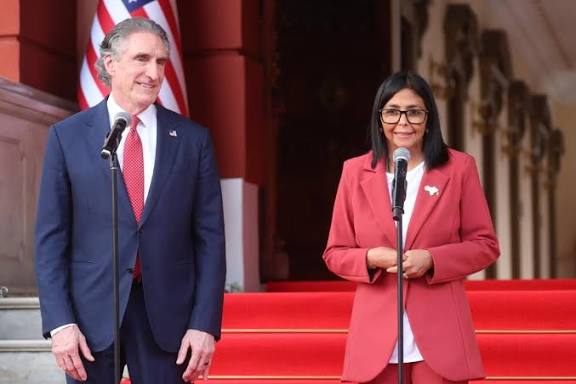
The United States and Venezuela have agreed to re-establish diplomatic and consular relations, signalling a major shift in ties between the two countries after years of political rivalry.
In a statement on Thursday, the United States Department of State said the move would enable both nations to work together to promote stability, support economic recovery and advance political reconciliation in Venezuela.
The development comes months after the US military captured Venezuelan President Nicolás Maduro in January following a surprise raid ordered by US President Donald Trump.
Maduro and his wife were taken to New York to face charges related to weapons and drug offences, allegations they have denied.
Since the incident, diplomatic relations between both countries have gradually improved.
The US embassy in Caracas, which was shut in 2019 after relations broke down, has now reopened and Washington has deployed a new diplomat to the South American nation.
The Venezuelan government, currently led by interim President Delcy Rodríguez, said it was ready to begin a new phase of constructive engagement with Washington.
Confirming the development in a statement, Caracas said it was willing to advance “a new stage of constructive dialogue based on mutual respect and cooperation between our peoples,” adding that the renewed ties should translate into social and economic benefits for Venezuelans.
However, the Venezuelan statement did not mention any plans for political transition or elections, unlike the US position, which said its engagement was aimed at creating conditions for a peaceful transition to a democratically elected government.
Meanwhile, US officials say the renewed engagement will also ease diplomatic negotiations and consular services as more personnel are expected to move to Caracas from the US mission in Bogotá, Colombia.
The renewed relations come amid growing economic cooperation between the two countries, particularly in Venezuela’s oil and mining sectors, as Washington seeks greater access to the country’s vast natural resources.
Venezuela is believed to hold the world’s largest proven oil reserves and is also rich in gold, diamonds and rare earth minerals used in modern technologies.
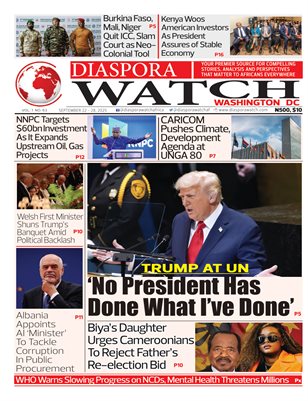


CARICOM pushes unified response to global shifts, backs Guyana’s COP35 bid

Nigeria’s Stakes in a Fractured Middle East, by Boniface Ihiasota

The United States, Israel and the Iran Question, by Alabidun Shuaib AbdulRahman

Pastor Jerry Eze Defends Miracles At UK Conference Amidst Criticism And Controversy

Diaspora Watch 20th Edition (October 14-20, 2024): Your Trusted Source for Global News and Insights


