
Environment
Woman Found Dead Inside Python’s Belly In Indonesia


A chilling discovery was made in central Indonesia on July 3, as a 36-year-old woman, Ms. Siriati, was found dead inside the belly of a python. This shocking incident marks the second python killing in the province within a month. Ms. Siriati had left her house on the morning of July 2 to buy medicine for her sick child. However, she never returned, prompting her relatives to launch a search.
Her husband, Mr. Adiansa, 30, found her slippers and pants on the ground about 500 meters from their house in Siteba village, South Sulawesi province. Mr. Adiansa’s search led him to a spot about 10 meters from the path, where he spotted a snake with a suspiciously large belly.
He called the villagers to help cut open the snake’s stomach, revealing the lifeless body of Ms. Siriati. Local police chief Idul confirmed the incident, stating that the snake was still alive when it was found. Village secretary Iyang also corroborated the story, highlighting the unusual size of the python’s belly.
This tragic event is not the first of its kind in the region. Just last month, a woman was found dead inside a reticulated python in another district of South Sulawesi.
In 2023, an 8-meter python was killed in the province after it was found strangling and eating a farmer. Similar incidents have occurred in recent years, including a 54-year-old woman found dead inside a 7-meter python in Southeast Sulawesi’s Muna town in 2018, and a farmer swallowed by a 4-meter python at an oil palm plantation in West Sulawesi the previous year.


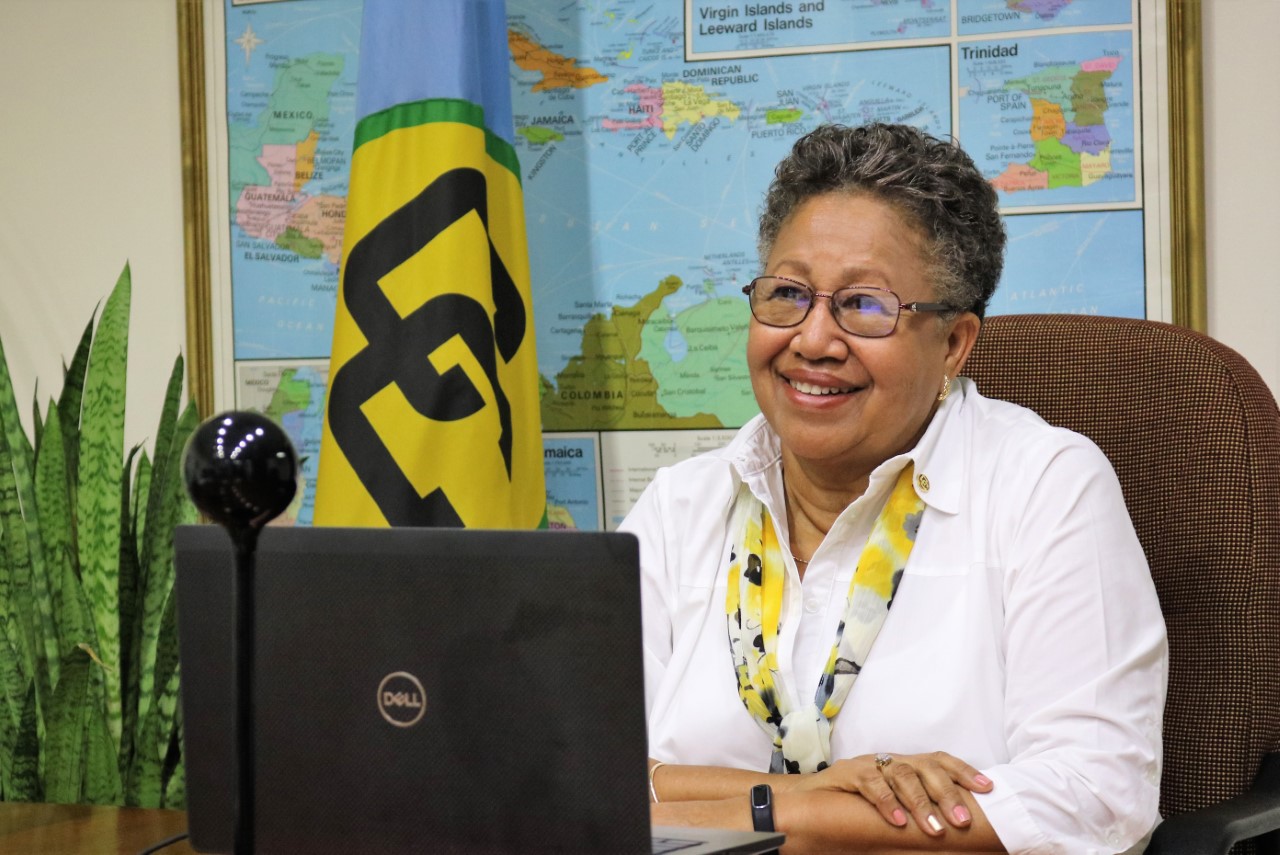
Hurricane Melissa: CARICOM Reaffirms Support for Jamaica, Haiti
CARICOM Secretary-General, Dr Carla Barnett, has restated the Community’s solidarity with Jamaica and Haiti following the devastation caused by Hurricane Melissa, saying the disaster reinforces the urgent need to strengthen regional resilience against climate change.
Dr Barnett made the remarks at the opening of the 61st Regular Meeting of the Council for Trade and Economic Development (COTED), where she also highlighted the importance of the CARICOM Single Market and Economy (CSME) in supporting sustainable growth amid recurring climate shocks.
She expressed sympathy to the Governments and people of Jamaica and Haiti over the loss of lives and widespread damage caused by the storm.
She commended the response of regional bodies, including the Caribbean Disaster Emergency Management Agency (CDEMA), the Caribbean Public Health Agency (CARPHA), private sector groups and other regional partners.
The Secretary-General also referenced the recent visit of four CARICOM Heads of Government to Jamaica as a strong demonstration of regional unity and a signal of continued support.
“The experience leaves us in no doubt about the urgency of addressing the existential threats posed by climate change and the need to redouble our efforts to build resilience and foster sustainable development across our Region,” she said.
“Strengthening our trade and economic performance is a critical part of this, and COTED must continue to play its important role in this regard.”
Chairing the meeting, Belize’s Minister of State for Foreign Trade, Hon. Marconi Leal, noted that the Region was dealing with complex global and domestic challenges that continue to test the resilience of individual Member States.
He said Hurricane Melissa further exposed the Caribbean’s vulnerability to climate threats, stressing the need for deeper cooperation and coordinated recovery efforts.
Minister Leal said COTED would deliberate on critical issues, including advancing the free movement of CARICOM nationals, implementing the Community’s Industrial Policy and Strategy 2035, and support measures under Article 164 of the Revised Treaty of Chaguaramas.
The 61st Regular Meeting of COTED reaffirmed CARICOM’s commitment to strengthening regional trade, deepening economic integration and advancing sustainable development across the Community.

Spain Introduces Disaster Preparedness Lessons for Children
In a bold move to strengthen climate resilience, Spain has announced compulsory disaster preparedness lessons for schoolchildren across the country.
The initiative, unveiled on Thursday by the Spanish government, is designed to equip children with knowledge and survival skills in the face of floods, wildfires, earthquakes and volcanic eruptions, which experts say are becoming more frequent due to the worsening climate emergency.
The development comes after a summer of devastating forest fires claimed four lives, and less than a year after catastrophic floods left more than 220 people dead in eastern Spain.
According to the Ministry of Education, the new programme will cover not only natural disasters but also industrial, nuclear and chemical accidents, as well as emergencies involving the transportation of hazardous materials.
Over 8 million pupils in 25,000 schools will benefit from the compulsory training, which will begin this academic year.
Lessons will be delivered through videos, infographics and other teaching tools, with children in infant and primary schools receiving a minimum of two hours, while older students will undergo at least four hours.
“Infant school children aged three, four and five will learn to recognise alarms and spot early signs of danger, as well as basic safety principles,” the ministry said in a statement.
“Older children will be taught how to seek higher ground during floods and to take cover under desks during earthquakes.”
The ministry added that students would also be educated on identifying disinformation during emergencies, a growing concern in the digital age.
Speaking at the launch in Cuenca, Prime Minister Pedro Sánchez stressed the importance of preparing young people to face disasters worsened by climate change.
“If we don’t want to bequeath our children a Spain that’s grey from fire and flames, or a Spain that’s brown from floods, then we need a Spain that’s greener,” Sánchez declared on September 1, calling for a “great state pact” to tackle the climate crisis.
The lessons form part of a 10-point government plan to safeguard Spain, which experts say lies on the frontline of Europe’s climate challenges.


Despite contributing a mere 0.03% to global greenhouse gas emissions, Pacific Small Island Developing States (PSIDS) are setting a powerful example in climate leadership.
A new report by the UN Climate Change Regional Collaboration Centre for Asia and the Pacific reveals that these nations are making significant strides in meeting the goals of the Paris Agreement.
The 14 PSIDS have demonstrated their commitment to reducing emissions and promoting sustainable development.
All 14 countries submitted their first round of Nationally Determined Contributions (NDCs) by the end of 2015, with 11 submitting updated or enhanced versions since then.
These NDCs outline ambitious targets in renewable energy, sustainable transport, and nature-based solutions.
Six PSIDS aim for 100% renewable energy, showcasing a commitment to reducing dependence on fossil fuels.
Countries are also exploring eco-friendly transportation options to minimize emissions and initiatives focus on preserving and restoring natural ecosystems to mitigate the effects of climate change.
The Pacific Island nations are reframing climate ambition as a regional issue, intersecting with identity, sovereignty, and development.
The 2050 Strategy for the Blue Pacific Continent highlights the importance of ocean-based solutions and regional collaboration.
Several countries in the region are taking bold steps to address climate change.
Fiji was the first country to ratify the Paris Agreement and preside over a UN Climate Conference (COP 23).
The Marshall Islands was an early submitter of Intended Nationally Determined Contributions (INDC) and has integrated youth participation and Indigenous knowledge into its national climate agenda.
Papua New Guinea was the first to formally submit an NDC, with a target of 100% renewable energy by 2030.
Vanuatu is committed to rapidly phasing out fossil fuels and transitioning to a circular economy, with NDC targets conditional on scaled-up international support.
As the global community prepares for the third round of NDCs, the Pacific Island nations offer a clear message: the next generation of NDCs must aim higher and go further, turning ambition into action and action into survival.
With climate change posing existential threats to these nations, their commitment to limiting warming to 1.5°C is not just about reducing emissions – it’s a matter of survival.



CARICOM pushes unified response to global shifts, backs Guyana’s COP35 bid

Nigeria’s Stakes in a Fractured Middle East, by Boniface Ihiasota

The United States, Israel and the Iran Question, by Alabidun Shuaib AbdulRahman

Pastor Jerry Eze Defends Miracles At UK Conference Amidst Criticism And Controversy

Diaspora Watch 20th Edition (October 14-20, 2024): Your Trusted Source for Global News and Insights


