
Sports
North Korea’s Olympic Return Sparks Hope For A Brighter Future


In a heartwarming display of unity, North Korean gymnast An Chang-ok was seen applauding and hugging her rivals, including American Simone Biles, at the women’s vault final in Paris. This moment of camaraderie has raised hopes that the secretive state may be partially reopening after a period of deep isolation.
North Korea’s participation in the 2024 Olympics, after skipping the Tokyo Games, signals a “remarkable” return to the international fold, according to experts. The country’s athletes have won two silvers and surprised commentators with their skills.
As An Chang-ok grinned and waved for TV cameras, it was a rare glimpse into the life of a young woman from a country known for its secrecy. Her interactions with fellow athletes were a testament to the power of sports to bridge even the deepest divides.
“This is a remarkable moment,” said Jean H Lee, a former Associated Press journalist who opened the US news agency’s first bureau in Pyongyang. “North Korea is making the effort to rejoin the international community, regardless of what’s happening with their nuclear program.”
The North’s nuclear ambitions are an enduring cause of tension with the South and the US. But in Paris, athletes from the three nations put aside their differences, united by their love of sport.
As the world watches, North Korea’s athletes are making a statement that they are more than just representatives of their country – they are ambassadors of hope for a more unified future.


All Hail Our Flamingos! By Boniface Ihiasota
There are moments in the life of a nation when sporting achievements become bigger than the game itself. They become statements of possibility, demonstrations of courage and reminders of what a country can accomplish when talent meets determination and opportunity. Nigeria witnessed one such moment on Saturday, November 7, 2026, when the Flamingos conquered Japan 2-1 to emerge champions of the FIFA U-17 Women’s World Cup in Morocco. It was not just another football victory. It was history written by young Nigerian women who carried the hopes of a continent and returned with the prestigious prize.
All hail our Flamingos! All hail the young champions who have given Nigeria and Africa a reason to celebrate!
At the Mohammed VI Football Complex in Rabat, the Nigerian girls delivered a performance that will remain an important chapter in the history of African football. With that victory, Nigeria became the first African country to win the FIFA U-17 Women’s World Cup. More significantly, the Flamingos became the first Nigerian women’s national team to win a FIFA World Cup title. For a continent whose female footballers have repeatedly demonstrated extraordinary ability without always receiving corresponding global recognition, this achievement carries a significance that extends far beyond the trophy.
What makes this victory particularly remarkable is the character displayed throughout the tournament. The Flamingos did not begin their campaign as favourites. They suffered a 2-1 defeat against Poland in their opening group match, a setback that could have damaged the confidence of a less determined team. Instead, the girls responded with victories over Puerto Rico and defending champions North Korea, finishing second in Group B with six points.
Their subsequent journey demonstrated that resilience is not merely a motivational expression but a quality that can determine sporting greatness. They defeated Mexico 2-1 in the round of 16, edged Venezuela 1-0 in the quarter-finals through an 89th-minute penalty converted by Azeezat Oduntan, and dispatched Brazil 3-1 in the semi-finals. Against Brazil, Queen Joseph and Awawu Bashiru, who scored twice, secured Nigeria’s historic first appearance in the competition’s final.
The victory over Japan completed an extraordinary sequence of five consecutive victories following the opening defeat. It also established the Flamingos as the first team to lose its opening match and subsequently win the competition. That is a remarkable testament to mental strength, tactical discipline and the ability to learn from setbacks.
This achievement also deserves to be appreciated against the team’s previous history. At the 2022 edition in India, Nigeria finished third after defeating Germany in the bronze-medal match. That performance had established the Flamingos as serious contenders in youth women’s football. Four years later, they have gone beyond the bronze medal to claim the championship itself. The progression from third place to world champions should remind Nigerian football administrators that sustained investment in youth development can produce results.
However, beyond the celebrations, this victory presents Nigeria with an opportunity to rethink its approach to women’s football. We cannot celebrate these girls today and return them to the familiar environment of inadequate facilities, inconsistent funding, poor welfare provisions and limited opportunities tomorrow. A World Cup trophy should not become a temporary national celebration followed by institutional forgetfulness.
Countries that have developed successful women’s football programmes understand that winning international competitions requires more than assembling talented players before a tournament. It requires functional domestic leagues, qualified coaches, competitive youth competitions, modern training facilities, medical support, sports science and a clear pathway from grassroots football to professional opportunities.
Nigeria must therefore see the Flamingos as an investment in the future, not merely a team that has delivered an unexpected trophy. Their achievement should inspire stronger school sports programmes, community football academies and deliberate talent identification across the country’s six geopolitical zones. Young girls in rural communities should have the same opportunity to discover and develop their footballing abilities as those in major cities.
The Nigeria Football Federation and the National Sports Commission must also ensure that the players receive appropriate recognition, rewards and long-term support. Their education, personal development and transition into the senior national team must not be left to chance. The experience of previous generations of Nigerian footballers should teach us that identifying talent is only the beginning; sustaining it is the real responsibility.
There is also a role for the Nigerian diaspora. Across Europe, North America and other parts of the world, Nigerians have built relationships, businesses and institutions that can contribute to sports development. This is an opportunity for diaspora organisations, private investors and former international footballers to support structured youth football initiatives, scholarships, coaching exchanges and partnerships that expose young Nigerian talents to international standards.
The victory is equally significant for the African continent. Nigeria has demonstrated that African girls can compete with and defeat the world’s established football powers. As we celebrate, we must also acknowledge the coaches, technical officials, support staff, families and everyone who contributed to this historic journey. Their collective efforts deserve recognition alongside the players.
For now, Nigeria has every reason to celebrate. These young women have carried our national colours with pride, overcome an early setback, defeated formidable opponents and conquered the world.
All hail our Flamingos!
You have made history, lifted the Nigerian flag higher and reminded the world that our young girls are capable of extraordinary things. May this trophy become the beginning of a stronger, more inclusive and more sustainable future for Nigerian women’s football.
Today, we celebrate champions. Tomorrow, we must build the system worthy of champions.
Nigeria is proud of you!
Tobi Amusan’s Legacy After the World Record Falls, by Boniface Ihiasota
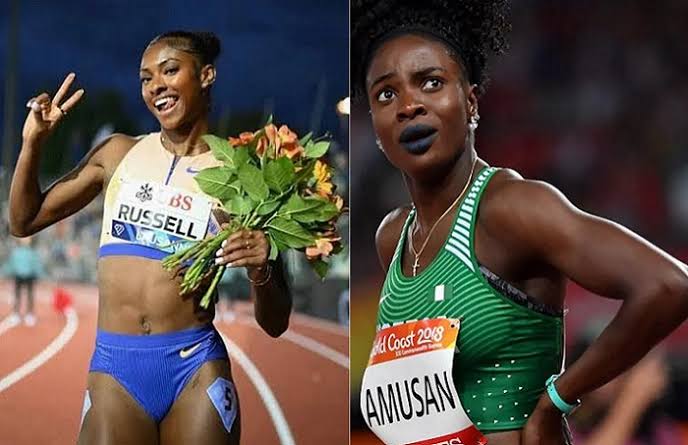
There are moments in sport when a stopwatch does more than record time. It records the changing of an era. That was the drama that unfolded in Zurich on Thursday, August 27, 2026, when American Olympic champion Masai Russell ran 12.09 seconds to erase Tobi Amusan’s world record in the women’s 100m hurdles.
For Nigerians watching from home and across the diaspora, it was a moment of conflicting emotions. The green-and-white pride associated with Amusan’s name suddenly had a new number attached to it. Yet, perhaps more importantly, the Zurich race demonstrated that sporting greatness is not diminished simply because a record is eventually broken.
Russell’s 12.09 seconds was extraordinary. She lowered Amusan’s 12.12-second world record by three hundredths of a second, with no assisting wind recorded. Reuters reported that Russell pulled decisively clear after the final hurdle to complete one of the defining performances of the 2026 athletics season.
But the story of Zurich is not simply about an American taking a Nigerian record. It is about two exceptional athletes meeting at different points of their careers and, in doing so, reminding the world why records exist in the first place: to be challenged.
Four years earlier, on July 24, 2022, Amusan had stunned the athletics world at Hayward Field in Eugene, Oregon. She ran 12.12 seconds in the semi-final of the World Athletics Championships, with a legal tailwind of 0.9 metres per second, establishing a new world record. World Athletics subsequently ratified the performance.
That evening transformed Amusan from a brilliant Nigerian hurdler into a global sporting icon. She went on to win the world title, completing a remarkable championship after having endured fourth-place finishes at the 2019 World Championships and the Tokyo 2020 Olympics. Her 12.12 remained the benchmark for four years.
And perhaps that is why her performance in Zurich deserves more attention than the silver medal beside her name. With the world record literally disappearing in front of her, Amusan did not collapse under the weight of history. Instead, she produced her fastest performance of the 2026 season, clocking 12.23 seconds to finish second behind Russell.
Sport has a cruel habit of reducing athletes to medals, rankings and numbers. But behind every record is a human being who has spent years training, sacrificing and competing against limits that most people will never understand. Amusan’s 12.12 was not merely a number on a results sheet. It represented years of Nigerian athletic excellence and a moment when an African woman stood at the summit of one of the world’s most competitive sporting disciplines.
Russell has now inherited that summit. At 12.09, she has also announced something potentially more significant: the possibility that the women’s 100m hurdles may be entering another extraordinary era. Russell had already run 12.14 earlier in 2026, the second-fastest performance in history at the time, before producing the world record in Zurich.
For the Nigerian diaspora, therefore, this should not be remembered as the night Nigeria lost a record. It should be remembered as the night Tobi Amusan’s record became part of athletics history.
Amusan has already changed how young Nigerian athletes see the hurdles. She has shown that an athlete from Ijebu-Ode can rise through international competition and become the fastest woman ever over the 100m hurdles. Her name will remain attached to the record books as the athlete who broke the barrier first.
Russell’s achievement does not erase Amusan’s chapter. It begins a new one. And perhaps the most beautiful part of Zurich was that Amusan was there when history moved forward. She did not merely watch her record fall; she answered with a season’s best.
That is how champions respond when the world changes around them. The record now belongs to Masai Russell. But the legacy of Tobi Amusan remains unmistakably Nigerian.

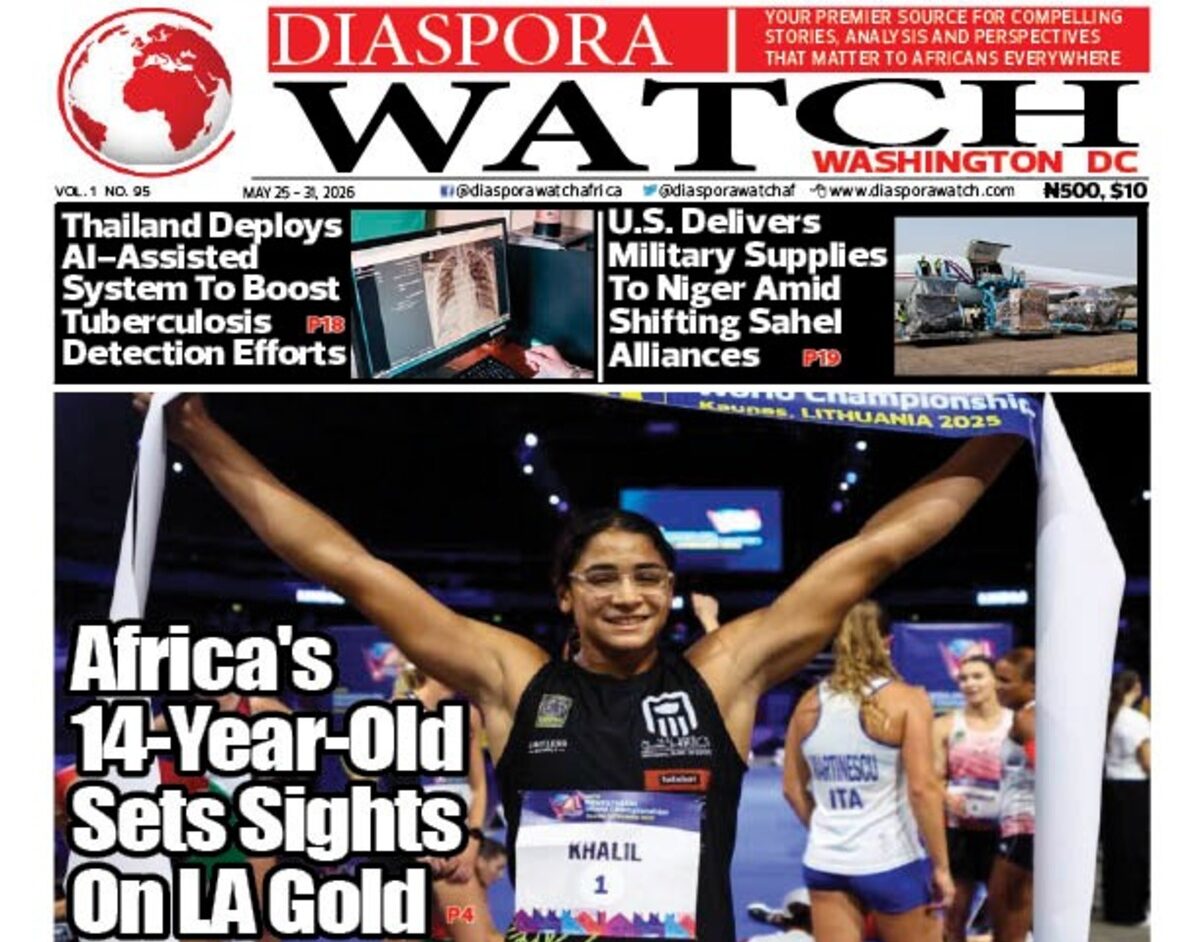
Diaspora Watch Newspaper is pleased to announce the publication of its 95th Edition, offering readers a compelling blend of international affairs, African development, diplomacy, health innovation, security, climate change, and human-interest stories shaping conversations across the globe.
Leading this week’s edition is the inspiring story of Egypt’s teenage sporting sensation, Farida Khalil, under the headline, “Africa’s 14-Year-Old Sets Sights on LA Gold.” The report chronicles the remarkable rise of the young athlete whose extraordinary achievements have positioned her as one of Africa’s brightest prospects ahead of the 2028 Los Angeles Olympic Games.
Diaspora Watch FREE Digital View: https://diasporawatch.com/3d-flip-book/diaspora-watch-vol-95/
On Demand Print: https://www.magcloud.com/browse/issue/3347818?__r=1069759
SUBSCRIBE TO DIASPORA WATCH NOW ON THE LINK BELOW!!!
https://diasporawatch.com/subscribe-to-diaspora-watch-newspaper/
Also making the front page is a major international legal development as a tribunal rules in favour of Britain in “Court Clears UK Over Scrapped Rwanda Migrant Pact,” ending a high-profile dispute over the controversial asylum relocation agreement.
The edition further examines unfolding political developments in the Horn of Africa through “Ethiopia Suspends Voting in Conflict-Hit Areas as Abiy Seeks Fresh Mandate,” highlighting the challenges facing Africa’s second-most populous nation amid security concerns and democratic transitions.
address environmental challenges confronting humanity.
In the area of health and technology, readers will find an insightful report on Thailand’s deployment of an AI-assisted system to improve tuberculosis detection, showcasing how innovation is transforming healthcare delivery and disease surveillance.
Security and geopolitical realignments in West Africa are explored in “U.S. Delivers Military Supplies to Niger Amid Shifting Sahel Alliances,” a report that sheds light on evolving international partnerships and strategic interests in a region grappling with persistent security threats.
The growing impact of climate change remains a central concern in this edition, with the United Nations warning of sustained global heat through 2030, reaffirming the urgency of collective action to
From the United States comes a politically charged story as President Donald Trump advances a proposal for a $250 bill bearing his portrait, triggering sharp reactions from political opponents and reigniting debate over leadership, legacy, and symbolism in American politics.
Diplomatic developments also take centre stage with coverage of efforts to deepen cooperation between the Caribbean and Europe in “CARICOM, Italy Strengthen Bilateral Ties as New Envoy Assumes Office.”
On the Back Page, readers will enjoy a lighter but culturally significant feature as New York City Mayor Zohran Mamdani attracts widespread attention with an Arsenal-inspired outfit worn during Eid celebrations, blending sports, identity, and public life in one memorable appearance.
As always, Diaspora Watch Newspaper remains committed to delivering credible journalism, insightful analysis, and stories that connect Africa, its diaspora, and the wider world.
The 95th Edition is now available to readers across our platforms.

CK4444 Official Website Account Verification Guide for Bangladeshi Players
F999 Official Website App and Mobile Guide for Bangladeshi Players
JW8 account verification guide for Bangladeshi gamblers

Pastor Jerry Eze Defends Miracles At UK Conference Amidst Criticism And Controversy

Diaspora Watch 20th Edition (October 14-20, 2024): Your Trusted Source for Global News and Insights

Tanzanian Man Reportedly Dies And Returns To Life Six Times


-
 Diplomacy7 days ago
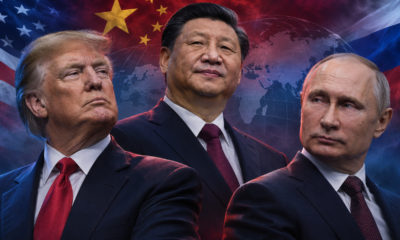
Trump, Putin, Xi meeting: A new world order or diplomatic spectacle?
-
 News6 days ago
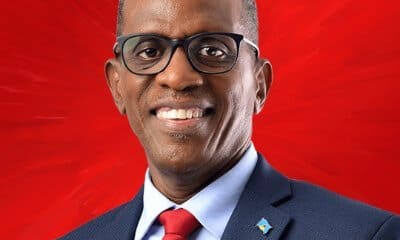
CARICOM Election Observation Mission to Grenada General Elections
-
 Opinion6 days ago
All Hail Our Flamingos! By Boniface Ihiasota
-

 Analysis6 days ago
What Succour Has CNG Brought? By Alabidun Shuaib AbdulRahman
-
 Opinion6 days ago
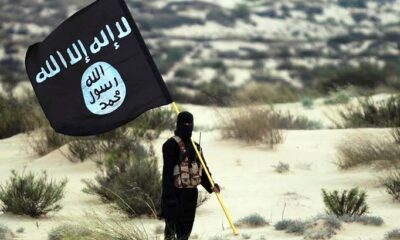
EDITORIAL: Poverty Is No Licence for Terrorism
-
News2 days ago
Coronavirus disease 2019